How to Catch Blue Catfish in Deep Water
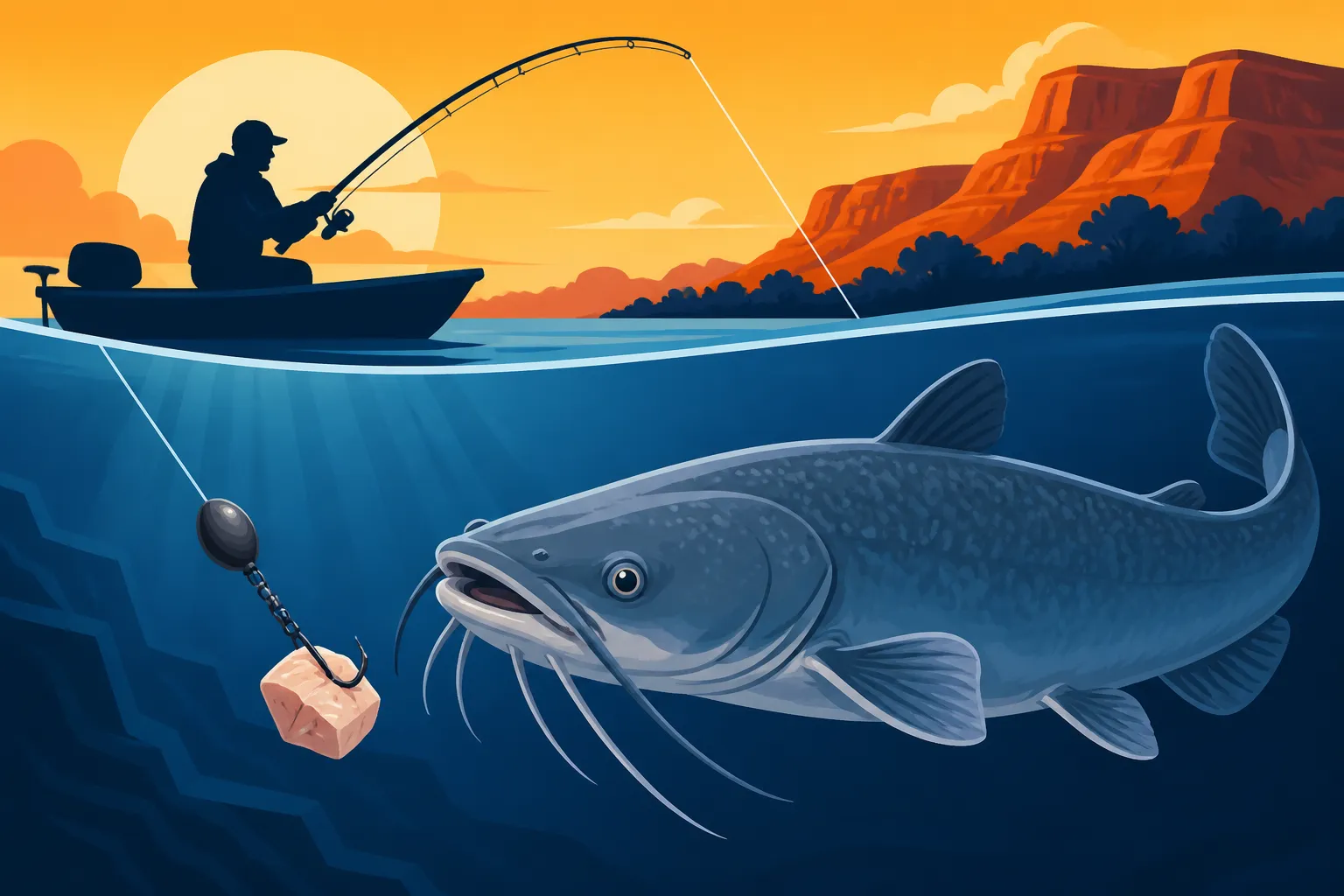
There’s nothing quite like the thrill of feeling that deep thud on your line, knowing it’s a big blue catfish down in the dark depths of an Oklahoma reservoir. But let's be real, finding and consistently landing these giants isn't always easy. They don't just hang out by the bank waiting for your worm. This guide is all about equipping you with the knowledge and techniques to confidently target and catch blue catfish in deep water, making those elusive deep-water monsters a real possibility for your next fishing adventure.
Understanding Blue Catfish Behavior in Deep Water
Blue catfish are fascinating creatures, and understanding their habits is the first step to consistently catching them, especially when they decide to hang out in deeper sections of a lake or river. It’s not just random; there's usually a good reason they've moved off the shallower flats.
Why Blue Catfish Go Deep
You might wonder why these powerful fish would venture into the deeper, often darker, parts of our Oklahoma waters. Well, it primarily boils down to comfort and food. When the surface water warms up significantly during the scorching Oklahoma summers, the top layer of water can become less oxygenated and less comfortable for a big blue cat. Deeper water, especially below the thermocline (that invisible layer where the water temperature changes rapidly), remains cooler and often holds more dissolved oxygen, providing a much-needed sanctuary. Imagine trying to relax in a sauna all day – eventually, you’d seek out a cooler spot!
Beyond comfort, their food source often dictates their depth. Blue catfish are predators, and they follow their prey. Baitfish like shad, which are a primary food source for blues, also seek out more comfortable water temperatures and higher oxygen levels. When these schools of shad move into deeper channels or suspend over submerged structures, the blue cats are right there with them, sometimes in massive schools of their own. Understanding these movements is key to finding them.
Seasonal Deep Water Patterns
Blue catfish don't stay in one place year-round, and their depth preferences shift with the seasons. It’s like us changing our wardrobes!
- Summer: This is perhaps the most obvious time you'll find blue catfish in deep water. As mentioned, the heat drives them down. You’ll often find them congregating along deep river channels, major creek channels, or hovering over deep humps and ledges, especially in the main lake basins of reservoirs like Lake Texoma Fishing Guide for Oklahoma Anglers. They'll often be suspended just above the thermocline if one is present, or hugging the bottom in deeper, cooler holes.
- Fall: As water temperatures begin to cool, blue catfish might spread out a bit more, but they still utilize deep water. They’ll often be found transitioning between deep channels and shallower flats, especially during feeding sprees as they fatten up for winter. They can be very active in deeper areas that are adjacent to these shallower feeding grounds.
- Winter: Don't let the cold fool you; blue catfish are still active and can be caught in deep water during winter, sometimes in huge concentrations. They'll often stack up in the deepest holes of creek and river channels, particularly where there's current or a good drop-off. They become lethargic but are still feeding, making them a prime target if you can find their winter holding spots.
- Spring: During the pre-spawn phase, blue catfish will begin to move out of their deepest winter haunts, but they'll often stage in deep channels or on submerged points adjacent to shallower spawning areas. They're still active in deeper water, feeding heavily before heading to shallower areas to spawn. This transitional period can be excellent for deep-water fishing.
Essential Gear for Deep Water Blue Catfish
When you're chasing big blue catfish in the dark abyss, your gear isn't just a suggestion; it's a necessity. You need robust, reliable equipment that can handle the sheer power of these fish and the demands of deep-water fishing.
Rods, Reels, and Line for the Depths
Forget your ultralight panfish setup; deep-water blue catfishing calls for heavy-duty artillery.
- Rods: Look for stout rods, typically 7 to 9 feet long, with a heavy or medium-heavy action and a strong backbone. You need a rod that can handle heavy sinkers (sometimes 8-12 ounces or more) and has enough power to set the hook firmly into a big cat's tough mouth, then muscle it up from 50 feet down. Many anglers prefer a moderate-fast action to absorb the strong head shakes while still providing plenty of lifting power.
- Reels: This is where strength really matters. Conventional baitcasting reels are generally preferred over spinning reels for deep-water catfishing due to their superior cranking power, larger line capacity, and durability. Look for reels with a strong drag system – one that can smoothly dispense line under immense pressure without sticking or jerking. A level-wind feature is also a big plus for even line retrieval. Brands like Abu Garcia and Penn are popular choices among serious catfishermen.
- Line: Your choice of line is critical.
- Monofilament: While traditional, heavy mono (20-40 lb test) has a lot of stretch, which can make it harder to detect subtle bites in deep water and to get a solid hook set. However, its abrasion resistance is a benefit around submerged timber.
- Braided Line: Many deep-water anglers swear by braided line (50-80 lb test, or even heavier). Its near-zero stretch provides incredible sensitivity, allowing you to feel every bump and nibble, even in very deep water. It also gives you more direct control for powerful hook sets. Its thinner diameter for its strength also means less water resistance, which helps your bait sink faster and stay put in current.
- Leader Material: Regardless of your main line, it’s a good idea to add a heavy monofilament or fluorocarbon leader (60-100 lb test) of a few feet. This provides extra abrasion resistance against sharp rocks or catfish teeth and acts as a shock absorber. You can easily find strong leader material on Amazon.
Terminal Tackle and Baits for Deep Water
Your terminal tackle needs to be as robust as your rod and reel.
- Sinkers: To get your bait down and keep it there, you’ll need heavy sinkers. Pyramid, no-roll, or flat bank sinkers are common choices, ranging from 3 to 12 ounces, depending on depth and current. In very strong current or extremely deep water, you might even need more.
- Hooks: Circle hooks are king for catfish. They are designed to hook the fish in the corner of the mouth, which is much safer for the fish if you plan to release it, and it greatly reduces gut-hooking. Sizes typically range from 7/0 to 10/0, sometimes even larger for truly enormous fish. The specific size depends on your bait.
- Swivels: Heavy-duty barrel or ball-bearing swivels (rated for 100+ lbs) are crucial to prevent line twist, especially when drifting or if your bait spins. They also make changing rigs easier.
- Rigs: A simple slip-sinker rig is highly effective for deep-water catfishing. Thread your sinker onto your main line, then tie on a heavy barrel swivel. To the other end of the swivel, tie your leader (12-36 inches long), and finally, your circle hook. This allows the fish to pick up the bait and run without feeling the weight of the sinker immediately.
- Baits: Blue catfish are primarily piscivores, meaning they eat other fish.
- Cut Bait: This is the undisputed champion for deep-water blues. Fresh cut bait from oily fish like shad (gizzard or threadfin), carp, drum, or even small perch works incredibly well. Cut them into steaks or chunks appropriate for your hook size. The oil and scent dispersal in the water column is irresistible to cruising blue cats.
- Live Bait: While less common for deep-water blues due to the difficulty of keeping it alive and active at depth, a large live shad or perch can also be effective if you can manage it.
- Prepared Baits: Some anglers use large prepared baits, but fresh cut bait usually outperforms them for deep-water giants.
The Role of Electronics: Fish Finders and Sonar
In the realm of deep-water blue catfishing, electronics are your eyes below the surface. Trying to find deep-water catfish without a good fish finder is like trying to find a needle in a haystack blindfolded.
- Locating Structure: A quality fish finder allows you to map out the contours of the bottom, identifying key structures where blue cats might be holding. Look for creek channels, submerged humps, ledges, drop-offs, and even standing timber. These are their highways and hiding spots.
- Identifying Bait and Fish: Modern sonar (especially down imaging and side imaging) can clearly show you schools of baitfish, which appear as clouds or dense clusters on your screen. And where there’s bait, there are usually predators. Blue catfish will show up as distinct arches or thick lines, often hugging the bottom or suspended slightly above it. Don’t be surprised to see huge schools of them stacked up on a deep ledge. Products like those from Humminbird or Lowrance offer excellent capabilities, and you can explore various models and features easily on Amazon.
- Understanding the Thermocline: Your fish finder can also help you identify the thermocline, especially in summer. This is typically where you'll see a distinct line or band of baitfish and often the blue cats themselves, as it represents their preferred temperature and oxygen zone. Knowing this depth can save you a lot of time fishing unproductive water.
Deep Water Blue Catfish Techniques
Alright, you've got the gear, and you know why they're down there. Now, let's talk about how to actually get your bait in front of them and bring them up.
Bottom Fishing and Anchor Systems
This is a classic and highly effective method for deep water blue cats, especially when you've identified a specific hotspot, like a deep hole in a channel or a submerged timber pile.
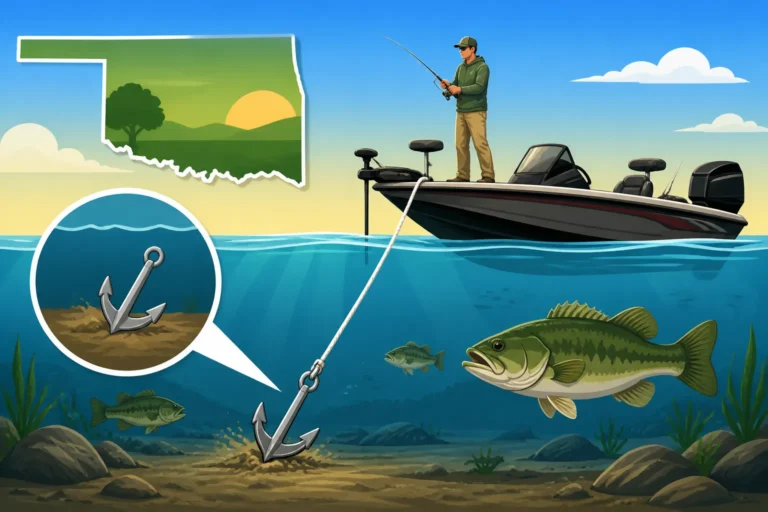
- Strategic Anchoring: Don’t just drop anchor anywhere. Use your electronics to find the exact spot you want to fish – maybe the top of a deep hump, the edge of a channel drop-off, or a specific timber pile. Anchor upwind or upstream from that spot, allowing your boat to settle back directly over it. This takes practice, often requiring multiple anchor drops to get it just right. Some anglers use a two-anchor system (one off the bow, one off the stern) to precisely position and hold their boat steady, even in wind or current.
- Deploying Your Baits: Once anchored, deploy multiple rods around the boat. Use your heavy slip-sinker rigs with fresh cut bait. Cast your lines to different depths or positions around your boat, ensuring some baits are right on the bottom and others might be slightly suspended if your sonar shows fish higher in the water column. The beauty of the slip-sinker rig is that it allows the catfish to pick up the bait and move off with it before feeling the resistance of your heavy sinker, giving you a better chance for a solid hookset.
- Patience and Persistence: Deep-water bottom fishing is often a game of patience. Let your baits soak. Watch your rod tips closely for any twitch or bend, as blue cats don’t always slam the bait. Sometimes it’s a slow, deliberate pull. When you feel a bite, let the fish take the line for a few seconds to ensure it has the hook firmly in its mouth before reeling down and setting the hook with a strong, sweeping motion. Remember, a single good spot can hold dozens of fish, so if you catch one, keep fishing that area.
Drifting and Controlled Drifting
Drifting is an excellent way to cover more water when the fish are scattered or you're trying to locate a school. It involves letting your boat (and baits) move with the wind or current over promising deep-water areas.
- Natural Drift: The simplest form is to just let the wind or current push your boat. However, this can sometimes be too fast, or take you off your desired path.
- Controlled Drifting with a Drift Sock: To slow down your drift and maintain better control, use a drift sock (also known as a sea anchor). Deploy one or two drift socks from the bow or stern (depending on wind direction and desired boat orientation) to act like a parachute in the water, significantly reducing your boat's speed. This allows your baits to stay in the strike zone longer and prevents them from skipping across the bottom too quickly.
- Controlled Drifting with a Trolling Motor: For ultimate control, use your electric trolling motor, especially a bow-mounted, GPS-enabled model. These motors allow you to hold a specific course and speed (like 0.5-1.5 mph) over deep contours, submerged points, or channel edges. This is particularly effective for presenting your baits to active fish that might be suspended or cruising. Many modern trolling motors offer "spot-lock" features which can momentarily anchor your boat in place if you hit a productive patch, allowing you to thoroughly fish an area.
- Rigging for Drifting: When drifting, you'll still use heavy sinkers, but you might consider longer leaders on your slip-sinker rigs to allow the bait to waft more naturally behind the sinker. Some anglers also use a three-way swivel rig, with one line to the sinker and another to the bait, to ensure the bait presents well off the bottom. Check out different rig setups for drifting on How to Rig a Slip Sinker for Catfish.
Trolling for Deep Blue Catfish
While less common than bottom fishing or drifting, trolling can be incredibly effective for covering large expanses of deep water and finding those scattered, active blue catfish. This method is often employed on huge reservoirs with vast open water.
- The Concept: Trolling involves pulling baits behind your boat at a controlled speed, usually with heavy weights to get them down to the desired depth. You’re essentially bringing the bait to the fish, rather than waiting for the fish to come to the bait.
- Heavy Gear is Key: You’ll need the same heavy rods, reels, and braided line as with other deep-water techniques. To get your baits down, you’ll be using planer boards or downriggers, or simply extremely heavy in-line weights (often 8-24 ounces or more) in front of your leader.
- Bait Presentation: Use large chunks of fresh cut bait. Some anglers also use large artificial lures designed for trolling, but cut bait is usually preferred for blue cats. Experiment with different trolling speeds (typically 1-3 mph) until you find what triggers bites. The goal is to make your bait look like an injured or easy meal.
- Targeting Depths: Use your fish finder to identify the depth range where you’re seeing baitfish and catfish. Then, adjust your weights and trolling speed to ensure your baits are running at or slightly above that depth. Many anglers will run multiple lines at different depths to find the "sweet spot." This technique allows you to systematically search deep channels, expansive flats, or ledges for actively feeding fish. If you’re interested in specific trolling tactics, look for guides on Striped Bass Trolling Techniques, as many principles apply.
Finding the Deep Water Hotspots in Oklahoma
Knowing the techniques is one thing, but knowing where to apply them in Oklahoma’s vast waters is another challenge entirely. It's about combining your knowledge of blue cat behavior with the actual underwater topography.
Key Deep Water Structures to Target
Blue catfish are creatures of structure, even in deep water. They seek out features that offer ambush points, current breaks, and concentrations of bait.
- River and Creek Channels: These are perhaps the most crucial deep-water highways for blue catfish. Main river channels that wind through reservoirs, and the deeper creek channels that feed into them, act as underwater highways for both baitfish and predators. Look for sharp bends, intersections, and sections where the channel narrows. Catfish will often sit on the edges or in the deepest parts of these channels.
- Humps and Ridges: Submerged humps (underwater hills) and long ridges provide excellent ambush points. Baitfish will often congregate around these structures, and blue cats will lie in wait on the sides, tops, or in the deeper depressions around them. These are great spots for both anchoring and drifting.
- Ledges and Drop-Offs: Any significant change in depth is a potential hotspot. Ledges where a flat drops sharply into a channel, or where a point extends out and drops off, are magnets for blue catfish. They can move up and down these ledges to feed and retreat to deeper water quickly. Pay close attention to these transitions on your sonar.
- Submerged Timber and Brush Piles: Even in deep water, timber provides cover and structure. Old standing timber, sunken trees, or intentionally placed brush piles can hold large numbers of blue catfish. These offer protection and attract baitfish. Be prepared for snags when fishing these areas, so bring plenty of spare terminal tackle.
- Dam Faces and Riprap: The riprap (rocky slopes) of dam faces often extend deep into the reservoir and can be incredibly productive for blue catfish. The rocks hold bait, and the deep, often current-swept water below the dam is a prime blue cat habitat.
Oklahoma Lakes Known for Deep Water Blues
Oklahoma is blessed with several large reservoirs that are renowned for their deep-water blue catfish populations. These are generally the bigger, deeper lakes with extensive river channels running through them.
- Lake Texoma: Straddling the Oklahoma-Texas border, Texoma is a legendary fishery for blue catfish. Its vast main lake basin, deep Red River and Washita River channels, and numerous submerged humps and ledges make it a prime deep-water destination. You can find fish holding in 30-80 feet of water, especially during the summer and winter months. The consistent populations of gizzard shad keep the blue cats healthy and growing to enormous sizes. Many anglers specifically target Best Catfish Fishing Spots in Oklahoma on Lake Texoma.
- Lake Eufaula: Oklahoma's largest lake, Lake Eufaula, also holds an incredible deep-water blue cat fishery. The meandering Canadian and North Canadian river channels provide extensive deep-water habitat. Look for blues in the main lake basin, especially around the numerous submerged creek channels and flooded timber in deeper areas. The sheer size of Eufaula means there's always a new deep-water section to explore, and the fish here can get huge. Learn more about Lake Eufaula: Oklahoma's Gentle Giant for Bass and Crappie.
- Grand Lake O' the Cherokees: In northeast Oklahoma, Grand Lake is another fantastic spot for deep-water blues. The deep Neosho River channel runs through the lake, providing ample deep-water structure. While often known for bass and crappie, the blue catfish here can be massive. Focus on the main lake points, channel swings, and deeper bluff walls, particularly where there’s current or abundant baitfish. The lower end of the lake tends to have deeper water, ideal for searching for those big blues. Check out Grand Lake O' the Cherokees Bass Fishing Guide for more insights on this lake.
- Keystone Lake: Near Tulsa, Keystone Lake is another great option. Its deep Arkansas River channel and numerous submerged features make it productive for blue catfish. Look for them in the deeper sections of the river channel, especially downstream from the confluence of the Arkansas and Cimarron rivers.
- Fort Gibson Lake: Also in northeast Oklahoma, Fort Gibson Lake offers good opportunities for deep-water blue cats, particularly in the deeper, lower end of the lake and along the Grand River channel.
Remember, conditions can vary greatly from lake to lake and even season to season. Always check recent fishing reports and pay close attention to your electronics to pinpoint exactly where the fish are holding on any given day. You might even find some useful gear on Amazon to enhance your deep-water fishing experience before you head out!
Here's a quick comparison of popular deep-water blue catfish techniques:
| Technique | Description | Pros | Cons | Best Conditions |
|---|---|---|---|---|
| Bottom Fishing | Anchoring over a specific deep structure and presenting baits on the bottom. | Highly precise; good for concentrated schools; effective in current. | Limited coverage; requires accurate anchoring; can be slow if fish are scattered. | Known hotspots, deep channels, humps, timber piles. |
| Controlled Drifting | Using wind/current and drift socks or trolling motor to move baits over an area. | Covers more water than anchoring; allows for systematic searching. | Requires good boat control; wind/current can make it challenging; potential for snags. | Scattered fish, covering large flats, channel edges. |
| Trolling | Pulling heavy weights and baits behind a boat at a controlled speed. | Covers vast areas quickly; effective for finding active, scattered fish. | Requires specialized heavy gear; less precise bait presentation; can be less subtle than other methods. | Large, open deep water; extensive channels; searching for schools. |
Disclaimer
This article is for general informational purposes only and does not constitute professional advice. Laws, prices and regulations vary by location and change over time. Consult a qualified professional for guidance on your specific situation.