Smallmouth Bass vs Spotted Bass: Key Differences
It can be incredibly frustrating when you're out on the water, hooking into some feisty bass, and you just can't quite tell if it's a smallmouth or a spotted bass. These two species, while both offering incredible fights, have subtle differences that can stump even experienced Oklahoma anglers. This guide is here to untangle that confusion, giving you the definitive visual cues and habitat knowledge you need to confidently identify smallmouth and spotted bass every time you reel one in.
Why These Two Bass Cause Confusion for Oklahoma Anglers
Let's face it, when you're caught up in the thrill of the fight, or you're just trying to get that fish back in the water quickly, taking the time to scrutinize every scale isn't always top of mind. But those quick glances can lead to misidentification, which can impact your understanding of local regulations and even how you approach fishing for them in the future.
The Challenge of Identifying Similar Species
Many anglers in Oklahoma are very familiar with the largemouth bass – it's our most common and iconic game fish. But when you start encountering smallmouth and spotted bass, that's where things can get a little fuzzy. They don't have the distinct, obvious features of, say, a catfish or a crappie. Both smallmouth and spotted bass have somewhat similar torpedo-shaped bodies, often similar coloration, and they can even be found in overlapping territories, particularly in certain Oklahoma reservoirs. This overlap in appearance and habitat is the root of the confusion, making it easy to mistake one for the other, especially for those who aren't regularly targeting them.
It's a common scenario: you catch a bass that's clearly not a largemouth because its mouth doesn't extend past its eye, but then you're left scratching your head. Is it a smallmouth because of its bronzy hue, or a spotted bass because of those faint horizontal markings? The nuances are real, and it’s perfectly normal to feel a bit baffled. The key is knowing exactly which features to look for, beyond just a quick glance.
Why Accurate Identification Matters for Anglers
Beyond simply knowing what you caught, accurate identification is crucial for a few practical reasons. First and foremost, fishing regulations in Oklahoma can sometimes differentiate between bass species. While often largemouth, smallmouth, and spotted bass are grouped together under "black bass" limits, there can be specific size or bag limits for smallmouth in certain areas, particularly rivers or clearer lakes. You'll want to be familiar with Oklahoma's Bass Fishing Rules and Limits to ensure you're always fishing legally. Misidentifying a fish could inadvertently put you in violation of these rules, leading to an unwanted conversation with a game warden.
Secondly, knowing the species helps you become a more effective angler. Smallmouth and spotted bass, while related, often prefer slightly different habitats and respond to different lures or presentations. If you think you're fishing for smallmouth in a spot that's actually holding a lot of spotted bass, your technique might be a little off. Understanding what you're catching helps you refine your approach, learn more about fish behavior, and ultimately, put more fish in the boat or on the bank. It also helps you understand the health and diversity of the fishery you're exploring, contributing to better conservation efforts.
Key Physical Differences Between Smallmouth and Spotted Bass
While they share a family resemblance, smallmouth and spotted bass have several distinct physical traits that, once you know what to look for, make identification much easier. It's like telling identical twins apart – once you see the subtle dimple or the slight arch in an eyebrow, you can't unsee it.
Mouth Size and Jaw Placement
This is often the first thing experienced anglers look at, and it's a very reliable indicator when comparing these two. Grab that fish gently and examine its jaw. For a smallmouth bass, the upper jaw (or maxillary) typically extends back to about the middle of the eye, or sometimes just slightly past the back edge of the eye, but rarely significantly beyond it. Their mouths generally appear more proportionate to their head size.
Now, for a spotted bass, their upper jaw will generally extend back to the middle of the eye or just under the eye, but it almost never extends past the back margin of the eye. This is the crucial differentiator from a largemouth bass, whose jaw famously extends well past the eye. So, with spotted bass, think "intermediate" jaw size – bigger than a smallmouth, but smaller than a largemouth. This mouth morphology directly impacts the size of bait they can comfortably eat, which can influence your lure selection.
Dorsal Fin Separation
Another incredibly reliable and often overlooked identification clue lies in their dorsal fins. If you look at the top of the fish, you'll see two dorsal fins: a spiny one towards the front and a soft-rayed one towards the back. The connection between these two fins is key.
On a smallmouth bass, the spiny and soft dorsal fins are clearly, almost distinctly, separated. There's a deep notch or indentation where the two fins meet, making it look like two separate fins rather than one continuous one. You can often easily press down on this separation with your finger. This pronounced separation is a hallmark feature of the smallmouth.
The spotted bass, on the other hand, will have a dorsal fin that is connected, or at least much less deeply notched than the smallmouth. It appears more continuous, similar to a largemouth bass. You won't find that distinct separation. This feature is often the quickest and most definitive way to tell a smallmouth from a spotted bass if you're holding the fish. It's an anatomical detail that doesn't change with age or environment.
Body Coloration and Markings
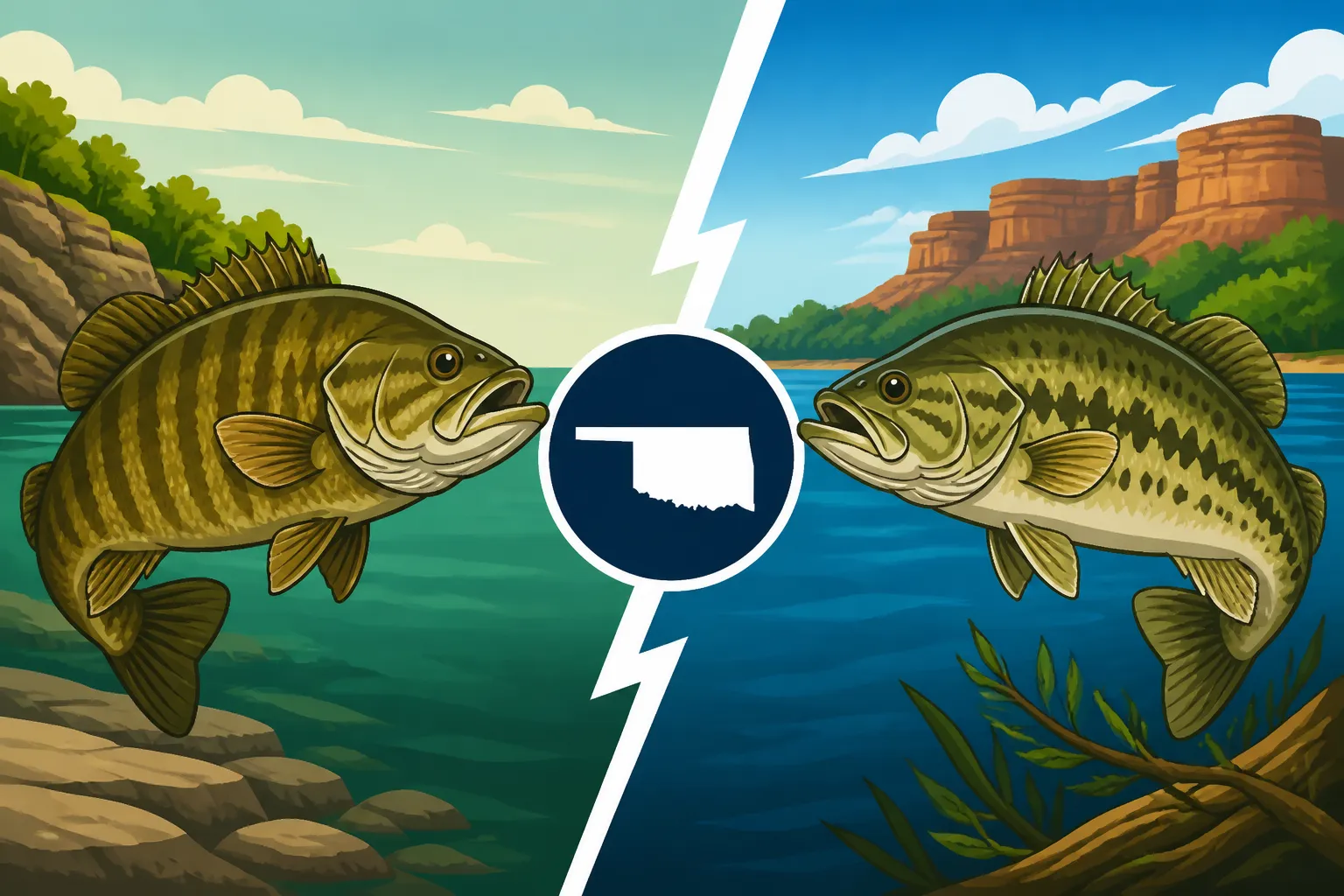
While coloration can vary wildly based on water clarity, diet, and even mood, there are some general patterns to look for. Smallmouth bass are often described as having a bronzy, golden-brown, or olive-brown back and sides, fading to a creamy white belly. They typically have 8-12 dark, vertical bars or blotches along their sides, which can sometimes be quite prominent, especially in clear water fish. These bars are usually not solid and can appear broken or mottled.
Spotted bass often have a more olive-green back and sides, transitioning to a whitish belly. The most defining characteristic for a spotted bass is the presence of distinct rows of dark spots along their lower sides, below the lateral line. These spots are usually much more prominent than any markings on a smallmouth and are what give the spotted bass its name. Sometimes, they also have a faint, irregular horizontal band or blotches, but it's the ventral spotting that's the giveaway. Additionally, many spotted bass have a rough patch of tiny "teeth" on their tongue; if you run your finger over their tongue, it will feel like sandpaper. This feature is absent in largemouth and smallmouth bass. When ordering new tackle online, perhaps from Amazon, make sure you consider the water clarity where you'll be fishing, as lighter or darker lure colors can mimic the forage these differently colored bass pursue.
Scales on the Cheeks and Gill Plates
This is a more subtle, but very consistent, identifying feature that often requires a closer look. It's one of those "if you know, you know" kind of details.
For a smallmouth bass, the scales on their cheeks and gill plates are typically very small, almost granular in appearance. They are often much smaller than the scales on the main body of the fish. This gives the head a smoother look compared to other bass species.
A spotted bass, however, will have distinctly larger scales on their cheeks and gill plates, similar in size to the scales on the rest of their body. They are fully scaled in these areas, and the scales are easily visible. If you're struggling to differentiate between a smallmouth and a spotted bass, gently rub your finger over the cheek area. The scale size will be a clear indicator. This anatomical detail is fixed and doesn't vary with environmental factors like water quality or food availability, making it a reliable diagnostic trait.
Habitat and Behavior: Where You'll Find Them in Oklahoma
Understanding where these bass prefer to live can give you a significant advantage, even before you cast a line. It's like knowing your neighbor's favorite coffee shop – you're more likely to run into them there!
Smallmouth Bass Preferred Habitats
Smallmouth bass, often called "bronzebacks" for their fighting prowess and color, are generally lovers of clear, cool, oxygen-rich water with plenty of rocky structure. Think of them as the mountain dwellers of the bass world. In Oklahoma, you'll typically find smallmouth bass in the eastern and southeastern parts of the state, particularly in clear-water reservoirs like Broken Bow Lake, Lake Tenkiller, and Lake Murray. They thrive in areas with extensive rock piles, ledges, bluffs, and gravel bottoms. You'll often find them lurking around current breaks in rivers and streams, too, where the water is moving and oxygenated. Smallmouth Bass in Oklahoma: What Anglers Should Know covers more detail on their biology.
They prefer depths where water temperatures remain cooler, especially during the summer months. During colder periods, they might hold in deeper water, but always with an eye for structure and forage. Their diet often consists of crayfish, smaller baitfish, and aquatic insects. Understanding this preference for rocky, clear water is key to finding them; if you're in a muddy, shallow, weedy cove, you're probably not in prime smallmouth territory.
Spotted Bass Preferred Habitats
Spotted bass, sometimes referred to as "spots" or "Kentucky spotted bass," are a bit more adaptable and often occupy a niche that overlaps with both largemouth and smallmouth bass, especially in Oklahoma's large reservoirs. They can tolerate slightly warmer and more turbid water than smallmouths, but still prefer some degree of clarity and structure. You'll find a good population of spotted bass in many of Oklahoma's major impoundments, including Lake Eufaula, Lake Ouachita (on the Arkansas side, but good indicator of habitat preferences), and Grand Lake O' the Cherokees. They tend to favor areas with submerged timber, brush piles, rocky points, and creek channels in reservoir settings.
Spotted bass are also quite comfortable in river systems, often found in current seams and around submerged logs and rock formations. They are, in a sense, a middle-ground bass, often outcompeting largemouth in reservoirs with less vegetation and more rock, and sometimes even pushing smallmouth out of their preferred clear-water haunts if conditions change. Their versatility means you might find them in a wider array of spots on a single lake. Spotted Bass Fishing in Oklahoma: A Complete Guide provides more specific information on these adaptable fish.
Feeding Habits and Aggression
The preferred habitat of these two bass species naturally influences their feeding habits and how aggressively they strike a lure. Smallmouth bass are notorious for their powerful, almost bulldog-like fight. They hit hard, make long runs, and will often jump repeatedly when hooked. Their diet, heavy on crayfish, means they often forage on the bottom or around rocky structures. They are aggressive predators, and in their clear-water environments, they rely on sight to ambush prey. Their fights are legendary among anglers, often outclassing fish twice their size.
Spotted bass are also incredibly aggressive, perhaps even more so than smallmouths at times, especially when schooling. They are known to hit lures with a vengeance and provide a strong, powerful fight, often pulling hard and staying deep rather than making acrobatic jumps. Their diet is varied, including a mix of baitfish, crayfish, and insects. They are excellent schooling fish, and when you find one spotted bass, you often find many. This schooling behavior makes them a blast to catch once you locate a productive area. Their aggression makes them a great target for those looking for consistent action.
Fishing Techniques and Lure Choices for Each Species
Tailoring your approach to the specific bass species you're targeting can dramatically increase your success. While there's overlap, a few key adjustments can make all the difference.
Targeting Smallmouth Bass
When you're chasing smallmouth bass in Oklahoma, think "finesse" and "rock." These fish are often found in clear water, so stealth can be important. Lures that mimic crayfish or small baitfish are usually excellent choices. Small crankbaits, jerkbaits, and soft plastic tubes or creature baits fished on jig heads are highly effective. For fishing rocky bottom, tubes are exceptional, as they imitate crayfish perfectly. Small grubs on light jig heads, especially in colors like green pumpkin, brown, or natural crayfish patterns, are also consistent producers.
Drop-shot rigs are fantastic for targeting smallmouth holding on deep structure. When they're aggressive, topwater lures like poppers or walking baits can bring exhilarating strikes, especially in low-light conditions. Ultralight or light-action spinning rods, often paired with 6-10 lb fluorocarbon or monofilament line, give you the sensitivity to feel subtle bites and the backbone to handle their hard runs. Many anglers will head over to Amazon to find a selection of finesse jigs and Ned rigs, which are particularly effective for smallmouth, or even to stock up on their favorite soft plastics. Consider browsing Best Rods for Oklahoma Largemouth Bass to see how choices might differ for smallmouth.
Targeting Spotted Bass
Spotted bass are aggressive and often school, making them a fantastic target for anglers who enjoy consistent action. They are less particular about finesse presentations than smallmouths can be. Small crankbaits that dive to different depths, spinnerbaits, and swimbaits are all great choices for covering water and locating schooling fish. When they're deep, jigs and soft plastics, especially shaky heads, can be deadly. Think about replicating the baitfish they are chasing.
For spotted bass, you can often get away with slightly heavier gear than smallmouths, perhaps a medium-light or medium action spinning or casting rod, with 8-12 lb test line. This gives you more power to pull them out of submerged timber or rocky structure. During certain times of the year, particularly when baitfish are schooling, spoons and even small topwater lures can be incredibly effective when retrieved over submerged humps or along bluff walls. If you're planning on fishing for spotted bass from the bank, you might want to look at a good selection of smaller, compact spinnerbaits and jigs on Amazon, as these tend to be easier to cast without a boat. When bass are schooling, you'll find that these adaptable fish respond well to a variety of presentations.
Understanding Bag and Length Limits in Oklahoma
Navigating the regulations for different bass species is essential. While Oklahoma often groups "black bass" (largemouth, smallmouth, spotted) together, there are nuances that every angler needs to know to avoid a citation.
Statewide Regulations for Smallmouth Bass
In general, the statewide bag limit for black bass in Oklahoma, which includes smallmouth bass, is 6 fish per day. The size limit often varies by lake, so it's critical to check the specific regulations for the body of water you're fishing. Many lakes have a 14-inch minimum length limit for black bass, meaning any smallmouth you catch under 14 inches must be immediately released. However, certain areas, especially rivers or specific clear-water lakes, might have unique smallmouth regulations.
For instance, some clear-water reservoirs known for their smallmouth populations might have protected slot limits or even lower bag limits to protect the fishery. A good example of a nuanced rule is the one found in some areas: "Only one bass 16 inches or longer may be kept per day." This applies to black bass generally, meaning if you keep a 16-inch largemouth, you cannot keep a 16-inch smallmouth on the same day. This rule, explained further in The One 16-Inch Bass Rule Anglers Miss, is often overlooked. Always consult the current Oklahoma Fishing Guide for the specific lake or river you intend to fish.
Statewide Regulations for Spotted Bass
Spotted bass are also included in the general "black bass" category in Oklahoma. This means they fall under the same statewide daily bag limit of 6 fish and are subject to the same length limits as largemouth and smallmouth bass, which are often a 14-inch minimum. So, if you're pulling in spotted bass, remember that they count towards that 6-fish daily limit, and any under the specified length for that body of water need to go back in.
It's common for anglers to keep a mix of largemouth and spotted bass, and as long as they adhere to the total bag limit and individual length requirements, they're fine. The key takeaway here is that while we're learning to tell these two species apart for identification and technique purposes, they are often regulated similarly under the broader "black bass" umbrella. For a full breakdown, check out How Many Bass You Can Keep in Oklahoma. Being informed about these regulations ensures a responsible and enjoyable fishing trip every time.
Here's a handy table to help you quickly identify the key differences:
| Feature | Smallmouth Bass | Spotted Bass |
|---|---|---|
| Upper Jaw Extension | To middle of eye, or slightly past back edge | To middle of eye, or just under, but not past back edge |
| Dorsal Fin Separation | Deeply notched, appears as two distinct fins | Connected, shallow notch, appears more continuous |
| Body Markings | Bronzy/olive-brown, vertical bars/blotches (often broken) | Olive-green, distinct rows of dark spots below lateral line |
| Tongue Patch | Smooth | Often has a rough patch of "teeth" |
| Cheek Scales | Very small, granular appearance | Larger, similar to body scales |
| Preferred Habitat | Clear, cool, rocky water; rivers, deep lake structure | Adaptable; submerged timber, brush, rocky points, creek channels |
This article is for general informational purposes only and does not constitute professional advice. Laws, prices and regulations vary by location and change over time. Consult a qualified professional for guidance on your specific situation.