What Gear Do You Need for Paddlefish Snagging
Paddlefish snagging in Oklahoma isn't your everyday fishing trip; it's an exhilarating, often physically demanding pursuit that targets truly massive, ancient fish. Many anglers, especially those new to this unique method, often underestimate the sheer power and size of these fish and try to make do with their standard bass or catfish gear. This usually leads to broken rods, spooled reels, and a lot of frustration when that monster paddlefish gets away. This guide is here to ensure you're properly equipped, detailing exactly what gear you'll need to successfully land one of Oklahoma's prehistoric giants.
The Core Gear: Rods, Reels, and Line for Snagging
When you're aiming to snag a fish that can easily weigh 50 pounds or more, sometimes pushing into triple digits, you can't skimp on your primary equipment. This isn't finesse fishing; it's a battle of strength, and your rod, reel, and line need to be up to the task. Think heavy-duty, robust, and dependable.
Heavy-Duty Rods for the Fight of Your Life
Forget your medium-heavy bass rods or even your beefy catfish setups for a moment; paddlefish snagging demands something entirely different. You need a rod with an incredibly strong backbone, designed to absorb the shock of a powerful strike and provide the leverage needed to pull a large, strong fish through often swift currents. A good paddlefish snagging rod will typically be quite long, often in the 7 to 9-foot range, which helps with casting those heavy weights and provides better leverage when fighting a fish far from the boat or bank.
Many experienced snagglers opt for rods designed for saltwater surf fishing or extra-heavy freshwater applications, sometimes even specialized muskie or trophy catfish rods. These rods are built to withstand immense pressure, featuring durable guides and reel seats that won't buckle under the strain. When you hook into a paddlefish, it's less about a subtle bite and more about feeling a sudden, heavy resistance as the hook embeds. You'll then need to set the hook with considerable force and immediately start a tough retrieve, which is where that heavy backbone truly shines. A weaker rod will simply flex too much, making it incredibly difficult to move the fish. If you're wondering Why Paddlefish Snagging Needs a Heavy Rod and Treble Hooks, it's precisely because of this power and the unique way these fish are caught. You might find a good selection of these specialized rods available through online retailers like Amazon, making it easier to compare specs and find exactly what you need.
Robust Reels Built for Power
Just like with your rod, your reel needs to be a beast. A paddlefish can make blistering runs, and you'll need a reel with a smooth, powerful drag system that can handle sustained pressure without overheating or locking up. High line capacity is also non-negotiable. You'll be casting heavy weights and hooks, and when a paddlefish decides to run, it can strip line off your spool faster than you'd believe. Most anglers prefer large conventional reels, often used in saltwater jigging or offshore trolling, for their sheer cranking power and robust gearing. These reels typically sit on top of the rod, allowing for better torque and control during the fight.
While conventional reels are popular, some anglers do use large, heavy-duty spinning reels, especially those looking for a bit more ease in casting. If you go this route, ensure it's a model known for its exceptional drag system and durable construction, perhaps a large saltwater spinning reel. Regardless of the type, look for a reel with an all-metal body and robust internal components, as plastic parts will likely fail under the stress of a big paddlefish. A strong handle and a good gear ratio for retrieving heavy weights and fighting strong fish are also key. Without a powerful reel, your fight will be short-lived, likely ending in a broken line or a burnt-out drag.
The Right Line: Strength and Abrasion Resistance
Your fishing line is the last link between you and the fish, and for paddlefish snagging, it needs to be incredibly strong and abrasion-resistant. Monofilament line just won't cut it for this application; the stretch and lower breaking strength are major disadvantages. Braided line is the overwhelming choice for paddlefish snagging, and for good reason. It has virtually no stretch, which translates directly to better hook sets and an immediate connection to the fish, allowing you to feel every head shake and run. The thinner diameter of braid, compared to mono of equivalent strength, also means you can pack more heavy-pound-test line onto your reel.
When we talk about "heavy" pound test, we're typically looking at braided line in the 80 to 120-pound range, sometimes even heavier depending on the current and the size of the fish you're targeting. This might sound extreme, but remember, you're not just trying to hold a fish; you're often trying to move a fish that could outweigh you. Abrasion resistance is also critical, as you might be pulling your line over rocky bottoms or through debris. While direct leaders are sometimes used, many snagglers tie their hooks directly to the main braided line using strong, tested knots. Ensuring your knots are flawless is paramount, as a weak knot can be the undoing of even the best gear. For more specifics on the setup, check out Paddlefish Snagging Gear Basics for Oklahoma's Grand Lake.
Hooks, Sinkers, and Terminal Tackle Essentials
Beyond your rod, reel, and line, the components at the business end of your setup are equally critical. These are the parts that actually make contact with the fish and provide the weight to get your offering into the strike zone.
Treble Hooks: The Heart of Snagging
Paddlefish are filter feeders, meaning they don't strike lures or bait with their mouths. This is why snagging is the accepted and legal method for catching them. The core of this technique is the treble hook, a three-pronged hook designed to catch the fish on its body as you retrieve your line through the water. Not just any treble hook will do; you need large, extremely sharp, and heavy-duty hooks that can penetrate the tough hide of a paddlefish and withstand the immense forces exerted during the fight.
Sizes typically range from 8/0 to 14/0, with many anglers preferring the larger sizes for better snagging efficiency. Look for hooks made from thick, strong wire that won't bend or straighten under pressure. Some hooks are even specifically designed for snagging, featuring extra-wide gaps and super-sharp points right out of the package. It's often a good idea to sharpen your hooks even further before hitting the water to ensure maximum penetration. The effectiveness of your snagging effort largely depends on the quality and sharpness of these hooks. To get a better idea of what to look for, consider the advice in Best Treble Hook Size for Paddlefish Snagging.
Heavy Sinkers to Reach the Depths
To effectively snag paddlefish, you need to get your hooks down to where the fish are, which often means near the bottom in swift currents. This requires significant weight. Depending on the current speed and water depth, you might be using sinkers anywhere from 8 ounces to a pound or even more. Pyramid sinkers are popular because they dig into the bottom, helping to hold your rig in place, but bell sinkers or bank sinkers also work. The goal is to get your hooks to the correct depth and keep them there while you retrieve your line in a sweeping motion.
The weight of your sinker is a direct factor in how effectively you can control your rig. Too light, and the current will sweep your hooks away from the fish. Too heavy, and you might struggle with casting or feeling the subtle "snag" as you retrieve. It's often a good idea to have a range of sinker weights on hand so you can adjust to changing river or lake conditions. Connecting your sinker securely to your line is also crucial, as losing a heavy sinker mid-cast or during a snag can be frustrating and costly.
Swivels and Leaders for Durability
While some paddlefish anglers tie their treble hooks directly to their main braided line, many opt for a short, heavy leader and a robust swivel. The swivel helps prevent line twist, which can be a major issue when constantly retrieving heavy weights and hooks, especially in current. A high-quality, heavy-duty swivel (think barrel swivels or ball bearing swivels designed for big game) will be essential to ensure your line doesn't weaken or tangle.
The leader, typically made from heavy monofilament or fluorocarbon (80 to 150-pound test), serves a couple of purposes. It provides an extra layer of abrasion resistance against the fish's body or any underwater structure, and it acts as a sacrificial piece of line. If your hook gets irretrievably snagged on the bottom, a heavy leader might allow you to break off just the hook and sinker, saving your expensive braided main line. Keep your leader relatively short, usually no more than 18-24 inches, to maintain direct contact with your hooks for better feel and hook sets.
Essential Accessories for a Successful Snagging Trip
Paddlefish snagging isn't just about the rod and reel; there are several other critical pieces of gear that will make your trip safer, more comfortable, and ultimately more successful. These accessories often get overlooked but can make a huge difference, especially when you're dealing with powerful fish and heavy tackle.
Grips, Gloves, and Safety Gear
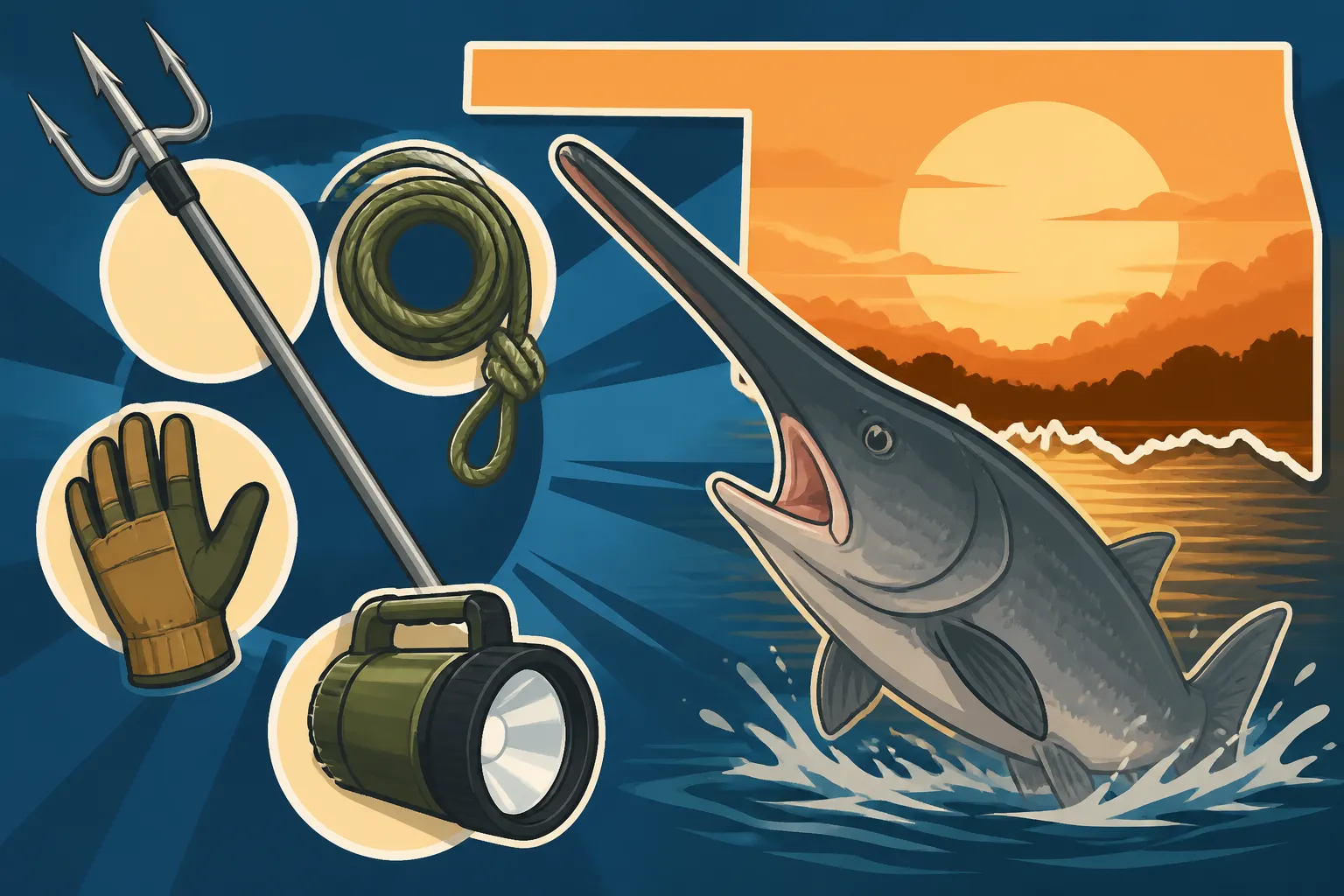
Handling a large paddlefish can be tricky. Their skin is rough, and they have a long, bony snout (rostrum) that can be awkward to grab. Fish grips, especially those designed for large species, are invaluable for securing the fish without harming it or yourself. These allow you to get a firm hold, making it easier to control the fish for photos or during the release/harvest process. Heavy-duty gloves, such as those used for offshore fishing or even work gloves, are also a must. They protect your hands from the abrasive skin of the paddlefish, sharp hooks, and the constant friction of handling heavy lines.
Safety should always be a priority, especially when dealing with heavy weights, large hooks, and powerful fish. If you're snagging from a boat, ensure you have all the necessary Oklahoma Boat Safety Equipment Checklist items, including appropriately sized life jackets for everyone on board. The forces involved in casting heavy rigs and fighting big fish can be unpredictable, and a little extra safety preparation goes a long way.
Netting and Landing Tools
Once you've fought and brought a large paddlefish close, the challenge isn't over. Landing these giants requires specialized tools. A standard bass net simply won't cut it. You'll need an extra-large, heavy-duty landing net with a robust handle and a deep, strong hoop. Look for nets with a rubberized or knotless mesh to minimize damage to the fish if you plan on releasing it. For truly massive paddlefish, some experienced anglers opt for a specialized gaff, though this is primarily for harvest and requires skill and care to use safely and effectively.
Having the right landing tool means the difference between celebrating a successful snag and watching your trophy slip away at the last second. Practice using your net or gaff beforehand if possible, so you're not fumbling when a hundred-pound fish is thrashing boatside.
Storage and Transport Considerations
If you plan to harvest your paddlefish, you'll need a substantial cooler. These fish are big, long, and can be quite heavy. A large marine cooler, capable of holding ice for extended periods, is essential to properly preserve your catch. You might even need a dedicated cooler just for the fish, separate from your drinks and snacks. Think about how you'll transport a large, heavy fish from the landing site back home; a large cooler or even a dedicated fish bag might be necessary.
For your rods and reels, consider cases or bags that can protect your heavy-duty gear during transport. These rods are often quite expensive, and protecting them from bumps and scrapes will extend their lifespan. Secure rod holders in your boat or vehicle will also prevent damage. Taking a moment to organize and secure your gear before and after your trip can save you headaches in the long run. If you want a full run-down, don't forget to review the Paddlefish Snagging Gear Checklist for Grand Lake.
Understanding Regulations and Responsible Snagging
Having the right gear is only one part of a successful and ethical paddlefish snagging experience. It's equally important to understand and abide by the specific rules and regulations set forth by the Oklahoma Department of Wildlife Conservation (ODWC). These regulations are in place to ensure the sustainability of this unique fishery and to promote responsible angling practices.
Know Your Limits and Seasons
Oklahoma has very specific seasons and regulations for paddlefish snagging, particularly on popular bodies of water like Grand Lake. These rules dictate everything from the exact dates you can snag, the daily and annual bag limits, and even length limits on harvested fish. Before you even think about buying gear, you absolutely must check the current ODWC fishing regulations. These rules can change, so always ensure you have the most up-to-date information. Missing a season or limit can result in hefty fines and the loss of your catch, which no one wants. Information on Paddlefish Snagging Season in Oklahoma is readily available and crucial to review.
Beyond the specific paddlefish rules, remember that all general fishing regulations still apply, including the need for a valid Oklahoma fishing license. If you're a non-resident, your license costs will differ from residents, so make sure you understand Oklahoma Fishing License Costs and Types. Don't ever assume; always verify.
Respecting the Resource
Paddlefish are a remarkable, long-lived species, and responsible snagging practices are key to ensuring their future. This includes handling fish with care, especially those you intend to release. If you snag a fish you don't intend to keep, or if it falls outside of the legal harvest slot, quickly and gently remove the hook and release the fish back into the water. Minimize its time out of the water, and support its body when handling to avoid internal injury. Use those fish grips and gloves not just for your safety, but for the fish's well-being too.
It's also important to be mindful of other anglers and boaters. Paddlefish snagging often takes place in crowded areas, especially during peak season. Maintain a safe distance, be courteous, and follow all boating safety rules. Fishing responsibly means not only following the law but also acting as a good steward of the resource and respecting fellow outdoor enthusiasts. For more general information about this unique method, refer to How Paddlefish Snagging Work in Oklahoma.
Conclusion
Paddlefish snagging in Oklahoma offers a truly unique and thrilling angling experience, a chance to connect with one of North America's oldest and most impressive freshwater fish. But to do it successfully, and responsibly, you simply can't show up with inadequate gear. From the heavy-duty rods and robust reels to the strong braided line, specialized treble hooks, and heavy sinkers, every piece of your equipment needs to be up to the challenge. Don't forget those essential accessories like fish grips, gloves, and a proper landing net, which ensure both your safety and the welfare of these magnificent fish. Prepare well, respect the regulations, and you'll be set for an unforgettable adventure on Oklahoma's waters.
Disclaimer
This article is for general informational purposes only and does not constitute professional advice. Laws, prices and regulations vary by location and change over time. Consult a qualified professional for guidance on your specific situation.