Largemouth Bass vs Smallmouth Bass: How to Tell Them Apart
It's a classic scenario: you've just reeled in a feisty bass on one of Oklahoma's beautiful lakes, and now you're wondering if it's a largemouth or a smallmouth. For many anglers, especially those new to the Sooner State's diverse fisheries, these two popular game fish can look remarkably similar at first glance. But understanding the subtle yet distinct differences isn't just about satisfying your curiosity; it's crucial for adhering to specific regulations and even for improving your fishing techniques. This guide will walk you through the tell-tale signs to confidently identify whether you've got a largemouth or a smallmouth on your line.
Distinct Visual Cues to Spot the Difference
When trying to distinguish between a largemouth bass and a smallmouth bass, think of yourself as a fish detective. You're looking for specific anatomical features, almost like fingerprints, that will give you the answer. While both are members of the black bass family, their appearances diverge in a few key ways that are easy to learn once you know what to look for.
Mouth Size and Jawline
This is often the most reliable and easiest way to tell the two apart, hence their names! It's right there in "largemouth" and "smallmouth."
Imagine holding the fish horizontally, looking at its head. With a largemouth bass, if you extend a finger from the back of its mouth straight backward, you'll find that the jawbone, or maxilla, extends well past the back edge of its eye. It's almost comically large, giving the fish a perpetual wide grin. This oversized maw allows them to gulp down larger prey, from substantial shad and sunfish to even small ducks, which is part of what makes them such aggressive and exciting predators to target. This is why many anglers often reach for bigger, more aggressive lures when targeting largemouth.
Now, consider the smallmouth bass. When you perform that same mental exercise, you'll notice that its jawbone typically does not extend past the back of its eye. In fact, it often stops directly underneath the pupil or just slightly behind it. Their mouth, while still formidable, is distinctly smaller in proportion to their head compared to their largemouth cousins. This means they often feed on smaller prey like crayfish, aquatic insects, and smaller baitfish. Understanding this difference can even influence your lure choice; smaller finesse baits might be more effective for smallmouth.
Body Shape and Coloration
Beyond the mouth, the overall body shape and color patterns offer another set of clues. It’s like comparing two different models from the same car manufacturer – similar, but with distinct styling.
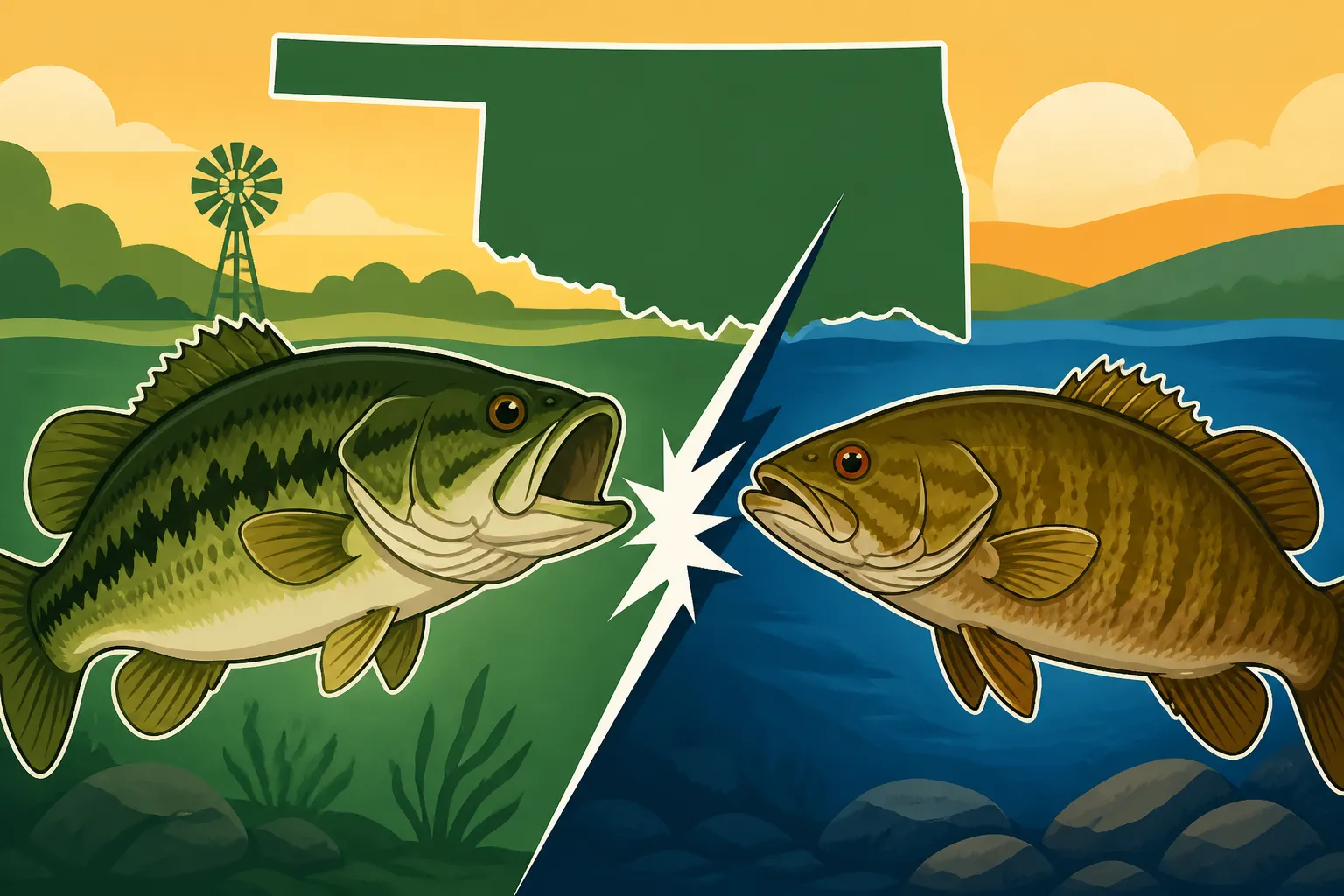
Largemouth bass generally have a chunkier, more robust body. They tend to be a deeper green, sometimes almost black-green, on their back, fading to a lighter green or yellowish-white on their belly. The most prominent feature of a largemouth's coloration is often a dark, horizontal stripe or series of blotches running down the side of its body. This stripe can be very distinct in clear water or quite faint in murkier environments. This coloration provides excellent camouflage in the weedy, brushy cover they prefer. Many anglers have spent hours peering into murky water, trying to spot that tell-tale lateral line against a submerged log.
Smallmouth bass, on the other hand, tend to be more streamlined and torpedo-shaped. Their coloration is usually a beautiful bronze, brown, or golden-brown on their back, fading to a creamy white on their belly. Instead of a distinct horizontal stripe, smallmouth often display vertical bars or blotches along their sides, which sometimes look like tiger stripes. These markings are incredibly effective at breaking up their outline against rocky bottoms and structures, which is their preferred habitat. When you pull a smallmouth from the clear, rocky waters of a creek, its iridescent bronze glow is truly striking. A detailed field guide, easily found on Amazon, can be an invaluable tool for discerning these subtle color patterns in different light conditions.
Dorsal Fin Separation
This is a more subtle detail, but it’s a definitive one once you know where to look. The dorsal fin is the fin on the fish's back.
The largemouth bass has a dorsal fin that appears almost completely divided into two distinct sections. There's a spiny, rigid front section, and a softer, rayed back section. There's a deep, noticeable notch or separation between these two parts, making it look like two separate fins joined at the very base. You can usually slip your finger into that notch without much trouble.
For a smallmouth bass, while it also has a spiny and a soft-rayed section to its dorsal fin, the two parts are much more connected. The notch between them is shallower and less pronounced, making it appear as one continuous fin. If you try to run your finger along the top of the dorsal fin, you'll feel the dip, but it won't be as deep or as separating as on a largemouth. This particular anatomical detail is a consistent identifier that doesn't change with age, diet, or habitat. How to Identify a Largemouth Bass and Smallmouth Bass vs Spotted Bass: Key Differences offer more nuanced identification tips if you're trying to differentiate other bass species.
Habitat and Behavior Differences
It's not just their looks; where you find them and how they behave can also offer strong clues about which type of bass you're dealing with. Understanding these preferences can help you target them more effectively and even predict what you might catch in a particular spot.
Preferred Water Conditions
Knowing the typical haunts of each bass species is like knowing the difference between a city dweller and a country bumpkin – they just prefer different surroundings.
Largemouth bass are typically found in warmer, often murkier, and more vegetated waters. Think of shallow coves choked with lily pads, submerged timber, weed lines, and brush piles in lakes and ponds. They are ambush predators that love to hide in cover, waiting for unsuspecting prey to swim by. They thrive in Oklahoma's sprawling reservoirs like Lake Eufaula and Grand Lake, where extensive shallow flats and flooded timber provide perfect largemouth habitat. If you're fishing in stagnant backwaters or muddy creeks, chances are high you're dealing with largemouth.
Smallmouth bass, conversely, are the connoisseurs of clear, cool, rocky water. They prefer rivers with strong currents, deep rock piles, ledges, and gravel bottoms in large lakes. They are more open-water oriented than largemouth, often chasing down prey in clear depths rather than waiting in ambush. While not as widespread in Oklahoma as largemouth, you'll find thriving populations in specific bodies of water and river systems known for their cooler, rockier conditions. For instance, areas around Lake Tenkiller or some of the clear rivers in eastern Oklahoma might hold good smallmouth populations. They're built for life in more dynamic environments, constantly moving and searching.
Fighting Style
The way a bass fights on the end of your line can also give you a hint about its identity. Both are incredible fighters, but they express their fighting spirit differently.
A largemouth bass is renowned for its explosive, acrobatic fight. When hooked, they often make powerful runs, but their signature move is leaping clear out of the water, shaking their head violently, trying to throw the hook. This aerial display is thrilling and is why many anglers adore them. They might dive into heavy cover to try and break your line, but that initial jump is a classic largemouth characteristic. It’s a spectacular show, especially when you've got a big one on.
Smallmouth bass, while they can jump, are more known for their bulldog-like, powerful pulls. When hooked, they tend to stay deep, making long, sustained runs and powerful dives. They'll pull like crazy, often described as fighting "pound for pound" harder than a largemouth. Imagine a determined, muscled wrestler trying to stay grounded and outmaneuver you. Their fight is less about flash and more about raw power and endurance. If your rod is bent over and the fish is relentlessly pulling line without breaking the surface, you might just have a bronzeback on your hands. Which Oklahoma Fish Put Up the Hardest Fight might give you more insights into the smallmouth's tenacity.
Oklahoma-Specific Considerations for Bass Identification
While the general characteristics apply everywhere, there are some unique aspects to consider when fishing specifically in Oklahoma. Our state offers a fantastic mix of habitats, meaning you might encounter both species, sometimes even in the same water body, making identification even more vital.
Common Lakes and Rivers for Each
Oklahoma's diverse aquatic environments mean that certain lakes and river systems are more likely to hold one species over the other. Knowing these general tendencies can help you narrow down your identification.
Largemouth bass are the undisputed kings of most Oklahoma lakes. From the sprawling depths of Lake Eufaula: Oklahoma's Gentle Giant for Bass and Crappie to the popular waters of Grand Lake O' the Cherokees Bass Fishing Guide and Lake Texoma, largemouth dominate the bass fishing scene. You'll find them in virtually every pond, creek, and reservoir across the state, especially those with abundant submerged timber, aquatic vegetation, and gradual sloping banks. If you're fishing a typical Oklahoma lake, your chances of catching a largemouth are significantly higher.
Smallmouth bass, while less prevalent statewide, have strongholds in certain regions. You're most likely to encounter them in the clearer, rockier reservoirs, particularly in eastern Oklahoma, and in some of the state's cooler river systems. Lakes like Tenkiller Ferry, Broken Bow, and Arbuckle, with their rocky shorelines and deeper, clearer waters, are known for their smallmouth populations. Some of the cooler, spring-fed rivers also provide excellent smallmouth habitat. When fishing these specific areas, it becomes even more critical to distinguish between the two for accurate regulation compliance. Looking for a good reference? An Amazon search for "Oklahoma fishing maps" can often highlight specific bodies of water known for smallmouth.
Why Accurate Identification Matters
Beyond personal satisfaction, correctly identifying your bass catch is essential for legal and ethical fishing in Oklahoma. The rules and regulations often differ significantly between species, and ignorance is no excuse when a game warden checks your cooler.
Oklahoma has specific bag and length limits for different bass species, and these can vary not only by species but also by water body. For instance, while a general statewide limit might apply to largemouth, a particular lake might have a more restrictive slot limit or minimum length limit specifically for smallmouth bass to protect their populations. You definitely don't want to accidentally keep a smallmouth that's undersized for the specific body of water you're fishing, or exceed a combined limit if one applies. The Oklahoma Department of Wildlife Conservation (ODWC) fishing regulations guide is your best friend here, always check it before you hit the water. Oklahoma's Bass Fishing Rules and Limits and Statewide Bass Bag Limits in Oklahoma cover many of these vital details.
Furthermore, some bodies of water might have specific restrictions on the number of smallmouth bass you can keep, especially concerning trophy-sized fish. Misidentifying a smallmouth as a largemouth could lead to unintentional violations, resulting in fines or even loss of fishing privileges. Taking the time to learn these distinctions ensures you're a responsible and law-abiding angler, contributing to the conservation of Oklahoma's precious fisheries.
Here's a quick comparison table to help you keep those key differences straight:
| Feature | Largemouth Bass | Smallmouth Bass |
|---|---|---|
| Jawline | Extends well past the back of the eye | Typically does not extend past the back of the eye |
| Body Shape | Generally chunkier, more robust | More streamlined, torpedo-shaped |
| Coloration | Deep green to black-green, prominent horizontal dark stripe/blotches | Bronze, brown, or golden-brown, vertical bars/blotches |
| Dorsal Fin | Deep, noticeable separation/notch between spiny and soft sections | Shallower, less pronounced notch, appears more continuous |
| Preferred Habitat | Warm, often murky, weedy, brushy, submerged timber | Clear, cool, rocky, current-rich rivers, deep rock piles |
| Fighting Style | Explosive runs, frequent acrobatic jumps | Powerful, deep pulls, bulldog-like fight, fewer jumps |
Knowing the difference between a largemouth and a smallmouth bass isn't just a fun piece of trivia; it's a fundamental skill for any Oklahoma angler. It empowers you to fish smarter, adhere to regulations, and appreciate the unique qualities of each amazing species. So, the next time you feel that exciting tug on your line, take a moment to observe your catch closely. You'll be able to confidently identify your bass and feel a little more connected to the incredible aquatic world beneath the surface of Oklahoma's waters.
Disclaimer
This article is for general informational purposes only and does not constitute professional advice. Laws, prices and regulations vary by location and change over time. Consult a qualified professional for guidance on your specific situation.