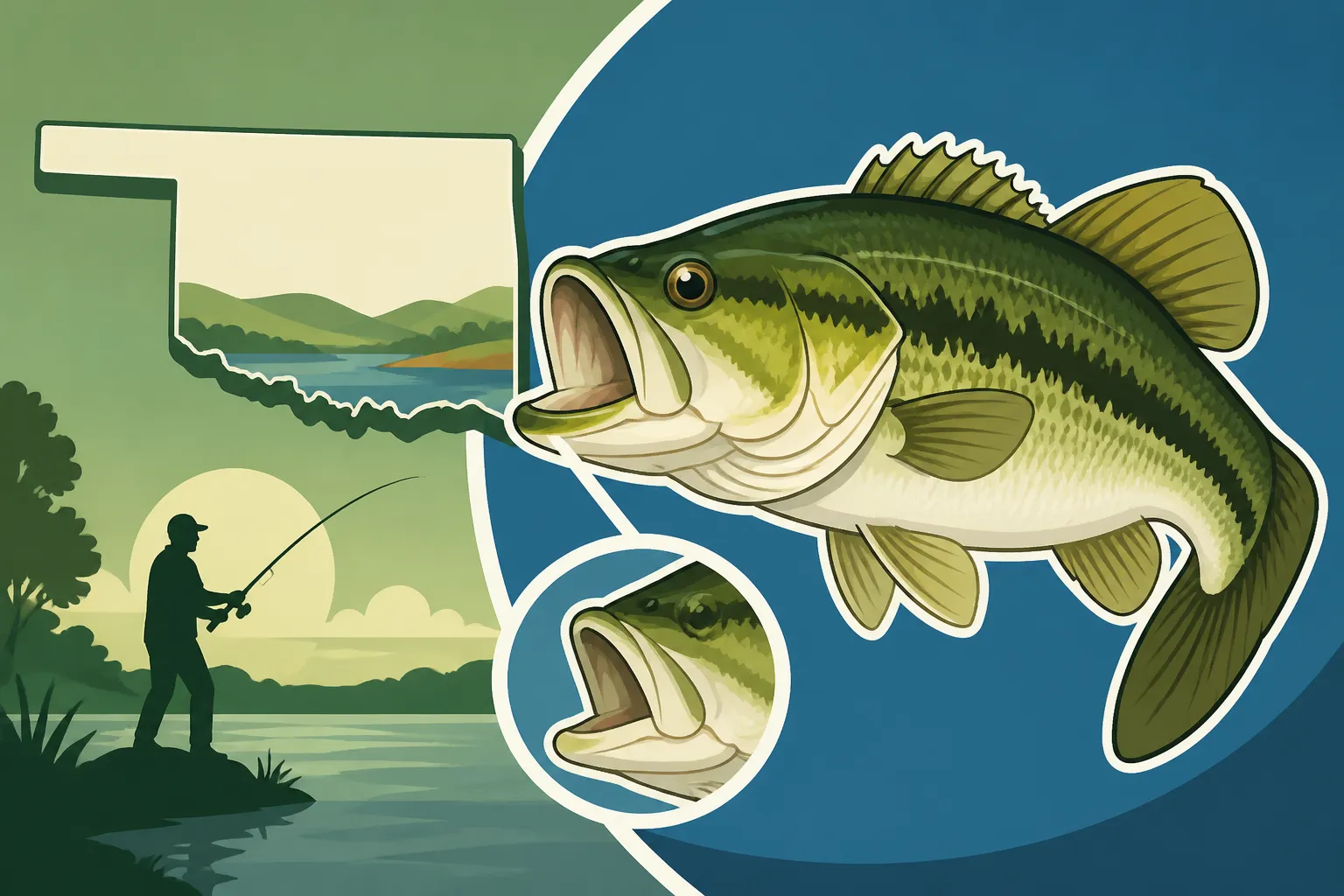
How to Identify a Largemouth Bass
Have you ever reeled in a beautiful bass from an Oklahoma lake, your heart pounding with excitement, only to pause and wonder, "Is this a largemouth, a smallmouth, or a spotted bass?" It's a surprisingly common moment of confusion for many anglers, whether you're a seasoned veteran or just starting out. Distinguishing between these similar-looking species is crucial not only for bragging rights but also for adhering to specific bag and length limits in our great state. This guide is here to cut through the guesswork, providing clear, actionable steps to confidently identify a largemouth bass the next time you land one.
The Classic Largemouth Profile: What to Look For First
When you pull a bass out of the water, your eyes probably dart across its entire body. But to truly identify a largemouth, you need to focus on a few key features that stand out. These aren't just subtle differences; they're the bread and butter of largemouth identification and often the first things a game warden will look for, too.
The Defining Jawline
The most reliable, hands-down, go-to characteristic for identifying a largemouth bass is its jaw. Seriously, this is where you start. Gently hold the fish and look at its mouth. For a largemouth, the jaw extends noticeably past the rear margin of its eye. Imagine drawing a vertical line down from the back of the eye; the largemouth's jawbone, specifically the maxilla, will extend beyond that line. This is a very distinct feature that separates it from its cousins.
I remember once fishing a small pond in central Oklahoma, pulling out what I thought was a huge spotted bass, only to realize the jaw went way back. That simple observation immediately told me I had a largemouth. It’s such a fundamental trick that it feels like a secret handshake among experienced anglers. So, before you even think about color patterns, check that jaw. It’s your primary diagnostic tool.
The Prominent Lateral Line
Next up, take a good look at the side of the fish's body. Largemouth bass typically feature a very distinct, dark, horizontal band running down their side, often referred to as a lateral line. While all bass have a lateral line (it's a sensory organ, after all), on a largemouth, this line is usually quite bold and sometimes even looks a bit jagged or broken, forming a series of dark blotches rather than a perfectly straight stripe.
Sometimes, depending on the water clarity, depth, or even the fish's mood, this line might appear more faded. But even then, you can usually discern its pattern. It's not uncommon to see this line more pronounced on fish from clearer waters, almost like a badge of honor. This lateral line, when combined with the jaw feature, paints a pretty clear picture. It's a tell-tale sign that differentiates it from the rows of spots you might see on a spotted bass or the fainter, more uniform line of a smallmouth.
The Deeply Notched Dorsal Fin
Now, turn your attention to the top of the fish. Largemouth bass have two dorsal fins – the spiny dorsal fin towards the head and the soft-rayed dorsal fin towards the tail. What you're looking for here is the connection (or lack thereof) between these two fins. On a largemouth, these two dorsal fins are almost completely separated by a very deep notch. It looks like two distinct fins, barely connected by a membrane. You can often push your finger down into that notch without much resistance.
This deep separation is another critical identifier. On other bass species, like the smallmouth, these fins are connected by a much shallower, more gradual dip, making them appear almost as one continuous fin. This might seem like a small detail, but it's incredibly consistent across largemouth populations. It's a subtle clue that, once you learn to spot it, makes identification so much easier. So, run your finger across that dorsal fin and feel for that pronounced separation.
Key Distinguishing Features of Largemouth Bass
While the jaw, lateral line, and dorsal fin are your primary identifiers, there are several other characteristics that, when taken together, will solidify your identification of an Oklahoma largemouth bass. These details fill in the rest of the picture and help confirm what those first three clues already told you.
Body Shape and Size
Largemouth bass, true to their name, tend to have a more elongated, somewhat compressed body shape. They're often stockier and heavier-bodied than a smallmouth, especially as they grow larger. Think of them as the "big bruisers" of the bass family. They typically grow to larger sizes in Oklahoma than their spotted or smallmouth counterparts. While size isn't a definitive identifier (you can catch small largemouth, of course!), a substantial bass in Oklahoma is often a largemouth.
It's pretty rare to pull a 10-pound smallmouth out of an Oklahoma lake, but a 10-pound largemouth, while a trophy, isn't unheard of. This larger growth potential contributes to their reputation as one of the most sought-after game fish. When you feel that characteristic heavy, solid thump on your line, and you pull in a good-sized fish, the odds are definitely leaning towards a largemouth. This is especially true in our larger reservoirs like Lake Eufaula: Oklahoma's Gentle Giant for Bass and Crappie or Grand Lake O' the Cherokees Bass Fishing Guide.
Coloration and Pattern Variation
Largemouth bass in Oklahoma display a wide range of colors, which can sometimes make identification tricky if you rely solely on this. Generally, their backs are dark green, fading to a lighter green or sometimes olive on their sides, and a white or cream-colored belly. The distinct lateral line we discussed earlier is often composed of dark, blotchy scales that sometimes merge into a solid band.
However, a largemouth's coloration is heavily influenced by its environment. A bass caught from clear, rocky water might be darker and more vibrant, while one from muddy, stained water could appear much paler, almost yellowish-green. Even the markings can vary; some largemouth have very clear, defined blotches, while others might have a more mottled or uniform appearance. Don't let these variations throw you off. Always go back to the jaw and dorsal fin if the color seems confusing. Many anglers find a good pair of polarized sunglasses, easily found on Amazon, can help you see subtle patterns even before you land the fish.
Tongue Patch and Scales
Two other subtle features can provide additional confirmation, though they might require a closer look. Firstly, check the largemouth's tongue. Unlike a spotted bass, a largemouth typically does not have a patch of teeth on its tongue. Run your finger gently across the center of the tongue. If it feels smooth, that's another point for largemouth. If it's rough, like sandpaper, you're likely looking at a spotted bass.
Secondly, examine the scales on the base of the second dorsal fin and the anal fin. On a largemouth, these fins usually have scales that extend up onto the membrane between the fin rays. This is a pretty technical detail, and honestly, most anglers don't need to get this granular. But if you're ever in doubt and want to be absolutely sure, these finer points can help. For more detailed insights into identifying specific species, you might find articles like Largemouth vs Smallmouth vs Spotted Bass: How to Tell Oklahoma's Bass Apart quite helpful.
Habitat and Behavior Clues for Largemouth Identification
Beyond the physical characteristics, understanding where largemouth bass like to hang out and how they behave can give you strong contextual clues about what you've caught. Environment plays a huge role in the lives of these fish, and knowing their preferences can help you predict what species you're likely to encounter in a given spot.
Preferred Habitats in Oklahoma
Largemouth bass are masters of ambush, and their preferred habitats reflect this. In Oklahoma, you'll most often find largemouth bass around cover and structure in warmer, murkier, or vegetated waters. Think about thick stands of lily pads, submerged timber, brush piles, rocky shorelines with plenty of nooks and crannies, and even boat docks. They love shallow, protected coves and areas with plenty of aquatic vegetation where they can hide and dart out to snatch unsuspecting prey.
If you're casting your line into a dense patch of hydrilla or flinging a jig into a brush pile in one of Oklahoma's countless ponds or larger reservoirs, the fish you're targeting is most likely a largemouth. They are far more prevalent in these types of environments than smallmouth or spotted bass, which often prefer clearer, deeper, or more rocky riverine habitats. Knowing this can guide your bait selection too, as certain lures are perfect for these types of cover. For example, Best Lures for Largemouth Bass at Lake Eufaula often highlights presentations meant for dense cover.
Feeding Habits and Behavior
Largemouth bass are opportunistic and aggressive predators. They have a varied diet that includes baitfish, crawfish, frogs, snakes, and even small birds or rodents. Their large mouth is perfectly designed for gulping down sizable prey. When you observe a largemouth striking, it's often an explosive, surface-busting event, especially if they're chasing a topwater lure. They hit hard and fast, often burying themselves back into cover once hooked.
This aggressive nature is part of their appeal. They're often found patrolling the edges of weed lines or submerged structures, waiting for prey to swim by. They're also known for their powerful fights once hooked, often jumping and thrashing to throw the hook. If you're experiencing a strong, acrobatic fight from a fish that was hiding deep in cover, it's a good bet you've got yourself a largemouth. This understanding of their behavior can give you a leg up in determining what species is on the end of your line.
| Feature | Largemouth Bass |
|---|---|
| Jaw Extension | Extends beyond the rear margin of the eye |
| Dorsal Fin | Deep, almost complete separation between spiny and soft fins |
| Lateral Line | Distinct, often dark, irregular band of blotches |
| Body Shape | Elongated, stocky; generally larger overall |
| Tongue Patch | Absence of a tooth patch on the tongue |
| Preferred Habitat | Warm, vegetated, shallower, often murky water; abundant cover |
Why Accurate Identification Matters
Beyond the simple satisfaction of knowing what you've caught, being able to accurately identify a largemouth bass is incredibly important for several practical reasons. These reasons directly impact conservation, legal compliance, and your overall success as an angler in Oklahoma.
Adhering to Oklahoma Regulations
Oklahoma has very specific fishing regulations, and these often differ between species. For instance, there are statewide bass bag limits and length restrictions, but certain lakes might have even stricter rules. If you misidentify a largemouth as a spotted bass (which often have different or no length limits), you could inadvertently be keeping an illegal fish. This could lead to fines and a less-than-pleasant encounter with a game warden. Understanding Oklahoma's Bass Fishing Rules and Limits is crucial for any angler.
For example, our statewide rule for largemouth and smallmouth bass usually includes a combined daily limit of six fish, with only one fish over 16 inches being allowed. This "one over 16 inches" rule is particularly important for largemouths. If you catch two largemouths, both over 16 inches, and keep them both, you're breaking the rules. Being able to correctly identify your catch on the fly ensures you stay compliant and contribute to healthy fish populations. The One 16-Inch Bass Rule Anglers Miss is a common area of confusion that proper identification can clear up immediately.
Conservation and Population Management
Correct identification is also vital for the ongoing health and management of Oklahoma's fish populations. The Oklahoma Department of Wildlife Conservation (ODWC) uses angler reports, creel surveys, and general population data to make informed decisions about stocking, habitat improvement, and regulation changes. If anglers are consistently misidentifying species, it skews this data, making it harder for wildlife professionals to effectively manage the resource.
By knowing your largemouth from your smallmouth or spotted, you're becoming a more responsible steward of our natural resources. Every fish you correctly identify and handle, especially if you plan to release it, contributes to the overall conservation effort. It's about ensuring future generations of Oklahomans can enjoy the same incredible fishing opportunities we have today. This commitment to responsible angling is something I deeply value and encourage in all my fellow fishing enthusiasts.
Enhancing Your Fishing Strategy
Finally, accurate identification can actually make you a better angler. Different bass species have different preferences for lures, depths, and structures. If you know you're in a largemouth-dominant lake, you can tailor your approach. You might throw more spinnerbaits into dense cover or pitch a Texas rig into lily pads, rather than trying to target smallmouth with deep-diving crankbaits over open rock formations. This is where Best Bass Fishing Lakes Across Oklahoma or articles specific to Best Bait for Largemouth Bass in Oklahoma Farm Ponds can be invaluable.
Learning to identify them quickly will allow you to adapt your techniques on the fly, increasing your chances of success. It allows you to refine your tackle box, focusing on gear that truly works for the species you're most likely to encounter. This insight helps you choose the right Best Rod for Largemouth Bass Fishing or select the perfect presentation for the conditions. It's not just about knowing what you caught, but using that knowledge to catch more, and responsibly.
Disclaimer
This article is for general informational purposes only and does not constitute professional advice. Laws, prices and regulations vary by location and change over time. Consult a qualified professional for guidance on your specific situation.