How Fast Do Blue Catfish Grow in Oklahoma Waters
It's a question every passionate angler eventually asks, especially when you're dreaming of reeling in that monster blue catfish: just how fast do these incredible fish grow in Oklahoma's waters? It's not a simple answer, as many factors come into play, from the lake itself to the fish's diet and even the temperature of the water. This guide will dive deep into the fascinating world of blue catfish growth, giving you a clearer picture of what influences their size and how you might encounter these impressive giants across the Sooner State.
Understanding Blue Catfish Growth Dynamics in Oklahoma
Blue catfish are truly magnificent creatures, renowned for their fighting spirit and their potential to reach truly astounding sizes. But their growth isn't uniform; it's a dynamic process shaped by a combination of their inherent biology and the environment they call home. When you're out on the water, whether it's a calm morning on Lake Eufaula or a breezy afternoon on Lake Texoma, understanding these dynamics can give you a new appreciation for the fish you're targeting.
The Role of Genetics and Species Characteristics
First and foremost, blue catfish (scientific name: Ictalurus furcatus) are genetically predisposed to grow larger and faster than their cousins, the channel catfish and flathead catfish. While all three are fantastic sport fish found in Oklahoma, the blue cat simply has a higher growth potential baked into its DNA. They are built for size, with a more streamlined body shape compared to the stockier flathead, and they primarily feed on other fish, which provides the rich protein needed for rapid development. This inherent capability means that under ideal conditions, a blue catfish will outgrow a channel or flathead catfish of the same age. Channel Catfish vs Blue Catfish vs Flathead Catfish in Oklahoma delves deeper into these distinctions.
Think about it like this: you can take two different breeds of dog and feed them the same high-quality food, but a Great Dane will naturally grow much larger than a Jack Russell terrier. The same principle applies here. Blue catfish are the "Great Danes" of the Oklahoma catfish world. This genetic blueprint is why anglers specifically target them when pursuing truly gargantuan catches. Their metabolism is wired to convert abundant food into body mass efficiently, allowing them to pack on pounds much quicker than many other freshwater species.
Environmental Factors: Food, Habitat, and Water Quality
Even with stellar genetics, a blue catfish won't reach its full potential without the right environmental support. These factors are critical and can make a huge difference between a slow-growing, average-sized fish and a record-breaking trophy. When we talk about "Oklahoma waters," we're talking about a vast array of lakes, rivers, and impoundments, each with its unique ecosystem.
Firstly, food availability is paramount. Blue catfish are opportunistic predators, and their diet primarily consists of smaller fish like gizzard shad, threadfin shad, and even smaller game fish. If a lake has an exploding population of these baitfish, the blue cats living there will have a buffet, leading to much faster growth. Conversely, in waters where forage is scarce, even a genetically superior blue catfish will struggle to grow quickly because it simply can't find enough to eat.
Secondly, habitat suitability plays a massive role. Blue catfish prefer large, deep river channels and expansive reservoirs with plenty of submerged structure, deep holes, and current. These areas provide both ambush points for hunting and deeper, cooler waters to retreat to during hot summer months. A cramped, shallow pond simply won't offer the space or resources for a blue cat to truly stretch its fins and grow. The complex bottom contours and expansive open water of lakes like Texoma or Grand Lake provide the perfect playground for these fish to thrive. Best Catfish Fishing Spots in Oklahoma highlights some of these prime locations.
Finally, water quality and temperature are non-negotiable. Clean, well-oxygenated water is essential for the health and vitality of all fish. Pollution or low oxygen levels can stress fish, making them more susceptible to disease and inhibiting their growth. Water temperature also dictates their metabolic rate. Blue catfish are most active and feed most heavily in warmer waters (generally 65-85 degrees Fahrenheit), which translates to faster growth. During colder months, their metabolism slows down, they become less active, and their growth rate decreases significantly. Think of it like a car engine: it runs best and most efficiently at its optimal operating temperature.
Key Influencers on Blue Catfish Growth Rates
It's truly fascinating how specific elements within a blue catfish's environment can accelerate or decelerate its growth. As anglers, we often observe these differences without fully understanding the underlying science. Knowing these factors can help you target waters more likely to produce larger fish or simply appreciate the journey of the fish you catch.
Forage Availability and Diet Quality
Imagine a teenager with an endless supply of healthy, protein-rich food versus one who constantly struggles to find enough to eat. The difference in growth would be stark, right? The same applies to blue catfish. Their growth is directly proportional to the abundance and quality of their food source.
In Oklahoma, gizzard shad are the primary protein source for many of our blue catfish. These oily, schooling baitfish provide a high-calorie diet that fuels rapid weight gain. Lakes with thriving shad populations, like Lake Texoma, Lake Eufaula, or Fort Gibson Lake, consistently produce larger blue catfish. When blue cats can easily find and consume large quantities of shad, they spend less energy hunting and more energy converting food into muscle and fat. This means they can grow both longer and heavier in a shorter amount of time. If you're interested in maximizing your chances for a big fish, understanding the baitfish populations in a particular lake is key. You can often find fishing reports or local bait shops talking about the shad presence, which gives you a strong hint about the potential for fast-growing blue cats. Learning about Best Bait for Catfish in Oklahoma Lakes and Rivers will show you what these fish are feeding on.
Conversely, in waters where shad or other baitfish are sparse, blue catfish might rely more heavily on insects, crawfish, or smaller bottom-dwelling organisms. While these foods provide some sustenance, they don't offer the same high-protein, high-calorie punch needed for explosive growth. Consequently, blue catfish in such environments will grow much slower and may never reach the massive sizes seen in richer fisheries. It's a fundamental truth of the food chain: a robust base leads to robust predators.
Water Temperature and Metabolic Rate
Water temperature is the silent conductor of an aquatic ecosystem, directly influencing the metabolic rate of cold-blooded animals like blue catfish. Just like we tend to eat more and burn more calories when we're active in warmer weather, fish operate on a similar principle.
When Oklahoma's lake temperatures are in their optimal range—typically from the mid-60s to the mid-80s Fahrenheit—blue catfish are at their most active. Their metabolism is running high, which means they're digesting food quickly and constantly seeking more sustenance. This period, generally spanning from late spring through early fall, is when blue catfish experience their most significant growth spurts. They'll actively chase down schools of shad, consume massive amounts of forage, and convert that energy efficiently into body mass. Anglers often find the best bite during these warmer periods because the fish are actively feeding. You can find gear like specialized water thermometers, available from retailers like Amazon, to help you understand these critical temperature zones.
However, once water temperatures drop into the colder ranges during late fall and winter, the blue cat's metabolism slows dramatically. They become more lethargic, consume less food, and their growth virtually grinds to a halt. While they don't hibernate in the traditional sense, they enter a state of reduced activity to conserve energy. This is why a blue catfish that's several years old might not be as large as a younger fish from a different lake that had consistently warmer water and more abundant food. It’s a delicate balance that Mother Nature orchestrates, defining the pace of growth throughout the year.
Population Density and Competition
You might think that more fish mean bigger fish, but that's often not the case, especially when it comes to growth rates. Population density, or how many fish are packed into a given area, can significantly impact individual growth.
In a body of water with a high blue catfish population density, competition for food and space becomes intense. Imagine a limited buffet table with too many hungry guests; not everyone is going to get enough to eat. In such a scenario, even with a decent amount of forage, individual blue catfish may grow slower and remain smaller because they're constantly competing with their brethren. This can lead to a phenomenon known as "stunting," where a large number of fish are present, but very few, if any, reach trophy sizes. These waters might be great for catching a lot of fish, but not necessarily big ones.
Conversely, in waters with a lower population density, each blue catfish has access to more resources. With less competition, individual fish can consume more food, find better resting and hunting grounds, and thus grow much faster and larger. This is often why newly stocked lakes, or those with very successful fish management, can produce some impressive "fast-growers" in their initial years. Resource managers sometimes even advocate for selective harvest of smaller fish in certain species to reduce competition and allow the remaining fish to grow larger. While it's not something an individual angler can typically control, understanding this dynamic helps explain why some lakes consistently produce bigger fish than others, even if they seem similar on the surface.
Typical Growth Trajectories and Size Expectations
So, with all these variables, what can you realistically expect from a blue catfish growing up in Oklahoma waters? It's important to remember that every fish is an individual, and every lake is a unique ecosystem, but there are general patterns we can observe.
Average Growth Rates in Oklahoma's Premier Lakes
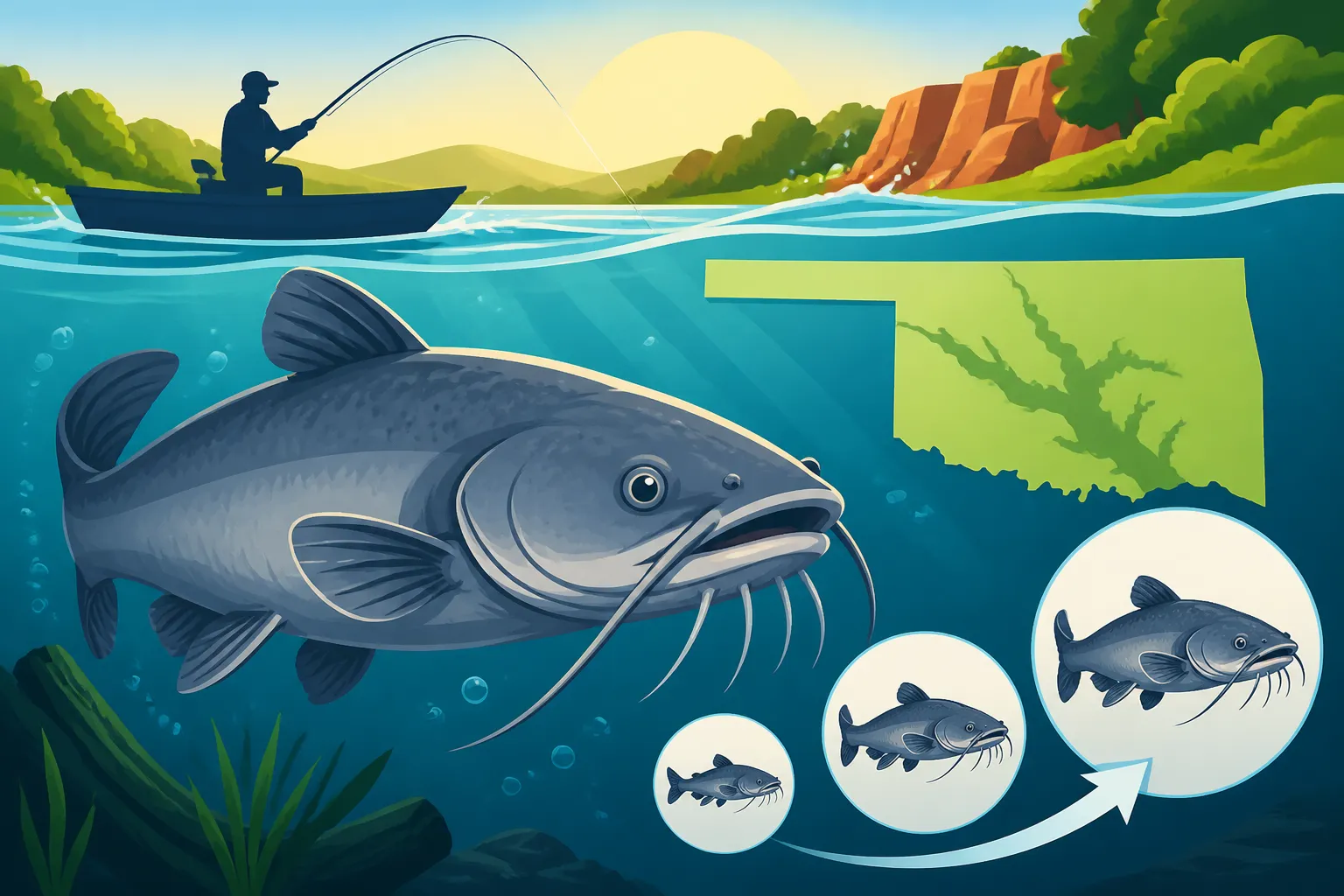
In Oklahoma's top blue catfish fisheries, like Lake Texoma, Lake Eufaula, or Grand Lake O' the Cherokees, blue catfish exhibit impressive growth. It's not uncommon for them to reach a few pounds within their first couple of years, steadily gaining size from there. For instance, a blue catfish can grow from a tiny fingerling to a fish of 5 to 10 pounds in just three to five years under optimal conditions. After that initial rapid growth phase, the rate might slow down slightly, but they continue to pack on pounds for many years.
These premier lakes provide everything a blue cat needs: vast expanses of water, deep channels, and a seemingly endless supply of gizzard shad. Anglers frequently report catching blue catfish ranging from 15 to 40 pounds, which are excellent sizes for sport fishing. These are often fish that are anywhere from 7 to 15 years old, demonstrating a consistent growth curve fueled by rich diets and stable environments. The excitement of catching a solid 20-pounder is a testament to the healthy ecosystems in these Oklahoma reservoirs. You can learn more about what to expect by checking out How Big Do Blue Catfish Get in Oklahoma.
It’s truly a remarkable journey for these fish. They start as tiny fry, dodging predators, and if they survive the initial gauntlet and find themselves in a food-rich environment, they can transform into substantial game fish relatively quickly. This sustained growth is what makes blue catfish such a popular target species across the state.
Reaching Trophy Potential
While catching a 20-pound blue catfish is fantastic, many anglers dream of the true giants—the 50, 70, or even 100-plus pound behemoths that make headlines. Reaching this "trophy potential" requires a perfect storm of favorable conditions over a very long period. These fish are not only lucky survivors but also products of exceptional environments.
To become a truly massive blue catfish, a fish needs:
- Exceptional Genetics: Some fish simply have the genetic blueprint to grow larger than average.
- Abundant Food Throughout Its Life: A consistent, high-quality diet for many years is non-negotiable. If forage is scarce for even a few seasons, it can set back growth significantly.
- Optimal Habitat: Deep, stable waters with plenty of cover and cool temperatures are crucial, especially for older, larger fish.
- Longevity: Trophy blue catfish are old fish. They need to evade predators (including anglers and other large fish) and disease for decades. It can take a blue catfish 15-20 years or more to reach truly monumental sizes. Trophy Catfish Spots in Oklahoma are often those places where these long-lived giants have found refuge and sustenance.
When you hook into one of these true titans, it’s not just about the size; it’s about the history of that fish. It’s a creature that has navigated countless challenges and exploited every opportunity for growth. Oklahoma has a proud history of producing world-class blue catfish, a testament to the health and richness of its major waterways. These fish represent the pinnacle of blue catfish growth in the state, making them a bucket-list catch for many dedicated anglers.
Angler's Role and Conservation for Healthy Growth
As anglers, we're not just passive participants in this ecosystem; we have a direct impact on the health and growth potential of blue catfish populations. Understanding and respecting our role is crucial for ensuring that future generations can continue to enjoy the thrill of catching these magnificent fish.
Catch-and-Release Practices for Future Growth
One of the most impactful things an angler can do to promote healthy blue catfish growth, especially for trophy potential, is to practice responsible catch-and-release. While keeping a few fish for a delicious meal is certainly part of the fishing experience – and Is Blue Catfish Good to Eat? will tell you they are! – releasing the larger, older fish can have significant benefits for the fishery.
Large blue catfish, particularly the females, are often the most prolific spawners, producing a huge number of eggs. By releasing these "broodstock" fish unharmed, we allow them to continue contributing to the population, ensuring a healthy supply of future generations. Furthermore, these older, larger fish have already proven their ability to survive and thrive, passing on those robust genetics. Many anglers choose to only keep smaller, "eating-sized" catfish (often under 10 pounds), and release anything larger. When releasing a big blue cat, it's vital to handle it carefully: support its body fully, minimize time out of water, and ensure it's revived before letting it go. A good quality measuring board and scale, easily found on platforms like Amazon, can help you quickly record its size before a gentle release.
Catch-and-release isn't just a feel-good gesture; it's a scientifically backed conservation practice that helps maintain a balanced population structure, allowing more fish to grow to larger sizes.
Understanding and Adhering to Regulations
Oklahoma has specific fishing regulations in place, including those for blue catfish, and these aren't arbitrary rules. They are carefully crafted by wildlife biologists to manage fish populations, protect breeding stock, and promote sustainable growth. Adhering to these rules is a vital part of responsible angling.
One of the most notable regulations for blue catfish in Oklahoma is the daily bag limit, and often, specific size restrictions. For instance, the general statewide limit for forked-tail catfish (which includes blue and channel catfish combined) is 15 fish per day, with only one blue catfish over 30 inches allowed. This "one over 30 inches" rule is particularly important. The 30-Inch Blue Catfish Exception Explained is designed to protect the very largest, oldest, and most productive spawners. By allowing anglers to keep only one trophy-sized fish, it significantly reduces the harvest pressure on these critical breeders, ensuring they can continue to reproduce and grow. You can find comprehensive details in Oklahoma's Catfish Fishing Rules and Limits.
Understanding these regulations, like Oklahoma Forked-Tail Catfish Bag Limit, before you head out is crucial. They are in place to safeguard the very growth dynamics we've been discussing, ensuring that our lakes and rivers remain vibrant and productive fisheries for years to come. Checking the current fishing guide, whether online or a physical copy, should be a standard part of your pre-fishing routine. By following these rules, we all contribute to a healthier fishery where blue catfish can continue to grow to impressive sizes, offering exciting challenges for every angler.
Factors Influencing Blue Catfish Growth
| Factor | Impact on Growth (General) | Example in Oklahoma Waters |
|---|---|---|
| Forage Abundance | High forage = Faster, larger growth; Low forage = Slower, stunted growth | Lakes rich in shad (e.g., Lake Texoma, Lake Eufaula) often produce bigger, heavier blue catfish than smaller, less fertile waters. |
| Water Temperature | Optimal temps (65-85°F) = Active feeding & growth; Cold/Hot extremes = Slower growth | Blue catfish feed aggressively in warmer summer and fall waters, but slow down significantly in winter, conserving energy. |
| Habitat Quality | Diverse, deep structure = More hiding/feeding opportunities; Poor habitat = Limited growth | Reservoirs with deep channels, submerged timber, and varying depths provide ideal conditions for blue catfish to thrive and grow large. |
| Population Density | Low density = Less competition, faster individual growth; High density = Stunted growth | An overcrowded pond might have many small catfish, while a large lake with fewer fish per acre can yield larger individuals due to less competition. |
| Water Quality | Clean, oxygenated water = Healthy fish; Poor quality = Stress, disease, stunted growth | Lakes with good water clarity and stable oxygen levels support robust fish populations and better overall growth, leading to healthier fish that grow faster. |
Disclaimer
This article is for general informational purposes only and does not constitute professional advice. Laws, prices and regulations vary by location and change over time. Consult a qualified professional for guidance on your specific situation.