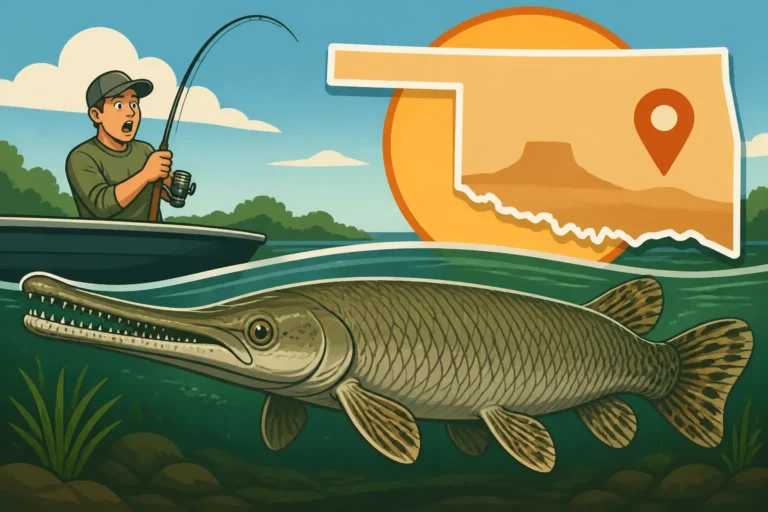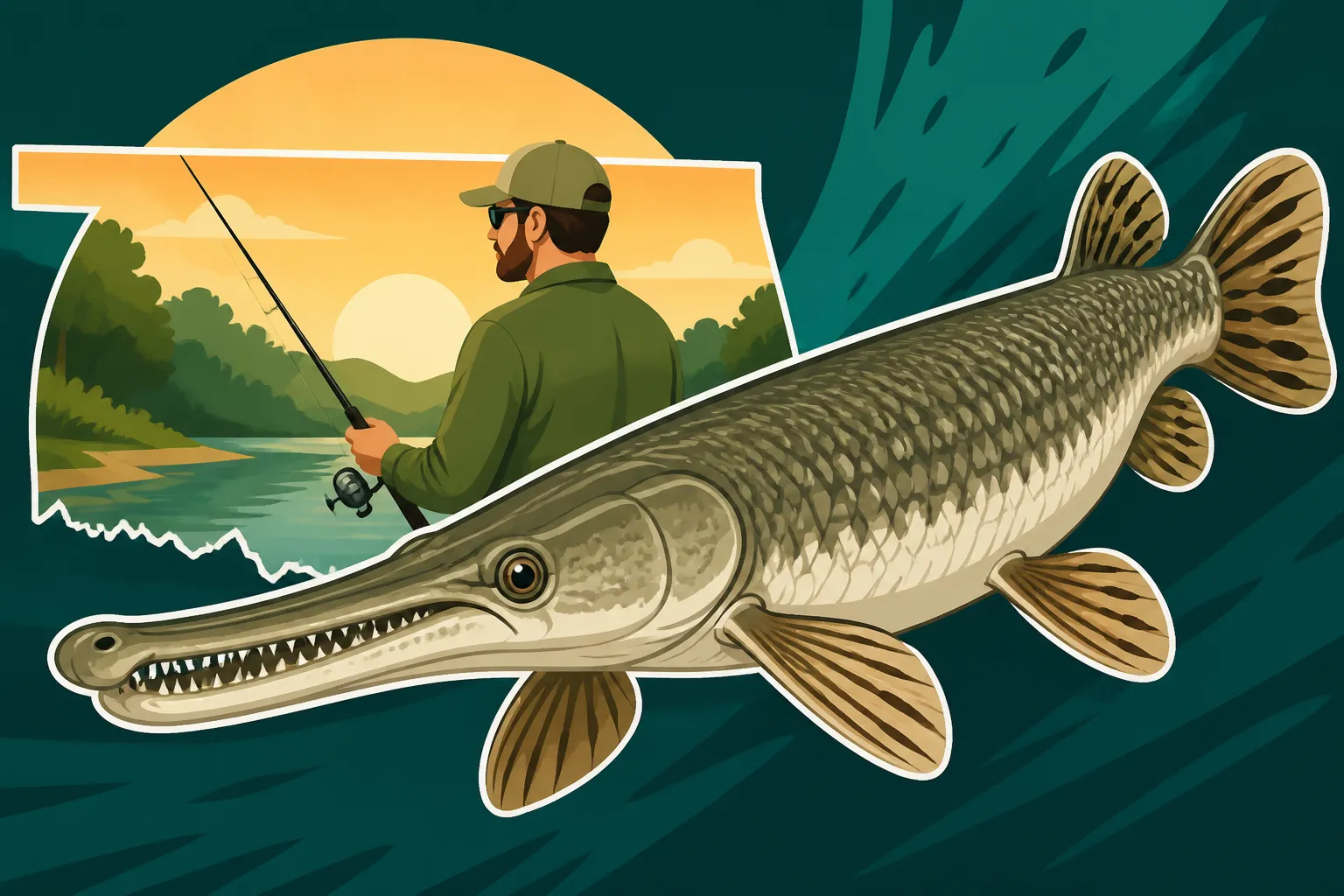
What Does an Alligator Gar Look Like
It's incredibly frustrating when you're out on the water, you hook into something big, and then you're left scratching your head, wondering exactly what kind of fish you've just wrestled. This is especially true with gar, a family of fish that can look quite similar at first glance, but have distinct characteristics that are important for every Oklahoma angler to know. This guide will help you understand precisely what an alligator gar looks like, breaking down its unique features so you can confidently identify this formidable freshwater giant.
The Alligator Gar: A Prehistoric Predator
The alligator gar is truly a relic from a bygone era, an ancient fish that has roamed the waters of North America for millions of years, largely unchanged. Seeing one of these magnificent creatures in person is an experience many anglers never forget, and it's easy to see why they command so much respect. Their sheer size, powerful build, and distinctive appearance set them apart from almost every other fish species. They are often considered apex predators in their ecosystems, playing a vital role in maintaining the balance of their watery homes.
A Brief Overview of the Species
Imagine a fish that combines the streamlined body of a torpedo with the fearsome snout of an alligator – that's pretty close to picturing an alligator gar. These fish aren't just big; they're massive, capable of reaching lengths over eight feet and weighing hundreds of pounds. Their bodies are covered in thick, diamond-shaped ganoid scales, which are incredibly tough and act like natural armor, making them incredibly difficult to penetrate. This formidable armor, combined with their powerful tails and rows of sharp teeth, makes them truly impressive creatures that demand respect. They are solitary hunters, often lying in wait for unsuspecting prey, and their presence in Oklahoma's waters is a testament to their adaptability and resilience.
Why Identification Matters for Oklahoma Anglers
Knowing exactly what kind of gar you've caught isn't just about bragging rights; it's crucial for responsible angling and adherence to state regulations. Different gar species can have different bag limits or even specific handling requirements, and misidentifying a fish could lead to unintentional violations. For instance, the sheer size and power of an alligator gar mean that handling it requires a different approach than, say, a smaller longnose gar. Furthermore, understanding the distinct features of the alligator gar helps us appreciate its unique place in Oklahoma's aquatic biodiversity. It’s also about safety; those powerful jaws and sharp teeth require careful handling from even the most seasoned angler.
Distinctive Features: How to Spot an Alligator Gar
When you're trying to figure out if that big fish on the end of your line is indeed an alligator gar, there are several key features that will immediately jump out at you. These characteristics are what truly set them apart from their gar cousins and give them their namesake. Learning these visual cues will make you a much more informed and capable angler, especially in areas where multiple gar species coexist.
The Snout: The Most Obvious Clue
Without a doubt, the most distinctive feature of the alligator gar, and the one that gives it its name, is its broad, flattened, and alligator-like snout. Unlike the long, narrow, and somewhat cylindrical snouts of other gar species you might encounter in Oklahoma, the alligator gar's snout is wide and blunt, resembling the head of its reptilian namesake. When you look at it from above, it's almost like a shovel, wide and flat across the top. This broad snout is equipped with two rows of formidable, fang-like teeth in its upper jaw, designed for grasping and holding onto large prey. If you see a gar with a wide, duckbill-like snout, especially one with visible double rows of teeth when its mouth is slightly open, you're almost certainly looking at an alligator gar. This is the first and most critical identifier.
Body Shape and Size: A Truly Massive Fish
Beyond the snout, the alligator gar's overall body shape and potential size are huge indicators. These fish are built like tanks. Their bodies are robust, cylindrical, and incredibly powerful, tapering slightly towards the tail. While other gar species can grow quite large, the alligator gar is in a league of its own. They are the largest of all gar species and one of the largest freshwater fish in North America. We're talking about fish that routinely exceed five feet in length, and individuals over seven or eight feet are not uncommon. Imagine trying to land a fish that's as long as a small car! Their sheer bulk and formidable presence in the water are hard to mistake once you've seen one. If the fish you're looking at seems unusually thick and heavy-bodied for a gar, chances are it's an alligator gar. How Big Do Alligator Gar Get in Oklahoma is a question many anglers ponder, and the answer is truly impressive.
Coloration and Markings: Camouflage of a Hunter
While not as immediately striking as their snout or size, the coloration and markings of an alligator gar also contribute to its identification. Typically, these fish display a beautiful, mottled pattern that helps them blend seamlessly into their surroundings, whether that's murky river bottom or submerged timber. Their backs are usually an olive-brown to grayish-green, fading to lighter, often silvery-green sides, and a clean, almost white belly. They can have irregular, dark spots or blotches along their body and fins, which are often larger and less uniform than the distinct spots found on species like the spotted gar. These markings aren't always sharply defined but rather appear as a natural camouflage. The overall impression is a powerful, earthy-toned predator, perfectly adapted to ambush prey in its habitat.
Comparing Alligator Gar to Other Oklahoma Gar Species
Oklahoma is home to several species of gar, and while they all share that basic elongated, prehistoric look, the devil is in the details when it comes to telling them apart. Confusion is common, especially among newer anglers, but once you know what to look for, distinguishing an alligator gar from its cousins becomes much easier. It's like telling different breeds of dogs apart; they're all dogs, but their specific features reveal their true identity.
Alligator Gar vs. Longnose Gar
The longnose gar is perhaps the most common gar species encountered in Oklahoma, and it's frequently mistaken for the alligator gar due to its size. However, the differences are quite stark once you know them. The most apparent distinction lies in the snout. While the alligator gar boasts that broad, flattened "alligator-like" snout, the longnose gar has, as its name suggests, a very long, slender, and cylindrical snout. Think of it like a needle or a pencil compared to a shovel. The longnose gar's snout length is typically more than twice the length of its head. Their bodies are also generally more slender and less bulky than an alligator gar of similar length. The overall impression is a more delicate, albeit still powerful, fish compared to the muscular, heavy-set alligator gar. Alligator Gar vs Longnose Gar: How to Tell Them Apart provides a deeper dive into these specific differences.
Alligator Gar vs. Spotted Gar
Spotted gar are beautiful fish, characterized by numerous distinct, dark spots covering their entire body, including their head, fins, and even their jaws. This spotting is usually much more pronounced and uniform than any markings you might see on an alligator gar. Beyond the spots, the spotted gar's snout is shorter and broader than the longnose gar's but still much narrower and more pointed than the blunt, wide snout of the alligator gar. It's kind of an in-between snout, but definitively not alligator-like. Their maximum size is also significantly smaller than that of an alligator gar, rarely exceeding three to four feet in length. If you see a gar covered in clear, defined spots and lacking that truly wide, flat snout, it's likely a spotted gar.
Alligator Gar vs. Shortnose Gar
The shortnose gar, as its name implies, has a relatively short and broad snout compared to the longnose gar, but it's still notably different from the alligator gar's. The shortnose gar's snout is shorter than the rest of its head, and while it's wider than a longnose's, it lacks the extreme width and bluntness of an alligator gar's snout. A good indicator for shortnose gar is that the distance from the tip of its snout to the eye is typically shorter than the rest of its head length. They also generally lack the distinct spots seen on spotted gar, often having a more uniform, olive-green to brownish coloration. Like the spotted gar, they are also much smaller than alligator gar, rarely reaching more than three feet in length.
Here's a quick comparison table to help solidify the differences:
| Feature | Alligator Gar | Longnose Gar | Spotted Gar | Shortnose Gar |
|---|---|---|---|---|
| Snout Shape | Broad, flattened, alligator-like, blunt | Very long, slender, cylindrical | Shorter, wider than longnose, still pointed | Short, somewhat broad, shorter than head |
| Upper Jaw Teeth | Double row of large, fang-like teeth | Single row of small, needle-like teeth | Single row of teeth | Single row of teeth |
| Body Size | Massive, robust, cylindrical (largest gar) | Slender, elongated (can be large but less bulky) | Moderately sized, somewhat slender | Smallest, relatively thick for its size |
| Color/Markings | Olive-brown/gray-green, irregular spots/blotches | Olive/brown back, silver sides, light spots | Numerous distinct dark spots on body and head | Uniform olive-green/brown, few or no spots |
| Max Length | 8+ feet | 5-6 feet | 3-4 feet | 2-3 feet |
Habitat and Behavior: Where You Might Encounter Them
Knowing what an alligator gar looks like is one thing, but knowing where to find them and understanding their behavior can greatly enhance your chances of an encounter. These are not fish you stumble upon in every small pond; they prefer specific environments that cater to their predatory lifestyle and massive size. Understanding their preferred haunts is key to targeting them or simply appreciating their presence.
Preferred Waters in Oklahoma
In Oklahoma, alligator gar are primarily found in the slower-moving, larger river systems and their associated oxbow lakes, as well as some of the state's sprawling reservoirs, particularly in the southern and southeastern regions. Think of the Red River and its tributaries, or large bodies of water where extensive shallow, weedy flats and submerged timber provide ample ambush cover. These areas offer the perfect combination of deep channels, slow currents, and abundant forage fish, which are essential for a fish that can grow to such immense proportions. They are creatures of warmer, often murkier waters, where they can blend in and wait patiently for prey. Where to Catch Alligator Gar in Oklahoma will give you more specific locations, but generally, if you're exploring the lower portions of major river systems or the backwaters of large lakes, you're in prime alligator gar territory.
Stealthy Hunters and Surface Dwellers
Alligator gar are classic ambush predators. They are masters of disguise, often lying perfectly still amidst submerged vegetation or timber, waiting for an unsuspecting fish, bird, or even small mammal to swim by. Their powerful tails allow for explosive bursts of speed to snatch prey. What's particularly fascinating about these fish is their ability to breathe both in and out of water. They have a unique swim bladder that acts like a primitive lung, allowing them to gulp air from the surface when oxygen levels in the water are low, a phenomenon known as "rolling" or "gasping." This adaptation means they can thrive in waters that would be deadly for many other fish, and seeing an alligator gar "roll" on the surface is a common way many anglers first spot these giants. They often cruise slowly just beneath the surface, especially on warm, sunny days, making them a captivating sight for anyone paying close attention to the water.
Fishing for Alligator Gar: What to Expect
If you're an angler who enjoys a challenge, targeting alligator gar can be an incredibly rewarding experience. These fish are not only immense but also incredibly powerful, providing a fight unlike almost any other freshwater species. However, their size and unique characteristics mean you need to be prepared with the right equipment and a strong understanding of how to handle them responsibly.
Gear Considerations for a True Giant
Fishing for alligator gar is not for the faint of heart, nor for light tackle. You need heavy-duty gear that can withstand the incredible power and sustained runs of these giants. Forget your bass rod; you'll be looking at saltwater-grade rods and reels. A robust, heavy-action rod, typically seven feet or longer, paired with a large, strong conventional reel spooled with at least 80 to 100-pound test braided line, is a good starting point. Many anglers even go heavier. Wire leaders are absolutely essential due to their razor-sharp teeth, which can easily sever monofilament or fluorocarbon. Circle hooks are often favored, as they tend to hook fish in the corner of the mouth, making for easier release and less damage. If you're looking to equip yourself, checking out options on Amazon for heavy catfish or big game saltwater gear will give you an idea of the kind of robust equipment you'll need for this pursuit. Look for reels with strong drag systems and rods with serious backbone.
Handling and Safety
Once you've hooked into an alligator gar and managed to bring it to the boat or shore, proper handling and safety are paramount. Their size, strength, and formidable teeth demand respect. Never try to lip an alligator gar like you would a bass. Instead, a strong pair of heavy-duty gloves, a long-nosed plier, and sometimes even a sturdy rope or net are necessary for control. Many experienced gar anglers prefer to use a snouted fish gripper or even a small rope to secure the gar's head for safe hook removal. When releasing an alligator gar, ensure it's done quickly and carefully, minimizing the time it's out of the water. Their tough scales can also be abrasive, so be mindful of where you're leaning or dragging the fish. Always be aware of the fish's powerful tail, which can deliver a surprising blow. Remember, these are incredible creatures, and respectful catch and release ensures their populations thrive for future generations of anglers.
Disclaimer
This article is for general informational purposes only and does not constitute professional advice. Laws, prices and regulations vary by location and change over time. Consult a qualified professional for guidance on your specific situation.