What Is the State Record Blue Catfish in Oklahoma?
For many anglers, the pursuit of a true trophy fish is a lifelong obsession, and when it comes to sheer size and pulling power, the blue catfish reigns supreme in Oklahoma's waters. It's not just about landing a big fish; it's about connecting with a magnificent creature that has defied the odds to grow to immense proportions. This guide will take you through the incredible story of Oklahoma's state record blue catfish, delving into the waters that produce these giants, and offering insights on how you, too, might one day reel in a fish of a lifetime.
The Allure of the Oklahoma State Record Blue Catfish
There’s something uniquely captivating about the idea of a state record. It's more than just a number on a scale; it's a testament to the incredible potential of our fisheries and the skill, patience, and often sheer luck of an angler. For those who chase blue catfish in Oklahoma, the state record isn't just a distant dream; it's a beacon, representing what's truly possible when conditions align.
The Thrill of a Record-Breaking Catch
Imagine the scene: you've been battling a fish for what feels like an eternity, your arms aching, your reel screaming. Finally, a colossal shadow emerges from the depths, and as you bring it to the boat or shore, you realize this isn't just a big fish – it's an absolute behemoth. That rush of adrenaline, the disbelief, the immediate understanding that you've just done something truly special, something that puts your name in the record books. It’s an experience that transcends typical fishing; it’s about pushing limits and seeing nature's incredible power up close. Many anglers spend decades perfecting their craft, exploring countless spots, and trying different baits, all for the chance to encounter such a magnificent specimen. The dedication required to even think about targeting a record fish speaks volumes about the passion involved in our sport.
How State Records Are Established and Verified
Catching a potential state record blue catfish isn't the end of the journey; it's just the beginning of a very specific process. When an angler believes they've landed a record breaker, there's a strict protocol to follow to ensure the integrity of the record book. First, the fish must be weighed on a certified scale, often at a local marina or tackle shop that has such equipment. This isn't just any old bathroom scale; it needs to be an official scale that's regularly calibrated. Next, an Oklahoma Department of Wildlife Conservation (ODWC) biologist or an authorized representative needs to verify the species, ensuring it is indeed a blue catfish and not a hybrid or another species. They will also confirm the weight and length. Oklahoma's Catfish Fishing Rules and Limits lay out some of the specific regulations you need to be aware of. Documentation, including photographs and witness statements, is usually required. This rigorous verification process is vital to maintain the credibility of state records, ensuring that every entry is legitimate and accurately represents the incredible fish caught in Oklahoma's diverse waters.
Oklahoma's Blue Catfish Record Holders
Oklahoma has long been renowned for its incredible catfish fisheries, and blue catfish, in particular, reach truly monumental sizes here. The state record stands as a testament to the health and potential of these waters, a monumental achievement for the angler who caught it, and a goal for every passionate catfisherman.
The Current State Record: A Monster of the Deep
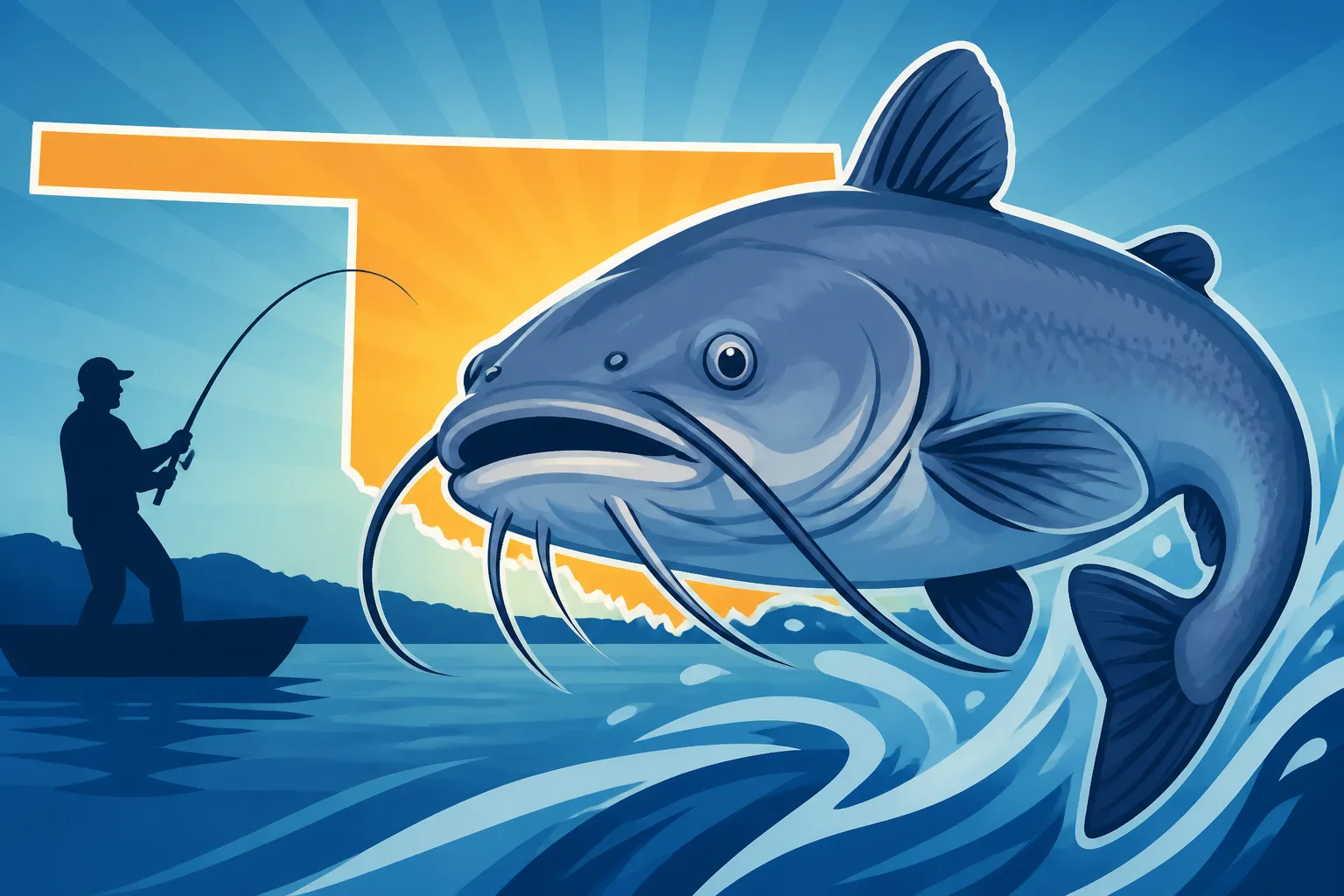
Oklahoma's state record blue catfish is an absolutely legendary fish. It was caught by angler Brad Triana on March 18, 2021, from the mighty Lake Texoma. This incredible blue cat tipped the scales at a staggering 118 pounds, 8 ounces, and measured 55.5 inches long with a girth of 40 inches. Imagine seeing that beast emerge from the water! It’s a fish that exemplifies the "trophy potential" of Oklahoma's waters and has inspired countless other anglers to hit the water in search of their own giants. The sheer size of this fish highlights why Lake Texoma is often considered one of the premier blue catfish destinations in the country, let alone just in Oklahoma. Brad Triana's catch became an immediate sensation among the fishing community, further solidifying the state's reputation for producing world-class catfish.
A History of Giants: Previous Record Holders
While the 118-pound behemoth from Lake Texoma holds the current title, it's important to remember that state records don't just appear overnight; they evolve. Oklahoma has a rich history of producing immense blue catfish, with previous records steadily increasing in weight over the decades. Each record-breaking fish represents a milestone in the state's fishing heritage, reflecting both improved fishing techniques and the incredible management of our aquatic resources. Anglers like Brad Triana stand on the shoulders of those who came before them, each new record pushing the boundaries of what was thought possible. The fact that the record keeps getting broken speaks volumes about the thriving blue catfish populations across our larger lakes and river systems. You can learn more about how truly massive these fish can get by checking out How Big Do Blue Catfish Get in Oklahoma. This continuous cycle of new records is what keeps the dream alive for so many of us who head out to the water with hope in our hearts.
| Aspect | Current State Record Blue Catfish | Previous Noteworthy Catches (Hypothetical) |
|---|---|---|
| Weight | 118 lbs, 8 oz | 100 lbs+, 90 lbs+ |
| Length | 55.5 inches | 50-54 inches |
| Girth | 40 inches | 35-39 inches |
| Location | Lake Texoma | Various large reservoirs and river systems |
| Date | March 18, 2021 | Historically, various dates |
| Significance | Benchmark for all Oklahoma anglers | Showcased evolving potential of fisheries |
Where to Find Trophy Blue Catfish in Oklahoma
If you're dreaming of tangling with a blue catfish that could rival the state record, you need to know where to start looking. Oklahoma is blessed with an abundance of waters that hold impressive populations of these whiskered giants, but some spots truly stand out for their trophy potential.
Lakes Known for Producing Giants
When it comes to consistently producing truly massive blue catfish, a few key lakes and river systems in Oklahoma always rise to the top of the list. Lake Texoma, straddling the Oklahoma-Texas border, is arguably the most famous, and for good reason—it's where the current state record was caught. Texoma's vast size, deep channels, and abundant forage, especially gizzard shad, create the perfect ecosystem for blue cats to grow to incredible sizes. You can find some specific advice on Where to Catch Catfish on Lake Texoma.
Another powerhouse is Lake Eufaula, Oklahoma's largest lake by surface area. Eufaula boasts extensive timber, river channels, and structure that hold large schools of baitfish, which in turn support a thriving population of large blue catfish. Anglers often report landing blues in the 50-70 pound range from Eufaula, with larger ones always a possibility. For some specific hotspots, check out Best Catfish Holes on Lake Eufaula.
Grand Lake O' the Cherokees in northeast Oklahoma is another fantastic blue cat fishery, particularly in its deeper, clearer sections and along the main river channel. The lower Arkansas River system, including locks and dams, also holds a tremendous number of big blues, as the flowing water concentrates baitfish and provides prime ambush points for these predatory fish. Understanding the unique characteristics of these larger reservoirs, from their depths to their food sources, is key to targeting the biggest blues.
Understanding Blue Catfish Habitat and Behavior
To catch a trophy blue catfish, you need to think like one. These fish are primarily open-water predators, often found in deep main lake channels, river bends, and along humps and ledges. They love current, which helps them ambush unsuspecting baitfish like shad. In colder months, they tend to congregate in the deepest parts of the lake or river, often near prominent underwater structure like old creek beds, submerged timber, or even bridge pilings. As the water warms, they might move shallower during feeding times, especially at night or during low light conditions, but they’re never far from deep water sanctuaries where they can retreat.
Their diet consists mainly of shad, carp, and other smaller fish, which is why cut bait is so effective. Blue catfish are highly nomadic and will follow bait schools. Using your electronics to locate large schools of shad in deep water is often the first step to finding the big blue cats that are feeding on them. They are powerful swimmers and will fight hard, so being prepared for a serious battle is crucial. The Oklahoma Forked-Tail Catfish Bag Limit and other regulations often reflect the need to manage these impressive populations for sustainable trophy fishing.
Targeting a Potential Record Breaker
Chasing a state record blue catfish isn't for the faint of heart; it requires specialized gear, proven techniques, and a hefty dose of patience. But the reward, should you succeed, is immeasurable.
Essential Gear for Monster Blues
When you're targeting blue catfish that could potentially weigh over 100 pounds, you absolutely cannot skimp on your tackle. This isn't finesse fishing; it's a brute force game. You'll need heavy-duty rods—think stout, extra-heavy power, fast-action rods around 7 to 9 feet long, capable of handling large weights and immense pressure. Paired with these rods should be large, robust conventional reels (baitcasters) or heavy-duty spinning reels with excellent drag systems. Spool your reels with at least 80-100 pound test braided line, which offers incredible strength and sensitivity, and a substantial monofilament or fluorocarbon leader of similar strength.
Hooks need to be large and super strong, often 8/0 to 12/0 circle hooks, designed to set themselves in the corner of the fish's mouth and prevent gut-hooking. Heavy sinkers, ranging from 4 to 10 ounces or even more depending on current and depth, are essential to keep your bait on the bottom. Don't forget a sturdy, large-hoop landing net or a heavy set of grippers to safely land your catch. Remember, you're not just fighting the fish; you're also fighting the current and the depths, so every piece of gear needs to be up to the task. You might want to explore Best Gear for Catfish Fishing in Oklahoma for more detailed recommendations.
Prime Baits and Techniques
For trophy blue catfish, there's one bait that consistently outperforms almost everything else: fresh cut bait. Gizzard shad is the absolute king, but fresh carp, drum, or even buffalo cut into chunks or strips can be incredibly effective. The fresher the bait, the better, as the scent trail it emits is crucial for attracting these keen-nosed predators from a distance. Live bait, such as a large live shad or perch, can also entice big blues.
As for techniques, two primary methods stand out:
- Anchoring on Structure: This involves positioning your boat directly over or just up-current from known blue catfish holding areas, such as deep holes, river bends, or submerged structure. Use heavy sinkers to present your cut bait on the bottom, often on a slip-sinker rig. How to Rig a Slip Sinker for Catfish explains this in detail. This method is excellent for targeting specific spots where you've marked fish or bait.
- Drift Fishing: This involves allowing your boat to slowly drift with the wind or current, dragging your baits along the bottom. This covers a lot of water and can be highly effective in locating scattered fish. Adjust your sinker weight to maintain bottom contact without snagging too often.
Both techniques rely heavily on using a quality fish finder to locate schools of baitfish and potential catfish holding areas. Catfish Bottom Fishing Techniques and How to Catch Blue Catfish in Deep Water offer more strategies to increase your chances. Patience is paramount, as big blues often take their time before committing to a bite.
Patience, Persistence, and Preparation
Catching a record-breaking blue catfish isn't usually a matter of luck; it's the culmination of countless hours on the water, learning, adapting, and refining your approach. You might make dozens of trips, catch plenty of respectable fish, but never encounter "the one." This is where patience truly comes into play. You have to be prepared for long stretches of inactivity, followed by an explosive, unforgettable battle.
Persistence means not giving up after slow days, continuing to scout new spots, trying different baits, and always seeking to improve your technique. It also means investing in quality gear that won't fail when that monster bite finally happens. Preparation extends beyond just tackle; it includes having a plan for safely handling a massive fish. This means having a large measuring board ready, a certified scale, and a camera to document your catch quickly and accurately, especially if you plan to release the fish after verification. Knowing Trophy Catfish Spots in Oklahoma might get you closer, but it's the dedication on the water that truly counts. The dream of the state record blue catfish keeps us coming back, knowing that with enough time and effort, that next cast could be the one that makes history.
Disclaimer
This article is for general informational purposes only and does not constitute professional advice. Laws, prices and regulations vary by location and change over time. Consult a qualified professional for guidance on your specific situation.