Statewide Bass Bag Limits in Oklahoma
Let's be honest, trying to keep up with all the fishing regulations in Oklahoma can sometimes feel like you need a law degree and a fishing license. You're out there, enjoying a beautiful day on the water, you catch a gorgeous bass, and suddenly your mind starts racing: "Is this one too big? Too small? How many have I kept today? Does this lake have special rules?" It's a common struggle, and navigating the nuances of statewide bass bag limits in Oklahoma is absolutely crucial for any responsible angler. This guide is here to untangle those rules, clarify the specifics, and ensure you're fishing legally and sustainably, so you can focus on the thrill of the catch without the nagging worry of breaking the law.
Deciphering Oklahoma's Statewide Bass Bag Limit: The Core Rules
Oklahoma is a fantastic state for bass fishing, boasting an incredible array of lakes and rivers teeming with these popular game fish. But with that abundance comes the responsibility to manage the populations, and that's exactly why we have bag limits. It's not about making things complicated; it's about making sure there are plenty of bass for everyone, now and in the future. The core rules seem straightforward, but there's a vital detail that many anglers, even seasoned ones, often overlook.
The Foundation: Six Bass Per Day
The most fundamental rule for black bass (that's largemouth, smallmouth, and spotted bass combined) across most of Oklahoma's public waters is a daily limit of six fish. This means from midnight to midnight, you can legally possess no more than six black bass. It sounds simple enough, right? You catch six bass, you stop keeping them for the day.
However, the "per day" part is key. If you're planning an overnight trip, remember that the limit resets at midnight. So, if you catch your six bass by dinnertime on Monday, you can't just keep them in your livewell or cooler and continue fishing for more bass before midnight. You've hit your daily limit for Monday. If you're staying for Tuesday, then come midnight, you can start your count over. This helps prevent excessive harvest over extended periods. This collective limit, encompassing all three primary black bass species, underscores the Oklahoma Department of Wildlife Conservation's (ODWC) approach to managing the overall bass population rather than micro-managing each specific type individually across general waters. It creates a simple, enforceable baseline for most anglers on most waters.
The Critical "One Over 16 Inches" Rule
Here's the trickiest part, the one that often catches anglers off guard: within that six-fish daily limit, only one bass can be 16 inches or longer. This isn't just a suggestion; it's a hard and fast rule designed to protect larger, often more reproductively successful bass. These bigger fish are vital for maintaining healthy populations, and by limiting their harvest, the ODWC ensures they have a chance to spawn multiple times and contribute to the gene pool.
Let's break this down with a few scenarios because this is where the rubber meets the road:
- Scenario 1: All small bass. You catch six bass, and all of them are under 16 inches. Perfectly legal.
- Scenario 2: One big bass. You catch five bass under 16 inches, and one bass that is 17 inches. You've hit your limit of six fish, and only one is over 16 inches. Perfectly legal.
- Scenario 3: Two big bass. You catch one bass that's 17 inches and another that's 18 inches. You cannot keep both of these fish. Even if you've only caught two fish total, possessing two bass over 16 inches is a violation of the statewide limit. You would have to release one of the larger fish.
- Scenario 4: Culling. If you're a tournament angler or just someone who likes to keep their best fish, you might catch a 16-inch bass, put it in your livewell, and later catch an 18-inch bass. To keep the 18-inch fish, you must immediately release the 16-inch bass. You cannot possess two bass over 16 inches at any point, even temporarily for culling purposes, unless you are participating in a permitted tournament with specific culling rules, which we'll touch on later. For the everyday angler, "culling" out a larger fish for another larger fish isn't an option if you already have one over 16 inches in possession.
This "one over 16 inches" rule is perhaps one of the most important pieces of information to remember when considering The One 16-Inch Bass Rule Anglers Miss. It's a cornerstone of sustainable bass management in Oklahoma, balancing recreational harvest with conservation efforts. Understanding that Oklahoma's 6-Fish Bass Limit for Largemouth and Smallmouth is not just a number, but also includes a size restriction, is paramount to staying on the right side of the law.
Identifying Oklahoma's Black Bass Species and Their Combined Limits
When we talk about the statewide bass bag limits, it's crucial to remember that this "black bass" category isn't just a generic term; it specifically refers to largemouth, smallmouth, and spotted bass. These three species are often lumped together under the same regulations because their management goals are similar, and they frequently inhabit the same waters. Knowing how to tell them apart isn't just good for bragging rights; it's essential for understanding specific lake or river regulations that might target one species over another.
Largemouth Bass: The Popular Choice
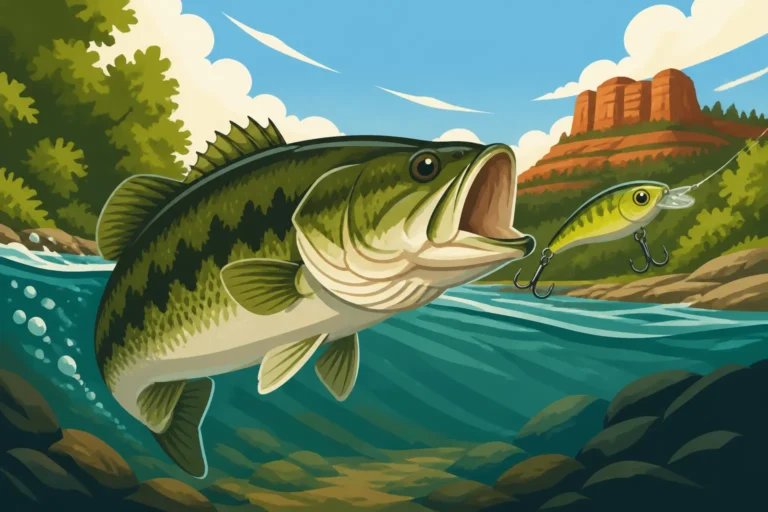
Ah, the largemouth bass! This is likely the fish that comes to mind for most anglers when they think of bass fishing in Oklahoma. They're widespread, aggressive, and grow to impressive sizes, making them a perennial favorite. Identifying a largemouth is usually quite straightforward:
- Jaw Line: The easiest way to tell is by their jaw. When the mouth is closed, the corner of the jaw (maxillary) extends beyond the back of the eye.
- Dorsal Fin: Their dorsal fin is distinctly separated into two parts.
- Body Pattern: They typically have a prominent dark, irregular horizontal stripe or blotches along their sides.
- Habitat: Largemouth love cover – think hydrilla beds, lily pads, submerged timber, docks, and riprap. They're ambush predators, waiting for prey to swim by. You'll find them in almost every lake, pond, and slower-moving river in the state.
Remember, every largemouth you keep, regardless of size (within the "one over 16 inches" rule), counts toward your six-fish daily black bass limit. If you're diving deeper into targeting these green machines, check out Largemouth Bass Fishing in Oklahoma: The Complete Guide.
Smallmouth Bass: River and Reservoir Gems
Smallmouth bass are a different breed altogether. Often referred to as "bronzebacks" for their distinctive coloration, they prefer cooler, clearer, and rockier waters than their largemouth cousins. In Oklahoma, you're more likely to find them in specific reservoirs with rocky shorelines and clear water, or in the faster-flowing sections of rivers. They are known for their incredible fighting ability, often leaping clear out of the water.
Key identification features include:
- Jaw Line: Unlike the largemouth, the corner of a smallmouth's jaw typically does not extend beyond the back of the eye when its mouth is closed.
- Dorsal Fin: Their dorsal fin is also separated, but usually less distinctly than a largemouth's, appearing more continuous.
- Body Pattern: Instead of a single stripe, smallmouth often have vertical bars or splotches on their sides, giving them a camouflaged look against rocky backgrounds. Their eyes are often reddish.
- Habitat: Look for them around rocky points, ledges, humps, and current breaks in rivers. They're less likely to be found in dense vegetation.
Like largemouth, smallmouth bass fall under the same six-fish daily black bass limit, with only one fish allowed over 16 inches. However, as we'll discuss, some river systems have even more restrictive rules specifically for smallmouth. For more insights into these feisty fighters, take a look at Smallmouth Bass in Oklahoma: What Anglers Should Know.
Spotted Bass: The Often-Confused Cousin
Spotted bass, sometimes called "spots," are perhaps the most frequently misidentified of the black bass species. They share characteristics with both largemouth and smallmouth, often leading to confusion. They are widely distributed throughout Oklahoma, especially in reservoirs and rivers that might not be ideal for smallmouth but are a bit too deep or clear for optimal largemouth habitat.
Here’s how to pick out a spotted bass:
- Jaw Line: Their jaw extends to about the middle of the eye, sometimes slightly beyond, but not as far back as a largemouth. This is one of the trickier distinctions.
- Dorsal Fin: Similar to a smallmouth, their dorsal fin appears less distinctly separated than a largemouth's.
- Body Pattern: They have a horizontal stripe like a largemouth, but the key feature is a patch of small, rough scales on their tongue. If you run your finger across their tongue, you'll feel it. Additionally, they often have distinct rows of dark spots on their lower flanks below the lateral line, giving them their name.
- Habitat: Spotted bass often prefer deeper, clearer water than largemouth, frequently orienting to submerged timber, humps, and creek channels in reservoirs.
Spotted bass also count towards the combined six-fish daily black bass limit, with the same "one over 16 inches" rule applying. Understanding the subtle differences between these species is vital, especially when dealing with specific regulations. To really nail down your identification skills, check out Spotted Bass Fishing in Oklahoma: A Complete Guide or even Largemouth vs Smallmouth vs Spotted Bass: How to Tell Oklahoma's Bass Apart.
Hybrid Bass and White Bass Considerations
It's important to clarify that "black bass" refers specifically to largemouth, smallmouth, and spotted bass. Other bass species, like hybrid striped bass (often called "wipers") and white bass, are not included in the black bass limit and have their own distinct regulations.
- White Bass: These are often caught in huge numbers, especially during their spring spawning runs up rivers and creeks. They typically have a liberal daily bag limit (often 25 fish) and no length limit.
- Hybrid Striped Bass: These sterile crosses between striped bass and white bass also have their own specific limits, usually more restrictive than white bass but separate from black bass.
Always consult the most current Oklahoma Fishing Guide for precise limits on these other species, as they can differ significantly from the black bass rules. Confusing a white bass with a smallmouth could lead to problems, so proper identification is critical.
Navigating Special Regulations: When Statewide Rules Don't Apply
While the six-fish, one-over-16-inches rule forms the backbone of Oklahoma's bass regulations, it's absolutely crucial to understand that it's not universal. The Oklahoma Department of Wildlife Conservation (ODWC) manages fisheries on a case-by-case basis, and some lakes and rivers have unique, more restrictive rules designed to achieve specific management goals, like producing trophy fish or protecting fragile populations. Ignoring these local variations is a surefire way to accidentally break the law.
Lake-Specific Bass Length and Creel Limits
Many of Oklahoma's prime fishing destinations have special regulations tailored to their unique ecosystems and angler pressure. These regulations might include:
- Slot Limits: This is where fish within a certain size range must be released. For example, a lake might have a 13- to 16-inch slot limit, meaning you can keep fish under 13 inches or over 16 inches, but anything in between must go back. This is often implemented to protect growing fish and allow them to reach larger sizes, increasing the number of trophy-class fish.
- Minimum Length Limits: Some lakes might simply require all bass kept to be a certain length, say 14 inches. This protects juvenile fish and ensures they have a chance to mature.
- Reduced Daily Limits: In rare cases, a lake might have a daily limit lower than six bass, although this is less common for black bass compared to other species.
These special regulations are typically posted at boat ramps and access points, but it's always your responsibility to know before you go. A quick search of the current ODWC Fishing Guide (available online or as a physical pamphlet) will arm you with the most up-to-date information. For example, specific lakes like McGee Creek Lake, Sardis Lake, and Lake Murray (a phenomenal fishery near Ardmore that's known for producing big bass) often have unique rules, sometimes including specific slot limits or different "one over" rules for bass. Even some popular lakes, such as Fort Gibson Lake or Lake Eufaula, could have nuances depending on management goals. Don't just assume the statewide rule applies; always check!
River and Stream Bass Limits
Flowing waters present a different set of challenges and opportunities for bass management, and as such, they often have distinct regulations. This is particularly true for smallmouth bass, which thrive in cooler, rocky river environments but can be more sensitive to overharvest.
The standard for many Oklahoma rivers and streams is often a 14-inch minimum length limit for black bass. This means any largemouth, smallmouth, or spotted bass caught in these flowing waters that measures under 14 inches must be immediately released. This is a significant departure from the lake rule, where you can keep bass under 16 inches (up to five of them, plus one over 16).
Furthermore, for smallmouth bass specifically, many rivers and streams enforce an even tighter restriction: only one smallmouth bass can be kept per day. This is a powerful conservation measure aimed at protecting smallmouth populations, which tend to grow slower and are more localized than largemouth. Anglers need to be acutely aware of this, especially if they are targeting smallmouth in a river system. The good news is, for dedicated smallmouth anglers, this rule often means those fish are more abundant and grow to respectable sizes in the right river systems.
This difference highlights why it's so important to understand Why River Bass Limits Differ From Lake Limits in Oklahoma. The conditions and vulnerabilities of riverine bass populations necessitate a more cautious approach. It’s also why learning about The 14-Inch Minimum for River and Stream Bass and the fact that you can keep Only One Smallmouth Bass a Day in Oklahoma Rivers are critical pieces of information for river anglers.
Tournament Angler Considerations
Bass fishing tournaments are a huge part of the angling culture in Oklahoma, and they operate under slightly different guidelines. Tournament organizations typically obtain special permits from the ODWC, which may allow for temporary possession of more than the daily limit in a livewell for weigh-in purposes, and also permit the practice of "culling" fish. Culling involves replacing a smaller fish in the livewell with a larger one caught later, as long as the total number of fish in the livewell (usually five) does not exceed the tournament limit.
However, even with these special permits, tournament anglers are still subject to overall state regulations and must adhere to all length limits and daily bag limits after the weigh-in. For instance, an angler cannot leave the tournament with more than the legal daily limit of six fish (with only one over 16 inches). The purpose of these allowances is to facilitate the sport of competitive fishing while still ensuring fish are returned to the water safely. If you're involved in tournaments, it's absolutely vital to be familiar with both the ODWC's Tournament Angler Rules in Oklahoma and the specific rules of your chosen tournament circuit.
To ensure compliance with these varied rules, consider this handy comparison table:
| Regulation Type | Statewide Lake (General) | Special Regulation Lake (Example: McGee Creek) | River/Stream (General) |
|---|---|---|---|
| Daily Bag Limit | 6 Black Bass | 6 Black Bass | 6 Black Bass |
| Length Limit | 1 Bass ≥ 16 inches | Slot Limit (e.g., 13-16" must be released) | 14-inch minimum |
| Smallmouth Specific | Counts toward 6-fish limit | Counts toward 6-fish limit | Only 1 Smallmouth Bass daily |
Note: Special lake regulations vary greatly. Always consult the current ODWC fishing guide for specific water bodies.
Essential Tools and Practices for Compliance
Being a responsible angler goes beyond just knowing the rules; it's about having the right tools and adopting the best practices to ensure you stay compliant and contribute to the health of Oklahoma's fisheries. Nobody wants to unintentionally break a regulation, and with a few simple habits, you can avoid common pitfalls.
Accurate Measurement is Key
The difference of an inch or even half an inch can be the difference between a legal catch and a violation, especially with those critical 14-inch river minimums or 16-inch statewide limits. Relying on a rough estimate or a mark on your rod simply isn't good enough. You need a reliable measuring device.
- Measuring Boards: A sturdy, flat measuring board is indispensable. Look for one made of plastic or aluminum, with clear, easy-to-read markings. Many options are available, from simple foldable boards to more robust ones that attach to your boat. You can find excellent, durable measuring boards on Amazon that will last for years.
- Proper Technique: When measuring your bass, always lay the fish flat on the board with its mouth closed and touching the bumper end of the ruler. Gently squeeze the tail to achieve its maximum length. Do not measure on a curved surface, as this will give you an inaccurate, shorter reading. When in doubt, round down to the nearest quarter or half inch, or simply release the fish. It's better to be safe than sorry.
Ethical Catch and Release for Oversized or Undersized Bass
Part of responsible angling, especially when dealing with length limits or the "one over 16 inches" rule, is practicing ethical catch and release. If a bass is undersized, oversized, or simply one you choose not to keep, releasing it in the best possible condition is paramount. The goal is for that fish to survive and contribute to the fishery.
- Minimize Handling: Reduce the time the fish is out of the water. Handle it gently, ideally with wet hands to protect its slime coat. Avoid squeezing its belly or gills.
- De-hooking Tools: Keep a pair of long-nosed pliers or a de-hooking tool handy. These allow you to quickly remove hooks with minimal damage to the fish, especially if it's deeply hooked. There are many great de-hookers and pliers available on Amazon that can make this process much easier and safer for the fish.
- Revive the Fish: If a fish seems stressed or sluggish before release, hold it gently in the water, facing into the current, until it regains its strength and can swim away on its own. For fish brought up from deep water, a fizzing tool might be necessary to release air from their swim bladder, though this is a more advanced technique typically used for deep-water species.
By employing these practices, you're not just complying with regulations; you're actively participating in the conservation of bass populations, ensuring that there will be healthy fisheries for generations to come.
Record Keeping and Staying Informed
In the heat of the moment, it can be easy to lose track of how many fish you've kept or what size they were. Develop a system to keep track, especially if you're approaching your limit.
- Mental or Physical Count: Some anglers simply remember, but if you're prone to distraction (or just catching a lot of fish!), a small notebook, a clicker counter, or even a specific compartment in your livewell for "keeper" bass can help you stay organized.
- Current Regulations: Never rely on old information. Fishing regulations can change annually, and sometimes even within a season. Always download the most current Oklahoma Fishing Guide from the ODWC website or pick up a physical copy at a license vendor. Many anglers use the free Go Outdoors Oklahoma mobile app, which puts the current regulations right in your pocket. Having the most up-to-date information is essential to prevent unwitting violations.
Avoiding Costly Mistakes: Penalties and Responsible Angling
Mistakes happen, especially when you're caught up in the excitement of a bite, but when it comes to fishing regulations, those mistakes can carry consequences. Understanding what's at stake and adopting a mindset of responsible angling not only keeps you out of trouble but also ensures the long-term health of our beloved Oklahoma fisheries.
The Consequences of Violating Bass Limits
Let's not sugarcoat it: violating fishing regulations, including bass bag limits, is a serious matter. Game wardens are out there to protect our natural resources, and they take their job seriously. If you're caught exceeding the daily bag limit or violating length limits, you could face:
- Fines: Penalties for fishing violations can range from a few hundred dollars to much steeper sums, depending on the severity of the offense and whether it's a repeat violation. These fines are designed to deter illegal activity and compensate the state for the illegally harvested resources.
- Confiscation: Your illegally caught fish will be confiscated. In some cases, your fishing gear, and even your boat, could be seized.
- Loss of Privileges: More serious or repeat offenses can lead to the suspension or revocation of your fishing license, meaning you won't be able to legally fish in Oklahoma for a period of time, or even permanently. Imagine not being able to enjoy the waters you love because of a preventable error.
It’s not just about the monetary cost; it’s about the hassle, the potential legal proceedings, and the stain on your record. This is why it's so important to be diligent. It's also worth noting that violations related to bag limits are often viewed with the same gravity as What Happens if You Fish Without a License in Oklahoma, as both undermine the state's conservation efforts.
The Broader Impact on Oklahoma's Fisheries
Beyond the personal penalties, there's a larger, often unseen consequence of regulation violations: the impact on the fishery itself. Bag limits and length limits aren't arbitrary numbers; they are scientifically determined by fisheries biologists to maintain healthy, self-sustaining populations of bass.
- Overharvesting: If too many anglers keep too many fish, or too many large, breeding-age fish, the population can decline. This means fewer bass for everyone in the future, smaller average sizes, and a less vibrant fishery.
- Ecosystem Imbalance: Bass are apex predators in many freshwater ecosystems. A decline in their numbers can have ripple effects throughout the food chain, impacting baitfish populations and the overall health of the lake or river.
- Lost Opportunities: A degraded fishery means fewer opportunities for future generations to experience the joy of bass fishing. It impacts local economies that rely on fishing tourism and diminishes a cherished outdoor pastime.
Every fish kept within the legal limits contributes to a sustainable system. Every fish kept illegally chips away at it. Your individual choices matter.
Being a Responsible Ambassador for the Sport
As anglers, we are stewards of the environment and ambassadors for our sport. We have a role to play in educating ourselves and, respectfully, others.
- Lead by Example: Always follow the regulations to the letter. If you see someone struggling with a rule (e.g., misidentifying a fish or measuring incorrectly), offer helpful advice rather than judgment. Most people want to do the right thing but might be misinformed.
- Respect Private Property and the Environment: Beyond regulations, this includes cleaning up your trash, being mindful of noise, and respecting private land access. A good angler leaves no trace.
- Support Conservation: Consider purchasing an annual Oklahoma fishing license even if you technically qualify for a special exemption (like during Free Fishing Days in Oklahoma). The revenue from licenses directly funds the ODWC's conservation efforts, including stocking programs, habitat improvements, and enforcement. This continuous cycle of support ensures that Oklahoma's fishing opportunities remain exceptional.
Planning Your Bass Fishing Trip with Regulations in Mind
Planning is half the fun of a fishing trip, and when you incorporate regulation checks into your preparation, you set yourself up for success and peace of mind. A little foresight can prevent a lot of headaches later on the water.
Pre-Trip Research
Before you even load up the boat or pack your tackle box, dedicate a few minutes to research.
- Consult the ODWC Fishing Guide: This is your bible. As mentioned, grab the latest version online or in print. Pay specific attention to the "General Regulations" section for black bass and then scour the "Public Fishing Waters" section for any special regulations pertaining to your chosen lake or river. For example, if you're heading to Lake Texoma, you'll want to check for any unique rules that might apply to that specific body of water, as it's a border lake with Texas.
- Check for Advisories: Sometimes, temporary regulations or advisories are issued due to environmental conditions, stocking efforts, or other factors. The ODWC website is the best place to find these.
- Map Your Journey: Understand where your chosen fishing spot is located relative to any known special regulation areas. A lake might have one set of rules, but the river feeding into it could have entirely different ones, especially for smallmouth bass.
Essential Gear for Compliance
Beyond your rod, reel, and favorite lures, there's some basic gear that directly helps you comply with regulations:
- Measuring Device: We can't stress this enough. A reliable measuring board or tape is non-negotiable. Many are marked with both inches and centimeters, making them versatile.
- De-hooking Tools: Pliers, hemostats, or specialized de-hookers are invaluable for quickly and safely removing hooks, especially when practicing catch and release for undersized or oversized fish.
- Livewell or Cooler: If you plan to keep fish, a functional livewell is best for bass to ensure they remain healthy until you're ready to process them. If you're using a cooler, ensure the fish are properly iced to preserve their quality.
- Fishing License: This goes without saying, but always ensure your Fishing License Requirements in Oklahoma are up to date and that you have it physically or digitally accessible. You can even find guides on How to Get a Fishing License in Oklahoma online.
Educating Fellow Anglers
One of the best ways to ensure compliance and promote conservation is through community education. If you're fishing with friends or family, especially those new to Oklahoma fishing, take the time to explain the regulations.
- Share Your Knowledge: Rather than just saying "you can't keep that," explain why the one-over-16-inch rule exists or why river smallmouth have a one-fish limit. When people understand the reasoning behind the rules, they are far more likely to adhere to them.
- Offer to Measure: If someone is unsure about a fish's length, offer your measuring board and demonstrate the proper technique.
- Lead by Example: Your actions speak louder than words. Consistently follow the rules, handle fish ethically, and demonstrate respect for the resource, and others will often follow suit.
By integrating regulation awareness into every aspect of your fishing journey, you're not just avoiding fines; you're becoming a more effective and responsible angler, contributing positively to the incredible fishing heritage we all share in Oklahoma.
Disclaimer
Please note that fishing regulations can change. While every effort has been made to provide accurate and up-to-date information in this guide, it is ultimately the angler's responsibility to consult the current Oklahoma Fishing Guide published by the Oklahoma Department of Wildlife Conservation (ODWC) before engaging in any fishing activity. This article is for informational purposes only and should not be considered legal advice.