Best Kayak Paddle for All Day Fishing Trips
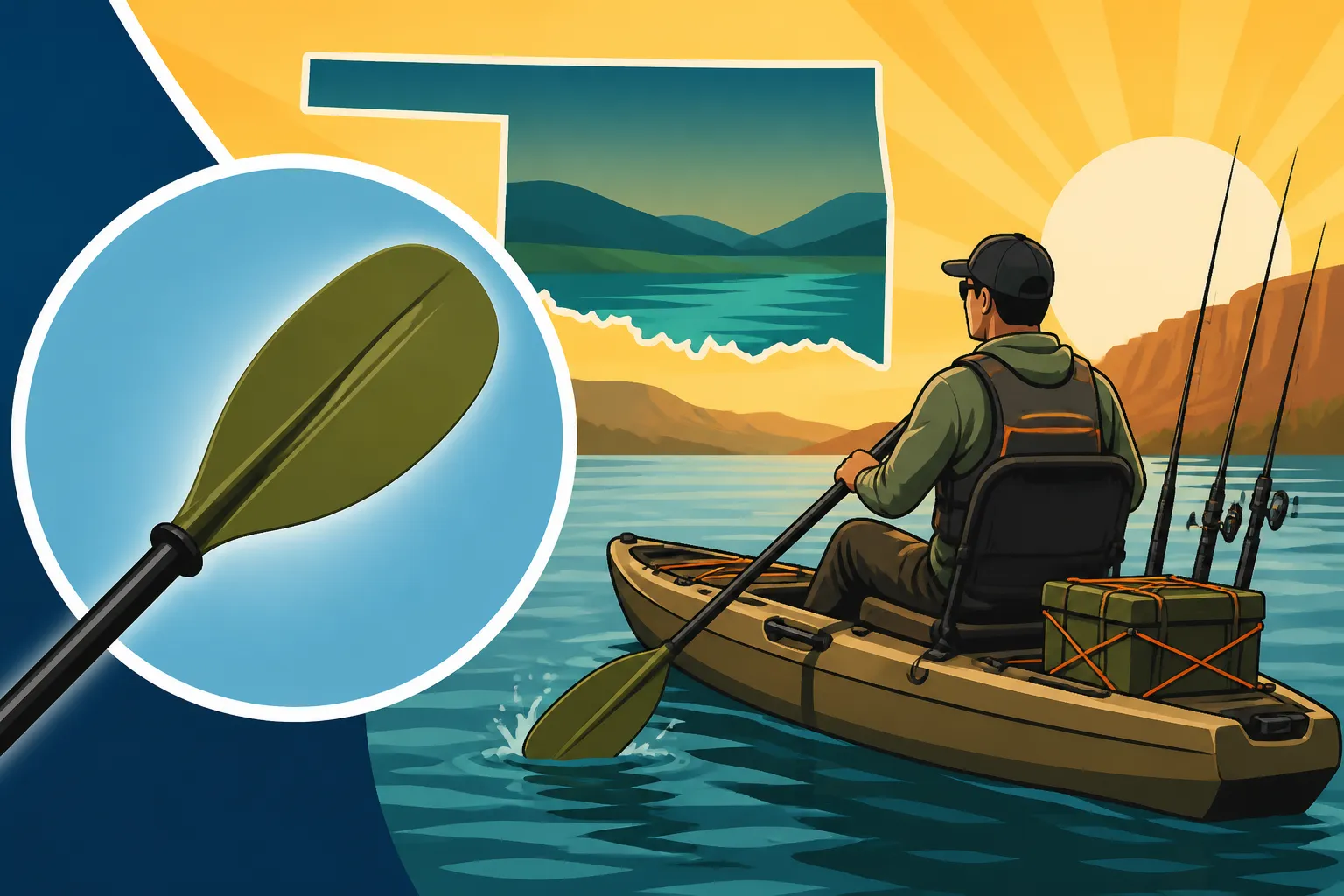
There's nothing quite like spending a full day out on an Oklahoma lake, kayak fishing. You're out there, the sun's shining, the water is calm, and you're just soaking it all in. But that perfect day can quickly turn into a grueling endurance test if your paddle isn't up to snuff, leaving you with aching shoulders and a sore back. This guide is all about helping you pick the perfect kayak paddle so your next all-day fishing trip is filled with nothing but bites and blissful paddling, not discomfort.
Why Your Paddle Choice Matters More Than You Think for All-Day Comfort
When you're planning an all-day fishing trip on one of Oklahoma's expansive reservoirs, like Lake Texoma or Lake Eufaula, every piece of gear plays a crucial role. We often obsess over our rods, reels, and tackle, but the humble paddle is easily overlooked. Trust me, after a few hours of battling the wind or covering serious distance to hit those honey holes, you'll quickly realize your paddle isn't just for getting from point A to point B; it's an extension of your body and a major factor in your comfort and endurance.
The Silent Killer: Fatigue and Its Impact on Fishing Success
Imagine you're out on the water, the bite is on, and you've just spotted some promising structure across a wide cove. You start paddling, and within an hour, your shoulders are screaming, your wrists ache, and your lower back is tightening up. This isn't just annoying; it's a "silent killer" of your fishing enjoyment and success. A paddle that's too heavy, too short, or poorly designed forces you to exert more energy with every stroke. On long days, this cumulative strain drains your energy, making you less likely to paddle to that next hot spot, less accurate with your casts, and ultimately, less focused on catching fish. Instead of savoring the fight of a big bass, you're just thinking about getting back to the launch. It's a real frustration many kayak anglers face, especially when trying to cover the vast waters of places like Grand Lake O' the Cherokees.
You might even find yourself cutting your trip short, heading back to the ramp long before you planned, all because your paddle choice has turned your adventure into a chore. That's a day of potential catches and relaxation lost. Investing in the right paddle is like investing in a comfortable chair for your office – it directly impacts your performance and well-being over extended periods. It allows you to stay out longer, explore more, and fish harder without paying the physical price.
Efficiency is Key: Covering Water with Less Effort
Oklahoma's lakes can be vast, and sometimes, the best fishing spots are miles from the nearest ramp or require navigating against a stiff breeze. This is where paddle efficiency becomes absolutely critical. An efficient paddle is one that moves the most water with the least amount of wasted energy. Think of it like a well-tuned engine: it delivers power smoothly and effectively, rather than sputtering and burning fuel for little gain. The right blade design and shaft material can dramatically reduce the effort needed for each stroke, allowing you to cover more water with significantly less fatigue.
When you're trying to sneak up on a school of Largemouth Bass Fishing in Oklahoma: The Complete Guide in a distant cove or fighting a crosswind on Lake Eufaula, an efficient paddle makes all the difference. It helps you maintain control, conserve your energy for casting and reeling, and ensures you arrive at your destination feeling refreshed, not exhausted. It's not just about speed, but about sustainable, comfortable propulsion over hours on the water. Just as you wouldn't use a fly rod for deep-sea fishing, you shouldn't use a paddle that's ill-suited for the long hauls typical of kayak fishing on big lakes.
Key Features to Look for in an All-Day Fishing Kayak Paddle
Choosing the "best" kayak paddle isn't about finding the most expensive one; it's about finding the one that best suits your body, your kayak, and your fishing style. There are several key features that directly impact how a paddle performs over an entire day of fishing. Understanding these elements will help you make an informed decision and ensure your investment pays off in comfort and longevity.
Material Matters: Weight, Durability, and Flex
The material your paddle is made from dramatically affects its weight, durability, and how it feels in your hands. This is one of the biggest factors in preventing fatigue on those long days.
Aluminum Paddles
Aluminum paddles are often the entry-level choice, and for good reason. They're generally the most affordable and quite durable, able to withstand a fair amount of abuse from rocky shorelines or accidental drops. If you're just getting started in kayak fishing or looking for a backup paddle, aluminum is a practical option. However, they are also the heaviest, which means more effort with every stroke. On a cold Oklahoma morning, an aluminum shaft can feel frigid to the touch, and under a hot summer sun, it can become uncomfortably warm. They can also corrode over time if not properly cared for, especially after exposure to brackish water or chemicals. They're a good choice for short trips or occasional use, but for an all-day excursion, their weight can quickly become a noticeable drawback.
Fiberglass Paddles
Stepping up from aluminum, fiberglass paddles offer a fantastic middle ground in terms of weight, performance, and price. They are significantly lighter than aluminum, which immediately reduces fatigue, especially over hours of paddling. Fiberglass also offers a pleasant flex, absorbing some of the shock from each stroke rather than transferring it directly to your wrists and shoulders. They're still quite durable and generally don't suffer from the temperature extremes that aluminum does. Many seasoned kayak anglers find fiberglass paddles to be the sweet spot, providing excellent performance without the top-tier price tag of carbon fiber. You'll find a wide selection of quality fiberglass paddles at retailers like Bass Pro Shops, making them accessible and easy to check out in person. They're an excellent upgrade for anyone serious about spending more time comfortably on the water.
Carbon Fiber Paddles
For the serious angler who demands the absolute best in terms of performance and comfort, carbon fiber paddles are the gold standard. They are the lightest of the three materials, making them incredibly efficient and reducing fatigue to a minimum. The stiffness of carbon fiber ensures that almost all your energy is transferred directly to propulsion, meaning more speed and less effort. While they are the most expensive, many anglers consider the investment worthwhile for the sheer comfort and efficiency they provide on all-day fishing trips. Carbon fiber also doesn't get as cold as aluminum in winter or as hot in summer, making it comfortable year-round. However, they can be more brittle on impact compared to aluminum or fiberglass, so a bit more care is needed when navigating rocky areas or loading and unloading your kayak. Think of it as the high-performance option, similar to choosing a specialized Best Rod for Largemouth Bass Fishing for competitive angling.
Here's a quick comparison of the common paddle materials:
| Material | Weight | Durability | Cost | Flex/Feel | Best For |
|---|---|---|---|---|---|
| Aluminum | Heavy | High | Low | Stiff | Beginners, occasional use, budget-conscious |
| Fiberglass | Medium | High | Mid-Range | Moderate | Regular use, all-day comfort, good value |
| Carbon Fiber | Lightest | Medium-High | High | Stiff | Serious anglers, long trips, maximum comfort |
Blade Design: Power, Efficiency, and Stability
Beyond the material, the shape and size of your paddle blades are critical for how much water you move and how efficiently you do it. This directly impacts your paddling power and how much energy you expend.
Asymmetrical/Dihedral Blades
Most modern kayak fishing paddles feature asymmetrical blades with a slight dihedral angle. Asymmetrical simply means the blade isn't perfectly symmetrical from top to bottom; one edge is usually wider or angled differently. This design, combined with the dihedral angle (a slight ridge running down the center of the blade), helps water flow smoothly off the blade, reducing flutter and turbulence. Reduced flutter means a smoother, more powerful stroke, which is less fatiguing over time. If your paddle blade wobbles or "flutters" in the water with each stroke, it's wasting energy and putting unnecessary strain on your body. Look for blades designed to slice cleanly through the water and provide consistent power.
Blade Size (Surface Area)
The overall surface area of the paddle blade dictates how much water it "grabs" with each stroke.
- Larger Blades: These provide more immediate power, which is great for accelerating quickly, paddling heavy kayaks (especially fully loaded fishing kayaks with gear like a Kayak Anchor Setup for Fishing Oklahoma Lakes and a cooler), or pushing against strong winds and currents. However, that extra power comes at a cost: it requires more strength and can lead to faster fatigue over long distances. If you're a strong paddler or typically fish in challenging conditions, a larger blade might be suitable for you.
- Smaller Blades: Conversely, smaller blades require less effort per stroke, making them ideal for long-distance paddling and all-day comfort. While they might not provide the same initial burst of power, their efficiency over time translates to less fatigue and a more enjoyable experience. For most kayak anglers spending hours on the water, a medium to smaller blade is often the better choice, allowing for a higher cadence of less strenuous strokes.
Feathering
Feathering refers to the angle at which your paddle blades are offset from each other on the shaft. When one blade is perpendicular to the water, the other is typically rotated to a certain degree (e.g., 45 or 60 degrees). This design helps reduce wind resistance on the blade that's out of the water during your stroke. Imagine paddling into a strong headwind on Lake Murray; a feathered paddle will catch less wind, making your stroke more efficient and less tiring. Most adjustable paddles allow you to change the feathering angle, letting you customize it based on wind conditions and personal preference.
Shaft Design and Length: Ergonomics for Your Body and Kayak
The paddle shaft is where your hands do all the work, so its design and length are paramount for comfort and injury prevention.
Shaft Type: Straight vs. Bent/Crank
- Straight Shafts: These are the most common and generally more affordable. They work well for most paddlers, but prolonged use can sometimes lead to wrist fatigue or strain for some individuals, especially if they have pre-existing issues.
- Bent (or Crank) Shafts: These shafts feature a subtle bend or "crank" where your hands grip. The ergonomic design helps align your wrists in a more neutral position, reducing strain and improving comfort, particularly over long paddling sessions. While often more expensive, a bent shaft can be a game-changer for anglers who experience wrist discomfort with straight shafts. It's a key feature to consider if you're battling chronic hand or wrist pain from paddling.
Adjustable Length
For kayak anglers, an adjustable length paddle is almost a necessity. Why? Because kayak widths vary, seating positions differ, and sometimes you might even fish from different kayaks (a sit-on-top one day, a sit-inside the next). An adjustable paddle allows you to fine-tune the length for optimal comfort and efficiency in any situation. If your paddle is too short, you'll be constantly hitting the sides of your kayak and expending extra energy. Too long, and you'll struggle to get a good vertical stroke, which also wastes effort. Being able to extend or shorten your paddle means you can adapt to different conditions or even switch between high and low seating positions in your Best Kayak for Fishing Oklahoma Reservoirs. This adaptability is invaluable for maximizing comfort on all-day fishing trips.
Proper Length Measurement
Determining the correct paddle length is crucial. A common method involves standing and raising one arm straight overhead. If the paddle blade reaches your fingertips, that's a good starting point. However, the best way is to use manufacturer sizing charts which typically consider your height and the width of your kayak. Wider kayaks generally require longer paddles to ensure the blades can effectively reach the water without you having to lean excessively. For instance, if you're a taller angler in a wider, stable fishing kayak, you'll need a longer paddle than a shorter angler in a narrower recreational kayak. Don't guess; consult the charts or even better, test it out if possible.
Ferrule Type: Snap-button vs. Leverlock/Telescoping
The ferrule is the connector that joins the two halves of a two-piece paddle.
- Snap-button Ferrules: These are simple and effective. You press a button, push the two halves together until it clicks, and you're good to go. They often offer a few fixed feathering angles. They are generally reliable but can sometimes develop a bit of wobble over time.
- Leverlock (or Telescoping) Ferrules: These systems use a lever or clamp to create a tight connection and offer infinite feathering angles, as well as precise length adjustments within a certain range. This type of ferrule provides the most versatility for fine-tuning your paddle and often creates a more solid, wobble-free connection. For an all-day angler who values customizability and a secure feel, a leverlock system is often preferred, even if it adds a bit to the cost.
Finding Your Perfect Paddle: Sizing, Testing, and Investment
So, with all this information, how do you actually go about finding your perfect paddle? It's a combination of understanding your needs, doing a little research, and potentially trying a few options. Don't rush this decision, because the right paddle will elevate every single fishing trip you take on Oklahoma's beautiful waters.
Sizing Your Paddle Correctly for Your Kayak and Body
We've touched on this, but it bears repeating: getting the paddle length right is non-negotiable for comfort and efficiency. It's not a "one-size-fits-all" situation. Your paddle needs to be matched to your height and, crucially, to the width of your kayak. If you're 6 feet tall and fishing from a wide, stable 34-inch fishing kayak designed for standing, you'll need a significantly longer paddle than if you're 5'4" in a narrower 28-inch recreational kayak.
A good rule of thumb for determining length is to consider your height and kayak width. Here's a very general guide, but always consult specific manufacturer charts:
| Kayak Width (inches) | Angler Height: 5'0" – 5'6" | Angler Height: 5'6" – 6'0" | Angler Height: 6'0" + |
|---|---|---|---|
| 23-28 | 210-220 cm | 220-230 cm | 230-240 cm |
| 29-33 | 220-230 cm | 230-240 cm | 240-250 cm |
| 34+ | 230-240 cm | 240-250 cm | 250-260 cm |
Note: These are general guidelines. Always check the paddle manufacturer's specific sizing chart.
If you have the opportunity, visit a specialty outdoor store or a Bass Pro Shops location that carries kayaks and paddles. See if you can sit in a kayak of similar width to yours and hold different length paddles. This hands-on test is invaluable. You want to be able to comfortably reach the water with a full stroke without straining your back or having your knuckles scrape the gunwales. Remember, an adjustable paddle is a great way to guarantee you can fine-tune the length for your exact setup and preferred paddling style. Having the right size paddle is just as important as ensuring you have a Life Jacket Rules for a 10 Year Old on an Oklahoma Boat – it's about safety and comfort.
When to Invest: Balancing Cost and Performance
It's easy to look at the price tag of a high-end carbon fiber paddle and wince. However, it's essential to view it as an investment in your comfort, endurance, and overall enjoyment of kayak fishing. Just like you might consider if Is the $81 Nonresident Annual License Worth It Over Multiple 1-Day Trips? is a worthwhile investment for more fishing opportunities, a quality paddle is an investment in better fishing experiences.
For those who spend countless hours on Oklahoma's lakes, the reduced fatigue and increased efficiency offered by a lighter, better-designed paddle can easily justify the cost. It means you can fish longer, explore more remote areas, and come home feeling invigorated instead of exhausted. If a carbon fiber paddle feels like too big a leap, consider a fiberglass paddle as an excellent mid-range option that offers significant performance benefits over aluminum without breaking the bank. You can often find great deals on quality paddles online, like on Amazon, but be sure to read reviews and stick to reputable brands to ensure you're getting a durable product.
Think about it this way: how much is an extra hour or two of comfortable, pain-free fishing worth to you? How much is preventing shoulder strain or back pain worth? For many dedicated anglers, the answer makes the investment in a quality paddle a no-brainer. After all, your Kayak Fishing Gear Every Oklahoma Angler Needs isn't complete without a paddle that helps you get the most out of every moment on the water.
Maintenance and Care for Longevity
Even the best kayak paddle will only perform its best and last its longest with a little care and maintenance. This is especially true after a day out on Oklahoma's varied waters, which can range from pristine mountain lakes to more turbid reservoirs.
The simplest and most important step is to always rinse your paddle with fresh water after each use. This washes away lake grit, mud, and any unseen chemicals or algae that could degrade the materials over time. Pay particular attention to the ferrule (the connecting mechanism) to ensure it stays clean and operates smoothly. Grime in the ferrule can lead to a sticky connection or, worse, premature wear and looseness.
Storing your paddle properly also extends its life. Avoid leaving it out in direct sunlight for extended periods, as UV rays can degrade plastics and resins over time, weakening the shaft or blades. Store it in a cool, dry place, ideally disassembled if it's a two-piece model, to reduce stress on the ferrule. Periodically, check the ferrule mechanism for any signs of wear or wobble and address it promptly. For leverlock systems, ensure the clamp is clean and lubricated if recommended by the manufacturer. A small amount of attention after each trip will ensure your paddle remains a reliable companion for countless all-day fishing adventures.
Disclaimer
This article is for general informational purposes only and does not constitute professional advice. Laws, prices and regulations vary by location and change over time. Consult a qualified professional for guidance on your specific situation.