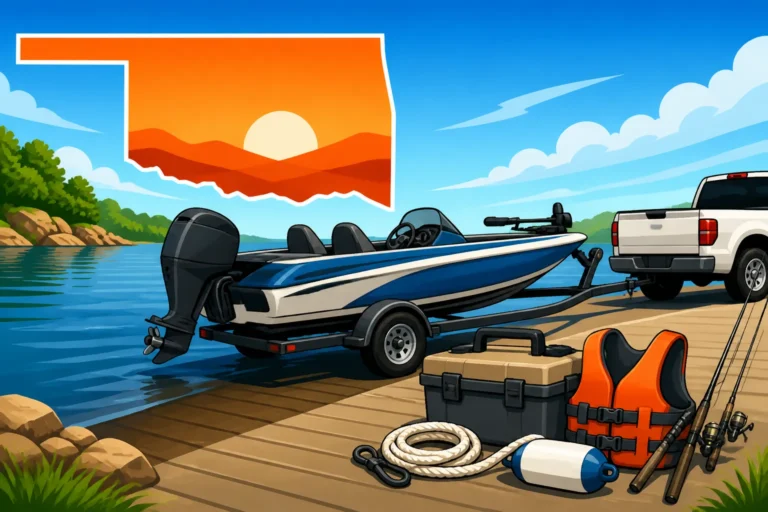
Best Boat for Fishing Lake Texoma’s Open Water
There's nothing quite like a day on Lake Texoma, chasing those incredible striped bass or just enjoying the vast, open water. But let's be real, that open water can be a beast if you're not in the right rig. It's not like fishing a calm farm pond; Texoma demands respect, and your boat is your first line of defense against the wind, waves, and sheer vastness. This guide is all about helping you figure out what kind of boat will truly stand up to Lake Texoma's legendary open waters, ensuring you have a safe, comfortable, and productive fishing experience, whether you're targeting those big stripers, chasing crappie, or just enjoying a family day out.
The Unique Challenges of Fishing Lake Texoma's Open Water
Lake Texoma isn't just a big lake; it's an enormous reservoir, one of the largest in the Southwest, spanning both Oklahoma and Texas. Its sheer size means it acts more like an inland sea than a typical lake, especially when the wind decides to kick up. Anglers who venture onto its open waters quickly learn that it requires a different kind of vessel than what you might use on smaller, more protected bodies of water. Ignoring these unique characteristics can lead to a less-than-ideal day on the water, or worse, an unsafe situation.
Wind and Wave Action on a Massive Scale
One of the biggest factors on Lake Texoma is the wind. Without many natural windbreaks, even a moderate breeze can whip up significant chop and whitecaps, especially on the main lake body. What starts as a gentle ripple can quickly turn into 2-3 foot waves, making for a bumpy, wet, and sometimes even dangerous ride for smaller or less-equipped boats. If you're planning to run long distances to hit a specific striper bite or move between different fishing grounds, a boat that can handle this consistent wave action without beating you and your gear to death is paramount. You don't want to be constantly looking over your shoulder at the weather forecast, wondering if your boat can make it back to the ramp safely.
Long Runs and the Need for Speed and Stability
Fishing Lake Texoma often means covering a lot of water. Those prized striped bass tend to move with the baitfish, and finding them can require significant runs across the lake. This isn't a place where you putter out a few hundred yards from the ramp and set up shop for the day. A boat that can get you to those distant fishing spots quickly and comfortably, even when the water isn't perfectly flat, is a huge advantage. Speed is a factor, of course, but equally important is the boat's ability to maintain a stable, dry ride at speed. A faster boat that constantly pounds through waves and drenches its occupants isn't truly faster if you're miserable the whole time or have to slow down to a crawl. The goal is efficient, comfortable travel, allowing you to maximize your fishing time.
Navigational Hazards and High Traffic Areas
Being such a popular lake, Texoma sees a lot of boat traffic, especially on weekends and holidays. This means not only dealing with your own boat's wake but also the wakes of countless other vessels – cruisers, wakeboard boats, and other fishing boats. These wakes can exacerbate wave conditions and create unpredictable chop. Beyond the traffic, like any large reservoir, Texoma has its share of underwater hazards, from submerged stumps to rocky points that lurk just beneath the surface during certain water levels. A reliable GPS and depth finder are absolutely essential, but the boat itself needs to be robust enough to handle unexpected encounters or provide a stable platform while you're navigating tricky areas. Knowing your boat can take a little more than a ripple gives you a crucial layer of confidence.
Key Features to Look for in a Lake Texoma Fishing Boat
When you're outfitting yourself for the vast expanse of Lake Texoma, selecting the right vessel is more than just picking something that floats. It's about finding a partner that can handle the challenges we just discussed, providing stability, safety, and a comfortable platform for your fishing adventures. There are several critical features that really make a difference when you're facing down Texoma's open water.
Hull Design and Length for Stability and Ride Quality
The hull design is arguably the most important feature for open-water fishing. You'll want a boat with a deep-V hull, or at least a modified-V, that can cut through waves rather than slap on top of them. A deeper V at the bow helps part the waves, while a slightly shallower V towards the stern provides better stability at rest and improved planing performance. The "dead rise" — the angle of the V at the transom — is a good indicator; a higher dead rise (18-22 degrees or more) generally means a smoother ride in choppy conditions, though it might sacrifice some stability when drifting.
Length also plays a crucial role. While there's no magic number, generally, boats 18 feet and longer are better suited for Texoma's open waters. A longer boat can bridge more waves, leading to a smoother ride and increased stability. Think of it this way: a longer wheelbase on a truck handles bumps better than a short one. The same principle applies here. A shorter boat might feel like a cork bobbing around, while a longer one will track straighter and feel more substantial.
Ample Freeboard and Beam for Safety and Comfort
Freeboard refers to the height of the boat's side from the waterline to the top of the gunwale. On Lake Texoma, where waves can splash over the bow or sides, ample freeboard is a non-negotiable safety feature. It helps keep water out of the boat, protecting you, your passengers, and your gear from getting soaked or worse. Imagine a wave breaking over the side of a low-profile boat – it’s not just uncomfortable, it’s a potential hazard.
The beam, or width, of the boat contributes significantly to stability. A wider beam generally means a more stable fishing platform, both when running and when anchored or drifting. This is especially important if you have multiple anglers moving around the boat, casting, or reeling in fish. A wider boat will also typically have more interior space for gear, coolers, and comfortable seating, making those long days on Lake Texoma much more enjoyable. When you're standing on the deck fighting a big striper, that extra stability is invaluable.
Engine Power and Fuel Capacity for Reliability
Given the potential for long runs on Lake Texoma, a reliable and appropriately powered outboard engine is essential. You need enough horsepower to get on plane quickly, maintain a comfortable cruising speed, and power through waves when necessary. Trying to save a few dollars by underpowering your boat can lead to frustration, slower travel times, and even safety concerns if you need to quickly get out of bad weather.
Equally important is sufficient fuel capacity. Running out of gas miles from the nearest marina on a vast lake like Texoma is a nightmare scenario. Consider your typical fishing trips: how far do you plan to run? How many hours will you be on the water? It's always a good idea to have a reserve, especially since rough water can decrease fuel efficiency. Many seasoned Texoma anglers will tell you to calculate your planned usage, then add at least a 25-30% buffer. You can often find fuel-efficient outboards and extra fuel tanks at stores like Bass Pro Shops or online retailers.
Types of Boats Best Suited for Lake Texoma's Open Water
When it comes to tackling the vast, often unpredictable waters of Lake Texoma, not all fishing boats are created equal. You need a vessel that can blend stability, comfort, and fishability. While personal preference and primary target species will always play a role, there are a few boat types that consistently rise to the top for serious Texoma anglers.
Deep-V Walleye Boats: The Versatile Workhorses
Deep-V walleye boats, often made of aluminum but some fiberglass models exist, are true champions for open-water fishing. Their name suggests walleye, but their design makes them incredibly versatile for chasing stripers, crappie, or even bass on a large lake like Texoma. The deep-V hull cuts through chop like a knife, providing an impressively dry and smooth ride even when the wind whips up. They typically feature high freeboard, which keeps spray out of the boat and adds a significant layer of safety in rough conditions.
These boats usually come equipped with powerful outboards, ample fuel capacity for those long runs across Lake Texoma, and plenty of storage for rods, tackle, and safety gear. The layouts are often angler-friendly, with large casting decks, livewells, and sometimes even a small cabin or console for protection from the elements. If you're looking for a boat that can handle nearly anything Texoma throws at it while still being incredibly fishable, a deep-V walleye boat is definitely one to consider. They might not be as fast as a pure bass boat, but they win on comfort and safety in rough water.
Center Console Boats: Maximum Fishing Space and Open-Water Prowess
Center console boats are practically custom-built for open-water environments. With the helm situated in the center of the boat, they offer 360-degree fishability, meaning you can fight a fish from any angle without obstruction. This is a huge advantage when you're battling a hard-running striper that decides to circle the boat. Their typically deep-V hulls provide an excellent ride in chop, and their high freeboard means you'll stay dry even when the waves get snotty.
While many center consoles are designed for saltwater, their robust construction and seaworthy design translate perfectly to large freshwater lakes like Texoma. They often have large fuel tanks, making those long runs to find schooling fish much less stressful. Storage is usually abundant, with in-deck fish boxes that can double as extra storage, rod holders galore, and plenty of space for coolers. Some even come with a small head (toilet) in the console, which is a real comfort on long days with the family. For serious striper anglers who spend countless hours trolling or casting on the main lake, a center console provides an unbeatable combination of fishing utility and open-water capability. Best Boat for Fishing Lake Texoma's Open Water really shines with this type of vessel.
Bay Boats: A Versatile Hybrid
Bay boats offer an intriguing compromise, sitting somewhere between a traditional bass boat and a full-blown center console. Originally designed for the shallower, yet often choppy, waters of coastal bays, they typically feature a modified-V hull that provides a good balance of shallow-water capability and open-water performance. They often have a lower profile than a deep-V walleye boat or a full center console, but still maintain decent freeboard.
For Lake Texoma, a bay boat can be an excellent choice if you enjoy both open-water fishing for stripers and perhaps occasionally venturing into shallower coves for bass or crappie. They are generally fast, offer plenty of casting deck space, and come equipped with rod storage and livewells. The trade-off is that in truly rough Texoma conditions, they might not offer as dry or soft a ride as a dedicated deep-V boat. However, for many anglers who appreciate versatility and want a boat that can handle the majority of Texoma's conditions effectively, a bay boat presents a very strong option. Many reputable brands offer bay boats that you can check out at a local Bass Pro Shops.
Here's a quick comparison of these popular boat types for Lake Texoma's open water:
| Feature/Boat Type | Deep-V Walleye Boat | Center Console Boat | Bay Boat |
|---|---|---|---|
| Hull Design | Deep-V | Deep-V | Modified-V |
| Ride in Chop | Excellent, dry | Excellent, dry | Good, can be wetter |
| Freeboard | High | High | Moderate |
| Fishing Space | Ample, versatile | 360-degree access | Ample, casting decks |
| Speed | Moderate to Fast | Fast | Fast |
| Primary Use | Open water, all species | Open water, striper | Versatile, open & shallow |
| Rough Water Rating | 5/5 | 5/5 | 4/5 |
Essential Electronics and Safety Gear for Texoma's Vastness
Having the right boat for Lake Texoma's open water is just the first step. To truly conquer this massive reservoir, you need to equip it with the necessary electronics and safety gear. These aren't just nice-to-haves; they are crucial components that enhance your fishing success, ensure your safety, and comply with Oklahoma boating regulations. Forget these, and you could find yourself in a tricky situation or facing fines.
Advanced Fish Finders and GPS Navigation
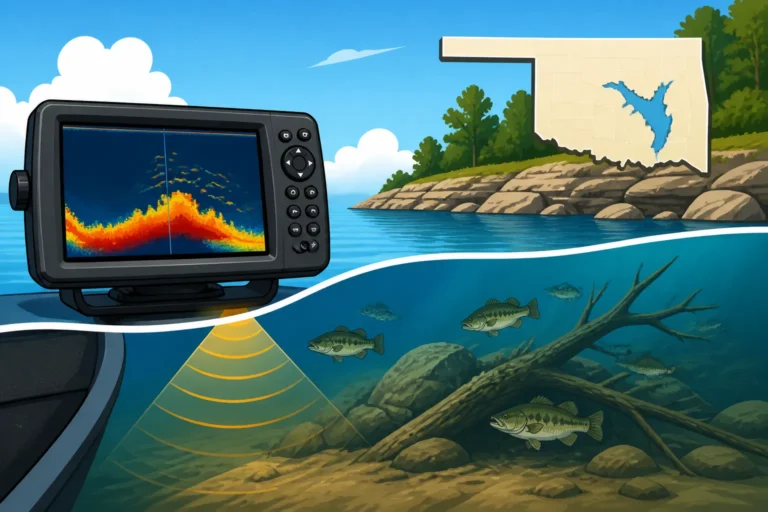
On a lake as expansive as Texoma, finding fish, especially schooling striped bass, often means relying heavily on your electronics. A high-quality fish finder with down imaging and side imaging capabilities is an absolute game-changer. These technologies allow you to scan wide areas, identify baitfish schools, locate submerged structure, and even spot individual fish holding near the bottom. Modern units from brands like Humminbird or Lowrance offer incredibly detailed views of what's beneath and around your boat, greatly increasing your chances of finding those elusive fish. You can learn more about Fish Finder Features That Matter Most on Oklahoma Reservoirs in another one of our guides.
Coupled with a robust fish finder, integrated GPS navigation is non-negotiable for Lake Texoma. This isn't just for finding your way back to the ramp; it's essential for marking productive fishing spots, navigating through channels, and avoiding submerged hazards. With thousands of acres of water, it's easy to get disoriented, especially on overcast days or in unfamiliar areas. A reliable GPS system allows you to mark waypoints for brush piles, humps, or areas where you found active fish, ensuring you can return to them later. Detailed mapping, often available as add-ons, provides invaluable information on contour lines, depth changes, and underwater structure. Having these tools will certainly help you understand How Deep to Troll for Striped Bass on Lake Texoma.
Trolling Motors and Power Poles for Strategic Fishing
For anglers targeting striped bass or even crappie and bass, a high-thrust electric trolling motor, preferably one with GPS anchoring capabilities (like Minn Kota's Spot-Lock or MotorGuide's Pinpoint GPS), is incredibly beneficial. These systems allow you to hold your boat precisely in position over a submerged point, a brush pile, or a schooling bait ball, even in windy conditions, without having to drop an anchor. This is a huge advantage for hands-free fishing, allowing you to focus on casting and reeling. For Best Trolling Motor for Striped Bass at Lake Texoma, you'll want something powerful and reliable.
While less critical for pure open-water striper fishing, power poles or shallow-water anchors can be useful for quickly deploying and holding your boat in shallower coves or near shorelines for crappie or bass fishing. They offer instant, quiet anchoring, which is perfect for stealthy approaches to productive areas. While Bass Pro Shops is a great place to see these in person, you can often find competitive pricing and a wide selection of accessories for these systems on Amazon.
Comprehensive Safety Equipment and Communication
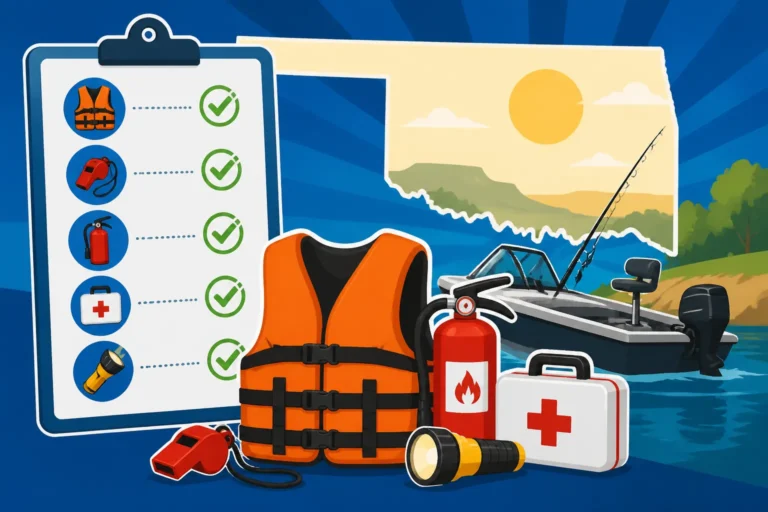
Safety on Lake Texoma should always be your top priority. Given the size and potential for rough water, having a comprehensive safety kit is not just good practice, it's often legally required. This includes enough Coast Guard-approved life jackets or personal flotation devices (PFDs) for everyone on board. For kids 12 and under, they must wear a life jacket whenever the boat is underway. Beyond the PFDs, you'll need a throwable flotation device (Type IV), visual distress signals (flares or a flag), a sound-producing device (horn or whistle), and a fire extinguisher. Always keep your boat's registration and your fishing license handy, as game wardens on Texoma are diligent. You can check out Oklahoma Life Jacket and PFD Rules for Boaters for specific requirements.
Furthermore, a marine VHF radio is a smart investment for communication, especially if your cell phone signal is spotty on certain parts of the lake. It allows you to communicate with other boaters, marinas, and even the Coast Guard or local authorities in an emergency. Carrying a well-stocked first-aid kit, a tool kit, extra ropes, a spare propeller, and a paddle are also wise precautions. Planning for the unexpected on Texoma's vast waters is simply part of being a responsible angler. Taking a moment to review an Oklahoma Boat Safety Equipment Checklist before each trip can literally save your day.
Comfort and Convenience Features for Extended Trips
Fishing Lake Texoma, especially if you're chasing those hard-fighting striped bass, often means long hours on the water. It's not uncommon for anglers to spend sunup to sundown, or even fish into the night, exploring different spots and patterns. Because of this, the comfort and convenience features of your boat become just as important as its raw fishing capability. A boat that keeps you comfortable and helps manage your gear makes those extended trips much more enjoyable and productive.
Ample Storage and Organization Systems
Imagine being out on Lake Texoma for hours, only to realize your tackle boxes are sliding around, your rain gear is soaked, and there's no good spot for your cooler. It's frustrating, right? That's why ample, well-designed storage is a critical feature for any Texoma fishing boat. Look for boats with multiple dry storage compartments to protect electronics, clothing, and other sensitive items from spray and rain. Rod lockers are essential for keeping your rods safe and organized, preventing tangles and damage, especially when running at speed across choppy water.
Beyond the built-in storage, think about how you'll organize your tackle. Many boats come with integrated tackle management systems or areas where you can easily add them. For open-water fishing, you're likely to carry a variety of baits and lures, from large striper topwaters to crappie jigs. Having designated spots for everything keeps your deck clear, reduces clutter, and ensures you can quickly grab what you need when the fish are biting. You might even find specialized gear organizers on Amazon that perfectly fit your boat's compartments, making your fishing experience smoother.
Comfortable Seating and Protection from the Elements
While standing and casting are part of the game, having comfortable seating options for when you're running, trolling, or simply taking a break is a blessing on Lake Texoma. Pedestal seats with good back support, leaning posts, or even a small bench seat can make a huge difference in reducing fatigue over a long day. If you're bringing family or non-fishing guests, comfortable seating becomes even more important for their enjoyment.
Protection from the elements is also a major consideration. The Oklahoma sun can be intense, especially reflecting off the water. A good bimini top or a T-top on a center console provides much-needed shade, helping to prevent sunburn and heat exhaustion. Some boats even offer full enclosures or partial windshields that provide shelter from wind and spray, which is invaluable on those cooler, windy days or when you're running through chop. Nobody wants to be shivering or baking when they're trying to enjoy a day of fishing. Consider what level of protection will keep you and your crew comfortable throughout the year, from the heat of summer to the chill of late fall.
Livewells, Coolers, and Refreshment Options
For serious anglers, a well-aerated livewell is crucial for keeping bait fresh and healthy, or for sustaining your catch until you're ready to head back to the ramp. On Lake Texoma, where you might be catching multiple species or planning to enter a tournament, the size and quality of your livewell can directly impact your success and compliance with regulations. Make sure it's large enough for your typical catch and has a good aeration system. Oklahoma's Crappie Fishing Rules and Limits can be quite specific depending on the lake, so having a good livewell helps you stay within those limits until you get back to shore to measure and make decisions.
Beyond fish and bait, keeping yourself and your crew hydrated and fed is key. Dedicated cooler space, whether built-in or accessible areas for personal coolers, is essential. Packing plenty of water, snacks, and perhaps a hot thermos on a chilly morning can drastically improve your comfort. Some boats even offer small sinks or wash-down hoses, which are fantastic for cleaning up after handling fish or simply washing your hands. These small conveniences add up to a much more pleasant and extended time on the water, allowing you to focus on the thrill of the catch rather than the discomforts of the trip.
Disclaimer
This article is for general informational purposes only and does not constitute professional advice. Laws, prices and regulations vary by location and change over time. Consult a qualified professional for guidance on your specific situation.