Trolling Speed for Striped Bass on Oklahoma Reservoirs
One of the biggest head-scratchers for anglers targeting striped bass on Oklahoma's vast reservoirs is figuring out that "just right" trolling speed. It's incredibly frustrating when you're dragging expensive lures around, seeing fish on the sonar, but getting absolutely no bites. This guide is here to unravel the mystery of trolling speed for striped bass, helping you dial in your approach and turn those frustrating outings into successful trips.
Understanding Striped Bass Behavior and Trolling
Before we even talk about specific numbers on your speedometer, it's crucial to understand why trolling speed is such a make-or-break factor when you're chasing striped bass. These aren't just any fish; they're apex predators with specific feeding patterns and preferences, and your presentation needs to align with what they're looking for.
Why Trolling Speed Matters for Stripers
Trolling speed isn't just a number; it's the lifeblood of your lure presentation. Think of it this way: you're trying to mimic a natural food source or trigger an aggressive reaction strike. If your lure is zipping by too fast, it might look unnatural, like a baitfish that's spooked and fleeing at an impossible speed, making it hard for a striper to commit. On the flip side, if you're dragging it too slowly, it can appear lethargic or even dead, which might not entice a predatory strike from an actively feeding fish. The goal is to make your lure look like an easy, appealing meal or an injured, struggling critter that's worth the chase.
The subtle vibrations, wobbles, and movements of your lure are all optimized for a particular speed range. Go too fast, and a crankbait might "blow out" or swim erratically, losing its natural action. Go too slow, and a swimbait might just sink like a rock without any enticing tail kick. Each lure is designed to perform best at a certain velocity, and matching your boat's speed to that sweet spot is key to unlocking its full potential. It's a delicate dance between presenting an irresistible meal and not making your offering seem suspicious or too difficult to catch. This understanding is foundational for successful Striped Bass Fishing Techniques for Oklahoma's Lake Texoma.
Factors Influencing Striped Bass Trolling Speed
So, what dictates that "perfect" speed? It's rarely a static number you can set and forget. Several environmental and behavioral factors on the water should influence your adjustments throughout the day. Water temperature, for instance, plays a huge role. In colder water, stripers are often less active and may prefer a slower, more deliberate presentation. As the water warms up, they tend to become more aggressive and might chase a faster-moving bait. This is a vital consideration when you think about How Striped Bass Fishing Changes Through the Seasons at Lake Texoma, Oklahoma.
The time of day and prevailing light conditions can also influence how fast you should troll. Early morning or late evening, when light is low, stripers might be more willing to chase faster baits as they rely on their lateral lines more than sight. During bright midday sun, they might be deeper and require a slower, more precise presentation. Furthermore, observing the baitfish on your sonar is paramount. Are they tightly schooled and moving quickly, or are they scattered and meandering? Your trolling speed should ideally reflect the activity level of the forage the stripers are currently targeting. Finally, consider the presence of structure – humps, ledges, old creek channels. When you're fishing tight to structure, a slower speed allows you more control and keeps your lure in the strike zone longer.
Optimal Trolling Speeds for Oklahoma Stripers
Now that we understand the "why," let's dive into the "what" and "how" of setting your trolling speed for these powerful fish. While there isn't a single magic number, there are widely accepted ranges and principles that will put you in a prime position for success.
General Speed Guidelines for Striped Bass
For striped bass in Oklahoma's large reservoirs like Lake Texoma or Grand Lake, a general trolling speed range often falls between 2.0 and 4.0 miles per hour (mph). This isn't a hard and fast rule, but it's an excellent starting point that covers most scenarios. Within this range, you'll want to lean towards the slower end (2.0-2.5 mph) when conditions indicate less active fish. This might be during cold fronts, in very clear water, or when you're marking fish deep on structure and they seem lethargic. A slower speed gives the fish more time to react and investigate your offering.
Conversely, when stripers are actively feeding, busting on the surface, or when the water is warmer and slightly stained, you might find more success by bumping up your speed to the 3.0-4.0 mph range. This faster pace can trigger aggressive reaction strikes, making your lure appear like a fleeing baitfish. It's also often effective when you're covering vast areas of open water, searching for active schools. Always remember that these are just guidelines; the fish will tell you what they want. It’s all about experimentation and paying close attention to your rod tips and sonar readings. For effective coverage, especially when seeking out these elusive schools, having a dependable trolling motor setup can make all the difference, as detailed in Trolling Motor Setup for Oklahoma Striped Bass.
Adjusting Speed for Different Lure Types
The type of lure you're pulling is one of the biggest determinants of your optimal trolling speed. Each lure has a sweet spot where it achieves its intended action. For instance, large crankbaits and lipless crankbaits often have a specific speed at which they wobble and dive correctly. Pull them too fast, and they might blow out or rise too high in the water column; too slow, and they won't have that irresistible action.
| Lure Type | Recommended Trolling Speed (mph) | Presentation Goal | Key Considerations |
|---|---|---|---|
| Deep-Diving Crankbaits | 2.0 – 3.0 | Mimic large baitfish, dive to target depths | Ensure lure tracks straight, doesn't "blow out" |
| Swimbaits (Rigged) | 2.5 – 3.5 | Replicate natural swimming motion of baitfish | Maintain natural tail kick, avoid spinning |
| Umbrella Rigs | 1.5 – 2.5 | Imitate a school of baitfish | Slower speeds prevent tangles and allow followers to commit |
| Live Bait (Shad, Herring) | 0.5 – 1.5 | Present an injured or cruising live baitfish | Slowest speeds to keep bait alive and natural-looking |
| Jigs/Soft Plastics (with weight) | 1.8 – 2.8 | Offer a subtle, injured baitfish or bottom-dwelling creature | Maintain bottom contact or desired depth without excessive skipping/bouncing |
Umbrella rigs, also known as A-rigs, are designed to mimic a school of baitfish, and they require a slower speed, typically 1.5 to 2.5 mph, to prevent tangles and allow the individual swimbaits to flutter naturally. If you go too fast, the whole rig can become a chaotic mess. Live bait, such as gizzard shad or threadfin herring, demands the slowest speeds, often 0.5 to 1.5 mph, just enough to keep the bait swimming naturally without dragging it lifelessly. Experimentation is key, and watching your rod tips for the desired action of each lure will give you immediate feedback. When you’re putting together your setup, consider checking out options at Bass Pro Shops or on Amazon for a variety of effective lures and Best Trolling Rigs for Striped Bass Fishing.
Reading Your Electronics for Speed Adjustments
Your boat's electronics are more than just fancy gadgets; they're essential tools for fine-tuning your trolling speed. Your GPS speedometer is your primary source for accurate boat speed. Wind and current can significantly impact your "speed over ground" versus your "speed through water," and GPS gives you the former, which is what truly dictates your lure's presentation. Always rely on your GPS speed, not just your engine's RPMs, as environmental factors can make a big difference.
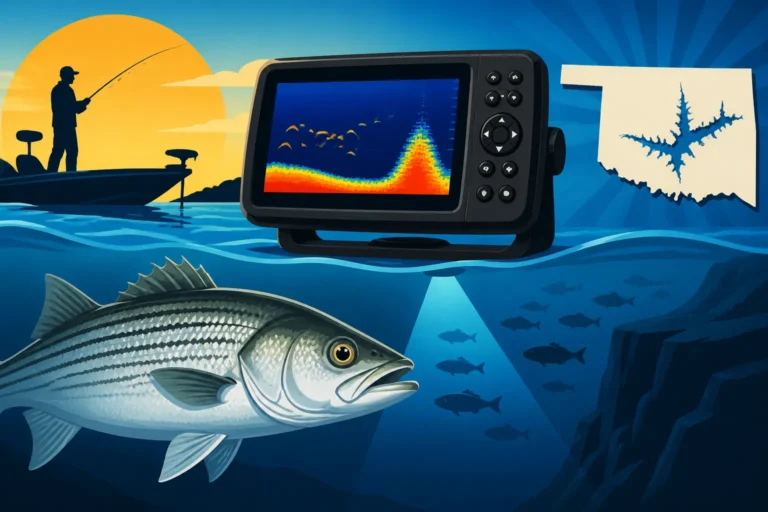
Your fish finder is another critical piece of the puzzle. It not only helps you locate schools of stripers and baitfish, but it also shows you their depth and activity level. If you're marking stripers tightly schooled and moving fast, you might need to increase your speed to draw a reaction. If they're scattered and holding tight to structure, a slower, more methodical approach might be in order. Observing baitfish on the screen – how fast they're moving, how deep they are – should directly inform your trolling speed. Many modern fish finders, particularly those designed for deep-water striped bass fishing like those you can find at Bass Pro Shops or on Amazon, offer detailed readouts that can guide your decisions, as covered in Best Fish Finder for Deep Water Striped Bass on Lake Texoma. Pay attention to water temperature readings as well; sudden drops or rises can indicate thermoclines or areas where fish might be more or less active, prompting a speed adjustment.
Practical Tips for Maintaining and Adjusting Trolling Speed
Having the right gear and knowing what to look for on your electronics is one thing, but actually implementing those adjustments on the water is where experience comes into play. It requires a combination of good equipment, keen observation, and a willingness to adapt.
Gear for Precise Speed Control
Achieving and maintaining a precise trolling speed, especially on large, windy Oklahoma reservoirs, requires the right equipment. A dedicated kicker motor is a game-changer for many serious striper anglers. These smaller, auxiliary outboards allow for incredibly fine adjustments to speed at very low RPMs, offering much better control than your main engine, especially in the 0.5 to 4.0 mph range. For silent, ultra-slow trolling or holding steady in a crosswind, a high-thrust electric trolling motor mounted on the bow is indispensable. Features like GPS-enabled spot-lock or cruise control on electric trolling motors can maintain your desired speed and direction even in challenging conditions, making them excellent for precise lure presentation. You can find a wide selection of these motors at Bass Pro Shops or browse various models and accessories on Amazon.
Beyond propulsion, a reliable GPS speedometer is non-negotiable. Many modern fish finders integrate GPS speed, but a dedicated unit can offer even more accuracy and redundancy. Rod holders are also critical; they keep your rods secure and allow you to spread out multiple lines, covering a wider swath of water. When you're trolling, watching the tip of each rod can tell you a lot about your lure's action and whether it's performing correctly at your current speed. Remember to consider the right setup for your specific needs, whether it's a Best Reel for Striped Bass Trolling at Lake Texoma or the appropriate How Deep to Troll for Striped Bass on Lake Texoma.
On-Water Adjustments and Observations
The most crucial aspect of mastering trolling speed for striped bass is continuous observation and adjustment. Don't just set it and forget it. Pay close attention to your rod tips. Are your crankbaits wobbling correctly? Are your swimbaits kicking their tails enticingly? If a lure isn't performing as it should, your speed is likely off. Even subtle changes in boat speed caused by wind gusts or current can drastically alter a lure's action. A small adjustment of 0.2 mph can sometimes be the difference between getting bites and getting nothing.
Watch your sonar religiously. Are you seeing baitfish being ambushed by stripers? How deep are the fish holding? If stripers are suspended at a certain depth, you might need to adjust your speed, line length, or lead weights to ensure your lures are precisely in that strike zone. The moment you get a strike, pay attention to all the variables: your exact speed, the lure that got hit, the depth, and the conditions. That strike is your immediate feedback that you’ve found the sweet spot. If you go too long without a bite, don't be afraid to experiment. Increase your speed by 0.5 mph for five minutes, then drop it by 0.5 mph. Try different turns, which naturally change the speed of your inside and outside lines, to see if that triggers a strike. This iterative process is how you truly learn what the fish want on any given day. You'll also want to understand How to Troll for Striped Bass in Deep Water for maximizing your success.
Conclusion
Trolling for striped bass on Oklahoma's majestic reservoirs is an incredibly rewarding experience, but it demands attention to detail, especially when it comes to speed. By understanding how factors like water temperature, lure type, and baitfish activity influence striper behavior, and by diligently using your electronics and observing your rod tips, you'll gain the confidence to dial in that "just right" trolling speed. It's a dynamic process of constant adjustment and learning, but with a bit of practice and the right gear, you'll be well on your way to more memorable days chasing those powerful Oklahoma stripers.
Disclaimer
This article is for general informational purposes only and does not constitute professional advice. Laws, prices and regulations vary by location and change over time. Consult a qualified professional for guidance on your specific situation.