Do Pontoon Boats Need to Be Registered in Oklahoma?
It can be incredibly confusing trying to navigate all the rules and regulations that come with owning a boat, especially when you invest in something as unique and versatile as a pontoon. Many folks assume pontoon boats might be in a different category than other vessels when it comes to rules, leading to a lot of head-scratching about whether they need to be officially registered. This guide is here to clear up that common misconception and walk you through everything you need to know about registering your pontoon boat in our beautiful state of Oklahoma.
The Clear Answer: Pontoon Boats and Oklahoma's Registration Law
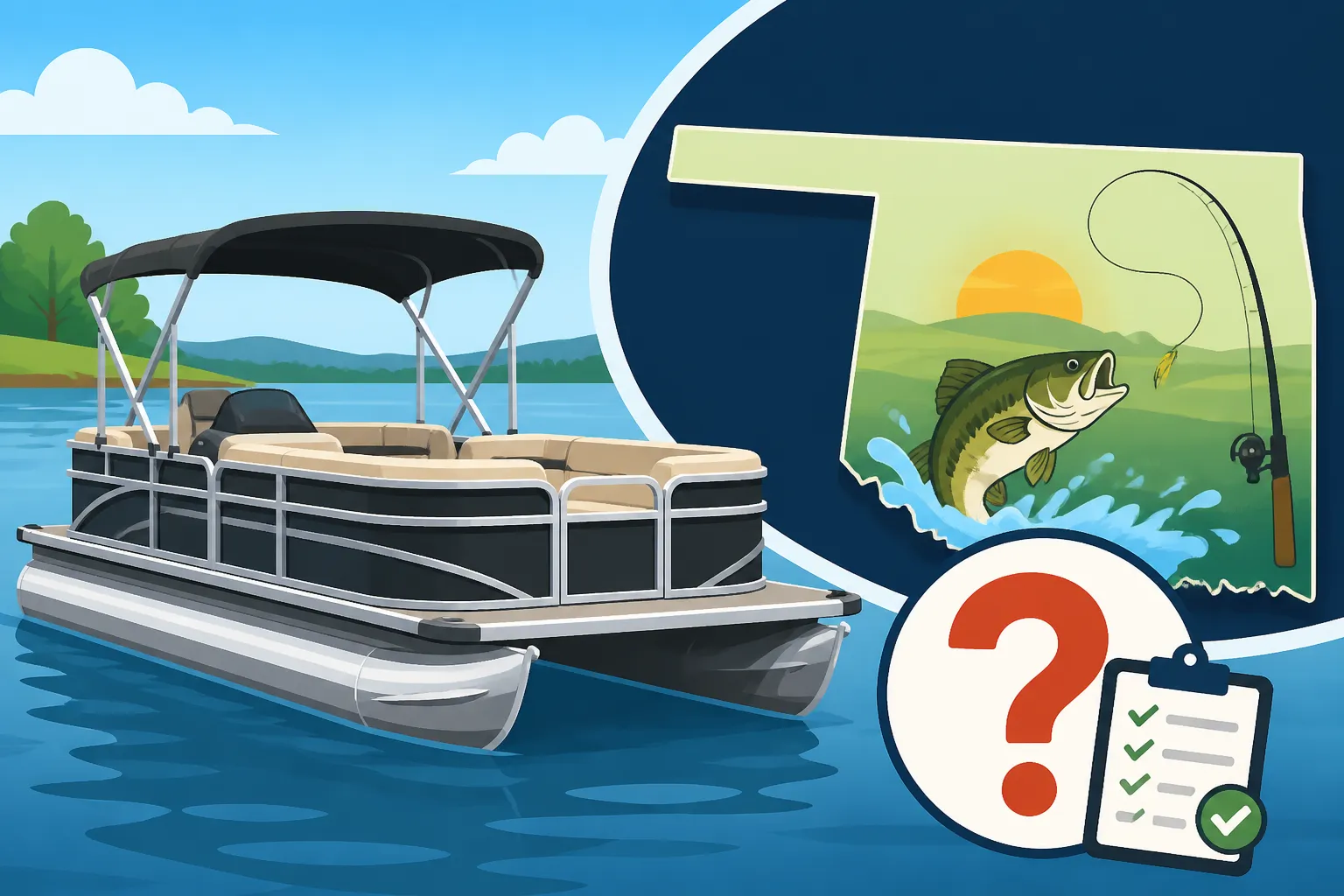
Let's cut right to the chase because I know you're probably eager to get your pontoon out on Lake Eufaula or Grand Lake. Yes, your pontoon boat absolutely needs to be registered in Oklahoma. There’s no special exemption for pontoons just because they might feel more like a floating patio than a traditional speed boat or fishing vessel. The Oklahoma statutes are pretty clear: any motorized vessel used on the public waters of the state must be registered and titled.
Think about it this way: a pontoon boat, by its very design, almost always has an engine, whether it's a quiet little kicker motor for cruising or a powerful outboard for pulling tubes. That engine is the key differentiator. If it has a motor, it's generally considered a vessel that needs to be registered. This isn't just about collecting fees; it's about safety, identification, and ensuring that all watercraft operating on our lakes and rivers can be accounted for and regulated properly. So, while your pontoon might be the ultimate relaxation station, the state sees it as a full-fledged boat that plays by the same rules as every other motorized craft out there.
What Constitutes a Registrable Vessel?
The Oklahoma Tax Commission defines a vessel as any boat or other description of watercraft, other than a seaplane, used or capable of being used as a means of transportation on water. The key here, for most recreational boaters, is the presence of a motor. If your pontoon is propelled solely by oars or paddles – a scenario that's pretty rare for a pontoon but theoretically possible for smaller craft – it might fall into an unregistered category, but that's almost never the case for these larger, motor-driven platforms.
This definition ensures consistency across the board. A bass boat, a ski boat, a houseboat, and yes, your pontoon boat, all share that common characteristic of being motor-propelled for transportation on water. This broad definition prevents confusion and ensures that every boat operating on our public waterways has a unique identifier and its owner is on record. It’s about more than just motor size or boat type; it’s about its intended use for powered navigation. Do You Need to Title a Boat You Just Bought in Oklahoma? covers these aspects in more detail.
Why the Confusion About Pontoons?
It’s completely understandable why people might get confused about pontoon registration. Pontoons often feel different. They're typically slower, focused more on leisure, entertaining, and gentle cruising than high-speed activities. Their flat decks and comfortable seating can make them seem more like a recreational platform than a "boat" in the traditional sense, especially if your primary image of a boat is a sleek bass boat or a powerful ski boat.
However, the law doesn't differentiate based on your boat's vibe. It differentiates based on its propulsion and use on public waters. Many pontoon owners also come from backgrounds of owning smaller, non-motorized craft like canoes or kayaks, which often have different (or no) registration requirements. This prior experience can sometimes lead to an incorrect assumption that all slower, leisure-oriented watercraft are exempt. Do Kayaks Need to Be Registered in Oklahoma? provides a useful comparison here. The sheer prevalence of pontoons on Oklahoma lakes means the state needs to know who owns them and how they're being operated, just like any other vessel.
Understanding Oklahoma's Boat Registration Requirements
Navigating the specifics of boat registration in Oklahoma can feel like a bit of a maze, but it's really quite straightforward once you know the steps. The Oklahoma Tax Commission is the agency responsible for handling boat registrations and titling. They're the ones who will issue you that all-important decal and registration card.
For any boat owner, whether you're bringing home a brand-new pontoon from Bass Pro Shops or purchasing a used one from a private seller, the process begins with understanding the core requirements. You'll need specific documentation to prove ownership and certain information about the vessel itself. This isn't just bureaucratic red tape; it's designed to protect you as an owner and ensure clear records for law enforcement and emergency services.
Documents You'll Need for Pontoon Registration
When you're ready to head to your local tag agent, make sure you have all your ducks in a row. The required documents will vary slightly depending on whether your pontoon is brand new or used, and if it's coming from out of state.
Here’s a general rundown of what you’ll likely need:
- Proof of Ownership: This is paramount. For a new pontoon, you'll need the Manufacturer's Statement of Origin (MSO) or Certificate of Origin (MCO). If you're buying a used pontoon, you'll need the previously issued Oklahoma title (or an out-of-state title if applicable), along with a bill of sale signed by both parties.
- Proof of Identity: Your valid driver's license or state-issued ID is a must.
- Proof of Residency: If you're an Oklahoma resident, they'll want to confirm your address.
- Application for Title/Registration: This form will be available at the tag agent's office or sometimes online.
- Hull Identification Number (HIN): This unique 12-digit number is like your boat's VIN and is crucial for identification. Make sure it's clearly visible on your pontoon.
Gathering these documents beforehand can save you a ton of time and a frustrated second trip to the tag agency. It's a bit like preparing for tax season – the more organized you are upfront, the smoother the process will be.
| Document Type | New Pontoon | Used Pontoon (Oklahoma) | Used Pontoon (Out-of-State) |
|---|---|---|---|
| Proof of Ownership | Manufacturer's Statement of Origin (MSO) | Oklahoma Title + Bill of Sale | Out-of-State Title + Bill of Sale |
| Proof of Identity | Valid Driver's License/State ID | Valid Driver's License/State ID | Valid Driver's License/State ID |
| Proof of Residency | Oklahoma Driver's License (or utility bill) | Oklahoma Driver's License (or utility bill) | Oklahoma Driver's License (or utility bill) |
| Application Form | Yes | Yes | Yes |
| Hull Identification Number (HIN) | Yes | Yes | Yes (must match documentation) |
| Odometer/Hour Meter Reading (if any) | N/A | N/A | N/A |
Note: Always double-check with your local tag agency for any specific, additional requirements.
Understanding the Fees Involved
Nobody likes talking about fees, but it's a necessary part of boat ownership. The cost of registering and titling your pontoon boat in Oklahoma isn't a fixed, one-size-fits-all number. It's often calculated based on a few factors, primarily the boat's purchase price or value, and its age. Oklahoma has a system where the registration fee is a percentage of the boat's purchase price or value when new, and this depreciates over time. This means an older, used pontoon will generally have a lower registration fee than a brand-new one fresh off the lot.
There's typically a separate fee for the title itself, which is a one-time cost, and then the recurring annual registration fee. While I can't give you exact figures, know that there are caps on these fees, particularly for the annual registration. For example, there's a Oklahoma's $151 Boat Registration Fee Cap that applies, ensuring that even for very expensive vessels, the annual cost doesn't skyrocket indefinitely. When budgeting for your pontoon, make sure to factor in these initial and ongoing costs. It's a smart move to call your local tag agency or check the Oklahoma Tax Commission website for the most current information regarding these calculations before you go. Oklahoma New Boat Registration Fee Cost is another helpful resource to review.
The Registration Process for Your Pontoon
Alright, you've got your pontoon, you understand why you need to register it, and you've started gathering your documents. Now, let's talk about the practical steps to actually get it registered and titled so you can legally cruise those beautiful Oklahoma waters. It's a process that many boaters find a little overwhelming, but breaking it down makes it much more manageable.
The core of the process revolves around visiting a licensed tag agency. These are your go-to spots for vehicle and vessel registrations across the state. They have the forms, the systems, and the trained staff to help you through each step.
Step-by-Step Guide to Registering Your Pontoon
- Gather All Necessary Documents: As discussed, this is your first and most crucial step. Make sure you have your MSO or title, bill of sale, personal ID, and any other relevant paperwork. Having these neatly organized will make your visit to the tag agent a breeze. It's better to have too much documentation than too little!
- Locate Your Nearest Tag Agency: Oklahoma has tag agencies scattered across every county. A quick search online for "Oklahoma tag agency near me" should bring up several options. While many agencies can handle boat registrations, it's always a good idea to call ahead and confirm they process vessel titles and registrations, just in case.
- Visit the Tag Agency: Head to the agency during business hours. Be prepared for a wait, especially during peak times. Present your documents and explain that you need to title and register a pontoon boat.
- Complete the Application Forms: The tag agent will provide you with the necessary application forms. These typically include an Application for Oklahoma Certificate of Title for a Vessel or Outboard Motor. Fill these out accurately and completely. Don't be afraid to ask questions if something is unclear; that's what they're there for.
- Pay the Fees: Once the paperwork is reviewed and approved, you'll pay the applicable titling and registration fees. Remember, these are calculated based on factors like the boat's value and age. You might also have to pay sales tax on the purchase price if you haven't already.
- Receive Your Temporary Registration and Decal: Upon successful completion, you'll usually walk out with a temporary registration and a new decal for your pontoon. The official title might be mailed to you later. You'll need to affix this decal to your pontoon boat in a visible location as required by law.
- Keep Your Registration Card Onboard: Always keep your registration card on your pontoon while it's in operation. Think of it like your car's registration – you need to have proof of legal operation readily available. Oklahoma Boat Registration and Titling Rules Explained provides a comprehensive look at these guidelines.
Crucial Timelines to Remember
Time is of the essence when it comes to boat registration. You can't just buy a pontoon and take your sweet time getting it registered. Oklahoma has specific deadlines that you need to be aware of, especially if you're a new owner.
Typically, you have a limited window – often 30 days – from the date of purchase to register your pontoon boat. If you delay, you could face penalties. It's a common mistake many new boaters make, thinking they have more wiggle room than they actually do. Don't let your excitement to get on the water overshadow the importance of compliance.
Similarly, if you're bringing a pontoon into Oklahoma from another state, there's usually a grace period, but you still need to act within that timeframe to establish Oklahoma registration. Missing these deadlines can lead to fines and unnecessary hassle. How Long Do You Have to Register a Boat After Buying It in Oklahoma? delves into these critical timeframes, so you don't accidentally fall out of compliance.
Why Registration Matters: Beyond Just Following the Law
You might look at all the paperwork and fees and wonder why it’s such a big deal. Beyond the simple fact that it's the law, there are several very practical and important reasons why registering your pontoon boat is crucial. It's not just about satisfying a government requirement; it's about protecting yourself, your investment, and ensuring the safety and order of our waterways for everyone.
Think of it as having your boat's personal identity card. This card, complete with its unique Hull Identification Number (HIN) and registration number, serves multiple functions that benefit you and the broader boating community.
Safety and Emergency Identification
In the unfortunate event of an emergency on the water – a breakdown, an accident, or even if your boat goes adrift – a registered vessel is much easier to identify and track. Your registration links your boat directly to you, the owner. This is invaluable for law enforcement, game wardens, and search and rescue teams.
Imagine a scenario where your pontoon breaks down on Lake Texoma, and you can't reach help. If someone spots your boat and reports its registration number, authorities can quickly identify it, ascertain its home port, and potentially even contact you or your emergency contacts. Without registration, your boat is just another unidentified vessel, making rescue or assistance efforts significantly more challenging and delayed. This is a critical component of overall Oklahoma Boat Safety Equipment Checklist.
Preventing Theft and Aiding Recovery
Boat theft, while hopefully not common for your beautiful pontoon, is a reality. A registered and titled boat is much harder to sell illegally and significantly easier to recover if it is stolen. The unique HIN and registration number act as clear identifiers. When a stolen boat is reported, these numbers are entered into national databases, making it extremely difficult for thieves to re-register or sell it without being caught.
Conversely, if an unregistered pontoon is stolen, proving ownership becomes a much more arduous task, and law enforcement has fewer tools at their disposal to track it down. Your title, which is directly linked to your registration, serves as concrete proof of your legal ownership. It’s a layer of protection for your significant investment.
Regulatory Compliance and Waterway Management
Registration fees, while sometimes frustrating to pay, contribute to the management and maintenance of Oklahoma's waterways. These funds often go towards things like improving boat ramps, maintaining navigation aids, supporting game warden patrols, and funding conservation efforts that keep our lakes and rivers healthy and fishable.
By registering your pontoon, you're contributing to the infrastructure that makes boating in Oklahoma enjoyable for everyone. It also helps the state track the number and types of vessels on its waters, which is vital for planning and resource allocation. It's part of being a responsible boater and a good steward of our natural resources.
What Happens If You Don't Register Your Pontoon?
So, you're thinking about skipping the registration process for your pontoon? Or perhaps you simply forget to renew your registration? It's easy to think, "What's the big deal?" but I'm here to tell you, it can become a pretty big deal. The Oklahoma Department of Wildlife Conservation (ODWC) game wardens are out there on the water, and they take boating regulations seriously. Ignoring these rules can lead to consequences that are far more inconvenient and costly than simply going through the registration process.
It's tempting to put off paperwork, especially when the weather's perfect for a day out on Fort Gibson Lake. However, just like driving an unregistered car, operating an unregistered boat comes with risks you definitely want to avoid.
Penalties and Fines for Non-Compliance
Operating an unregistered pontoon boat on Oklahoma's public waters is a violation of state law. If a game warden stops you and your boat isn't properly registered and displaying current decals, you can expect to receive a citation. The penalties vary, but they can include fines, which will certainly be more expensive than the registration fee itself. It’s a classic case of paying more later for something you could have handled easily upfront.
Beyond the initial fine, you might also be required to immediately register the vessel, sometimes incurring additional late fees or even facing further legal action if you continue to operate it illegally. Game wardens have the authority to issue these citations and ensure compliance, and they are regularly patrolling our lakes and rivers. They're not just looking for fishing violations; they're ensuring general boating safety and compliance with all regulations, including registration. Penalties for Fishing Without a License in Oklahoma is a related read that shows how seriously such violations are taken.
Risk of Impoundment
In more severe or repeated cases of non-compliance, your pontoon boat could even be impounded. Imagine having your prized pontoon, which you've probably spent countless hours cleaning and preparing, towed off the water because of an administrative oversight. Not only would this ruin your day, but you'd then be on the hook for impoundment fees, storage fees, and still have to pay the original fines and registration costs to get your boat back. This is a hassle and an expense no boater wants to deal with.
It's a stark reminder that boating is a privilege that comes with responsibilities. Game wardens want everyone to enjoy the water safely and legally, and part of that means ensuring all vessels are properly identified and registered.
Insurance and Legal Implications
An often-overlooked consequence of failing to register your pontoon boat relates to insurance and liability. Many boat insurance policies require that your vessel be legally registered and operated. If you're involved in an accident while operating an unregistered pontoon, your insurance company might deny coverage, leaving you personally responsible for damages, medical bills, and legal fees. This can be a financially devastating outcome.
Furthermore, if your pontoon is stolen and it's not registered, some insurance policies might make it more difficult to claim reimbursement, or they might deny the claim altogether. The registration is proof of legal ownership and operation. Without it, you could face significant challenges if anything goes wrong. It's just not worth the risk when considering the small effort and cost it takes to get things squared away at the tag agency.
When you're outfitting your pontoon, whether it's with safety gear from Bass Pro Shops or new gadgets from Amazon, remember that legal operation is just as crucial as having the right equipment. Ensuring your registration is current means you can focus on enjoying your time on the water without the looming worry of legal troubles.
Keeping Your Pontoon Registration Current
Once your pontoon boat is officially registered and titled in Oklahoma, you're all set for a year of fun on the water! But remember, registration isn't a one-and-done deal. Just like your car tags, your boat registration needs to be renewed periodically to remain valid. This is often an annual process, and it's super important to keep track of the expiration date to avoid any issues or penalties.
Staying on top of your renewals is a simple way to continue enjoying your pontoon without interruption. The process for renewal is typically much simpler than the initial registration, as all your boat's information is already in the system.
The Renewal Process
Renewing your pontoon registration is generally a straightforward affair. Most Oklahoma tag agencies offer several convenient ways to renew:
- In Person: You can always visit your local tag agency with your current registration card or renewal notice. This is a good option if you have any questions or need to make changes to your information.
- By Mail: Many agencies allow renewals by mail. You'll typically receive a renewal notice in the mail that you can fill out and send back with your payment.
- Online: For many boat owners, renewing online is the easiest and most convenient option. The Oklahoma Tax Commission usually provides an online portal where you can enter your boat's information, pay the renewal fee, and often print a temporary registration immediately. Your new decal and official card will then be mailed to you. Renewing Your Oklahoma Fishing License Online is a good example of how convenient online renewals can be for other outdoor permits.
Whichever method you choose, make sure to renew before your current registration expires. There’s usually a grace period, but it's always best to be proactive.
What Happens If You Let It Expire?
Letting your pontoon registration expire is essentially the same as operating it unregistered. If you're caught on the water with expired tags, you'll face the same potential fines and penalties as if you'd never registered it in the first place. Nobody wants to cut a fun day short because of an expired decal!
The key is to pay attention to those renewal notices that typically come in the mail. If you've moved, make sure you've updated your address with the tag agency so you don't miss these important reminders. Setting a reminder on your phone or calendar for a month before your registration expires is also a great habit to adopt. That way, you have plenty of time to get it renewed and avoid any last-minute stress or late fees. Enjoying your pontoon on the beautiful waters of Oklahoma should be about relaxation, not worrying about paperwork!
Disclaimer
This article is for general informational purposes only and does not constitute professional advice. Laws, prices and regulations vary by location and change over time. Consult a qualified professional for guidance on your specific situation.