Best Anchor for Fishing From a Boat on Oklahoma Reservoirs
There's nothing quite as frustrating as finally getting your boat positioned perfectly over that submerged brush pile or hummock where the fish are hiding, only for a sudden gust of wind or a subtle current to drag you off course. Every Oklahoma angler knows this dance—you cast, you retrieve, and then you're scrambling to adjust, losing precious fishing time. This guide is all about helping you conquer that challenge by diving deep into the best anchor options and techniques for fishing from a boat on Oklahoma's diverse reservoirs, ensuring you stay exactly where you want to be.
Understanding Oklahoma Reservoir Conditions for Anchoring
Oklahoma's reservoirs are beautiful, expansive, and full of incredible fishing opportunities, but they also present unique challenges for boaters trying to hold a steady position. It's not like anchoring in a calm, shallow pond. You're often dealing with deeper water, changing currents, and, let's be honest, that notorious Oklahoma wind that seems to come out of nowhere.
The Impact of Wind and Current on Your Boat
Wind is arguably the biggest nemesis for anglers on Oklahoma lakes. Whether you're on the vast expanses of Lake Texoma, the sprawling waters of Lake Eufaula, or the tree-lined shores of Grand Lake O' the Cherokees, a strong breeze can turn a peaceful fishing spot into a constant battle against drift. Even a small bass boat or a kayak can feel like a leaf in a hurricane when the wind picks up. Currents, while often less noticeable than wind, can also play a significant role, especially near dam spillways, river channels, or after heavy rain. These forces combine to push your boat, making precision anchoring critical. If you're trying to work a specific contour line or a small piece of structure that you've identified with your fish finder, being constantly pushed around defeats the purpose.
It's not just about comfort; it's about effectiveness. Imagine you've spent an hour navigating to a sweet spot, perhaps a productive crappie bed, and you're fighting the wind instead of fishing. It's exasperating and inefficient. That's why having the right anchoring setup isn't a luxury; it's a necessity for serious anglers. You need an anchor that can dig in and hold, giving you the stability to focus on your retrieve, feel those subtle bites, and land more fish. For tips on navigating these larger bodies of water, check out Best Fishing Boats for Oklahoma's Big Reservoirs.
Common Bottom Types in Oklahoma Reservoirs
Oklahoma's reservoirs boast a variety of bottom compositions, and understanding these is key to choosing an effective anchor. No single anchor type is perfect for every situation, which is why many experienced anglers carry a couple of different options.
- Mud and Silt: Many of Oklahoma's older, shallower coves and river arms are characterized by soft, mucky bottoms. This is common in areas like the upper reaches of Lake Eufaula or some protected bays on Keystone Lake. In these conditions, anchors need to have a broad surface area or be designed to sink deep and hold.
- Sand and Gravel: You'll find sandy or gravelly bottoms in many recreational areas, beach zones, or shallower flats on lakes like Lake Murray. These offer good holding power for anchors designed to dig in, like fluke anchors.
- Rock and Riprap: Shorelines, dam areas, and submerged roadbeds often feature rocky or riprap bottoms. This is prevalent on lakes like Grand Lake O' the Cherokees. These areas can be tricky, as some anchors get wedged hopelessly in the rocks, while others struggle to find purchase.
- Clay: Often found mixed with sand or gravel, clay bottoms provide excellent holding power if an anchor can penetrate the surface. Many of our lakes have a good mix of this firm bottom type.
- Submerged Timber and Brush Piles: While not a "bottom type" in the traditional sense, these structures are critical fishing spots that also pose anchoring challenges. You don't want to drop a traditional anchor directly into a dense brush pile, risking a snag. This is where drift socks or specialized shallow-water anchors might come into play, or careful placement of a traditional anchor just outside the structure. If you need a refresher on locating these, take a look at How a Fish Finder Helps You Find Structure on Oklahoma Reservoirs.
Types of Anchors Best Suited for Oklahoma Reservoirs
When you're out on an Oklahoma reservoir, your anchor is your connection to the bottom, holding you in place against the elements. Choosing the right type can make all the difference between a productive day of fishing and a frustrating battle against drift. Let's explore the anchors that prove most reliable in our waters.
Fluke (Danforth) Anchors
The fluke anchor, often called a Danforth, is a very popular choice for many Oklahoma anglers, and for good reason. It’s designed with two large, flat flukes that pivot and dig deep into soft bottoms like mud, sand, and gravel.
- Pros:
- Excellent holding power in soft to medium bottoms.
- Lightweight for their holding capacity.
- Relatively easy to retrieve, especially if it hasn't buried too deep.
- Many models are easily collapsible for storage, which is a huge plus in smaller boats.
- Cons:
- Struggles to hold in rocky or hard-packed clay bottoms where the flukes can't penetrate.
- Can get snagged in submerged timber or dense brush.
- Requires a bit of scope (the ratio of anchor line to water depth) to set properly.
- Best Use Case in Oklahoma: If you spend most of your time fishing the sandy flats of Lake Texoma, the muddy coves of Lake Eufaula, or the gravel beds of Fort Gibson Lake, a fluke anchor will serve you very well. It's a fantastic all-around choice for many of our larger, open-water reservoirs where softer bottoms dominate. You can find a good selection of these at local outfitters or through online retailers like Amazon.
Claw (Bruce) Anchors
The claw anchor, sometimes referred to as a Bruce-style anchor, is another solid contender, particularly for those who encounter a mix of bottom types. Its design, resembling a grappling hook or a plow, allows it to find purchase in various conditions.
- Pros:
- Good holding power across a wider range of bottoms, including mud, sand, and even some rock.
- Sets quickly, often on the first try.
- Less prone to getting fouled by mud clogging the flukes compared to some other types.
- Generally holds well in changing wind conditions once set.
- Cons:
- Can be bulky and awkward to store compared to a collapsible fluke.
- May still struggle to dig into extremely hard clay or thick rock beds.
- Heavier for its size than a fluke anchor, so consider your boat size and strength.
- Best Use Case in Oklahoma: If you fish diverse lakes or tend to move between different types of terrain on a single reservoir – perhaps starting on a sandy point for bass and then moving to a rocky bluff for crappie – a claw anchor offers a versatile solution. Many anglers who fish the varied structures of lakes like Tenkiller Ferry Lake or Lake Keystone swear by them.
Mushroom Anchors
Mushroom anchors are often associated with smaller boats, kayaks, and temporary mooring rather than heavy-duty fishing. They rely on suction and weight rather than digging in.
- Pros:
- Excellent for soft, silty, or muddy bottoms, where they create a strong suction.
- Less likely to snag on submerged debris compared to fluke or claw anchors.
- Simple, durable design.
- Cons:
- Poor holding power in sand, gravel, or rock.
- Requires a significant amount of weight to hold larger boats effectively, making them impractical for many fishing boats.
- Slow to set and retrieve.
- Best Use Case in Oklahoma: While not ideal for most power boats, a lighter mushroom anchor might be perfect for a small jon boat fishing a calm, muddy pond, or a kayak angler looking for something that won't snag in a reedy, silty cove. If you're out in a larger reservoir, you'll need something more substantial. For more kayak-specific gear, check out Kayak Fishing Gear Every Oklahoma Angler Needs.
Grapnel Anchors (Folding)
The grapnel anchor, with its multiple prongs, is often seen as a versatile, compact option, particularly popular among kayak and small boat anglers.
- Pros:
- Folds up for extremely compact storage, perfect for kayaks or limited space.
- Good at grabbing onto rocky bottoms or submerged tree limbs.
- Lightweight and easy to deploy.
- Cons:
- Limited holding power in soft bottoms like mud or sand; it primarily "grapples" rather than digs.
- High risk of getting permanently snagged in heavy cover.
- Often too light to hold larger fishing boats in windy conditions without a very long scope.
- Best Use Case in Oklahoma: A grapnel anchor is a fantastic option for kayak anglers targeting specific rocky outcrops or fishing light structure where a heavier anchor would be overkill or prone to snagging. It's also a good secondary anchor for smaller vessels needing to secure to a specific piece of structure. Many anglers pair these with a robust anchor retrieval ring to help release snags.
Box Anchors (River Anchors)
Box anchors, or river anchors, are a specialized type designed for strong currents, though they can be surprisingly effective in specific reservoir situations. They're typically a heavy, open box design that quickly settles and digs.
- Pros:
- Excellent holding power in swift currents and varied bottoms.
- Sets extremely fast due to its heavy, open design.
- Can often be retrieved more easily than flukes from soft bottoms.
- Cons:
- Very heavy and bulky, making storage and deployment a challenge for smaller boats.
- Less common for typical reservoir fishing due to their weight.
- Can still get snagged in heavy rock or timber.
- Best Use Case in Oklahoma: While primarily used in rivers with strong flows, a box anchor could be a consideration for larger boats fishing areas of high current on reservoirs, such as below dams or in major river channels feeding into lakes. For most recreational reservoir fishing, they are often overkill, but for certain scenarios or larger vessels, they offer unmatched holding power.
Anchoring Alternatives and Accessories
Sometimes, a traditional anchor isn't the best tool for the job, or you need something to complement your primary anchor. Oklahoma anglers often employ these clever alternatives to maintain boat position.
Drift Socks and Boat Control
Drift socks (sometimes called sea anchors) aren't designed to anchor your boat in place, but rather to slow its drift. This is an incredibly valuable tool on windy Oklahoma reservoirs, especially when you're trying to fish a long contour line, a submerged creek channel, or a large flat where precision holding isn't as critical as a slow, controlled drift.
- How They Work: A drift sock is a cone-shaped fabric bag that fills with water and creates drag, acting like a parachute in the water. By deploying one or more drift socks, you can significantly reduce your boat's speed, allowing you to thoroughly work an area with baits like crankbaits, swimbaits, or jigs.
- Advantages for Oklahoma Fishing:
- Controlled Presentation: Ideal for covering water slowly and meticulously without constantly fighting the wind with your trolling motor.
- Reduced Battery Drain: Using a drift sock can save your trolling motor battery, especially on days with consistent wind, freeing it up for smaller adjustments or navigating back to the ramp.
- Versatility: You can deploy one off the bow to slow the front of the boat, off the stern to slow the back, or both to keep the boat straight and slow.
- Considerations: Size matters. A larger boat will need a larger drift sock or multiple smaller ones to be effective. It takes some practice to deploy and retrieve them smoothly, especially when you've got a fish on. Many anglers keep a couple on board, readily available from retailers like Bass Pro Shops or Amazon, for different wind conditions.
Shallow Water Anchors
For those fishing in shallower water, typically less than 15 feet, shallow water anchors like Power-Pole or Minn Kota Talon offer an amazing solution. These systems physically deploy a spike into the lakebed, instantly and silently holding your boat in place.
- How They Work: These are electromechanical devices mounted to the transom of your boat. With the push of a button, a sturdy spike (often fiberglass) deploys down into the bottom, pinning your boat securely.
- Advantages for Oklahoma Fishing:
- Instant & Silent: No more pulling up a muddy anchor or making noise that spooks shallow-water fish.
- Precision Holding: Holds your boat exactly where you want it, even in wind or current, without swinging.
- Versatility: Great for bass fishing shorelines, crappie fishing shallow brush, or wading anglers who want to quickly stop and cast. They integrate beautifully with many trolling motors.
- Considerations:
- Depth Limit: Only effective in shallower water.
- Cost: These are a significant investment compared to traditional anchors.
- Installation: Requires professional installation or a confident DIY approach.
- Best Use Case in Oklahoma: If you spend a lot of time shallow-water fishing for bass in the numerous coves and timbered areas of lakes like Lake Eufaula, Fort Gibson, or even the shallower arms of Lake Texoma, a shallow water anchor is a game-changer. They are incredibly popular with tournament anglers for their efficiency and stealth.
Choosing the Right Anchor for Your Oklahoma Fishing Style
Selecting the best anchor isn't a one-size-fits-all decision. It truly depends on your specific fishing habits, the type of boat you run, and the kinds of Oklahoma waters you frequent most often. Thinking through these factors will help you make an informed choice that enhances your time on the water.
Matching Anchor to Boat Size and Type
The size and weight of your boat are paramount when choosing an anchor. A heavier boat simply requires a heavier anchor or one with significantly more holding power.
- Kayaks and Canoes: For these nimble craft, lightweight folding grapnel anchors, small mushroom anchors, or even specialized kayak anchors are usually sufficient. The key here is portability and minimal space requirements. A 3-5 lb grapnel or mushroom anchor can often hold a kayak adequately in calm to moderate conditions.
- Jon Boats and Small Aluminum Boats (10-16 ft): A 10-15 lb fluke or claw anchor is often a good starting point. These boats are light enough that you don't need a massive anchor, but they are still susceptible to wind. Having a good length of anchor rope (at least 3-5 times the maximum depth you plan to anchor in) is crucial.
- Bass Boats and Fiberglass Runabouts (17-21 ft): For typical bass boats, a 15-20 lb fluke or claw anchor is usually appropriate. These boats have more surface area for the wind to catch, so a reliable anchor is essential. Many bass anglers also rely heavily on powerful trolling motors with spot-lock features, sometimes using a traditional anchor only as a backup or for specific, very windy conditions. You might also consider a shallow water anchor if your fishing primarily takes place in shallower depths, as discussed in the Boat Fishing Techniques for Beginners guide.
- Pontoon Boats and Larger Multi-Species Boats (20+ ft): Larger, heavier boats or those with high profiles (like pontoons) will need a more substantial anchor, perhaps a 20-30 lb claw or box anchor, especially if you're regularly on large, open bodies of water like Lake Texoma. The added weight and larger surface area of these boats mean they are buffeted more by wind and current. Ensuring you have sufficient chain (usually 6-10 feet) between the anchor and the rope also significantly improves holding power for heavier boats.
Considering Your Primary Fishing Spots
Think about where you actually spend most of your time fishing. Do you stick to calm, muddy coves or venture out into the windswept main lake?
- Shallow, Protected Coves (Mud/Silt/Light Vegetation): If you're often in quiet, shallow, and somewhat protected areas, a mushroom or fluke anchor can work well. If you're kayak fishing these spots, a grapnel might suffice. For precise positioning in these depths, a shallow water anchor is unrivaled.
- Deep, Open Water (Sand/Gravel/Hard Bottoms): When you're fishing offshore humps, ledges, or deep main lake points, you'll want an anchor that excels in these conditions. A claw anchor is a strong choice here, as is a well-sized fluke anchor with plenty of scope. This is where a proper Best Anchor for Fishing From a Boat on Oklahoma Reservoirs setup becomes critical.
- Rocky Areas and Submerged Timber: These are the trickiest. While a claw anchor can sometimes find purchase, there's always a risk of snagging. Many anglers fishing these types of spots, common on lakes like Grand Lake, might use a grapnel anchor with a trip line (a line from the crown of the anchor) or rely more on their trolling motor's spot-lock feature to avoid losing an expensive anchor. Another strategy is to anchor just outside the structure and cast into it.
Your Budget and How Much You Value Boat Positioning
Let's be real, gear costs money. Anchors range from simple, affordable options to advanced, expensive systems.
- Basic Setup (Under $100): You can get a perfectly functional fluke or grapnel anchor, suitable for smaller boats or occasional use, along with adequate rope and chain, within this budget. Look for options at general sporting goods stores or online.
- Mid-Range Setup ($100-$300): This budget allows for a higher-quality, heavier fluke or claw anchor, a more robust anchor line, and perhaps some accessories like an anchor caddy or a drift sock. This is where most serious anglers with mid-sized boats will find their sweet spot. Check out options at Bass Pro Shops for durability and reliability.
- Advanced Systems ($1000+): This category is primarily for shallow water anchors. While a significant investment, the convenience, precision, and stealth they offer can be invaluable for certain fishing styles, justifying the cost for dedicated anglers.
Regardless of your budget, remember to factor in the cost of good quality anchor rope and chain. The chain helps the anchor lie flat and dig in, greatly increasing its effectiveness, and the rope needs to be strong enough to handle the load. Don't cheap out on these critical components! If you're planning a full day of fishing, you'll want to ensure you have all your Safety Gear Checklist for a Day on an Oklahoma Reservoir in order, which includes a reliable anchor.
Here's a quick comparison of common anchor types and their suitability for Oklahoma reservoirs:
| Anchor Type | Primary Bottoms | Holding Power | Snag Risk | Portability | Best Use Case in Oklahoma |
|---|---|---|---|---|---|
| Fluke (Danforth) | Mud, Sand, Gravel | Excellent | Moderate | Good | All-around for most reservoirs, softer bottoms. |
| Claw (Bruce) | Varied: Mud, Sand, Rock | Very Good | Moderate | Fair | Diverse lakes, switching between bottom types. |
| Mushroom | Soft Mud, Silt | Fair to Good | Low | Good | Kayaks, small jon boats in very calm, muddy ponds. |
| Grapnel (Folding) | Rock, Timber | Fair (grabs) | High | Excellent | Kayaks, small boats fishing structure, as a secondary anchor. |
| Box (River) | Varied, Current | Exceptional | Moderate | Poor | Large boats in high-current areas (below dams, major channels). |
| Drift Sock | N/A (Slows Drift) | N/A | Low | Good | Controlled drifting over large areas, saving trolling motor battery. |
| Shallow Water | Mud, Sand, Clay (Shallow) | Excellent | Low | N/A | Precision holding in shallow water (under 15 ft) for bass/crappie. |
Best Practices for Anchoring on Oklahoma Reservoirs
Knowing your anchor is just the first step. Proper deployment, retrieval, and general anchoring etiquette are equally important for a safe and successful fishing trip on Oklahoma's reservoirs.
Proper Anchor Deployment and Retrieval Techniques
There's more to anchoring than just tossing it over the side. A well-executed anchoring maneuver can save you time, prevent snags, and ensure your boat stays put.
- Deployment:
- Approach Upwind/Upcurrent: Always approach your desired fishing spot from upwind or upcurrent. This allows the wind/current to help you set the anchor as you drift back.
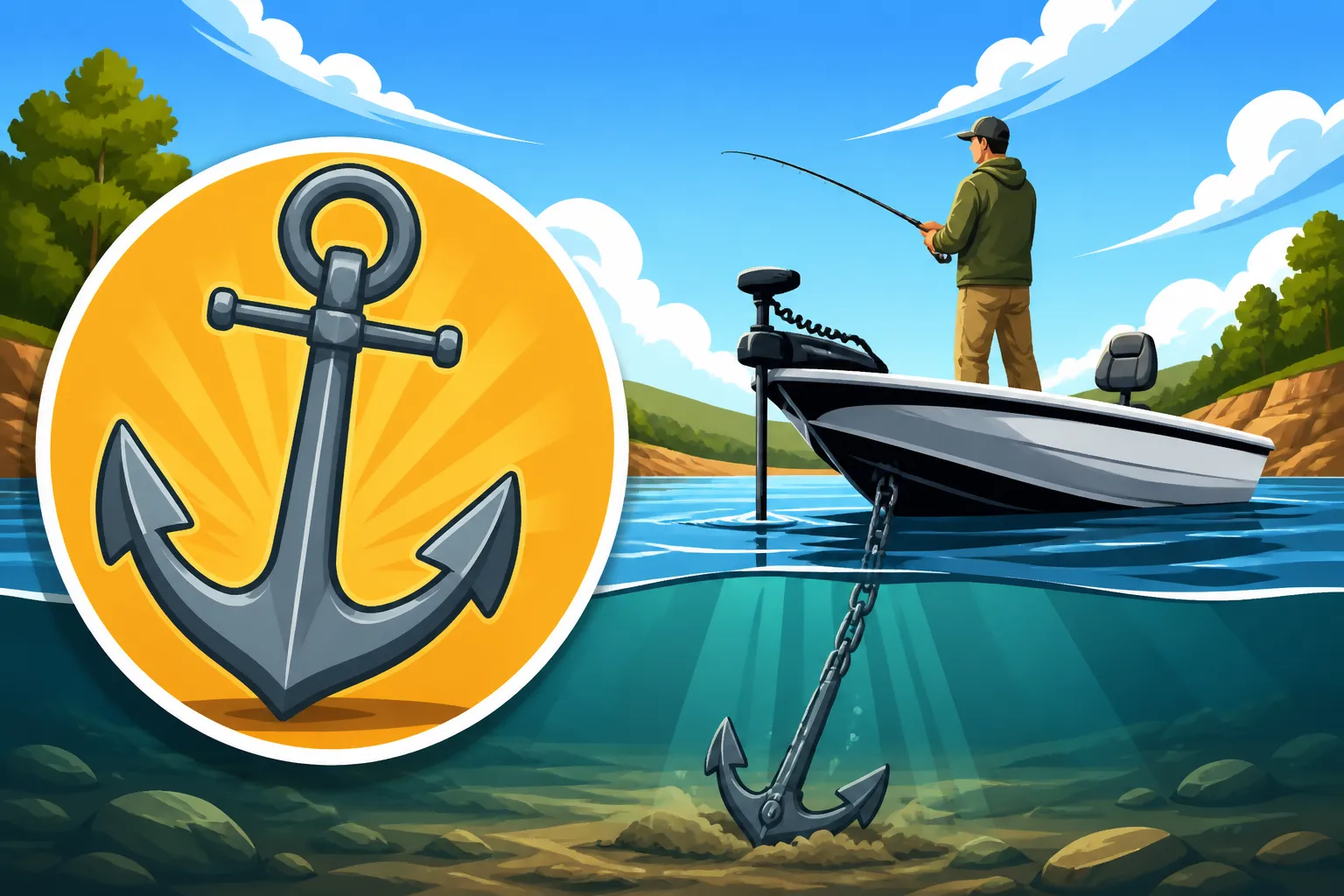
- Estimate Scope: Don't just drop the anchor directly over your spot. You need to account for scope, which is the ratio of anchor line to water depth. A common recommendation for fishing anchors is a 5:1 to 7:1 scope, meaning for 10 feet of water, you'd deploy 50-70 feet of line. This angle allows the anchor to dig in horizontally rather than just dragging vertically.
- Lower, Don't Throw: Gently lower the anchor to the bottom. Throwing it can create a mess, foul the line, or even injure someone.
- Back Down or Drift: Once the anchor hits the bottom, slowly move your boat backward (either by gently idling in reverse or letting the wind/current push you) while paying out the anchor line. This allows the anchor to drag along the bottom until it digs in and "sets."
- Test the Hold: Once you've paid out enough scope, cleat off the line and feel the tension. You should feel the anchor dig and the boat stop its drift. If you're still drifting, pay out more line or try to reset.
- Retrieval:
- Move Over the Anchor: Slowly motor or pull your boat directly over the anchor. This will pull the anchor straight up, breaking its hold on the bottom.
- Pull Smoothly: Once you're directly above it, pull the line hand-over-hand, coiling it neatly as you go. Avoid leaving slack line in the water to prevent entanglement with your prop.
- Clean and Secure: Once the anchor is aboard, clean off any mud or debris and secure it properly in its storage spot to prevent it from bouncing around, which can be a safety hazard or damage your boat. For larger boats, an anchor winch can make this process much easier.
Safety Considerations for Anchoring
Safety should always be your top priority on the water, and anchoring is no exception.
- Weather Awareness: Always be mindful of changing weather, especially wind. A sudden squall can put immense strain on your anchor system or make retrieval difficult. If conditions deteriorate, prioritize safety and consider moving to a more sheltered area or heading in.
- Anchor Line Safety: Keep anchor lines neatly coiled and free of knots or tangles. Never tie an anchor line to yourself or any part of your body. In an emergency, you might need to quickly cut or release the line.
- Overloading: Don't rely on an undersized anchor to hold a large boat in heavy conditions. This is a recipe for disaster. Refer to the manufacturer's recommendations for anchor size relative to boat length.
- Clearance: When anchoring, be aware of other boats, navigation channels, and hazards. Give other boats plenty of room to swing, and avoid blocking access points.
- Emergency Release: Know how to quickly release your anchor line in an emergency, whether it's by cutting it or using a quick-release mechanism. A sharp knife stored safely but within reach is a good idea. Remember, understanding Oklahoma Life Jacket and PFD Rules for Boaters is also part of overall boat safety.
Combining Anchors with Trolling Motors
For many Oklahoma anglers, especially those chasing bass or crappie, the combination of a traditional anchor and a modern trolling motor with GPS-controlled spot-lock or anchor mode is the ultimate boat positioning system.
- Precision Positioning: Use your trolling motor's spot-lock feature to hold you over a specific brush pile or ledge. This is fantastic for pinpoint accuracy and silent operation.
- Supplemental Hold: In very heavy wind or current, even a powerful trolling motor can struggle to hold a boat perfectly steady without draining the battery rapidly. This is where a traditional anchor comes in. You can drop your main anchor a bit upwind/upcurrent of your target, letting it take the primary strain, and then use your trolling motor for small, precise adjustments or to prevent "anchor swing." This dual approach gives you incredible stability and control.
- Drift Control and Spot Lock: If you're drifting a large flat with a drift sock, you can still use your trolling motor's spot-lock to temporarily pause your drift over a particularly promising school of fish or piece of structure.
- Navigating Snags: If your anchor gets snagged in heavy cover, your trolling motor can be invaluable for moving around the snagged anchor to try and free it from different angles, potentially saving your anchor. If you're an avid bass angler, you likely have a robust trolling motor, and knowing Best Trolling Motor for Striped Bass at Lake Texoma (even if you're not striper fishing, the principles apply to power) can help you understand its capabilities.
By understanding these techniques and having the right gear, you'll spend less time fighting your boat and more time enjoying the incredible fishing opportunities that Oklahoma's reservoirs have to offer. Happy anchoring!
Disclaimer
This article is for general informational purposes only and does not constitute professional advice. Laws, prices and regulations vary by location and change over time. Consult a qualified professional for guidance on your specific situation.