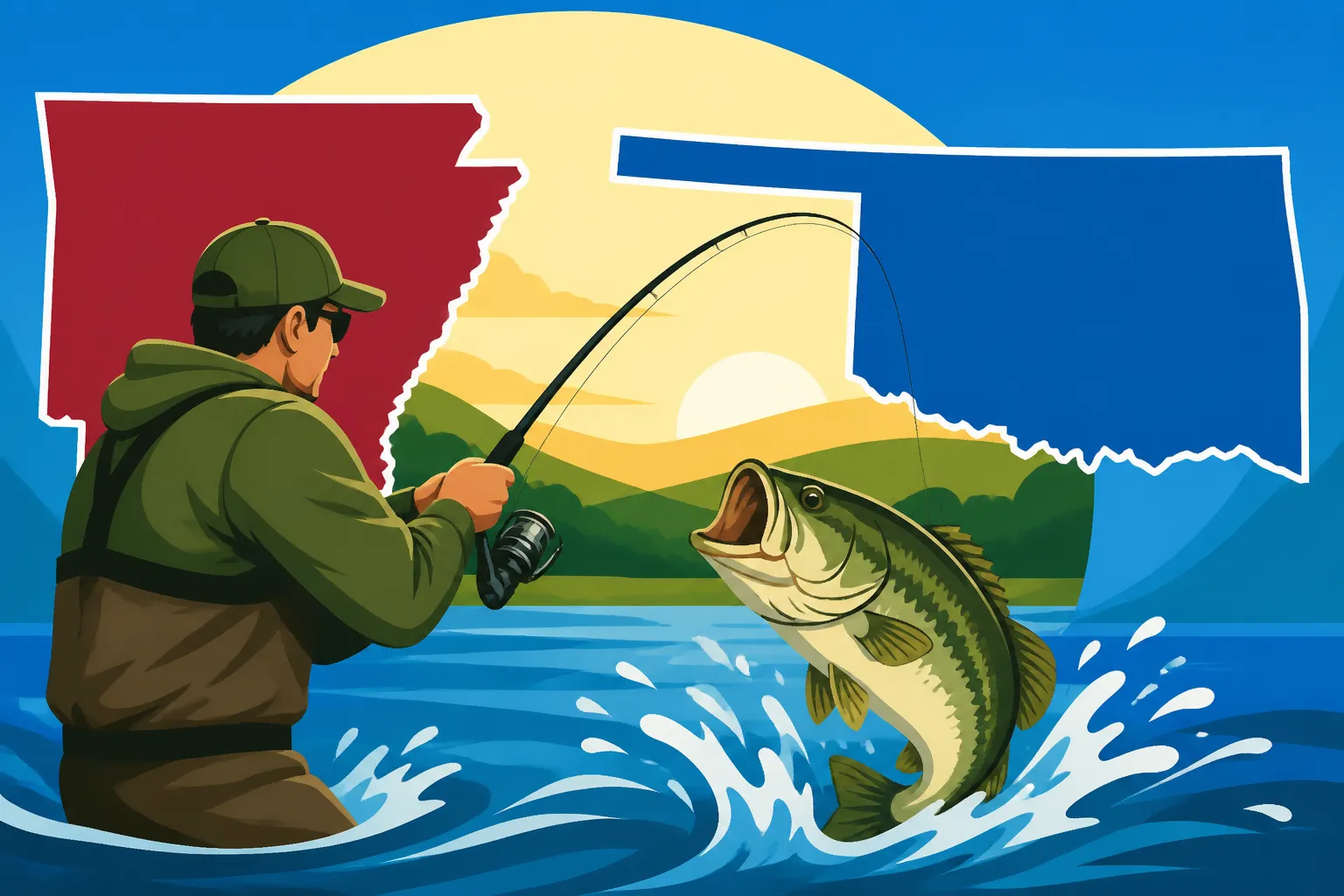
Arkansas Anglers Fishing in Oklahoma Waters
It’s a common scenario: you’re an angler from Arkansas, eyeing those fantastic fishing reports coming out of Oklahoma. Maybe you live just across the state line, or perhaps you’re planning a longer trip to explore some new waters. The big question that often pops up, and causes a fair bit of frustration, is whether your trusty Arkansas fishing license will actually cover you once you cross into the Sooner State. This comprehensive guide is here to clear up that confusion, lay out exactly what Arkansas anglers need to know before casting a line in Oklahoma, and help you navigate the licensing and regulatory landscape without a hitch.
The Reality Check: Do Arkansas Anglers Need an Oklahoma License?
Let's get right to it, because this is the question on everyone's mind: if you're holding a valid Arkansas fishing license, can you just waltz across the border and start fishing in Oklahoma? The short, clear, and perhaps slightly disappointing answer for many is no, not usually. Oklahoma, like most states, requires that anyone 16 years of age or older fishing in its public waters possesses a valid Oklahoma fishing license. This holds true regardless of whether you have a license from a neighboring state like Arkansas.
Understanding State Reciprocity (or Lack Thereof)
The concept of "reciprocity" is a wonderful idea, especially for folks who live near state lines. It means that licenses from one state are recognized and valid in another, often on shared bodies of water. For anglers specifically, true reciprocity is a rare gem, and sadly, it's not something Oklahoma generally shares with Arkansas. While Oklahoma does have specific reciprocal agreements with Texas on border waters like Lake Texoma, where a Texas license might be valid under certain conditions, no such general agreement exists with Arkansas. This means that even if you're fishing a lake that seems to straddle the border, if it's considered Oklahoma water, an Oklahoma license is required.
It's easy to assume that because the states are neighbors, or because a certain river flows through both, your home state license would suffice. But fishing regulations are intricate, state-specific legal frameworks designed to manage resources within their own borders. Each state has its own fee structures, conservation programs, and enforcement bodies. To legally participate in Oklahoma's fishing activities, you're expected to contribute to its conservation efforts by purchasing a license issued by the Oklahoma Department of Wildlife Conservation (ODWC). This distinction is incredibly important because ignorance of the law is not considered an excuse by game wardens. The moment your line hits Oklahoma water, you are subject to Oklahoma's rules.
The Importance of Knowing the Rules Before You Go
Before you even load up your boat or pack your tackle box, taking the time to understand the specific regulations for Oklahoma is paramount. Imagine driving all the way from Little Rock to fish a prime spot near Fort Smith, only to find out you're not legally equipped to fish. That's a day wasted, and potentially a hefty fine if you decide to risk it. The Oklahoma Department of Wildlife Conservation (ODWC) website is your absolute best friend in this regard. It’s the official source for all current regulations, license types, and any special permits you might need.
Beyond the license itself, there are also bag limits, size restrictions, and specific rules that can vary from one body of water to another, even within Oklahoma. What's perfectly legal in Arkansas might be a violation in Oklahoma. For instance, some lakes might have stricter crappie limits or different bass slot limits. You wouldn't want to catch a prize-winning fish, only to discover you can't keep it or, worse, that keeping it incurs a penalty. It’s not just about avoiding trouble; it’s about being a responsible angler who respects the local wildlife management practices. Taking a few minutes to review the latest guide can save you a world of headache and ensure your fishing trip is enjoyable and legal. Don't rely on word-of-mouth or outdated information; always double-check the official sources.
Oklahoma Fishing License Options for Nonresidents (Arkansas Anglers Included)
So, you've accepted that an Oklahoma license is a must. The good news is, Oklahoma offers several convenient options for non-resident anglers, including those from Arkansas, making it relatively easy to get properly licensed for your trip. The key is to pick the license that best fits the length and frequency of your fishing excursions into the Sooner State.
Annual Nonresident Fishing License
For those Arkansas anglers who find themselves frequently crossing the border to fish Oklahoma's abundant waters, the Annual Nonresident Fishing License is often the most cost-effective and hassle-free choice. This license is valid for a full calendar year from the date of purchase. It covers fishing in all public waters across Oklahoma, offering the most flexibility for exploring various lakes and rivers throughout the seasons.
Think about it: if you plan on making more than a few trips over the course of 12 months, the annual pass quickly pays for itself compared to purchasing multiple short-term licenses. It removes the need to constantly re-up your license every time you visit. While the initial cost is higher than a single-day pass, the convenience and peace of mind it offers are invaluable. You can purchase this license online, print it out, or save it digitally on your phone, making it super accessible. It’s truly the best option for the dedicated angler who considers Oklahoma a regular fishing destination. For current costs, check out the information on Nonresident Annual Fishing License Cost in Oklahoma.
1-Day Nonresident Fishing License
Perhaps you're just looking for a quick, spur-of-the-moment trip, or you're planning a one-off adventure to a specific Oklahoma lake. In that case, the 1-Day Nonresident Fishing License is your best friend. This license is perfect for short visits and offers a straightforward way to get legal for a single day of fishing. It's often the cheapest way to experience Oklahoma fishing without a long-term commitment.
It’s important to note how this license works: it’s valid for 24 hours from the time of purchase, or for the specified date if you buy it in advance. This flexibility allows you to align it precisely with your fishing schedule. For instance, if you purchase it at 8 AM on a Saturday, it's valid until 8 AM on Sunday, which can sometimes give you a bit more fishing time than a strict "calendar day" license. This makes it ideal for weekend warriors or those just passing through who want to wet a line. For information on the current pricing, you can refer to Nonresident 1-Day Fishing License Price in Oklahoma. While convenient, remember that if you fish for two days, you’ll need two 1-day licenses, and those costs can add up quickly, making the annual option more attractive if your plans extend beyond a single weekend.
Special Licenses and Endorsements
Beyond the basic annual and daily licenses, Oklahoma also has specific requirements for certain types of fishing or for targeting particular species. These are often in the form of endorsements or separate permits that you might need in addition to your general fishing license.
For example, if you're interested in snagging paddlefish, particularly popular at places like Grand Lake, you'll need a special Paddlefish Permit. Trout fishing in designated trout areas, such as the Lower Mountain Fork River or the Illinois River, often requires an Oklahoma Trout License or endorsement. While less common, it’s always wise to check if your target species or chosen fishing method triggers any additional license requirements. This ensures you’re fully compliant and can enjoy every aspect of your fishing trip. These endorsements are typically available through the same channels as your general fishing license, either online or through authorized vendors. Always cross-reference your fishing plans with the ODWC's current regulations to ensure you haven't overlooked any necessary special permits.
Here's a quick comparison of the main nonresident license options:
| License Type | Cost (Approximate, subject to change) | Validity Period | Best For |
|---|---|---|---|
| Annual Nonresident Fishing | $81 | 1 Year from purchase | Frequent visitors, multiple trips per year |
| 1-Day Nonresident Fishing | $15 | 24 hours from purchase | Single-day trips, short notice outings |
| Paddlefish Permit | $10 | Annual | Targeting paddlefish (in addition to base license) |
| Trout License (Nonresident) | $15 | Annual | Fishing designated trout areas (in addition to base license) |
(Note: These prices are approximations and subject to change by the Oklahoma Department of Wildlife Conservation. Always check the official ODWC website for the most current pricing.)
Specific Border Lake Considerations for Arkansas Anglers
When you're an angler living close to a state line, the idea of "border lakes" can be confusing. It's natural to think that if a lake is geographically shared or very close to both states, there might be some kind of joint agreement that simplifies licensing. While this is true for Oklahoma and Texas on Lake Texoma, it is not the case for Oklahoma and Arkansas. Anglers from Arkansas should be particularly aware of this when eyeing spots like Fort Gibson, Tenkiller, or Wister, all of which are relatively close to the Arkansas border but fully within Oklahoma's jurisdiction.
Border Lakes: Wister, Tenkiller, Fort Gibson, and Eufaula
There are several fantastic fishing lakes in Eastern Oklahoma that are geographically quite close to the Arkansas border, drawing interest from anglers across both states. Lakes like Wister, Tenkiller Ferry Lake, Fort Gibson Lake, and Lake Eufaula are renowned for their bass, crappie, and catfish populations. However, it's crucial for Arkansas anglers to understand that these lakes, despite their proximity to the state line, are entirely within Oklahoma's boundaries and are therefore governed exclusively by Oklahoma fishing regulations.
This means there's no special reciprocity or shared licensing for these waters with Arkansas. If you launch your boat or fish from the bank on any of these lakes, you must possess a valid Oklahoma fishing license. It's a common misconception that being "close enough" might grant some leeway, but game wardens operate strictly by state lines. Fishing these waters without the proper Oklahoma license would be considered fishing without a license, subjecting you to potential fines and penalties. So, while these lakes offer incredible fishing opportunities, plan accordingly by securing your Oklahoma license beforehand. You can find comprehensive guides on lakes like Tenkiller Ferry Lake Fishing Guide, Oklahoma and Fort Gibson Lake Fishing Guide for more details on these specific areas.
Navigating Joint Waters and Agreements (or lack thereof with Arkansas)
It's a common misconception that because some rivers, like the Arkansas River itself, flow through both states, or because certain lakes are just a stone's throw away, there must be some kind of joint agreement. As mentioned earlier, Oklahoma does have a well-known reciprocal agreement with Texas concerning Lake Texoma, where a valid fishing license from either state is honored on the main body of the lake. This unique arrangement often leads Arkansas anglers to hope for something similar.
However, after thorough investigation, it's clear: Oklahoma does not have any general or specific reciprocal fishing license agreements with the state of Arkansas. This means there are no "joint waters" where an Arkansas license is automatically valid in Oklahoma, or vice-versa. Even on the Arkansas River as it flows from Arkansas into Oklahoma, once you are in Oklahoma waters, an Oklahoma fishing license is required. This can be frustrating for those who live on the border and frequently fish both sides, but it's a critical detail to understand. Therefore, if your fishing plans involve any body of water within Oklahoma's geographical borders, an Oklahoma fishing license is non-negotiable. Always consult the official Oklahoma Department of Wildlife Conservation regulations to ensure you're compliant, as relying on assumptions can lead to disappointment and legal issues.
Bag Limits, Size Restrictions, and Other Regulations for Arkansas Anglers
Getting your Oklahoma fishing license is the first step, but it’s certainly not the last. Just like in Arkansas, Oklahoma has a detailed set of rules governing what you can catch, how many you can keep, and how big they need to be. These regulations are designed to manage fish populations and ensure sustainable fishing for everyone. For Arkansas anglers, it’s crucial to remember that your familiar Arkansas bag limits and size restrictions do not apply once you are in Oklahoma waters. You must abide by Oklahoma’s rules.
Statewide Bag Limits vs. Lake-Specific Rules
Oklahoma has a comprehensive set of statewide bag limits and size restrictions that apply to most public waters. These rules dictate the maximum number of fish of a particular species you can keep in a single day, and often minimum or sometimes maximum size limits. For example, there's a statewide bag limit for black bass (largemouth, smallmouth, spotted) and a generous limit for crappie. However, this is where it gets a little tricky: many lakes and sometimes even specific river sections in Oklahoma have their own unique regulations that supersede the statewide rules.
This variation is usually implemented to address specific conservation needs, improve fish quality, or manage unique fisheries on certain bodies of water. For an Arkansas angler, this means you can't just memorize the statewide limits and be done with it. Before you head out, you need to identify the specific lake or river you plan to fish and then check the ODWC's current regulations for that particular body of water. Ignoring these lake-specific rules can lead to serious violations, even if you were under the impression you were following the general statewide guidelines. For example, certain lakes might have a 10-inch minimum length for crappie, or a protected slot limit for bass that differs from the statewide "six fish, only one over 16 inches" rule. Always consult the ODWC's fishing guide, available online, for the most up-to-date and specific information for your chosen destination. You can find general information on Oklahoma's Bass Fishing Rules and Limits, Crappie Fishing Rules and Limits in Oklahoma, and Oklahoma's Catfish Fishing Rules and Limits to get started, but always cross-reference with site-specific rules.
Species-Specific Regulations
Oklahoma boasts a diverse array of game fish, and each species comes with its own set of rules. For popular species like bass, crappie, and catfish, here’s a general idea of what Arkansas anglers should be looking out for, though remember, these are subject to lake-specific exceptions:
- Black Bass (Largemouth, Smallmouth, Spotted): The statewide daily limit is six fish in aggregate. Often, there are length restrictions, such as only one fish over 16 inches being allowed within that six-fish limit. Rivers and streams typically have different limits, often a 14-inch minimum, and specific limits for smallmouth bass. This can be confusing, so always read the specific regulations for the water you're on.
- Crappie (Black and White): Oklahoma has a relatively generous statewide daily limit for crappie, usually 37 fish in aggregate. However, as mentioned, many popular lakes like Tenkiller, Fort Gibson, and Hudson have stricter limits, often reducing the daily creel to 15 fish and implementing a 10-inch minimum length limit. It’s absolutely critical to know these exceptions.
- Catfish (Channel, Blue, Flathead): The statewide daily limit for channel and blue catfish is 15 fish in aggregate, with a special rule that only one blue catfish over 30 inches can be kept within that limit. Flathead catfish often have a separate, lower daily limit, usually five fish, with no size restrictions. Again, these rules can vary, particularly on specific river sections or trophy catfish lakes.
Beyond these popular species, Oklahoma also manages walleye, saugeye, paddlefish, striped bass (especially on Lake Texoma), and various sunfish. Each of these will have its own specific regulations regarding bag and size limits. Before you even tie on your first lure, a quick check of the ODWC regulations for your target species and location is non-negotiable.
Boating and Safety Regulations
If you're bringing your boat from Arkansas into Oklahoma, you'll need to be aware of Oklahoma's boating regulations as well. While many safety rules are consistent across states (like the requirement for life jackets), there can be nuances. Your boat must be properly registered in its home state of Arkansas, and that registration should be valid. However, if you spend an extended period, generally more than 60 consecutive days, you might be required to register your boat in Oklahoma.
Crucially, Oklahoma has specific rules regarding life jackets, especially for children. Children 12 years of age and younger are required to wear a U.S. Coast Guard-approved personal flotation device (PFD) whenever the vessel is underway. There are also requirements for throwable flotation devices on boats 16 feet or longer, and for fire extinguishers. It's not just about what's on your fishing line; it's about what's in your boat and how you operate it. Just as with fishing licenses, ignorance of boating laws can result in citations and fines. Take a moment to review Oklahoma Life Jacket and PFD Rules for Boaters before hitting the water. A quick safety check before each trip is not only smart but also a legal requirement for safe boating.
How to Purchase Your Oklahoma Fishing License
Alright, you’re ready to get your Oklahoma fishing license. The good news is the Oklahoma Department of Wildlife Conservation has made the process incredibly streamlined and convenient, no matter if you’re planning ahead or need a last-minute permit. You have a couple of primary options, and both are designed to get you on the water quickly and legally.
Online Purchase Process
For most modern anglers, buying your Oklahoma fishing license online is by far the easiest and most recommended method. The ODWC’s online licensing system is user-friendly and accessible 24/7, meaning you can purchase your license from the comfort of your home in Arkansas, any time of day or night. This is especially convenient if you decide on a spontaneous trip or realize you need a license outside of regular business hours.
Here’s a general step-by-step breakdown of how it works:
- Visit the ODWC Go Outdoors Oklahoma website: Navigate to the official Oklahoma Department of Wildlife Conservation’s licensing portal.
- Create an Account or Log In: If you’ve purchased an Oklahoma license before, you can log in with your existing account. First-time buyers will need to create a new profile, which usually involves providing some basic personal information like your name, address, date of birth, and possibly a form of identification.
- Select License Type: Choose the appropriate nonresident license for your needs – either the Annual Nonresident Fishing License or the 1-Day Nonresident Fishing License. If you need any special permits, like a Paddlefish Permit or Trout License, you can often add those at this stage.
- Review and Pay: Double-check that all your information is correct and that you’ve selected the right licenses. Proceed to payment, where you’ll typically use a credit or debit card. The system is secure, ensuring your financial information is protected.
- Print or Save: Once your purchase is complete, you’ll receive a confirmation, and crucially, a digital copy of your license. You can print this out to carry with you, or save it as a PDF or screenshot on your smartphone. Having it readily accessible on your phone is usually sufficient, but a physical backup isn't a bad idea, especially if you anticipate being in areas with poor cell service.
The online system offers immediate gratification – you buy it, and you’re instantly licensed. This saves you time and ensures you’re legal before you even leave Arkansas. It's the most straightforward path for How to Buy an Oklahoma Fishing License Online.
In-Person Options
While online is great, some folks prefer the traditional route or find themselves needing a license while already on the road. Oklahoma has a network of authorized license vendors scattered across the state where you can purchase your fishing license in person. These vendors typically include sporting goods stores like Academy Sports + Outdoors, Walmart locations with a sporting goods counter, and various local bait shops or convenience stores.
The advantage of buying in person is that you can ask questions directly if you have any last-minute uncertainties about regulations or need recommendations for local bait. However, you are limited by business hours, and there's no guarantee that every small convenience store will have the specific nonresident license you need in stock. If you're relying on an in-person purchase, it's wise to plan ahead and locate a known vendor near your fishing destination. A quick search on the ODWC website can usually provide a list of authorized agents in a specific area. Just be sure to bring a valid ID and be ready to provide your necessary personal details.
What to Have Ready When Buying
Whether you’re buying online or in person, having your information readily available will make the process much smoother. Here’s what you’ll typically need:
- Valid Identification: This usually means a driver's license or state-issued ID. For nonresidents, this confirms your out-of-state status.
- Date of Birth: Essential for confirming eligibility and proper record-keeping.
- Current Address: Your residential address in Arkansas.
- Payment Method: A credit card or debit card for online purchases, or cash/card for in-person transactions.
Having these details on hand prevents delays and ensures your license is issued accurately. It's a small step that can save you a lot of time and potential frustration, ensuring you're quickly ready to enjoy the rich fishing opportunities that Oklahoma offers.
Avoiding Penalties: What Happens If You Don't Comply
No angler ever wants to have their peaceful day on the water interrupted by a game warden for an infraction. The goal is always to have a fun, legal, and memorable trip. For Arkansas anglers crossing into Oklahoma, understanding the potential consequences of not complying with Oklahoma’s fishing regulations is essential. It’s not just about fines; it can impact future fishing privileges and your reputation as a responsible outdoors person.
Common Violations and Their Consequences
Fishing without a valid Oklahoma license is, hands down, the most common violation encountered by out-of-state anglers. When a game warden checks you and you can't produce a current Oklahoma license (or a valid reciprocal one, which isn't generally the case with Arkansas), you're looking at a penalty. The specific consequences can vary based on the severity of the offense, but they typically include:
- Fines: This is almost always the first consequence. Fines for fishing without a license can range from a couple of hundred dollars to significantly more, depending on the circumstances and whether it’s a first offense or a repeat violation. These fines can quickly outweigh the cost of an annual nonresident license, making the initial investment a no-brainer.
- Court Appearance: In some cases, especially for more serious infractions or repeat offenses, you might be required to appear in court. This means taking time off work, traveling back to Oklahoma, and dealing with legal proceedings, which can be far more costly and inconvenient than the initial fine.
- Confiscation of Gear/Fish: Game wardens have the authority to confiscate your fishing gear (rods, reels, tackle) and any fish you’ve caught illegally. This isn’t just an inconvenience; it can be a significant financial loss if you have expensive equipment.
- Loss of Fishing Privileges: For serious or repeated violations, the Oklahoma Department of Wildlife Conservation (ODWC) can revoke your fishing privileges in Oklahoma. This means you would be prohibited from purchasing an Oklahoma fishing license for a specified period, effectively banning you from fishing in the state. In some instances, this revocation can even extend to other states through interstate compacts.
Beyond fishing without a license, other common violations include exceeding bag limits, keeping undersized or oversized fish (especially in lakes with special regulations), fishing during a closed season, or using illegal fishing methods. Each of these carries its own specific penalties. The key takeaway is that Oklahoma game wardens are serious about enforcing conservation laws, and they patrol lakes and rivers diligently. Always assume you will be checked, and always be prepared. For more detailed information on specific penalties, you can consult Penalties for Fishing Without a License in Oklahoma.
The Importance of Checking ODWC Resources
To avoid any of these unpleasant scenarios, the single most important piece of advice for any angler, especially those from out of state, is to make the Oklahoma Department of Wildlife Conservation (ODWC) website your primary resource. Their online fishing regulations guide is updated annually and provides the most current and accurate information on licenses, bag limits, size restrictions, and specific lake rules.
Think of it as your digital fishing bible for Oklahoma. Before every trip, especially if it’s been a while since your last visit or if you’re trying a new body of water, take a few minutes to:
- Verify your license is current: Check the expiration date.
- Review statewide regulations: Refresh your memory on general rules.
- Check specific lake/river regulations: This is critical. Look up the exact spot you plan to fish to see if there are any special rules that override the statewide limits.
- Look for any emergency proclamations: Occasionally, due to weather, environmental concerns, or fish management issues, the ODWC might issue temporary rule changes. These are always posted on their website.
By consistently checking these resources, you empower yourself with the knowledge needed to fish legally and responsibly. It shows respect for Oklahoma’s natural resources and the efforts of its wildlife professionals. Plus, it ensures that your focus remains on the joy of fishing, rather than the worry of potential penalties. Being well-informed is your best defense against inadvertently breaking the rules and guarantees a much more relaxing and successful fishing adventure in the Sooner State.
Disclaimer
Please note that fishing regulations, license fees, and other rules are subject to change by the Oklahoma Department of Wildlife Conservation (ODWC). While this guide provides comprehensive information, it is always your responsibility to verify the most current regulations directly with the ODWC before engaging in any fishing activities. This content is for informational purposes only and should not be considered legal advice.