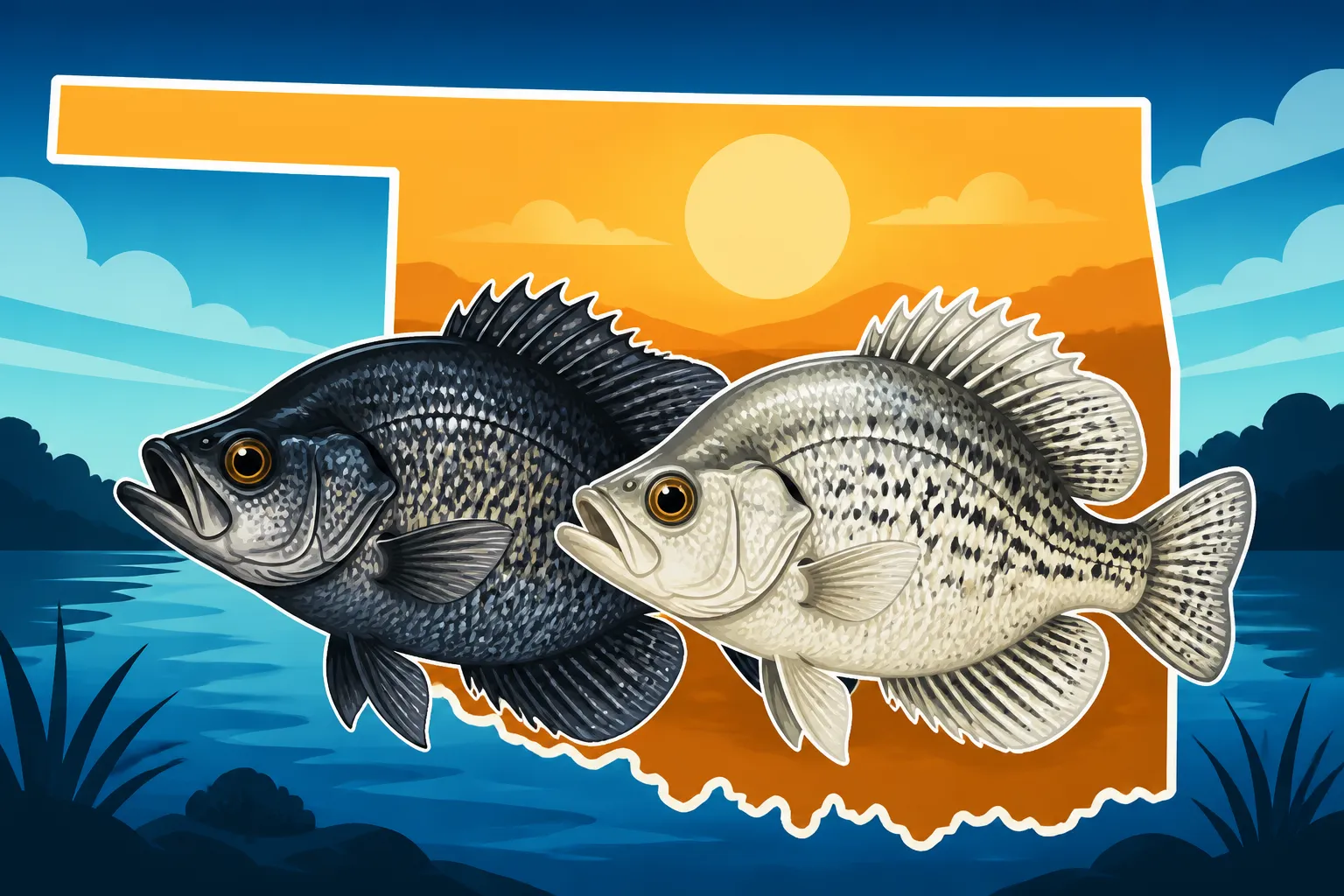
Black and White Crappie Counted Together
It's easy to get a little confused when you're out on the water, especially when you're trying to keep track of bag limits for different species, or even different types of the same species. Many anglers wonder if the black crappie they're catching count separately from the white crappie they might also land. The good news is, in Oklahoma, the rules simplify things by lumping them together, and this guide will walk you through exactly what that means for your fishing trip.
Understanding Oklahoma's Crappie Regulations
When you're out chasing those delicious crappie in Oklahoma, it's natural to notice the subtle differences between black and white crappie. Maybe one has more distinct blotches, or a slightly different body shape. You might even have a preference for catching one over the other. But when it comes to the legalities of how many you can keep, the Oklahoma Department of Wildlife Conservation (ODWC) has made it crystal clear: for the purposes of your daily limit, black crappie and white crappie are treated as one and the same. There's no separate tally for each, which actually makes your job of counting a lot less complicated.
The Statewide Crappie Bag Limit
Oklahoma has a statewide daily bag limit for crappie, which means you can only keep a certain number of these panfish per day. Currently, that number is quite generous, allowing you to bring home a total of 37 crappie. This limit applies to all waters within the state, unless a specific lake or body of water has a special regulation in place. That's a crucial distinction, and one many anglers, myself included, have learned the hard way. It’s not just about the numbers; it’s about understanding that this 37-fish limit encompasses both black and white crappie combined.
Imagine you're out on Lake Eufaula, and you have an incredible morning. You reel in 20 beautiful white crappie, then move to a different brush pile and start catching black crappie. Once you've added 17 black crappie to your livewell, you've hit your combined limit of 37 fish. Any additional crappie, regardless of whether they're black or white, would need to be immediately released. This is a common scenario, and knowing the limit for both species together is key to staying legal. For a full breakdown, you can always refer to the official Oklahoma Statewide Crappie Bag Limit guidelines.
Why Black and White Crappie are Grouped
So, why does the state group these two distinct species of crappie together? It largely comes down to practical science and enforcement. From a biological standpoint, black crappie (Pomoxis nigromaculatus) and white crappie (Pomoxis annularis) are very similar. They often inhabit the same waters, have overlapping diets, and can even hybridize, making positive identification tricky for the casual angler, especially when they're small. The ODWC aims for regulations that are easy for anglers to understand and, more importantly, easy for game wardens to enforce. Trying to sort out whether an angler has 20 black crappie and 20 white crappie, when the fish might look similar, would be a logistical nightmare on the water.
By combining them, it simplifies the rule to "you can keep 37 crappie, period." This prevents confusion and reduces potential arguments or mistakes. It’s also a way to manage the overall crappie population effectively. If anglers were allowed 37 of each, that would be a whopping 74 crappie a day, which could put undue pressure on the local crappie fisheries. The current combined limit ensures that recreational harvest remains sustainable for both species. It’s all about balance – balancing the angler's desire to catch and keep fish with the need to protect the long-term health of our beloved Oklahoma waters.
Practical Implications for Anglers
Understanding that both types of crappie count towards the same daily bag limit isn't just about avoiding a ticket; it's about being a responsible angler and ensuring future generations can enjoy the same fantastic fishing experiences we do. It impacts how you plan your day on the water, how you manage your catch, and even how you interpret those whispered "hot tips" from fellow fishermen.
How to Manage Your Catch on the Water
Managing your catch effectively is crucial, especially when you're in the middle of a hot bite. When you're consistently reeling in crappie, it's easy to lose count, especially if you're excited or distracted. This is where a little discipline comes in handy. I always recommend having a clear system for keeping track. Some anglers use a simple clicker counter, readily available on Amazon or at any tackle shop. Others prefer to arrange their fish in their livewell in groups of ten or five, so a quick visual check gives them an idea of their total.
A common practice for crappie anglers, especially those targeting larger fish, is "culling." This is when you catch a crappie, decide it's smaller than one you already have in your livewell, and release the smaller one to replace it with the larger catch. While culling is generally allowed in Oklahoma, it's critical to remember that you can never possess more than the legal daily bag limit in your livewell at any one time, even temporarily. So, if your limit is 37 and you have 37 fish, you must immediately release any newly caught fish before you decide to swap it with a smaller one you already possess. This ensures you're always within the legal limit. To truly master the art of crappie fishing, check out our guide on Crappie Fishing Techniques and Seasonal Patterns in Oklahoma.
Avoiding Common Misconceptions and Penalties
One of the biggest misconceptions I hear is that anglers think they can keep 37 black crappie and 37 white crappie. As we’ve discussed, this simply isn't the case in Oklahoma. Falling prey to this misunderstanding can lead to serious consequences. Getting caught with an over-limit of fish isn't just a slap on the wrist. Game wardens take these violations very seriously, and the penalties can include hefty fines, the confiscation of your catch, and even the suspension of your fishing privileges. It's an unnecessary headache that's easily avoided by just knowing the rules.
Imagine you've had a banner day on Grand Lake O' the Cherokees, and you're proudly heading back to the ramp with what you think is a legal limit, only to be stopped by a game warden. If you've got 50 crappie in your cooler because you thought black and white crappie had separate limits, you're in for a rough time. The game warden won't care about your good intentions; they care about adherence to the law. Always assume the most conservative interpretation of the rules if you're ever in doubt. For more general information on regulations, you can read about Crappie Fishing Rules and Limits in Oklahoma.
Specific Lake Variations and Exceptions
While the 37-fish combined crappie limit is generally true across Oklahoma, it's absolutely vital to remember that not all waters are created equal. Some lakes, due to their unique ecology, management goals, or fishing pressure, have their own specific regulations that supersede the statewide rules. Ignoring these localized rules is one of the quickest ways to find yourself in a bind with a game warden.
Lakes with Stricter Crappie Limits
There are several lakes in Oklahoma where you'll encounter stricter crappie limits, either in terms of the total number of fish you can keep, or specific size limits. These regulations are often implemented to help manage fish populations, improve the quality of the fishery, or address specific biological concerns for that body of water.
Here are a few notable examples of lakes with special crappie regulations:
- Lake Arbuckle: This popular southern Oklahoma lake often has a 10-inch minimum length limit and a reduced daily bag limit compared to the statewide 37. You can check out more specific details at Arbuckle Lake Crappie Rules in Oklahoma.
- Tenkiller Ferry Lake: Known for its clear waters and excellent crappie fishing, Tenkiller also has a 10-inch minimum length limit for crappie, which means anything shorter has to go back. For full details on this, see Tenkiller Lake's 10-Inch Crappie Minimum.
- Hudson Lake: Another lake where you need to pay close attention is Hudson. It's one of the six lakes with specific crappie regulations, often including a 10-inch minimum and a reduced bag limit. Get the full scoop on Hudson Lake Crappie Limit Explained.
- Lake Texoma: This massive border lake can have unique regulations due to its shared waters with Texas. While the general crappie limit applies, always double-check for any specific Texoma nuances.
- Fort Gibson Lake: A fantastic crappie fishery, Fort Gibson also falls under special regulations, typically a 10-inch minimum length and a 15-fish daily bag limit. Our article Fort Gibson Lake's 15-Fish Crappie Limit has the details.
- Grand Lake O' the Cherokees: This iconic northeastern Oklahoma lake also features a 10-inch minimum length limit and a 15-fish daily bag limit for crappie. Learn more with our guide to Grand Lake Crappie Size and Bag Limits.
It's clear that several key crappie lakes have these stricter rules. The ODWC has implemented these specific measures at Stricter Crappie Limits at Six Oklahoma Lakes to ensure the sustainability and quality of crappie fishing in those high-demand areas.
Here's a quick comparison of some of these limits:
| Water Body | Black & White Crappie Combined Daily Bag Limit | Minimum Length Limit | Notes |
|---|---|---|---|
| Statewide (Most Waters) | 37 fish | None | Applies unless specific lake rules override |
| Lake Arbuckle | 15 fish | 10 inches | Focus on quality crappie |
| Tenkiller Ferry Lake | 15 fish | 10 inches | Popular clear water fishery |
| Hudson Lake | 15 fish | 10 inches | Important for healthy populations |
| Fort Gibson Lake | 15 fish | 10 inches | Great fishery, but regulated |
| Grand Lake O' the Cherokees | 15 fish | 10 inches | High angler pressure managed with limits |
Checking Local Regulations Before You Go
Honestly, I can't stress this enough: always, always, always check the most current regulations before you head out on your fishing trip. The Oklahoma Department of Wildlife Conservation publishes an annual Fishing Guide, and it's your bible for all things regulation-related. You can pick up a physical copy at most bait shops, sporting goods stores, or ODWC offices. Even better, it's available as a free download on their official website. This guide is updated annually, so what was true last year might have changed this year.
Beyond the annual guide, some local bait shops or marinas often have posted regulations specific to their lake, which can be a lifesaver. Taking a few minutes to confirm the rules, especially for specific lakes like Best Crappie Fishing Spots on Tenkiller Ferry Lake, Oklahoma or How Many Crappie You Can Keep in Oklahoma, can save you a lot of grief and ensure your fishing experience is enjoyable and legal. Don't rely on old memories or hearsay; trust the official sources. A quick search on your phone before you launch can prevent a costly mistake and keep you enjoying the beautiful waters of Oklahoma without worry.
Disclaimer
Please note that fishing regulations are subject to change. While this guide provides the most up-to-date information at the time of writing, it is always the angler's responsibility to consult the current Oklahoma Fishing Regulations Guide published by the Oklahoma Department of Wildlife Conservation (ODWC) before engaging in any fishing activities. The ODWC website is the definitive source for all official and current regulations.