Crappie Fishing Techniques and Seasonal Patterns in Oklahoma
There's nothing quite like the subtle tug of a crappie on the line, but let's be honest, figuring out where they are and what they're biting can feel like solving a new puzzle every time you hit the water. Crappie, those feisty, delicious panfish, have a knack for changing their patterns with the seasons, leaving many anglers scratching their heads. This comprehensive guide is dedicated to helping you unravel the mysteries of crappie fishing in Oklahoma, offering detailed techniques and seasonal strategies to help you fill your livewell, no matter the time of year.
Understanding Oklahoma Crappie: Black vs. White
Before we dive into the nitty-gritty of techniques, it’s helpful to understand the two main species of crappie you'll encounter in Oklahoma: black crappie and white crappie. While they share many similarities and often school together, knowing their subtle differences can give you an edge, especially when targeting them in varying water conditions. Both are abundant across the state's diverse waterways, from sprawling reservoirs to tranquil farm ponds.
Identifying Key Differences
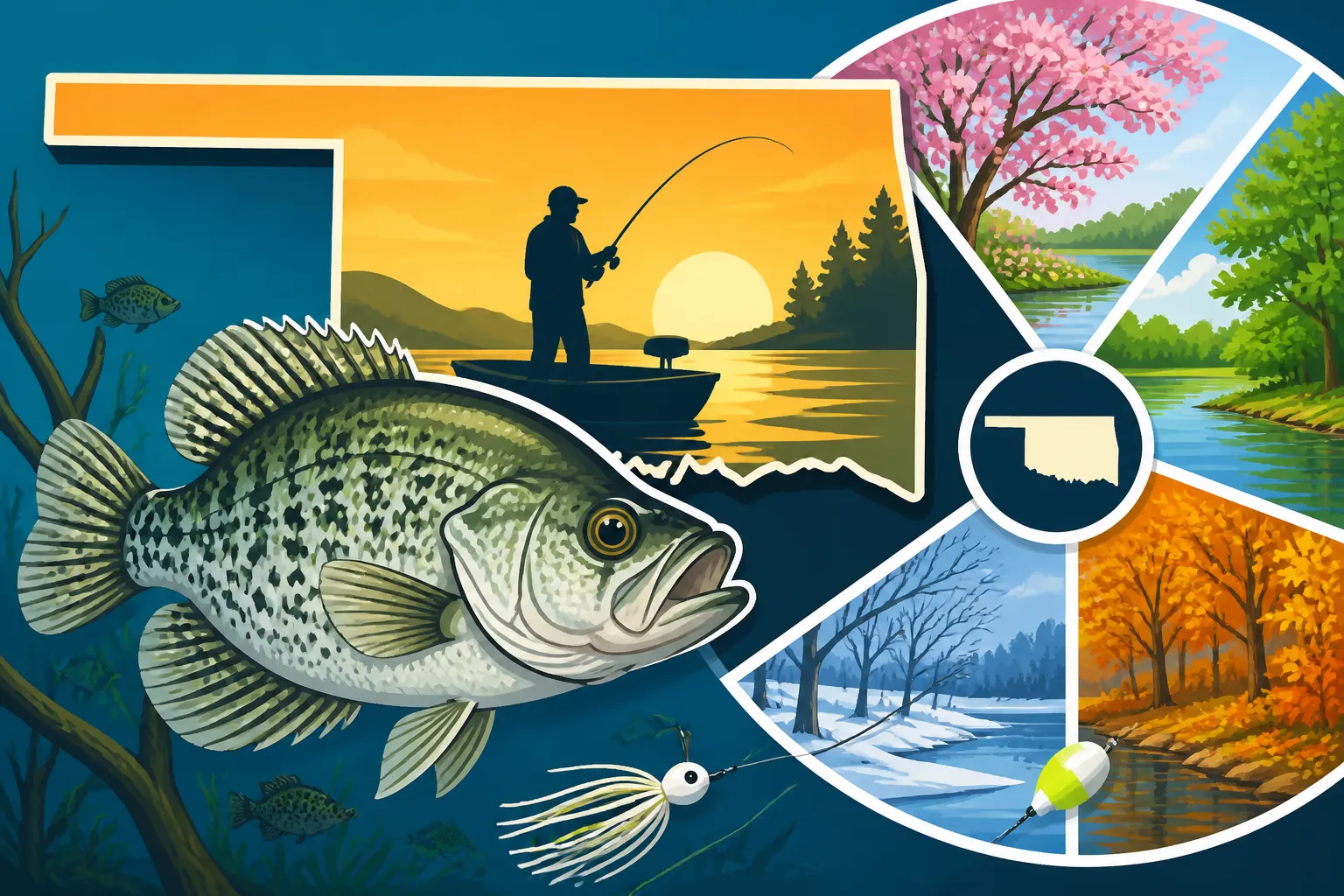
Distinguishing between black and white crappie isn't always easy at first glance, but there are a few tell-tale signs. The most reliable way to tell them apart is by counting the dorsal fin spines. Black crappie typically have 7 or 8 dorsal spines, giving their dorsal fin a more rounded appearance. Their bodies are usually covered in irregular, speckle-like dark spots, which gave them their "black" moniker, though their coloration can vary greatly depending on water clarity and habitat. White crappie, on the other hand, generally have 5 or 6 dorsal spines, resulting in a more elongated dorsal fin. Their dark markings tend to be arranged in several vertical bars on their sides, though these can fade in some conditions.
Beyond the spines and markings, there are also slight body shape differences. Black crappie often have a deeper, more compressed body profile, making them appear a bit more "round" than their white crappie cousins. White crappie tend to be a bit more slender and elongated. When you’re out on the water, especially in a mixed bag, these distinctions might seem minor, but they can sometimes indicate a preference for certain habitats or feeding patterns, which savvy anglers can exploit. For a deeper dive into these differences, check out our guide on Black Crappie vs White Crappie: Key Differences for Oklahoma Anglers.
Preferred Habitats and Behaviors
While both species are found throughout Oklahoma, they do exhibit some slight preferences. Black crappie tend to thrive in clearer water with more abundant vegetation and structure. Think about lakes with plenty of submerged brush piles, standing timber, or aquatic grass beds; that's prime black crappie territory. They're also a bit more tolerant of cooler water. White crappie are often more prevalent in murkier or more turbid waters, and they're incredibly resilient, adapting well to a variety of conditions, including areas with less cover. You might find them more often in open water or around less dense structures.
Understanding these habitat preferences helps you narrow down your search. If you're fishing a clear, heavily vegetated lake like Broken Bow, you might naturally encounter more black crappie. If you're on a vast, often turbid reservoir like Lake Eufaula, white crappie could dominate your catch. Both species are ambush predators, often holding tight to cover, waiting for an unsuspecting minnow or insect to swim by. Their schooling behavior is also key; where you find one crappie, you're very likely to find more.
Statewide and Lake-Specific Regulations
Navigating crappie regulations in Oklahoma can sometimes feel like trying to untangle a snarled fishing line – it’s not always straightforward, but it’s absolutely vital for conservation and staying on the right side of the law. Oklahoma has a statewide crappie bag limit of 37 fish per day, and there's no minimum length limit in most waters. This is excellent news for anglers looking to fill a stringer for a fish fry! However, and this is a big "however," certain lakes have stricter, special regulations that you absolutely must be aware of.
For instance, lakes like Arbuckle, Hudson, Sardis, Tenkiller, Waurika, and Fort Gibson often have a 10-inch minimum length limit and reduced bag limits, sometimes as low as 15 fish. These regulations are in place to help grow bigger, healthier crappie populations in those specific fisheries. It's a real bummer to catch a beautiful crappie only to realize it's undersized for that particular lake, so always, always check the current Oklahoma Fishing Guide before you head out. You can dive deeper into these specific rules by reading about Stricter Crappie Limits at Six Oklahoma Lakes or even Tenkiller Lake's 10-Inch Crappie Minimum if you're planning a trip there. Ignoring these specific rules can lead to hefty fines, so staying informed is paramount for a legal and enjoyable crappie fishing experience. Don't forget to familiarize yourself with the general Oklahoma Statewide Crappie Bag Limit as well.
Spring Crappie Fishing: The Spawn and Beyond
Ah, spring in Oklahoma! For crappie anglers, it’s arguably the most anticipated time of year. As the water warms, crappie shake off their winter lethargy and begin their migration towards shallower waters for the annual spawn. This is a period of intense activity and often the best chance to catch large numbers of fish. But it’s not just a single event; the spring bite progresses through distinct phases: pre-spawn, spawn, and post-spawn, each requiring slightly different tactics.
Pre-Spawn Tactics and Locations
As early spring arrives and water temperatures creep into the upper 40s and low 50s, crappie begin to stage in deeper water adjacent to their eventual spawning grounds. Think creek channels, secondary points, and brush piles in 10-20 feet of water, often near the mouths of coves and protected bays. They’re essentially waiting for that perfect temperature window to move shallower. During this phase, crappie are actively feeding to build up energy for the spawn, making them relatively easy to catch if you can find them.
A key tactic here is slow trolling jigs or minnows along those deeper channel edges and humps. Spider rigging, where you deploy multiple rods from the front of the boat, allows you to cover a lot of water and present baits at various depths. Look for concentrations of fish on your sonar before dropping lines. Small jigs (1/16 to 1/8 ounce) tipped with minnows or soft plastics in natural colors like shad or chartreuse work wonders. Don't be afraid to experiment with depth; crappie might be suspended anywhere from a few feet off the bottom to halfway up the water column.
Hitting the Peak of the Spawn
This is the golden ticket for many crappie anglers! The spawn typically kicks off when water temperatures consistently reach the mid-50s to low 60s, usually sometime from late March through May, depending on the specific lake and weather patterns. Crappie move into incredibly shallow water – often less than 5 feet, sometimes even just a foot or two – to fan out nests around cover. They'll seek out submerged timber, brush, docks, riprap, and even lily pads. These fish are aggressive and highly concentrated, making them prime targets.
When crappie are on the beds, sight fishing can be incredibly effective in clear water. Look for disturbed areas on the bottom or actual fish guarding nests. Casting small jigs, soft plastics, or even tiny crankbaits near these areas will often elicit a strike. A classic method is fishing a small jig or minnow under a bobber, setting your depth to just above the cover. Pitching and flipping techniques can get your bait into tight spots where crappie are hiding. This is also a fantastic time for bank anglers, as crappie are within casting distance of shore in many areas. If you're wondering exactly when this magic happens, you might find our guide on When Do Crappie Spawn in Oklahoma Lakes? quite useful.
Post-Spawn Strategies and Recovering Fish
Once the spawn is complete, typically when water temperatures hit the mid-60s and higher, crappie begin to disperse and recover. This can be a challenging period for anglers, as the fish are no longer as concentrated or as aggressive. Many crappie will move to slightly deeper, but still accessible, cover near their spawning grounds, such as brush piles on secondary points or the first drop-offs outside of coves. They're often lethargic but will still eat.
Focus your efforts on vertical jigging or slowly trolling minnows and jigs around structure in 8-15 feet of water. Crappie might suspend over these structures, so a good fish finder is invaluable for pinpointing their location. Pay attention to how they're oriented to the cover – sometimes they're right in it, other times they're just above it. Don't be afraid to lighten your line and use smaller baits, as they can be finicky during this recovery period. Patience is a virtue here, but with persistence, you can still find good numbers of fish that are beginning to feed again.
Summer Crappie Fishing: Deep Water and Night Lights
As Oklahoma's temperatures soar and lake waters get warm, crappie fishing changes dramatically. The shallow, spawning grounds become less productive, and crappie retreat to cooler, deeper refuges. This is where your electronics become your best friend, and understanding their warm-water habits is crucial for continued success.
Locating Crappie in Warm Water
When summer kicks in, crappie move to areas where they can find cooler water and stable oxygen levels. This almost always means deeper water, often 15-30 feet or more, depending on the lake's depth and thermocline. They'll relate to significant structure like main lake points, submerged humps, deep brush piles, standing timber on channel bends, and even bridge pilings. The key is to find these deeper structures that attract baitfish, as crappie will be close by.
A quality fish finder with side imaging or down imaging is a game-changer for summer crappie. Spend time idling over likely areas, searching for schools of crappie suspended around or within these deep-water structures. Once you mark fish, vertical jigging with a 1/8 to 1/4 ounce jig or a live minnow dropped right into the school is the ticket. You might also find them congregated around thermocline layers, which often hold abundant baitfish. Understanding how to use your electronics to How to Find Crappie in Deep Water in Summer will be invaluable.
Night Fishing for Crappie
When the sun beats down during the day, one of the most effective and enjoyable ways to catch summer crappie is under the cover of darkness. Night fishing for crappie is not only cooler and more comfortable, but it can also be incredibly productive. Crappie, like many predatory fish, become more active and willing to feed under the cloak of night, especially when artificial lights are used to draw in baitfish.
The strategy involves deploying submersible crappie lights or surface lights from your boat or a dock. These lights attract zooplankton, which in turn attracts baitfish like shad and minnows. And where the baitfish go, the crappie follow! Position your boat over a known brush pile or channel edge in 15-25 feet of water, drop your lights, and wait. Within an hour or two, you should start seeing a vibrant ecosystem develop around your lights. Fish small jigs (1/32 to 1/16 ounce) or live minnows suspended at various depths, typically 5-15 feet below the surface, adjusted to where you see the baitfish and crappie on your sonar. For more detailed advice, consider exploring How to Catch Crappie at Night Under Lights.
Crappie in Brush Piles and Structure
Regardless of the season, crappie are almost always associated with some form of cover or structure. In summer, this becomes even more critical as they seek refuge from the sun and ambush points for baitfish. Man-made brush piles are gold mines, whether they're submerged trees, discarded Christmas trees, or purpose-built structures like spider blocks. Natural structure like standing timber, laydowns, and rock piles also hold fish.
The challenge is often in getting your bait into these snag-ridden areas without getting hung up. Vertical presentations are key here. Use a sensitive rod to feel subtle bites and quickly react. A simple slip bobber rig with a minnow or a small jig can be effective for presenting bait precisely at the desired depth just above or within the cover. You might also try a technique called "doodling" or "shooting" docks, where you skip a small jig under boat docks, reaching crappie that are hiding in the shade. It takes practice, but the rewards are often worth it.
Fall Crappie Fishing: The Feeding Frenzy
Just as spring sees crappie gorging for the spawn, fall triggers another major feeding frenzy. As water temperatures begin to cool, crappie sense the approaching winter and start putting on the feedbag, making them incredibly active and often easier to catch than in the heat of summer. This transition period offers some fantastic fishing opportunities for anglers willing to adjust their approach.
Transitioning from Summer Patterns
As summer slowly gives way to autumn, the thermocline (the layer in the lake where the water temperature changes rapidly) begins to break up, allowing crappie to move more freely throughout the water column. They will start to migrate from their deep summer haunts towards shallower areas, mimicking their spring movements but often with a focus on deep flats, creek channels, and areas where shad are schooling. The key is to follow the baitfish.
Look for crappie suspended over open water on your sonar, especially in major creek arms or the main lake. Often, they'll be chasing schools of shad, and if you can locate those baitfish balls, you're likely to find crappie. Trolling jigs or crankbaits at various depths is a very effective way to cover water and find these scattered, actively feeding fish during this transitional phase. As the water cools further, they'll consolidate around structure.
Finding Fall Crappie Concentrations
Once the water temperatures drop into the 60s and 50s, crappie will start to concentrate heavily around specific structures. Main lake points, especially those with brush piles, standing timber, and channel edges near creek bends, become prime real estate. They’ll often suspend in schools anywhere from 10 to 25 feet, holding tight to cover or patrolling nearby for shad. This consolidation makes them very vulnerable once you locate a school.
This is a fantastic time for spider rigging or slow trolling multiple jigs and minnows, allowing you to present several baits at once and pinpoint the exact depth the fish are holding. Look for areas with a good supply of baitfish, as crappie will be driven by their hunger. Rivers and feeder creeks can also be hotspots, especially after a good rain, as crappie move into these areas to feed on disoriented bait. For more detailed insights into this productive period, our guide on Fall Crappie Fishing Patterns in Oklahoma is a great resource.
Best Fall Baits and Lures
In the fall, crappie are often aggressive and less finicky than in other seasons, making a wide range of baits effective. Live minnows are always a perennial favorite and hard to beat. They provide natural action and scent that crappie can’t resist. Rigging them under a slip bobber or directly on a jig head is a classic approach.
When it comes to artificial lures, small jigs are king. Hair jigs, tube jigs, and soft plastic grubs in sizes ranging from 1/32 to 1/8 ounce are highly productive. Colors like chartreuse, white, pink, and various shad imitations work well. Don't be afraid to tip your jig with a crappie nibbler or a bit of scent to add extra appeal. Tiny crankbaits, especially those that dive to appropriate depths, can also be very effective for trolling and covering water, mimicking fleeing baitfish. You can find a huge variety of these effective jigs and plastics on Amazon, often in multi-packs that let you experiment with colors and styles.
Winter Crappie Fishing: Cold Water Challenges
Winter crappie fishing in Oklahoma presents its own unique set of challenges and rewards. The fish slow down, their metabolism drops, and they become less active. However, they also tend to school very tightly, making for excellent catches once you pinpoint their location. It’s a game of patience, precision, and understanding their cold-water behavior.
Locating Winter Crappie
When water temperatures dip into the 40s and below, crappie retreat to their deepest winter haunts. They'll typically be found in deep creek channels, main lake river channels, around major submerged humps, and at the base of significant standing timber or bridge pilings. They often suspend in large, tight schools, sometimes right on the bottom, other times suspended 5-10 feet off the bottom in 20-40 feet of water.
Your fish finder is, once again, your most essential tool. Spend time idling slowly over deep channels and known structures, meticulously scanning for those tell-tale arches or bait balls. Once you find a school, mark its location precisely. These fish are not actively chasing, so presenting your bait directly to them is crucial. Think of it like a cold-water version of Winter Catfishing Techniques in Oklahoma, where fish are less active and concentrated in deeper areas.
Slow Presentation Techniques
Because crappie are lethargic in cold water, aggressive presentations rarely work. This is the time for finesse and patience. The most effective technique is vertical jigging small jigs or live minnows directly below your boat, right into the marked school of fish. Use ultralight gear with light line (2-4 lb test) to maximize sensitivity and allow your small baits to sink naturally.
Small jigs, often 1/32 or even 1/64 ounce, are perfect for this. Tip them with a tiny soft plastic grub or a live minnow. Drop your bait to the depth where you see fish on your sonar and slowly "hover" it in place, imparting only the slightest twitch. Sometimes, simply holding it perfectly still is what triggers a bite. The takes can be incredibly subtle – a slight tick, a spongy feeling, or just added weight on your line. Watch your line closely for any unusual movement.
Crappie Under Ice / Deep Jigging
While Oklahoma doesn’t typically see prolonged, widespread ice fishing opportunities like more northern states, occasional hard freezes on smaller ponds and shallow coves can create ice fishing conditions. If you're fortunate enough to experience safe ice, ice fishing for crappie is a fantastic winter pursuit. They'll be concentrated in deeper pockets, often around brush or channel edges. Jigging tiny spoons or small tungsten jigs tipped with wax worms or minnow heads through holes in the ice is incredibly effective.
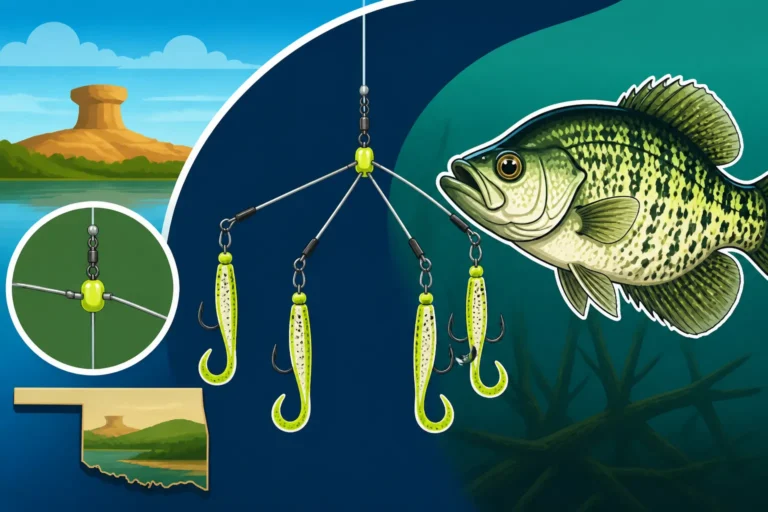
For open water winter fishing, deep jigging is the primary technique. This involves fishing those same small jigs or minnows vertically in deep water. You might use a weighted crappie rig, sometimes called a "drop shot" style rig, with two hooks and a weight at the bottom to present multiple baits at once. Another effective method is tightlining, where you use a weighted line with no float, feeling for bites directly through your rod and line. This precision helps get your bait exactly where those tight-lipped winter crappie are holding.
Essential Crappie Fishing Techniques for Every Season
Catching crappie isn't just about knowing where they are; it's also about mastering the right techniques to present your bait effectively. Whether you're fishing shallow cover in spring or deep channels in winter, having a diverse toolkit of presentations will significantly increase your success.
Jigging for Crappie
Jigging is perhaps the most fundamental and versatile crappie fishing technique. It involves using a jig head (a lead head with a hook) paired with a soft plastic body, hair, or feather dressing. The beauty of jigging is its adaptability:
- Vertical Jigging: This is ideal for fishing deep schools of crappie or those holding tight to structure. You simply drop your jig straight down to the desired depth and impart subtle rod tip movements to give the jig action. This works wonders when you've pinpointed fish on your sonar.
- Casting and Retrieving: In shallower water or when crappie are scattered, casting a jig and slowly retrieving it with a lift-and-fall motion can be very effective. This mimics a wounded baitfish. Experiment with retrieve speeds and pauses.
- Shooting Docks: A more advanced technique, "shooting" a jig involves flicking your rod to propel the jig under boat docks, reaching crappie that are hiding in the shade. It requires a bit of practice but can be incredibly rewarding.
For a deeper dive into the nuances of this technique, check out our dedicated guide on Crappie Jigging Techniques. A wide array of crappie jigs, including tube jigs, curly tail grubs, and soft plastic minnow imitations, can be found online through retailers like Amazon.
Spider Rigging and Trolling
When crappie are scattered or you need to cover a lot of water to find them, especially in open water or along channel edges, spider rigging and trolling are your go-to methods.
- Spider Rigging: This technique involves using multiple long rods (often 10-16 feet) extended from the front of your boat, creating a "spider web" of lines. Each rod typically has a minnow or jig rig, allowing you to present baits at different depths and distances from the boat. You slowly motor along, covering wide swaths of water. It's particularly effective in pre-spawn, post-spawn, and fall when crappie are moving or scattered.
- Trolling: Similar to spider rigging, trolling involves dragging jigs, minnows, or small crankbaits behind your boat. You can use fewer rods than spider rigging, but the principle is the same: cover water and entice strikes. Trolling is excellent for finding schools of crappie suspended over open water or along contours. You can use lead core line or specialized weights to get your baits down to specific depths. Experiment with speeds; sometimes a slight variation makes all the difference.
These methods are fantastic for identifying productive patterns and locations on larger Oklahoma reservoirs.
Tightlining and Bobber Fishing
These classic techniques are simple, effective, and perfect for anglers of all skill levels.
- Tightlining: This involves using enough weight on your line to keep it vertical, allowing you to feel bites directly through your rod. It’s excellent for deep-water presentations where a bobber might not be practical or when you want maximum sensitivity. A small bell sinker above a swivel, leading to a leader with one or two hooks, is a common tightline setup for minnows. It's often used in winter or when crappie are holding tight to the bottom in channels. This method truly shines when crappie are barely biting, as you're feeling every little bump. Learn more about this technique in our guide on Crappie Tightlining Techniques.
- Bobber Fishing: Perhaps the most iconic method, bobber fishing is fantastic for presenting baits at a consistent depth, especially in shallower water or over submerged cover. Both fixed bobbers and slip bobbers have their place. Fixed bobbers are great for depths up to your rod length, while slip bobbers allow you to fish much deeper by letting the line slide through the bobber until it hits a stopper knot. This is perfect for fishing brush piles, docks, or shorelines where crappie are active. It’s also incredibly fun for kids, as watching the bobber go down is a thrill!
Gear Up for Oklahoma Crappie Success
Having the right gear makes a world of difference in crappie fishing. It's not about having the most expensive setup, but rather gear that is appropriately sized, sensitive, and reliable for the techniques you'll be employing.
Rods, Reels, and Line
Crappie fishing demands finesse, so ultralight or light-action spinning rods are typically preferred. A good crappie rod will have a sensitive tip to detect those subtle bites, yet enough backbone to handle a good-sized crappie. Rods in the 5 to 7-foot range are versatile for both casting and vertical jigging. For spider rigging, longer rods (8-16 feet) are essential to spread out your lines.
Pair your rod with a small, lightweight spinning reel (size 500 to 1000). A smooth drag system is important for protecting light lines when a larger crappie or an unexpected bonus fish hits. For line, 4-6 pound test monofilament or fluorocarbon is standard. Monofilament is more forgiving with stretch, while fluorocarbon offers greater sensitivity and is nearly invisible underwater. Braided line in 8-10 pound test can also be used, especially in heavy cover, but you'll want to add a fluorocarbon leader for stealth. For a deeper look at essential tackle, our article on the Best Tackle Setup for Oklahoma Crappie can provide more detailed recommendations.
Baits, Lures, and Scents
This is where you can truly customize your crappie arsenal.
- Live Bait: Live minnows are king for crappie, especially in colder water or when fish are finicky. Keep them lively in a good minnow bucket. Crappie nibblers or tiny bits of Berkley Gulp! Alive can also be added to jigs for extra scent and attraction.
- Jigs: Soft plastic jigs are incredibly versatile. Tube jigs, curly tail grubs, paddle tails, and minnow imitations come in a dazzling array of colors and sizes. A good starting point is a 1/16 oz jig head with a 2-inch grub or tube in chartreuse, white, or black/chartreuse. Hair jigs and feather jigs also have their place, especially in clear water.
- Crankbaits: Small, shallow-diving crankbaits are effective for trolling or casting, especially in fall when crappie are aggressively chasing baitfish. Look for models that dive 5-10 feet.
- Scent Attractants: Adding scent to your artificial lures can often entice reluctant crappie to hold on longer, giving you more time to set the hook. Brands like Berkley PowerBait or Pro-Cure offer effective crappie-specific scents. You can find a vast selection of these baits, lures, and scents on Amazon, making it easy to stock up for your next trip.
Electronics and Accessories
Modern electronics have revolutionized crappie fishing, making it easier to locate fish and structure.
- Fish Finders/Sonar: A quality fish finder is almost a necessity for serious crappie anglers. Look for models with down imaging and side imaging capabilities, which allow you to see fish and structure directly beneath and to the sides of your boat. This is crucial for finding deep crappie schools, brush piles, and submerged timber. Having GPS functionality to mark hotspots is also invaluable. If you're wondering which features are most important, check out Fish Finder Features That Matter Most on Oklahoma Reservoirs.
- Crappie Lights: For night fishing, submersible or floating crappie lights are essential. They attract baitfish, which in turn draws in the crappie, creating a productive fishing zone around your boat.
- Landing Net: A small, crappie-specific landing net with fine mesh helps you land fish safely and quickly, preventing them from flopping off the hook at the boat.
- Livewell/Cooler: A good livewell (if you have a boat) or a quality cooler with ice is vital for keeping your catch fresh, especially in Oklahoma’s warm climate.
Popular Oklahoma Crappie Lakes and Their Nuances
Oklahoma is blessed with an abundance of fantastic crappie lakes, each with its own character and nuances. While the general seasonal patterns apply, understanding the specific traits of each lake can help you tailor your approach for maximum success.
Lake Eufaula: The Gentle Giant
Lake Eufaula, often called "Oklahoma's Gentle Giant," is the state's largest lake and a phenomenal crappie fishery. Its vast size means diverse habitats, from shallow, timber-filled coves to sprawling open water. Crappie here can be found in a multitude of locations depending on the season. In spring, focus on the shallow backs of coves and creek channels filled with standing timber or laydowns in areas like the North Fork or Gaines Creek arms. During summer, look for crappie suspended around brush piles in the main lake or along the deeper channel edges. Fall sees crappie chasing shad in the major creek arms.
Eufaula's crappie can grow quite large, and it's not uncommon to catch fish over a pound. The sheer amount of structure and diverse forage base makes it a consistent producer. Anglers often do well spider rigging in the spring and fall, and vertical jigging deep timber in the summer and winter. For more on this lake's fishing potential, our guide Lake Eufaula: Oklahoma's Gentle Giant for Bass and Crappie is worth a read.
Grand Lake O' the Cherokees: A Crappie Hotspot
Grand Lake, in Northeast Oklahoma, is another premier crappie destination, particularly known for its abundance of white crappie. This lake is characterized by its clear to stained water, rocky banks, and extensive dock systems, especially in the mid and lower lake sections. The upper reaches of the lake, where the Neosho and Spring Rivers feed in, tend to be shallower and more turbid, offering different crappie habitats.
Spring crappie are abundant around the numerous docks and riprap banks, making shooting docks a highly effective technique. In summer, crappie retreat to deep brush piles and bridge pilings (especially the famous US-59 bridge). Fall sees them chasing shad in open water and around main lake points. Grand Lake is also a popular spot for night fishing with lights. Knowing the specific spots can be a huge advantage, so check out Where to Catch Crappie on Grand Lake O' the Cherokees for more detailed information on local hotspots.
Tenkiller, Arbuckle, and Other Top Lakes
Oklahoma boasts many other outstanding crappie lakes, each with its unique flavor:
- Tenkiller Ferry Lake: Known for its clear, deep waters and dramatic bluffs, Tenkiller is a beautiful lake with a healthy crappie population. Remember, however, that Tenkiller is one of those lakes with a special 10-inch minimum length limit and reduced bag limit for crappie, so always verify the current regulations before you go. This lake's clarity often means crappie will hold deeper, even in spring, and subtle presentations are key. You can learn more about its specific rules in Tenkiller Lake's 10-Inch Crappie Minimum.
- Lake Arbuckle: Located in south-central Oklahoma, Arbuckle is a smaller, clear-water lake nestled in the Arbuckle Mountains. It's famous for its strict 10-inch crappie minimum length limit and reduced bag limits, which have helped produce some truly impressive slab crappie. Structure fishing, especially around brush piles and standing timber, is key here. Dive into Arbuckle Lake Crappie Rules in Oklahoma for more details.
- Fort Gibson Lake: This lake offers diverse crappie fishing, from the timber-filled upper arms to the clearer lower lake. Like Tenkiller and Arbuckle, it often has specific crappie regulations to be aware of.
- Hudson Lake: Another lake with special crappie limits, Hudson offers good crappie fishing around its abundant timber and submerged structures.
- Kaw Lake: In northern Oklahoma, Kaw is known for its prolific white crappie populations and excellent open-water fishing, particularly for spider rigging and trolling.
- Broken Bow Lake: With its exceptionally clear, deep waters, Broken Bow provides a unique crappie fishing experience. The crappie here are often found in very deep water or tight to vertical structure.
Each of these lakes offers incredible opportunities, but success often comes down to adapting your techniques to the specific conditions and always adhering to the local regulations.
Disclaimer
Fishing regulations and conditions in Oklahoma can change frequently. Always consult the latest Oklahoma Fishing Regulations Guide issued by the Oklahoma Department of Wildlife Conservation (ODWC) before heading out. This guide is for informational purposes only and should not be considered a substitute for official regulations. Be safe, respect the resource, and enjoy your time on the water!