How Many Crappie You Can Keep in Oklahoma
One of the most common headaches for any angler hitting the water in Oklahoma is trying to keep all those fishing regulations straight. You're out there, the crappie are biting, and suddenly a nagging doubt creeps in: exactly how many of these beautiful fish am I allowed to keep today? It’s a question that can quickly turn a relaxing day into a stressful one, especially with different rules for different lakes. This comprehensive guide is here to clear up all that confusion, detailing Oklahoma's crappie limits, explaining why they exist, and helping you navigate the sometimes tricky world of lake-specific regulations so you can focus on catching fish responsibly.
Understanding Oklahoma's Statewide Crappie Bag Limit
Oklahoma is renowned for its fantastic crappie fishing, attracting anglers from all over for a chance to fill a cooler. But before you start dreaming of a big crappie fry, it's absolutely crucial to understand the statewide regulations that govern how many of these speckled beauties you can legally take home. These rules aren't just arbitrary; they're in place to ensure that crappie populations remain healthy and abundant for generations of anglers to come.
The General 37-Fish Rule
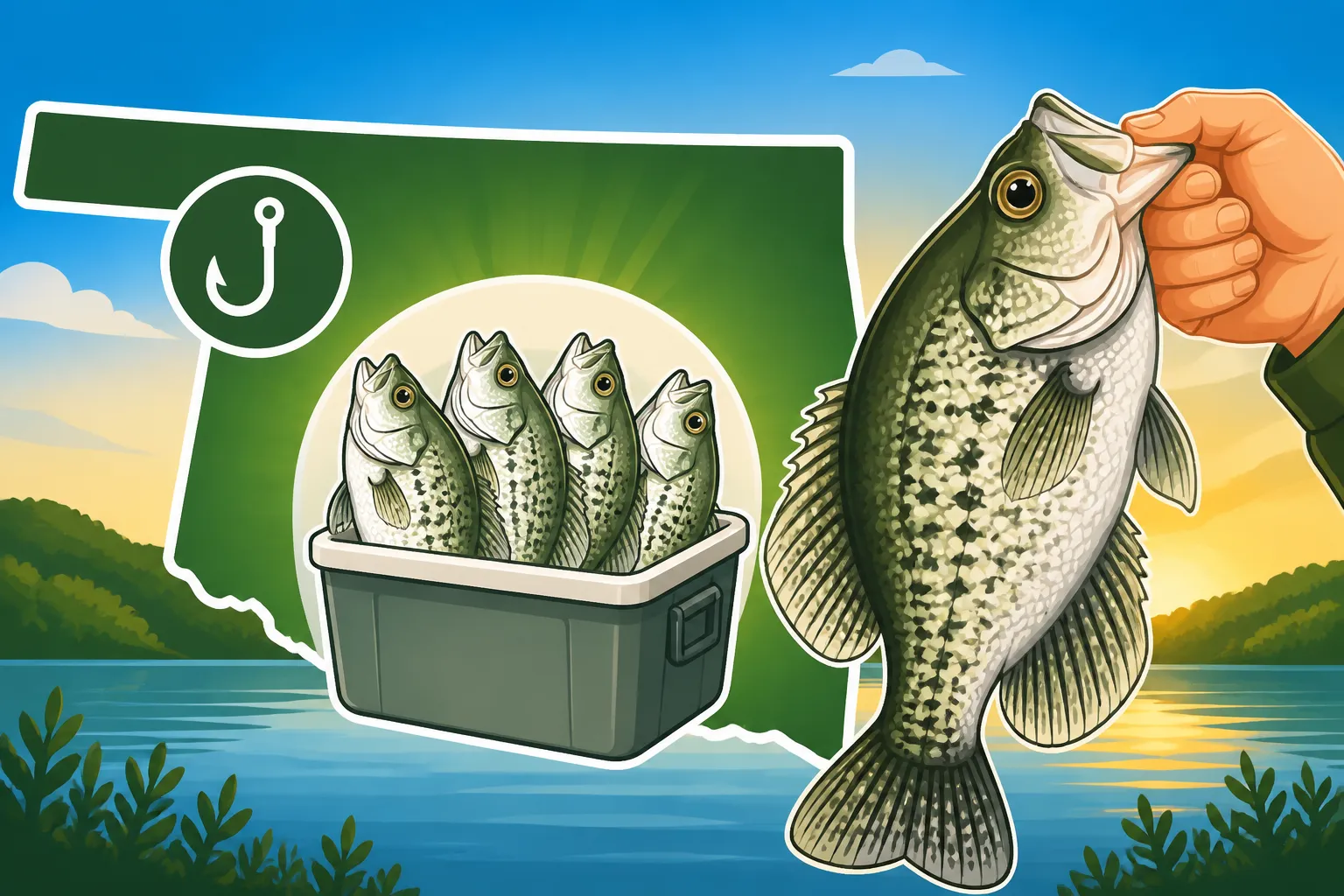
Across most of Oklahoma's lakes, rivers, and ponds, anglers are subject to a statewide daily bag limit of 37 crappie. This applies to both black crappie and white crappie, meaning you don't get 37 of each; it's a combined total for both species. So, whether you're catching a mix or focusing on just one type, once you hit that 37th fish, it's time to either switch to catch-and-release or call it a day. Many anglers find this number quite generous, allowing for a really productive day on the water, but it's important not to exceed it. Understanding the basics of the Oklahoma Statewide Crappie Bag Limit is your first step to legal and responsible fishing.
This 37-fish limit is a daily limit, meaning it resets at midnight. However, it's also your "possession limit" when you're on the water. You can't have more than 37 crappie in your livewell, cooler, or vehicle while actively fishing or on your way home from a fishing trip, even if you’ve fished for multiple days. For instance, if you caught 37 crappie on Monday and were planning to fish again on Tuesday, you'd need to have Monday's catch processed and stored at home before returning to the lake for another 37. This prevents anglers from accumulating massive quantities of fish by stretching the daily limit over several days without ever leaving the area.
Why Bag Limits Exist
Bag limits, including the 37-fish crappie limit, are fundamental tools in fisheries management. They serve several critical purposes, all aimed at maintaining a sustainable and enjoyable fishing experience for everyone. First and foremost, they prevent overfishing. Crappie are prolific breeders, but they can still be vulnerable to excessive harvest, especially during popular spawning periods or when fishing hot spots. Without limits, a few highly successful anglers could significantly deplete local populations, leading to fewer and smaller fish for everyone else in the long run. The goal is to allow enough crappie to survive and reproduce, ensuring a healthy population structure year after year.
Secondly, bag limits help distribute the resource more equitably among anglers. If there were no limits, a small percentage of anglers could potentially take a disproportionate share of the fish, leaving less for the majority. By capping the number of fish an individual can keep, the system encourages more people to have a successful outing while still protecting the overall fish stock. It’s a balance between individual enjoyment and collective sustainability, a concept integral to Crappie Fishing in Oklahoma Black and White Crappie success. The limits are often based on extensive biological studies of fish populations, growth rates, and reproductive cycles, ensuring they're scientifically sound.
How to Count Your Catch
Counting your catch seems straightforward, but there are a few nuances, especially when considering the "possession limit" aspect. The most direct way to count is to simply keep a tally as you place fish in your livewell or cooler. It's easy to get caught up in the excitement of a good bite, so having a mental or even physical count (like using a clicker counter) can be very helpful. Remember, both black and white crappie contribute to that single 37-fish total. You can't just catch 37 white crappie and then start on 37 black crappie; it's a combined limit as articulated in Black and White Crappie Counted Together.
For multi-day trips, this becomes even more critical. If you're staying at a cabin or campground by the lake for a weekend, your cooler might hold crappie from Friday's fishing. If you go out again on Saturday, any fish you catch then add to your existing possession. To legally catch another full limit on Saturday, you would need to have Friday's catch entirely consumed, given away, or stored off-site (like in a freezer at home or a local processing facility) before you go fishing again. Otherwise, if a game warden checks your cooler and finds more than 37 crappie, regardless of when they were caught, you could be cited for exceeding the possession limit. It's always safest to only possess one day's legal limit of fish at any given time while you are in the field or actively engaged in fishing.
Navigating Lake-Specific Crappie Regulations
While the 37-fish statewide limit is a good baseline, Oklahoma has a handful of lakes that operate under special, often stricter, crappie regulations. This is where many anglers, even seasoned ones, can get tripped up. These specific rules are put in place for very good reasons, usually to address unique ecological conditions, high fishing pressure, or to foster trophy fisheries in those particular bodies of water. Ignoring these lake-specific rules can lead to fines and legal trouble, so paying attention is vital.
The "Ten-Inch Crappie Rule" Lakes
The most significant deviation from the statewide crappie rule involves a minimum length limit, usually 10 inches, and often a reduced daily bag limit at specific lakes. As explained in detail in Stricter Crappie Limits at Six Oklahoma Lakes, there are several well-known reservoirs where these stricter rules apply.
These lakes are:
- Lake Arbuckle: Famous for its clear water and scenic beauty, Arbuckle often sees heavy fishing pressure. You can explore Arbuckle Lake Crappie Rules in Oklahoma for more in-depth information.
- Tenkiller Ferry Lake: A popular destination in Eastern Oklahoma, known for diverse fishing opportunities, including crappie. Read up on Tenkiller Lake's 10-Inch Crappie Minimum before you visit.
- Hudson Lake: Another key crappie lake in the state with its own set of rules. For more, check out Hudson Lake Crappie Limit Explained.
- Fort Gibson Lake: A large reservoir near Muskogee, known for strong crappie populations but requiring adherence to its specific limits. Learn about Fort Gibson Lake's 15-Fish Crappie Limit.
- Grand Lake O' the Cherokees: One of Oklahoma's largest and most famous lakes, it’s a crappie hotspot with specific regulations that differ from the statewide rule. Always double-check Grand Lake Crappie Size and Bag Limits before heading out.
- Lake Texoma: This massive border lake shared with Texas has unique regulations, and its crappie rules are often compared to the statewide limit because they differ. Dive into Texoma's Crappie Rules Compared to the Statewide Limit.
At these specific lakes, you'll encounter two key differences:
- Minimum Length Limit: Any crappie you catch must be at least 10 inches long from the tip of its snout to the end of its tail (with the tail compressed) to be legally kept. If it's shorter than 10 inches, it must be immediately released unharmed.
- Reduced Daily Bag Limit: The statewide 37-fish limit is reduced. For most of these lakes, including Arbuckle, Tenkiller, Hudson, and Texoma, the daily bag limit is 15 crappie. Fort Gibson is also 15, and Grand Lake currently maintains a 20-fish limit.
It's a lot to remember, which is why Crappie Fishing Rules on Oklahoma's Ten-Inch Lakes exist. Here's a quick comparison table:
| Lake Name | Minimum Length (inches) | Daily Bag Limit (Crappie) | Notes |
|---|---|---|---|
| Most Oklahoma Lakes | None | 37 | Statewide general rule |
| Lake Arbuckle | 10 | 15 | Strict limits for this clear-water lake |
| Tenkiller Ferry Lake | 10 | 15 | Popular lake with specific conservation |
| Hudson Lake | 10 | 15 | Key Northeast Oklahoma crappie spot |
| Fort Gibson Lake | 10 | 15 | Managing a popular crappie fishery |
| Grand Lake O' the Cherokees | 10 | 20 | Large, heavily fished lake with special rules |
| Lake Texoma | 10 | 15 | Border lake with unique regulations |
Why Certain Lakes Have Stricter Rules
These stricter, lake-specific rules are not designed to frustrate anglers, but rather to serve as targeted management strategies. Often, these lakes experience unique pressures or have distinct ecological characteristics that necessitate a different approach than the statewide standard. For example, some lakes might have slower-growing crappie populations, making a 10-inch minimum size limit crucial to ensure the fish have a chance to reach reproductive maturity before being harvested. This helps protect the breeding stock and sustain the fishery.
High fishing pressure is another major factor. Lakes like Grand Lake or Texoma are incredibly popular and see thousands of angler hours each year. Without more restrictive limits, the crappie populations could quickly be depleted, impacting both fish size and overall numbers. By reducing the bag limit and enforcing a minimum size, wildlife managers aim to distribute the harvest more widely and encourage the growth of larger, more desirable crappie. This is all part of Why Six Oklahoma Lakes Have Stricter Crappie Limits are in place, reflecting a proactive approach to maintain quality fishing experiences.
The Importance of Checking Local Regulations
Given these variations, it cannot be stressed enough how vital it is to check the current regulations for the specific body of water you plan to fish before you even cast a line. Regulations can change from year to year, or even mid-season if a new conservation concern arises. Relying on outdated information or hearsay is a recipe for trouble.
The best and most reliable source for up-to-date information is the Oklahoma Department of Wildlife Conservation (ODWC) website or their annual Oklahoma Fishing and Hunting Regulations guide. You can find digital versions online, or pick up a physical copy at most sporting goods stores, bait shops, or ODWC offices. When planning a crappie trip, specifically for one of the larger reservoirs, make it a habit to look up the exact rules. This proactive step helps you avoid any misunderstanding that could lead to a citation from a game warden. Take the time to confirm the rules, especially when Planning a Crappie Trip Around Oklahoma's Six Stricter Lakes or if you're venturing to a new spot for the first time.
Practical Tips for Responsible Crappie Fishing
Beyond just knowing the numbers, responsible crappie fishing involves adopting practices that minimize harm to the fish and ensure you stay within legal bounds. It’s about more than just avoiding a fine; it’s about being a good steward of the resource and ensuring healthy fisheries for the future.
Measuring Your Crappie Correctly
When you're fishing on a lake with a minimum length limit, accurate measurement is critical. The official way to measure a fish in Oklahoma (and most places) is to lay it flat and measure from the tip of its snout (mouth closed) to the very end of its tail, with the tail compressed or squeezed together. Don't measure to the fork of the tail, and don't let the tail fan out; push it together to get the maximum length.
It's a good idea to have a reliable measuring device with you. Many tackle boxes come with built-in rulers, or you can purchase stand-alone fish rulers. Some boat manufacturers even include measuring decals on their gunwales. When in doubt, a slightly longer measurement is always better. If your crappie is borderline 10 inches, it's safer to release it unless you're absolutely confident it meets the minimum. A game warden isn't likely to give you the benefit of the doubt if your fish comes up short.
Releasing Undersized or Excess Crappie
Inevitably, when fishing lakes with size limits, you're going to catch crappie that are too small to keep. And even on lakes with just a bag limit, you might accidentally catch more than 37 before you decide to stop. Knowing how to properly release these fish is essential for their survival.
Here are some best practices for catch-and-release:
- Handle with care: Minimize the time the fish is out of the water. Handle it gently with wet hands or a wet towel to protect its protective slime coat.
- Remove hooks quickly: Use needle-nose pliers or a dehooking tool to remove hooks cleanly and swiftly. If the fish is deeply hooked in the gills or gut, it's often better to cut the line as close to the hook as possible rather than trying to remove it, as the hook will eventually rust out.
- Support the fish: If you must hold the fish for a quick photo, support its body horizontally. Avoid holding it vertically by the jaw, as this can damage its spine and internal organs.
- Revive if necessary: If a fish looks sluggish or disoriented, hold it gently in the water, facing into the current, and move it back and forth to force water over its gills until it regains strength and swims away on its own.
- Consider single, barbless hooks: For crappie, especially if you anticipate a lot of catch-and-release, using single, barbless hooks can make hook removal much easier and less traumatic for the fish. You can buy barbless hooks or simply crimp down the barb on your existing hooks with pliers.
These practices contribute to the health of the fishery and are a cornerstone of ethical angling, allowing more crappie to grow larger and provide future opportunities.
Avoiding Common Crappie Limit Mistakes
It’s easy to make mistakes, especially when you're just trying to enjoy your time on the water. However, ignorance of the law is generally not a valid defense if you're caught violating fishing regulations. Here are some common pitfalls and how to steer clear of them:
- Not checking for lake-specific rules: This is probably the most frequent mistake. Always confirm the rules for each specific lake, especially the big ones like Texoma, Grand Lake, or Fort Gibson. Don't assume the statewide limit applies everywhere. Checking Crappie Rules Before Fishing Grand Lake is a perfect example of this proactive step.
- Miscounting your catch: It happens. You're on a hot bite, and the cooler starts filling up. Keep a running tally, or if you're fishing with friends, designate someone to keep count for the group. It's much easier to accidentally go over than you think.
- Possession limit misunderstandings: As discussed, your possession limit is your total crappie count while in the field. Don't try to "stack" limits over multiple days without properly storing or consuming the previous day's catch.
- Not measuring correctly: If there’s a size limit, an undersized fish counts as an illegal fish. Always measure properly, and if it's close, err on the side of caution and release it.
- Forgetting your fishing license: While not directly related to crappie limits, not having a valid Oklahoma fishing license is the quickest way to ruin your day and incur a penalty. Make sure it's current and with you, whether in print or on your phone (you can often buy and display them digitally through services like the Go Outdoors Oklahoma app or print them from the ODWC website, or find physical licenses at stores like Walmart or local bait shops).
Being diligent about these small details ensures that your fishing adventures remain enjoyable and hassle-free, contributing positively to Oklahoma's vibrant fishing community.
Disclaimer
Please remember that fishing regulations are subject to change. Always consult the official Oklahoma Department of Wildlife Conservation (ODWC) website or their current printed regulations guide for the most up-to-date and accurate information before heading out on any fishing trip. The information provided here is for general guidance and educational purposes only.