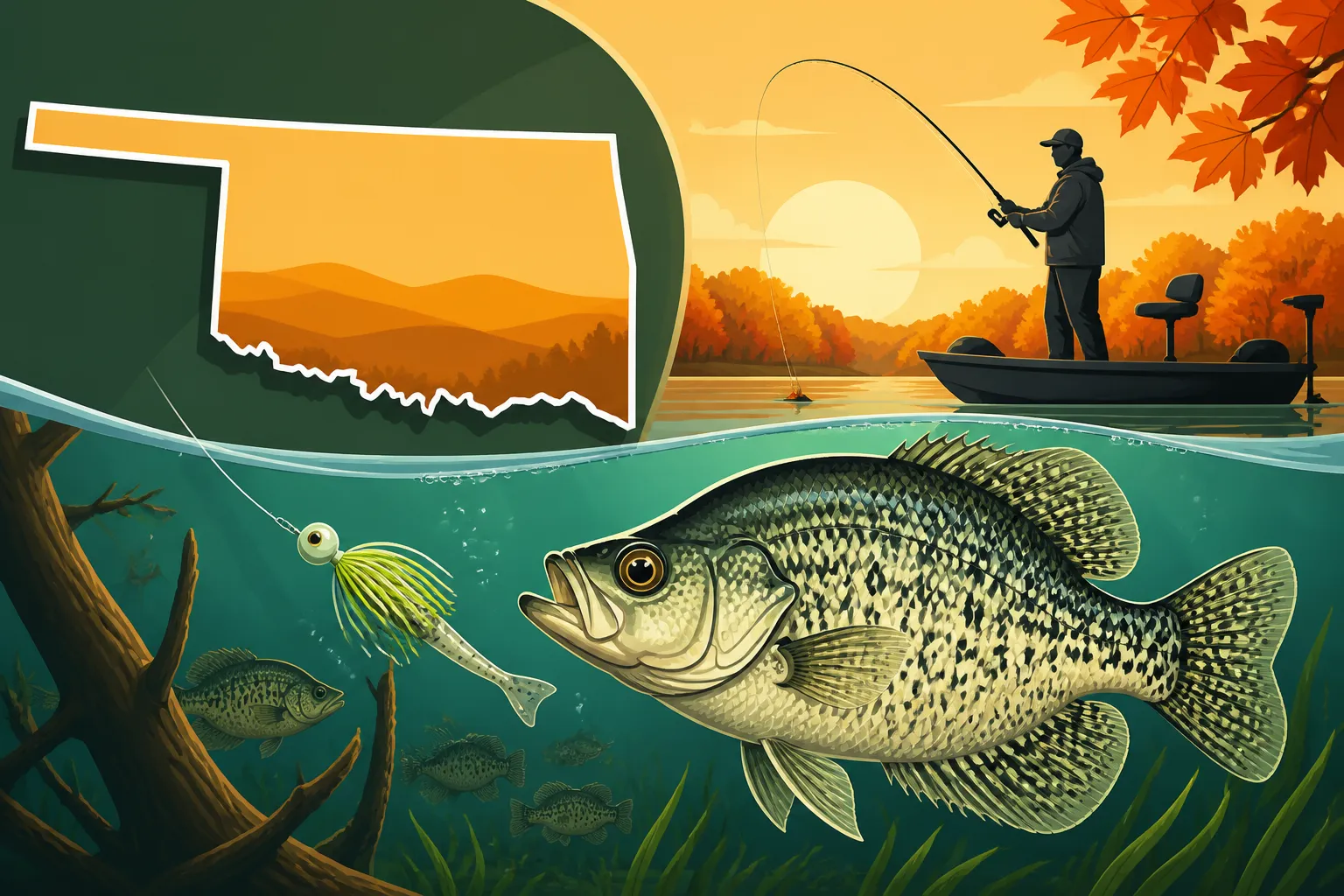
Fall Crappie Fishing Patterns in Oklahoma
As the sweltering Oklahoma summer finally loosens its grip, many anglers find themselves scratching their heads, wondering where all the crappie went. Those easy summer patterns around brush piles and docks suddenly vanish, leaving a void that can be incredibly frustrating. This comprehensive guide will walk you through the distinct phases of fall crappie behavior, offering detailed strategies, techniques, and insights to help you consistently find and catch these popular panfish as the water cools across our beloved Sooner State.
Understanding the Autumnal Shift for Crappie
Fall isn't just one static season for crappie; it's a dynamic transition that changes week by week, sometimes even day by day, depending on the weather fronts rolling through Oklahoma. What worked in September probably won't cut it in November. The key to successful fall crappie fishing is understanding why these changes happen and how crappie react to dropping water temperatures and shorter daylight hours. This understanding empowers you to adapt your approach, rather than just blindly throwing bait.
The Influence of Water Temperature and Daylight
Crappie are cold-blooded creatures, meaning their metabolism and activity levels are directly tied to water temperature. As the scorching summer heat gives way to cooler nights and crisp autumn days, the surface water begins to cool down. This cooling process triggers a shift in crappie behavior, moving them from their deeper, oxygen-rich summer haunts to more predictable locations. Initially, they might become more active, feeding aggressively to build up fat reserves for the lean winter months. Later, as temperatures plummet further, their activity slows, and they seek out stable, deeper sanctuaries.
Daylight hours also play a crucial role. Shorter days often coincide with those temperature drops, signaling to the crappie that winter is indeed coming. This combined environmental cue pushes them through various transitional patterns. Knowing the typical water temperature ranges for each fall phase will give you a significant advantage, allowing you to anticipate where the fish might be congregating. For instance, in early fall, temperatures might hover in the 70s, while by late fall, they could dip into the 40s. Each range demands a different strategy.
Crappie Foraging and Schooling Behavior Changes
During summer, crappie often spread out, relating to specific structures like individual brush piles, standing timber, or shaded docks. But as fall progresses, their behavior shifts dramatically. Baitfish, especially shad, begin to school up tightly as they also react to cooling water. Crappie, being opportunistic predators, follow suit. You'll find them congregating in larger, tighter schools, often shadowing these baitfish concentrations. This schooling behavior can be both a blessing and a curse for anglers.
The blessing is that when you find one crappie, you've likely found a whole school, leading to rapid-fire action. The curse, however, is that if you're not on top of their location, you might fish for hours without a bite. Their feeding patterns also intensify in early to mid-fall. They're more willing to chase down a lure or minnow, making them easier to catch than during the dog days of summer or the sluggishness of deep winter. However, by late fall, that aggression wanes, and a more subtle, vertical presentation becomes necessary as they become less willing to expend energy.
Early Fall Crappie Strategies September-October
Early fall in Oklahoma, roughly encompassing September and early October, is a fantastic time to target crappie. The blistering heat of summer is finally breaking, but the water hasn't gotten truly cold yet. This is often a transition period where crappie start to move and feed aggressively. If you can catch this window, you're in for some great action.
Targeting Transition Areas and Shad Migration
As water temperatures begin to drop from the 80s into the low 70s, crappie will start to migrate from their deepest summer sanctuaries. They're still somewhat depth-conscious, but they'll often push shallower, especially during overcast days or early mornings and late evenings. A prime target during this phase is transition areas – those spots where deep water quickly gives way to shallower flats, points, or creek channels. Think about the mouths of major creeks where they meet the main lake body, or the edges of river bends. These are highways for baitfish, and crappie will be right on their heels.
Shad, being the primary forage for crappie in most Oklahoma lakes, will start to school up and move into these creek arms and shallower main lake coves. Keep an eye out for surface activity – birds diving, baitfish flickering on the surface, or even larger fish busting bait. These are tell-tale signs that the buffet is open. Using your electronics to locate these dense schools of shad is paramount. Once you find the bait, the crappie won't be far behind, often suspended just below or within the bait ball itself.
Effective Lures and Live Bait Presentations
For early fall crappie, you can often get away with more aggressive presentations because their metabolism is still relatively high. Small crankbaits, like the Berkley Flicker Shad or similar shallow-diving models, can be incredibly effective when trolled or cast around schooling bait. The vibration and flash mimic fleeing shad, often triggering a reaction strike. Light jigs, from 1/16 to 1/8 ounce, tipped with small plastic bodies like grub tails, tubes, or small swimbaits are also excellent. Chartreuse, white, and shad patterns are always reliable.
Don't overlook live bait, especially minnows. A small minnow fished under a bobber near submerged brush or suspended just above a bait school can be irresistible. A simple single hook rig with a split shot, often called tightlining, is a deadly technique, especially when you can pinpoint the depth crappie are holding. Remember to adjust your retrieve speed; while they might be aggressive, sometimes a slower, more deliberate presentation will draw more bites. You can find a fantastic selection of these crappie jigs and minnow rigs on Amazon.
Mid-Fall Crappie Strategies Late October-November
As Oklahoma progresses into late October and November, the weather truly begins to cool, and the crappie patterns solidify into more distinct fall behaviors. Water temperatures will typically drop into the 60s and eventually the 50s. This is when crappie really start to school up in earnest, making them both harder to find but incredibly rewarding once you do.
Locating Deeper Structure and Submerged Cover
Gone are the days of chasing them to shallow flats. Mid-fall crappie will be deeper, concentrating on prominent main lake structures. Think long, tapering points, channel breaks, humps, and especially standing timber or brush piles in 15 to 30 feet of water. These fish aren't just roaming; they're relating to specific depth contours and cover that offers them both refuge and ambush points for baitfish. A good fish finder is no longer a luxury, but a necessity to efficiently locate these submerged structures and the crappie holding to them. Many anglers swear by brands like Humminbird and Garmin for their detailed sonar capabilities, which can reveal individual fish around structure.
When fishing these deeper areas, pay close attention to the thermocline if one still exists, though by mid-fall, lakes are often undergoing turnover or have fully turned over, meaning temperatures are more uniform from top to bottom. Instead, focus on the depth where baitfish are most concentrated, or where you see distinct schools of crappie on your sonar. Sometimes, a few feet of depth can make all the difference between a barren spot and a honey hole. This is also a good time to review how specific lakes are managed; remember that there are Stricter Crappie Limits at Six Oklahoma Lakes, so always check local regulations.
Vertical Jigging and Spider Rigging Techniques
With crappie holding tighter to structure in deeper water, vertical presentations become incredibly effective. One of the most popular techniques is vertical jigging. Drop a small jig (1/16 to 1/8 ounce) or a minnow directly over the school you've marked on your electronics. The key is to keep your bait in the strike zone. Use a sensitive rod – light action or ultralight spinning rods with fast tips are ideal for detecting those subtle crappie bites. Good quality crappie rods are readily available on Amazon. Jigging spoons can also be effective, especially when crappie are feeding on larger shad.
Another highly productive mid-fall technique, particularly from a boat, is spider rigging. This involves using multiple rods (often 4-8) spread out from the boat, each rigged with a jig or minnow, and slowly trolling over structure. This allows you to cover a wider swath of water at different depths, increasing your chances of finding the exact depth and location where crappie are holding. It's a method that requires patience and a good understanding of your boat's trolling motor, but it can be incredibly rewarding once you dial in the pattern. For a more detailed look at the gear, you might explore articles like Best Tackle Setup for Oklahoma Crappie.
| Fall Phase | Water Temp Range (approx.) | Crappie Behavior Highlights | Common Depths | Primary Techniques | Recommended Baits/Lures |
|---|---|---|---|---|---|
| Early Fall | 70s to low 60s | Transitional, aggressive, follows shad into creeks | 8-15 ft | Trolling, Casting | Small crankbaits, 1/16 oz jigs, minnows |
| Mid-Fall | 60s to low 50s | Schooling up, relates to deeper structure, less aggressive | 15-25 ft | Vertical Jigging, Spider Rigging | 1/16 – 1/8 oz jigs, minnows, small spoons |
| Late Fall | 50s to low 40s | Deep, tightly schooled, sluggish, very subtle bites | 20-40 ft+ | Deadsticking, Slow Trolling, Live Bait | Small jigs, minnows, hair jigs |
Late Fall Crappie Strategies December
As December arrives, and true winter weather begins to set in across Oklahoma, crappie fishing shifts dramatically once more. Water temperatures will consistently be in the low 50s, dipping into the 40s or even colder in some of the shallower northern lakes. This is when crappie become much more lethargic, conserving energy, and you'll often find them hunkered down in their wintering holes.
Deep Water Sanctuaries and Wintering Holes
By late fall, crappie are seeking the most stable water temperatures they can find, which almost always means the deepest parts of the lake. They'll abandon much of the main lake structure they used in mid-fall and move into distinct wintering holes. These are typically deep creek channels, main lake river channels, or the deepest parts of large coves, often 20 to 40 feet deep, or even deeper depending on the lake's maximum depth. They'll suspend in these deep areas, often relating to baitfish that are also seeking thermal refuge.
It's not uncommon to find crappie suspended just a few feet off the bottom in 30-foot water, or sometimes even 10-15 feet down over 50 feet of water, following a deep bait school. Your sonar is an absolute must during this time. Look for those tell-tale arches or horizontal lines of fish suspended over what looks like barren bottom. Often, they'll be near some subtle bottom change, like a slight bend in a channel or a small hump. When you find one of these congregations, you've likely hit the jackpot for the day. For more insights on general patterns, refer to the larger resource on Crappie Fishing Techniques and Seasonal Patterns in Oklahoma.
Deadsticking and Ultra-Slow Presentations
Because crappie are so sluggish in cold water, aggressive presentations simply won't work. This is the time for finesse and patience. The "deadsticking" technique becomes king. This involves dropping a very small jig (1/32 or 1/64 ounce) or a tiny minnow straight down to the fish's depth, and then holding it perfectly still, with just the slightest twitch or quiver. The idea is to make the bait appear as easy a meal as possible, requiring minimal effort from the crappie. You're not looking for a hard strike; often, it's just a subtle "thump" or the line going slack.
Using the lightest line possible (2-4 lb test fluorocarbon or monofilament) will help your bait sink naturally and make these subtle bites more detectable. Some anglers even prefer using a tiny hair jig or a micro-jig dressed with a minimal plastic tail. Paired with a sensitive ultralight rod and a smooth spinning reel, like those you might pick up after reading about the Best Spinning Reel for Crappie Fishing, this approach can turn a slow day into a productive one. It's a test of patience, but when you connect with a slab crappie in the cold, it's incredibly satisfying.
Essential Gear and Techniques for Fall Crappie
Having the right tools for the job can make a significant difference, especially when crappie are playing hard to get. While crappie fishing doesn't always require the most expensive gear, understanding the purpose of each item and how to use it effectively will absolutely elevate your success.
Rods, Reels, and Line for Sensitivity
For fall crappie, sensitivity is paramount. You need to feel those subtle bites that can sometimes be barely discernible. This means opting for light to ultralight action rods, typically 6 to 7 feet long. Graphite rods are often preferred over fiberglass for their enhanced sensitivity. A fast tip will allow you to quickly detect bites and set the hook, even when fish are just gently "mouthing" the bait. Look for models designed specifically for panfish or crappie.
Pair these rods with small, lightweight spinning reels (500 or 1000 size) that have a smooth drag system. The drag is crucial for fighting larger crappie on light line without breaking off. For line, 4-6 pound test monofilament is a popular choice for its ease of use and stretch, which can act as a shock absorber. However, many experienced anglers switch to 4-pound fluorocarbon for its low stretch and increased sensitivity, which is particularly beneficial when fishing deeper or in cold water. You can explore options for line, rods, and reels on Amazon, often finding great combos.
Sonar and Electronics for Locating Fish
In the clear, open waters of many Oklahoma reservoirs during fall, fish finders and other electronics become indispensable. You simply cannot efficiently locate crappie schools in deeper water without them. Modern sonar units with Down Imaging and Side Imaging capabilities can reveal not only baitfish and crappie directly beneath your boat but also off to the sides, helping you identify submerged timber, brush piles, or channel breaks that might be holding fish. Brands like Lowrance, Humminbird, and Garmin offer excellent models with various features.
Look for a unit with good screen resolution to help differentiate between baitfish and crappie. GPS mapping is also incredibly useful for marking productive spots, saving tracks, and navigating back to those honey holes on subsequent trips. Whether you're considering a high-end unit or something more budget-friendly, doing some research into fish finder features that matter most on Oklahoma reservoirs will pay dividends. Even a portable, less expensive unit can greatly improve your success if you learn how to read it effectively.
Top Oklahoma Lakes for Fall Crappie Action
Oklahoma is blessed with an abundance of fantastic crappie fisheries, and many of them truly shine during the fall months. While crappie can be found in almost any water body across the state, some lakes consistently produce excellent fall action due to their size, depth, and structure.
Lake Eufaula: The Gentle Giant
Lake Eufaula, often called Oklahoma's Gentle Giant for Bass and Crappie, is a perennial favorite for crappie anglers, and fall is no exception. Its sprawling size and diverse structure, including numerous creek channels, standing timber, and brush piles, offer endless opportunities. In early fall, crappie will push into the backs of major creeks like Eufaula, Gaines, and Mill Creek arms, following shad. As the water cools further, they'll retreat to the main lake channels and deeper timber.
Anglers often find success by spider rigging minnows and jigs along the edges of these channels or vertically jigging over submerged brush. The sheer volume of water and structure means there's always a new spot to explore. Remember to check the Oklahoma Statewide Crappie Bag Limit before you head out, and if you're fishing one of the specific areas with unique regulations, consult Stricter Crappie Limits at Six Oklahoma Lakes for up-to-date information.
Grand Lake O' the Cherokees: Northeast Crappie Hotspot
Grand Lake O' the Cherokees, located in northeast Oklahoma, is another powerhouse crappie lake that truly comes alive in the fall. Known for its clear waters and abundant forage, Grand Lake offers excellent crappie fishing throughout the cooler months. Early fall sees crappie moving into the shallower coves and creek arms, often around docks and brush. As temperatures drop, they gravitate towards the main lake river channel (Neosho and Spring River arms) and deeper brush piles.
Many local guides and seasoned anglers here employ vertical jigging techniques over marked brush or spider rigging along channel swings. Don't be afraid to experiment with different depths; crappie can suspend anywhere from 10 to 30 feet, depending on the day. For more localized information on this lake, you can also look into the Grand Lake Crappie Size and Bag Limits, which might have specific regulations.
Lake Texoma: Border Lake Bonanza
While Lake Texoma is famous for its striped bass, it's also a phenomenal crappie fishery, especially in the fall. Being a border lake with Texas, it has unique regulations, so always be sure you understand the rules for Crappie Fishing at Lake Texoma on the Oklahoma Side. Its vast open water and numerous creek arms and ledges hold huge schools of crappie. Early fall can see crappie still holding around marina docks and shallow brush, while mid to late fall will push them into deeper creek channels and main lake ledges.
Anglers often target crappie here using both minnows and jigs, either by slow trolling, spider rigging, or vertical jigging over marked structure. The massive shad populations in Texoma keep the crappie well-fed and growing, making for some truly impressive catches. If you're planning a trip to this fishing mecca, a good portable fish finder or detailed map chip will be your best friend.
Tenkiller Ferry Lake: Clear Water Challenges and Rewards
Tenkiller Ferry Lake, known for its deep, clear waters and steep rocky bluffs, offers a different kind of fall crappie challenge. The clear water can make crappie a bit more skittish, but when you find them, the rewards are often chunky, healthy fish. In the fall, crappie will follow the shad into the deeper creek channels and coves, often suspending over or near standing timber and brush piles. You might also find them relating to the deep bluffs.
Due to the clear water, using lighter line and more natural bait presentations, such as clear or natural-colored jigs or live minnows, often works best. Vertical jigging or tightlining directly over marked fish is the go-to technique here. For specific rules, be sure to check out the Tenkiller Ferry Lake Fishing Guide, Oklahoma, as it is one of the lakes with special crappie regulations. Finding crappie in these deep, clear reservoirs can be tricky, but once you crack the code, Tenkiller offers some of the best crappie fishing in the state.
Disclaimer
Fishing regulations and conditions in Oklahoma can change frequently. Always consult the latest Oklahoma Department of Wildlife Conservation (ODWC) regulations before heading out on the water. This article is for informational purposes only and does not constitute legal advice or an exhaustive list of all rules and regulations. Local lake rules, creel limits, and size restrictions may apply and can supersede statewide regulations. Exercise caution and practice safe boating whenever you are on the water.