How to Fish a Texas Rig for Bass
Ever felt that frustration of casting into what looks like a perfect bass hideout – a dense tangle of submerged brush, a thick mat of lily pads, or a rocky, craggy bottom – only to get snagged immediately? It's a common heartbreaker for anglers across Oklahoma's diverse lakes and rivers. But what if there was a simple, yet incredibly effective, way to present a soft plastic bait right into those seemingly impenetrable zones without constantly losing your lure? This guide is going to break down the magic of the Texas Rig, a technique that allows you to confidently fish the nastiest cover and drastically increase your chances of landing some serious Oklahoma bass.
What Exactly is a Texas Rig and Why It's a Bass Angler's Secret Weapon?
The Texas Rig isn't just another way to tie a hook to a line; it's a specific assembly of tackle designed to make your soft plastic bait virtually snag-proof while maintaining an incredibly natural presentation. For any serious bass angler in Oklahoma, from the seasoned pro to the weekend warrior, understanding and mastering this rig is non-negotiable. It opens up a whole new world of fishing possibilities, letting you get your bait where the big bass live – deep within the thick stuff.
The Anatomy of a Texas Rig
At its core, a Texas Rig is a straightforward setup, but each component plays a crucial role in its effectiveness. When you break it down, it's an ingenious combination of a few key pieces working in harmony.
First up, you have your hook. Typically, this will be an offset worm hook or an Extra Wide Gap (EWG) hook. The offset design is what allows the hook point to be buried back into the body of your soft plastic bait, creating that essential weedless configuration. We'll delve into the specific advantages of each hook type a bit later, but the main takeaway is that the hook choice directly impacts how well your bait slides through cover and how clean your hook sets are.
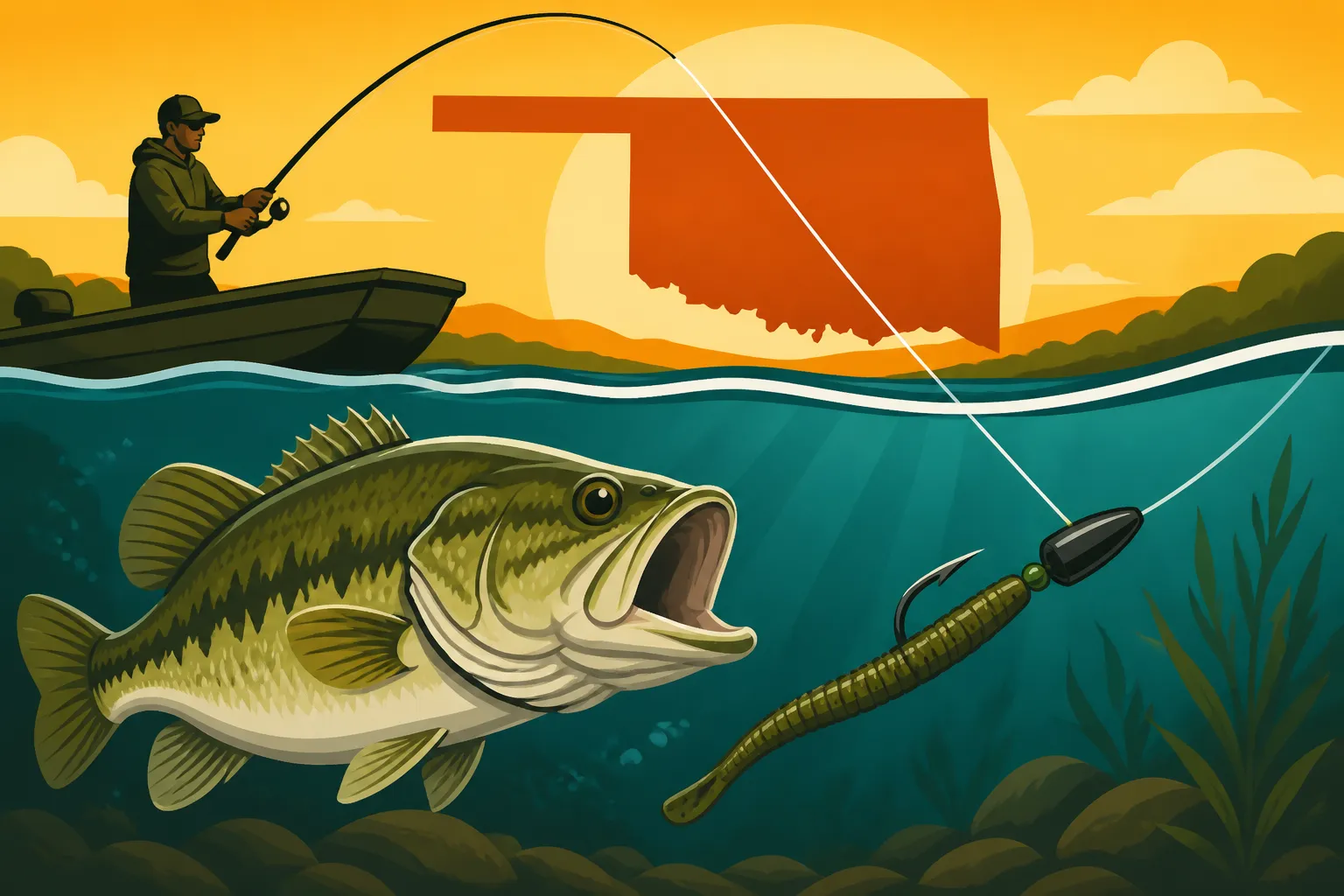
Next, there's the bullet weight. This teardrop-shaped weight is threaded onto your main line before the hook. Its streamlined profile is key to the Texas Rig's ability to penetrate thick cover. As it pulls the bait through grass, wood, or rocks, its pointed tip acts like a plow, clearing a path and protecting the hook point from snags. These weights come in various materials, with lead being traditional and tungsten being a more sensitive, compact, and increasingly popular choice, which you can easily find on Amazon.
Following the weight, some anglers opt for a plastic or rubber bobber stopper. This small, inexpensive piece of tackle slides onto your line above the bullet weight. Its purpose is simple but profound: it pegs the weight directly against the eye of your hook. This "pegged" setup ensures the weight and bait fall as a single unit, enhancing the rig's weedless properties and giving you more control over the bait's fall and presentation. Without it, the weight can slide up and down your line, which has its own application in different presentations, but for truly nasty cover, a pegged weight is often preferred.
Finally, and perhaps most importantly, there's the soft plastic bait. This is what the bass sees and, hopefully, eats. From slender worms to bulky creature baits and realistic crawfish imitations, the possibilities are endless. The beauty of the Texas Rig is that it allows these baits to move and undulate naturally in the water, mimicking real forage without the obstruction of an exposed hook. The way you rig this bait onto the hook – threading it on straight and ensuring the hook point is skin-hooked back into the plastic – is fundamental to the entire system.
The Unbeatable Advantages of the Texas Rig
Why has the Texas Rig remained a staple for bass anglers for decades? It boils down to a few critical advantages that make it superior in specific fishing situations, especially when targeting larger, wary bass that often hide deep within protective cover.
The most celebrated advantage is its weedless design. Imagine fishing a brush pile on Grand Lake O' the Cherokees or the dense hydrilla beds of Lake Eufaula. An exposed hook would be a magnet for snags, costing you time, money, and potentially that trophy fish. With the Texas Rig, the hook point is safely tucked inside the soft plastic, allowing it to glide over and through branches, grass, rocks, and mats with minimal hang-ups. This means you can cast directly into areas where other lures fear to tread, putting your bait exactly where the bass are likely to ambush prey. This ability to penetrate thick cover is what makes it a genuine game-changer, giving you access to untouched fishing grounds.
Beyond just being snag-proof, the Texas Rig offers incredible versatility. You can fish it at virtually any depth and with a multitude of retrieves. Want to slowly drag it across a rocky point? Go for it. Need to punch through a thick mat of vegetation? Just up your weight size. Looking to subtly twitch it through sparse cover? A lighter weight will do the trick. This adaptability means you don't have to constantly re-tie or switch rigs when conditions or target areas change slightly. It's a true workhorse, capable of handling everything from shallow shoreline structure to deep offshore humps, making it a go-to choice for anglers practicing various Oklahoma Bass Fishing: Techniques by Season.
Finally, there's the natural presentation it offers. Because the weight is on the line ahead of the hook and the hook is hidden, the soft plastic bait has a freedom of movement that's hard to replicate with other rigs. As it falls, twitches, or drags along the bottom, it looks incredibly lifelike. A subtle hop can make a plastic worm mimic a fleeing crawfish or a struggling baitfish. This natural, uninhibited action is often irresistible to bass, especially those that have seen countless conventional lures. It's a stealthy approach that can fool even the most pressured fish in popular spots like those found in the Best Bass Fishing Lakes Across Oklahoma.
Getting Your Texas Rig Setup Just Right for Oklahoma Waters
Setting up your Texas Rig correctly is crucial for maximizing its effectiveness. It's not just about throwing a hook and weight on the line; it's about choosing the right components that complement each other and suit the specific conditions you're fishing. Think of it like a finely tuned instrument – each piece contributes to the overall performance.
Choosing the Right Rod, Reel, and Line
Your rod, reel, and line are the extensions of your hand, transmitting every subtle bump and bite from your Texas Rig. Selecting the right combination is key to feeling those light bites and delivering powerful hooksets.
For most Texas Rig applications, particularly when fishing heavy cover, you'll want a medium-heavy to heavy power rod with a fast or extra-fast action. The "power" refers to the stiffness of the rod, and a medium-heavy or heavy rod provides the backbone needed to drive a thick-gauge hook through a soft plastic bait and into a bass's jaw, as well as to horse a fish out of dense cover. The "action" refers to where the rod bends. A fast or extra-fast action means the rod bends primarily in the tip section, offering excellent sensitivity for detecting subtle bites and quick hook-setting power. For example, when fishing a Texas Rig in the dense timber of Lake Eufaula, a heavy power, fast action rod is almost essential. Many anglers will head to Amazon to pick out a suitable rod, like one specifically designed for the Best Rod for Largemouth Bass Fishing.
When it comes to reels, a baitcasting reel is generally preferred for Texas Rig fishing. Its direct line retrieve and powerful drag system are ideal for casting heavier weights, managing heavier lines, and fighting strong bass. A gear ratio in the 6.1:1 to 7.5:1 range is versatile, offering enough speed for quick retrieves and enough torque for powerful fights. While a baitcaster is dominant, a sturdy spinning reel with a medium-heavy rod can be effective for lighter Texas Rigs or when teaching beginners.
Your line choice is also critical. Fluorocarbon line is a popular choice for Texas Rigs due to its low visibility under water, excellent abrasion resistance, and high sensitivity. These qualities allow you to feel those subtle bites and prevent break-offs when fishing around sharp cover. A 15-20 lb test fluorocarbon is a good starting point. If you're punching through extremely thick mats or heavy vegetation, some anglers opt for braided line (30-65 lb test) for its incredible strength, zero stretch, and superior abrasion resistance. When using braid, it's often paired with a short fluorocarbon leader (12-24 inches) tied with a reliable knot, like a FG knot, to maintain some invisibility. Monofilament, while buoyant and easy to cast, lacks the sensitivity and abrasion resistance typically desired for Texas Rig fishing.
Selecting Your Hook, Weight, and Soft Plastic Bait
This is where you start to really customize your Texas Rig to the specific conditions you're facing. The choices you make here will directly impact how your bait performs and how many fish you catch.
For hooks, the two main types for Texas Rigs are the Extra Wide Gap (EWG) hook and the straight shank hook. EWG hooks (like a 3/0 to 5/0 size) are fantastic for larger, bulkier soft plastics like creature baits or fat worms. Their wider gap provides plenty of space for the hook to penetrate the bass's mouth, even when a lot of plastic is balled up. Straight shank hooks (also 3/0 to 5/0) are often preferred for slender worms or when fishing around very heavy cover, as they offer a more compact profile and can sometimes provide a quicker hook set. Both are excellent choices, and it often comes down to personal preference and the specific bait you're using.
Weights are typically bullet-shaped and can be made of lead or tungsten. Tungsten weights are denser than lead, meaning a smaller weight can achieve the same sink rate as a larger lead one. This compactness allows tungsten to slip through cover more easily and offers superior sensitivity, letting you feel every pebble, stick, and subtle bite. While often pricier, the advantages often outweigh the cost for serious anglers. Weights range from 1/8 oz for light cover and shallow water to 1 oz or more for punching through heavy vegetation. A good all-around starting point for many Oklahoma lakes would be 3/8 oz or 1/2 oz. Remember to match your weight to the depth and density of the cover you're fishing. For example, a lighter 1/4 oz weight might be perfect for dragging a worm across a clean bottom in 5-10 feet of water, whereas a 3/4 oz tungsten weight would be necessary to punch a creature bait through a dense lily pad mat on a scorching summer day.
Finally, the soft plastic bait is your presentation. The variety is staggering, but popular choices for Texas Rigs include:
- Plastic worms: These are classics for a reason. Ranging from 4 inches to 12 inches, they mimic various forage and are incredibly versatile. Popular styles include ribbon tail, curly tail, and stick worms.
- Creature baits: These oddly shaped baits often have flapping appendages, craw-like claws, or multiple tails that create a lot of action and disturbance in the water. They excel in heavy cover, mimicking crawfish or other aquatic creatures.
- Crawfish imitations: Exactly as they sound, these baits look like crawfish, a primary food source for bass in many Oklahoma waters.
When it comes to color, start with natural hues like green pumpkin, junebug, and black/blue in clear to lightly stained water. In murkier conditions, brighter colors like chartreuse or brighter blues can stand out better. Consider the Seasonal Bait Selection for Bass and local forage when making your choice. You'll find a massive selection of all these components, including various brands like Strike King, Zoom, and Gary Yamamoto, on Amazon.
Mastering the Texas Rig Retrieve: Techniques for Tricking Oklahoma Bass
Once your Texas Rig is expertly tied and matched to your tackle, it's time to learn how to bring it to life in the water. The beauty of this rig is that it allows for a wide array of retrieves, each designed to entice bass in different situations.
The Classic Drag and Hop
The "drag and hop" is probably the most fundamental and widely used retrieve for a Texas Rig, especially when fishing bottom structure or when bass are less active. It's a fantastic way to cover water slowly and thoroughly, giving bass plenty of time to find and react to your bait.
Here's how you execute it:
- Cast: Make a precise cast past your target area, allowing the weight to sink all the way to the bottom. Let your line settle.
- Drag: With your rod tip pointed towards the water, engage your reel and slowly drag the bait across the bottom using your rod. This isn't reeling; it's a slow, steady sweep of your rod, typically from the 9 o'clock position to the 11 or 12 o'clock position. You're feeling for subtle changes in bottom composition – rocks, gravel, wood, or even a soft mud flat.
- Hop/Lift: After dragging, pause briefly. Then, lift your rod tip slightly, just enough to make the weight and bait "hop" or "crawl" a few inches off the bottom. This mimics a crawfish scuttling or a baitfish attempting to escape.
- Reel Slack: While dropping your rod tip back down to the 9 o'clock position, quickly reel in any slack line. It's crucial to maintain constant contact with your bait, as many bites occur on the fall after the hop, or as the bait settles.
- Repeat: Continue this drag-hop-reel sequence, systematically working your bait back to the boat or shore.
This retrieve is incredibly effective when bass are holding tight to bottom structure, such as rocky ledges, submerged roadbeds, or scattered timber. It’s also excellent in colder water or after a cold front, when fish are sluggish and not willing to chase fast-moving baits. Imagine slowly dragging a green pumpkin creature bait across a deep brush pile on Lake Murray – the drag-and-hop technique would perfectly present the bait to a lethargic bass seeking shelter.
Pitching and Flipping into Heavy Cover
This technique is for the bold angler, the one who isn't afraid to get their bait right into the absolute nastiest, thickest cover imaginable – because that's often where the biggest bass hide. Pitching and flipping are precision casting methods designed for short-distance, accurate presentations into tight spots.
Pitching involves swinging the bait underhanded, using the rod tip to lob it into a target area with minimal splash. It's great for reaching targets 10-30 feet away.
Flipping is even shorter range, often done with a long rod (7'6" to 8'0") by pulling line directly from the reel and swinging the bait in a pendulum motion, letting it fall vertically into cover just a few feet from the boat.
Both techniques aim to get your Texas Rig into places like:
- Dense lily pad fields.
- Thick stands of submerged hydrilla or milfoil.
- The heart of a fallen tree or log jam.
- Underneath docks or overhanging trees.
When you pitch or flip a Texas Rig into heavy cover, the streamlined, pegged bullet weight (often 3/4 oz or heavier tungsten) punches through the vegetation or slides past the wood, allowing your soft plastic to drop straight down into the bass's living room. Once it penetrates, let the bait fall naturally on a slack line or a controlled tight line, depending on the thickness of the cover. Many bites will occur as the bait falls or immediately after it settles. A subtle shake of the rod tip can impart enticing action. This is a highly effective technique during the warmer months when bass seek shade and ambush points within thick cover, making it a critical skill for summer fishing in places like Lake Texoma.
Reading the Bite and Setting the Hook
One of the biggest challenges, and most rewarding skills, in Texas Rig fishing is learning to read the bite. Unlike a hard-hitting crankbait strike, a Texas Rig bite is often incredibly subtle. It's rarely a violent jerk; more often, it's a slight "tick," a feeling of "mushiness" or added weight on your line, or simply the line going slack when it should be tight.
Here are some common bite scenarios:
- The "Tick": This is the classic, sharp, sometimes almost imperceptible tick you feel in your rod tip. It means a bass just inhaled your bait.
- The "Mouthful of Mud": Your bait suddenly feels heavy, like you've dragged it into a clump of mud. This often means a bass has taken the bait and is slowly moving off with it.
- Slack Line: You're dragging your bait, and suddenly your line goes completely slack, even though it should still be taut. This happens when a bass picks up the bait and swims directly towards you.
- Line Jump/Movement: You might see your line twitch, jump, or start moving sideways where it enters the water. This is a visual cue that a bass has it.
When you detect a bite, don't hesitate, and set the hook with authority! This isn't a gentle wrist flick. With the hook point buried in plastic, you need to drive it through the plastic and then into the hard mouth of the bass.
- Point your rod tip towards the fish (if possible) and reel down any slack until you feel tension.
- Deliver a swift, powerful, upward or sideways sweep of your rod. Think "cross their eyes!"
- Continue reeling and fighting the fish.
Many new anglers miss fish because they don't set the hook hard enough. The key is to get that hook fully exposed and embedded. Pay close attention to your line and the feel of your rod, especially after a cast or a hop. The more you practice, the better you'll become at distinguishing a fish bite from bottom contact. This sensitivity is crucial, particularly when fishing during times like the Spring Bass Spawn Timing in Oklahoma, when bass can be aggressive but sometimes still hit subtly.
Advanced Texas Rig Strategies and Troubleshooting Common Problems
Once you've got the basics down, you can start finessing your Texas Rig approach to maximize your success in various Oklahoma fishing conditions. Knowing how to adapt and troubleshoot is what separates good anglers from great ones.
Adjusting for Different Water Conditions and Seasons
The effectiveness of your Texas Rig can vary wildly depending on the water conditions and the season. Being able to adapt on the fly is a critical skill.
- Clear Water: In clear lakes like Broken Bow, bass rely heavily on sight. Opt for more natural bait colors like green pumpkin, watermelon red, or subtle junebug. Use lighter line (e.g., 12-15 lb fluorocarbon) and smaller, less intrusive weights (1/8 oz to 1/4 oz) to create a more natural, slower fall. A slow, steady drag with minimal hops can be very effective.
- Stained/Muddy Water: When the water is murky, as it can sometimes be on Keystone Lake after a heavy rain, bass primarily use their lateral line to detect vibrations. This is when bolder bait choices shine. Go for darker, more contrasting colors like black and blue, or even chartreuse. Larger, bulkier creature baits with lots of flapping appendages create more vibration. Increase your weight size (1/2 oz to 3/4 oz) to help the bait get down and present a more significant thump on the bottom. A more aggressive hop-and-fall action can also help bass locate your bait.
- Cold Water (Winter): During the colder months, bass are sluggish. They're conserving energy and aren't likely to chase. You need to present your Texas Rig slowly and deliberately. Use smaller, more subtle baits (like a 4-inch straight worm) with light weights (1/8 oz to 1/4 oz). Fish extremely slowly, dragging the bait with very long pauses between subtle twitches. Focus on deep channels, sharp drops, and lethargic bass near cover. Understanding How Water Temperature Affects Bass Spawning in Oklahoma is crucial, as cold water means fish aren't actively spawning.
- Warm Water (Summer): In the heat of summer, bass can be active but also seek deep cover and shade. This is prime time for pitching and flipping heavy Texas Rigs into dense vegetation, brush piles, and under docks. Use larger creature baits or substantial worms (7-10 inches) with heavier weights (1/2 oz to 1 oz+) to punch through cover quickly. A more aggressive retrieve, with quicker hops and snaps, can trigger reaction strikes. During the warmer seasons, consider the Post-Spawn Bass Fishing Techniques Explained for more specific strategies.
Overcoming Snags and Line Twist
Even with its weedless design, a Texas Rig can still get snagged. It's part of the game. However, there are ways to minimize snags and deal with them when they happen.
Minimizing Snags:
- Proper Rigging: Ensure your hook point is skin-hooked cleanly into the plastic and your bait is rigged perfectly straight. A crooked bait is more prone to snagging.
- Peg Your Weight: If fishing heavy wood or rocky bottoms, pegging your weight prevents it from sliding up the line and exposing the hook point.
- Slow Down: When fishing really nasty stuff, slow your retrieve down. This gives the bait time to slide over obstacles rather than wedging into them.
- Approach Angle: Try to approach cover from different angles. Sometimes a slightly different retrieve path can help your bait slide over a submerged branch instead of getting stuck.
Dealing with Snags:
- Don't Pull Hard Initially: When you feel a snag, don't immediately yank your rod. Keep a tight line and try to jiggle the rod, or even move your boat/position to approach the snag from a different angle. Often, the lure will come free.
- "Bowstring" Technique: If you're using braid, you can try pulling the line tight and then letting go, allowing the elasticity of the line (or just the snap) to sometimes pop the hook free. Be careful not to damage your rod tip.
- Go Get It: If fishing from a boat and the snag is in shallower water, sometimes the best solution is to motor over to the snag and try to retrieve your lure directly. A lure retriever tool (often a heavy chain on a rope) can be a lifesaver.
Preventing Line Twist:
Line twist can be a real headache, leading to tangles and weakened line. The Texas Rig generally doesn't cause severe line twist on its own, but improper rigging or retrieve can contribute.
- Rig Your Bait Straight: A soft plastic worm or creature bait that isn't rigged perfectly straight will spin in the water, causing line twist. Take your time to rig it flawlessly.
- Check Your Swivel/Line: If you notice consistent line twist, check your reel's bail roller for proper function. Sometimes a damaged roller can contribute.
- Let Your Line Out: Occasionally, after a lot of casting, let out all your line behind the boat (with no lure) and troll slowly. This can help "untwist" your line.
When Not to Use a Texas Rig
While the Texas Rig is incredibly versatile, it's not a silver bullet for every fishing situation. Knowing when to put it down and pick up a different lure is just as important as knowing how to use it.
- Open Water/Suspended Fish: If bass are suspended in open water, or actively chasing baitfish near the surface, a Texas Rig on the bottom isn't your best bet. A crankbait, jerkbait, or swimbait would be far more effective for covering water and targeting these active, non-bottom-oriented fish.
- Super Clear, Finesse Situations: In extremely clear, pressured waters, or when fish are highly finicky, the presence of a bullet weight, even a small one, might be too much. This is where truly finesse techniques, like a weightless wacky rig or a drop shot, might out-fish a Texas Rig.
- Fast-Moving Baits Needed: If bass are actively ambushing baitfish and you need to cover a lot of water quickly to find them, a Texas Rig is generally too slow. Spinnerbaits, chatterbaits, or fast-retrieved swimbaits are better choices for triggering those reaction strikes.
- Vertical Jigging: If you're vertical jigging over deep structure for schooled bass, while a Texas Rig could technically be dropped, specialized jigs or spoons are typically more efficient and present a different action.
- Targeting Other Species: While accidental catches happen, a Texas Rig is specifically designed for bass. If you're targeting crappie, catfish, or other species, there are much more effective and appropriate rigs and baits available. For example, if you're looking for different presentations, you might find that How to Fish a Carolina Rig for Bass offers a good alternative for covering different types of bottom structure.
The Texas Rig is an indispensable tool for bass anglers, especially here in Oklahoma where we have so much fantastic, cover-rich water. It might seem daunting at first, but with a little practice, you'll be confidently slinging that weedless setup into places you never dared to fish before. So grab your gear, head out to your favorite lake, and get ready to feel that satisfying thump!
Disclaimer
Fishing regulations, license requirements, and safety guidelines can change. Always check the latest Oklahoma Department of Wildlife Conservation (ODWC) rules and regulations before heading out on the water. This article is for informational purposes only and does not constitute official advice. Always prioritize safety and responsible angling practices.