How to Rig a Jig for Bass Fishing
Ever feel like you've got all the right bass fishing gear, but your presentations just aren't connecting with those big lunkers? There's a subtle but crucial difference between just using a jig and truly rigging a jig for bass fishing that makes all the difference. Mastering this technique isn't just about tying a knot; it's an art form that can dramatically increase your hook-up ratio, especially when targeting those elusive giants in Oklahoma's diverse waters. This guide will walk you through everything you need to know to rig a jig like a seasoned pro and unlock its full potential.
Understanding the Bass Jig: More Than Just Lead and Skirt
The bass jig is one of the most versatile and productive lures in an angler's tackle box, often overlooked by those who don't understand its nuances. It's a fantastic imitator of crawfish, baitfish, and even small panfish, making it a year-round staple for targeting big bass. But to truly appreciate its power, you need to understand its components and why it works so well.
The Anatomy of a Bass Jig
At first glance, a jig might seem simple: a lead head, a hook, and a skirt. But each element is meticulously designed to create a specific presentation and action, and knowing these parts helps you choose the right jig for the right situation.
The jig head is the foundation, dictating how the lure falls, moves along the bottom, and interacts with cover. You'll find a variety of shapes, each with a purpose. A football head jig, for instance, is excellent for dragging across rocky bottoms, mimicking a crawfish scurrying over rocks and boulders without getting snagged as often. A round head jig offers a more erratic fall and is great for open water or sparse cover, while an Arkie style head has a flatter bottom that helps it stand up on the bottom and slip through wood and brush piles with less hang-up. The weight of the head also matters, from lightweight 1/4 ounce jigs for shallow finesse presentations to heavy 1 ounce jigs designed for deep water or punching through dense vegetation.
The hook is usually heavy-duty, super sharp, and designed for solid hook sets on powerful bass. Many jigs feature a stout, wide-gap hook to accommodate soft plastic trailers and ensure good penetration. The skirt is the jig's "flare" or "dress," typically made of silicone, living rubber, or a combination of both. This material pulses and breathes in the water, adding lifelike action and bulk to the jig's profile. Different skirt patterns and colors are chosen to imitate specific forage or to create contrast in varying water conditions.
Finally, most bass jigs come equipped with a weed guard, usually a cluster of stiff bristles that protect the hook point from snags while still compressing easily on a strike. A good weed guard is crucial for fishing jigs in heavy cover, which is often where the biggest bass hide.
Why Jigs Are So Effective for Bass
Jigs are effective because they are incredibly versatile and can mimic a wide range of bass forage. Their compact profile allows them to penetrate heavy cover where bass feel safe and ambush prey.
One of the primary reasons jigs excel is their ability to imitate a crawfish, a favorite meal for largemouth bass, smallmouth bass, and even spotted bass in Oklahoma. When a jig with a craw-style trailer is dragged or hopped along the bottom, the skirt flares and the trailer claws wave, perfectly replicating a defensive crawfish. This presentation can be absolutely deadly in the spring and fall when crawfish are abundant and active.
Beyond crawfish, a jig can imitate a baitfish swimming through cover or a bluegill foraging near a brush pile. With the right trailer and retrieve, a jig can trigger aggressive reaction strikes from bass that might otherwise ignore other lures. Their weedless design means you can present them in places where other lures would quickly get snagged, allowing you to put your bait right in the fish's face. Whether you're targeting big prespawn bass or trying to pry a lunker out of deep structure, the jig's ability to be precisely presented and its chameleon-like qualities make it an undeniable bass magnet.
Choosing the Right Jig for Oklahoma Waters
Oklahoma's diverse lakes and rivers present a myriad of fishing challenges, from shallow, muddy backwaters to deep, clear rock ledges. Choosing the right jig involves considering several environmental factors to ensure your presentation is as effective as possible. It’s not a one-size-fits-all game; adapting to the conditions is key to consistent success.
Matching Jig Weight to Conditions
The weight of your jig is paramount for a proper presentation. It dictates how fast the jig falls, how well it maintains contact with the bottom, and how easily you can feel bites.
For shallow water (under 8 feet) or calm conditions with minimal wind, a lighter jig in the 1/4 to 3/8 ounce range is often ideal. This slower fall allows the bass more time to see and react to the lure, especially when they're less aggressive. It also creates a more subtle, natural presentation. Imagine pitching a 1/4 ounce jig into a shallow weed line at Lake Eufaula; it drifts down gently, mimicking a critter falling into the weeds. If it were too heavy, it would crash through the cover too quickly, potentially spooking the fish.
When you're dealing with deeper water (8-20 feet), moderate wind, or current, stepping up to a 1/2 ounce jig is a good move. This weight maintains better bottom contact and allows for a quicker, more controlled descent to the fish's strike zone. For example, if you're fishing a deep brush pile at Fort Gibson Lake, a 1/2 ounce jig will get down to the fish efficiently and help you feel those subtle "thunks" as bass pick it up.
For very deep water (over 20 feet), heavy wind, or dense cover like thick mats of hydrilla, a 3/4 ounce to 1 ounce jig is often necessary. These heavier jigs punch through vegetation, resist strong currents, and allow for efficient fishing in tough conditions. Fishing offshore ledges or deep rock piles on Lake Texoma on a windy day practically demands a heavier jig to stay in contact with the bottom and effectively present your bait.
Selecting Jig Color and Skirt Type
Jig color and skirt type are all about mimicking the local forage and adapting to water clarity, just like when you're selecting baits for a "How to Fish a Texas Rig for Bass".
In clear water, which you'll often find in lakes like Broken Bow Lake or Tenkiller Ferry Lake, natural patterns are usually best. Think greens, browns, and subtle blues – colors that imitate crawfish, bluegill, or shad. For instance, a green pumpkin jig with a bit of brown or amber in the skirt can be incredibly effective. Sometimes, a "watermelon candy" or "bluegill" pattern can be a killer in these conditions.
For stained or muddy water, which is common in many Oklahoma reservoirs after heavy rain or in certain arms of larger lakes, brighter or darker, contrasting colors tend to stand out better. Black and blue is a classic choice, as it creates a strong silhouette that bass can see even in low visibility. Junebug, black, or dark purple can also be very effective. The key is to provide enough contrast for the bass to locate your bait.
The skirt material also plays a role. Silicone skirts offer a vibrant, undulating action, while living rubber skirts have a more subtle, lifelike movement. Many jigs combine both for maximum appeal. Consider the action you want – a lot of flare for active fish, or a more subdued pulse for lethargic ones. During the spring, when bass are in their prespawn phase and often aggressive, a skirt with lots of movement can draw attention, while during a cold front, a slower, more subtle skirt action might be necessary.
Jig Head Styles and Their Applications
Different jig head styles aren't just for looks; they profoundly impact how your jig fishes and where it excels.
- Football Jigs: These jigs have a wide, football-shaped head that causes them to wobble and crawl over rocky bottoms with minimal snagging. They are phenomenal for fishing deep points, humps, and ledges, especially on lakes with prevalent rocky structure like Grand Lake O' the Cherokees. They stand up well on the bottom, presenting your trailer enticingly.
- Arkie Jigs: Characterized by a flat, tapered head, Arkie jigs are a fantastic all-around option. Their design helps them slip through wood cover, brush piles, and sparse grass with surprising efficiency. These are excellent for pitching into submerged timber or laydowns, common in many of Oklahoma's older reservoirs like Lake Eufaula. The Arkie head also allows the jig to stand upright on the bottom, mimicking a defensive crawfish.
- Flipping and Pitching Jigs: These jigs are designed with a compact head, a recessed line tie, and a stout hook, specifically for punching through heavy vegetation or fishing tight quarters. Their streamlined shape minimizes snagging, making them perfect for fishing docks, lily pads, or dense weed mats. When you're fishing around thick cover, having a jig that can get in and out cleanly is crucial.
- Swim Jigs: Unlike bottom-contact jigs, swim jigs are designed to be retrieved through the water column. They often have a pointed, keeled head that helps them track straight and a light weed guard. They are usually paired with a paddle-tail or grub trailer to enhance their swimming action, making them ideal for covering water, fishing around sparse cover, or mimicking baitfish.
Understanding these head styles means you can select a jig that truly performs best in the specific type of cover or structure you're fishing, optimizing your chances for success.
The Art of Rigging a Jig: Attaching Your Trailer
Attaching the right trailer to your jig is where the real magic happens. It’s not just an accessory; it’s an integral part of the presentation that completes the illusion for the bass. Think of it like adding the perfect side dish to a gourmet meal – it just enhances everything.
Why a Trailer is Essential
A jig without a trailer is like a hamburger without a bun – it's just not complete, and it's definitely less appealing! The trailer serves several vital functions, all geared towards making your jig more attractive to a hungry bass.
First, it enhances the profile of the jig. A bare jig head and skirt might look a little sparse, but adding a trailer significantly increases the bait's overall size and bulk. This makes it a more substantial meal in the eyes of a bass, triggering their predatory instincts. A bigger profile can often mean bigger bites.
Second, and perhaps most importantly, a trailer adds action. Whether it's the subtle flutter of a grub, the aggressive kicking of a crawfish imitation, or the seductive swim of a paddle tail, the trailer provides lifelike movement that the skirt alone cannot replicate. This action makes the jig appear alive, mimicking natural forage like a scurrying crawfish or a struggling baitfish. This is particularly crucial during different seasons; a slow, pulsing trailer might be great for "Winter Catfishing Techniques in Oklahoma" (if bass are sluggish), while a more aggressive action might be better in warmer waters.
Finally, the trailer allows you to customize your jig to mimic specific forage. Bass often key in on particular food sources, and by selecting the right trailer, you can perfectly imitate what they're already eating. This attention to detail can make a massive difference, especially when bass are finicky or heavily pressured.
Common Trailer Types and Their Best Uses
The world of soft plastic trailers is vast, but a few types stand out for their effectiveness when paired with bass jigs.
- Soft Plastic Craws: These are arguably the most popular jig trailers. Designed to imitate crawfish, they feature realistic claws that flap and undulate with every hop, drag, or shake of the jig. They come in various sizes and designs, from bulky, aggressive craws like the Strike King Rage Craw to more slender, subtle versions. They are fantastic for any bottom-oriented jig presentation and are particularly effective in lakes known for their crawfish populations, mimicking their movements when targeting the state record blue catfish in Oklahoma.
- Grubs: Single-tail or double-tail grubs are excellent for adding a subtle swimming action. The curly tail of a grub provides constant movement even on a slow retrieve or during a pause. They are versatile and can be used with various jig styles, from football jigs to swim jigs. A smaller grub can add a finesse touch, while a larger one provides more bulk and vibration. You can find a huge assortment of these on Amazon or at any good tackle shop.
- Chunk Baits: These are traditionally thick, bulky soft plastic baits, often with two paddle-like appendages. They provide a lot of bulk and a slower fall rate, making them ideal for slow-paced presentations or when you want the jig to sink like a wounded baitfish. They excel on cold fronts when bass are lethargic, or when targeting deeper water.
- Paddle Tails: Specifically designed for swim jigs, paddle tail trailers have a prominent tail that thumps and vibrates as it's retrieved, creating a strong swimming action. These are perfect for mimicking shad or other baitfish moving through the water column. Brands like Keitech offer fantastic paddle tails that produce incredible action.
Experimenting with different trailer types is key to figuring out what the bass prefer on any given day. Factors like water clarity, water temperature, and prevailing forage can all influence their preference.
Step-by-Step Jig & Trailer Rigging
Getting your jig and trailer rigged correctly is crucial for maximizing action, preventing snags, and ensuring solid hook sets. It's a simple process, but precision matters.
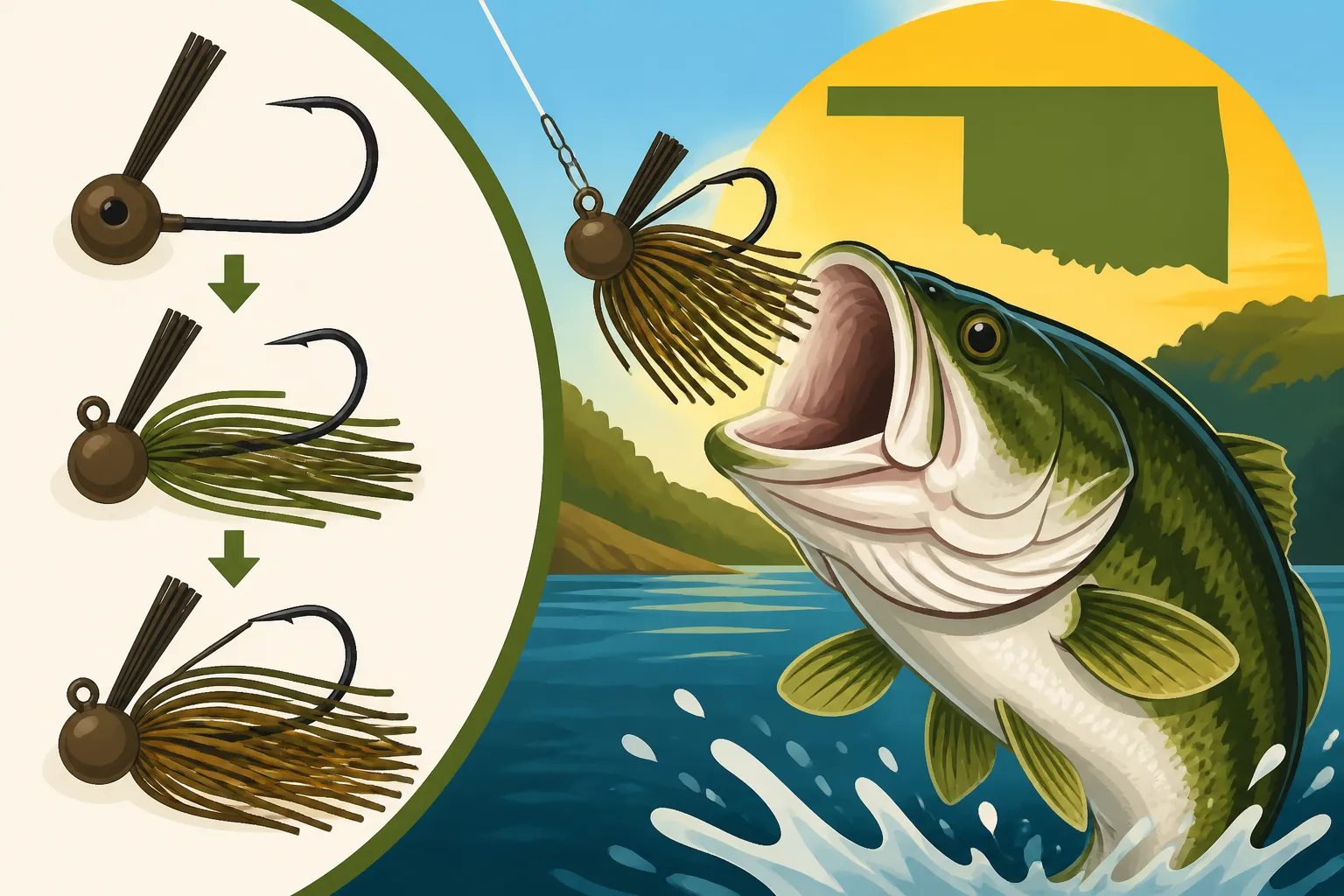
- Select Your Jig and Trailer: Based on the conditions and the forage you're trying to imitate, choose your jig and matching soft plastic trailer. Consider the length of your trailer in relation to the jig; generally, you want the trailer to extend just past the hook bend, giving it maximum action without impeding the hook gap.
- Determine Entry Point: Hold the jig in one hand and the trailer in the other. Place the jig's hook point against the nose of the trailer where you want the hook to enter. This is usually the dead center of the trailer's nose.
- Thread the Trailer: Push the hook point directly into the center of the trailer's nose. Continue threading the trailer up the hook shank, ensuring it stays centered. You want the trailer to be straight on the hook, not twisted or bent, as this will hinder its action.
- Advance to the Keeper: Thread the trailer past the jig's "keeper barb" or wire. These keepers are designed to hold your soft plastic securely in place, preventing it from sliding down the hook on casts or after a missed strike. You might need to gently twist the trailer as you push it over the keeper.
- Expose the Hook Point: Once the trailer is seated firmly against the jig head, bring the hook point out of the bottom or side of the trailer. The key here is to ensure the hook point is exposed cleanly and the trailer is straight. For a weedless presentation, aim for the hook point to come out roughly where the trailer's "body" ends and its "tail" or "claws" begin, allowing the barb to clear the plastic easily on a hook set.
- Check for Straightness and Action: Give the jig a little shake in your hand or in a bucket of water if possible. Does the trailer sit straight? Does it have the desired action? If it's crooked, it will spin or swim unnaturally, which can deter bass. Adjust as needed until it's perfectly aligned.
This precise rigging ensures that your jig and trailer combination moves naturally through the water, presents a convincing profile, and is ready for an effective hook set when a bass inevitably strikes.
Fishing Techniques: Making Your Jig Dance
Once your jig is rigged, it's time to learn how to work it. The beauty of a bass jig lies in its versatility; it can be presented in countless ways, each designed to trigger a strike under different conditions. It’s all about making that lead and rubber dance in a way that bass can’t resist.
Flipping and Pitching Jigs for Heavy Cover
Flipping and pitching are stealthy, precise casting techniques specifically designed to present a jig into tight, heavy cover where big bass often ambush prey. Think about those gnarly laydowns, thick brush piles, docks, or lily pad fields often found in Oklahoma's best bass fishing lakes.
Flipping is a short-range technique where you use your rod tip to swing the jig pendulum-style, releasing it to fall quietly into the target area. You keep a short line out, often just a few feet longer than your rod, and use your off-hand to manage the line. The goal is a quiet entry with minimal splash, dropping the jig right on the fish's nose. This is ideal for extremely dense cover, like punching through thick mats of hydrilla or targeting the darkest recesses of a dock.
Pitching is similar but involves a slightly longer cast. You let out a bit more line, then use a gentle underhand swing, releasing the jig with a smooth motion. It's still about accuracy and a quiet entry, but allows you to cover a little more water from a slight distance. Imagine pitching a jig under a low-hanging tree branch or into a small opening in a log jam.
With both techniques, the presentation after the cast is crucial. Let the jig fall on a slack line, watching your line for any twitch or jump – this often indicates a bite on the fall. Once it hits bottom, gently lift the rod tip, shake it, or hop it a few times. Don't be afraid to let it sit motionless for a few seconds. Many strikes occur on the initial fall or during these pauses. The goal is to make the jig appear like a crawfish or small fish rummaging through the cover, provoking a reaction strike from a territorial bass. Using a strong, sensitive rod is key for "Best Bass Boats for Oklahoma's Lake Texoma" type environments, allowing you to feel subtle bites and pull fish out of cover.
Dragging and Hopping Jigs Along the Bottom
This is perhaps the most common and effective way to fish a jig, especially for imitating crawfish. It’s a slower, more methodical approach that works exceptionally well when bass are feeding on the bottom or are less aggressive, perhaps during a cold front.
To drag a jig, cast it out, let it sink to the bottom, and then slowly pull your rod tip from 9 o'clock to 1 o'clock, sweeping the jig along the bottom. Reel in the slack as you return your rod tip to the 9 o'clock position, then repeat. The idea is to keep constant contact with the bottom, allowing the jig to crawl over rocks, logs, and shell beds, stirring up sediment and mimicking a feeding crawfish. This technique is deadly on main lake points, humps, and ledges where baitfish or crawfish congregate.
Hopping involves a more aggressive movement. After the jig hits bottom, give your rod tip a sharp, short snap to lift the jig a foot or two off the bottom, then let it fall back down on a semi-slack line. Watch your line intently as it falls, as many bites occur as the jig descends. This hopping motion imitates a crawfish darting away or a baitfish making a quick escape. It can be particularly effective when bass are slightly more active, or when trying to draw a reaction from them.
With both dragging and hopping, feeling the subtle "thump" or "tick" as the jig makes contact with structure, or the unexpected "mushy" feeling of a bass picking it up, is a learned skill that comes with practice. Fishing jigs this way requires patience and a good sense of feel, but it's incredibly rewarding when you connect with a big bass that inhaled your crawfish imitation.
Swimming Jigs for Reaction Strikes
While many jigs are designed for bottom contact, swim jigs are a different beast, intended to be retrieved through the water column, mimicking a swimming baitfish or even a bluegill. This technique is fantastic for covering water, fishing around sparse cover, or when bass are actively chasing bait.
To fish a swim jig, make a cast and begin a steady retrieve as soon as the lure hits the water. The retrieve speed can vary from slow-rolling it just above the bottom to a moderate pace that keeps it in the middle of the water column. The goal is to make the jig and its paddle-tail or grub trailer look like a natural swimmer.
You can vary your retrieve by adding subtle twitches, pauses, or changes in speed to impart a more erratic, lifelike action. Target areas include the edges of grass lines, around submerged timber, over shallow flats, or through sparse cover. A swim jig is excellent for fishing during the post-spawn period when bass are guarding fry, as it resembles a predator encroaching on their territory. It's also a great choice for covering water during active feeding periods, allowing you to quickly locate aggressive bass. The flash and vibration of a well-presented swim jig can often trigger powerful reaction strikes from otherwise hesitant fish.
Rod, Reel, and Line for Jig Fishing
The right equipment can make all the difference when jig fishing, allowing you to feel subtle bites, maintain control, and effectively pull powerful bass out of heavy cover. Don't underestimate the importance of a balanced setup.
Rod Selection: Power, Action, and Length
Your rod is your connection to the lure and the fish. For jig fishing, especially for bass in Oklahoma's varied environments, you need a rod that offers a blend of sensitivity, power, and the right action.
Power refers to the rod's lifting strength. For most bass jig fishing, a medium-heavy to heavy power rod is preferred. This gives you the backbone to drive a large, single hook through tough bass jaws and the strength to horse fish out of dense cover like submerged cedar trees or lily pads. A medium-heavy rod is a good all-around choice, while a heavy power rod is essential for flipping heavy jigs into thick vegetation or when fishing for trophy-sized bass.
Action refers to where the rod bends. A fast action rod is almost always preferred for jig fishing. This means the rod bends mostly in the tip section, providing extreme sensitivity to feel subtle bites, bottom composition, and even the slightest contact with cover. The fast tip also allows for quick, powerful hook sets with minimal wasted motion. You want to feel every "tick" and "thump" on the bottom.
Length depends on your preferred fishing style and the cover you're targeting.
- 6'10" to 7'2" rods are excellent for general casting, dragging, and hopping jigs. They offer a good balance of casting distance and accuracy.
- 7'3" to 7'6" rods are ideal for pitching and flipping, providing more leverage for accurate presentations in tight spaces and better fish control in heavy cover. A longer rod also helps with longer casts, useful on larger lakes like Lake Eufaula or Lake Texoma. This type of rod is often recommended in guides on "Best Rod for Largemouth Bass Fishing".
Reel Choice: Gear Ratio and Drag
When it comes to reels for jig fishing, baitcasting reels are almost universally preferred over spinning reels due to their power, control, and ability to handle heavier lines and lures.
The gear ratio of your baitcasting reel determines how much line is retrieved with one crank of the handle.
- A moderate gear ratio (6.4:1 to 7.1:1) is a versatile choice for most jig fishing applications. It allows for a controlled retrieve for dragging and hopping, while still being fast enough to pick up slack quickly after a cast or when a fish makes a run.
- A higher gear ratio (7.5:1 or faster) can be beneficial for flipping and pitching, where you need to quickly reel in slack after a short cast or when a bass blasts out of heavy cover and runs towards the boat. This speed helps you gain control and get the fish moving in the right direction fast.
The drag system is also critical. Ensure your reel has a smooth, powerful drag that can be set precisely. When a big bass hits your jig in heavy cover, you need to be able to lock that drag down to prevent the fish from burying itself in snags, but still allow for some give if it makes a powerful surge in open water.
Line Options: Braided, Fluorocarbon, or Monofilament
The fishing line you choose significantly impacts your jig's performance, particularly in terms of sensitivity and abrasion resistance.
- Braided Line: This is a fantastic choice for jig fishing, especially in heavy cover. Braided line has virtually no stretch, offering unparalleled sensitivity – you'll feel every bump, every rock, and every subtle bite. Its extreme abrasion resistance makes it ideal for fishing around wood, rocks, and thick vegetation. However, braided line is highly visible, so many anglers use a fluorocarbon leader (typically 15-20 lb test) tied to the braid with a strong knot like an FG knot. This gives you the sensitivity and strength of braid with the low visibility of fluorocarbon.
- Fluorocarbon Line: If you prefer a single line type, 12-20 lb test fluorocarbon is an excellent option. It's almost invisible underwater, highly sensitive (though slightly less than braid), and offers good abrasion resistance. Fluorocarbon sinks, which helps your jig get to the bottom faster and maintain better contact. The main downside is that it can be more prone to memory and coiling than braid, especially in heavier tests.
- Monofilament Line: While less common for dedicated jig fishing, monofilament (14-20 lb test) can still be used, particularly for swim jigs where a little stretch can be beneficial for cushioning violent strikes. However, its lower sensitivity and abrasion resistance compared to braid and fluorocarbon make it less ideal for detecting subtle bites or fishing in heavy cover.
Choosing the right line comes down to personal preference and the specific conditions you're fishing. Many pros opt for braided main line with a fluorocarbon leader for maximum performance and versatility, especially when they need to penetrate dense cover.
Jig Fishing Breakdown
Here's a quick overview to help you differentiate between popular jig types and their ideal applications.
| Jig Head Style | Primary Application | Best Cover/Structure | Best Trailer Type | Key Benefit |
|---|---|---|---|---|
| Football Jig | Deep water (8-25ft+), open bottom | Rocks, gravel, ledges, humps | Craw, Grub, Chunk | Crawls over structure, stands up on bottom |
| Arkie Jig | All-around, moderate cover | Wood, brush piles, sparse grass | Craw, Chunk | Slides through cover, good bottom contact |
| Flipping Jig | Heavy cover, close-quarters | Docks, laydowns, lily pads, mats | Craw, Compact Creature | Weedless, precise, punches through cover |
| Swim Jig | Covering water, shallow to mid-depth | Grass lines, open water, docks | Paddle Tail, Grub | Mimics baitfish, versatile retrieve |
Disclaimer
Please remember that fishing regulations, including licensing requirements and bag limits, can change. Always check the latest rules and guidelines from the Oklahoma Department of Wildlife Conservation before heading out on your fishing trip. Stay safe and fish responsibly.