Best Crappie Jig Colors for Stained Water
We've all been there: you pull up to your favorite Oklahoma crappie spot, full of anticipation, only to find the water isn't the clear, inviting color you remembered. Instead, it's murky, off-color, or downright muddy after a good rain or a stretch of windy weather. Trying to pick the right crappie jig color in stained water can feel like a shot in the dark, leading to frustration and fewer bites. This guide is here to shed some light on the subject, helping you confidently choose the best jig colors to entice crappie even when visibility is at its worst.
Understanding What "Stained Water" Really Means for Crappie
Before we dive into the rainbow of jig colors, it's really important to get a handle on what we mean by "stained water" and how it impacts the crappie you're trying to catch. It's not just "dirty water"; there are nuances, and those nuances can definitely influence your jig selection.
Different Shades of Stained: Muddy, Tannic, and Algae Blooms
When anglers talk about "stained water," it can actually encompass a few different conditions, each with its own characteristics:
- Muddy or Turbid Water: This is often the result of heavy rains, strong winds churning up the bottom, or upstream agricultural runoff. The water is full of suspended sediment, clay, and silt, which severely limits light penetration. Think of those post-rain days on Lake Eufaula or the upper reaches of Keystone Lake. When the water is truly muddy, visibility might be only a few inches.
- Tannic or "Tea-Stained" Water: Common in areas with heavy vegetation or cypress trees, this water gets its color from tannins released by decaying organic matter. It looks like dark tea or coffee, and while it might not be as opaque as muddy water, it still absorbs light differently, often giving a reddish or brownish hue. You might find this in some backwater creeks or heavily wooded areas, especially in southeastern Oklahoma.
- Algae Blooms: During warmer months, especially in nutrient-rich lakes, algae can proliferate, giving the water a green, sometimes almost pea-soup color. These blooms also reduce visibility, but the color spectrum available underwater is different compared to muddy or tannic conditions. These can pop up anywhere from Grand Lake O' the Cherokees to Lake Texoma when conditions are right.
Crappie, being visual predators, rely heavily on their eyesight to find food. In clear water, they have a wide range of colors to see, but as the water gets stained, light penetration decreases, and certain wavelengths of light are filtered out. This means that a jig color that glows vibrant red in clear water might appear dull or even black in deep, stained conditions. The crappie's world shrinks, and they become more reliant on other senses, but visual cues still play a critical role if you can make your bait stand out.
How Crappie Perceive Color in Low Light Conditions
Crappie, like many fish, have rods and cones in their eyes, allowing them to perceive color, especially in brighter conditions. However, in low light or stained water, their color perception becomes limited. It's not so much about seeing a vibrant "chartreuse" as it is about seeing contrast and silhouette against the limited available light or the surrounding water.
Think of it this way: if you're in a dimly lit room, you might not distinguish between a red shirt and an orange shirt easily, but you can definitely tell if someone is standing in front of a window, creating a silhouette. Crappie in stained water operate on a similar principle. They're looking for anything that creates a strong profile, a distinct outline, or reflects the minimal light in a way that differentiates it from the background. This is why high-contrast patterns and colors that glow or appear unnaturally bright are often so effective. For more detailed insights into their feeding habits, you might want to read our guide on how to Find Crappie in Deep Water in Summer.
Go-To Crappie Jig Colors for Stained Water: The Proven Performers
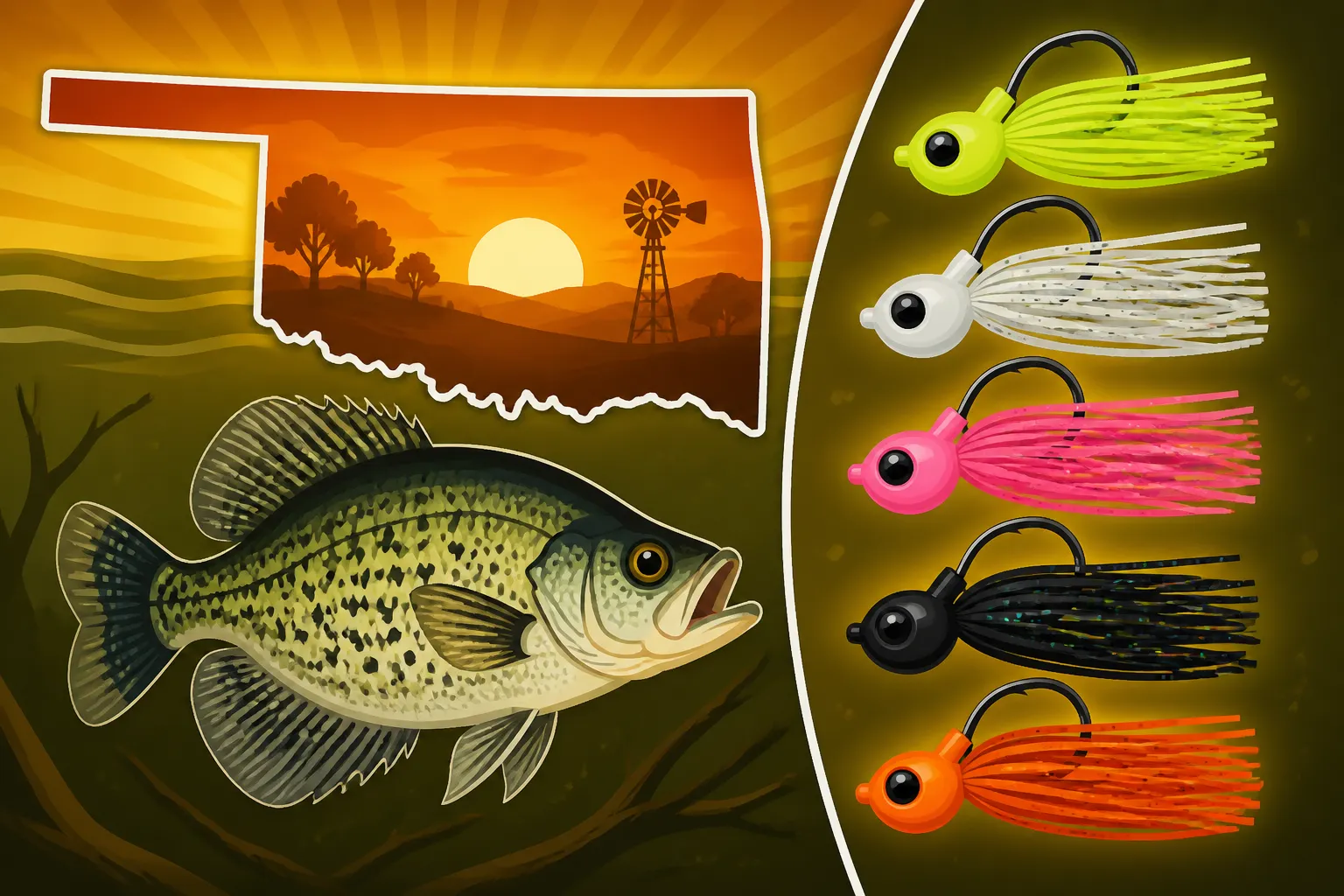
When the water clarity is less than ideal, you need colors that scream "eat me!" even in the gloom. Over years of trial and error, a few colors have consistently proven themselves to be crappie magnets in stained water across Oklahoma and beyond.
Chartreuse and Bright Greens: The Undisputed Champions
If there's one color that every crappie angler should have in their box for stained water, it's chartreuse. This vibrant, almost neon yellow-green is a powerhouse in murky conditions.
- Why it Works: Chartreuse excels because it's a high-visibility color. Even in heavily stained or muddy water where many other colors seem to disappear, chartreuse still manages to reflect enough light to be seen. It creates a stark contrast against the dark water, making it easy for crappie to spot. It doesn't mimic any specific baitfish perfectly, but its unnatural brightness is often what triggers an aggressive reaction strike from crappie that are struggling to find food. It's truly a universal go-to.
- Best Uses: I've had incredible success with chartreuse jigs in moderately muddy conditions on Fort Gibson Lake, especially after spring rains. A small, 1/16 oz or 1/32 oz chartreuse jig tipped with a minnow or a scented crappie nibbler can be absolutely deadly. It's also fantastic in tannic water where it provides a necessary pop of color against the darker background. Whether you're vertical jigging or casting, a chartreuse jig is a must-try. You can find a huge variety of these, from companies like Bobby Garland and Crappie Magnet, available on Amazon.
Orange and Hot Pinks: Aggressive and Attention-Grabbing
When chartreuse isn't quite cutting it, or you want to try something a little different, turn to the aggressive tones of orange and hot pink. These colors are fantastic for triggering reaction bites.
- Why they Work: Like chartreuse, orange and hot pink are high-visibility colors that maintain some of their vibrancy even in stained conditions. Hot pink, in particular, has a unique ability to stand out because it reflects ultraviolet (UV) light. Many fish, including crappie, can see UV light, making pink jigs appear even brighter and more unnatural to them underwater. Orange provides a strong contrast against greens and browns in the water.
- Best Uses: I tend to reach for hot pink or bright orange when the water is moderately stained, or when crappie are particularly aggressive. These colors can be excellent when you're fishing areas with a lot of cover, like submerged brush piles or timber. The bright jig often pulls crappie out of hiding. On days when the bite is tough, a hot pink jig can often turn the tide. Try a small curly-tail grub in these colors for an enticing action.
Black, Dark Purple, and Black/Blue: The Power of Silhouette
It might seem counterintuitive to use dark colors in dark water, but black and dark hues are incredibly effective in heavily stained or muddy conditions.
- Why they Work: Instead of relying on reflecting light, dark colors create a strong silhouette against any available ambient light. Even in very murky water, there's usually a tiny bit of light filtering down. A black jig, when silhouetted against this lighter background (e.g., looking up towards the surface), presents a clear, defined profile that crappie can easily see. It looks like a distinct, edible morsel, even if they can't make out its exact "color." Black/blue is a classic bass color that translates well to crappie because the blue adds just a hint of contrast without sacrificing the strong silhouette.
- Best Uses: When the water is truly chocolate milk, like after a major flood on a river system or heavily muddied impoundment, black is often my first choice. I'll use it for vertical jigging directly into cover or fishing very slowly. For instance, if you're fishing the Red River arm of Lake Texoma after a heavy rain, and the water is super muddy, a simple black jig can often out-produce brighter colors. A black jig paired with a chartreuse tail can be a fantastic combination to give both silhouette and a touch of flash.
Two-Tone Combinations: Maximize Contrast and Appeal
Don't limit yourself to solid colors! Two-tone jigs are often the best of both worlds, offering both high visibility and strong contrast.
- Why they Work: Combining a bright, reflective color with a dark, silhouetting color creates maximum visual appeal. For example, a black head with a chartreuse body offers a distinct profile while still having that vibrant flash. A white head with a pink body gives both lightness and UV reflection. These combinations make the jig more dynamic and noticeable to crappie.
- Best Uses: Experiment with these combinations in varying levels of stained water. A common and incredibly effective combination is black/chartreuse. This is particularly good in tannic water or moderately muddy conditions. Another great pairing is orange/chartreuse. The key is to have one color that "pops" and another that provides definition. Many anglers swear by these combos when they're targeting crappie that are holding tight to cover, forcing the fish to react quickly. For more specific lure selection tips, you might check out our guide on Best Lures for Walleye at Oklahoma Reservoirs, as some of those principles of visibility can overlap.
Why These Colors Work: The Science of Stained Water Contrast
Understanding why certain colors are effective in stained water isn't just academic; it helps you make better decisions on the water. It boils down to light, how it travels through water, and how fish eyes perceive it.
Light Penetration and Color Visibility Underwater
Light is composed of a spectrum of colors, each with a different wavelength. When light hits water, especially water with suspended particles or tannins, these wavelengths are absorbed and scattered at different rates.
- Red disappears first: Red wavelengths are the first to be absorbed by water, disappearing almost completely within the first few feet of depth, even in relatively clear conditions. This is why a bright red jig quickly looks dark brown or black underwater.
- Orange and Yellow follow: Orange and yellow penetrate a bit deeper than red but still lose their vibrancy relatively quickly.
- Greens and Blues penetrate deepest: Green and blue wavelengths penetrate the furthest in clear water. However, in stained water, especially muddy or tannic conditions, even these can be heavily filtered.
- The "Glow" Effect: Colors like chartreuse and hot pink often contain fluorescent pigments. These pigments absorb higher energy light (like UV) and re-emit it as a lower energy, visible light. This makes them appear to "glow" or stand out more prominently than non-fluorescent colors, even in low light conditions. This phenomenon can be a huge advantage when the water is murky.
In stained water, the total amount of light is greatly reduced. So, while green and blue might penetrate deeper in clear water, a vibrant chartreuse jig, even if not truly "glowing," simply reflects more of the limited light available, making it appear brighter and more noticeable to a crappie's eye.
Creating Contrast and Silhouette: Making Your Jig Stand Out
Since direct color perception is diminished in stained water, the concept of contrast becomes paramount. Crappie are looking for anything that creates a strong visual distinction from its surroundings.
- Against the Background: A bright jig like chartreuse or hot pink creates a positive contrast, appearing much lighter than the surrounding dark water. Imagine a flashlight beam in a dark room; the light stands out.
- The Silhouette Effect: Conversely, a dark jig like black or dark purple creates a negative contrast, appearing as a dark shape against the slightly lighter surface light or even against the lighter belly of the fish itself as it approaches. This silhouette provides a clear, unmistakable profile of a potential meal. It's why a black or dark blue jig can be so effective in extremely muddy conditions. The crappie sees a distinct shape, not necessarily a distinct color.
- Movement Enhances Contrast: The movement of your jig also plays a crucial role. A jig darting, falling, or vibrating disrupts the surrounding water and momentarily changes the light reflection or silhouette, drawing attention even further. Consider incorporating these insights when choosing your lures for specific conditions. You might also find valuable tips on Best Crappie Jig Colors for Clear Water to understand the contrast in strategy.
Matching Your Crappie Jig Color to Specific Stained Water Conditions
Choosing the right color isn't a one-size-fits-all situation, even within the realm of "stained water." Different types and levels of stain warrant different approaches.
Lightly Stained Water: When Clarity is Just a Little Off
This is when the water isn't totally clear, but it's not super murky either. Maybe there's a slight greenish tint from an early algae bloom or just a bit of cloudiness after light wind. Visibility might be 2-3 feet.
- Recommended Colors: You can often still get away with some of your clear-water favorites, but lean towards brighter versions. White, white/chartreuse, or even a subtle glow-in-the-dark white can be excellent. Pink or orange can also start to shine here.
- Scenario: Imagine a slightly overcast day on Lake Murray, the water a little murky from boat traffic. You might start with a white or white/chartreuse jig. The slight stain gives the crappie a little more confidence to strike, and these brighter colors ensure good visibility without being too aggressive. Sometimes, a jig that mimics a small baitfish, but in a brighter shade, can be very effective.
Moderately Stained Water: The Mid-Range Murk
This is probably the most common "stained water" scenario: visibility is reduced to 1-2 feet. The water might be a light brown, greenish-brown, or slightly tannic.
- Recommended Colors: This is prime time for chartreuse, chartreuse/black, hot pink, and bright orange. Glow colors can also be fantastic, especially in deeper water where light penetration is minimal.
- Scenario: You're fishing a creek arm of Lake Eufaula after a moderate rain, and the water has that tell-tale brown tint. This is where chartreuse becomes king. A chartreuse curly-tail grub fished slowly around submerged timber or bridge pilings will often produce. If the bite slows, try a chartreuse/black combination to offer both brightness and silhouette. The strong contrast will help crappie zero in on your bait. For consistent success in such conditions, understanding different Crappie Fishing Techniques and Seasonal Patterns in Oklahoma is key.
Heavily Stained or Muddy Water: When Visibility is Almost Zero
This is the toughest condition to fish: visibility is often less than a foot, sometimes only a few inches. The water looks like chocolate milk.
- Recommended Colors: Black, black/blue, dark purple, and chartreuse (yes, still chartreuse, but perhaps a very bright or glow version). The goal is maximum contrast and silhouette.
- Scenario: Heavy rains have turned a section of Grand Lake O' the Cherokees into a muddy mess. Here, a black jig, perhaps tipped with a minnow for added scent and appeal, is often the best bet. Fish it very slowly, almost bouncing it off the bottom or through cover. Sometimes, a tiny bit of flash from a chartreuse tail on a black jig can make a difference. The crappie are relying heavily on vibration and scent, but that strong silhouette from a dark jig gives them something definitive to aim for. Don't be afraid to fish very shallow, as crappie will often move up in the water column in muddy conditions. When pursuing these trophy fish, always keep an eye on the Oklahoma Statewide Crappie Bag Limit.
Tannic Water: The "Tea-Stained" Challenge
Tannic water, while often clearer than muddy water, still presents a unique challenge because of its dark, tea-like hue.
- Recommended Colors: Chartreuse, white, pink, and orange tend to perform well. The goal is to provide a bright, unnatural contrast against the dark background.
- Scenario: You're exploring a slow-moving creek or oxbow lake in southeastern Oklahoma, and the water has that characteristic dark, tea-stained look from decaying leaves and wood. Here, a bright chartreuse or hot pink jig will often shine. These colors stand out vividly against the dark water, making it easier for crappie to pinpoint your offering. A white jig can also be surprisingly effective, appearing as a stark, light-colored object against the dark water. If you're fishing these types of waters during cooler months, remember that Fall Crappie Fishing Patterns in Oklahoma can be very different.
Beyond Color: Other Factors for Success in Stained Water
While jig color is super important, it's not the only piece of the puzzle. When the water is stained, you need to combine color strategy with other tactics to really boost your chances.
Jig Size and Profile: Making a Bigger Statement
In stained water, bigger isn't always better for attracting fish, but a slightly larger profile can definitely help crappie find your jig.
- Increased Visibility: A larger jig creates a more substantial silhouette, making it easier for crappie to see from a distance, or at least to pick up on its presence as it moves through the murky water. You don't necessarily need to go up to a huge jig, but moving from a 1/32 oz to a 1/16 oz, or even a 1/8 oz, can make a significant difference.
- Enhanced Vibration: A larger profile, especially with a grub tail, can displace more water, creating more vibration. This is critical because crappie will rely more on their lateral line (which detects vibrations) in low visibility. Consider soft plastic grubs with paddle tails or wider bodies, which offer both a larger profile and more thumping action. You can often find a good selection of these on Amazon, including brands like Mister Twister and Strike King.
Scent and Vibration: Appealing to Other Senses
Since crappie's vision is compromised in stained water, stimulating their other senses becomes crucial.
- Add Scent: Crappie have an excellent sense of smell. Tipping your jig with a live minnow, a crappie nibbler, or a fish attractant scent can significantly increase your strike chances. When crappie can't see your jig clearly, they might pick up on the scent and follow it to the source. Berkley Gulp! Alive! Minnow Grubs, for instance, are infused with powerful attractant scents that disperse in the water, drawing crappie in. I always make sure to have some sort of scent on my jig when the water is off-color.
- Create Vibration: As mentioned, crappie use their lateral line to detect subtle changes in water pressure, which translates to vibration. Jigs with ribbed bodies, curly tails, or paddle tails create more vibration than a plain straight-tail jig. Consider fishing small spinnerbaits or even bladed jigs designed for crappie (like a Road Runner) that add flash and thump. These vibrations can alert crappie to the jig's presence long before they can see it, especially in those muddy pockets where the fish might be holding tight.
Presentation and Retrieval Speed: Slow and Deliberate
In stained water, crappie are often less aggressive and more tentative. A slow, deliberate presentation is usually key.
- Slow Down: Fish often become less active and slower to react in stained water because it takes more effort to find food. A fast retrieve might zoom your jig past them before they even notice it. Slow down your retrieve significantly. Let the jig pause, fall, and then slowly lift it again. This gives the crappie more time to locate and commit to the bite.
- Vertical Jigging and Trolling: Vertical jigging directly below the boat or dock is incredibly effective in stained water because you can place your bait right in the crappie's strike zone. Trolling at very slow speeds (0.5-1.0 mph) with multiple rods allows you to cover water slowly and systematically, waiting for a crappie to encounter your jig. When you do get a bite, hit that spot again, as crappie often school up tightly in stained water. This is particularly helpful when fishing from a boat. If you're a bank angler, however, don't despair! There are still plenty of ways to find success, and you can learn more by checking out our guide on how to Catch Crappie from the Bank.
- Bumping Cover: Crappie in stained water often relate tightly to structure like brush piles, submerged trees, or dock pilings. Don't be afraid to literally bump your jig into the cover. The sudden contact and change in movement can often trigger a strike from a crappie that's nestled deep in the brush, waiting for an easy meal. This technique is often discussed in guides focused on specific conditions like How to Jig for Crappie in Spring or when navigating localized regulations, such as the Stricter Crappie Limits at Six Oklahoma Lakes.
Table of Crappie Jig Colors for Stained Water Conditions
Here's a quick reference table to help you choose the best crappie jig colors based on the specific type of stained water you're facing.
| Water Condition | Primary Jig Colors | Secondary Options | Why They Work | Recommended Retrieval | Key Tip |
|---|---|---|---|---|---|
| Lightly Stained | Chartreuse, White | Pink, Orange, White/Chartreuse | High visibility, natural mimicry still possible | Slow, erratic retrieve or subtle jigging | Add a minnow for extra appeal. |
| Moderately Stained | Chartreuse, Hot Pink, Black/Chartreuse, Orange | Glow-in-the-Dark, Dark Purple | Strong contrast, high visibility, UV reflection | Slow, steady retrieve with pauses and drops | Focus on structure; try scented jigs. |
| Heavily Stained (Muddy) | Black, Black/Blue, Bright Chartreuse (fluorescent) | Dark Purple, Black/Orange | Maximum silhouette, highest contrast, some fluorescent pop | Very slow retrieve, vertical jigging, bumping cover | Add scent generously, focus on vibration. |
| Tannic (Tea-Stained) | Chartreuse, White, Pink, Orange | White/Chartreuse, Black/Orange | Brightness to stand out against dark water, some UV reflection | Slow roll, vertical jigging around cover | Experiment with different shades of bright colors. |
Remember, this table is a starting point. Crappie can be fickle, and what works one day might not work the next. The best approach is always to experiment with different colors and techniques until you find what the fish are keying in on. Don't be afraid to try combinations, and always keep an eye on your electronics for signs of fish, even in the murkiest water. For more information on what to pair with your jigs, check out our insights on Best Crappie Bait for Oklahoma Reservoirs.
Disclaimer
The information provided in this article is for general guidance and informational purposes only. Fishing regulations, conditions, and fish behavior can vary greatly. Always consult the latest Oklahoma Department of Wildlife Conservation regulations before fishing, and prioritize safety on the water. Fishing success is never guaranteed, and local conditions and personal skill play significant roles.