Best Time of Year to Catch Walleye
Trying to figure out the absolute best time to catch walleye in Oklahoma can feel like cracking a secret code. These elusive, finicky fish are a prize for any angler, but they definitely don't make it easy. Unlike some of our more aggressive species, walleye often require a thoughtful approach, a keen eye on the calendar, and a deep understanding of their seasonal movements. This guide is all about helping you decode those patterns, so you can increase your chances of landing that coveted walleye, no matter what month it is.
Understanding Walleye Behavior Throughout the Year
Before we dive into specific months and techniques, it's crucial to grasp the fundamental drivers behind walleye behavior. These fish are creatures of habit, heavily influenced by their environment, especially water temperature and light conditions. If you can anticipate what they're doing and why, you're already halfway to finding them.
Walleye Basics: What Makes Them Tick?
Walleye are often described as having "paper mouths" because of how delicate their bite can be, but don't let that fool you into thinking they're not formidable predators. They thrive in cooler, deeper waters and have excellent low-light vision, which is why they're often most active during dawn, dusk, or even through the night. In Oklahoma, you'll find them in several of our larger reservoirs, like Canton Lake, Lake Fort Supply, and Lake Hefner, among others. These fish are primarily carnivorous, feeding on smaller baitfish like shad and minnows. Understanding their preferred diet and habitat is the first step to knowing when and where to present your offerings. Their eyes are specially adapted to dim light, giving them a significant advantage over their prey (and over us anglers during bright midday sun!). This means you'll rarely find them aggressively chasing baits in the bright, shallow waters unless specific conditions dictate otherwise.
The Impact of Water Temperature on Walleye Activity
Water temperature is arguably the single most important factor dictating walleye behavior throughout the year. It governs their metabolism, their spawning cycle, and ultimately, where they'll be found and how actively they'll feed.
- Cold Water (Below 40°F): Walleye are lethargic, conserving energy. They'll still eat, but their movements are slow, and they'll hug tight to structure. Think subtle presentations.
- Cool Water (40-55°F): This is the magic zone for pre-spawn and spawning activity. Their metabolism picks up, and they become more active feeders as they prepare for reproduction.
- Moderate Water (55-70°F): Post-spawn recovery and summer patterns begin. Walleye are active but will start seeking deeper, cooler water as surface temperatures rise.
- Warm Water (Above 70°F): Walleye retreat to the deepest, coolest parts of the lake, often becoming nocturnal feeders to avoid the heat and bright light.
Keeping an eye on surface water temperatures can give you a huge advantage. Many anglers use fish finders with temperature gauges, or even simple thermometers, to track these crucial changes. It helps you decide not just if they're biting, but how they're biting.
Spring: The Prime Time for Oklahoma Walleye
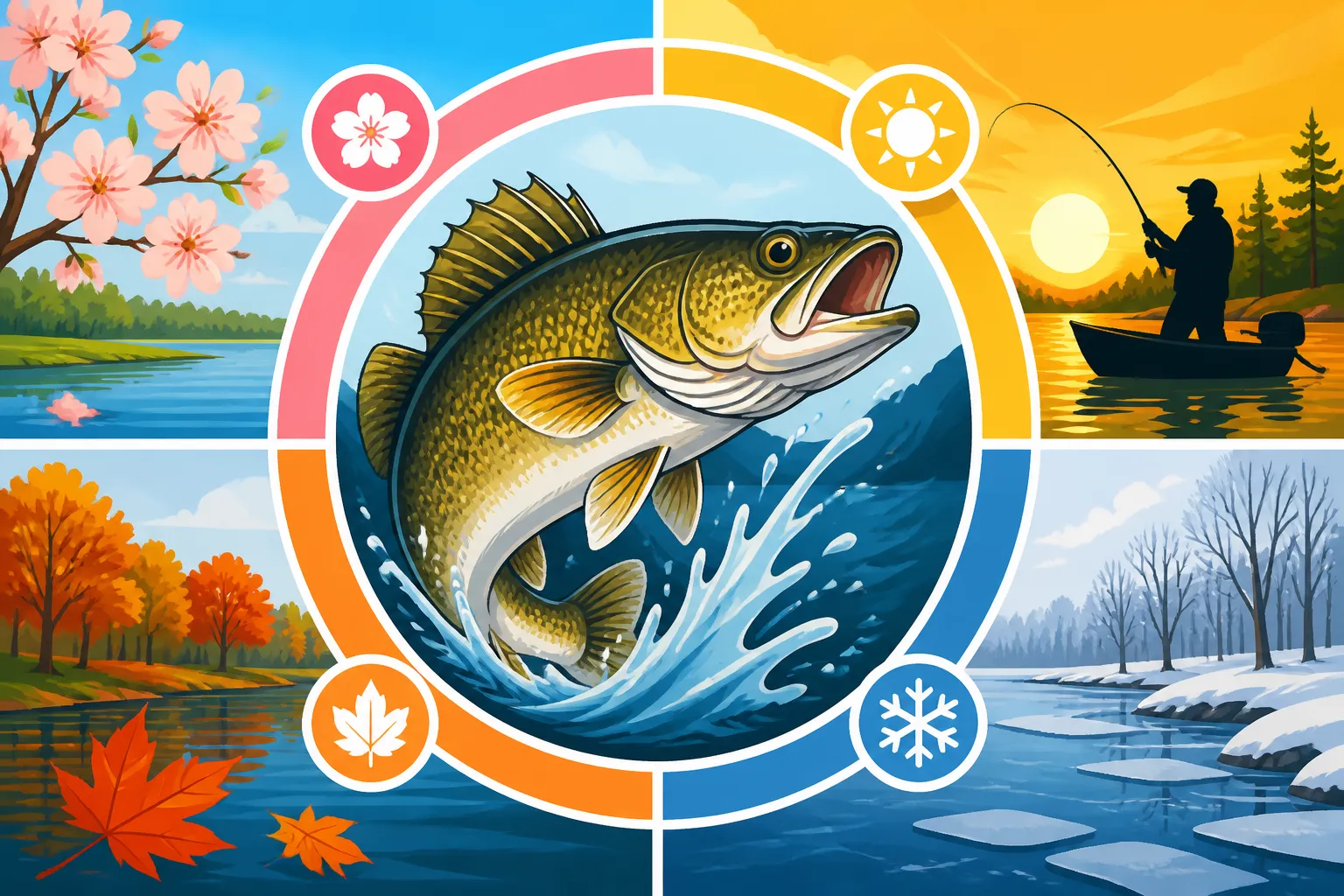
Without a doubt, spring is widely considered the best time of year to catch walleye in Oklahoma. This season offers several distinct phases of activity, each presenting unique opportunities for anglers willing to brave the often-unpredictable spring weather.
Pre-Spawn Aggression: Loading Up Before the Deed
As late winter gives way to early spring, typically from late February into March, water temperatures begin to creep into the low 40s and 50s. This is the pre-spawn period, and walleye are hungry. They're bulking up on baitfish, preparing for the energy-intensive spawning ritual. This is a fantastic time to target them, as they tend to be more aggressive than any other time of year. They'll often stage in deeper water adjacent to their spawning grounds, which are usually rocky areas, riprap, or gravel points near tributary mouths. Think of them like athletes before a big game, loading up on carbs! They’re not just hungry; they’re trying to pack on weight.
Anglers often find success during the pre-spawn by focusing on these transition areas. Deep-diving crankbaits that mimic shad, jigging spoons, or even slow-trolled bottom bouncers with live bait (like shiners or large minnows) can be incredibly effective. Look for underwater points, humps, and channel edges leading into shallower spawning flats. These fish are concentrated and actively feeding, making them a prime target. For more insights on how water temperature affects fish activity, check out our guide on How Water Temperature Affects Fish Feeding Habits.
The Elusive Spawn Window: Timing is Everything
The actual walleye spawn usually occurs when water temperatures reach the 45-50°F range, typically in late March to mid-April in Oklahoma. This period is often short-lived and can be frustrating for anglers because while the fish are shallow, they are singularly focused on reproduction and not necessarily on feeding. They'll move onto shallow, rocky shorelines, riprap banks, and even stream inlets to deposit their eggs. The males often arrive first, waiting for the females.
During the peak of the spawn, catch rates can drop significantly. However, immediately before and after the most intense spawning, you can still find active fish. It requires precise timing and often targeting the staging areas where fish are waiting to move up, or dropping back into slightly deeper water after they've spawned. While not impossible, directly targeting spawning walleye can be hit-or-miss. Many anglers choose to focus on the more productive pre- and post-spawn windows.
Post-Spawn Recovery: Hunger After the Hard Work
Once the spawn is complete and water temperatures settle into the low to mid-50s, the walleye enter a recovery phase, typically from late April through May. They are often exhausted and hungry, making them very catchable again. Females, especially, are looking to replenish their energy reserves. They’ll usually drop back into slightly deeper water adjacent to the spawning areas or move to secondary points and flats where baitfish are abundant.
This is another fantastic time for fishing, as the walleye are often scattered but actively feeding. Trolling crankbaits, casting jigs, or using live bait rigs (like a Lindy rig with a nightcrawler or minnow) can be very effective. They might not be as aggressive as pre-spawn, but they are consistently feeding. Focus on main lake points, submerged humps, and the edges of creek channels. This period is a sweet spot because the weather is usually more stable, and the fish are spread out but catchable. It's a great time to experiment with different presentations to see what they prefer on any given day.
Summer: Deep, Dark, and Productive
As Oklahoma’s notorious summer heat sets in, walleye retreat from the shallows and seek refuge in cooler, deeper waters. While it might require a bit more effort and specialized techniques, summer fishing can be incredibly rewarding, especially for those targeting larger, more mature walleye.
Seeking Cooler Depths: Walleye Go Down
From June through August, when surface water temperatures soar into the 80s, walleye will move to their deep-water haunts. This means you'll find them congregated around main lake points, submerged humps, offshore ledges, and deep creek channels. They'll often suspend over deeper water, following schools of shad, or relate tightly to bottom structure. A good fish finder is almost essential during this time to locate these deep-water hideouts and the baitfish they are shadowing. Products from brands like Garmin or Humminbird, readily available on Amazon, can be invaluable for finding these deep structures.
Vertical jigging with spoons or heavy jigs tipped with plastics or live bait can be very effective if you can pinpoint schools of fish. Trolling deep-diving crankbaits or bottom bouncers with spinner rigs (using a nightcrawler or leech) is another popular and productive method to cover large areas of deep water. The key here is presenting your bait at the exact depth where the walleye are holding. If you're not getting bites, adjust your depth. The fish might be just a few feet shallower or deeper than you think.
Night Fishing for Summertime Success
Because of their superior low-light vision, walleye often become much more active after the sun goes down, especially during the hot summer months. The cooler night air brings down the surface water temperature, and the darkness gives them the advantage over their prey. This is a prime opportunity for anglers seeking a different kind of challenge and often a more relaxed fishing experience away from the midday crowds. You'll find night fishing tips for Oklahoma in our guide on Summer Night Fishing Techniques in Oklahoma.
Night fishing for walleye often involves targeting shallower points, humps, and flats adjacent to deeper water, where they move up to feed. Trolling shallow-running crankbaits in areas they wouldn't dare visit during the day can be highly effective. Another popular technique is fishing under lights from a boat or dock, which attracts baitfish, and in turn, walleye. Jigs tipped with minnows or worms are excellent choices. Be sure to have appropriate lighting, safety gear, and insect repellent for night excursions. A headlamp from a brand like Black Diamond, found on Amazon, can make rigging and baiting much easier in the dark.
Fall: The Walleye Feast Before Winter
As summer transitions into fall, and water temperatures begin to cool, walleye enter another active feeding period. This "fall bite" can be just as, if not more, productive than the spring bite for many anglers, especially for those chasing bigger fish.
Autumn Aggression: Fueling Up for the Cold
From September through November, as the water temperatures drop into the 60s and then 50s, walleye become incredibly aggressive. They know winter is coming, and they need to pack on fat reserves to survive the leaner months. This is when they will actively chase down baitfish and can be found in more varied locations than in the heat of summer. Their metabolism is high, and they're focused on feeding.
During this time, walleye will often move back to main lake points, creek channel edges, and even shallow flats in low light conditions. They are often less spooky than in spring, allowing for a more straightforward approach. Trolling crankbaits (both shallow and deep runners), casting jigs with large plastic trailers, or working blade baits can all be very productive. This is a time to cover water and experiment with different speeds and depths until you find where the fish are concentrating.
Locating Fall Walleye: Structure and Baitfish
The key to fall walleye success often lies in finding the baitfish. Shad, in particular, will school up in large numbers during the fall, and walleye will be right on their tails. Look for large schools of baitfish on your electronics, especially around points, humps, and creek channel swings. Walleye will often be positioned just below or on the edges of these bait balls, waiting for an easy meal.
Main lake points and channel edges are prime ambush points. As the water cools further, look for walleye to move into deeper portions of these structures. Don't be afraid to fish deeper into the fall, even as temperatures drop into the low 50s. The fish will still be active, though their bite might become more subtle. Using electronics to scout for bait and structure can save you a lot of time and lead you directly to the fish.
Winter: A Niche Opportunity for the Dedicated Angler
While not as popular as spring or fall, winter fishing for walleye in Oklahoma can still yield results for those willing to brave the cold. It requires patience and specific techniques, but the reward can be a few quality fish.
Slow and Steady Wins the Race
During the colder months, typically December through February, Oklahoma's lake temperatures can drop significantly, though true ice fishing is rare in most parts of the state. Walleye become much more lethargic, conserving energy. They will usually hold tight to deep structure, such as channel breaks, deep humps, and points, often in 20-40 feet of water or even deeper. Their feeding windows are shorter, and their bites are incredibly subtle.
This is a time for slow, methodical fishing. Vertical jigging small spoons, blade baits, or jigs tipped with small minnows or plastic grubs is often the most effective method. The key is to keep your presentation right in their face and work it very slowly. A sensitive rod and light line are essential to detect those faint bites. Focus on areas where you know there are thermoclines or consistent deep water temperatures. This can be a challenging but rewarding time for the persistent angler. For more on winter fishing, you might find our guide on Winter Catfishing Techniques in Oklahoma helpful, as some principles of slow presentations apply across species.
Targeting Walleye Through the Open Water
In Oklahoma, ice fishing for walleye is generally not a common pursuit due to inconsistent ice conditions. Instead, winter walleye fishing is typically done from boats on open water. This means employing similar deep-water tactics as summer, but with an even slower presentation. Trolling deep-diving crankbaits at very slow speeds (often less than 1 mph) can sometimes tempt a sluggish walleye. Using a sensitive trolling rod, you might feel a slight "tick" or simply notice your rod tip load up slightly, indicating a bite.
Another effective strategy is to anchor over known walleye haunts (deep points, humps, channel edges) and vertical jig with spoons or live bait. Minnows become a prime bait choice in winter due to their natural appeal. The fish are often concentrated in small areas, so once you find them, you can sometimes pick off a few. Dress warmly, bring a thermos of hot coffee, and be prepared for a slower pace, but don't underestimate the potential for a trophy walleye during these quiet months.
General Tips for Maximizing Your Walleye Season
No matter the time of year, certain factors consistently influence walleye activity and your chances of success. Mastering these general tips will make you a more versatile and effective walleye angler.
Best Times of Day to Target Walleye
Walleye are famously low-light feeders. This means the prime times of day are almost always at dawn, dusk, and throughout the night, especially in warmer months. During these periods, their superior eyesight gives them an advantage, and they are more likely to move into shallower feeding grounds.
- Dawn and Dusk: These are arguably the most consistent bite windows year-round. The transition periods of light are when walleye are most active.
- Night: Particularly in summer, walleye can be caught throughout the night as they ascend from deeper water to feed in the shallows.
- Midday: This can be challenging, especially in clear water and bright sunshine. Walleye will usually be in the deepest, shadiest parts of the lake. However, overcast days or days with choppy water can extend their feeding window into the midday hours.
Always factor in the prevailing light conditions. If it's a bright, sunny day, focus on deep water or heavy cover. If it's cloudy or rainy, they might be more active in shallower areas for longer. You can often find a good selection of specialized night-fishing gear, including glow-in-the-dark lures, on Amazon.
Reading the Weather and Its Influence
Weather plays a huge role in walleye fishing, often more so than with other species.
- Fronts: Just before a cold front moves in, walleye often go on a feeding binge. The barometric pressure drops, and they become very active. Immediately after a cold front, when pressure is high and skies are clear, fishing can be tough as walleye often get lockjaw and hug the bottom. Our guide on How Cold Fronts Change Fishing Patterns on Oklahoma Lakes offers more detailed advice.
- Wind: A moderate chop on the water can actually improve walleye fishing. The waves break up the light penetration, making them more comfortable in shallower water, and it also concentrates baitfish. Too much wind, however, can make boat control difficult and fishing unpleasant.
- Cloud Cover: Overcast days are generally better for walleye fishing than bright, sunny days, as it simulates low-light conditions and allows them to be active for longer.
- Rain: Light rain can sometimes trigger a bite, especially if it's accompanied by stable barometric pressure. Heavy, sustained rain can muddy the water, which walleye generally don't prefer, but can also wash in nutrients and baitfish, depending on the intensity.
Being aware of the forecast and understanding how different weather patterns affect walleye behavior will empower you to adjust your tactics and maximize your time on the water. Ultimately, the "best" time to catch walleye in Oklahoma isn't just one month or season; it's a series of opportunities dictated by temperature, light, and their biological drive. By understanding these nuances, you'll be well on your way to consistent walleye success.
Disclaimer
This article is for general informational purposes only and does not constitute professional advice. Laws, prices and regulations vary by location and change over time. Consult a qualified professional for guidance on your specific situation.