How to Downrig for Striped Bass
Have you ever found yourself out on a sprawling Oklahoma lake, scanning the surface and casting till your arm aches, only to come up short on those elusive striped bass? It's a common frustration when these powerful fish decide to hang out in the deeper, cooler water, far from conventional casting range. This guide is all about tackling that challenge head-on, teaching you the art of downrigging to consistently put your lures right in front of those deep-dwelling stripers, turning those frustrating days into exhilarating successes.
Understanding Striped Bass Behavior in Oklahoma's Deep Waters
Striped bass are truly magnificent fish, known for their powerful runs and their tendency to school up, making them a prime target for many Oklahoma anglers. However, they're not always easy to find, especially when the conditions push them into the depths. Knowing their habits is the first step to mastering any deep-water technique. For a broader look at this species, you might find our guide on Striped Bass Fishing in Oklahoma: An Introduced Species Guide helpful.
Why Stripers Go Deep: Seasonal Movements
Just like us, striped bass are creatures of comfort, and their comfort zone often revolves around water temperature and oxygen levels. As Oklahoma's notorious summer heat sets in, the surface waters of our big reservoirs, like the immense Lake Texoma, can become too warm and less oxygenated for stripers. They'll actively seek out cooler, more comfortable zones, which are almost always in deeper water. This isn't just a summer thing, either; during other seasons, baitfish schools might congregate in specific deep structures, drawing the stripers down with them. Understanding these seasonal shifts in depth preference is critical.
During the spring and fall, you might find stripers more willing to chase bait near the surface, especially early mornings or late evenings. But once that sun climbs high or the water temperatures stabilize, they retreat. Winter can see them holding over deep structure, conserving energy. Knowing when and why they move deep gives you a huge advantage, letting you anticipate their location rather than just reacting. Think of it as playing chess with the fish; you're trying to predict their next move.
Locating Striped Bass with Sonar
Before you can effectively downrig for striped bass, you've got to find them! This is where your boat's electronics, particularly a good fish finder with sonar capabilities, become your best friend. Modern fish finders are incredibly sophisticated tools that can reveal not just the depth of the water, but also the structure below, the baitfish, and most importantly, the game fish themselves. Learning How to Find Striped Bass Schools with Sonar is a game-changer.
When you're out on the water, pay close attention to your sonar screen. You're looking for arches or distinct marks that indicate individual fish, often suspended over humps, ledges, or submerged creek channels. Even better, look for dense clouds of smaller dots – those are baitfish schools, and where there's bait, there are usually predators like striped bass lurking nearby. Sometimes, you'll see larger arches directly beneath or alongside these bait balls, signaling hungry stripers. Don't just motor over a spot once; make several passes, varying your speed, to get a clearer picture of how the fish are positioned and moving. Mark these hot spots on your GPS so you can return to them with your downriggers.
The Basics of Downrigging: What It Is and Why It Works
So, you've found the stripers holding deep. Now, how do you get your bait down to them precisely and consistently? That's where downrigging comes in. It's a method that allows you to present your lure or bait at a specific, controlled depth, independent of your boat's speed or the type of lure you're using.
Essential Downrigging Components
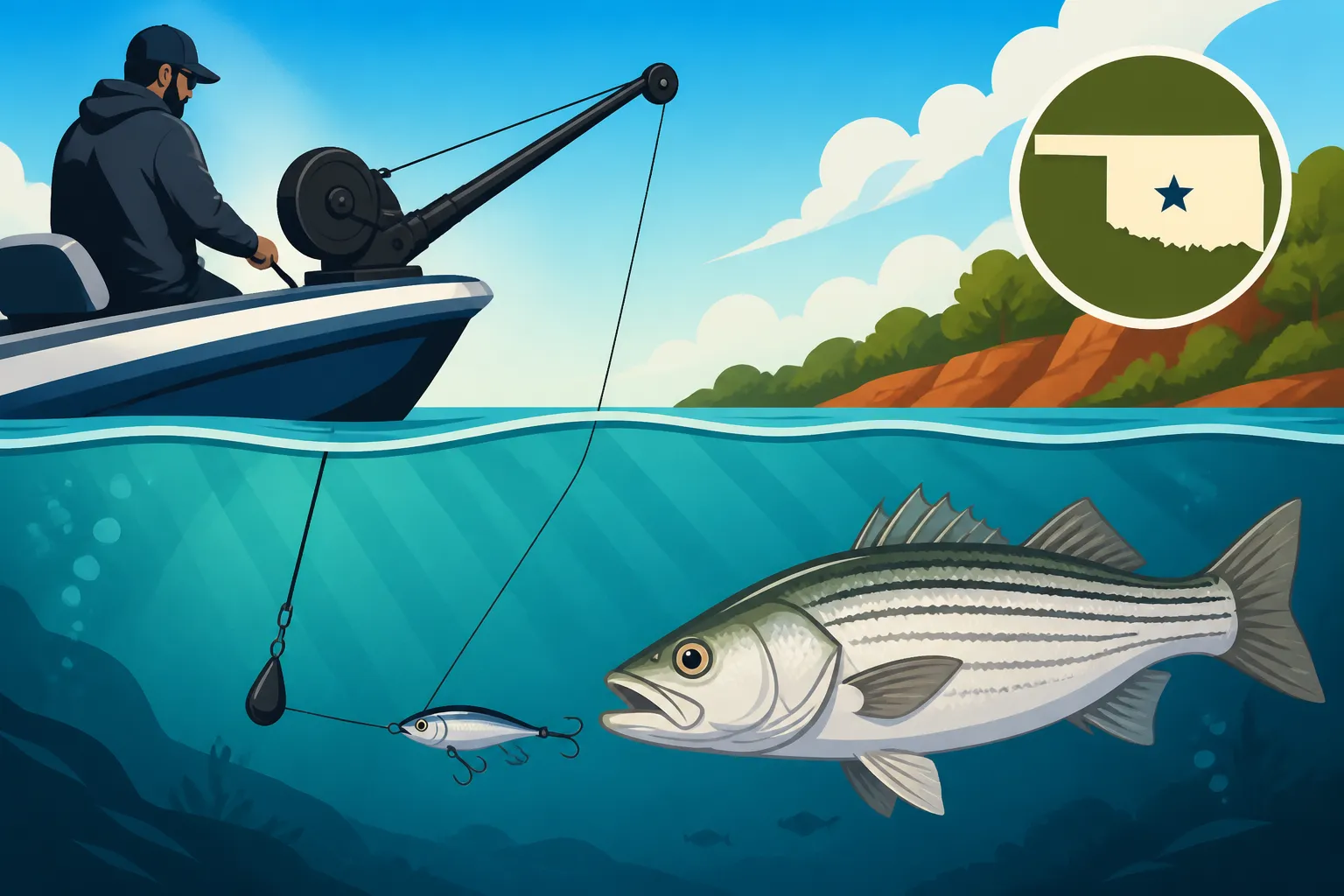
A downrigging system might seem intimidating at first glance, but it's actually quite straightforward once you understand its main parts. At its core, it's a weighted system that carries your fishing line down to the desired depth, then releases it so your lure can swim freely.
- The Downrigger Unit: This is the main piece of equipment, typically mounted to the stern or sides of your boat. It consists of a boom, a spool (either manual or electric), and a depth counter. Electric downriggers are definitely a luxury, making retrieval much easier, especially when fishing very deep. You can find a wide variety of downrigger models, weights, and release clips on platforms like Amazon, offering options for every budget and boat size.
- The Downrigger Weight: This is a heavy lead or cannonball-shaped weight, usually ranging from 6 to 15 pounds, that pulls your main downrigger line straight down. The heavier the weight, the less "blowback" (the angle at which the line trails behind the boat) you'll experience, especially at higher trolling speeds or in strong currents.
- The Release Clip: This is a crucial component that connects your fishing line to the downrigger weight. The clip holds your line securely while the weight pulls it down, but when a fish strikes, the tension of the strike "releases" your line from the clip, allowing you to fight the fish directly without the downrigger weight interfering. There are various types, from adjustable tension clips to specialized stacker clips that allow you to run multiple lines off a single downrigger weight.
- Specialized Rods and Reels: While you can technically downrig with any stout rod, many anglers prefer longer, more forgiving rods (often 7-9 feet) with a soft tip to absorb the shock of the release and allow the lure to work naturally. Line counter reels are almost essential, helping you accurately track how much fishing line you have out after the release, which is vital for replicating successful depths.
Setting Up Your Downrigging System
Once you have your components, setting them up properly is key to success. This isn't just about bolting things to your boat; it's about fine-tuning your entire presentation.
First, secure your downrigger units to your boat. They need to be sturdy enough to handle the stress of heavy weights and potentially large fish. Make sure they're positioned so the boom extends out from the boat, keeping your fishing lines clear of the prop and other obstructions.
Next, spool your downrigger with heavy-duty line, typically wire or braided line designed for this purpose. Then attach your downrigger weight and, most importantly, your release clip to the end of this line. Now for your actual fishing line: thread it through your rod guides, tie on your chosen lure or bait, and then clip your fishing line into the release clip. You'll typically clip the line 5-10 feet above your lure, creating a "leader" section that allows the lure to swim naturally once released. Remember, the tighter the clip tension, the harder the strike needed to release it. Experiment to find the sweet spot – too loose, and your line will release prematurely; too tight, and you might lose fish on light strikes.
Once everything is connected, lower the downrigger weight to your target depth, watching your depth counter carefully. Your fishing line will be held securely by the clip, with your lure swimming freely at that exact depth. Now you're ready to start trolling. For details on more general trolling strategies, refer to our article on Striped Bass Trolling Techniques.
Mastering Downrigging Techniques for Oklahoma Stripers
Downrigging isn't just about dropping a weight. It's a nuanced dance between boat speed, lure choice, and precise depth control. It's about presenting your bait as naturally as possible to fish that are often suspended in open water.
Optimal Depth and Speed Control
The beauty of downrigging lies in its precision. If your sonar shows stripers at 40 feet, you can set your downriggers to 40 feet. But it's rarely that simple. The fish might be at 40 feet, but the bait is at 35, or the optimal presentation is slightly above their heads.
- Finding the Zone: Always start by marking fish and bait on your sonar. If fish are scattered, try to target the top of the bait ball or just above the main concentration of stripers. Sometimes, fish will look up for their meal. Experiment by setting one downrigger a few feet above the marks and another directly on them.
- Controlling Your Speed: Trolling speed dramatically affects lure action and how much "blowback" your downrigger weight experiences. For most striped bass applications, a trolling speed between 2 to 4 miles per hour is a good starting point. However, this varies widely based on the type of lure you're using. If you're using spoons or plugs, you might need more speed to get the right wobble. Live bait, on the other hand, often requires slower speeds. Learn more about Trolling Speed for Striped Bass on Oklahoma Reservoirs.
- Adjusting for Current: Strong currents, like those often found near dam structures or river channels, can cause your downrigger weight to "blow back" or ride higher than your depth counter indicates. You'll need to compensate by letting out more downrigger cable or using heavier weights. Also, experiment with trolling both with and against the current, as this changes your lure's action and how quickly fish perceive it.
Lure Selection and Presentation
The right lure can make all the difference, and with downrigging, you have the flexibility to use a wide array of options because the downrigger takes care of the depth.
- Spoons: Metal spoons, like Flutter Spoons or Drone Spoons, are classic striper lures. Their erratic, wobbling action mimics injured baitfish, making them irresistible. They work well at moderate to fast trolling speeds.
- Plugs and Crankbaits: Deep-diving crankbaits and lipped plugs are excellent for downrigging, especially those designed to have a strong swimming action. Choose natural baitfish colors or bright, attention-grabbing patterns depending on water clarity.
- Swimbaits and Jigs: Soft plastic swimbaits, often rigged on a jig head, can be deadly effective. Their realistic profiles and subtle movements are great for finicky fish. You can also trail bucktail jigs for a different presentation.
- Live Bait: Don't underestimate the power of live bait! Live shad, threadfin, or bluegill can be presented perfectly at depth using downriggers. This often requires a slightly slower trolling speed to keep the bait lively and natural.
When it comes to presentation, always keep your lines clear. Stagger your downrigger depths if running multiple lines to avoid tangles. If you have two downriggers, run one slightly higher than the other, or run different lures at the same depth to see what they prefer. A reliable online retailer like Amazon is an excellent place to explore the vast selection of downrigging lures and specialized tackle.
Here's a quick reference for common downrigging lures and their applications:
| Lure Type | Recommended Trolling Speed | Depth Range (Downrigger Set) | Notes |
|---|---|---|---|
| Metal Spoons | Moderate to Fast (2.5-4 mph) | Mid to Deep (20-60 ft+) | Great for aggressive fish, high flash and wobble. |
| Deep-Diving Plugs | Slow to Moderate (2-3 mph) | Mid (15-35 ft) | Excellent vibration, good for mimicking larger baitfish. |
| Soft Plastic Swimbait | Slow (1.5-2.5 mph) | Mid to Deep (20-50 ft+) | Realistic profile, subtle action, good for finicky fish. |
| Live Shad | Very Slow (1-1.5 mph) | Any Depth | Irresistible natural action, requires careful handling. |
Common Downrigging Challenges and Solutions
Even with the best setup, downrigging can present a few hurdles. Knowing how to troubleshoot them will save you headaches and keep your lines in the water.
- False Releases: Your line releases from the clip, but there's no fish. This can be due to too much slack in your line, a sudden jolt from a wave, or your clip tension being too light. The solution? Ensure your fishing line is taut when clipping in, use a sturdier clip, or adjust the tension. Check your lure for weeds, as debris can also cause a false release.
- Tangles: Running multiple lines can inevitably lead to tangles, especially when turning or if lines are set at the same depth. To prevent this, stagger your depths and run different lengths of line behind the boat. For instance, if you have two downriggers on one side, run one weight at 30 feet with a 20-foot lead, and the other at 35 feet with a 15-foot lead. This creates separation.
- Finding the "Strike Zone": Sometimes, even if you see fish on sonar, they just won't bite. This might mean you're not in the true "strike zone." Adjust your depth by a few feet up or down. Change your trolling speed slightly. Swap out lures. Sometimes, a subtle change in color or size can make all the difference. Remember that fish don't always hang out right on the bottom; they might be suspended high above it. Our guide on Deep Water Striper Fishing Techniques has more insights here.
- Dealing with "Blowback": As mentioned, the angle of your downrigger cable due to boat speed and current can make your weight ride higher than the depth counter shows. To minimize this, use heavier downrigger weights (10-15 pounds). Also, try slowing your trolling speed, or troll with the current to reduce drag. Some advanced fish finders even have settings to calculate your true lure depth based on cable angle.
Advanced Downrigging Tips for Trophy Stripers
Once you've got the basics down, you can start refining your approach to specifically target those larger, more elusive trophy striped bass that Oklahoma's waters, especially places like Lake Texoma, are known for producing. Our article Striped Bass Record Size at Lake Texoma highlights just how big these fish can get.
Combining Downrigging with Other Methods
Downrigging doesn't have to be your only strategy; it can be an excellent complement to other techniques. Many successful striper anglers use a multi-pronged attack.
- Stacking Lines: Some downriggers allow you to run two separate fishing lines off a single downrigger weight using "stacker clips." This doubles your presentation in the same column of water, effectively fishing two depths (or two lures) simultaneously. This is particularly effective when you've pinpointed a tight school of fish.
- Planer Boards: While downrigging targets vertical depth, planer boards extend your lures out to the side of the boat, covering a wider swath of water. Combining these two methods allows you to cover both vertical and horizontal ranges, increasing your chances, especially when stripers are scattered. You could downrig for deep fish and run planer boards with surface lures for any stripers chasing bait on top.
- Live Baiting and Kite Fishing: For truly finicky or large trophy stripers, nothing beats live bait. You can downrig live bait for precision depth, but you can also run some live baits on free lines or even use a kite to suspend a bait perfectly at the surface or just above a specific depth, enticing those wary giants. This is particularly effective when you observe surface activity that downriggers can't reach.
Seasonal Adjustments for Downrigging Success
The behavior of striped bass changes throughout the year, and so should your downrigging approach.
- Spring: As water temperatures rise, stripers become more active and might be found shallower during low light. However, they'll still retreat to deeper points during midday. Focus your downrigging efforts around main lake points, submerged humps, and creek channels where baitfish are staging for the spawn. Your target depth might be shallower than in summer.
- Summer: This is prime downrigging season. Stripers will be seeking thermal refuge in the deepest, coolest, and most oxygenated water available. Focus on the thermocline (the layer where warm surface water meets cooler deep water), often found at depths ranging from 20 to 50 feet or even deeper depending on the lake. Look for them over main lake humps, river channels, and deep ledges. Consider night fishing during the summer; stripers sometimes feed shallower in the darkness. Learn more about Summer Night Fishing Techniques in Oklahoma.
- Fall: As water temperatures cool, stripers become incredibly active, often chasing bait to the surface in spectacular "topwater boils." While you'll want to cast to these, don't forget that many stripers will still be feeding in deeper water as well. Downrigging around schooling baitfish in open water or along prominent structures can be highly productive. The fish will be more spread out but also more aggressive.
- Winter: Cold water can make stripers sluggish, but they still need to eat. They'll often school tightly over very deep structure, like humps, submerged islands, or deep creek channels. Your downrigging will need to be extremely precise, often targeting depths from 40 to 80 feet, depending on the lake. Slower trolling speeds and subtler baits might be more effective during this time. For more general cold water tips, check out our Winter Catfishing Techniques in Oklahoma article – some principles apply to stripers too.
By constantly adapting your downrigging setup, lure choice, and trolling strategy to the specific season and conditions, you'll greatly increase your chances of hooking into those fantastic Oklahoma striped bass. Whether you're targeting Lake Texoma's massive striped bass fishery or exploring another one of Oklahoma's Best Striped Bass Fishing in Oklahoma lakes, downrigging offers a reliable way to get your bait where the fish are hiding.
Disclaimer
This article is for general informational purposes only and does not constitute professional advice. Laws, prices and regulations vary by location and change over time. Consult a qualified professional for guidance on your specific situation.