Best Bass Fishing Spots on Skiatook Lake, Oklahoma
If you've ever spent countless hours on a beautiful lake, casting your line with high hopes, only to come back empty-handed, you know the frustration. Skiatook Lake in Oklahoma, with its expansive waters and diverse terrain, can be incredibly rewarding for bass anglers, but finding those prime locations where the bass are biting can feel like searching for a needle in a haystack. This comprehensive guide is here to cut through the guesswork, pinpointing the best bass fishing spots on Skiatook Lake and sharing the strategies you need to make your next trip a success.
Understanding Skiatook Lake's Bass Habits
Skiatook Lake, nestled in Osage County, is a gem for Oklahoma anglers. It's known for its clear water, rocky shores, and abundant standing timber, all of which contribute to excellent bass habitat. But to really tap into its potential, you need to understand the lake itself and the specific bass species that call it home.
Lake Characteristics and Structure
Skiatook is a relatively deep lake, especially compared to some other Oklahoma reservoirs. Its clear water means that bass can be more skittish and light penetration goes deeper, influencing where fish hold. The dominant structure here is rock – from large boulders to shale banks – along with standing timber, particularly in the upper arms of the lake. The deep channels and sudden drop-offs offer ideal ambush points and thermal refuges for bass throughout the year. Understanding how to "read" this structure, whether it's a subtle depth change on your sonar or a visible rock pile, is key to consistent success. Many anglers find that focusing on areas where rocky bottoms meet submerged timber often yields the best results, as these transitions create perfect feeding lanes and cover.
Common Bass Species in Skiatook
While many lakes might primarily feature one dominant bass species, Skiatook Lake boasts a healthy population of both largemouth and smallmouth bass, along with spotted bass.
- Largemouth Bass: These are the classic green fish, often found in areas with more cover like standing timber, brush piles, and submerged vegetation (though vegetation is less common in Skiatook's clear, rocky areas). They love to ambush prey from heavy cover. When targeting largemouth, think about pitching jigs or soft plastics into dense cover, especially in the northern arms and coves. You can learn more about Largemouth Bass Fishing in Oklahoma: The Complete Guide to enhance your understanding.
- Smallmouth Bass: Skiatook is one of Oklahoma's premier smallmouth fisheries, thanks to its clear, rocky habitat. Smallmouth typically prefer deeper, cooler water and hard bottom structures like rocky points, ledges, and bluffs on the main lake. They're fierce fighters and a blast to catch. Look for them on the wind-blown sides of points or around significant rock transitions.
- Spotted Bass: Often overlooked, spotted bass are abundant and aggressive in Skiatook. They tend to blend the habits of largemouth and smallmouth, often holding deeper than largemouth but still associating with cover and structure. They readily hit many of the same baits as largemouth but can be found in a wider range of depths. They're a great fallback species if largemouth or smallmouth prove elusive.
Knowing which species you're targeting can help refine your approach, from bait selection to the specific types of structure you focus on.
Top Bass Fishing Hotspots on Skiatook Lake
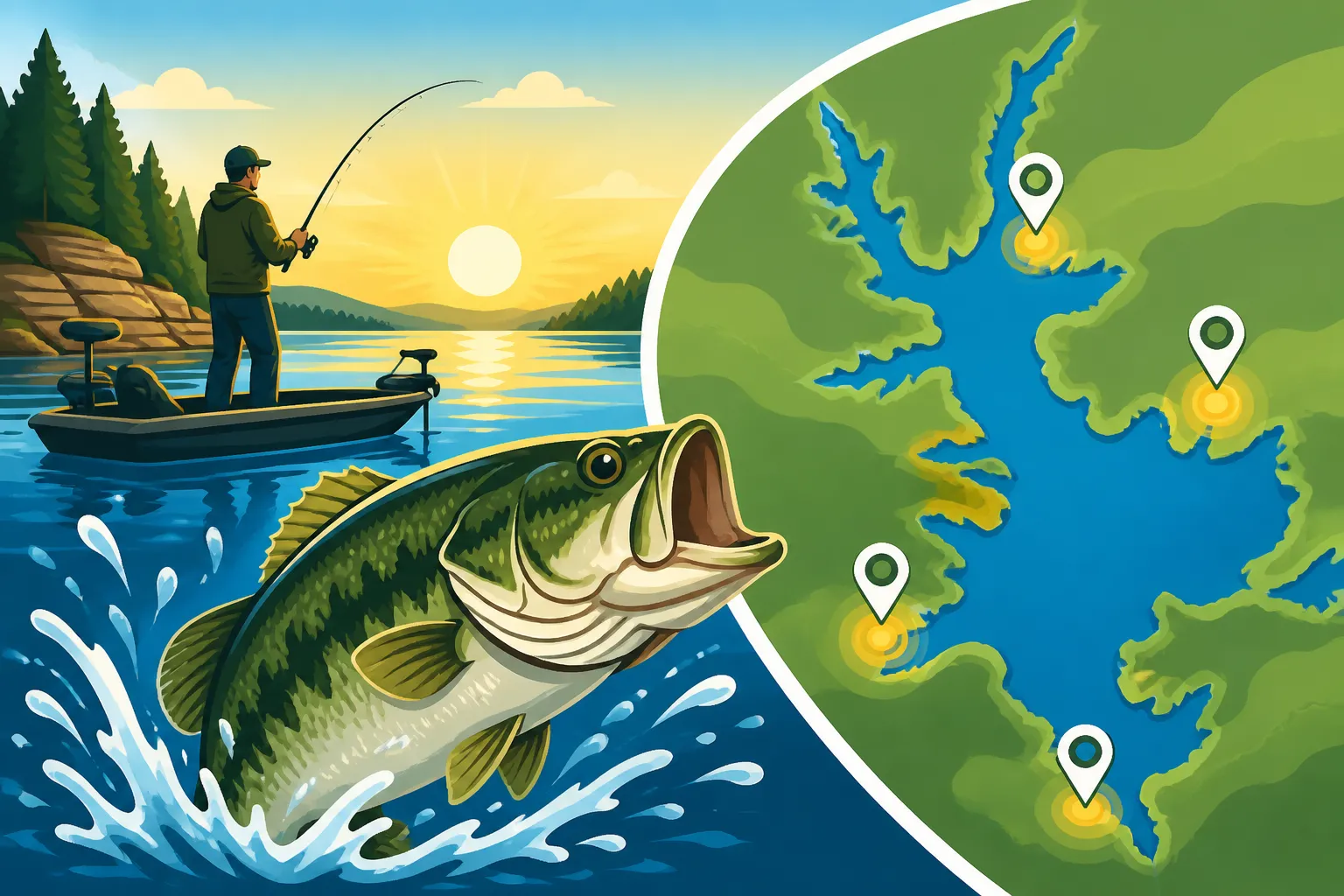
When you're looking for the best bass fishing spots on Skiatook Lake, it helps to break the lake down into general areas, each with its own character and prime targets.
The North End: Coves and Inlets
The northern reaches of Skiatook Lake, particularly the areas fed by Hominy Creek and Bird Creek, offer a different fishing experience compared to the main lake. This part of the lake tends to be shallower, with more standing timber, mud flats, and less pronounced rock structure. This makes it a fantastic area for targeting largemouth bass, especially during the spring spawn and fall migrations.
You'll find numerous coves and inlets here that warm up quickly in spring, drawing bass into shallower water for spawning. Look for areas with a mix of standing timber and small pockets of emergent vegetation, if any, as these provide crucial cover. The mouths of these creeks and the transition zones where they meet the main lake are also excellent, acting as highways for bass moving in and out of spawning grounds. Later in the year, after heavy rains, these creeks can bring in muddy water and nutrients, concentrating baitfish and, in turn, bass. Spinnerbaits, ChatterBaits, and squarebill crankbaits can be very effective in these shallower, often stained waters. For those unfamiliar with the best access points, exploring local fishing guides through platforms like FishingBooker can provide invaluable, up-to-the-minute local knowledge.
Mid-Lake Structure and Main Lake Points
The middle section of Skiatook Lake is where things get really interesting for smallmouth and spotted bass, and even some deeper-holding largemouth. This area is characterized by steep rocky banks, bluff walls, and prominent main lake points that extend far out into deeper water. These points are absolute magnets for bass, especially when there's a good wind blowing across them, pushing baitfish close to the structure.
Focus on the submerged ledges, humps, and irregular rock formations that don't always show up on the surface. These are textbook smallmouth habitats. Look for depth changes, brush piles (often placed by local anglers or natural debris), and transition lines where different types of rock meet. Drop-shot rigs, shaky heads, football jigs, and deep-diving crankbaits are go-to choices here. Pay close attention to your electronics, as bass will often suspend along these deep structures or hold tight to cover. Remember that How to Read Water Temperature for Better Fishing in Oklahoma can be crucial in locating these mid-lake bass, as they'll often follow specific temperature ranges.
Dam Area and Deep Water Access
The area around the Skiatook Lake dam is a whole different ballgame. It's the deepest part of the lake, with sheer rock walls, massive boulders, and very clear water. This deep-water access makes it a prime location for suspended bass and those seeking cooler temperatures during the brutal Oklahoma summer.
During the summer months, when surface temperatures soar, bass will often seek refuge in the cooler, oxygen-rich depths. The dam area provides this in spades. Look for schools of baitfish, often shad, congregating over deep water, and you can bet bass won't be far behind. Vertical jigging spoons, heavy swimbaits, and deep-diving jerkbaits are excellent for targeting these suspended fish. Sometimes, bass will hold right on the bluff walls, making a drop-shot rig or a slow-falling senko a great presentation. Even in winter, the dam's stable temperatures can attract schools of bass. For boaters, it's worth noting that the deeper water often means less protection from wind, so plan your trip accordingly, and always check the wind forecast.
Seasonal Bass Strategies for Skiatook
Understanding how bass behave throughout the year is perhaps the most critical component of consistent success on Skiatook Lake. Their patterns change dramatically with water temperature and spawning cycles.
Spring Spawn and Pre-Spawn Tactics
Spring is arguably the most exciting time to fish for bass on Skiatook. As the water temperatures begin to climb (typically from mid-March through May), bass move from their deep wintering grounds into shallower water.
- Pre-Spawn (Water Temps 50-60°F): This is when bass are feeding heavily, bulking up before the rigors of spawning. They'll stage on points and secondary channels leading into spawning coves. Look for these staging areas in the north end of the lake or in the larger coves on the main body. Crankbaits, jerkbaits, and spinnerbaits are incredibly effective as bass are aggressive and chasing food. This is a great time to practice Bass Fishing Techniques by Season to maximize your catch.
- Spawn (Water Temps 60-70°F): Once the water hits the ideal temperature range, bass move onto beds in protected coves, especially those with some sunlight exposure and a mix of rock and timber. They'll be shallower, sometimes in just a few feet of water. While sight-fishing is possible in Skiatook's clear waters, it's often more effective to target likely bedding areas with soft plastics like lizards, tubes, or creature baits pitched onto visible or suspected beds. Remember to release spawning bass quickly and gently.
- Post-Spawn (Water Temps 70°F+): After spawning, bass can be a bit lethargic for a short period before moving back to deeper water to recover and feed. They'll often hang out around the first available cover near their spawning grounds, like submerged brush or docks. Topwater lures can be deadly during this phase, especially early in the morning or late in the evening.
Summer Deep Water and Night Fishing
Summer fishing on Skiatook presents its own challenges and opportunities. With surface temperatures soaring into the 80s and even 90s, bass move deeper to find cooler, more comfortable water.
- Deep Water Tactics: During the day, focus on main lake points, bluffs, and deep structure, especially those with access to the thermocline. Bass will often suspend at specific depths. Carolina rigs, deep-diving crankbaits, and football jigs are excellent choices. Use your electronics to find schools of baitfish and any accompanying bass. You can really hone your skills in How to Fish Deep Structure for Bass in Summer during this period.
- Night Fishing: This is a fantastic option for beating the heat and catching big bass in summer. Bass move shallower at night to feed under the cover of darkness. Topwater baits like buzzbaits and large worms or jigs fished slowly along rocky banks and docks can be incredibly productive. The lack of boat traffic and cooler air temperatures make for a pleasant experience, and the bass often feel much more secure. Ensure you have proper lighting and safety gear for night excursions.
Fall Feeding Frenzy and Winter Patterns
As temperatures begin to drop in the fall, bass go on another feeding spree, trying to put on weight for the upcoming winter. This is a highly anticipated time for many anglers.
- Fall Turnover and Feeding: Once the lake begins its "turnover" (as surface waters cool and mix with deeper water), baitfish become more active and scattered, and bass follow suit. Look for schooling bass chasing baitfish in open water, often near main lake points or creek channels. Spoons, swimbait, and topwater lures can be incredible when bass are busting on the surface. Later in the fall, as water cools further, focus on shallow-to-mid depth crankbaits and jigs around cover.
- Winter Slow-Down: Winter can be tough, but big bass can still be caught. Bass typically move to deep, stable water, often suspending over deep channels or holding tight to vertical structure like bluffs and deep timber. Slow presentations are key. Jigging spoons, blade baits, and subtle finesse baits like a shaky head or a drop-shot rig fished very slowly are your best bet. Targeting sunny, protected coves on warmer winter days can also yield results.
Gear and Techniques for Skiatook Bass
Having the right gear and knowing the best techniques will significantly increase your odds of success on Skiatook Lake. The diverse conditions require a versatile approach.
Essential Lures and Baits
Given Skiatook's clear water and varied structure, a diverse tackle box is your best friend.
- Soft Plastics: These are arguably the most versatile for Skiatook bass. Texas-rigged worms and creature baits are excellent for pitching into timber and brush piles for largemouth. Drop-shot rigs with small worms or finesse baits are deadly for smallmouth and spotted bass holding on deep rock structure. A Carolina rig is also fantastic for covering ground on main lake points.
- Crankbaits and Jerkbaits: A range of crankbaits, from shallow squarebills for the northern coves to deep-diving models for main lake points and channels, will cover most conditions. Jerkbaits are particularly effective in Skiatook's clear water, especially for smallmouth and suspended bass during cooler months. Brands like Rapala and Strike King offer excellent options for these conditions.
- Jigs: Football jigs are perfect for dragging over rocky bottoms and ledges, mimicking crawfish, a primary food source for bass. Flipping and pitching jigs are great for heavy cover.
- Topwater Lures: When conditions are right (low light, calm water), topwater baits like walking baits, poppers, and buzzbaits can provoke explosive strikes, especially during post-spawn and early fall.
- Spinnerbaits and ChatterBaits: These are excellent search baits, especially in areas with stained water or scattered cover, helping you locate active fish quickly.
Remember that Best Bass Lures for Spring Fishing might differ significantly from those used in summer or winter, so adjust your arsenal seasonally.
Boat vs. Bank Fishing Approaches
Whether you're fishing from a boat or the bank, Skiatook offers opportunities, though with different advantages.
- Boat Fishing: Having a boat, especially one equipped with good electronics (like a fish finder with side imaging), opens up the entire lake. You can access main lake points, deep bluffs, and the vast expanses of standing timber that bank anglers simply can't reach. A boat allows you to follow fish as they move seasonally and fish deeper structure more effectively. Many anglers seeking an advantage for tournaments or simply to explore more of the lake often consider booking a guided trip through services like FishingBooker, which can connect them with experienced local captains who know Skiatook's every nook and cranny. For boaters, remember to check Best Boat Ramps on Skiatook Lake, Oklahoma before your trip for easy access.
- Bank Fishing: While more limited, bank fishing can still be productive, especially in the numerous public access areas and state parks around the lake. Look for accessible points, coves, and areas where the bank drops off quickly into deeper water. Target visible cover like downed trees, docks (where allowed), and rocky outcroppings. The north end of the lake, with its shallower, more accessible coves, can be particularly good for bank anglers during the spring. Light spinning tackle and versatile baits like plastic worms, small crankbaits, and jigs are ideal for bank fishing. For more tips on fishing from shore, check out Bank Fishing Techniques.
| Skiatook Bass Fishing Hotspot | Primary Species | Best Season | Recommended Lures/Baits | Key Features |
|---|---|---|---|---|
| Hominy Creek Arm (North) | Largemouth | Spring, Fall | Squarebills, Spinnerbaits, Jigs, Texas Rigs | Standing timber, shallow coves, mud flats |
| Bird Creek Arm (North) | Largemouth | Spring, Fall | ChatterBaits, Swim Jigs, Plastic Worms | Timber, brush piles, transitional areas |
| Tall Chief Cove Area | Largemouth, Spotted | Spring, Summer | Wacky Worms, Crankbaits, Jigs | Coves, docks, some timber, rocky points |
| Skiatook City Park Area | Largemouth, Spotted | Spring, Fall, Summer (Night) | Jerkbaits, Topwater, Jigs | Public access, rocky banks, docks |
| Main Lake Points (Mid-Lake) | Smallmouth, Spotted | Year-round | Drop-shot, Football Jigs, Deep Cranks | Rocky ledges, humps, sharp drop-offs |
| Dam Area Bluffs | Smallmouth, Spotted | Summer, Winter | Jigging Spoons, Deep Jerkbaits, Drop-shot | Deep clear water, bluff walls, thermocline |
Disclaimer: Fishing conditions and regulations can change rapidly. Always check the latest Oklahoma Department of Wildlife Conservation (ODWC) regulations before heading out on the water. This guide is for informational purposes only.