Best Lures for Walleye at Oklahoma Reservoirs
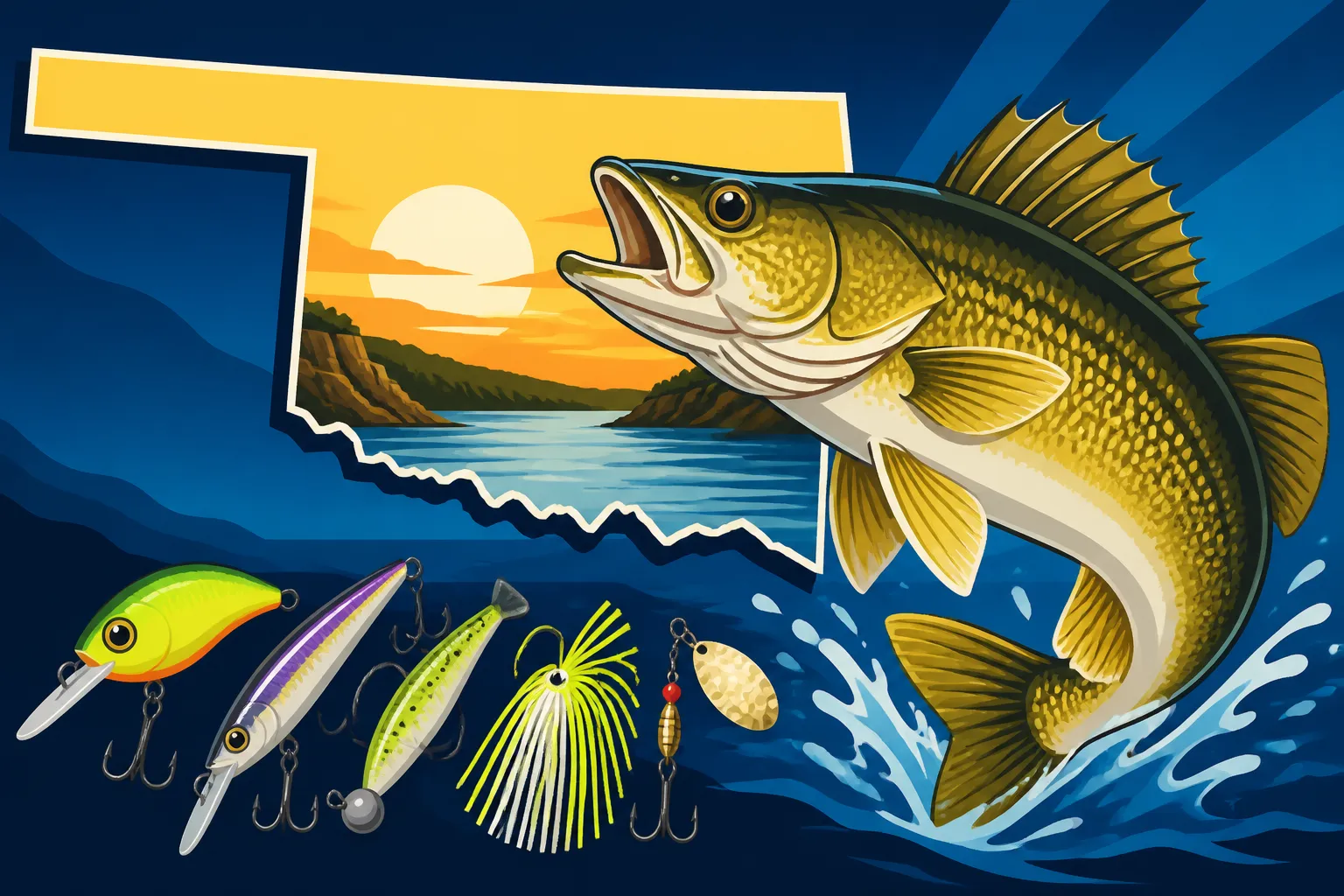
For many Oklahoma anglers, the walleye is a true trophy – a challenging catch known for its elusive nature and incredible table fare. It's easy to get frustrated when you spend hours on the water at places like Canton or Kaw Lake, trying every lure in your box, only to come up empty-handed. But don't throw in the towel just yet! This guide is all about equipping you with the knowledge of the best lures to tempt those finicky walleye lurking in our Oklahoma reservoirs, helping you unlock more successful fishing trips.
Understanding Walleye Behavior to Choose the Right Lure
Before we dive into the specific lures, let's chat a bit about what makes walleye tick. These fish are masters of ambush, preferring low-light conditions and often hugging bottom structure or suspended in deeper water. They have excellent vision in dim light, which is why darker, more subtle colors can sometimes outperform bright ones, especially in clear water or during twilight hours. Knowing this inherent behavior is your first step to selecting a lure that truly speaks to their predatory instincts.
Why Walleye are Picky Eaters
Walleye aren't like some other aggressive species that will hit almost anything that moves. They're often described as finicky, and there's a good reason for it. Their primary diet usually consists of small baitfish like shad, shiners, or even juvenile perch, and they become highly tuned to the size, shape, and movement of these natural prey items. This means your lure needs to mimic these characteristics as closely as possible, both in appearance and action. Throwing something that looks completely alien to their usual forage won't typically get the job done.
Imagine you're trying to fool a smart predator in crystal clear water; every detail matters. The retrieve speed, the vibration of the lure, even the subtle flash it gives off can be the difference between a strike and an ignored offering. It's a game of deception, and the more accurately your lure imitates what they're already eating, the higher your chances of success. That's why having a diverse tackle box tailored for various walleye moods and conditions is so crucial.
Key Factors Influencing Lure Choice
The conditions on the water are rarely static, and what worked yesterday might not work today. Water temperature, clarity, depth, and even light penetration all play a massive role in how walleye position themselves and what they're willing to bite. In colder water, walleye are often lethargic, preferring slower, more subtle presentations. As the water warms, they become more active, and you can often get away with faster retrieves and more aggressive lures.
Wind, current, and cloud cover also influence their behavior. A cloudy day or a chop on the water can make walleye more aggressive and willing to move into shallower water, allowing you to use different lure types than on a bright, calm day. Understanding these environmental cues and adapting your lure choice accordingly is a hallmark of successful walleye anglers. It’s not just about having the "best" lure, but the "right" lure for the moment.
Jigs: The Walleye Angler's Bread and Butter
When you ask any seasoned walleye angler in Oklahoma what their go-to lure is, a jig will almost certainly be at the top of the list. Jigs are incredibly versatile and can be fished in countless ways, making them effective in a wide range of conditions and depths. Their ability to imitate injured baitfish or simply present a tempting morsel makes them irresistible to walleye.
Traditional Lead Head Jigs
The classic lead head jig, often paired with a soft plastic body or live bait, is a perennial favorite. These jigs come in various weights and head shapes, each designed for a specific purpose. A round head jig is great for general-purpose fishing, especially in situations where you want a slow, natural fall. Stand-up jigs, with their flat bottom, are fantastic for presenting your bait upright on the bottom, making it more visible to walleye cruising along the lakebed. For drifting or situations with current, a banana or swimming jig head can cut through the water more efficiently.
When it comes to soft plastic trailers, the options are endless. Twister tails, paddle tails, and grub-style baits are all popular choices, with colors ranging from subtle greens and browns to brighter chartreuses and oranges, depending on water clarity and light conditions. You can find a huge selection of these soft plastics, often in multi-packs, on Amazon, giving you plenty of options to experiment with. The key is to match the hatch as much as possible, mimicking the local baitfish. For instance, if you know the lake has a lot of shad, a silver or white grub on a jig can be deadly.
Jigging with Live Bait
While soft plastics are effective, many walleye purists swear by live bait on a jig. Minnows, shiners, and even nightcrawlers can be rigged onto a jig head, providing natural scent and action that soft plastics sometimes can't replicate. A hooked minnow, lightly jigged along the bottom, can be absolutely deadly, especially in colder water or when walleye are particularly lethargic. The natural swimming motion and distressed appearance of a live minnow is often too much for a walleye to resist.
Imagine you're slowly drifting over a rocky point on Lake Tenkiller. You're using a 1/4 ounce jig head with a lively shiner hooked through the lips, just barely ticking the bottom. That subtle "thump-thump" as the jig bounces, followed by the frantic wiggle of the minnow, is a powerful combination. It's a patient game, but the rewards are often big, especially for those trophy walleye. Be sure to check Oklahoma's Walleye, Sauger and Saugeye Fishing Rules and Limits for specific regulations on bait use in certain areas.
Blade Baits: The Vibration Sensation
Blade baits might look simple, but don't underestimate their effectiveness for walleye. These lures, typically made of metal with a lead weight molded into the bottom, vibrate intensely when retrieved or vertically jigged, sending out irresistible pulses that walleye can detect from a distance. The vibration mimics a struggling baitfish, triggering a reaction strike even from less active fish.
They are particularly effective in deeper water or when fishing over submerged structure. A common technique involves dropping the blade bait to the bottom, then sharply snapping your rod tip up about a foot or two, allowing the lure to helicopter back down on a semi-slack line. Most strikes happen on the fall. Brands like Heddon and Johnson produce popular blade baits. Experiment with retrieve speeds and pauses; sometimes, a slower lift and fall is more productive, while other times a more aggressive snap is needed.
Crankbaits: Trolling and Casting for Success
Crankbaits are another essential weapon in the walleye angler's arsenal, especially when covering large areas of water or targeting specific depths. They come in a dizzying array of shapes, sizes, and colors, each designed to dive to a particular depth and exhibit a unique action. The key with crankbaits is to match the lure's dive curve to the depth where the walleye are holding.
Deep Diving Crankbaits for Trolling
When walleye are holding in deeper water, often suspended off points or along ledges, deep diving crankbaits shine. These lures are designed with a long, aggressive lip that allows them to dive quickly and maintain a consistent depth while trolling. Trolling is a highly effective way to cover vast expanses of water, allowing you to present your lure to numerous fish over a longer period.
Popular deep diving crankbaits include models from Rapala, Berkley, and Bandit, which you can often find in specialized fishing shops or online through retailers like Amazon. Colors should again mimic local forage, with shad patterns, chrome, and firetiger being common choices. The speed of your troll is critical; too fast, and the walleye might not have time to react; too slow, and the lure might not achieve its intended action. Experimentation is key to finding that sweet spot. Remember that the walleye's incredible eyesight in low light means that even subtle, natural hues can be incredibly effective when trolled through clear water.
Shallow and Mid-Diving Crankbaits for Casting
While trolling is often associated with crankbaits, casting them is also highly effective, particularly when walleye move shallower to feed during low light, cloudy conditions, or after a rain. Shallow-diving crankbaits are perfect for working rocky shorelines, weed edges, or submerged timber, where walleye might be ambushing baitfish. These lures have smaller lips and run anywhere from a few feet to about 8-10 feet deep.
Casting allows for a more targeted approach, letting you pick apart specific pieces of structure or cover. A stop-and-go retrieve, or a slow, steady retrieve with occasional twitches, can often entice a strike. Mid-diving crankbaits bridge the gap, reaching depths of 10-15 feet, making them versatile for covering transition areas where walleye often move between shallow and deep water. Look for lures that have a tight wiggle, as walleye tend to prefer that over a wide, sweeping action.
Spinner Rigs and Live Bait Harnesses
Sometimes, simplicity is key, and few presentations are simpler yet more effective than a spinner rig or live bait harness, especially when walleye are spread out or in a neutral mood. These rigs combine the visual attraction of a spinning blade with the irresistible scent and action of live bait, making them a dual threat.
Crawler Harnesses
The most famous of these rigs is undoubtedly the crawler harness, designed specifically to present a nightcrawler in an enticing manner. Typically, a crawler harness consists of a leader with two or three snelled hooks, followed by a clevis and a spinning blade. This rig is often fished behind a bottom bouncer or a weight, allowing it to be trolled or drifted slowly along the bottom, keeping the nightcrawler just above the lakebed where walleye are often found.
The spinning blade creates flash and vibration, calling walleye in, while the wiggling nightcrawler provides the natural appeal. Colors of the blades can vary wildly, from bright chartreuse and orange in stained water to more natural silver, gold, or copper in clear conditions. You can rig a full nightcrawler, or "half" a crawler if they're particularly large, ensuring it flows naturally behind the blade. These rigs are fantastic for covering large flats or subtle humps where walleye might be scattered.
Minnow Rigs and Walleye Spinners
Similar to crawler harnesses, minnow rigs and other walleye spinner setups are designed to present live minnows or even artificial plastic minnows with an added element of flash. These often feature smaller blades and fewer hooks, tailored to the size of a typical minnow. They can be incredibly effective when walleye are keying in on baitfish.
Whether you're slow-trolling these behind a bottom bouncer on Lake Keystone or casting them into current seams on a river, the combination of a spinning blade and a lively minnow is hard to beat. The speed of your retrieve or troll will dictate how much the blade spins and the action of your minnow, so adjust until you find what the walleye are responding to. Don't forget to vary your retrieve by adding pauses or slight accelerations; sometimes, that subtle change is all it takes to trigger a strike.
Soft Plastics and Swimbaits: Modern Walleye Killers
While traditional jigs and live bait setups have their place, modern soft plastics and swimbaits have become incredibly popular and effective for walleye, offering a different profile and action that can be irresistible. The advancements in soft plastic technology mean there's a bait for almost every condition.
Paddle Tail Swimbaits
Paddle tail swimbaits, often rigged on a jig head, create a realistic swimming action as the tail thumps and wobbles through the water. These baits are excellent imitators of baitfish and can be fished in a variety of ways: cast and retrieved steadily, vertically jigged, or even trolled. Their versatility makes them a staple for many walleye anglers.
Colors like shad, perch, or bluegill patterns are typically good starting points, but don't shy away from vibrant chartreuse or white, especially in stained water. The size of the swimbait should match the size of the baitfish in the lake you're fishing. If you're targeting bigger walleye on a reservoir like Lake Eufaula, a 4-5 inch swimbait might be more appropriate, whereas smaller waters might call for a 2-3 inch bait. The subtle vibration and realistic profile of a good paddle tail can often fool even the wariest walleye.
Finesse Worms and Grubs
For those days when walleye are particularly lethargic or in clear, heavily pressured waters, finesse worms and smaller grubs can be the ticket. These soft plastics offer a subtle presentation, often requiring very little movement to entice a bite. Rigged on a light jig head, these can be slowly dragged, hopped, or even dead-sticked along the bottom.
Techniques like the "Ned Rig," featuring a small mushroom head jig with a short, buoyant worm, have gained popularity for their ability to stand up on the bottom and offer a subtle, enticing action. These finesse presentations are about coaxing a bite rather than triggering an aggressive strike. They are perfect for targeting walleye in cold water or when they are suspended in deep clear reservoirs where a more natural, subtle offering is required. You'll find a wide array of these finesse plastics, often by brands like Z-Man or Gary Yamamoto, available through popular online retailers like Amazon.
Other Effective Walleye Lures
While jigs, crankbaits, and spinner rigs cover a lot of ground, there are a few other lure types that can be incredibly effective for walleye in specific situations. Don't overlook these in your quest for those golden-sided beauties.
Lipless Crankbaits
Lipless crankbaits, like the Rattlin' Rapala or Bill Lewis Rat-L-Trap, are known for their loud rattles and tight, vibrating action. While often associated with bass, they can be phenomenal for walleye, particularly during the pre-spawn when fish are aggressive, or when you need to cover water quickly. They're especially good in areas with moderate depth and sparse cover.
These lures are fantastic for searching for active fish. Cast them out, let them sink to the desired depth, and then retrieve with a steady pace, or incorporate a lift-and-fall technique, allowing the bait to flutter and fall, mimicking a dying baitfish. The loud rattles are designed to attract fish from a distance, making them ideal in stained or murky water where visibility is reduced.
Spoons
Spoons, both jigging and casting varieties, can be incredibly effective for walleye, especially when they are holding tight to vertical structure or schooling in deeper water. Jigging spoons, like a Kastmaster or Cotton Cordell C.C. Spoon, are dropped to the bottom and then vertically jigged with sharp snaps, creating a fluttering, dying baitfish action.
Casting spoons, like a Little Cleo or Acme Tackle Kastmaster, are great for covering water and can be retrieved with a wobbling action, mimicking a fleeing baitfish. Spoons are particularly useful in the winter through the ice, or vertically jigged over suspended schools of walleye found on your fish finder. Their flash and erratic movement can provoke reaction strikes from even finicky fish.
Combining Lures with Electronics and Techniques
Having the right lures is only half the battle; knowing how to use them effectively and where to find the fish is just as crucial. Modern electronics, coupled with tried-and-true fishing techniques, will drastically increase your success.
Using Your Fish Finder to Locate Walleye
A good fish finder is an invaluable tool for walleye fishing, especially on Oklahoma's larger reservoirs. Walleye often relate to subtle changes in depth, submerged humps, rocky points, and creek channels. Your fish finder will help you pinpoint these structures and, more importantly, mark the presence of baitfish and the walleye themselves.
Once you've located schools of bait or arches that indicate walleye, you can then select a lure that will effectively reach that depth and tempt those fish. For example, if you see fish suspended at 20 feet over a 30-foot bottom, a deep-diving crankbait or a jigging spoon might be more appropriate than a bottom-hugging jig. Understanding your electronics is like having x-ray vision into the underwater world. For more on this, check out Fish Finder Features That Matter Most on Oklahoma Reservoirs.
Varying Your Presentation and Retrieve
Walleye can be incredibly sensitive to how a lure is presented. What worked five minutes ago might not work now. That's why it's so important to constantly experiment with your retrieve speed, pauses, and movements. Sometimes a slow, steady drag is best, while other times a sharp snap and long pause will trigger a strike.
If you're not getting bites, don't be afraid to change things up. Try different colors, different sizes, or even switch to a completely different lure type. A walleye that ignores a crankbait might smash a jig and minnow. The best walleye anglers are those who are constantly adapting and learning what the fish want on any given day. It's a puzzle, and you're always trying to find the missing pieces.
| Lure Type | Best Conditions | Target Depth | Key Action | Pros | Cons |
|---|---|---|---|---|---|
| Lead Head Jigs | All conditions, especially cold/clear water | Bottom to Mid-column | Hopping, dragging, vertical jigging | Highly versatile, natural presentation, great with live bait | Can be slow to cover water, prone to snagging on bottom |
| Blade Baits | Deep water, vertical jigging, strong vibration | Bottom to Mid-column | Intense vibration, sharp snaps | Attracts fish from afar, good for reaction strikes | Less subtle, can be too aggressive in some situations |
| Deep Diving Cranks | Trolling large areas, suspended fish | Mid-column to Deep | Tight wiggle, consistent dive depth | Covers water quickly, good for active fish | Less effective for stationary presentations, depth limitations |
| Shallow/Mid Cranks | Casting near structure, low light | Surface to Mid-column | Erratic darting, tight wobble | Targeted casting, effective for active fish | Can get snagged in heavy cover, not for deep water |
| Crawler Harnesses | Drifting/trolling large flats, scattered fish | Bottom to Mid-column | Flash & vibration with natural bait | Irresistible scent, covers ground, versatile | Requires live bait, can be messy to rig |
| Paddle Tail Swimbaits | All conditions, mimicking baitfish | All depths, depending on jig | Realistic swimming, thumping tail | Versatile, realistic, durable | Action can be lost with improper retrieve speed |
| Lipless Crankbaits | Aggressive fish, searching, stained water | All depths, cast & retrieve | Loud rattle, tight vibration, rapid sink | Attracts fish from distance, good for reaction strikes | Can be overly aggressive for lethargic fish |
| Spoons | Deep vertical jigging, suspended fish | Deep water, vertical | Fluttering, erratic fall | Triggers reaction strikes, good for schooling fish | Less effective for horizontal retrieves in shallow water |
Mastering the Art of Walleye Fishing in Oklahoma
Ultimately, finding the best lures for walleye at Oklahoma reservoirs comes down to understanding the fish, adapting to conditions, and not being afraid to try new things. What works on Lake Canton might be slightly different from what works on Kaw Lake, so local knowledge and observation are key. Talk to other anglers, pay attention to baitfish patterns, and always keep an open mind.
Remember to always consult the latest Fishing Regulations You Need to Know in Oklahoma and ensure you have your How to Get a Fishing License in Oklahoma before hitting the water. Whether you're a seasoned pro or just starting your walleye quest, the thrill of hooking into one of these prized fish is an experience that keeps us coming back for more. Don't let those elusive walleye intimidate you; with the right lures and a bit of persistence, you'll be enjoying fresh walleye fillets in no time!
Disclaimer
This article is for general informational purposes only and does not constitute professional advice. Laws, prices and regulations vary by location and change over time. Consult a qualified professional for guidance on your specific situation.