Best Time of Year for Paddlefish Snagging Season
Few fishing experiences in Oklahoma are as unique and adrenaline-pumping as paddlefish snagging. Yet, for many anglers, the biggest hurdle isn't the technique or the powerful fight of these prehistoric giants; it's simply knowing when to go. You’ve likely heard stories of incredible hauls or seen pictures of massive paddlefish, but if you've ever tried to plan a trip, you know the prime window can feel elusive. This guide is here to demystify the timing, helping you understand the best time of year for paddlefish snagging season in Oklahoma and how to maximize your chances of success.
Understanding the Annual Paddlefish Snagging Season in Oklahoma
The paddlefish snagging season in Oklahoma isn't just a random set of dates on a calendar; it's a carefully managed period designed to coincide with the natural biological cycle of these incredible fish. These giants are filter feeders for most of the year, sifting plankton from the water, which makes them nearly impossible to catch with traditional hook-and-line methods. However, during their annual spawning migration, they gather in concentrated numbers, making snagging both feasible and ethical under strict regulations.
The Spring Spawning Run: Nature's Call to Action
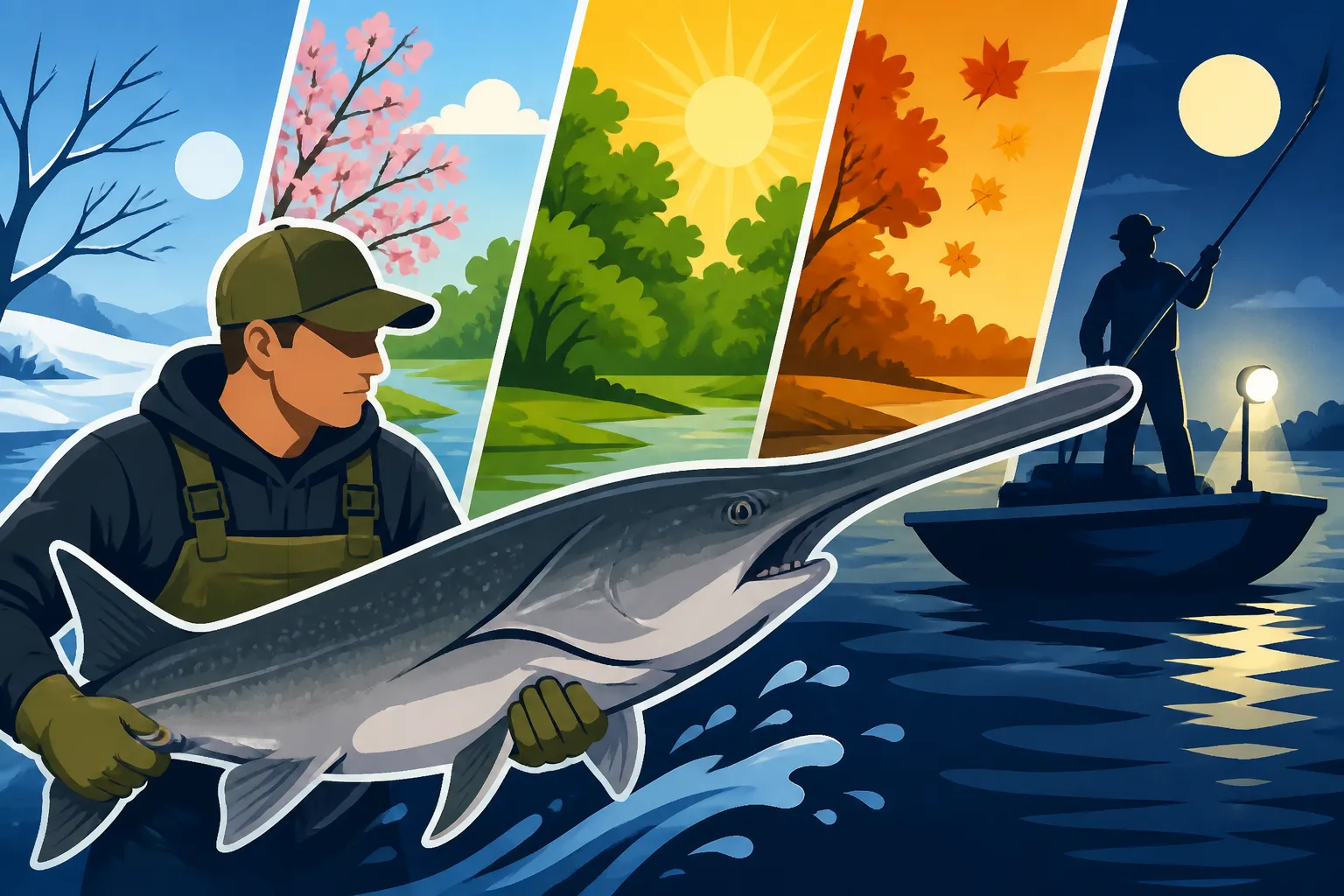
Hands down, the absolute best time for paddlefish snagging in Oklahoma is during their spring spawning run. This is when paddlefish migrate upstream from their deeper lake habitats into the rivers and tributaries, driven by an ancient instinct to reproduce. It's a truly spectacular natural phenomenon, and it's the specific behavior that anglers target. The fish are concentrated in these moving water systems, making them vulnerable to snagging techniques. If you're looking for the peak action, mark your calendar for spring.
Think of it this way: for most of the year, paddlefish are spread out across vast reservoirs, living solitary lives in the depths. But when that biological clock ticks, and the conditions are just right, they all start moving towards specific areas to spawn. It's like a grand, silent parade heading upriver. This congregation is precisely what makes snagging effective, as you're casting into an area where you know a high density of fish is present. Missing this window often means a lot of casting for very little reward, as trying to find scattered fish in a massive lake is like looking for a needle in a haystack.
Official Season Dates and Flexibility
While "spring" is the general answer, the Oklahoma Department of Wildlife Conservation (ODWC) sets specific official season dates for paddlefish snagging each year. These dates are crucial because fishing outside of them is illegal and can result in significant penalties. Typically, you'll find the season running through much of March and April, sometimes extending into early May, particularly for areas like Grand Lake O' the Cherokees. It's not a rigid 365-day season; it's a concentrated effort to ensure sustainability while still offering anglers a chance to participate. You'll want to check the most current ODWC regulations for the precise start and end dates each year, as they can sometimes shift slightly based on management needs.
It's also important to remember that within this official window, the peak action can still vary. Nature isn't a strict clock. A late cold front or a sudden warm spell can push the ideal conditions earlier or later within the official season. This is why paying attention to environmental factors, which we'll discuss next, is just as important as knowing the calendar dates. You might have the official dates down, but if the water isn't right, the fish might not be either. For a deeper dive into these regulations, you might want to read Paddlefish Snagging Season in Oklahoma.
Key Environmental Factors Influencing the Snagging Window
Knowing that the spring spawning run is the best time is a great start, but successful paddlefish snagging often comes down to understanding the subtle cues Mother Nature provides. These cues dictate when the fish are truly active and concentrated, making your efforts much more productive. Ignoring these environmental factors can lead to frustrating days on the water, even if you're within the official season.
Water Temperature and Flow: The Primary Triggers
The two most critical environmental factors for paddlefish snagging are water temperature and river flow. Paddlefish typically begin their upstream migration and spawning activities when water temperatures reach a specific range, often in the low to mid-50s Fahrenheit, gradually increasing. A sudden cold snap can halt their movement, while a consistent warm-up signals "go time."
Equally important, if not more so, is the river flow. Paddlefish are drawn to increased current, especially after significant rainfall. This influx of freshwater into the rivers and tributaries creates the perfect conditions, pushing fish upstream and concentrating them in bottlenecks, tailraces, and areas where the current is strong. High water flow often means active fish. Conversely, if the rivers are low and stagnant during the spring, the spawning run might be weak or delayed, and the fish might not congregate in the typical snagging hotspots. This is why many experienced anglers often monitor stream gauges and dam discharge rates in addition to weather forecasts. They are looking for that sweet spot where rising temperatures combine with strong, consistent current.
Reservoir Levels and Their Impact on Access
While paddlefish primarily spawn in rivers, the levels of the large reservoirs they inhabit for most of the year can also play a role, especially concerning angler access and boat launches. Extremely high lake levels can make certain areas inaccessible or even dangerous due to debris and swift currents. On the other hand, very low lake levels might mean boat ramps are unusable, forcing anglers to seek alternative access points or stick to bank fishing where possible.
Consider Grand Lake O' the Cherokees, a renowned paddlefish hotspot. If the lake is particularly high, some of the traditional snagging spots along the Neosho River arm might be harder to navigate or even submerged. Conversely, if the lake is much lower than normal, you might find certain areas too shallow or difficult to reach by boat. It’s a constant dance with the water levels, and being prepared to adapt your approach is key. Always check local conditions and lake reports before heading out. Sometimes, the best strategy involves focusing on areas that are less affected by fluctuating lake levels, such as specific tailwater sections below dams where water flow is more controlled.
Maximizing Your Chances: Planning for the Peak
You've got the general season in mind and a grasp of the environmental triggers. Now, how do you translate that knowledge into a successful paddlefish snagging trip? It's all about preparation, staying informed, and having the right gear. Don't leave it to chance; a little planning can make a world of difference between a memorable trip and a frustrating blank.
Monitoring Conditions: What to Watch For
Successful paddlefish anglers are often diligent "weather watchers" and "water watchers." They don't just pick a date and hope for the best. Instead, they keep a close eye on several indicators as spring approaches:
- Weather Forecasts: Look for sustained periods of warmer weather, especially overnight lows that stay above freezing. This helps water temperatures climb steadily.
- Rainfall: Pay attention to regional rainfall, particularly in the watersheds that feed into your target rivers. Recent heavy rains can mean increased flow, which is exactly what you want.
- Water Temperature Reports: Many local fishing reports or even some popular marine electronics can provide real-time water temperature readings. Aim for that mid-50s and rising trend.
- Stream Gauges and Dam Discharge Information: For serious anglers, checking online stream gauges (like those provided by the USGS) and dam discharge schedules (from the Army Corps of Engineers) can give crucial insights into river flow and current. A sudden increase in flow often means paddlefish are on the move.
- Local Fishing Reports and Forums: Veteran snag fishermen often share informal updates on local conditions. While you have to sift through the chatter, these can offer valuable real-time intel.
By constantly monitoring these factors, you can often pinpoint the exact weeks or even days when the bite is expected to be hottest. It's a bit like predicting a prime blossom season – you watch for the right blend of sun and warmth. Remember, the paddlefish aren't going to wait for your schedule, so being flexible and ready to go when the conditions are ideal is a huge advantage. You might find useful information on seasonal patterns in Oklahoma Fishing Seasons: A Month-by-Month Guide.
Gear and Prep: Being Ready When the Time Comes
When the prime paddlefish snagging window opens, you want to be ready to hit the water without scrambling for gear. These fish are big, powerful, and require specialized equipment. Your typical bass rod isn't going to cut it. Having your heavy-duty rod, reel, and terminal tackle ready to go means you can capitalize on those perfect conditions immediately. This is where a little upfront shopping comes in handy.
You'll need a heavy-action rod, often 7-8 feet long, capable of handling heavy weights and powerful fish. Coupled with this should be a large, durable casting or spinning reel spooled with strong braided line, usually 60-80 pound test. For terminal tackle, you'll need large treble hooks (often 8/0 to 10/0) and heavy weights, sometimes 8-12 ounces, to get your hooks down to where the fish are holding in the strong current. Many anglers find reliable gear on sites like Amazon, making it easy to stock up on the specific heavy-duty components needed for paddlefish. Ensuring your hooks are sharp and your line is fresh can prevent heartbreak when you finally hook into a monster. For more details on what to bring, check out What Gear Do You Need for Paddlefish Snagging in Oklahoma.
It’s not just about the fishing gear, either. Consider your personal comfort and safety. Spring weather in Oklahoma can be notoriously unpredictable, swinging from warm and sunny to cold and rainy in a single day. Pack layers of clothing, rain gear, and plenty of water and snacks. If you're fishing from a boat, ensure all your Oklahoma Boat Safety Equipment Checklist items are onboard, including life jackets. Preparing thoroughly allows you to focus on the fishing when those prime conditions finally arrive.
Prime Paddlefish Destinations and Their Seasonal Nuances
While paddlefish are found in several Oklahoma waterways, certain locations are renowned for their consistent and impressive runs. Each of these spots might have its own slight variations in terms of peak timing and specific conditions that make for the best snagging. Knowing these nuances can help you fine-tune your trip planning.
Grand Lake O' the Cherokees: A Premier Destination
When most Oklahomans think of paddlefish snagging, Grand Lake O' the Cherokees often comes to mind first. It is arguably the state's most famous and productive paddlefish fishery. The primary snagging areas are typically found in the upper reaches of the lake, particularly where the Neosho and Spring Rivers flow in. These river channels act as natural funnels, concentrating the fish as they move upstream to spawn. The peak season here usually aligns with the general statewide spring window, often hitting its stride in late March and running strongly through April.
Anglers at Grand Lake will often focus on areas like the Twin Bridges area or farther up the river arms. The sheer volume of fish that move into these areas during a strong run can be astounding. However, because it's so popular, these areas can get crowded, especially on weekends during the peak. Knowing Best Time of Year to Snag Paddlefish at Grand Lake, Oklahoma can help you plan your trip to avoid the heaviest crowds or capitalize on less busy weekdays. The ODWC also operates a paddlefish research and processing center near Twin Bridges, which provides a wealth of information and often allows anglers to donate their paddlefish for research, an excellent way to contribute to conservation efforts.
Other Productive Rivers and Tributaries
While Grand Lake is a superstar, it's not the only place to find paddlefish in Oklahoma. Other significant paddlefish populations can be found in systems associated with Keystone Lake and Lake Eufaula, particularly in their respective river arms (Arkansas River for Keystone, Canadian and North Canadian Rivers for Eufaula). The timing in these areas will generally follow the same spring spawning run pattern, but local conditions, like specific dam releases or unique river characteristics, can influence the exact peak.
For instance, the Arkansas River below Keystone Dam can be a hotspot, especially when water is being released. The current creates an inviting environment for migrating paddlefish. Similarly, the river systems feeding into Lake Eufaula can also experience excellent runs. These locations might offer a slightly different angling experience, potentially with fewer crowds than Grand Lake, but they still require the same diligent monitoring of environmental factors. Always consult the latest ODWC regulations and local fishing reports for specific information on these areas. Understanding Which Oklahoma Lake Has the Best Paddlefish Snagging might give you more options to explore.
Here’s a quick overview of key factors for planning your paddlefish snagging trip:
| Factor | Best Conditions for Snagging | Why It Matters | How to Monitor |
|---|---|---|---|
| Season | Early Spring (March-April, potentially early May) | Paddlefish undertake their spawning migration, concentrating in rivers. | ODWC Regulations, local fishing reports. |
| Water Temp | Mid-50s °F and rising | Triggers upstream migration and spawning behavior. | Marine electronics, online reports, personal thermometers. |
| River Flow | Increased flow, especially after heavy rains | Attracts fish upstream, concentrates them in current. | USGS Stream Gauges, Army Corps of Engineers release schedules. |
| Reservoir Levels | Stable to slightly rising for good access | Affects boat ramp usability and access to prime areas. | Local lake level reports, park websites. |
| Weather | Warming trends, stable conditions | Consistent warmth helps maintain fish activity and comfort. | Local weather forecasts. |
Planning a trip around these factors will significantly increase your odds. Remember, paddlefish can grow to incredible sizes, so gear up appropriately for the fight. You can find robust treble hooks and heavy-duty line on Amazon to ensure you're ready. The thrill of landing one of these ancient giants is an experience every Oklahoma angler should try to have! And if you want to know more about what happens after the catch, exploring Is Paddlefish Good to Eat? could be your next read.
Disclaimer
This article is for general informational purposes only and does not constitute professional advice. Laws, prices and regulations vary by location and change over time. Consult a qualified professional for guidance on your specific situation.