Best Time of Year to Catch Sauger Below Dams
It can feel like a real mystery trying to pin down the absolute best time to catch sauger, especially when you're focusing on those productive tailwaters below Oklahoma's dams. You might spend hours casting, hoping to hit that magical window, only to come up empty-handed. It's frustrating when you know these feisty fish are there, but they just aren't biting. This guide is all about demystifying sauger fishing below dams, helping you understand their seasonal patterns so you can maximize your chances of landing a few.
Understanding Sauger Behavior Below Oklahoma Dams
Sauger are fascinating fish, cousins to the walleye, and they thrive in specific conditions. When you're fishing below dams in Oklahoma, you're tapping into a unique ecosystem that attracts these fish in predictable ways, if you know what to look for. The constant current, the release of cooler water, and the abundance of baitfish all play a critical role in making these areas sauger hotspots.
The Allure of Dam Tailwaters for Sauger
Imagine standing below a towering dam, feeling the rumble of water being released, seeing the churning, oxygen-rich currents. This isn't just a picturesque scene; it's a prime hunting ground for sauger. Dams act as natural barriers, concentrating baitfish that get pulled through the turbines or over spillways. This creates an all-you-can-eat buffet that sauger can't resist. The constant flow also brings in cooler, oxygenated water, which is particularly appealing to sauger, especially as surface temperatures rise in the main lake.
Sauger are often found hugging the bottom, using the current to their advantage, much like they would in a natural river system. They're ambush predators, waiting for an unsuspecting shad or minnow to drift by. The turbulent water below a dam also provides cover, making it easier for them to hide and then dart out for a meal. Understanding that dams create these unique current and forage dynamics is your first step to consistent sauger success. It's not just about where you fish, but why the fish are there in the first place. You'll often find sauger stacked in eddies, current seams, and deeper pockets right below the dam. Knowing how to read these subtle shifts in water flow can be the difference between a productive day and a frustrating one.
Sauger's Seasonal Movements and Feeding Habits
Just like us, sauger have different priorities throughout the year. Their movements and feeding habits are heavily dictated by water temperature, spawning cycles, and the availability of food. During certain times of the year, they'll be more active and easier to target below dams. Other times, they might be scattered or less inclined to bite. For instance, cold water tends to concentrate sauger in deeper, more stable areas, often near the dam's outflow. Conversely, warmer water might see them dispersed or seeking out cooler thermoclines further downstream.
Their feeding habits also shift. In colder months, they might be lethargic, preferring slower presentations of bait or lures, conserving energy. As water temperatures warm up, they become more aggressive, willing to chase down faster-moving baits. Understanding these nuances is key. For example, during the pre-spawn period, they'll be gorging themselves, preparing for the rigors of reproduction, making them incredibly active feeders. Post-spawn, they might be recovering and a bit more finicky. By tuning into these natural rhythms, you can adjust your techniques and bait choices to match their mood. You can learn more about how different fish species behave by exploring articles like Oklahoma Fishing Seasons: A Month-by-Month Guide.
Prime Seasons for Sauger Success: Fall and Winter Domination
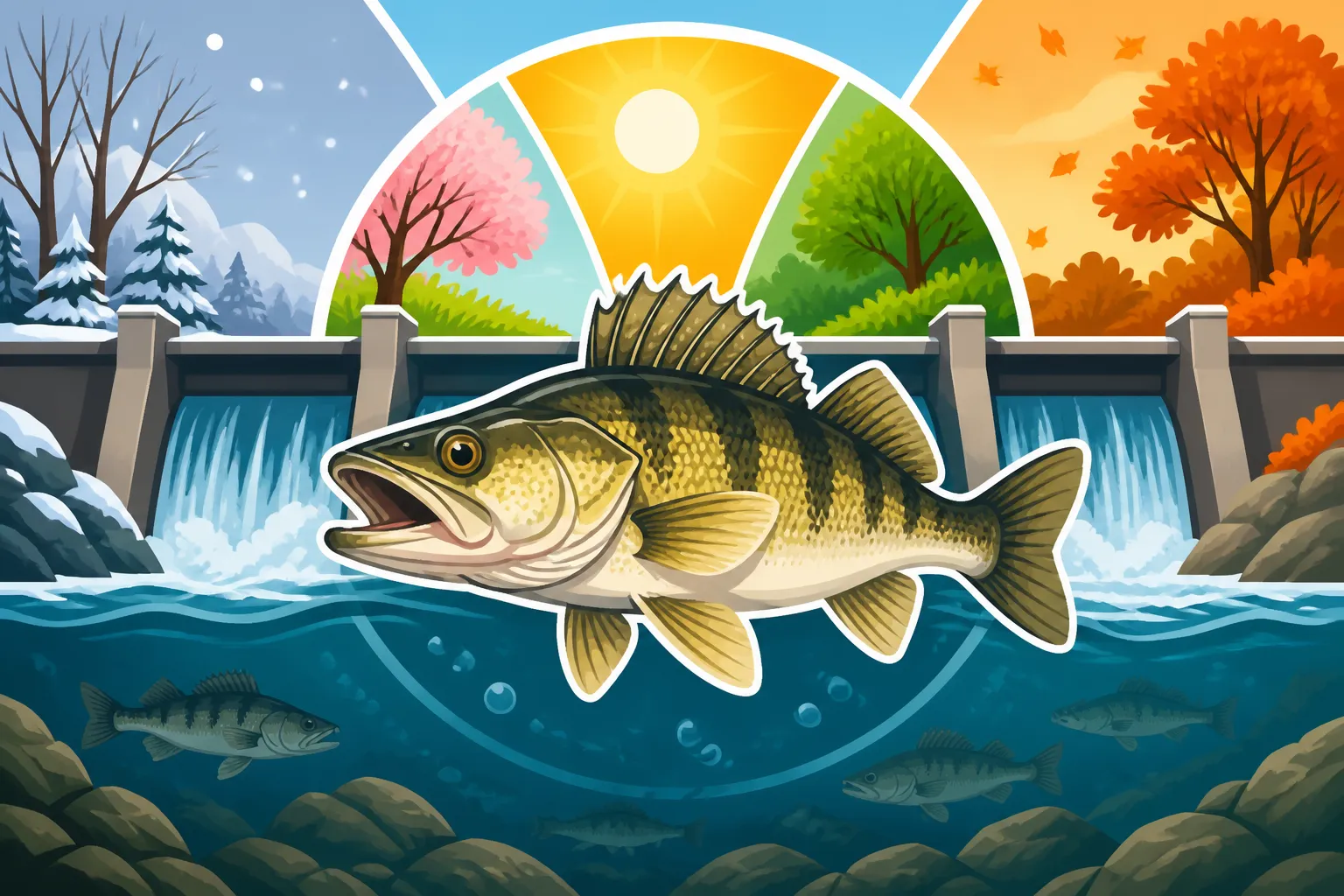
If you're looking for the absolute best time to target sauger below Oklahoma's dams, you're going to want to bundle up. Fall and winter are undeniably the peak seasons for these cool-water dwellers. This is when sauger really shine, concentrating in predictable areas and often feeding aggressively as they prepare for or recover from the spawn.
Fall: The Pre-Winter Feast
As the scorching Oklahoma summer starts to fade and the first cool fronts sweep through, a magical transformation begins in our lakes and rivers. Water temperatures begin to drop, signaling to the sauger that it's time to put on the feedbag before the harshness of winter fully sets in. This period, typically from late September through November, is prime time for sauger below dams. The fish are actively gorging themselves, building up fat reserves, and often gathering in larger schools.
The reduced surface temperatures in the main lake mean that the tailwaters, with their consistent flow and oxygen levels, become even more attractive. Baitfish are also feeling the chill and often seek refuge in these slightly warmer, current-rich zones, creating a perfect storm for sauger anglers. You'll find sauger transitioning from scattered summer patterns to more concentrated schooling behavior. They'll often hold in deeper current seams, behind submerged structures, or in the scour holes directly beneath the dam. Look for those distinct "breaks" in the current where the water slows just enough for a sauger to lie in wait without expending too much energy. Using jigs tipped with minnows or soft plastics can be incredibly effective during this time, allowing you to probe the bottom slowly and thoroughly. Remember, falling water temperatures mean the fish are less likely to chase aggressively, so a more deliberate presentation is usually best.
Winter: Challenging but Rewarding
Many anglers pack away their gear once winter truly sets in, but those dedicated few who brave the cold often find themselves handsomely rewarded with sauger. From December through February, when air temperatures are often freezing and water temperatures hover in the low 40s to low 50s, sauger are at their most concentrated and predictable below dams. They're cold-blooded, so their metabolism slows down, but they still need to feed. The key is to present your bait right in front of them, as they won't go far to chase a meal.
The tailwaters offer relatively stable conditions compared to the main lake, preventing extreme temperature fluctuations. Sauger will often stack up in the deepest pockets and current breaks, seeking refuge from the strongest currents and maintaining a more comfortable temperature. This is where a good fish finder can be invaluable to pinpoint those deeper holding zones. Vertical jigging directly below the boat or from the bank in specific eddies is a highly effective technique. Small, heavy jigs, spoon lures, or blade baits presented slowly and methodically often provoke a strike. Don't be afraid to experiment with brighter colors on overcast days or in stained water, as sauger have excellent low-light vision. Dress warmly, bring a thermos of hot coffee, and be patient – the bites can be subtle, but when you hook into a sauger in the dead of winter, it's an exhilarating fight. Many anglers find quality cold weather gear on Amazon invaluable for these trips. For more cold-weather strategies, check out Winter Catfishing Techniques in Oklahoma, which shares similar principles of slow presentations and targeting deep holes.
Spring and Summer: The Less Productive Months (But Still Possible!)
While fall and winter steal the show for sauger fishing below Oklahoma dams, that doesn't mean you should completely write off spring and summer. These seasons present different challenges and require adjusted strategies, but you can still find sauger if you know where to look and how to adapt. It's just a matter of tempering your expectations and understanding their altered behavior.
Spring: Spawning and Transition
Spring brings a flurry of activity to Oklahoma's waters, but for sauger, it's a period of transition centered around their spawning ritual. Typically, sauger will spawn when water temperatures reach the upper 40s to mid-50s, usually from late February through April, depending on the specific dam and water conditions. During this time, their focus shifts from feeding to reproduction, and they can be found moving upstream into rocky areas of rivers and tributaries, or even directly below dams if the conditions are right for their eggs to adhere to gravel and rock.
Immediately after the spawn, sauger can be lethargic and dispersed as they recover. The post-spawn period often sees them moving back into deeper, cooler dam tailwaters, but their feeding drive isn't as intense as it was in the fall. You might catch a few as bycatch while targeting other species like white bass or crappie. However, they aren't as concentrated or aggressive as they will be later in the year. If you're targeting them specifically, focus on the immediate post-spawn when they start to regain some energy. Small crankbaits, jigs, and live minnows can still tempt them. It's a game of patience and covering water, rather than finding large, actively feeding schools. You might find some helpful insights into understanding seasonal shifts in fish behavior in How Water Temperature Affects Fish Feeding Habits.
Summer: Deep Water Retreat
As Oklahoma's temperatures soar and lake waters warm significantly, sauger fishing below dams becomes the most challenging. Sauger are cool-water fish, and they generally don't tolerate high temperatures well. During the summer months, from late May through August, sauger will seek refuge in the coolest, most oxygenated water available. Below dams, this often means they will hug the deepest parts of the tailrace, or move further downstream to find areas where cooler water persists.
They become less active feeders, conserving energy in the heat. Their metabolism slows, and they're less likely to chase baits vigorously. If you are determined to catch sauger in the summer, you'll need to focus on vertical presentations in the deepest holes and channels directly below the dam, especially during periods of water release when cooler water is being drawn from the lake's depths. Night fishing can also sometimes be productive, as the surface water cools slightly and baitfish may become more active. Heavy jigs, deep-diving crankbaits, or even bottom-bouncing rigs with live bait might tempt a lethargic sauger. However, be prepared for slower action and smaller numbers compared to the cooler months. It's more of a strategic hunt than an easy haul.
Essential Tactics and Gear for Dam Sauger Fishing
Successfully catching sauger below dams isn't just about knowing when to go; it's also about knowing how to fish and what gear to bring. The unique environment of a dam tailwater—with its strong currents, varied depths, and specific fish behavior—demands particular approaches. Getting your presentation right can make all the difference.
Bait, Lures, and Presentation
When it comes to tempting sauger, variety is key, but some options consistently outperform others below dams. Given their preference for holding near the bottom and ambushing prey, lures and baits that can reach and stay in the strike zone are crucial.
Here's a breakdown of effective options:
- Jigs: These are perhaps the most versatile and effective sauger lures. A jig head (1/4 to 3/4 ounce, depending on current strength) tipped with a soft plastic grub, a twister tail, or a live minnow is a deadly combination. The weight helps you get to the bottom quickly in current. Colors like chartreuse, white, orange, and darker greens are often productive. The key is a slow, methodical retrieve, bouncing or dragging the jig along the bottom. You can find a wide array of jig heads and soft plastics on Amazon.
- Live Bait: Minnows are hands down the best live bait for sauger. They perfectly mimic the natural forage in dam tailwaters. Hook them through the lip or back and present them on a simple jig head or a three-way swivel rig (often called a "Carolina rig" or "bottom bouncer" in these situations) that keeps them near the bottom. The natural movement of a live minnow in the current is often irresistible to sauger, especially in colder water when they're less inclined to chase.
- Blade Baits: These vibrating metal lures are excellent for vertical jigging directly below the boat or from the bank. Their tight wiggle and flash can attract sauger from a distance, and their weight gets them down fast. Snap them up and let them fall on a semi-slack line to maximize their action.
- Spoons: Similar to blade baits, heavy jigging spoons can be effective, especially when dropped into deep holes. They mimic dying baitfish as they flutter down.
- Crankbaits: While not always the primary choice below dams, deep-diving crankbaits can be effective when cast downstream and slowly retrieved, especially in areas with less turbulent current. Look for models that dive to the depth where you expect sauger to be holding.
The presentation itself is paramount. Sauger are often hugging the bottom, so your bait needs to be there too. Use the lightest weight possible to maintain bottom contact in the current. A "controlled drift" where your bait moves naturally with the current but stays near the bottom is often ideal. For more on specific lure choices, you might find tips in Best Lures for Walleye at Oklahoma Reservoirs and Best Bait for Walleye in Deep Reservoirs, as many of these principles apply directly to their sauger cousins.
Reading the Water and Current
Fishing below a dam means constantly interpreting the water, and this is where many anglers struggle. The current isn't uniform; it creates specific holding patterns for fish. Understanding how to read these subtle cues can drastically improve your catch rate.
Here's what to look for:
- Current Seams: These are lines where fast-moving water meets slower water. Sauger will often position themselves in the slower water, just outside the main current, waiting for baitfish to be swept past. Cast into the faster water upstream of the seam and let your lure drift into the slower water.
- Eddies: These are swirling pockets of slower or even reverse current, often found behind large rocks, bridge pilings, or other submerged structures. Eddies provide a perfect resting and ambush point for sauger. Cast into the main current just above the eddy and let your bait swing into the calmer water.
- Scour Holes: The powerful outflow from dams often digs out deep holes directly below the structure. These scour holes are prime sauger habitat, especially in winter, offering deep, stable water. Using your fish finder to locate these depressions is crucial.
- Water Release Schedules: The Oklahoma Department of Wildlife Conservation (ODWC) often publishes generation schedules for dams. Knowing when water is being released (and how much) can be a game-changer. Increased flow can mean increased feeding activity, but it also means stronger currents and sometimes more debris. Adjust your weight accordingly.
- Turbidity: Clearer water often calls for more natural bait colors, while stained or muddy water might warrant brighter, more contrasting colors. After heavy rains, the water can become very turbid, sometimes making fishing difficult, but sauger can still be caught if you adjust your presentation.
For boat anglers, a good trolling motor with GPS Spot-Lock is a blessing for holding position in strong currents, allowing you to focus on fishing rather than constantly battling the drift. For bank anglers, identifying accessible current breaks and eddy lines is vital. Observing other successful anglers can also offer clues, but remember that conditions are constantly changing. Fishing below dams is dynamic; you need to be prepared to adapt your approach based on what the water is telling you. A table comparing the sauger's seasonal preferences can be a helpful quick guide:
| Season | Optimal Water Temperature | Preferred Depth | Feeding Activity | Recommended Lures/Bait | Key Tactics |
|---|---|---|---|---|---|
| Fall | 50-60°F (10-15°C) | Mid to Deep | High | Jigs (minnows/plastics), Blades | Slow current drifts, bottom bouncing |
| Winter | 40-50°F (4-10°C) | Deepest | Moderate | Heavy Jigs (minnows), Spoons | Vertical jigging, precise placement |
| Spring | 45-55°F (7-13°C) | Varied (Spawning) | Moderate/Finicky | Jigs, Small Crankbaits, Minnows | Targeting structure, post-spawn recovery |
| Summer | 65°F+ (18°C+) | Deepest (Relief) | Low | Heavy Jigs, Deep Cranks, Live Bait | Night fishing, direct dam outflow |
In conclusion, if you're serious about catching sauger below Oklahoma's dams, set your sights on the cooler months of fall and winter. These seasons consistently offer the best conditions and the most concentrated fish. While spring and summer present tougher challenges, with the right techniques and a deep understanding of sauger behavior and current dynamics, you can still find success. Don't be afraid to experiment with different baits and presentations, and always pay close attention to what the water is telling you. A well-placed jig in a deep, current-broken hole during a chilly November evening can turn a frustrating day into a memorable catch. Get out there, brave the elements, and enjoy the thrill of sauger fishing!
Disclaimer
This article is for general informational purposes only and does not constitute professional advice. Laws, prices and regulations vary by location and change over time. Consult a qualified professional for guidance on your specific situation.