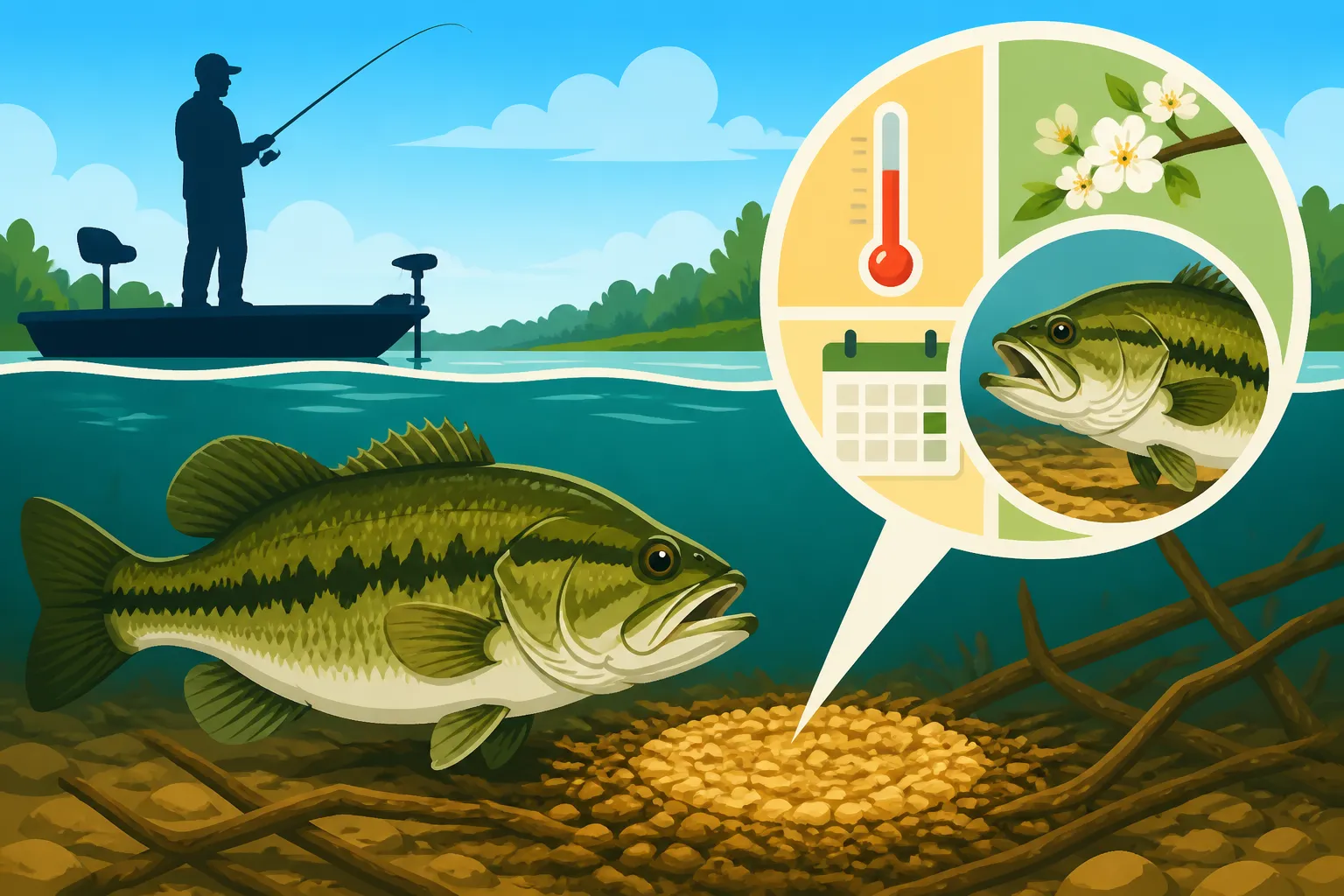
How to Tell When Bass Are Spawning in Oklahoma Lakes
Trying to figure out exactly when bass are hitting their spawning cycle in Oklahoma lakes can feel like a guessing game, leaving you wondering if you're even on the water at the right time. It's a common frustration, especially when you're eager to capitalize on one of the most exciting times to fish. This guide is dedicated to helping you decipher the subtle and not-so-subtle clues that tell you exactly when and where these fish are getting ready to spawn, are actively spawning, or have just finished up.
The Critical Role of Water Temperature in Bass Spawning
When it comes to bass fishing, especially during the spring, water temperature isn't just a factor; it's the factor that dictates everything from feeding patterns to spawning activities. Bass are cold-blooded creatures, which means their metabolism and behavior are directly tied to the temperature of the water around them. As the days lengthen and the sun gets stronger in Oklahoma, the warming water acts like a biological alarm clock, signaling to bass that it's time to begin their annual reproductive cycle.
One of the biggest mistakes anglers make is assuming a single "magic temperature" for the spawn across all bass species. While there are general ranges, each species has its own preferred window, and even within a species, local conditions can cause slight variations. Understanding these nuances is key to truly predicting the spawn, rather than just reacting to it.
Ideal Temperature Ranges for Different Bass Species
Oklahoma is home to several popular bass species, and each one has its own specific water temperature sweet spot for spawning. Knowing these ranges can significantly narrow down your search and improve your timing. It's not about hitting one exact degree, but rather a gradual progression into and through a particular temperature band.
For largemouth bass, which are arguably the most popular game fish in Oklahoma, the spawn typically kicks off when water temperatures consistently reach the mid-60s Fahrenheit, usually somewhere between 60 and 70 degrees. This is the range where you'll start seeing them move shallow, preparing their beds. Think of those sunny, protected coves and shallow flats. If the water dips back down unexpectedly, they might pull back to slightly deeper water, only to return when the warmth stabilizes. This period of temperature stability is often more important than hitting a specific degree.
Smallmouth bass, often found in the clearer, rockier waters of eastern Oklahoma lakes like Tenkiller Ferry Lake, prefer slightly cooler temperatures. Their spawning window usually falls between 55 and 65 degrees Fahrenheit. Because they often inhabit areas with more current or cooler spring-fed creeks, their spawn might start a bit earlier than largemouth in the same general region. They're also notorious for being a bit more sensitive to sudden temperature drops, often retreating to deeper rock piles if a cold front pushes through. For more on these incredible fighters, check out our guide on Smallmouth Bass in Oklahoma: What Anglers Should Know.
Then we have spotted bass, sometimes called Kentucky bass, which are found in many of the same lakes as largemouth but often prefer steeper banks, rocky points, and more open water structure. Their spawning temperature range tends to overlap with largemouth, typically from the low 60s to low 70s Fahrenheit. However, they sometimes spawn a little later than largemouth in the same body of water, or in slightly different areas that warm up or cool down at a different pace. Understanding these subtle differences for each species is what truly separates consistent anglers from those who only find success by chance. For a deeper dive into these unique fish, take a look at our article on Spotted Bass Fishing in Oklahoma: A Complete Guide.
How to Measure Water Temperature Accurately
You can't just guess the water temperature; you need reliable tools. A good thermometer is an essential piece of equipment for any serious angler, especially during the spring spawn. There are a few different types you can use, each with its own advantages.
One of the simplest and most cost-effective options is a portable liquid thermometer, often found in a protective casing you can tie to your boat or a piece of rope and lower into the water. These are usually accurate enough for general fishing purposes, and you can pick one up easily on Amazon. For more advanced anglers, a modern fish finder will almost always include a built-in water temperature sensor, providing real-time readings directly to your display. This is incredibly convenient as you cruise around the lake, allowing you to quickly identify areas that have reached that prime spawning temperature.
When taking readings, remember that surface water temperature can be influenced by direct sunlight or recent rain. For the most accurate assessment, try to measure the temperature at the depth where you expect the bass to be staging or spawning – usually just a few feet below the surface in shallow coves. Take multiple readings in different parts of the lake, especially when moving from main lake points into protected creek arms. You’ll often find significant variations, and those warmer pockets are usually where the action will be heating up first. This detailed approach to temperature can help you immensely with your Spring Bass Spawn Timing in Oklahoma.
Visual Cues and Spawning Bed Identification
Beyond the invisible world of water temperature, bass give us plenty of visual clues when they are in full spawning mode. Learning to spot these signs on the water can turn a slow day into a banner day, giving you a clear indication of where to focus your efforts. It requires keen observation and understanding what you're looking for, but once you train your eye, these signs become unmistakable.
The act of spawning itself is a visible event, particularly for largemouth bass, which tend to be more accessible in shallower water. However, even smallmouth and spotted bass leave tell-tale signs if you know where to look. It's like finding a needle in a haystack, but the hay is perfectly arranged and glowing.
Spotting Nests in Shallow Water
The most obvious visual sign of bass spawning activity is the presence of spawning beds, also known as nests. Bass construct these beds by clearing out circular depressions on the bottom, typically ranging from 1 to 3 feet in diameter. They use their tails to fan away silt, debris, and smaller rocks, exposing cleaner, often lighter-colored substrate beneath. This creates a noticeable "lighter spot" on the lakebed, a perfect contrast against the surrounding darker bottom.
You'll most often find these beds in shallow, protected areas of lakes and ponds. Think about north-facing banks that get maximum sun exposure, quiet coves, or the backs of creek arms where the water is typically warmer and less affected by strong winds or boat traffic. Look for hard bottom areas like gravel, sand, or small rocks, as bass prefer these substrates for their eggs to adhere to. If you're fishing a lake with lots of submerged timber or brush, beds might also be found near these structures, using them for additional protection. A good pair of polarized sunglasses is invaluable here, cutting glare and allowing you to peer into the water column. You can find some excellent options on Amazon that make spotting these subtle signs much easier.
When you're out on the water, try to position your boat or yourself (if bank fishing) so the sun is behind you, illuminating the shallow water. This helps minimize glare and makes the lighter spots on the bottom more visible. Sometimes, the beds will be very close to the surface, practically within casting distance from the bank. Other times, they might be in 3-5 feet of water, especially in clearer lakes. Remember that sometimes the "spot" isn't perfectly round; it might be an irregular shape where the bass has worked the bottom. The key is that distinct contrast in color and texture.
Observing Bass Behavior on Beds
Once you've identified a potential bed, the next step is to look for the bass themselves. During the spawn, their behavior is distinctly different from normal feeding or schooling patterns. The male bass is the primary architect and guard of the nest, meticulously fanning the eggs and protecting them from predators. You'll often see a male bass hovering directly over the bed, sometimes circling it slowly. They're usually quite aggressive during this period, willing to strike anything that comes too close to their offspring, which makes them vulnerable to various bass fishing techniques by season.
The female bass will visit the bed to lay eggs and then typically leave, sometimes returning for subsequent clutches, but often moving to slightly deeper water to recover. If you see a larger bass, especially one that looks like it could be carrying eggs (often called a "fat mama"), lingering near a bed or moving in and out of a shallow area, it’s a strong indicator that the spawn is either ongoing or imminent. The males are the ones you'll typically see locked onto the bed, displaying intense territorial behavior.
Their reactions to baits are also a dead giveaway. Spawning bass aren't necessarily feeding; they're defending. They might not eat your lure, but they will aggressively strike it to remove the perceived threat. This is why slower presentations and lures that linger in the strike zone, like a Texas rig or a Carolina rig, are often so effective. You'll see the fish dart at your bait, mouth it, or even just nose it away. It’s not always a hard strike, but a clear sign that you’ve invaded their territory. Understanding these behaviors can provide crucial insights for your Pre-Spawn Bass Fishing Techniques Explained.
Pre-Spawn and Post-Spawn Indicators
The bass spawn isn't just a single event; it's a phase with distinct pre-spawn and post-spawn periods, each offering unique fishing opportunities and behavioral tells. Recognizing these stages can help you adapt your approach and find success when the fish aren't locked onto beds. It’s all part of the larger annual cycle, and each part has its own set of rules.
Think of it as the lead-up to the big event, and then the recovery period afterward. Both are crucial times for anglers, but they demand different strategies and a keen eye for different sets of clues. The bass are still present and catchable, but their motivations and locations shift significantly.
Aggressive Pre-Spawn Feeding Frenzy
Before bass fully commit to building and guarding beds, they enter a crucial "pre-spawn" phase. This is arguably one of the most exciting times to fish because bass are typically at their heaviest weight of the year, and they are incredibly aggressive. Their primary goal during this period is to gorge themselves, building up energy reserves for the strenuous act of spawning.
You'll notice bass moving from deeper wintering grounds towards shallower staging areas, often along points, secondary creek channels, and the edges of spawning flats. They'll hold on submerged structure like stumps, rocks, or brush piles in 5 to 15 feet of water, waiting for those water temperatures to stabilize in the upper 50s. During this time, they’re not yet concerned with reproduction; they’re just hungry. This is when you'll often encounter schools of larger bass actively chasing baitfish.
The aggressive feeding is your biggest clue. Instead of subtle bites or defensive strikes, you'll feel powerful, confident takes. Reaction baits like lipless crankbaits, spinnerbaits, and jerkbaits become incredibly effective as bass are looking for a big meal. If you're consistently catching chunky bass that are full of fight and showing no interest in staying on one spot, you're likely in the pre-spawn. This is often the period when anglers catch some of the biggest bass of the year. Our article on Best Bass Lures for Spring Fishing dives deeper into what to use during this exciting time.
Post-Spawn Guarding and Recovery
Once the eggs have been laid and fertilized, the male bass remains on the bed, meticulously guarding the eggs and fry until they hatch and disperse. This is the stage where you'll see those defensive strikes mentioned earlier. The female, having expended massive amounts of energy, typically moves off the bed. She'll often retreat to nearby deeper cover, like brush piles, submerged timber, or even deep docks, to recover from the ordeal. This is known as the "post-spawn" funk or recovery period.
During this recovery phase, female bass can be tough to catch. They're often lethargic, sore, and not actively feeding. However, after a few days to a week, they will start to feed again, though usually not with the same intensity as the pre-spawn. They'll often target smaller, easier meals, and will still gravitate towards cover. If you're catching male bass off beds, but not seeing any larger females, it's a strong indicator that the spawn is either in full swing or has just concluded, and the females are in recovery.
The transition from catching active, pre-spawn fish to catching either defensive males or lethargic, recovering females is your key indicator. As the water continues to warm into the 70s and 80s, the post-spawn will fully transition into summer patterns, with bass scattering more and often seeking out thermoclines or deeper offshore structure. Understanding this period is crucial for your Post-Spawn Bass Fishing Techniques Explained.
Where to Look for Spawning Bass in Oklahoma
Knowing when bass spawn is only half the battle; knowing where to look is the other, equally critical piece of the puzzle. Oklahoma's diverse aquatic landscapes, from vast reservoirs to smaller private ponds, offer a variety of habitats, but bass consistently seek out similar conditions for successful reproduction. Local knowledge and careful observation of specific areas will always be your best friend.
Prime Locations in Oklahoma Lakes
Bass, particularly largemouth, gravitate towards specific types of locations when it's time to spawn. Their choice of real estate isn't random; it's driven by survival. They need stable, warm water, protection from predators, and a suitable substrate for their eggs.
Shallow, protected coves and creek arms are consistently prime spawning grounds. These areas warm up faster due to less wind exposure and often shallower depths. Look for the backs of these coves, especially those with northern exposure, which receive more direct sunlight throughout the day. The warmer water here is often the first to reach those critical temperature ranges.
Hard bottoms are non-negotiable. Bass need sand, gravel, small rocks, or firm clay for their beds. Avoid areas with deep, mucky silt, as eggs will suffocate. If you're in a clear water lake, you can often visually confirm the bottom composition. In stained water, you might need to use a jig or a Carolina rig to feel the bottom with your rod tip.
Structure and cover are also important for protection. While a bass might make a bed in an open area, they often prefer to have some form of cover nearby – a submerged log, a brush pile, a dock pilings, or even an overhanging tree limb. This provides shade and a quick escape route for the guarding male. On some lakes, you'll even find beds tucked up against seawalls or boat ramps. For excellent ideas on specific bodies of water, our guide to Best Bass Lakes in Oklahoma During the Spring Spawn is a fantastic resource. Many of Oklahoma’s top fisheries like Lake Eufaula or Grand Lake O' the Cherokees have vast shallow flats and protected coves that become bass nurseries each spring.
Understanding Lake-Specific Differences
While general principles apply, every Oklahoma lake has its own unique characteristics that influence the spawn. A large, deep reservoir like Lake Texoma might have different spawning zones than a shallower, more timber-filled lake like Lake Eufaula. The clarity of the water also plays a huge role.
In clearer lakes, bass might spawn slightly deeper to avoid direct sunlight exposure and predators. They might also be more skittish, requiring longer casts and a more subtle approach. You'll often be able to see their beds from a distance, which is an advantage for locating them but also means you need to be stealthy.
In stained or muddy water lakes, bass will typically spawn shallower, sometimes in just a foot or two of water, to maximize light penetration for their eggs. Visual identification of beds can be much harder here, so you'll rely more on feeling the bottom with your lure and watching for active fish movement. In these conditions, understanding how Water Temperature and Oklahoma Fishing Timing intersect is crucial.
River systems also present unique spawning challenges. Bass in rivers and streams will seek out quieter backwaters, oxbows, and protected eddy areas away from the main current. The flow of the river can impact water temperature and clarity more rapidly, so you need to be extra vigilant about changes.
The following table summarizes key spawning indicators for Oklahoma's most popular bass species:
| Bass Species | Ideal Water Temp (F) | Preferred Bottom Type | Typical Depth (feet) | Key Visual/Behavioral Cues |
|---|---|---|---|---|
| Largemouth Bass | 60-70° | Sand, Gravel, Firm Clay | 1-5 | Visible light-colored beds, male actively guarding, aggressive defensive strikes |
| Smallmouth Bass | 55-65° | Rocks, Gravel | 3-8 | Less visible beds (deeper/rockier), territorial males, often found in clear water |
| Spotted Bass | 60-70° | Gravel, Clay, Rocks | 2-7 | Similar to Largemouth but often on steeper banks, active males |
Remember, observation is key. If you're seeing signs like baitfish activity in shallow water, turtles basking on logs (a sign of warming water), or even other anglers targeting specific shallow areas, these are all clues. Use your time on the water to explore, observe, and piece together the puzzle of the bass spawn in your favorite Oklahoma fishing spot. This diligent approach will not only help you catch more fish but also deepen your understanding of the intricate world of Oklahoma Fishing.
Disclaimer
Fishing regulations and conditions can change. Always consult the latest Oklahoma Department of Wildlife Conservation rules and regulations before heading out on the water. This guide is for informational purposes only and does not constitute legal advice.