Best Trailer Setup for Launching a Boat at an Oklahoma Ramp
There's nothing quite as frustrating as pulling up to your favorite Oklahoma fishing ramp, ready for a fantastic day on the water, only to realize your boat trailer isn't quite up to snuff. Whether it's a flat tire, a broken winch, or lights that refuse to cooperate, a problematic trailer can turn a promising morning into a stressful ordeal. This guide is here to walk you through setting up your boat trailer for seamless launching and retrieval at any Oklahoma lake, ensuring you spend less time fumbling at the ramp and more time reeling in fish.
The Foundation: Getting Your Trailer Ready Before You Leave Home
Before you even think about hitting the highway toward Lake Eufaula or Grand Lake, a thorough check of your trailer is paramount. It's easy to overlook these details in the excitement of a fishing trip, but trust me, a few minutes of prevention at home can save you hours of heartache on the road or at the ramp.
Tire Health and Pressure: The Unsung Heroes
Just like your truck, your trailer's tires are crucial, perhaps even more so because they often sit for long periods. You wouldn't hit the road in your tow vehicle with low tires, and your boat trailer deserves the same attention. Always check the tire pressure before each trip, especially if you haven't used the trailer in a while. Underinflated tires can lead to excessive heat buildup, increasing the risk of a blowout, which is the last thing you want on a hot Oklahoma summer day on the way to Lake Texoma.
Inspect the tread for wear and tear, and look for any cracks in the sidewalls, which can be a sign of aging or sun damage. Don't forget to check your spare tire, too! Many anglers have learned this lesson the hard way, discovering their spare is flat or dry-rotted only when they desperately need it. Having a properly inflated spare and the right tools for a tire change can make all the difference, especially if you're heading to a remote fishing spot.
Bearing Lubrication and Maintenance: Smooth Rolling
Your trailer's wheel bearings are constantly exposed to water when you launch and retrieve your boat, making them highly susceptible to corrosion and wear. Properly greased bearings ensure your wheels spin freely and prevent costly roadside breakdowns. Before heading out, feel the hubs on your trailer. They should be cool to the touch. If one feels noticeably warmer than the others, it could indicate a bearing issue that needs immediate attention.
Regular maintenance involves checking and repacking the bearings with marine-grade grease, especially if you frequently submerge your trailer in water. Many modern trailers come with bearing protectors, which help keep grease in and water out, extending their lifespan. However, even with these, it's wise to visually inspect them and ensure they're adequately lubricated. A frozen wheel bearing can lead to a catastrophic failure, leaving you stranded on the side of an Oklahoma highway.
Light and Wiring Checks: Staying Legal and Safe
Functional trailer lights aren't just a courtesy; they're a legal requirement and a critical safety feature. Before every trip, hook up your trailer and test all the lights: brake lights, turn signals (left and right), and running lights. Corrosion in the wiring connections, especially where the harness plugs into your vehicle, is a common culprit for light failures, particularly after repeated exposure to water.
Check the wiring itself for any frayed sections or exposed wires that could short out. Often, a quick spray of electrical contact cleaner on the connections can resolve intermittent issues. Carrying a spare set of trailer lights or at least a repair kit can be a lifesaver, especially if you plan on driving at dusk or dawn. An Oklahoma Highway Patrol officer will certainly notice non-functional trailer lights, and a citation is a sure way to put a damper on your fishing trip.
Essential Components for a Smooth Launch and Retrieval
Once you've ensured your trailer is road-ready, it's time to focus on the components that directly impact your experience at the boat ramp itself. These parts ensure your boat stays securely on the trailer during transport and slides off and on with minimal effort.
Winch, Strap, and Bow Stop: Securing Your Investment
The winch, winch strap (or cable), and bow stop are the primary safety mechanisms that keep your boat firmly attached to the trailer. The winch should operate smoothly, allowing you to easily pull your boat onto the trailer and secure it tightly against the bow stop. Regularly inspect the winch strap or cable for any fraying, cuts, or kinks. A damaged strap can fail unexpectedly, potentially causing your boat to slide off the trailer, a truly nightmare scenario.
The bow stop provides a solid point of contact for the front of your boat, preventing it from moving forward during sudden stops or backward during acceleration. Ensure it's adjusted correctly for your boat's hull shape, making full contact to absorb impact evenly. Many anglers upgrade to a stronger, wider winch strap for added peace of mind, and you can find these at most marine supply stores or through retailers like Bass Pro Shops. Best Rod and Reel Combo for Crappie Fishing might be on your mind, but a secure boat is always priority number one.
Rollers and Bunk Boards: Protecting Your Hull
How your boat rests and moves on the trailer is determined by either rollers or bunk boards. Rollers, typically made of rubber or a durable synthetic material, are designed for easier launching and retrieval, as they allow the boat to roll on and off with less friction. However, they must be in good condition, free from flat spots or excessive wear, which could scratch your hull.
Bunk boards, usually carpeted wooden planks, provide more surface area support for the hull and are excellent for distributing the boat's weight evenly, which can be better for long-term storage. The carpeting on the bunks needs to be in good shape, free from tears or excessive wear, which could expose the wood and scuff your boat's finish. Ensure both rollers and bunks are properly adjusted to the contours of your boat for maximum support and minimal stress on the hull. You'll want to check Best Boat for Fishing Lake Eufaula's Coves to see what kind of hull support those popular boats use.
Tongue Jack and Coupler: The Connection Points
The tongue jack is your workhorse at the ramp, allowing you to easily raise or lower the trailer tongue to hitch or unhitch it from your tow vehicle, and to level the trailer at the water's edge. A sturdy, smoothly operating tongue jack is invaluable, especially on uneven ramps. Look for one with a wheel that can handle rough terrain, or consider an upgrade to a more robust model if yours frequently struggles.
The coupler, which connects your trailer to your hitch ball, needs to be in excellent condition. Inspect it for rust, cracks, or any signs of damage. The locking mechanism should engage securely, and the safety chains should be robust and properly crisscrossed under the coupler. Always double-check that the coupler is fully seated and locked onto the hitch ball before every drive, and ensure your safety chains are connected. This crucial step prevents your trailer from separating from your vehicle. You can find robust tongue jacks and coupler replacements at many hardware stores or online at Amazon.
Smart Additions and Upgrades for Oklahoma Ramps
While the basic components are essential, there are several smart additions and upgrades that can significantly improve your boat launching experience, especially when dealing with the diverse conditions of Oklahoma's boat ramps.
Guide Poles and Load Guides: Making Life Easier
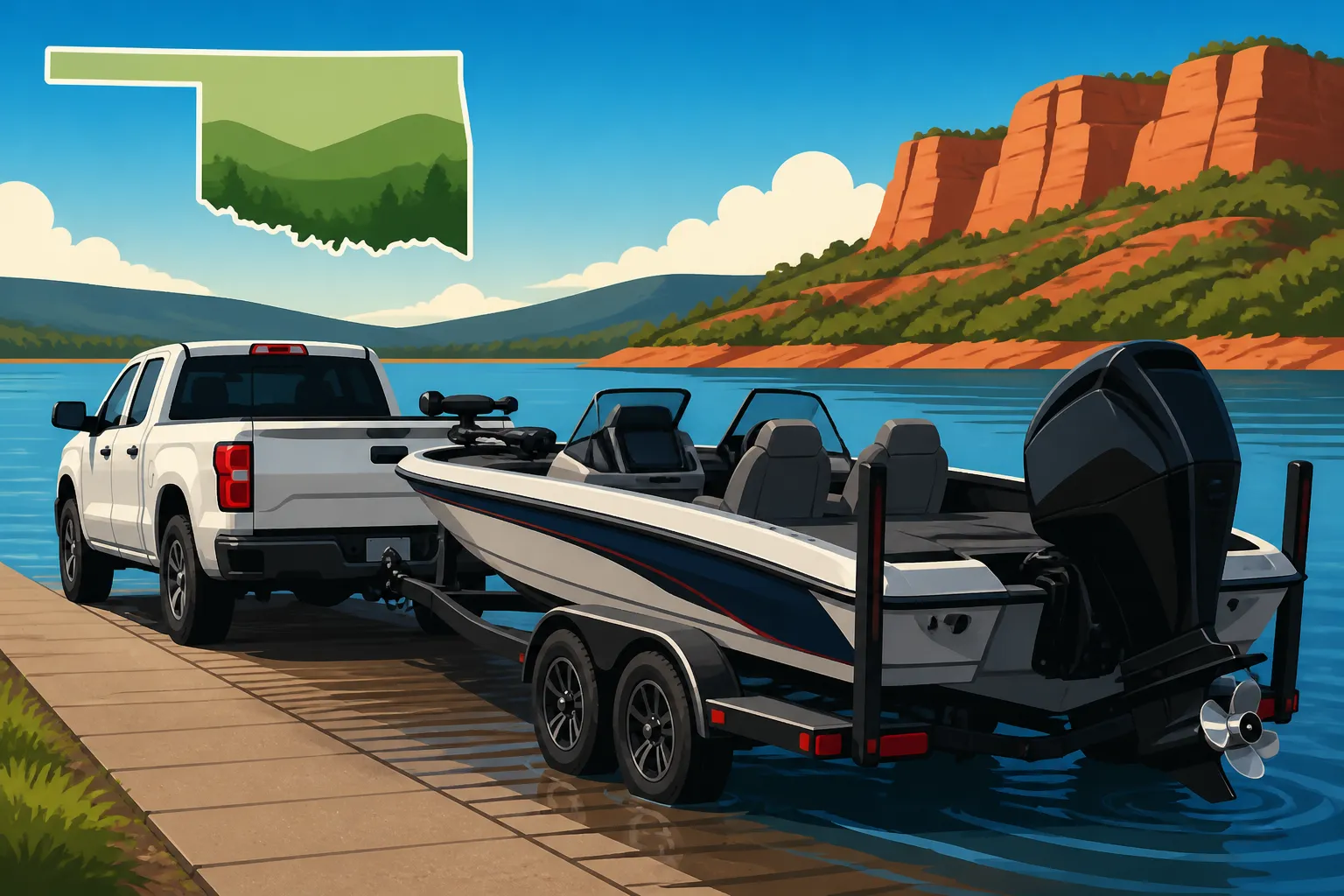
If you've ever tried to launch or retrieve your boat on a windy day, or navigate a strong current at a busy ramp, you know the struggle of keeping your boat perfectly aligned. This is where guide poles or load guides truly shine. These vertical posts, usually mounted to the rear of your trailer, extend above the water line, providing clear visual targets to help steer your boat onto the bunks or rollers.
They are particularly helpful for single-person operations, allowing you to maintain control and alignment even when you can't see the bunks clearly beneath the water. Guide poles come in various heights and materials, from sturdy PVC to galvanized steel. Investing in a good set can reduce stress, prevent damage to your boat' or trailer, and make you look like a seasoned pro at even the trickiest boat ramps. For those fishing big water, these are a must-have, just like knowing the Lake Texoma Fishing Guide for Oklahoma Anglers.
Transom Savers and Tie-Downs: Protecting Your Investment on the Road
While your boat is secure on the trailer, the transom (the flat back part of your boat where the outboard motor is mounted) can take a beating during transport, especially from the motor bouncing and jarring on bumpy roads. A transom saver is a device that supports the weight of your outboard motor, transferring the stress from the transom to the trailer frame. This simple piece of gear can prevent costly damage to your boat's transom and motor bracket over time.
Additionally, strong, reliable tie-downs are essential to secure the stern of your boat to the trailer. While the winch holds the bow, the stern tie-downs prevent the back of the boat from shifting or bouncing independently of the trailer. Ratchet-style tie-downs offer superior security and tension compared to simple rope. Always ensure all tie-downs are tightened snugly before hitting the road. This helps keep your boat stable, protecting both your investment and other drivers. You can find quality transom savers and heavy-duty tie-downs at Bass Pro Shops or other marine retailers.
Spare Tire Mount and Hub Kit: Emergency Preparedness
We touched on the importance of a spare tire, but equally important is having it mounted securely and easily accessible. A well-placed spare tire mount ensures your spare is always there when you need it, rather than buried under a pile of gear in your truck bed. Many mounts also include locking mechanisms for security.
Beyond a spare tire, carrying a spare hub kit is a next-level preparedness measure. This kit typically includes a pre-greased bearing assembly, hub, and often a spare seal. If you experience a complete bearing failure far from civilization – which can happen quickly and without much warning – being able to swap out an entire hub can get you back on the road without waiting for a tow truck. While not as common as a flat tire, a spare hub kit is invaluable for serious anglers who venture to more Remote and Less-Crowded Fishing Spots in Oklahoma.
Pre-Launch Checklist and Best Practices at the Ramp
Even with a perfectly set up trailer, a smooth launch and retrieval depend heavily on your actions at the boat ramp. Being prepared and following good etiquette not only makes your life easier but also helps keep things flowing smoothly for everyone else.
Staging Area Etiquette: Be a Good Neighbor
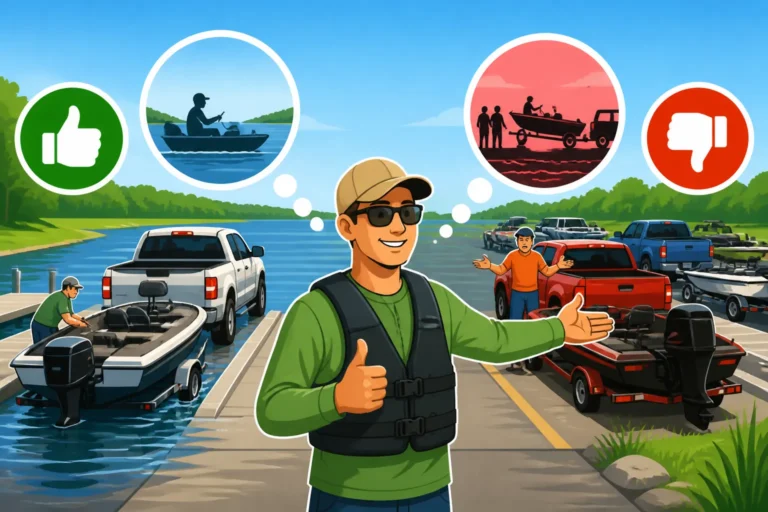
One of the biggest frustrations at busy Oklahoma boat ramps is watching someone hold up the line because they're doing all their prep work at the water's edge. The staging area, usually a parking lot or paved area just before the ramp, is where you should do all your pre-launch tasks. This includes removing your boat cover, taking off transom savers and tie-downs, loading all your fishing gear, and, most importantly, inserting the drain plug! It's an honest mistake we've all made, but nothing sinks a fishing trip faster than forgetting the drain plug.
By doing all this away from the ramp, you keep the flow of traffic moving and show courtesy to other anglers. Imagine being excited to launch into Grand Lake O' the Cherokees Bass Fishing Guide waters, only to be stuck behind someone who's just starting to get ready. A little planning goes a long way in making everyone's day better.
The Launch Sequence: A Step-by-Step Approach
When it's your turn at the ramp, execute your launch with confidence and efficiency. Slowly back your trailer down the ramp until your boat begins to float, or is nearly floating off the bunks/rollers. For many, backing down until the fender tops are just at the water level is a good starting point. Once the boat is in position, unhook the winch strap from the bow eye. If you have an additional safety chain or rope, remove that as well.
Then, either push the boat gently off the trailer or use your vehicle to slowly pull the trailer forward, allowing the boat to float free. Be mindful of wind and current, as they can quickly push your boat away. Once the boat is safely in the water, quickly move your tow vehicle and trailer out of the ramp area to a designated parking spot. The goal is to get in, get out, and clear the ramp as swiftly as possible. This is especially important at popular spots like Lake Texoma Fishing Guide for Oklahoma Anglers.
Retrieval Techniques: Getting Back on the Trailer Right
Retrieving your boat at the end of the day should be just as smooth as launching it. Back your trailer down the ramp, positioning it correctly for your boat. Often, you'll want to back in a bit deeper than for launching, as the boat will have to climb up the bunks or rollers. Once the trailer is positioned, either drive your boat directly onto the trailer (if your boat and ramp allow for it) or guide it by hand.
The key is to align your boat perfectly with the trailer's center, using those guide poles if you have them. Gently push or power the boat forward until the bow makes contact with the bow stop. Once the boat is properly seated, attach the winch strap and crank it tightly until the bow is snug against the bow stop. With the boat secured by the winch, pull the trailer quickly out of the water. Once off the ramp, move to the staging area to install your transom saver, attach stern tie-downs, and put on your boat cover. Don't forget to pull your drain plug to let any bilge water empty out, especially before a long drive home.
Trailer Setup Checklist for Oklahoma Anglers
A quick glance at this checklist can save you a lot of grief at the ramp or on the road. Keep a printed copy in your tackle box or glove compartment!
| Component | Pre-Trip Check | On-Ramp Action (Launch) | On-Ramp Action (Retrieval) |
|---|---|---|---|
| Tires | Pressure, tread wear, sidewall cracks, spare tire | N/A | N/A |
| Bearings | Greased, cool to touch, no excessive play | N/A | N/A |
| Lights/Wiring | All lights functional, clean connections | N/A | N/A |
| Winch/Strap | Strap/cable condition, winch function | Unhook strap from bow eye | Hook strap, winch boat tight to bow stop |
| Bow Stop | Adjusted for boat, good condition | N/A | Ensure boat is snug against bow stop |
| Rollers/Bunks | Good condition, adjusted for hull, carpet intact | N/A | N/A |
| Tongue Jack | Operates smoothly, stable wheel | Level trailer, unhitch/hitch | Level trailer, unhitch/hitch |
| Coupler | Securely latched, safety chains crossed | N/A | N/A |
| Drain Plug | INSERTED before launch | INSERTED | REMOVED after leaving ramp |
| Transom Saver | Removed before launch | Remove | Install (after leaving ramp) |
| Tie-Downs | Removed before launch | Remove (stern) | Attach & tighten (stern, after leaving ramp) |
| Guide Poles | Securely mounted, aligned | Use for visual alignment during backing | Use for visual alignment during retrieval |
| Boat Cover | Removed before launching | Remove | Install (after leaving ramp) |
| Gear/Supplies | Loaded/secured (in staging area) | N/A | Remove (in staging area) |
Having your boat trailer perfectly dialed in takes away so much of the potential stress that can come with a day on the water. By focusing on these key areas, from tire maintenance to smart additions like guide poles and a proper launch sequence, you're setting yourself up for success. Spend the time preparing your trailer now, and you'll be rewarded with countless hassle-free fishing trips across Oklahoma's beautiful lakes and rivers.
Disclaimer
This article is for general informational purposes only and does not constitute professional advice. Laws, prices and regulations vary by location and change over time. Consult a qualified professional for guidance on your specific situation.