How to Back a Boat Trailer Down a Steep Ramp
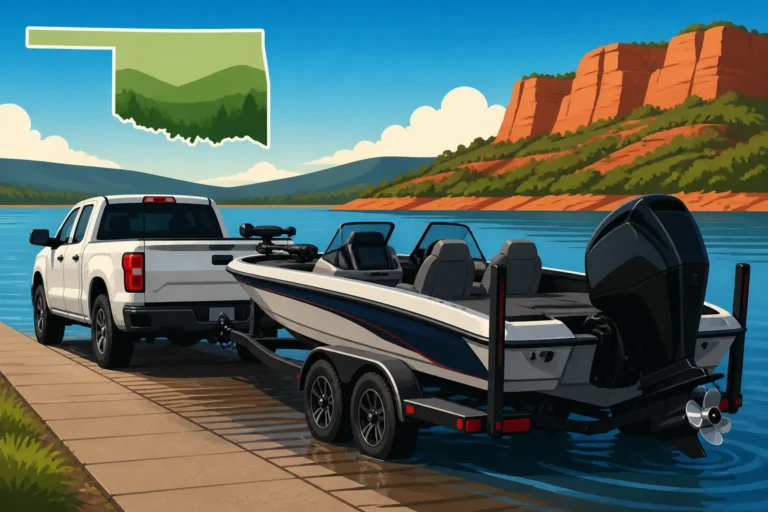
We've all been there: pulling up to a busy boat ramp, maybe at Lake Eufaula or Grand Lake, and feeling that knot of dread in your stomach. Backing a boat trailer, especially down a steep incline, can feel like trying to pat your head and rub your belly while standing on one leg. It’s intimidating, frustrating, and can quickly make you feel like a novice even if you’re an experienced angler. This guide is here to untangle that frustration, giving you clear, actionable steps to confidently navigate even the steepest Oklahoma boat ramps.
Understanding the Challenge of Steep Ramps and Boat Trailers
It’s not just you. Backing a boat trailer is genuinely one of the most challenging maneuvers many drivers face, and adding a steep ramp into the mix cranks up the difficulty significantly. There's a reason seasoned pros still take their time and focus intently.
The Inverted Steering Phenomenon
The number one reason backing a trailer feels so unnatural is what I like to call the "inverted steering phenomenon." When you're driving forward, you turn the wheel right, and the front of your vehicle goes right. Simple enough, right? But with a trailer, if you turn your steering wheel right while backing up, the back of your car goes right, and the trailer actually pivots to the left. It's counter-intuitive, and it takes dedicated practice to rewire your brain to think this way.
Think of it this way: your steering wheel controls the back of your tow vehicle. Whichever way the back of your vehicle swings, the trailer's tongue will be pushed in that direction, causing the trailer to pivot the opposite way at its rear. This is why small, slow movements are absolutely crucial. Over-correcting by turning the wheel too much in the "wrong" direction is a common trap, leading to those frustrating S-curves and jackknifing attempts on the ramp. Don't worry, everyone has done it! It's a rite of passage for many boaters.
Added Difficulty of a Steep Incline
Now, layer a steep ramp on top of that inverted steering challenge, and you've got a recipe for potential headaches. The incline itself brings several new variables into play:
- Gravity's Pull: On a steep ramp, gravity is working against you. It can cause your trailer to pick up speed quickly if you're not careful with your brakes, or make your tow vehicle struggle for traction when trying to stop or pull forward. This adds a physical dimension to the mental challenge of steering.
- Reduced Visibility: The angle of the ramp can distort your perspective in your mirrors. The back of your boat might disappear from view sooner, or the steepness might make it harder to judge distances to the water or the edge of the ramp. You might find yourself craning your neck more, which can be disorienting.
- The Pressure Cooker: Let's be honest, busy boat ramps, especially popular spots like Lake Texoma Fishing Guide for Oklahoma Anglers on a sunny Saturday, can feel like a performance stage. When you're struggling on a steep ramp, the perceived pressure from other waiting boaters can lead to rushed decisions, frantic steering, and ultimately, more mistakes. It’s easy to feel flustered when you know eyes are on you.
Recognizing these challenges is the first step. It validates that your struggle is real, not just a personal failing. With a little strategy and practice, you can absolutely master it.
Essential Pre-Backing Checklist for Success
Before you even think about putting your truck in reverse, a little preparation can save you a lot of grief. Think of it like pre-flight checks for a pilot – essential for a smooth operation.
Scouting the Ramp and Surroundings
Never just blindly back down a ramp, especially one you're unfamiliar with. A quick walk-through can reveal crucial information.
- Walk the Ramp: Take a moment to physically walk down the ramp you intend to use. Look for any sudden drop-offs at the water's edge, which can be disastrous for your trailer or even your tow vehicle. Check for slippery patches of algae, loose gravel, or submerged debris that could damage your tires or boat. Are there any sharp curves or obstacles to navigate around? Knowing what's coming can help you mentally prepare.
- Identify Your Target Launch Point: Where exactly do you want the back of your boat to hit the water? Visualizing this spot before you start backing helps you aim more effectively. Is there a dock nearby you'll need to use? Is the wind pushing your boat one way or another?
- Check for Wind and Current: This is especially important on large, open reservoirs like Grand Lake O' the Cherokees Bass Fishing Guide or the mighty Lake Texoma. A strong crosswind can catch the side of your boat and trailer, pushing you off course. A significant current might pull your boat to one side as it comes off the trailer. Knowing these factors allows you to anticipate and compensate with your steering. If a strong current or wind is present, you might need to adjust your approach angle slightly or be ready to use your boat's engine as soon as it's deep enough to help guide it off the trailer.
Adjusting Your Vehicle and Trailer
A few simple adjustments can significantly improve your visibility and control.
- Side Mirrors and Rear-View Camera Settings: Take a moment to adjust your side mirrors so you have the best possible view down both sides of your trailer. Sometimes angling them slightly outward helps. If your vehicle has a rear-view camera, practice using it in conjunction with your mirrors, but don't rely solely on it. The camera often distorts distances, and its angle can make judging the trailer's path tricky without peripheral vision. Consider a wireless trailer camera if you frequently launch solo – it's a game-changer and you can find various models on platforms like Amazon.
- Trim Motor Up, Secure Loose Gear: Before backing, ensure your boat's outboard or stern drive motor is trimmed up to prevent it from hitting the ramp or the bottom as you enter the water. This is a common oversight that can lead to costly damage. Also, double-check that all loose gear inside your boat is secure. Nothing's worse than watching your fishing rods or tackle box slide to the front of the boat (or worse, out of the boat) as you back down a steep incline. Make sure your bow and transom straps are unhooked, but leave the winch strap attached until your boat is ready to float free.
- Ensure Trailer Lights Are Connected and Working: While this might seem obvious, a quick check of your trailer lights is important, especially if you're launching at dusk or dawn. Not only is it a legal requirement, but working brake lights and turn signals are essential for communicating your intentions to anyone else on the ramp. A quick wiggle of the connection can often fix a non-working light. If you're a serious boater, investing in an LED trailer light kit from a place like Bass Pro Shops can offer greater reliability and visibility.
Step-by-Step Guide to Backing Down a Steep Ramp
Alright, deep breath. You've scouted the ramp, you've prepped your rig. Now for the main event. Remember, confidence comes from practice and a solid technique.
The "Hands at the Bottom of the Wheel" Technique
This is arguably the most fundamental and effective trick for backing a trailer. It helps simplify that "inverted steering" problem.
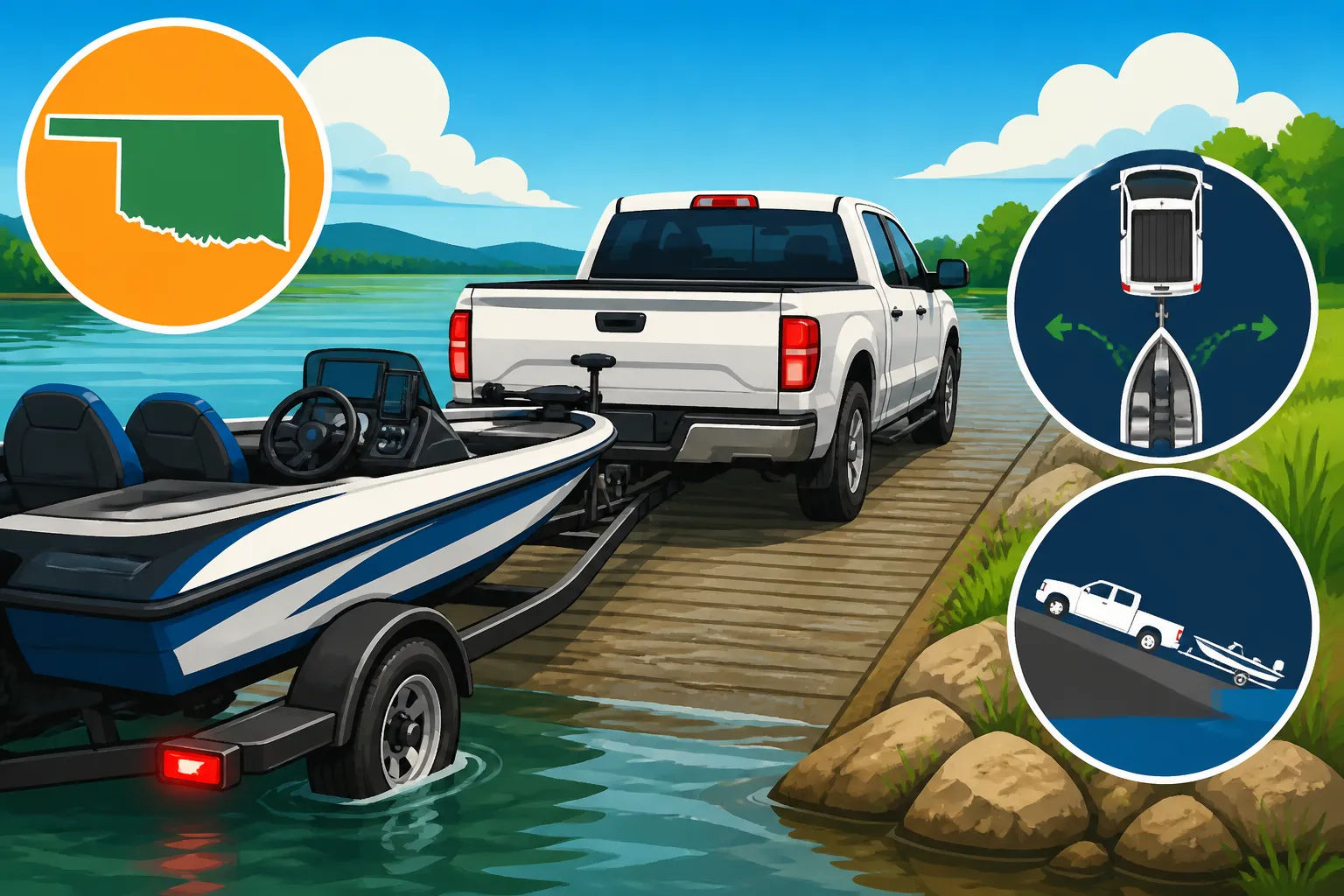
- How it Works: Place your dominant hand at the very bottom of your steering wheel – imagine the 6 o'clock position. Now, whatever direction you want the rear of your trailer to go, you simply move your hand in that same direction. Want the trailer to go left? Move your hand left. Want it to go right? Move your hand right. This directly correlates your hand movement with the trailer's movement, making it much more intuitive.
- Small Adjustments are Key: The most common mistake is to turn the wheel too much. Even a quarter turn of the wheel can result in a significant swing of the trailer. Think in terms of tiny, incremental adjustments. Move your hand a couple of inches, observe the trailer's response in your mirrors, and then make another tiny adjustment. It's like stirring a giant pot with a very long spoon – small movements at the handle have big effects at the other end. Focus on keeping the trailer mostly straight, making only small corrections as needed.
Slow and Steady Wins the Race
Patience is your best friend when backing a boat trailer, especially on a steep ramp where things can get away from you quickly.
- Importance of Minimal Speed: You should be barely moving. Idle speed is usually sufficient. The slower you go, the more time you have to react to the trailer's movements and make those small corrections. If you start going too fast, the trailer can quickly get out of alignment, and it becomes much harder to regain control.
- Using Brake and Idle: Keep your foot lightly on the brake pedal, ready to press down more firmly if needed. Your vehicle's idle speed is usually enough to provide momentum, so avoid pressing the gas unless you absolutely need a tiny burst to overcome a sticky spot or steep resistance. Using the brakes to control your descent is critical on steep ramps, preventing the trailer from free-rolling too fast into the water. If you feel like you're losing control, gently apply the brakes and stop. It's always better to pause, assess, and reset than to try to muscle through a bad angle.
- Taking Breaks and Correcting: Don't be afraid to stop, pull forward a few feet to straighten out, and start over. Seriously. It happens to everyone. If you find your trailer getting severely jackknifed or going too far off course, just stop. Pull forward slowly, straighten your truck and trailer, and then restart the backing process. This is a far better option than continuing to struggle and potentially damaging your boat or trailer, or blocking the ramp for even longer. This skill of straightening out and resetting is just as important as the backing itself.
Utilizing Spotters and Visual Cues
Having another pair of eyes, or setting up your own visual aids, can dramatically increase your success and confidence.
- Communication with a Spotter: If you have a passenger, enlist them as a spotter. Establish clear, unambiguous hand signals before you start backing. "Stop," "come this way," "a little more left/right," and "slow down" are essential. Make sure your spotter stays visible in your mirrors and knows to keep an eye on both sides of the trailer, as well as the water level. A good spotter can be your best asset. Remember, they are helping you, so make sure you communicate clearly.
- Using Cones or Markers for Practice: If you're new to this, or just want to refine your skills, practice in an empty parking lot using cones or even empty buckets to simulate a ramp and dock. This low-pressure environment allows you to experiment with steering inputs and get a feel for how your specific truck and trailer combination handles. The more repetitions you get without the pressure of an audience, the more automatic the movements will become.
- Focusing on the Trailer's Rear: As you back, constantly check both side mirrors. While the 'hands at the bottom of the wheel' technique guides your initial steering, your eyes should be focused on the back corners of your trailer. This is where you'll see the earliest indications of the trailer turning too sharply or going off course. By monitoring the rear, you can make micro-adjustments before a small deviation becomes a big problem. You can also use a distinct feature on your boat, like the top of the motor or a specific corner, as a focal point in your mirror.
Correcting Course Mid-Backing
Even with the best preparation, you might find your trailer starting to drift or turn more sharply than intended. Knowing how to recover gracefully is key.
- When to Pull Forward and Straighten: If you notice the trailer getting significantly off-kilter – say, it's angled too far to one side, or you're about to jackknife – don't keep trying to force it. The best move is to stop, pull forward slowly until your truck and trailer are perfectly straight again, and then restart your backing attempt. This might feel like admitting defeat, but it's actually the smartest and safest way to proceed. Every experienced boater has done this countless times.
- Avoid Over-Correcting: This ties back to the "small adjustments" rule. When you see the trailer veering, your instinct might be to crank the steering wheel hard in the opposite direction. Resist that urge! A large, quick steering input will often cause the trailer to over-correct and swing wildly to the other side, sending you into a frustrating back-and-forth wobble. Instead, make a gentle, smooth correction, let the trailer respond, and then gently counter-steer to bring it back in line. It's a dance, not a wrestling match.
Overcoming Common Steep Ramp Hurdles
Beyond the basic backing technique, steep ramps throw a few extra curveballs. Being prepared for these can make all the difference.
Dealing with Slippery Ramps and Traction Issues
Oklahoma lakes often have ramps that can get covered in algae, especially in shaded areas or during certain times of the year. This can make them incredibly slick.
- Four-Wheel Drive Considerations: If your tow vehicle has four-wheel drive (4WD) or all-wheel drive (AWD), this is the time to engage it, especially if the ramp looks wet, slimy, or is particularly steep. 4WD provides significantly better traction, both for backing down and, more importantly, for pulling your rig back up the ramp, especially if your tires are partially submerged in water. Don't wait until you're stuck to try and engage it.
- Avoiding Wheel Spin: If you feel your wheels spinning, resist the urge to stomp on the gas. This will only make the situation worse, digging your tires deeper and polishing the slick surface. Instead, gently release the accelerator, make tiny steering adjustments, and try to ease off the brake slowly. Sometimes, a very slight turn of the steering wheel can shift your weight just enough to find a patch of traction. If you have a spotter, they can help guide you to a less slippery section.
- Considering Tire Pressure for Towing: While you don't want to drastically change tire pressure just for a ramp, ensure your tires are properly inflated for towing. Under-inflated tires can lead to instability, while over-inflated tires can reduce your contact patch and potentially reduce traction. Always follow your vehicle and trailer manufacturer's recommendations.
Managing Traffic and Pressure
The "ramp rage" phenomenon is real, and it can add a layer of stress to an already tricky maneuver. But remember, your safety and the integrity of your equipment come first.
- Practicing During Off-Peak Hours: If you're new to backing or new to a particular ramp, try to go during off-peak times. Early mornings on weekdays, or late afternoons when most people are leaving, can offer a much more relaxed environment. This allows you to take your time, make mistakes, and correct them without feeling the intense gaze of a line of impatient boaters behind you. You can often find quiet times at spots like Family-Friendly Fishing Spots at Skiatook Lake, Oklahoma during the week.
- Ignoring Impatient Onlookers: This is easier said than done, but try to develop a thick skin. Most experienced boaters understand that backing a trailer takes time and skill. If someone is impatiently revving their engine or making gestures, just ignore them. Focus on your task. Rushing will only lead to more mistakes and potentially a longer delay for everyone. A quick, polite wave to acknowledge the line and then a return to your focus is usually all that's needed.
- Focus on Safety Over Speed: Your priority is to launch your boat safely and efficiently, not to set a speed record. Take your time, make deliberate movements, and prioritize not hitting anything or anyone. A few extra minutes for a safe launch is always better than a costly accident or a frustrating repair job. When you're fishing at Fort Gibson Lake Fishing Guide or another popular spot, knowing your limits and taking your time is crucial.
Advanced Tips for Challenging Conditions
Once you've got the basics down, you might encounter situations that require a bit more finesse.
- Wind and Current Adjustments: As mentioned before, strong wind or current can push your boat or trailer around. If the wind is pushing your trailer to the right, you might need to initially steer slightly more to the left to compensate. This is where experience and a keen eye come into play. Your spotter can be invaluable here, giving you real-time feedback on how the boat is being affected.
- Night Launch Considerations: Launching in the dark adds another layer of complexity. Ensure you have good working boat lights and possibly a headlamp for your spotter. The lack of ambient light can make judging distances even harder. A good tip is to briefly turn on your vehicle's high beams (if safe for others) to get a quick visual of the ramp before you start backing. Make sure you check your Oklahoma Boat Safety Equipment Checklist before heading out for a night launch.
- Gear Up for Success: Having the right gear can make a big difference. Consider a quality hitch with anti-sway features for longer tows, available at places like Bass Pro Shops. For difficult launches, a good set of marine-grade tie-downs will ensure your boat stays secure on the trailer. Even simple things like a clear, unobstructed rear window can make a difference. Many anglers opt for extended mirrors or mirror extensions for their tow vehicles to get a better view down the sides of their boat.
To summarize some common backing issues and their solutions:
| Problem | Symptom | Solution |
|---|---|---|
| Trailer Veering Off Course | Trailer starts to go too far left or right, not straight down the ramp. | Small Corrections: Use the "hand at the bottom of the wheel" technique. Make tiny, deliberate steering inputs. Focus on keeping the trailer straight. |
| Jackknifing | Trailer is turning too sharply, forming a "V" shape with the tow vehicle. | Stop and Straighten: Immediately stop. Pull forward slowly until the truck and trailer are perfectly aligned. Then restart backing. Never try to force it. |
| Going Too Fast | Trailer feels out of control; difficult to make small adjustments. | Slow Down: Use idle speed and gentle brake pressure. The slower you go, the more time you have to react. Don't be afraid to stop and reassess. |
| Poor Visibility | Can't see the back of the trailer or the ramp's edge clearly. | Adjust Mirrors: Take time to position side mirrors. Use a spotter with clear hand signals. Consider adding mirror extensions or a wireless trailer camera. |
| Slippery Ramp | Wheels spinning or difficulty maintaining traction. | Engage 4WD/AWD: If available, engage before backing. Avoid heavy acceleration. Try subtle steering to find new traction spots. |
| Ramp Pressure | Feeling rushed by other boaters. | Ignore Onlookers: Focus on your task. Take your time. Practice during off-peak hours. A safe launch is more important than a fast one. |
Mastering backing a boat trailer down a steep ramp takes practice, patience, and a bit of courage. But with these tips, you'll be able to confidently launch your boat and get to those amazing Best Fishing Spots in Oklahoma without the usual stress. Remember, every boater, no matter how experienced, started exactly where you are.
Disclaimer
This article is for general informational purposes only and does not constitute professional advice. Laws, prices and regulations vary by location and change over time. Consult a qualified professional for guidance on your specific situation.