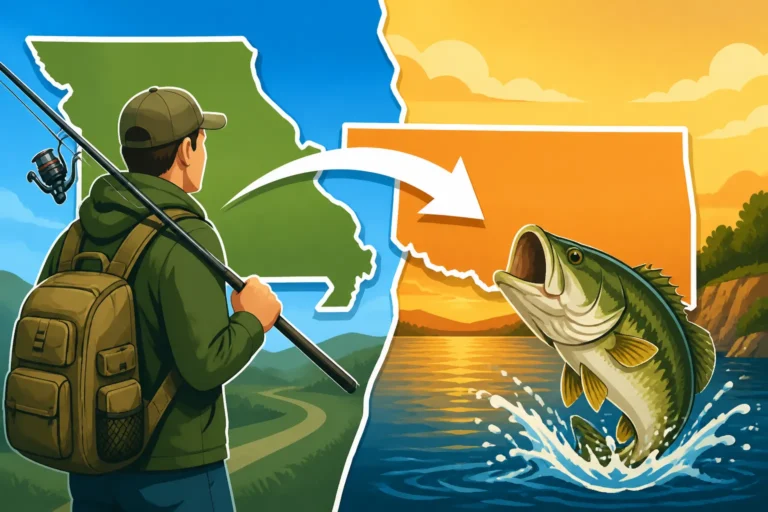
Fishing License Rules for Kids and Nonresidents in Oklahoma
It’s easy to feel overwhelmed when you’re planning a fishing trip, especially if you’re trying to figure out the maze of regulations for both your little ones and any out-of-state guests. Nobody wants to accidentally break the rules or, worse, ruin a fun day on the water with an unexpected fine. This comprehensive guide is here to untangle Oklahoma’s fishing license requirements, making sure you understand exactly what’s needed for kids and nonresidents so you can enjoy the beautiful waters of the Sooner State worry-free.
Understanding Oklahoma's Fishing License Landscape
Oklahoma, with its incredible array of lakes, rivers, and streams, offers fantastic fishing opportunities year-round. From the expansive waters of Lake Texoma to the serene beauty of Broken Bow, there's a spot for every angler. However, protecting these precious resources and funding conservation efforts relies heavily on the sale of fishing licenses. These licenses aren't just pieces of paper; they're your ticket to legally access and enjoy the state's aquatic bounty, contributing directly to fish stocking programs, habitat restoration, and enforcement. Ignoring these requirements can lead to hefty fines and a spoiled day, which is the last thing any angler wants.
Why Fishing Licenses Are Essential for Conservation
When you purchase a fishing license in Oklahoma, you're doing more than just gaining legal permission to cast a line. A significant portion of the funds collected from license sales goes directly into the Oklahoma Department of Wildlife Conservation (ODWC). This department is tasked with maintaining healthy fish populations, managing public access points, and conducting vital research. Think about it: without these funds, our favorite fishing holes wouldn't be as vibrant, and the diverse species we love to target might not thrive as they do. It’s a direct investment in the future of fishing.
Beyond the financial aspect, licenses help the ODWC track angler participation and harvest rates. This data is crucial for making informed decisions about bag limits, size restrictions, and stocking efforts. For instance, if data shows a particular species is declining in certain areas, the ODWC might implement stricter limits or focus stocking efforts there. It's a continuous cycle of monitoring, funding, and managing that keeps Oklahoma's fishing robust for generations to come.
The General Rules of Engagement for Anglers
Generally speaking, almost everyone over a certain age needs a fishing license to fish in Oklahoma's public waters. This includes lakes managed by the state, Corps of Engineers lakes, municipal reservoirs, and all rivers and streams. There are different types of licenses available, from annual options to shorter-term permits, designed to suit various needs, whether you're a lifelong resident or just visiting for a weekend. The key is to have the correct license for your residency status and age group before you start fishing.
It’s not just about having the license, though. Anglers also need to be aware of the specific regulations for the species they are targeting and the body of water they are fishing. While a license grants you permission to fish, it doesn't exempt you from adherence to statewide or localized rules concerning bag limits, size limits, and specific tackle restrictions. For a comprehensive look at what your annual license covers, check out our guide on What an Oklahoma Resident License Buys You for $31 a Year.
Kid-Friendly Fishing: When Do Minors Need a License?
One of the most common questions from families is about fishing license rules for kids. You want to introduce your children to the joys of fishing, but navigating the legalities can be confusing. Thankfully, Oklahoma makes it quite easy for young anglers to get started without immediately needing a license, making it a truly family-friendly activity for many years.
Age Exemptions for Young Anglers
The good news for parents and grandparents is that children under the age of 16 are generally exempt from needing a fishing license in Oklahoma. This is fantastic because it removes a barrier for families and encourages youngsters to experience the outdoors without an upfront cost or bureaucratic hurdle. Imagine taking your 10-year-old nephew out to Lake Murray for some crappie fishing – they can cast their line right alongside you, completely license-free, as long as they haven't yet celebrated their 16th birthday.
This exemption applies to both residents and nonresidents, which is a huge bonus. So, if you're visiting from out of state with your children, they too can enjoy Oklahoma's waters without a license until they reach 16. This policy really fosters a love for fishing at a young age, allowing kids to learn the ropes, feel the thrill of a bite, and develop an appreciation for nature, all while keeping the focus purely on fun. You can find more details in our dedicated article on Fishing License Rules for Kids in Oklahoma.
Special Considerations for Minors
While the under-16 exemption is broad, there are a few nuances to keep in mind. For instance, if a minor is participating in certain specialized activities that have additional licensing requirements, such as paddlefish snagging, they might need a specific permit for that activity, even if they don't need a general fishing license. Always double-check the ODWC regulations for any unique fishing methods you plan to undertake. However, for standard rod-and-reel fishing, the age rule generally holds.
It’s also important to remember that while the kids might not need a license, the adults accompanying them almost certainly will. If you, as an adult, are helping your child bait a hook, cast a line, or reel in a fish, you must possess a valid fishing license yourself. The intent is that supervised children can fish, but the supervising adult must be legally compliant. This ensures that an experienced, licensed individual is overseeing the activity, reinforcing responsible angling practices. So, make sure your own paperwork is in order before you head out!
Navigating Nonresident Licenses: Your Guide to Fishing Oklahoma Waters
Oklahoma is a popular destination for anglers from surrounding states like Texas, Arkansas, Kansas, and Missouri, and even farther afield. Our lakes are renowned for their trophy bass, abundant crappie, and massive catfish. However, if you're not an Oklahoma resident, the license requirements are different from those for locals. Understanding these distinctions is crucial to avoid any unexpected issues during your visit.
Nonresident Annual vs. Temporary Options
For visitors, Oklahoma offers a few different options when it comes to fishing licenses. The most straightforward is the Nonresident Annual Fishing License. This license is valid for a full calendar year from the date of purchase, allowing you to fish Oklahoma waters whenever you visit within that period. While it costs more than a resident annual license, it’s often the most economical choice if you plan on making multiple trips to Oklahoma throughout the year. For example, if you anticipate two or three weekend trips to Lake Texoma for striped bass, an annual license would likely pay for itself compared to buying multiple daily licenses.
Alternatively, if you're only planning a short, one-off trip, Oklahoma offers temporary nonresident fishing licenses, such as a 1-day or 6-day option. These are perfect for those spontaneous fishing trips or if you’re passing through and just want to wet a line for a day or two. A 1-day nonresident license can be a great way to experience Oklahoma's fishing without committing to a full year. You can weigh the costs and benefits of these options in our article, Is the $81 Nonresident Annual License Worth It Over Multiple 1-Day Trips?.
Defining Residency for License Purposes
The key to determining whether you need a resident or nonresident license boils down to Oklahoma's definition of residency. Generally, to be considered an Oklahoma resident for fishing license purposes, you must have resided continuously in the state for at least six months immediately preceding your application. This usually means establishing a physical presence, like having a valid Oklahoma driver's license, vehicle registration, or proof of property ownership. Simply owning land or having a P.O. box isn't enough; continuous physical domicile is the standard.
For those who are just moving to Oklahoma, there's usually a waiting period before you can qualify for a resident license. This prevents people from briefly moving to the state just to acquire a cheaper license. If you're unsure about your residency status, it’s always best to err on the side of caution and purchase a nonresident license, or contact the ODWC directly for clarification. Misrepresenting your residency status can lead to fines and legal complications, so it’s always better to be transparent.
Special Scenarios and Exemptions: Who Else Skips the License?
While most adults need a fishing license, Oklahoma does recognize several specific groups and situations that grant exemptions. These aren't loopholes, but rather thoughtful considerations to ensure certain individuals or groups can enjoy fishing under particular circumstances. Knowing these can save you money and ensure you're compliant.
Free Fishing Days: A Gift to All Anglers
Perhaps one of the most celebrated exemptions is Oklahoma's annual Free Fishing Days. Typically held over a weekend in June, these are specific days designated by the state where anyone can fish public waters without a state fishing license. This includes both residents and nonresidents, of any age. It's a fantastic opportunity to introduce friends or family to fishing, or for those who rarely get out to enjoy a day on the water without the initial financial outlay.
However, even during Free Fishing Days, it's crucial to remember that all other fishing regulations remain in effect. This means bag limits, size limits, and species-specific rules still apply. You can't just catch and keep everything you want; you still have to abide by the conservation rules. For example, if you're fishing for bass on a free fishing day, you still need to adhere to the statewide bass bag limit. Mark your calendar for these dates, and always check the ODWC website for the exact schedule and any specific rules for that year. Our article on Free Fishing Days in Oklahoma has more details.
Senior Anglers and Lifetime Licenses
Oklahoma deeply values its senior citizens and offers a special license option for them. Residents who are 65 years of age or older can purchase a Lifetime Senior Citizen Fishing License for a significantly reduced, one-time fee. This lifetime license is a fantastic deal, allowing seniors to fish for the rest of their lives without ever having to worry about renewing an annual license. It’s a wonderful way to honor their contributions and ensure they can continue to enjoy Oklahoma's fishing for decades.
To qualify for this special senior lifetime license, you must be an Oklahoma resident and prove your age. The cost is remarkably low, making it one of the best bargains for avid senior anglers in the nation. It's important to differentiate this from an annual senior discount, as Oklahoma primarily offers the lifetime option. For a deep dive into who qualifies and the application process, check out our guide on the Oklahoma's Senior Fishing License Guide.
Landowners and Private Pond Privileges
Another key exemption applies to certain landowners. Oklahoma residents who own land (or are the spouse or dependent of a landowner) are generally exempt from a fishing license when fishing on waters that are entirely confined to their property. This means if you have a private pond on your own land, you don’t need a state license to fish it, nor do your immediate family members living with you. This makes fishing on private property very convenient for those who own suitable land.
However, this exemption has strict limits. It only applies to waters that do not have a public access point or are not fed by or connected to public waters. If your pond is fed by a public stream or river, or if it's part of a larger lake with public access, the exemption typically does not apply, and you'd need a license. It’s always best to confirm if your specific body of water qualifies for this exemption, especially if there's any ambiguity about public access or connectivity.
The Nitty-Gritty: How to Purchase and Carry Your License
Once you've determined you need a fishing license, the next step is to acquire it. Oklahoma has made this process quite convenient, offering several avenues for purchase. It’s not just about buying the license, though; knowing how to properly carry and present it is just as important.
Where and How to Buy Your Oklahoma Fishing License
The easiest and most common way to buy an Oklahoma fishing license these days is online through the official Oklahoma Department of Wildlife Conservation website. Their portal is user-friendly, allowing you to quickly select the correct license type, enter your details, and make a payment. Once purchased, you'll often receive a digital copy via email, which you can print out or keep on your phone. This method is incredibly convenient, especially if you decide last-minute to go fishing or are purchasing a nonresident license from another state. Our article on How to Buy an Oklahoma Fishing License Online provides a step-by-step walkthrough.
For those who prefer a more traditional route, licenses can also be purchased in person. Many sporting goods stores across the state, bait shops, and even some county clerk offices act as authorized license vendors for the ODWC. This can be handy if you need to ask questions in person, or if you prefer a physical license card immediately. Stores like Academy Sports + Outdoors or local bait shops are common places to find these vendors. It’s always a good idea to check their operating hours and confirm they sell fishing licenses before making a special trip. While you can find a lot of great fishing gear on Amazon, you'll need to go directly through the state or an authorized vendor for the actual fishing license.
Carrying Your License and What to Do If You Lose It
Once you have your license, you need to carry it with you whenever you are fishing. This means having either a physical printout of your license or a digital copy on your smartphone or other mobile device. Game wardens and other law enforcement officials have the authority to request to see your fishing license at any time while you are engaged in fishing activities. Being able to readily produce it ensures a smooth interaction and confirms your compliance. Failing to produce a valid license when requested can lead to significant penalties, as discussed in Penalties for Fishing Without a License in Oklahoma.
If you happen to lose your physical license, don't panic. If you purchased it online, you can usually log back into your ODWC account and print another copy. If you bought it from a vendor, you might need to contact the ODWC or visit another vendor to obtain a duplicate, though there might be a small fee involved. The important thing is to ensure you have a valid, accessible copy with you every time you cast a line. It's a good practice to take a photo of your license and keep it on your phone as a backup, just in case you misplace the paper copy.
Reciprocity and Border Waters: Fishing with Out-of-State Licenses
Oklahoma shares borders with several other states, and many of these border areas include shared waterways, most notably Lake Texoma with Texas. This naturally leads to questions about license reciprocity: Can you use a Texas license to fish on the Oklahoma side of Texoma, or vice versa? Understanding these agreements (or lack thereof) is critical for anglers who frequently cross state lines.
The Special Case of Lake Texoma
Lake Texoma is perhaps the most famous example of a shared waterway between Oklahoma and Texas. Due to its unique status and immense popularity, there is a special reciprocal agreement in place. Anglers possessing a valid Oklahoma fishing license or a valid Texas fishing license are legally allowed to fish the entire body of Lake Texoma. This means if you're an Oklahoma resident with an Oklahoma license, you can fish on both the Oklahoma and Texas sides of the lake. The same applies to Texas residents with a Texas license.
However, it's vital to remember that while the license itself is reciprocal, the regulations might not be. Each state still enforces its own bag limits, size restrictions, and other species-specific rules for its respective side of the lake. So, if you're an Oklahoma angler fishing on the Texas side of Texoma, you'll need to know and abide by Texas's regulations for that specific area. This can be complex, so always carry a copy of both states' regulations or familiarize yourself thoroughly before heading out. Our guide on Texas Anglers Fishing in Oklahoma Waters offers a closer look at these nuances.
Other Bordering States and General Reciprocity Rules
Beyond Lake Texoma, general reciprocity agreements with other bordering states are much less common for statewide fishing. Typically, an Oklahoma fishing license is only valid for fishing within the boundaries of Oklahoma. If you're an angler from Arkansas, Kansas, Missouri, or any other state, and you plan to fish in Oklahoma, you will almost certainly need to purchase an Oklahoma nonresident fishing license. There are no blanket agreements that allow a Kansas state license, for example, to be valid on an Oklahoma lake.
This means if you're an Arkansas resident planning a trip to Broken Bow Lake, you'll need an Oklahoma nonresident license, regardless of whether you hold an Arkansas license. The same goes for anglers from Missouri visiting Grand Lake O' the Cherokees, or Kansas anglers heading to Lake Keystone. Always assume you need a separate nonresident license when crossing state lines into Oklahoma, unless a very specific and limited reciprocity agreement (like Texoma's) is explicitly stated by the ODWC. Our post on Kansas Reciprocity for Oklahoma Fishing Licenses dives deeper into the lack of general agreements.
Consequences of Non-Compliance: What Happens If You Don't Have One?
Nobody wants to encounter a game warden and realize they're not compliant with the law. Fishing without a proper license in Oklahoma is not just a minor oversight; it's a violation that can carry significant penalties. Understanding these potential consequences can certainly reinforce the importance of getting your license before you even think about casting a line.
Fines and Court Appearances
Getting caught fishing without a valid Oklahoma fishing license, or without the proper endorsements for certain species or methods, is typically considered a misdemeanor offense. This isn't just a slap on the wrist; it can result in a fine, and in some cases, even a mandatory court appearance. The fine amount can vary, often ranging from a few hundred dollars or more, depending on the discretion of the game warden and the specific circumstances. This could easily exceed the cost of an annual license many times over, making the initial investment in a license a very wise one.
Beyond the immediate fine, having a misdemeanor on your record can have other, albeit minor, implications. It's a mark on your record that could potentially show up in background checks. It’s far more than just losing a fishing privilege for the day; it becomes a legal matter that requires time, money, and stress to resolve. Imagine traveling hours to a beautiful lake, only to have your trip cut short and your wallet lightened significantly because of an overlooked license.
Loss of Fishing Privileges and Confiscation
In more serious or repeated instances, or if there are other accompanying violations (like exceeding bag limits or fishing in a restricted area), the penalties can escalate. Game wardens have the authority to confiscate your fishing equipment, including rods, reels, and even your catch. They can also revoke your fishing privileges, meaning you might be prohibited from purchasing a fishing license or engaging in fishing activities for a certain period. This could range from months to even years, depending on the severity of the offense.
Consider a scenario where you're caught fishing without a license on a popular lake. Not only could you face a fine, but your prized fishing rod and reel might be seized, and you could be banned from fishing in Oklahoma for a season or more. This is why the message is always clear: check your license status, and ensure you're compliant before heading out. It’s not worth the risk, especially when a license is so easy and relatively inexpensive to obtain. The article Penalties for Fishing Without a License in Oklahoma covers this in detail.
Planning Your Trip: Combining Licenses with Local Regulations
Having the correct fishing license is a critical first step, but it's only one piece of the puzzle. Oklahoma's diverse waterways mean that regulations can vary significantly from one lake or river to another, and even by species. To truly have a successful and compliant fishing trip, you need to combine your license knowledge with an understanding of these localized rules.
Species-Specific Rules and Bag Limits
Your Oklahoma fishing license grants you the general right to fish, but it doesn't give you carte blanche to keep every fish you catch. Each fish species in Oklahoma has specific regulations regarding bag limits (how many you can keep per day) and size limits (the minimum or maximum length a fish must be to be kept). These rules are in place to manage fish populations and ensure sustainable fishing for everyone. For example, the statewide bass bag limits are 6 fish, but only one can be over 16 inches. However, this can change dramatically depending on the specific lake.
For instance, while the statewide crappie limit is generous, certain popular lakes like Lake Tenkiller, Lake Hudson, or Fort Gibson Lake have stricter regulations, often imposing a 10-inch minimum size limit or a reduced bag limit. Always consult the current Oklahoma Fishing Guide, available digitally on the ODWC website or in print at license vendors, before you head out. Don't rely on old information or hearsay. Knowing these specifics is just as important as having your license. Our guides on Oklahoma's Bass Fishing Rules and Limits and Crappie Fishing Rules and Limits in Oklahoma are excellent resources.
Local Lake and River Regulations
Beyond species-specific rules, many individual lakes, rivers, or specific sections of waterways in Oklahoma have their own unique regulations. These can include restrictions on certain types of bait, limits on boat motor size, or even special rules for specific times of the year, such as spawning seasons. These localized rules are typically implemented by the ODWC based on scientific surveys and management goals for that particular body of water.
For example, a specific creek or river might have a "catch and release only" zone for trout, or a small municipal pond might have a different daily limit for sunfish to encourage family fishing. It's not enough to know the statewide rules; you absolutely must research the specific body of water you intend to fish. A quick search on the ODWC website for the lake or river name will usually bring up any special regulations that apply. This diligence ensures you're not just legally licensed, but also fishing responsibly and within all local guidelines.
Table: Key Fishing License Rules at a Glance
To help consolidate some of the information, here’s a quick overview of the primary rules for kids and nonresidents in Oklahoma:
| License Type / Angler Group | Age Requirement | Residency Requirement | Cost (Approx. as of 2024) | Notes |
|---|---|---|---|---|
| Kids | Under 16 | None | $0 | Exempt for all public waters; supervising adult must be licensed. |
| Nonresident Annual | 16 and Over | Nonresident | $81 | Valid for a full year from purchase date. Best for multiple trips. |
| Nonresident 1-Day | 16 and Over | Nonresident | $11 | Valid for 24 hours. Good for quick, single-day visits. |
| Nonresident 6-Day | 16 and Over | Nonresident | $38 | Valid for six consecutive days. |
| Lake Texoma (Reciprocal) | 16 and Over | OK or TX Resident | Varies (use home state license) | OK or TX license valid on entire lake, but obey local state's rules. |
| Free Fishing Days | All Ages | None | $0 | Specific days in June (check ODWC calendar); all other rules apply. |
| Senior (Lifetime) | 65 and Over | OK Resident (6 months) | $30 | One-time purchase, valid for life. Requires proof of age/residency. |
Costs are approximate and subject to change. Always verify current prices and regulations on the official Oklahoma Department of Wildlife Conservation website.
Disclaimer
The information provided in this guide is intended for general informational purposes only and does not constitute legal advice. Fishing regulations in Oklahoma can change, and it is the angler's responsibility to review and comply with all current laws and regulations set forth by the Oklahoma Department of Wildlife Conservation. Always consult the official ODWC website or current Oklahoma Fishing Guide before engaging in any fishing activities.