How Weather Fronts Affect Fishing at Grand Lake, Oklahoma
Oh, the weather! It's the eternal struggle for every angler, isn't it? You spend hours planning your trip to Grand Lake, checking the forecast, only to have a sudden shift in the atmosphere throw all your carefully laid plans right out the window. It's truly frustrating when you feel like you're doing everything right – you've got the right bait, the right spot – but the fish just aren't biting, and it's all because a weather front rolled through. This comprehensive guide is here to demystify how different weather fronts impact fishing success on Grand Lake, Oklahoma, giving you the knowledge to adapt your strategies and still come home with a great story, and hopefully, some fish.
Understanding Weather Fronts and Their Impact on Grand Lake
When you're out on Grand Lake, it's not just about what's in the water, but what's above it. Weather fronts are essentially boundaries between two air masses of different temperatures and humidity, and as they move across Oklahoma, they bring significant changes that directly affect fish behavior. The key to understanding this lies in the barometric pressure, which is the weight of the air pressing down on the water. Fish, with their sensitive swim bladders, are incredibly attuned to these changes.
The Science Behind Barometric Pressure Changes
Think of a fish's swim bladder like a tiny internal balloon. When the barometric pressure is high (often associated with clear, calm weather), it's like someone is pushing down on that balloon. Fish feel this pressure and it can make them uncomfortable, often pushing them deeper into the water column or making them less active. Conversely, when the barometric pressure is low (think cloudy, stormy conditions), the "push" is reduced, and fish tend to feel more comfortable and often become more active, especially in shallower water. At Grand Lake, with its varied depths and structures, these pressure changes can dictate whether fish are suspended over deep channels or actively foraging on rocky points. Understanding how to interpret these shifts can dramatically improve your chances, as detailed in our guide on How to Read Water Temperature for Better Fishing in Oklahoma, which often correlates with these atmospheric shifts.
How Cold Fronts Alter Fish Behavior
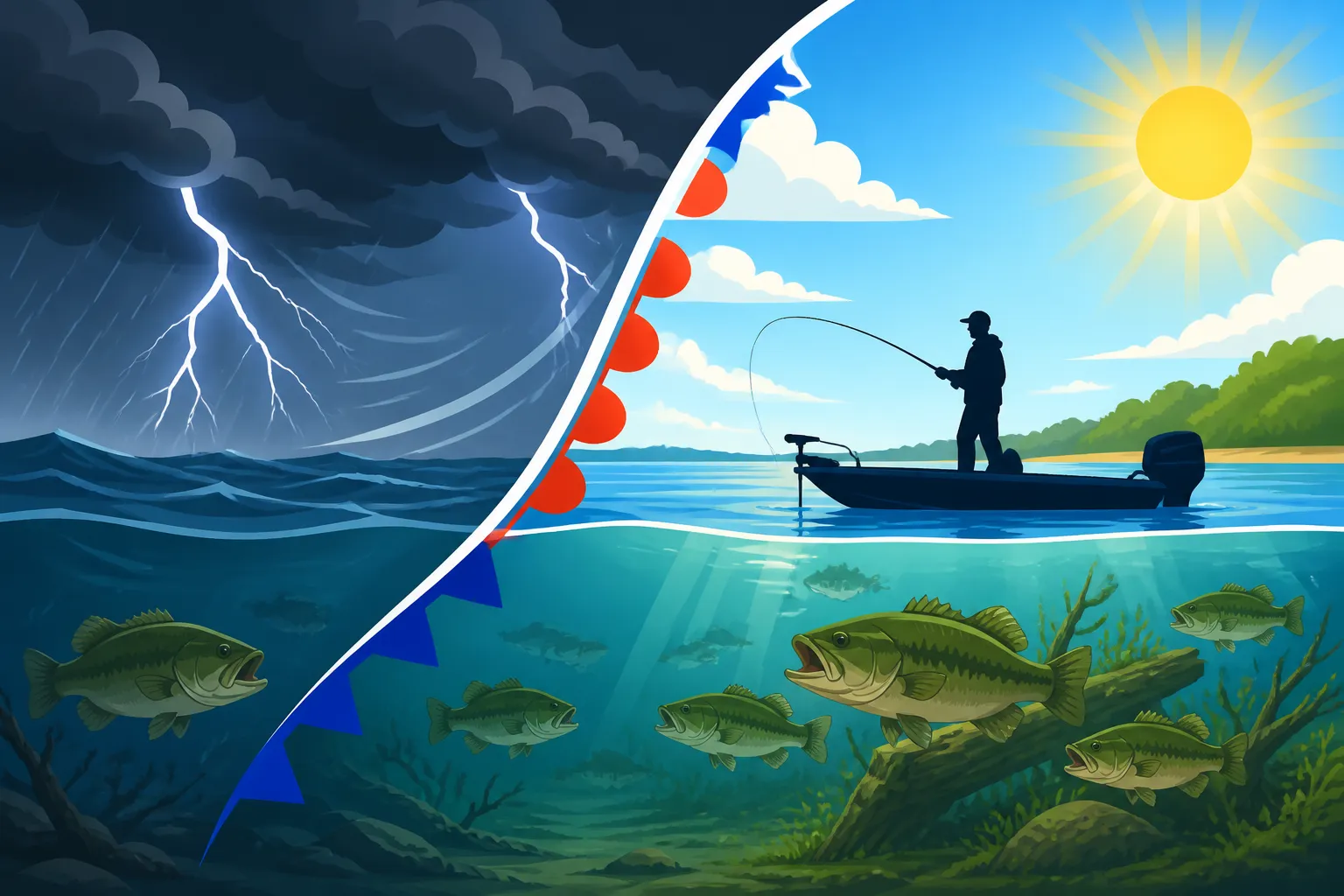
A cold front is probably the most notorious villain for anglers. When a cold, dense air mass pushes out warmer air, it often brings with it a sudden drop in temperature, high winds, and often, rain or storms. Before the front arrives, as the warm air is being pushed out and the barometric pressure drops, fishing can be absolutely phenomenal. Fish often go on a feeding frenzy, trying to gorge themselves before the uncomfortable conditions set in. They'll move shallow, hit aggressive baits, and generally be easier to catch.
However, after the cold front has passed, and especially on those bright, clear, high-pressure days that follow, that's when the "post-frontal bite" kicks in – or rather, shuts down. The abrupt change in pressure and temperature, combined with clear skies, makes fish extremely lethargic and skittish. They'll often move to deeper water, hug tight to cover like brush piles or ledges, and require much more subtle presentations. This shift is a classic pattern observed across the state, and our article on How Cold Fronts Change Fishing Patterns on Oklahoma Lakes goes into more detail.
Warm Fronts and Their Influence on Grand Lake Fish
While cold fronts often bring a sharp, dramatic change, warm fronts tend to be a bit more gradual and often more favorable for fishing, especially during the colder months. A warm front occurs when a warm air mass advances and rides over a colder air mass. This usually brings a gradual increase in temperature, often accompanied by cloud cover, light rain, and rising or stable low barometric pressure.
For the fish in Grand Lake, a warm front can signal a period of increased activity. The rising temperatures and stable, lower pressure make them more comfortable and willing to move and feed. In spring, this is when you'll see fish staging for the spawn, moving from deeper wintering grounds to shallower flats and points. Even in winter, a warm front can activate fish, encouraging them to feed more aggressively than they would during a prolonged cold snap. It's a prime time to target species like bass and crappie as they become more accessible and responsive to various baits.
Fishing Strategies Before, During, and After a Cold Front
Knowing a front is coming is one thing; knowing how to react is another. Grand Lake offers a diverse fishery, and successful anglers understand that their approach needs to be as dynamic as the weather itself.
Pre-Frontal Fishing: Capitalizing on the Bite
This is your golden window. As a cold front approaches, and the barometric pressure starts to fall, fish often sense the impending change and go on a feeding binge. They're trying to pack in calories, knowing that a period of discomfort and inactivity is on its way. This is the time for aggressive tactics. On Grand Lake, focus on areas where baitfish congregate: prominent points, main lake humps, and the edges of creek channels. Spinnerbaits, crankbaits, and topwater lures can be incredibly effective for species like largemouth bass. For crappie, they might push up shallower on brush piles or docks, making them susceptible to aggressive jigging.
You'll want to cover water quickly, looking for active fish. Don't be afraid to experiment with faster retrieves and bigger baits. This pre-frontal period is often short-lived, sometimes only a few hours, so make the most of it. It's the kind of opportunity where understanding Best Fishing Techniques Before a Cold Front can lead to some truly memorable catches.
Post-Frontal Fishing: The Tough Bite
Alright, the front has passed. The wind has shifted, the sky is clear, and the air feels crisp. You might think, "Perfect day for fishing!" But often, this is when the bite gets tough. The high, stable barometric pressure after a cold front makes fish lethargic and pushes them deeper, or tight to the thickest cover they can find. They might also suspend in the water column, making them incredibly difficult to locate and tempt.
Your strategy needs a complete overhaul. Slow down. Think finesse. For bass, this means moving to deeper structure like ledges, submerged brush, or deep creek channel swings. Jigs, shaky heads, and drop shots presented slowly and precisely are often the ticket. For crappie, they'll likely bury themselves deep in brush piles or move to the darkest, most secluded parts of docks. Small jigs or minnows fished vertically and patiently are usually more effective. Consider fishing the sunniest banks in winter or the shadiest, deepest spots in summer, as fish try to find comfort zones away from the direct sunlight and high pressure. Our guide on How to Fish Deep Structure for Bass in Summer provides excellent insights that apply to these post-frontal conditions, regardless of the season.
Adjusting for Grand Lake's Unique Features
Grand Lake O' the Cherokees, being a large, diverse reservoir with a mix of clear and stained water, abundant rock, and considerable depth, requires specific adaptations to these frontal changes. Its numerous pockets, deep channels, and vast open water mean fish have plenty of places to go when the weather changes.
When a cold front hits, fish often seek refuge in the lake's deeper, more stable thermal zones, or they'll burrow into the heavy cover in creek arms like Horse Creek or Duck Creek. In the clear water sections, they'll be even more skittish. Conversely, during a pre-frontal bite, those rocky points and shallow flats around areas like Monkey Island or the Bernice Bridge can light up. Understanding these local nuances is crucial. The sheer size of Grand Lake means that conditions can even vary from one end to the other, so paying attention to localized forecasts and water conditions is key. A good fish finder, perhaps one you picked up from Amazon, can be invaluable for locating those deep, tight-lipped fish after a front. For a deeper dive into the lake's topography and fish habits, consult our Grand Lake O' the Cherokees Bass Fishing Guide.
Warm Fronts, Storms, and Barometric Pressure
While cold fronts often dominate the conversation about challenging fishing, other atmospheric events, like warm fronts and thunderstorms, also play a significant role.
Understanding Warm Fronts and Rising Activity
As mentioned, warm fronts are generally good news for anglers. The rising temperatures and stable or slowly falling barometric pressure lead to increased fish metabolism and activity. This is particularly noticeable during the spring, when a sustained warming trend, often associated with a series of warm fronts, triggers significant pre-spawn movements. Bass will start migrating from their deep winter haunts to secondary points and flats, looking for food and preparing for the spawn. Crappie will begin moving towards shallow cover.
During these periods, fish are often found in shallower water than during post-frontal conditions. You can use a wider array of lures, from lipless crankbaits to jigs, covering water efficiently. It's an excellent time for targeting species that are moving to feed or stage. Even in the fall, warm fronts can extend the active feeding windows for fish, making them more predictable and aggressive. Think about where baitfish will be active – that's where the game fish will be.
Stormy Weather and Fishing Opportunities
Thunderstorms and severe weather are a common occurrence in Oklahoma, especially in spring and summer. While safety should always be your number one priority – get off the water if lightning is present or a severe storm is approaching – the period before a major storm, as well as the immediate aftermath of a lighter rain event, can offer incredible fishing opportunities.
Just like with a cold front, the rapidly dropping barometric pressure leading up to a thunderstorm can trigger a furious feeding spell. Fish know that rough weather is coming, and they want to eat. This can be a prime time for a big bite. After a storm, if the water doesn't get too muddy, the increased oxygen and dislodged baitfish can also stimulate feeding. However, if heavy rains churn up the lake and make the water extremely muddy, fishing can become challenging, as the fish's visibility is reduced. Our article on Does Fishing Get Better After a Storm? provides more insights into how to approach post-storm conditions.
The Role of Barometric Pressure in Fish Location
To summarize, barometric pressure is your best friend when trying to predict fish behavior.
- Falling or Low Pressure (Pre-Frontal/Stormy): This is when fish are generally most active. The reduced pressure makes their swim bladders more comfortable, and they often move shallower to feed aggressively. Look for them on points, flats, shallow brush, and submerged humps.
- Rising or High Pressure (Post-Frontal/Clear Skies): This is typically the toughest bite. The increased pressure can make fish lethargic and uncomfortable. They will often retreat to deeper water, suspend, or bury themselves in thick cover. Your presentation needs to be slow, subtle, and precise.
Keep an eye on a reliable weather app that displays barometric pressure. Many modern marine GPS units and fish finders, even some affordable models you can find on Amazon, also have built-in barometers or can integrate with weather data. This information is invaluable for planning your day on Grand Lake.
Practical Tips for Fishing Grand Lake's Dynamic Weather
Fishing Grand Lake means being prepared for anything Mother Nature throws your way. The weather here can change in an instant, so adaptability is not just a skill, it's a necessity.
Essential Gear and Electronics for Weather Changes
Having the right gear isn't just about catching fish; it's about being safe and comfortable too.
- Rain Gear: A high-quality rain suit is non-negotiable for fishing in Oklahoma. A pop-up shower can turn into a downpour in minutes, and staying dry will keep you comfortable and focused.
- Layered Clothing: Temperatures can swing wildly, even within a single day. Dress in layers so you can easily add or remove clothing as conditions change.
- Weather Radio/App: Always have a NOAA weather radio or a reliable weather app on your phone. Real-time radar and severe weather alerts are critical for safety.
- Fish Finder with Sonar: Modern fish finders are more than just depth sounders. Many, like those from Humminbird or Lowrance, offer side imaging and down imaging, which can help you locate those tight-lipped, cover-hugging fish after a cold front. Checking our guide on Fish Finder Features That Matter Most on Oklahoma Reservoirs can help you choose the right one for Grand Lake's expansive waters.
- GPS: For Grand Lake's vastness, a reliable GPS (often integrated into a fish finder) is essential, especially if fog or heavy rain limits visibility. This is a crucial part of your Safety Gear Checklist for Oklahoma Boaters.
Reading the Water and Adjusting on the Fly
Beyond the forecast, your eyes and intuition are your best tools.
- Observe Wind Direction and Intensity: Wind direction can tell you a lot. A shifting wind often signals an approaching front. Wind also creates current and concentrates baitfish, which in turn concentrates game fish. Our article on How Wind Direction Affects Where Fish Feed provides valuable tips here.
- Look for Baitfish Activity: If you see schools of baitfish flickering on the surface or being chased, you know game fish are active, often a sign of stable or falling pressure. If baitfish are sparse or deep, it might indicate high pressure.
- Watch for Water Color Changes: Heavy rain can bring stained or muddy water into specific creek arms or sections of the lake. Adjust your lure colors and retrieve speeds accordingly – brighter colors and slower retrieves in muddy water.
- Experiment with Depths: Don't get stuck fishing one depth. If fish aren't biting shallow, try deeper, and vice-versa. During post-frontal conditions, fish might be suspended 15-20 feet over a 40-foot bottom, making them tricky to find without sonar.
Being adaptable is the name of the game. If what you're doing isn't working, change something! Lure color, size, depth, retrieve speed, even the spot you're fishing.
Safety First: When to Stay Off the Water
As much as we all love fishing, safety must always come first. Grand Lake is beautiful, but it can be dangerous when severe weather rolls in.
- Lightning: If you hear thunder or see lightning, get off the water immediately. Boats are often the tallest objects on the water and make prime targets.
- High Winds: Strong winds can whip up dangerous waves on Grand Lake, especially in its wide-open sections. If you're in a smaller boat, or even a larger one not designed for rough conditions, it's best to stay docked. Even the Best Boats for Grand Lake's Open Water have their limits.
- Fog: Thick fog can settle quickly, making navigation incredibly difficult and dangerous. If visibility drops, head to shore or a safe harbor.
No fish is worth risking your life. Be smart, stay informed about the weather, and don't hesitate to cut your trip short if conditions turn sour.
Here's a quick reference guide to help you remember these key dynamics:
| Weather Element | Barometric Pressure | Fish Behavior | Recommended Action |
|---|---|---|---|
| Approaching Cold Front | Falling | Aggressive feeding, move shallow | Fast retrieves, aggressive lures (crankbaits, spinnerbaits), target points/flats. |
| Post-Cold Front | High (stable) | Lethargic, move deep or tight to cover | Slow, finesse presentations (jigs, drop shots), target deep structure, brush piles. |
| Approaching Warm Front | Rising or stable low | Increased activity, comfortable, moving to feed | Cover water, use a variety of lures, target staging areas, pre-spawn movements. |
| Pre-Thunderstorm | Rapidly Falling | Intense feeding frenzy (short window) | Aggressive tactics, cover water quickly, prioritize safety and get off water at first sign of storm. |
| Post-Light Rain | Stable or slightly rising | Increased oxygen, active feeding (if water clear) | Target fresh inflows, structure near current, adjust for water clarity. |
| Heavy Rain/Muddy Water | Variable | Reduced visibility, may move shallower or suspend | Use loud, vibrating lures, bright colors, slower presentations, target edges of muddy water. |
Remember, this table provides general guidelines. Every day on Grand Lake is a unique adventure, and successful fishing often comes down to observing, experimenting, and adapting to the conditions you encounter. Happy fishing!
Disclaimer
The information provided in this guide is for general informational purposes only and is not a substitute for professional advice. Fishing regulations, weather conditions, and personal safety should always be prioritized. Always check the latest Oklahoma Department of Wildlife Conservation regulations and local weather forecasts before heading out onto the water. Fishing, boating, and outdoor activities inherently involve risks, and it is the responsibility of each individual to exercise caution and ensure their own safety.