Blue Catfish vs Flathead Catfish: Key Differences
Staring down into the bottom of a landing net at a slime-coated, thirty-pound whiskered giant in the dim glow of a headlamp can leave even experienced anglers scratching their heads. Distinguishing a heavy blue cat from a mottled flathead isn’t just about boasting rights at the boat ramp; it directly dictates your bait choices, your fishing strategy, and whether that fish can legally go into your cooler. This guide breaks down the key physical differences, behavioral patterns, and state regulations separating these two behemoths so you can fish smarter across local waters.
Physical Identification and Anatomy
When you pull a massive catfish over the gunwale of your boat, the adrenaline is pumping, and sorting out species identity on the fly can be trickier than it sounds. While color is usually the first thing people notice, relying on shade alone can lead you down the wrong path. Water clarity, bottom substrate, and stress levels can alter a fish’s pigment drastically. A blue catfish pulled from a muddy river channel might look surprisingly pale, while a flathead caught out of a clear, rocky cove can sport dark, dramatic contrast. To truly know what you are holding, you need to look at structural anatomy, starting with the fins and the head.
Tail Shape and Fin Profiles
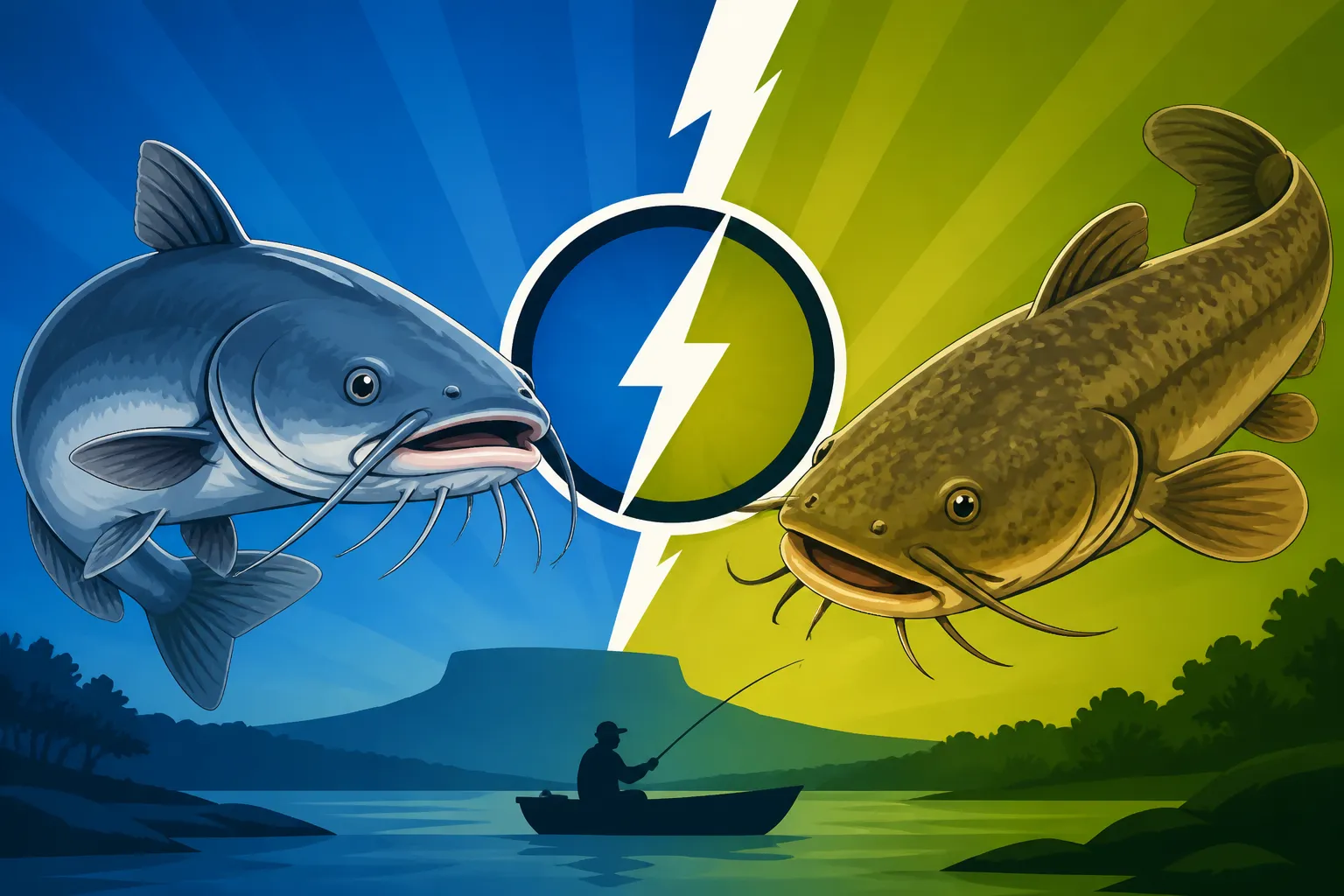
The most reliable visual indicator between these two native giants sits right at the back of the fish. A blue catfish features a deeply forked tail fin with sharp, pointed tips. If you draw an imaginary vertical line straight down through the fork, you will see a clean, dramatic V-shape indentation. In stark contrast, a flathead catfish possesses a tail that is broad, flat, and squared-off or only slightly notched in the middle. The upper lobe of a flathead’s tail fin often features a white or pale tip, particularly on younger, growing fish, which stands out instantly when lifted out of the water.
Moving forward along the underside of the belly, the anal fin offers another dead-giveaway structural cue. On a blue catfish, the anal fin is exceptionally long and straight along its bottom edge, resembling a neat row of keys on an accordion. It typically contains between 30 and 35 rays. On a flathead catfish, the anal fin is significantly shorter, rounded like a slight crescent moon, and contains only 14 to 17 rays. Counting these rays or simply observing the profile of the fin margin will clear up any confusion if you are comparing a blue against another whiskered species, a common dilemma explained in detail within our comparison on Channel Catfish vs Blue Catfish vs Flathead Catfish in Oklahoma.
Jaw Alignment and Body Shape
Taking a close look at the fish’s head reveals everything you need to know about how these top-tier predators live and hunt. The flathead catfish earns its name honestly. Its head is distinctly compressed, looking as though it were gently squeezed flat between two heavy boards. More importantly, a flathead features a prominent, undershot lower jaw. The bottom lip juts out past the upper snout, giving the fish an aggressive, bulldog-like underbite. This anatomical design allows the flathead to lie in wait on the river bottom and scoop up passing forage from below.
A blue catfish presents a much more streamlined, torpedo-like profile. Its head is sloped rather than flat, tapering smoothly down from the high arch of its back toward the tip of its snout. Unlike the flathead, the blue catfish has an overhanging upper jaw. Its top lip slightly overlaps the lower jaw, creating a smooth, wedge-shaped snout built for cruising open water and feeding on schooling baitfish at various depths. If you find yourself struggling to examine the mouth closely during a late-night fishing trip, picking up an adjustable LED headlamp on Amazon can make spotting jaw alignments and fin structures infinitely easier when handling heavy fish in the dark.
Field Identification Summary
| Physical Feature | Blue Catfish | Flathead Catfish |
|---|---|---|
| Tail Fin | Deeply forked with sharp tips | Squared-off or slightly notched |
| Anal Fin | Long and straight edge (30-35 rays) | Short and rounded edge (14-17 rays) |
| Jaw Alignment | Upper jaw overlaps lower jaw | Lower jaw juts past upper jaw (underbite) |
| Head Profile | Sloped and wedge-shaped | Extremely flat and wide |
| Coloration | Slate blue to silvery gray with white belly | Mottled olive, yellow, brown, and dark tan |
| Primary Diet | Opportunistic: live/cut shad, invertebrates | Strict carnivore: live fish only |
Habitat Preferences and Feeding Behaviors Across Oklahoma Waters
Understanding where these fish live and how they hunt is the key to filling your freezer or landing a personal best. While you can occasionally catch both species in the same stretch of water, their lifestyle preferences could not be more different. One is a wide-ranging open-water traveler, while the other is an ambush predator that rarely strays far from heavy structure.
Open Water Cruisers vs Cover-Bound Ambush Predators
Blue catfish are the pelagic wanderers of Southern reservoirs and major river systems. They thrive in large bodies of open water where they follow massive schools of gizzard and threadfin shad. Blues rely heavily on olfactory senses and lateral line vibrations to hunt, roaming across expansive mud flats, creek channels, and deep drop-offs. During the winter, huge groups of blue catfish gather in deep basin water, while spring rains pull them up into shallower mud flats where water warms quickly. If you want to dive deeper into pinpointing these open-water giants, review our strategy guide on How to Catch Blue Catfish in Deep Water.
Flatheads, often called yellow cats or mudcats locally, take a completely different approach to survival. They are solitary, highly territorial creatures that spend their days tucked deep into thick cover. You will find them wedged inside hollow logs, beneath massive boulder piles, under undercut riverbanks, or entangled in flooded timber. When darkness falls, a flathead moves out to the edge of its wooden hideout to launch lightning-fast attacks on unsuspecting prey. Because flatheads spend so much time tucked into abrasive, snag-heavy cover, anglers targeting them must rely on ultra-durable tackle. Stocking up on heavy-duty terminal tackle, high-test braided line, and robust circle hooks on Amazon before heading out ensures you won’t lose the fish of a lifetime to a submerged cedar tree.
Live Bait vs Cut Bait Tactics and Gear Essentials
Your choice of bait will almost always determine which species ends up on your hook. Blue catfish are notorious opportunistic feeders. While huge blues will certainly gobble down live fish, they are primarily driven by smell and sight. Freshly cut bait that bleeds freely into the water column is the undisputed king for blue cat fishing. Fresh-cut gizzard shad, skipjack herring, or chunked sunfish hooked on a drift rig or slip-sinker setup will draw blues from vast distances. For a complete breakdown on choosing the right presentation, check out our guide on Best Cut Bait for Catfish Fishing.
Flatheads, on the other hand, are apex predators with a strong preference for living, swimming prey. It is extraordinarily rare to catch a big flathead on stink bait, chicken liver, or dead cut bait. They want something moving, making noise, and sending out distress vibrations through the water. A lively green sunfish, bullhead, or bluegill suspended just off the bottom near heavy structure is the ultimate trap for a monster flathead. If you are prepping for a nocturnal outing targeting these wooden-structure dwellers, read up on Best Bait for Flathead Catfish at Night to maximize your time on the water.
Matching your rod and reel setup to the fishing style is equally critical. Blue catfish anglers often prefer long, medium-heavy rods that can cast heavy sinkers and cut bait far out into open water or hold steady while drifting. Flathead anglers need stout, stiff extra-heavy rods capable of stopping a fifty-pound fish instantly before it can pull your line into a submerged root wad. Equipping your vessel with heavy-duty boat rod holders ordered on Amazon gives you the leverage needed to handle violent strikes without risking a lost rod when a heavy cat hits.
Oklahoma Regulations, Size Limits, and Harvest Best Practices
Both blue and flathead catfish are vital components of local aquatic ecosystems, but their population dynamics require tailored management strategies. Knowing the rules before you head out ensures the sustainability of these fisheries and keeps your trip free of costly legal trouble.
Navigating Blue Catfish Regulations and the 30-Inch Rule
Because blue catfish can reproduce rapidly in large reservoirs, general bag limits are generous, allowing harvest for the dinner table. However, growing a truly massive trophy blue cat takes decades. To protect these slow-growing giants from over-harvest while still allowing anglers to keep plenty of smaller eating-sized fish, wildlife managers implemented specific length restrictions across state waters.
Under current guidelines, anglers face daily bag limits that combine certain whiskered species, but with strict caps on trophy-class individuals. Specifically, there is a key size threshold aimed at preserving large breeding stock, detailed thoroughly in The 30-Inch Blue Catfish Rule in Oklahoma. While you can keep a generous daily limit of smaller blues, you are strictly limited to keeping only one blue catfish over 30 inches per day in most public waters. Understanding how these regulations intersect across different species is critical, especially when fishing mixed waters; brush up on Oklahoma Catfish Rules for Blue and Channel Combined to keep your daily catch legally compliant.
Carrying a flexible, waterproof measuring board or picking up a heavy-duty digital lip scale on Amazon simplifies compliance, allowing you to quickly measure length and weight before deciding whether to keep or release a big fish.
Handling and Preserving Flathead Catfish for the Table
Flathead catfish harvest limits operate independently from the combined blue and channel catfish rules. Because flatheads do not exist in the same massive density as blues and rely on live forage, their populations are more susceptible to localized overfishing. State rules establish a dedicated daily limit specifically for flatheads, along with a minimum length requirement to ensure fish reach maturity before harvest. Always check local lake updates or river-specific rules before setting trotlines or throwing cast nets for live bait.
When it comes to table fare, anglers often debate which fish tastes better. Blue catfish offer firm, white meat with a mild flavor, provided you carefully trim away the dark lateral red line where fat and oil accumulate. Flatheads, however, are widely considered by veteran anglers to be the absolute crown jewel of freshwater eating. Because their diet consists entirely of live fish, flathead meat is extraordinarily clean, firm, and sweet, closely resembling crappie or walleye in texture. If you are curious about harvesting one for a fish fry, explore the culinary insights in Is Flathead Catfish Good to Eat?.
Whether you are hunting open-water blues on broad reservoirs or tangling with flatheads in logjams, treating large breeding fish with care is essential. Practicing catch-and-release on fish over twenty pounds helps maintain healthy populations across top-rated waters, many of which are highlighted in our tour of Trophy Catfish Spots in Oklahoma.
By mastering these physical identification cues, tailoring your bait to their unique hunting styles, and respecting state conservation rules, you will elevate your success on the water every time you cast a line.
Disclaimer
This article is for general informational purposes only and does not constitute professional advice. Laws, prices and regulations vary by location and change over time. Consult a qualified professional for guidance on your specific situation.