Oklahoma New Boat Registration Fee Cost
Buying a brand-new boat is an exciting milestone, but the paperwork and fees can feel like a murky patch of water you’d rather not navigate. Many folks get confused about how much it actually costs to register that shiny new vessel here in Oklahoma, and what all those different fees really mean. This guide is going to clear up all that financial fog, helping you understand the exact structure of the Oklahoma new boat registration fee and what other charges you can expect to pay to get your new pride and joy legally on the water.
Understanding Oklahoma's Boat Registration System for New Vessels
So, you've just picked out your dream boat, maybe a sleek bass boat from a local dealer or a sturdy pontoon boat for family outings on Lake Eufaula. That feeling of excitement is unmatched, but don't let it overshadow the important step of getting it registered. Oklahoma's system is designed to keep track of vessels and ensure everyone is operating legally, but it can feel a bit complex at first glance. It's not just a flat fee; it's a multi-layered process that takes into account the value of your boat and a few other factors.
The Initial 30-Day Window and Why It Matters
Let's talk about that initial sprint you've got once you sign the papers. In Oklahoma, you generally have a relatively short window – typically 30 days – to register your new boat from the date of purchase. Think of it like a freshly hatched bass fry needing to get to cover quickly. Missing this deadline isn't just a minor oversight; it can lead to additional headaches and penalties down the line. That's why it's crucial to understand How Long Do You Have to Register a Boat After Buying It in Oklahoma? and start gathering your documents as soon as you can. It's easy to get caught up in planning your first fishing trip, but neglecting this step can quickly turn that excitement into a costly frustration.
This 30-day period isn't a suggestion; it's a requirement. If you happen to buy your boat from a dealer, they'll often handle some of the initial paperwork or at least guide you through it. However, if you're buying privately, the responsibility falls squarely on your shoulders. It's a critical detail that many first-time boat owners overlook, assuming they have more time than they actually do. A common scenario might be buying a boat on a Friday, planning to hit the lake that weekend, and then getting busy with life, pushing off the registration. Before you know it, that 30-day window has closed, and suddenly, you're looking at extra fees.
What "New" Really Means in the Eyes of Oklahoma Law
When we talk about "new" in the context of boat registration, it typically refers to a vessel that has never been registered in Oklahoma before. This could be a boat fresh off the showroom floor, never before titled or registered by an end-user, or it could be a boat brought in from another state where it was also considered new, but now needs its initial Oklahoma registration. The key is that it's entering the Oklahoma registration system for the first time in its operational life with you as the owner. This distinction is important because the fee structure for a truly new boat is different than for a used one, which might have accumulated some depreciation.
For example, if you just purchased a gleaming, never-before-owned fishing boat from a local dealership, that's unequivocally "new." The paperwork you receive will reflect that, typically including a Manufacturer's Statement of Origin (MSO) or Manufacturer's Certificate of Origin (MCO). If, on the other hand, you bought a two-year-old boat that was previously registered in Arkansas and are now bringing it into Oklahoma, while it might be "new to you," the state will generally treat it as a used vessel for registration purposes because it's already depreciated. This guide primarily focuses on the truly "new" scenario – the first time registration of a non-depreciated vessel in Oklahoma. This foundational understanding is vital to making sense of the fees you'll encounter.
Deconstructing the Registration Fee for Your Brand New Boat
Okay, let's get into the nitty-gritty of what you'll actually pay for that shiny new boat. It's not a flat rate like a fishing license; it's a bit more nuanced. The Oklahoma Tax Commission, through its motor license agents across the state, handles these registrations, and they follow a specific formula. It's less about the size of the boat and more about its value when it comes to the primary registration cost.
The Percentage-Based Calculation: How It Works
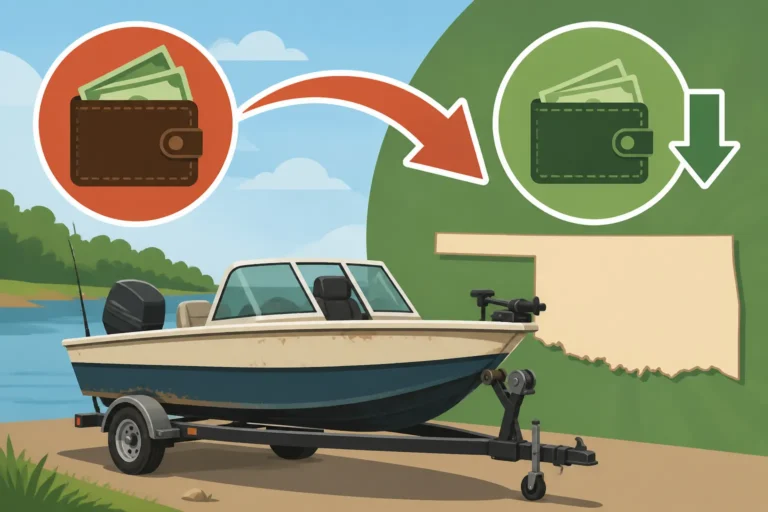
For a new boat in Oklahoma, the primary registration fee is calculated as a percentage of the manufacturer's suggested retail price (MSRP) or the purchase price, whichever is higher, for the boat, motor, and any permanently attached accessories. Specifically, it's typically set at a rate that reflects a certain percentage. You can get a deeper dive into this by checking out How Oklahoma Calculates a 3.25 Percent Boat Registration Fee. So, if your new boat package has a total value, say, of $20,000, you'll apply that percentage to the full $20,000. This is different from how you might register a car, which has a different fee structure.
Let's imagine you just bought a new fishing boat from Bass Pro Shops in Oklahoma City, complete with a powerful outboard and a trolling motor already mounted. The total package price is what the state will look at when calculating your fee. This isn't just about the hull itself; it includes all the major components that make it a functional vessel. For instance, if the boat alone is $15,000, the motor is $4,000, and built-in electronics are another $1,000, your total value for calculation is $20,000. It's a critical detail because overlooking the motor or accessories can lead to an incorrect initial estimate of your costs.
Understanding the Maximum Fee Cap
Now, here's a piece of good news for those investing in higher-end vessels: Oklahoma does have a cap on the annual boat registration fee. No matter how expensive your new boat is, there's a maximum amount you'll pay for the annual registration. This means that while the percentage calculation applies, once your boat's value pushes the calculated fee past a certain threshold, the fee stops increasing. This cap is a real relief for anglers who've invested heavily in a top-tier bass boat or a large cruiser for Lake Texoma. It's important to understand this ceiling because it can significantly impact the total cost for very expensive new boats. You can find more details on this by reading Oklahoma's Maximum Boat Registration Fee of $151.
Consider a scenario where the percentage calculation on a very expensive boat would theoretically yield an annual fee of several hundred dollars. Because of this cap, you won't actually pay that much. Instead, you'll pay the maximum allowed amount. This makes budgeting a lot easier for premium boat owners and ensures the registration burden doesn't become excessive. It's a nice safety net for new boat owners, especially those who might be upgrading to a larger, more feature-rich vessel that could otherwise accrue a much higher annual fee.
Additional Fees Beyond the Core Registration
While the percentage-based fee is the big one, it's not the only cost you'll encounter. There are often smaller, administrative fees that get tacked on. These might include a lien fee if you financed your boat, a mailing fee if you want your decals sent to you, or specific fees related to the motor license agent's services. These aren't usually enormous, but they add up and are important to factor into your total budget. Think of them as the little incidentals that come with buying a new piece of gear, much like the shipping cost on that new tackle box you ordered from Amazon. These small fees can often be overlooked in the excitement of a new boat purchase.
For instance, when you go to the motor license agency, there's usually a service fee for their time and processing of your documents. If you have a loan on your new boat, a lien will be recorded, and there's a specific fee for that. While these individual charges are relatively small, ignoring them can lead to an unpleasant surprise when the final bill is tallied. Always ask for a breakdown of all fees involved to ensure you have a complete picture of your total out-of-pocket expense. Understanding Oklahoma Boat Registration and Titling Rules Explained will give you a comprehensive overview of these various charges.
The Titling Process: An Essential Partner to Registration
It's easy to confuse registration and titling, but they are two distinct, albeit interconnected, processes in Oklahoma. Think of registration as the annual permit to operate your boat, while titling is proof of ownership. You can't really have one without the other for a new boat, and both come with their own set of fees.
Why You Need a Boat Title in Oklahoma
Just like a car, your new boat needs a title in Oklahoma. This document establishes legal ownership and is absolutely crucial for several reasons. It's necessary when you sell the boat, a lender will require it if you finance the purchase, and it's your primary proof that the vessel truly belongs to you. Without a title, proving ownership can become a tangled mess, especially if the boat is ever stolen or involved in an accident. You definitely want to make sure you get this sorted immediately after purchase. This is a question many people have: Do You Need to Title a Boat You Just Bought in Oklahoma?, and the answer is almost always yes.
The title is essentially your boat's birth certificate and deed rolled into one. It details the vessel's identification number (HIN), make, model, and the owner's information. If you're planning on reselling the boat down the line, having a clean and properly transferred title is non-negotiable. Banks and credit unions will always require the title to be held by them until the loan is paid off, protecting their interest in the asset. Skipping this step or delaying it can create significant legal and financial complications that no one wants to deal with.
The Cost of Titling Your New Vessel
The fee for titling your new boat in Oklahoma is typically a separate, fixed charge. Unlike the registration fee, which is percentage-based, the titling fee is generally a set amount that doesn't fluctuate with the boat's value. This makes it a bit simpler to budget for. However, remember that if you have a lien (a loan) on your boat, there will be an additional lien filing fee on top of the base titling cost. This is usually a small but necessary expense that accompanies financing. It's a good idea to confirm Is the Oklahoma Titling Fee Charged on Top of Registration? as part of your overall cost calculation.
To give you a clearer picture, let's look at the breakdown of what you might expect for a brand-new boat. Remember, these are general descriptions, and you should always check with a motor license agent for the most current figures and specific nuances of your situation.
| Fee Type | Description | Calculation Method | Common Additional Factor |
|---|---|---|---|
| Annual Registration Fee | Required annually to legally operate your boat on Oklahoma waters. | Percentage of MSRP/purchase price (boat, motor, permanent accessories), with a state cap. | Varies based on boat value, capped. |
| Initial Titling Fee | One-time fee to establish legal ownership of the vessel. | Fixed amount. | Lien filing fee if financed. |
| Lien Filing Fee | If you have a loan on your boat, this fee registers the lender's interest. | Fixed amount. | Only applies if financed. |
| Excise Tax | A one-time tax on the purchase of a new boat, similar to sales tax, but paid to the state tag agency. | Percentage of purchase price. | Applies to almost all new purchases. |
| Motor License Agent Fee | Small administrative fee charged by the tag agency for processing your paperwork. | Fixed amount per transaction. | Always applies. |
As you can see, the titling fee is just one component. Along with the titling fee, you'll also likely pay an excise tax, which is essentially Oklahoma's version of a sales tax on vehicles and vessels. This is another percentage-based fee on the purchase price, and it's a one-time charge you pay when you first title the boat. Therefore, the "total cost to get on the water" includes registration, titling, excise tax, and those smaller administrative fees. For a complete picture, exploring Total Cost to Register and Title a Boat in Oklahoma is highly recommended.
Avoiding Common Pitfalls and Ensuring a Smooth Process
Navigating bureaucracy can feel like reeling in a trophy flathead when you're using ultralight tackle – challenging, to say the least! But with a little preparation, you can make the new boat registration and titling process as smooth as glassy water at dawn. Ignoring the requirements or delaying the process can lead to unnecessary stress and financial penalties, which nobody wants when they're dreaming of their first catch.
Gathering Your Documentation Before You Go
Preparation is key, my friends. Before you even think about heading to a motor license agency, gather all your paperwork. This means your bill of sale, the Manufacturer's Statement of Origin (MSO) or Manufacturer's Certificate of Origin (MCO) if it's a brand-new boat from a dealer, and any loan documents if you've financed it. If you're a new Oklahoma resident bringing a boat from out of state, you'll also need your out-of-state title and registration, along with proof of Oklahoma residency. Having everything in order prevents frustrating delays and ensures you don't have to make multiple trips.
Imagine showing up, excited, only to be told you're missing a crucial document. That's a surefire way to dampen your new boat enthusiasm! Double-check everything. For example, the MSO is critical for a truly new boat, as it's the document that certifies the boat's origin and has never been titled. If you bought from a private seller, you'd need the properly signed-over title from the previous owner. It's also wise to have your driver's license handy for identification. Thinking ahead about all the required paperwork will save you a world of trouble.
The Consequences of Delayed Registration
Remember that 30-day window we talked about earlier? It's not just a suggestion; it's a rule with teeth. If you miss that deadline, you'll likely incur penalties. These can be daily fees that accrue the longer your registration is past due. These penalties aren't insignificant, and they're entirely avoidable with a bit of proactive planning. It's a classic example of how a small oversight can lead to a larger expense. You don't want your first few casts on the lake to be overshadowed by the thought of accumulating late fees.
Beyond just the monetary penalties, operating an unregistered boat can also lead to citations from game wardens or other law enforcement officers. While a friendly reminder might be common, they can issue fines if you're found to be in violation. It's simply not worth the risk. What Happens If You Miss the 30-Day Boat Registration Deadline in Oklahoma? is a topic you absolutely need to understand to avoid these unnecessary headaches. Nobody wants a game warden to be the first person to greet them on the water for a problem that could have been easily prevented.
Where to Go to Get it Done
The good news is that getting your boat registered and titled is fairly straightforward once you have your documents in order. You'll visit a local Oklahoma motor license agent. These offices are located throughout the state, often referred to as "tag agencies." They are equipped to handle all the necessary paperwork, calculate your fees, and issue your registration decals and temporary tags on the spot. You can also explore options for How to Buy an Oklahoma Fishing License Online through the ODWC website, but boat registration usually requires an in-person visit for new boats due to the documentation and excise tax requirements.
Before you head out, it's always a good idea to check the operating hours of your nearest motor license agency. Some agencies might be busier than others, especially during peak seasons like spring and summer when many new boats hit the water. A quick call ahead can confirm what documents you need and give you an idea of wait times. Once your boat is properly registered and titled, you'll receive your registration card and decals to affix to your boat, making it legally ready for all your fishing adventures. Don't forget, you'll also need a fishing license to accompany your boat registration before you wet a line! Where to Buy a Fishing License in Oklahoma is another excellent resource for new anglers to consider.
Disclaimer
This article is for general informational purposes only and does not constitute professional advice. Laws, prices and regulations vary by location and change over time. Consult a qualified professional for guidance on your specific situation.