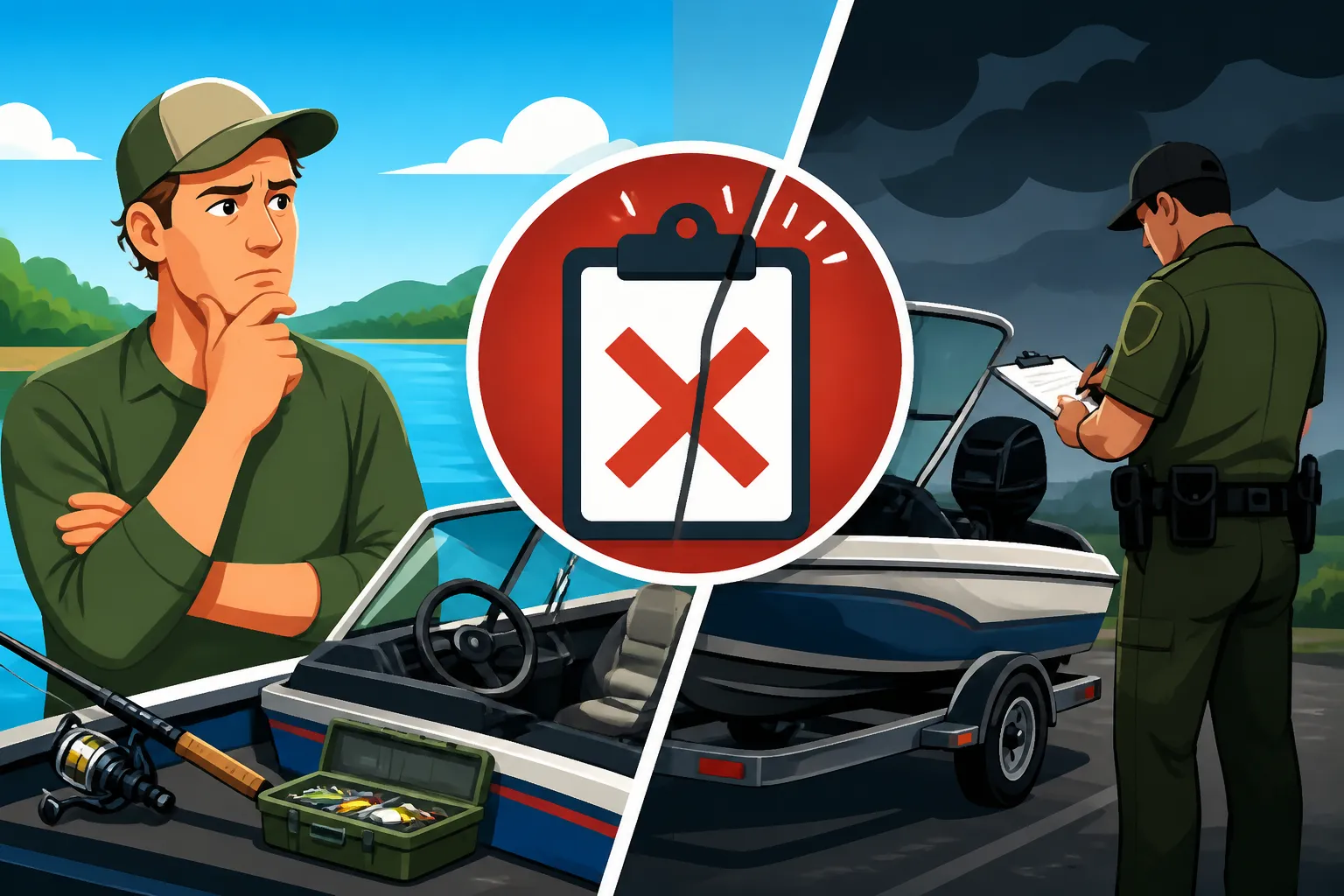
What Happens If You Miss the 30-Day Boat Registration Deadline in Oklahoma?
You just bought that shiny new fishing boat, or perhaps you finally moved your beloved vessel into Oklahoma, and you're dreaming of open water on Lake Texoma or the peaceful coves of Lake Eufaula. But then you remember: there's paperwork. Specifically, the 30-day deadline to register your boat in Oklahoma. If that deadline has slipped your mind, or if life simply got in the way, you're probably wondering what kind of trouble you might be in and, more importantly, how to fix it without too much hassle. This guide is here to walk you through exactly what happens when you miss that crucial 30-day window, the potential headaches you might face, and the steps you can take to get your boat legally registered and back on the water.
The Crucial 30-Day Window for Oklahoma Boat Registration
Buying a boat is exciting! Whether it’s a nimble jon boat for fishing local ponds or a powerful bass boat for tournament angling, the thrill of ownership often overshadows the less glamorous but equally important administrative tasks. In Oklahoma, one of the first things you need to tackle after acquiring a boat or moving it into the state is getting it properly registered.
Understanding the Initial Registration Period
Oklahoma law is pretty clear: if you purchase a boat, or bring a boat that was previously registered in another state into Oklahoma, you have a mere 30 calendar days to get it registered with the Oklahoma Tax Commission (OTC). This 30-day countdown starts from the date of purchase, or from the date you establish residency in Oklahoma if you're bringing an out-of-state boat with you. It sounds straightforward, but between inspecting your new purchase, maybe getting it detailed, or just figuring out your first trip to the lake, that month can vanish in a flash.
Many folks assume they can just head out to the water with a bill of sale, especially if they’re just waiting for the dealer to send over the paperwork, but that’s a risky gamble. The 30-day clock is ticking from day one, regardless of whether you've received your permanent title or not. It's a common point of confusion, and one that often catches new boat owners off guard. You can find more details on this initial period in our comprehensive guide, Oklahoma Boat Registration and Titling Rules Explained.
Why This Deadline Matters for Boaters
This 30-day period isn't just an arbitrary rule; it's a vital part of maintaining public safety, enforcing regulations, and even funding Oklahoma's crucial wildlife and conservation efforts. When boats are properly registered, it allows game wardens and other law enforcement agencies to easily identify vessels on the water, ensuring everyone is following the rules. This also helps in case of accidents, theft, or other emergencies, as registered boats can be traced back to their owners more efficiently.
Think about it: if every boat could just float around unregistered indefinitely, it would be nearly impossible to manage the waterways. The fees collected from boat registrations directly contribute to programs that maintain boat ramps, improve fishing habitats, and ensure the safety of Oklahoma's lakes and rivers. So, while it might feel like bureaucratic red tape, it's actually for the greater good of all anglers and boaters in the Sooner State. Missing this deadline means you're operating outside of these vital systems, and that's where the potential for penalties comes in. Our post, Oklahoma's 30-Day Boat Registration Deadline Explained, delves deeper into the specifics of this timeframe.
Penalties and Frustrations of Late Boat Registration in Oklahoma
Let's face it, life happens. Maybe you were busy with work, maybe a family emergency took precedence, or maybe you simply misread the calendar. Whatever the reason, if you've missed that 30-day window, you're not alone. However, Oklahoma has clear rules in place for tardy registrations, and these can lead to both financial headaches and inconvenient encounters with law enforcement.
The Financial Hit: Late Fees and Interest
This is where it can really sting. Oklahoma doesn't just give you a slap on the wrist for being late. Once you pass that 30-day mark, you're looking at penalties. The state levies a late penalty, which is typically $1.00 per day for the first 90 days you're overdue. So, if you're 60 days late, that's an extra $60 tacked onto your registration fee. It might not sound like a fortune, but it's money that could have gone towards new fishing lures or fuel for your next outing.
After those first 90 days, the penalty structure shifts. The daily penalty stops, but then you're hit with an additional penalty equal to 10% of the registration fee. So, if your initial registration fee was, say, $50, you're now paying an extra $5 on top of whatever daily penalties accumulated. These penalties are designed to encourage prompt registration, and they certainly do a good job of that by hitting your wallet. It's frustrating to pay more for something simply because of a missed date, but that's the reality. You can review how the standard fees are calculated in Oklahoma New Boat Registration Fee Cost to understand what you might have avoided.
Dealing with Enforcement and Potential Citations
Beyond the financial penalties at the Tag Agency, there's the even more immediate concern of actually using your boat. If you get pulled over by a game warden or other marine law enforcement officer while your boat is unregistered or your registration is expired, you could face a citation. This isn't just a minor inconvenience; it can be a misdemeanor offense in Oklahoma.
Imagine you're out on Grand Lake, enjoying a beautiful Saturday morning chasing Best Bass Fishing Spots on Grand Lake O' the Cherokees, Oklahoma, and a game warden approaches your boat for a routine safety check. They ask for your registration, and you realize it's expired. Not only will they likely inform you of your overdue status, but they have the authority to issue a ticket. This can come with its own set of court fees and additional fines beyond what the Tax Commission charges for late registration. It's an unnecessary stressor that can turn a relaxing day into a costly nightmare. Law enforcement officers are out there to ensure everyone's safety and compliance, and they take unregistered vessels seriously.
Other Complications of an Expired or Missing Registration
The financial and legal implications are significant, but there are other subtle frustrations too. For instance, some marinas or boat launch facilities might be hesitant to let you use their services if your boat's registration is clearly expired or missing. While not universally enforced, some private facilities might have policies to only service legally registered vessels to avoid their own liabilities.
Furthermore, if you ever need to apply for a boat loan, secure insurance, or even sell your boat, having an unregistered or expired status can complicate matters. Buyers might be wary, and financial institutions or insurance companies will require proper documentation. Trying to sell a boat that isn't legally registered in your name can add layers of paperwork and delay the sale significantly. It's always best to keep everything above board to avoid these kinds of ripple effects down the line.
Your Path to Getting Back on Track: Late Registration Steps
So, you've missed the deadline. Don't panic! It's not the end of the world, and you absolutely can get your boat registered. The process might involve a few extra steps and fees, but it's completely doable. The key is to address it as soon as you realize the oversight.
Gathering Your Documents for a Late Application
The documents you'll need for a late registration are largely the same as for a timely one, but it's crucial to have everything in order to avoid further delays. Here’s a checklist:
- Proof of Ownership: This is usually the manufacturer's statement of origin (MSO) for a new boat, or a properly assigned title from the previous owner for a used boat. If you don't have this, contact the seller or the place you purchased it immediately.
- Bill of Sale: A clear bill of sale showing the purchase price, date of sale, and buyer/seller information.
- Proof of Identity: Your Oklahoma driver's license or state ID.
- Proof of Residency: If you're new to Oklahoma, you'll need to establish your residency.
- Hull Identification Number (HIN): This unique 12-digit number is typically found on the transom of your boat.
- Pencil Tracing or Photograph of HIN: Some agencies might require a physical tracing or a clear photograph of the HIN. It's always good to have this on hand.
- Payment for Fees and Penalties: Be prepared for the standard registration fees, plus any accumulated late penalties and interest.
It’s a good idea to call your local tag agency before you go to confirm their specific requirements, as sometimes they can vary slightly or have additional forms for late registrations. Don't forget, when you're looking for boating essentials, retailers like Bass Pro Shops or even online giants like Amazon often have forms or links to state resources that can help you double-check your checklist.
Where to Go and What to Expect for Overdue Registration
Once you have all your documents ready, your next stop is an Oklahoma Tag Agency. These agencies handle motor vehicle and boat registrations across the state. You can usually find one conveniently located in most towns and cities. Just like with a car, you’ll present your documents, fill out any necessary forms, and pay the applicable fees, including the late penalties.
The staff at the tag agency will process your application, verify your documents, and issue you a temporary registration. Your permanent registration decal and card will typically be mailed to you within a few weeks. It's important to remember that you must have proof of registration (the temporary one will suffice) on board your vessel whenever it's in operation. Don't wait until you receive the permanent decal to go fishing.
Here's a quick comparison of timely vs. late registration:
| Aspect | Timely Registration (Within 30 Days) | Late Registration (After 30 Days) |
|---|---|---|
| Fees | Standard registration fee + titling fee | Standard registration fee + titling fee + daily late penalties + 10% penalty (after 90 days) |
| Process | Straightforward, fewer questions | Same basic process, but additional penalty calculations and forms |
| Documentation | MSO/Title, Bill of Sale, ID, HIN | MSO/Title, Bill of Sale, ID, HIN (may be scrutinized more) |
| Legal Status | Compliant, no risk of citation | At risk of citations if caught on water before resolution |
| Stress Level | Low | Potentially high due to penalties and fear of enforcement |
| Time Investment | Relatively quick | Can take longer due to penalty calculations or missed documents |
While the process for a late registration isn't dramatically different from a timely one, the added costs and the lingering worry about legal repercussions make it far less pleasant. That's why being proactive is always the better route.
Preventing Future Delays and Staying Compliant
Nobody wants to deal with late fees or the worry of getting a citation. Thankfully, once you've gotten your boat registered, there are several simple strategies you can employ to ensure you never miss a renewal deadline again. Staying on top of boat registration means more time on the water and less time stressing about paperwork.
Strategies for Remembering Your Boat Registration Renewal
The annual renewal process in Oklahoma can be easy to overlook, especially if you don't use your boat year-round. Here are some tried-and-true methods to keep that renewal date etched in your mind:
- Set Digital Reminders: Use your phone's calendar, Google Calendar, or other digital assistants to set multiple reminders. Set one for a month before the expiration date, another for two weeks out, and a final one a few days before. Label them clearly, like "Boat Registration Renewal Due!"
- Physical Calendar Marks: If you're a fan of old-school methods, mark your wall calendar or planner prominently. Put a big red circle around the month and make a note.
- Link it to Another Event: Pair your boat registration renewal with an annual event you won't forget. Maybe it's around your birthday, a specific holiday, or the start of a fishing season. For example, if you know you want to hit the Lake Texoma May Striper Fishing in Oklahoma run hard every year, make sure your registration is squared away well before then.
- Keep Your Information Updated: Ensure the Oklahoma Tax Commission has your correct mailing address. They typically send out renewal notices, but if your address is outdated, you won't receive them. This is a common pitfall.
- Create a "Boat Documents" Folder: Have a dedicated physical and/or digital folder for all your boat's important documents. This includes the title, original bill of sale, and your current registration. When you receive your new decal and card, immediately place them in this folder or apply the decal.
Utilizing Online Resources and Local Agencies
Oklahoma makes it relatively easy to stay compliant, with various resources available to boat owners.
- Online Renewal: Many boat registrations can be renewed online through the Oklahoma Tax Commission's website. This is often the quickest and most convenient way to handle the process. You can typically do this from the comfort of your home, avoiding a trip to the tag agency. Just make sure you're on the official state website.
- Local Tag Agencies: As mentioned, your local tag agency is a primary resource. They can answer questions, process renewals, and help with any unique situations you might encounter. Don't hesitate to give them a call if you're unsure about something.
- ODWC Website: The Oklahoma Department of Wildlife Conservation (ODWC) website also provides valuable information regarding boat registration, safety, and regulations. While they don't handle the registration itself, they are an excellent source for understanding the bigger picture of boating rules.
- Boating Retailers: Sometimes, major retailers like Bass Pro Shops or even smaller local tackle shops will have information or flyers about boat registration requirements, especially during peak boating seasons. They want you on the water just as much as you do!
By being proactive and using the resources at your disposal, you can ensure your boat registration is always up-to-date. This small administrative effort pays off immensely by preventing fines, avoiding legal troubles, and most importantly, keeping you stress-free and ready to enjoy Oklahoma’s fantastic waterways. Happy boating!
Disclaimer
This article is for general informational purposes only and does not constitute professional advice. Laws, prices and regulations vary by location and change over time. Consult a qualified professional for guidance on your specific situation.