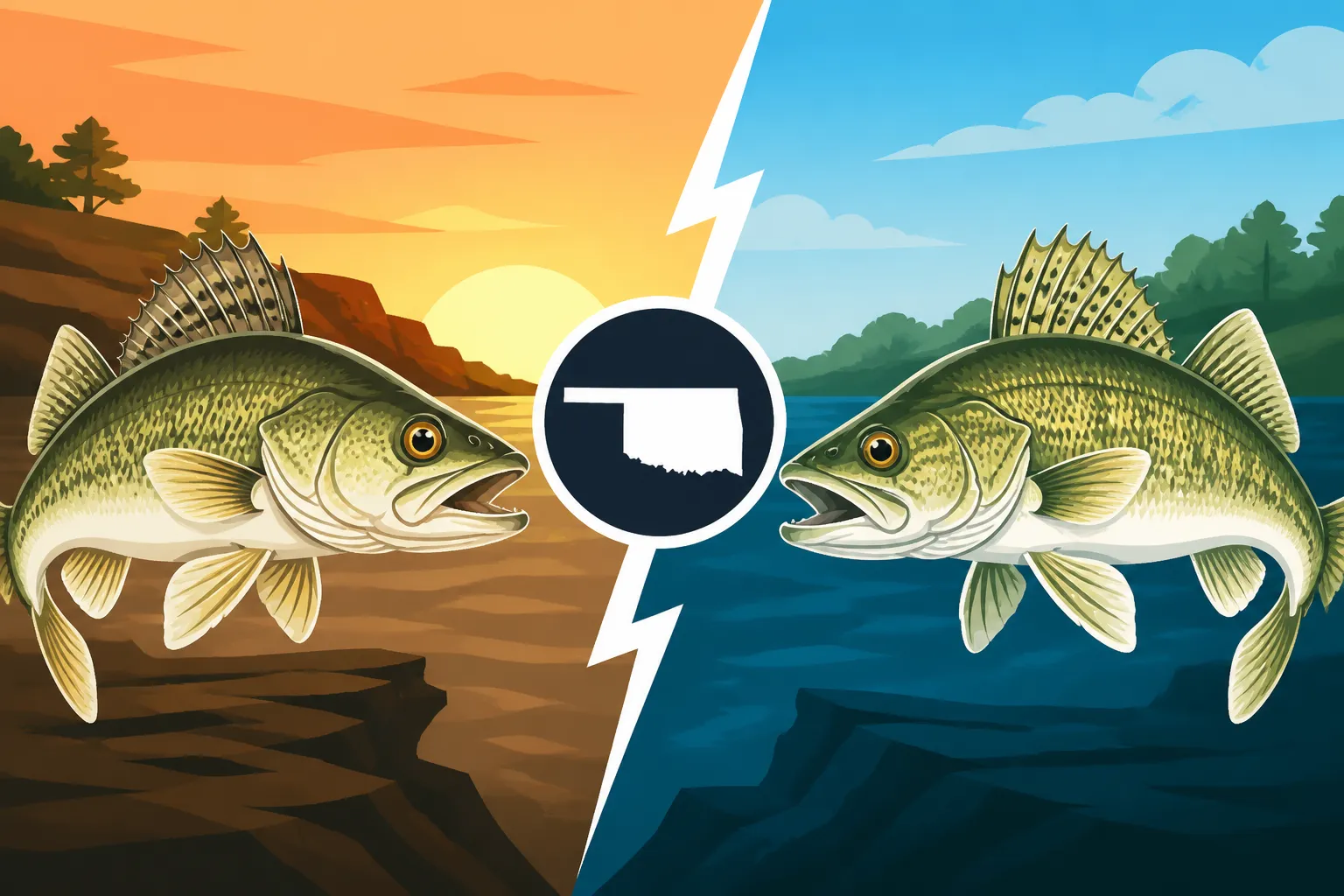
Sauger vs Saugeye: Key Differences for Oklahoma Anglers
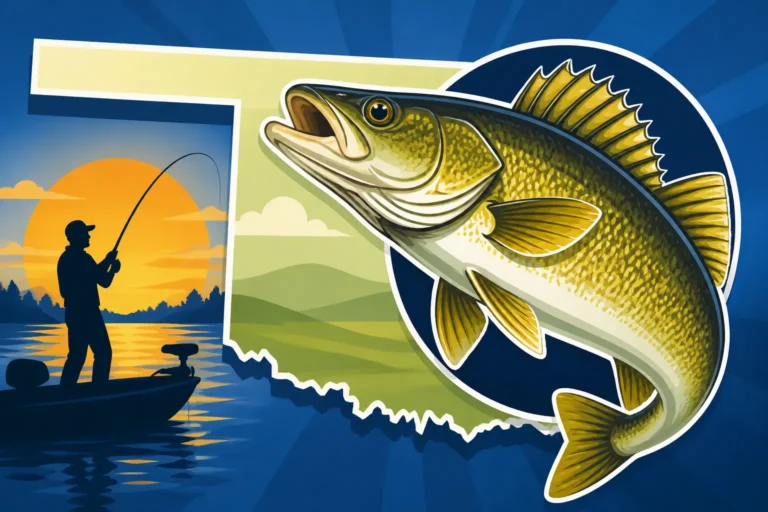
For many Oklahoma anglers, there's nothing quite like the thrill of reeling in a feisty walleye, or one of its equally spirited cousins. However, a common source of head-scratching often comes when trying to tell the difference between a sauger and a saugeye – two fantastic sport fish that look incredibly similar at first glance. It's a real frustration when you're out on the water, trying to quickly figure out what's on the end of your line, especially when bag limits and size restrictions can differ! This guide is here to clear up that confusion, offering clear, practical tips to help you distinguish between these two formidable fighters.
Understanding the Sauger's Signature Marks
The sauger (Sander canadensis) is a native fish to many parts of North America, including Oklahoma, and it has some distinct features that, once you know them, make it easier to identify. They are often found in larger rivers and deeper parts of reservoirs, preferring areas with current and moderate turbidity.
Dorsal Fin Distinctions and Body Patterns
One of the most reliable ways to identify a sauger is by looking at its dorsal fins. Unlike its walleye cousin, the sauger’s spiny dorsal fin (the one closer to the head) will have very obvious, distinct black spots. These spots are usually arranged in neat rows, creating a banded or mottled appearance. If you run your hand along the membrane between the spines, you'll also notice it’s generally free of scales, or at least has very few, giving it a smooth feel.
Beyond the dorsal fin, the sauger's body itself provides clues. They typically have a more cylindrical, slender body shape compared to a walleye, and their overall coloration tends to be brownish or brassy, often with dark blotches or saddle-like markings across their back and sides. These markings often create a camouflage pattern that helps them blend into rocky or gravelly river bottoms. The scales on a sauger often feel a bit rougher to the touch than a walleye's, another subtle but sometimes helpful indicator when you’re handling the fish.
Tail Fin and Pyloric Caeca: Deeper Dives for the Determined Angler
If the dorsal fin spots aren't conclusive, or if you just want to be absolutely sure, take a look at the tail fin. A key characteristic of the sauger is the lack of a white tip on the lower lobe of its caudal (tail) fin. This is a crucial difference from the walleye, which almost always has a prominent white tip there. The sauger's tail will be more uniformly colored, often with some spotting or banding that matches its body.
For the truly dedicated angler, or perhaps for those collecting specimens for scientific purposes, there's an internal characteristic that unequivocally separates a sauger from a walleye or saugeye: the pyloric caeca. These are finger-like projections found at the junction of the stomach and intestine. A pure sauger will have a relatively small number of long, unbranched pyloric caeca, usually numbering between 6 and 9. While you certainly won't be dissecting your catch on the water, this anatomical detail is what makes a sauger biologically distinct and is important in scientific identification. You can find detailed anatomical guides, often available through university extensions or even on Amazon, which illustrate these internal features.
Decoding the Saugeye: The Hybrid Clues
The saugeye is a fascinating fish, a hybrid created by crossing a female walleye with a male sauger. This deliberate cross was developed by fisheries biologists to combine the best traits of both parent species – the sauger's adaptability to turbid water and riverine environments, and the walleye's faster growth rate and larger size potential. In Oklahoma, these hybrids are often stocked in reservoirs to provide excellent fishing opportunities, particularly in waters where pure walleye or sauger might struggle.
The Blotches, Bars, and Dorsal Fin of a Saugeye
The saugeye often presents a blend of characteristics from both parents, which is precisely why they can be so confusing to identify! When looking at the spiny dorsal fin, a saugeye will typically have distinct dark spots or bars, similar to a sauger. However, these spots are often less defined and more "blotchy" than the crisp, regular rows you'd see on a pure sauger. You might also notice some darker streaks or patches on the fin membrane, rather than isolated spots.
On the body, saugeye tend to show some of the dark, saddle-like blotches of the sauger, but often with the more elongated, somewhat compressed body shape of a walleye. Their overall color can vary, usually a mix of gold, brown, and olive, reflecting both parent species. The scales on a saugeye might feel a bit smoother than a sauger's, leaning more towards the walleye side. It's truly a mix-and-match situation, which means you have to look for a combination of traits rather than just one defining characteristic.
Why the Saugeye Exists and Where to Find Them
Saugeye were specifically bred to be a robust sport fish, thriving in conditions that might not be ideal for either pure species. They grow faster than sauger and often tolerate warmer, more turbid waters better than walleye. This makes them an excellent choice for stocking programs in many Oklahoma lakes and reservoirs, especially those with some murkiness or fluctuating water levels. They tend to be more active during daylight hours than pure walleye, which often prefer low light, and they are generally easier for anglers to catch.
When it comes to the tail fin, the saugeye is often the trickiest. While some saugeye might have a faint white tip on the lower lobe of the caudal fin, it's typically not as pronounced or consistent as on a pure walleye. It might just be a small, smudged patch of white, or even completely absent, leaning towards the sauger trait. Because of this variability, relying solely on the tail fin can lead to misidentification, making it essential to combine all the visual cues you can gather. Anglers often find saugeye in open water, along main lake points, or near submerged structure in places like Canton Lake or Foss Lake, where they are regularly stocked. Best Walleye Fishing Spots in Oklahoma covers some of the prime locations for these hybrid fish.
Why Knowing the Difference is Crucial for Oklahoma Anglers
Beyond the personal satisfaction of correctly identifying your catch, distinguishing between sauger and saugeye (and walleye, for that matter) carries significant weight for Oklahoma anglers. It's not just about bragging rights; it's about adhering to regulations, contributing to conservation, and making the most of your fishing experience.
Navigating Bag and Size Limits for Each Species
The most immediate reason to know your fish is because Oklahoma's fishing regulations can differ significantly for each species. For example, bag limits and minimum length requirements might be specific to walleye, sauger, or saugeye, or sometimes combine them. Imagine catching a beautiful fish, proud of your technique, only to realize later that you accidentally exceeded a limit because you misidentified it. That's a headache no one wants, and it could lead to penalties. The Oklahoma Department of Wildlife Conservation (ODWC) sets these rules to manage fish populations sustainably.
Being able to confidently identify your catch on the spot means you can make informed decisions. If you're on a lake with a 16-inch minimum for walleye but a different limit for saugeye, knowing which one you have can save you from a fine or, more importantly, from impacting the future of the fishery. Always check the current regulations handbook for the specific body of water you're fishing, as limits can vary not just by species, but by lake or river system. Understanding these rules is a fundamental part of responsible angling in Oklahoma. You can always refer to resources like Oklahoma Fishing Regulations You Need to Know in Oklahoma for detailed information.
The Importance of Accurate Identification for Records and Conservation
Accurate fish identification also plays a vital role in conservation efforts and fisheries management. When anglers correctly report their catches, especially in tournaments or during creel surveys, it provides invaluable data to wildlife agencies. This data helps biologists understand population health, growth rates, and the overall success of stocking programs. If everyone is misidentifying sauger as saugeye, or vice-versa, the data becomes skewed, making it harder for the ODWC to make sound decisions about stocking, habitat improvements, or regulation adjustments.
Furthermore, if you're ever lucky enough to land a potential state record fish, precise identification is paramount. Imagine catching a monster saugeye only to have it incorrectly identified as a sauger, potentially missing out on a record. The integrity of state records relies heavily on accurate species identification. So, taking the time to learn these differences isn't just for your benefit; it's a small but significant way you can contribute to the health and future of Oklahoma's diverse fisheries. Understanding Oklahoma's 181 Fish Species: A Quick Overview can highlight the importance of knowing each one.
Sauger vs. Saugeye: A Quick Reference Guide
To help you quickly differentiate these two similar fish species, here's a handy comparison table summarizing their key identifying characteristics. Keep this in mind next time you're trying to figure out what's on the end of your line!
| Feature | Sauger | Saugeye (Walleye x Sauger Hybrid) |
|---|---|---|
| Spiny Dorsal Fin | Distinct dark spots in rows | Blotchy, less defined dark spots/streaks |
| Caudal (Tail) Fin | No white tip on lower lobe | Faint or absent white tip on lower lobe |
| Body Markings | Prominent dark blotches/saddle marks | Mix of blotches and sometimes faint bars |
| Body Shape | More cylindrical, slender | Intermediate, often more elongated than sauger |
| Overall Color | Brownish/brassy, often mottled | Gold/brown/olive mix, variable |
| Pyloric Caeca | Few, long, unbranched (internal) | Intermediate (internal, not practical roadside ID) |
| Preferred Habitat | Rivers, turbid areas, deeper water | Reservoirs, lakes, tolerant of varying turbidity |
| Typical Size | Generally smaller than walleye or saugeye | Grows faster and larger than sauger |
Fishing for Sauger and Saugeye in Oklahoma
Once you can tell the difference, the next step is enjoying the fantastic fishing opportunities these species provide. Both sauger and saugeye are aggressive predators that put up a great fight, making them highly sought after by anglers across the state.
Common Techniques and Preferred Baits
Fishing for sauger and saugeye often involves similar techniques, given their shared genetics and predatory nature. They are primarily bottom-oriented fish, so presenting your bait or lure near the lakebed is usually key. Jigs are incredibly effective, especially tipped with live bait like minnows or shiners. Popular jig colors vary, but chartreuse, white, and darker purples or blues often produce results. Soft plastic grubs, paddle tails, or creature baits rigged on a jig head can also be deadly, mimicking small baitfish.
Trolling with crankbaits is another highly successful method, particularly in larger reservoirs where saugeye roam. Deep-diving crankbaits that mimic shad or other forage fish, in natural or bright colors, are excellent choices. You'll want to fish these along ledges, humps, and submerged creek channels. For sauger, who often inhabit river systems, vertical jigging in deeper holes or current breaks with minnows or jigs is a classic and effective strategy. Using a good quality fishing line, like a sensitive braided line with a fluorocarbon leader, can help you detect those subtle bites. Many anglers also find success using a simple slip-sinker rig with live minnows or nightcrawlers when targeting these fish from the bank or a stationary boat. Best Rods and Reels for Oklahoma Fishing can guide you to the right setup for these tenacious fish.
Best Times and Locations for Success
Both sauger and saugeye are often more active during low-light conditions, such as dawn, dusk, or even at night. However, saugeye, due to their walleye parentage, can be caught throughout the day, especially if the water is a bit stained or cloudy. In Oklahoma, spring and fall are typically the prime seasons for targeting these species. During spring, they'll be moving into shallower areas to spawn, making them more accessible. In the fall, they feed aggressively to put on weight for winter, congregating in predictable patterns on structure.
Look for areas with distinct structure in reservoirs – submerged humps, points, rock piles, ledges, and creek channels are all prime real estate. A good fish finder can be an indispensable tool for locating these fish and their preferred habitats; many anglers rely on models that offer side imaging to scout out structure. In rivers, sauger will often hold in deep pools below dams, along current breaks, or behind larger rocks that provide a respite from the flow. Keep an eye on water temperature; as it drops in fall and winter, these fish will often move deeper. Knowing How Water Temperature Affects Fish Feeding Habits is a game-changer when targeting these elusive species.
Disclaimer
This article is for general informational purposes only and does not constitute professional advice. Laws, prices and regulations vary by location and change over time. Consult a qualified professional for guidance on your specific situation.