Brown Trout Fishing in Oklahoma
It’s easy to think of Oklahoma as a warm-water fishing paradise, full of bass, crappie, and catfish, but many anglers are surprised to learn that our state also offers fantastic opportunities for trout fishing, particularly for the elusive and highly sought-after brown trout. If you've ever dreamt of landing one of these beautiful, challenging fish in our often-overlooked coldwater streams, you've probably wondered where to even begin. This guide is dedicated to helping you unlock the secrets of brown trout fishing in Oklahoma, covering everything from identifying these incredible fish to finding their preferred haunts and the best techniques to bring them to hand.
The Allure of Brown Trout in Oklahoma's Waters
When you picture trout fishing, your mind likely drifts to the crystal-clear streams of the Rockies or the misty rivers of the Pacific Northwest. Oklahoma might not be the first place that comes to mind, but our state holds a special, often understated, charm for trout enthusiasts. Brown trout, with their distinctive spotted patterns and wily nature, add an extra layer of challenge and reward to the angling experience. They aren't as widely distributed as their rainbow trout cousins, making their pursuit feel like a true treasure hunt right here in the heartland.
Why Brown Trout Capture Anglers' Hearts
Brown trout, originally native to Europe and western Asia, have earned a reputation among anglers for being exceptionally cunning and notoriously difficult to catch. This isn't just an old angler's tale; these fish are genuinely smarter and more cautious than many other species. They have an uncanny ability to detect subtle changes in their environment, from a shadow falling over the water to the vibrations of heavy footsteps on the bank. This makes the successful pursuit of a brown trout incredibly satisfying, a true testament to an angler's skill and patience. There’s a quiet respect that grows when you finally outwit one, especially a larger, older specimen that has seen countless lures and flies. Their beauty, with iridescent flanks speckled in red and black, often haloed in lighter rings, makes them a stunning trophy, even if only for a photograph before release.
Beyond their intelligence, brown trout are also known for their aggressive strikes and powerful fights. When you hook into a respectable brown, be prepared for a spirited battle that will test your tackle and your reflexes. They'll often try to dive into submerged logs, rock crevices, or thick weeds, using the current to their advantage, making every landed fish feel like a hard-won victory. For many, the thrill isn't just in the catch, but in the intricate dance of strategy, observation, and execution required to trick one of these magnificent fish into biting. They are truly a game fish that challenges you to be a better angler.
Brown Trout vs. Rainbow Trout: Key Differences
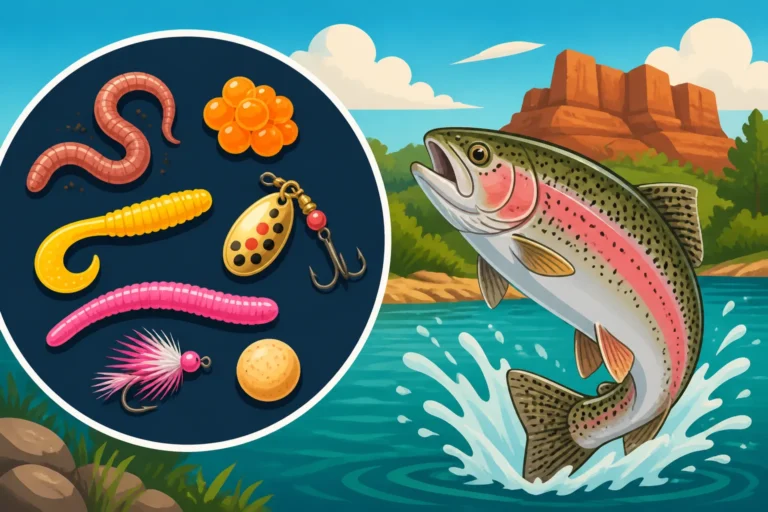
While both brown and rainbow trout inhabit some of Oklahoma's coldwater fisheries, they are distinct species with different behaviors and appearances. Knowing these differences can not only help you identify your catch but also refine your fishing strategies. Rainbow trout, as their name suggests, typically feature a prominent pink or red band running horizontally along their sides, especially during spawning. Their spots are usually smaller, darker, and more evenly distributed, often extending into their caudal (tail) fin. They tend to be a bit more aggressive and willing to strike a wider variety of baits and lures, making them a popular target, especially for beginners or those seeking more consistent action. You can learn more about Rainbow Trout vs Brown Trout: How to Tell Them Apart.
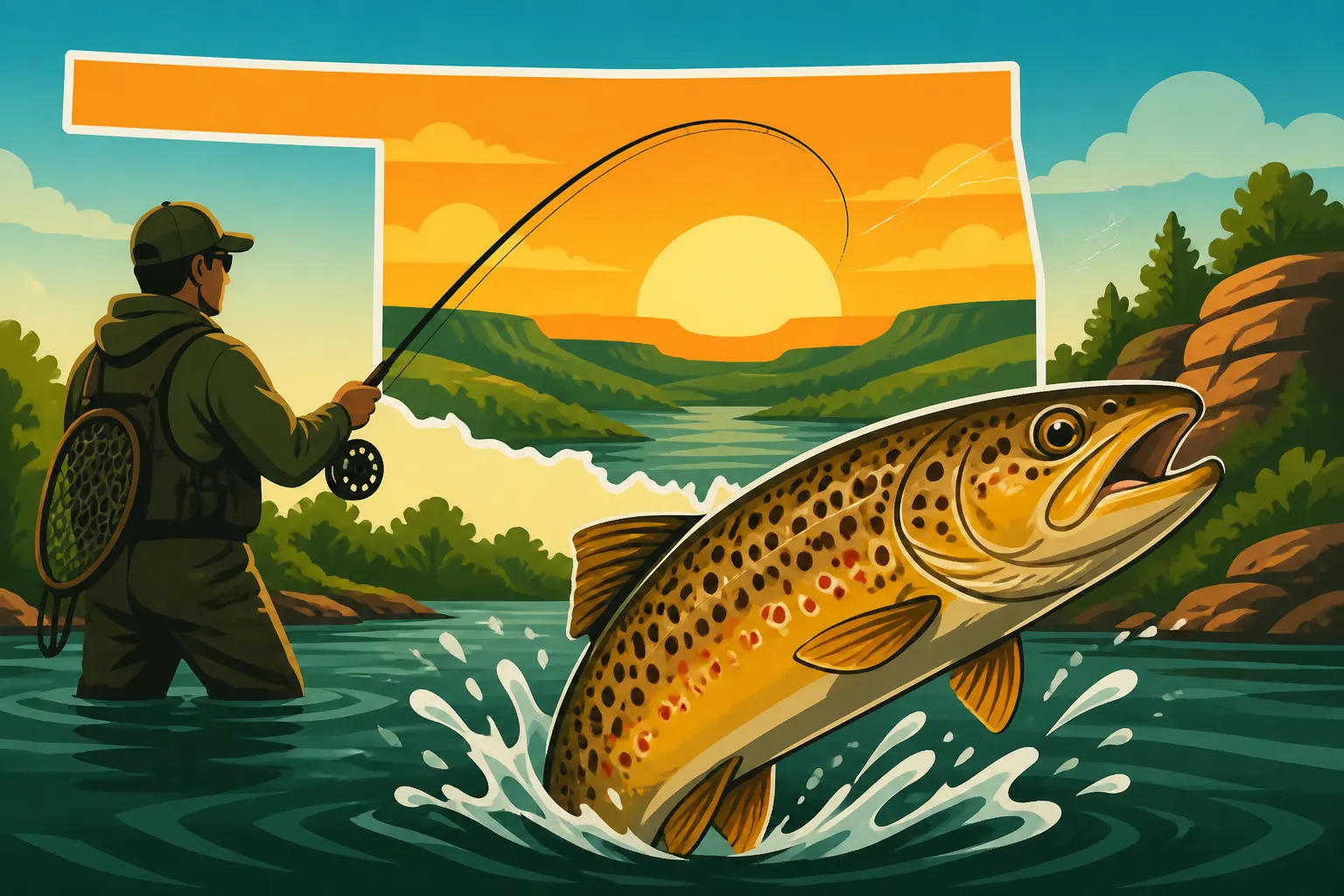
Brown trout, on the other hand, usually have a more subdued coloration, often golden brown or olive green on their backs, fading to a creamy white or yellowish belly. Their distinguishing marks are large, dark spots, often surrounded by a pale halo, mixed with red or orange spots, especially on their flanks. These spots rarely extend onto their tail fin, which is typically unspotted or has very faint markings. Their tails are also often noticeably squared off compared to the slightly more forked tail of a rainbow. Behaviorally, brown trout are more nocturnal and reclusive. They often hold in deeper, darker pockets, undercuts, or heavy cover, making them harder to find and entice during daylight hours. They're pickier eaters, requiring more finesse and often more natural presentations, whether you're using flies or bait. Understanding these nuances is crucial for successful brown trout angling in Oklahoma.
Where to Find Brown Trout in Oklahoma
Oklahoma isn't a state teeming with native trout streams, but we do have some fantastic opportunities, primarily through stocking programs and the unique environments created by our major reservoirs. These specific locations offer the cold, oxygen-rich water that brown trout need to survive and thrive, even in our otherwise warm climate.
The Coldwater Havens of Oklahoma
The key to finding brown trout in Oklahoma lies in understanding their need for cold water. Our state’s warm climate means that natural trout populations are largely restricted to specific environments. The most prominent of these are the tailwater fisheries – stretches of river directly below large hydroelectric dams. These dams release cold water from the bottom of their reservoirs, creating an artificial coldwater environment downstream that can sustain trout year-round. These tailwaters are incredibly valuable resources, providing consistent fishing opportunities for both brown and rainbow trout.
Beyond tailwaters, some smaller, spring-fed creeks and rivers in certain parts of the state might offer isolated pockets where brown trout can be found, though these are often less accessible and may not be actively managed for trout. The important thing to remember is that you won't find brown trout in just any lake or river in Oklahoma; you need to focus your efforts on these specialized coldwater habitats that mimic their preferred natural environment. These areas are truly gems, offering a completely different fishing experience than what most Oklahomans are accustomed to.
Specific Stocked Locations and Tailwaters
When it comes to reliably finding brown trout in Oklahoma, the focus inevitably turns to a few key locations that benefit from consistent stocking programs by the Oklahoma Department of Wildlife Conservation (ODWC). These spots are your best bet for encountering these beautiful fish.
One of the most well-known brown trout fisheries in Oklahoma is the Lower Mountain Fork River below Broken Bow Lake. This picturesque tailwater, nestled in the southeastern part of the state, is renowned for its year-round cold water and beautiful scenery. The ODWC regularly stocks both rainbow and brown trout here, and with proper habitat and ample food sources, many of these fish not only survive but grow to impressive sizes, offering legitimate trophy opportunities. It's truly a destination spot for serious trout anglers. The various sections of the river, from Delayed Harvest areas to general regulations, provide diverse experiences for different angling styles. You can often find brown trout holding in the deeper pools, around submerged logs, or behind large rocks where the current is broken.
Another significant area, though primarily for rainbow trout, is the Illinois River below Tenkiller Ferry Dam. While historically more known for rainbows, the potential for brown trout to be present or occasionally stocked cannot be ruled out, especially in the colder sections. Anglers should always consult the latest ODWC stocking schedules and regulations for specific species in any given area.
It's important to remember that these are dynamic fisheries. Stocking schedules can change, and fish populations fluctuate. Before planning a trip, always check the current ODWC regulations and stocking reports. This diligence will help you understand Do Oklahoma Lakes Stock Brown Trout? and ensure you're fishing in the right places at the right time. For general information on trout opportunities, our guide on Trout Fishing in Oklahoma: Rainbow and Brown Trout can be a great resource.
Essential Gear and Tackle for Brown Trout
Successfully targeting brown trout in Oklahoma requires a bit more finesse and specialized gear than your typical bass or catfish setup. These fish are wary, and their habitats can be challenging, so having the right tools for the job makes all the difference.
Rods, Reels, and Line Choices
For brown trout, you'll generally want lighter, more sensitive gear that allows for delicate presentations and detection of subtle bites.
- Rods: If you're fly fishing, a 4-weight to 6-weight fly rod, typically between 8.5 to 9.5 feet in length, is ideal. This range offers enough backbone to fight larger fish but remains sensitive enough for accurate casting and presentation with smaller flies. For spin fishing, a light to ultralight spinning rod, generally 5 to 6.5 feet long, with a fast action tip, is perfect. The fast action allows for good hook sets and sensitivity to feel light strikes, while the lighter power rating ensures maximum sport when fighting these fish. A good quality graphite rod is recommended for its sensitivity.
- Reels: For fly fishing, a matching fly reel with a smooth drag system is crucial. The reel's primary purpose is to hold line and allow for controlled payout during a fight. For spin fishing, a small, high-quality spinning reel in the 1000 or 2000 size class is appropriate. Look for a reel with a smooth, reliable drag, as brown trout can make powerful runs. The reel should balance well with your chosen rod to minimize fatigue during a long day of casting.
- Line: Fly lines should be weight-forward floating lines for most dry fly and nymph fishing, matching your rod weight. You'll also need a tapered leader and tippet, typically ranging from 4x to 6x, to ensure a stealthy presentation. For spin fishing, light monofilament or fluorocarbon line is preferred. Four-pound test monofilament is a versatile choice, offering a good balance of strength, castability, and invisibility. Fluorocarbon, though less forgiving with knots, is nearly invisible underwater and sinks, which can be an advantage when fishing certain lures or baits. You can find a wide selection of these lines on Amazon, often with detailed reviews to help you choose.
Using appropriate line is critical. Brown trout have excellent eyesight, especially in clear tailwater conditions, and a heavy, visible line can easily spook them. Think finesse, think subtlety.
Lures, Flies, and Bait for Brown Trout
Brown trout are opportunistic feeders, but they can also be incredibly selective, especially in heavily pressured waters. Your choice of offering often depends on the season, water conditions, and what the fish are currently feeding on.
- Flies: For fly anglers, the world of brown trout flies is vast and exciting.
- Nymphs are often king, especially when fish are feeding subsurface. Patterns like Pheasant Tails, Hare's Ears, Prince Nymphs, and Caddis Larva imitations in sizes 14-20 are highly effective.
- Streamers imitate small baitfish, crayfish, or other larger prey and are excellent for targeting larger, more aggressive brown trout. Woolly Buggers (black, olive, brown), Clouser Minnows, and Deceivers are popular choices.
- Dry Flies are thrilling when fish are actively rising to insects on the surface. Caddis, Mayfly, and Terrestrial patterns (like hoppers or ants) can be deadly in the right conditions. Learning to "match the hatch" – figuring out what insects are active and using a fly that imitates them – is a key skill.
- Lures: Spin fishermen have a good array of options.
- Small inline spinners (e.g., Mepps, Rooster Tail) in sizes #0 to #2 are perennial favorites. Silver, gold, black, or fire-tiger patterns are often effective.
- Small spoons (e.g., Kastmaster, Little Cleo) can imitate injured baitfish.
- Tiny crankbaits that dive a few feet, especially those mimicking small minnows or crawfish, can also draw strikes. Focus on natural colors like brown, green, or silver.
- Soft plastics, such as small grubs or trout worms rigged on a light jig head, can be deadly when retrieved slowly near the bottom.
- Bait: While many dedicated trout anglers prefer artificials, bait can be incredibly effective, especially in general regulation areas.
- PowerBait in various colors (chartreuse, rainbow, pink) and forms (dough, nuggets) is a consistent producer for stocked trout.
- Live worms or mealworms are natural offerings that brown trout often can't resist.
- Small minnows (where legal and appropriate) can attract larger brown trout looking for a substantial meal.
Remember, presentation is often more important than the specific lure or bait. Cast upstream and let your offering drift naturally downstream, or retrieve your lure with varied speed and occasional twitches to mimic injured prey. A diverse tackle box, easily assembled with items from Amazon, will prepare you for varying conditions and picky fish.
Techniques for Successful Brown Trout Fishing
Catching brown trout consistently requires more than just having the right gear; it demands a deep understanding of their behavior, their environment, and the subtle art of presentation.
Reading the Water and Approaching Stealthily
Brown trout are incredibly wary fish. Unlike some other species that might tolerate a bit of commotion, brown trout will often vanish at the first sign of danger. Therefore, your approach to the water is just as important as your casting technique.
- Approach from Downstream: Whenever possible, approach a potential fishing spot from downstream. Fish generally face upstream, waiting for food to drift down to them. Approaching from behind them significantly reduces your chances of being seen.
- Stay Low and Concealed: Walk softly, avoid heavy footsteps on the bank that can send vibrations through the water, and keep a low profile. Use natural cover like trees, bushes, and shadows to break up your silhouette. Think like a hunter stalking prey. Any sudden movement or bright clothing can spook fish, especially in clear water.
- Read the Water for Holding Lies: Brown trout love cover and current breaks. Look for:
- Undercut banks: These provide overhead cover and a hiding spot from the current.
- Log jams and submerged trees: Prime ambush points where fish can dart out to feed.
- Large rocks and boulders: These create current seams and eddies where trout can rest without expending too much energy, waiting for food.
- Deep pools: Especially important during warmer periods, deep pools offer thermal refuge and a sense of security.
- Confluences: Where two currents meet, or a small tributary enters the main stream, can concentrate food and provide diverse habitat.
Understanding these "holding lies" is critical. A brown trout isn't going to sit in the middle of a fast, exposed current. They'll be where they can conserve energy and ambush food. Casting your lure or fly directly into these spots, or just upstream to allow a natural drift, dramatically increases your chances. Pay attention to changes in current speed, depth, and bottom structure. These are all clues.
Seasonal Strategies and Best Times
Oklahoma’s weather can be quite dynamic, and brown trout behavior is heavily influenced by water temperature and seasonal changes. Adjusting your tactics accordingly will lead to more success.
- Spring: As water temperatures begin to rise after winter, brown trout become more active. This is an excellent time for nymph fishing, as aquatic insect hatches begin. Streamers can also be effective as fish shake off winter lethargy and aggressively feed on baitfish. Look for fish moving into shallower runs and feeding lanes. The period after a good rain, when water levels might be slightly higher and stained, can be fantastic for streamer fishing.
- Summer: This can be the most challenging time for brown trout, as warmer air temperatures can push water temperatures beyond their comfort zone. Focus on early mornings, late evenings, or even night fishing when temperatures are cooler. Target deep pools, shady spots, and areas with cold water inflows. Terrestrial patterns (hoppers, ants, beetles) can be effective if fish are looking up. Ultralight spin fishing with small lures or natural bait can also be productive in these cooler, deeper spots. The Oklahoma Fishing Seasons: A Month-by-Month Guide provides a broader overview of seasonal changes.
- Fall: Often considered the prime time for brown trout fishing. As water temperatures cool and brown trout prepare for their spawning run, they become very aggressive. Large streamers, mimicking baitfish or even smaller trout, can elicit brutal strikes from big browns. This is also a fantastic time for dry fly fishing with attractor patterns or smaller emergers as insects hatch. The cooler, crisp air and vibrant foliage also make for a truly enjoyable day on the water.
- Winter: While many anglers put their gear away, winter can offer incredible brown trout fishing, especially in Oklahoma’s tailwaters where water temperatures remain relatively stable. Fish will often concentrate in deep, slow-moving pools. Nymphing with heavily weighted patterns, often fished "tight-line" style, is the dominant technique. Smaller, more subtle presentations are key. Patience is paramount, as bites can be very light and infrequent, but the rewards can be some of the largest trout of the year. Our guide on Where to Catch Stocked Trout in Winter offers more insights into cold-weather trout fishing.
Always remember that brown trout are often most active during low-light conditions, such as dawn, dusk, and even overnight. These are the times when they feel safest to venture out from cover and feed aggressively.
Conservation and Responsible Angling Practices
Brown trout are a special fishery in Oklahoma, and it's up to all of us to ensure they thrive for future generations. Practicing responsible angling, including catch and release, and adhering to regulations is paramount.
Catch and Release Best Practices
Many brown trout fisheries, especially those managed for trophy potential or sustained populations, heavily emphasize catch and release. Even where keeping fish is permitted, releasing larger, older brown trout is a noble practice that helps maintain the fishery's health and genetic diversity.
Here are some best practices for catch and release:
- Minimize Fight Time: Use appropriate tackle to bring the fish in quickly, reducing stress and exhaustion.
- Handle with Care and Wet Hands: Always wet your hands before touching a fish. Dry hands can remove the fish's protective slime coat, making it susceptible to disease. Avoid squeezing the fish, especially around its belly.
- Keep the Fish in the Water: The best practice is to keep the fish submerged as much as possible. If you need a photo, do it quickly with the fish just above the water, then immediately return it.
- Remove Hooks Gently: Use needle-nose pliers or hemostats to quickly remove the hook. If the fish is deeply hooked, especially in the gills or gut, it's often best to cut the line as close to the hook as possible rather than tearing delicate tissues.
- Revive the Fish Properly: Hold the fish gently in the current, facing upstream, until it can swim away under its own power. Don't push it or throw it back into the current; let it recover until it actively kicks its tail and struggles to leave your hands.
By following these simple steps, you significantly increase the chances of a released brown trout surviving and thriving. It’s a small effort that makes a huge difference in preserving these unique angling opportunities.
Understanding Regulations and Limits
Oklahoma's fishing regulations, especially for trout, can be quite specific and vary by location and even by section of a particular river. It's crucial to understand these rules before you cast a line, as ignorance is no excuse for a violation.
- Check the ODWC Regulations Guide: Always carry a current copy of the Oklahoma Fishing Guide, either a physical copy or the digital version on your phone. This guide details statewide regulations, as well as specific rules for "Designated Trout Areas" and "Special Regulations Areas" like the Lower Mountain Fork River.
- Bag and Size Limits: Pay close attention to bag limits (how many fish you can keep) and size limits (minimum or maximum length). For brown trout, there are often specific limits that differ from rainbow trout. For example, some areas might have a slot limit, allowing anglers to keep fish under a certain size and over another, but requiring the release of fish within a particular size range to protect larger breeding stock. Our guide on Oklahoma Fishing Regulations You Need to Know in Oklahoma covers general rules.
- Tackle Restrictions: Some trout areas, particularly "Delayed Harvest" sections or fly-fishing-only zones, may have restrictions on the type of tackle you can use (e.g., artificial lures only, single barbless hooks only, fly fishing only). These rules are in place to reduce mortality rates and enhance the angling experience.
- Special Licenses/Permits: While a general Oklahoma fishing license is required, some specific trout areas might have additional permits or stamps required. Always verify. Our Fishing License Requirements in Oklahoma will tell you everything you need to know about getting your license.
Compliance with these regulations is not just about avoiding fines; it's about being a responsible steward of our natural resources. These rules are designed to protect the fragile trout populations in Oklahoma, ensuring that these challenging and rewarding fish continue to draw anglers for years to come.
Preparing Your Brown Trout Catch (If Keeping)
While many brown trout anglers practice catch and release, especially for larger specimens, brown trout can be an incredibly delicious fish to eat. If you decide to keep a legal catch, knowing how to properly handle and prepare it will ensure the best possible dining experience. After all, a fresh trout cooked over an open fire or pan-fried with a simple seasoning is one of the ultimate rewards of a successful fishing trip. You can also explore Is Brown Trout Good to Eat? for more culinary insights.
Handling and Storage for Optimal Flavor
The moment you decide to keep a brown trout, proper handling is key to preserving its delicate flavor and texture.
- Dispatch Quickly and Humanely: The quickest and most humane way to dispatch a fish is usually with a firm blow to the head or by quickly cutting the gills to bleed it out. This reduces stress hormones that can negatively impact meat quality. Bleeding the fish immediately by cutting the gill arches allows the blood to drain, resulting in cleaner, whiter fillets.
- Keep it Cold: This is perhaps the most critical step. Fish meat degrades rapidly at warm temperatures. Get your brown trout on ice as soon as possible. A cooler filled with ice is indispensable. Don't just lay it on top of a few cubes; bury it completely in ice. The colder the fish, the longer it will remain fresh and the better it will taste. For extended trips, consider using frozen water bottles or gel packs in addition to ice.
- Clean Promptly: Once you're off the water, clean your fish promptly. This means gutting it and removing the gills. You can also scale it if you plan to cook it whole with the skin on. Rinse the cavity thoroughly with cold water to remove any blood or viscera. Pat it dry with a paper towel before storing.
- Short-Term Storage: For consumption within a day or two, store the cleaned and dried fish in a zipper-top bag or wrapped tightly in plastic wrap, then place it back on ice in the refrigerator. Ensure any melted ice water doesn't directly contact the fish.
- Long-Term Storage: For longer storage, brown trout freeze well. Clean and dry the fish, then either vacuum seal it or wrap it tightly in plastic wrap followed by freezer paper or an aluminum foil layer to prevent freezer burn. Freeze quickly and thaw slowly in the refrigerator when ready to cook.
Proper handling from catch to kitchen makes all the difference in enjoying your hard-earned brown trout.
Simple Cooking Methods to Savor Your Catch
Brown trout have a delicate, slightly nutty flavor and a flaky texture that is best showcased with simple cooking methods. Overpowering seasonings or complex recipes can detract from the natural goodness of the fish.
Here are a couple of straightforward, delicious ways to prepare your brown trout:
-
Pan-Fried Perfection: This is a classic for a reason.
- Preparation: If your trout is scaled and gutted, you can cook it whole. For larger fish, filleting is easier. Pat the fish or fillets thoroughly dry.
- Seasoning: Season generously with salt, black pepper, and perhaps a sprinkle of garlic powder or your favorite fish seasoning. A light dusting of flour or cornmeal can add a crispy crust.
- Cooking: Heat a tablespoon or two of butter or olive oil (or a combination) in a cast iron skillet or heavy-bottomed pan over medium-high heat. Once the fat is shimmering, carefully place the fish in the pan.
- Searing: Cook for 3-5 minutes per side for whole fish, or 2-4 minutes per side for fillets, depending on thickness. The skin should be crispy, and the flesh should flake easily with a fork when done.
- Serve: Finish with a squeeze of fresh lemon juice and a sprinkle of chopped fresh parsley or dill. This method highlights the fish's natural flavors beautifully.
-
Foil-Wrapped Baked or Grilled Trout: This method keeps the fish incredibly moist and allows for easy cleanup, perfect for a camp meal or backyard grill.
- Preparation: Place your whole, cleaned trout or fillets on a large piece of heavy-duty aluminum foil.
- Flavoring: Add a few pats of butter, thin slices of lemon, sprigs of fresh herbs like thyme or rosemary, and thinly sliced garlic or onion over and inside the fish. Season with salt and pepper.
- Wrapping: Fold the foil tightly around the fish, creating a sealed packet. Ensure there are no leaks.
- Cooking:
- Baking: Place the packet on a baking sheet and bake in a preheated oven at 375°F (190°C) for 15-20 minutes, or until the fish is cooked through and flakes easily.
- Grilling: Place the foil packet directly on a preheated grill over medium heat. Cook for 12-18 minutes, flipping once halfway through.
- Enjoy: Carefully open the foil packet (watch out for steam!) and transfer the tender, aromatic trout to your plate.
| Cooking Method | Best For | Flavor Profile | Prep Time | Cook Time |
|---|---|---|---|---|
| Pan-Frying | Fillets, smaller whole fish | Crispy skin, delicate, buttery | 5-10 min | 6-10 min |
| Foil-Wrapping | Whole fish, fillets | Moist, infused with herbs/citrus | 10-15 min | 12-20 min |
| Grilling | Whole fish, larger fillets | Smoky, tender, light char | 10-15 min | 12-18 min |
| Baking | Whole fish, fillets | Moist, gentle, even cooking | 10-15 min | 15-25 min |
Whether you're fishing for the challenge or for the table, brown trout offer a rewarding experience in Oklahoma's unique coldwater fisheries.
Disclaimer
This article is for general informational purposes only and does not constitute professional advice. Laws, prices and regulations vary by location and change over time. Consult a qualified professional for guidance on your specific situation.