Best Bait for Crappie Fishing in Oklahoma Reservoirs
Choosing the right bait for crappie fishing in Oklahoma's vast reservoirs can feel like a never-ending riddle. One day they're biting on anything, the next you can't buy a strike, leaving you wondering if you're using the wrong stuff or just fishing in the wrong spot. This guide is going to strip away the mystery and help you understand the best baits and presentations to consistently land those speckled beauties across our beautiful Sooner State lakes.
The Undisputed Reign of Live Bait for Crappie
When it comes to crappie fishing, live bait often feels like cheating – it's just that effective. Crappie are predatory fish, and there's nothing quite like a natural, struggling meal to trigger their instincts. Many anglers, myself included, will always have some live bait on hand, even if they plan to primarily fish artificials. It's often the ultimate fallback when the bite gets tough, or you're just looking to fill the cooler.
Minnows: The Gold Standard for Crappie Anglers
Let's be honest, if there's one bait synonymous with crappie fishing, it's the humble minnow. These small, silvery fish are a crappie's natural food source, and they simply can't resist them. The key to success with minnows isn't just having them, it's about having the right size, keeping them lively, and presenting them properly.
When fishing our Oklahoma reservoirs, you'll typically want to look for fathead minnows or shiner minnows in the 1 to 2-inch range. Too big, and the crappie might ignore them; too small, and you might attract more sunfish than slabs. You can find minnows at almost any bait shop around major lakes like Lake Eufaula or Grand Lake O' the Cherokees. Keeping them alive is crucial, so a good aerated bait bucket is a non-negotiable piece of equipment. You can often find reliable portable aerators on Amazon that will keep your bait lively all day, even in the summer heat. A healthy minnow swimming naturally is far more attractive than a sluggish, half-dead one.
Presentation is another critical factor. Most anglers prefer a simple hook-and-bobber setup, which allows the minnow to swim freely. Hook the minnow lightly through the lips or just behind the dorsal fin. Experiment with depth until you start getting bites. Crappie often suspend at specific depths, so adjusting your bobber until you find that "strike zone" is key. Another popular method, especially when crappie are holding tighter to structure, is tight-lining, where you fish the minnow on a light jig head without a bobber, letting it slowly descend into the fish. This technique is particularly effective around brush piles and submerged timber, which are crappie magnets.
Other Natural Offerings: Worms and Insects
While minnows get most of the glory, don't underestimate the power of other natural baits, especially when you're trying to entice finicky crappie or if minnows are hard to come by. Crappie, particularly smaller ones or those in pond-like environments, are opportunists and will readily snack on a variety of invertebrates.
Waxworms and mealworms are excellent alternatives, offering a smaller, more subtle presentation. They're particularly good when crappie are being cautious, maybe after a cold front has moved through, or in clearer water where they might be more observant. You can rig them on a tiny jig head or a small hook under a bobber. Their wiggling action is very enticing, and they release natural scents that can draw crappie in. These can often be found at bait shops or even ordered in bulk online if you're planning a longer trip. Small pieces of earthworms, like a quarter of a nightcrawler, can also work surprisingly well. The key here is not to use too large a piece, as crappie have relatively small mouths.
These alternative live baits also offer a great option for younger anglers or beginners, as they are easier to handle than minnows and can still be incredibly effective. Sometimes, a change of pace is all it takes to turn a slow day into a successful one. Remember, variety is the spice of life, and sometimes it's the key to unlocking a crappie bite when nothing else seems to work.
The Allure of Artificial Lures: When to Reach for Plastic and Feathers
While live bait is a classic, artificial lures offer versatility, efficiency, and the thrill of triggering a strike with your own crafted presentation. Many seasoned crappie anglers, especially those participating in tournaments or covering large areas, rely almost exclusively on artificials. They allow you to quickly cover water, experiment with colors and actions, and don't require the hassle of keeping bait alive.
Jigs: The Versatile Workhorse of Crappie Fishing
Jigs are, without a doubt, the most popular and versatile artificial lure for crappie fishing. The sheer variety available means there's a jig for almost every situation you'll encounter on Oklahoma's lakes. From Lake Texoma to Lake Murray, jigs are putting crappie in the boat.
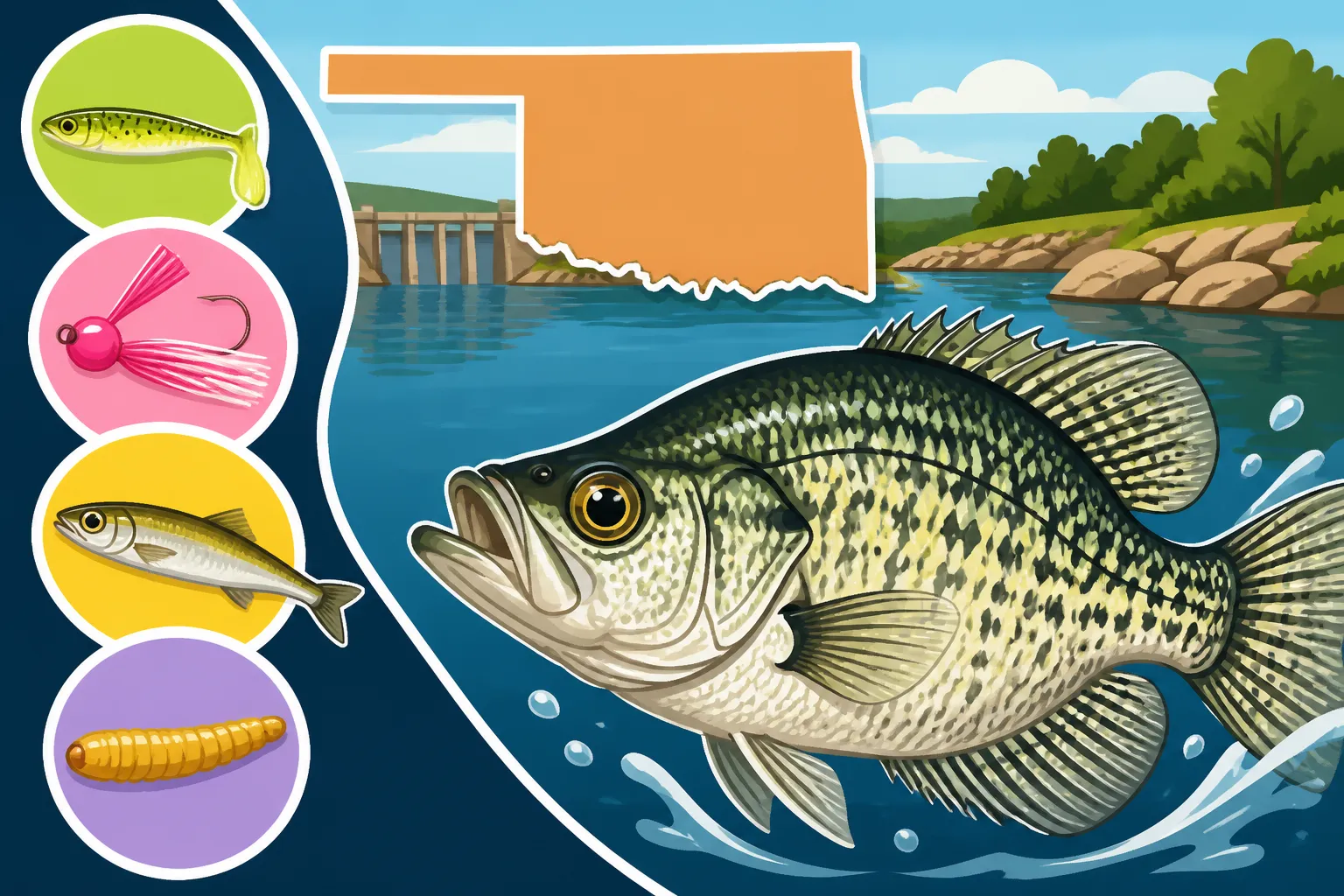
Tube jigs, with their soft, hollow bodies and tentacles, are a staple. They mimic small baitfish or invertebrates and come in an endless array of colors. Marabou and hair jigs, made from natural feathers or hair, offer a pulsing, lifelike action in the water, especially on the fall. Their subtle movement can be irresistible to crappie. Soft plastic grub bodies, often paired with a lead head, are also incredibly effective, allowing you to change colors and tail styles to match the mood of the fish. When choosing jig size, generally stick to 1/32 to 1/16 ounce for most crappie fishing, though you might go heavier (1/8 oz) in deeper water or strong currents, or lighter (1/64 oz) for super finicky fish.
Color selection is a constantly debated topic among crappie anglers. In stained or muddy water, brighter colors like chartreuse, orange, or hot pink often excel because they provide better visibility. In clearer water, more natural colors like white, pearl, smoke, or even black can be more effective. Don't be afraid to experiment, and pay attention to what the fish are telling you. A wide selection of crappie jigs can easily be purchased from retailers like Amazon, allowing you to stock up on different sizes and colors to be ready for any condition.
Retrieval techniques are just as important as the jig itself. A slow, steady retrieve with occasional pauses is often very effective. Crappie frequently strike on the fall, so letting your jig sink naturally is key. Jigging them vertically, especially over brush piles or submerged trees, is another deadly tactic. You can gently lift and drop the rod tip, giving the jig a subtle dancing action. Some anglers prefer "spider rigging" where multiple rods with jigs or minnows are deployed around the boat, covering a wide area and various depths.
Small Crankbaits and Spinnerbaits: Covering Water and Attracting Aggressive Bites
While jigs excel at finesse and targeting specific structure, sometimes you need to cover water more quickly or provoke a more aggressive strike. That's where small crankbaits and spinnerbaits come into play for crappie fishing.
Tiny crankbaits, usually no more than 2 inches long, can be fantastic for crappie, especially during periods of higher activity like the pre-spawn or post-spawn. These lures dive to specific depths and have a built-in wobbling action that can imitate a fleeing baitfish. They come in various diving depths, so you can select one that matches the depth where you expect the crappie to be. Try casting them near points, submerged humps, or the edges of weed lines. A slow, steady retrieve is usually best, letting the lure do its work. Colors that mimic baitfish, like chrome with a blue back, or natural shad patterns, are often effective.
Small inline spinnerbaits, sometimes called "Road Runners" or similar, are another great option. They feature a spinning blade that creates flash and vibration, along with a jig body or grub tail. These are particularly good for crappie suspended in open water or when they are actively chasing baitfish. The flash and vibration can draw crappie from a distance, making them excellent search lures. A steady retrieve is usually all that's needed to keep the blade spinning. They can be very effective in the upper water column during overcast days or low light conditions. You'll often find these small spinnerbaits in the same sections as crappie jigs in tackle shops or on Amazon.
Mastering the Presentation: Making Your Bait Irresistible to Oklahoma Crappie
Having the best bait in the world won't matter much if you're not presenting it in a way that crappie want to eat. Crappie are often schooling fish and can be quite sensitive to subtle changes in retrieve, depth, and even how gently your bait falls. Mastering these elements can make the difference between an empty livewell and a full stringer. Many of these techniques can apply whether you're chasing black crappie or white crappie, two species commonly found throughout Oklahoma's waters. For more on distinguishing between them, check out Black Crappie vs White Crappie: How to Tell Them Apart.
Rigging Live Bait for Maximum Appeal
The way you rig your minnow or worm directly impacts its effectiveness. A common mistake is using too heavy a weight or too large a hook, which can make your bait look unnatural or intimidate the fish.
For minnows, a small, thin-wire hook in sizes #4 to #8 is usually ideal. Hooking them through the lips allows them to swim naturally, making them look like an easy meal. Hooking them just behind the dorsal fin makes them swim in more distressed circles, which can also trigger a strike. Pair this with a small split shot weight placed 6-12 inches above the hook, or better yet, a light jig head (1/32 or 1/16 oz) if you want to control the depth more precisely. A slip bobber setup is invaluable, allowing you to easily adjust your depth without constantly re-tying, which is perfect when crappie are suspended in deep water. This is particularly useful in many of Oklahoma's deeper reservoirs, where crappie might hold at 15-20 feet over even deeper water.
For worms or waxworms, a tiny panfish hook (size #10 or #12) is perfect. Thread the worm onto the hook, leaving a small piece dangling for enticing action. Again, a small split shot or tiny jig head will help get it down to the strike zone. The goal is always to make the live bait appear as natural and vulnerable as possible. Don't be afraid to try different setups until you find what the crappie are keying in on that particular day.
Effective Techniques for Working Artificial Lures
Artificial lures require an active hand, and learning different retrieve techniques is part of the fun and challenge. The speed and action you impart to the lure can often be the deciding factor.
When jigging, whether vertically or casting and retrieving, focus on rhythm and subtlety. Crappie often respond to a "lift and fall" motion. Lift your rod tip a foot or two, then let the jig fall on a semi-slack line. Many strikes occur as the jig falls, so watch your line for any twitch or sudden movement. If you're using a lighter jig, a slow, steady retrieve with a few short twitches can imitate a fleeing baitfish. Experiment with the cadence – sometimes a rapid jigging motion works, other times a slower, almost imperceptible wiggle is what they want. When they are sluggish, a slight trembling of the rod tip, called "quivering," can give your jig just enough life to draw a strike without being too aggressive. Learning to How to Jig for Crappie in Spring can be a game-changer.
For small crankbaits and spinnerbaits, a steady retrieve is often all that's needed to get the lure working correctly. However, adding pauses or sudden accelerations can sometimes provoke a reaction strike from a hesitant crappie. Try a "stop-and-go" retrieve, allowing the crankbait to float up slightly during the pause, then reeling it back down. This erratic action often triggers predatory instincts. Keep your retrieves slow enough that the crappie have time to track and intercept the lure, but fast enough to maintain the lure's intended action.
| Bait Type | Pros | Cons | Best Uses |
|---|---|---|---|
| Live Minnows | Highly effective, natural attractant | Require aeration, messy, fragile | Finicky crappie, slow bite, specific depth targeting |
| Waxworms/Mealworms | Easy to handle, subtle presentation, clean | Smaller fish, less robust action than minnows | Picky crappie, clear water, beginner anglers |
| Tube Jigs | Versatile, various colors/sizes, durable | Requires active retrieve, can get snagged | All seasons, various depths, imitating baitfish or insects, How to Tightline for Crappie |
| Marabou/Hair Jigs | Natural pulsing action, subtle fall | Can be delicate, less durable than plastic | Clearer water, cold fronts, slow fall presentations |
| Small Crankbaits | Covers water quickly, aggressive strikes | Limited depth range, can be expensive | Active crappie, pre-spawn, searching open water |
| Spinnerbaits | Flash and vibration, attracts from distance | Can be snag-prone, less subtle | Searching, windy conditions, active schools, dirty water |
Seasonal and Situational Adjustments for Crappie Bait Selection
Crappie behavior changes dramatically with the seasons and water conditions, and so should your bait choices and presentation. What works on a hot summer afternoon in deep water won't necessarily work on a chilly spring morning in the shallows. Understanding these patterns is key to consistently catching crappie in Oklahoma. You might also find these adjustments affect how many fish you can keep, so be sure to review Oklahoma Statewide Crappie Bag Limit before heading out.
Spring Crappie: Spawning Frenzy and Shallow Water Tactics
Spring is often considered prime crappie time in Oklahoma. As water temperatures rise into the 50s and 60s, crappie move from deeper wintering grounds into shallower water to spawn. This means they are often accessible from the bank or in relatively shallow coves and creek arms. The best crappie lakes in Oklahoma become hotspots this time of year.
During the pre-spawn and spawn, crappie are often aggressive and focused on feeding before, during, and after nesting. This is a fantastic time for both live minnows under a bobber and small jigs. Look for brush piles, submerged timber, or even flooded terrestrial vegetation in 2 to 10 feet of water. Brighter colored jigs like chartreuse, pink, or orange can be very effective as crappie are often visually oriented and defending their nests. A slow retrieve with a lot of pauses, letting the jig slowly fall into the cover, is deadly. Don't be afraid to experiment with slightly larger minnows or jigs if you're targeting bigger, more aggressive spawning females. This period also sees a lot of crappie in the 10-inch range, so knowing Tenkiller Lake's 10-Inch Crappie Minimum or other lake-specific rules is important.
Summer and Deep Water Crappie: Finding the Thermocline
As Oklahoma's temperatures soar in the summer, crappie move to deeper, cooler water. They'll often suspend over deep creek channels, near submerged humps, or around deep timber and brush piles. This shift often means a change in tactics.
Vertical jigging or tight-lining with live minnows or jigs becomes incredibly effective. Fish finders are invaluable during summer to locate these deeper schools and the structure they relate to. Look for the thermocline – the layer of water where the temperature changes rapidly – as crappie often hold just above or within this zone where oxygen levels and baitfish are optimal. In clearer lakes, natural colored jigs like white, pearl, or smoke can be more effective. When the sun is high, crappie often hold very tight to cover, so precise bait placement is crucial. Many anglers will load up on tackle from Amazon for these deep-water techniques, including heavier jig heads and drop-shot weights. You might even consider night fishing under lights during the summer, as crappie are drawn to the light and often feed aggressively.
Fall and Winter Crappie: Slower Bites and Deeper Structures
As the water cools in the fall, crappie once again become active, feeding heavily to put on weight for winter. This can be another fantastic time to fish, especially during the "fall turnover" when water temperatures stabilize throughout the water column. Crappie will often be found near deeper brush piles, channel bends, and main lake points, especially in lakes like Fort Gibson which have specific size and bag limits; you'll want to review Fort Gibson Lake's 15-Fish Crappie Limit for that particular body of water.
In fall, both live minnows and jigs continue to be productive. The key is often a slower, more deliberate presentation. Crappie might not chase a fast-moving bait as readily as they would in spring. As winter sets in and water temperatures drop further, crappie become much more lethargic. They'll often school tightly in deep main lake areas, suspending over creek channels or near vertical structure like bluff walls. Tiny jigs (1/32 or 1/64 oz) or small minnows fished extremely slowly are often the ticket. A very subtle lift and fall, or simply holding the bait still in the strike zone, can entice a bite. It's often a game of patience and finesse during the colder months, but the rewards can be big, as these slower periods can yield some of the largest crappie. Learning Crappie Fishing Techniques and Seasonal Patterns in Oklahoma is essential for success year-round.
Disclaimer
This article is for general informational purposes only and does not constitute professional advice. Laws, prices and regulations vary by location and change over time. Consult a qualified professional for guidance on your specific situation.