Oklahoma Boat Registration and Titling Rules Explained
Owning a boat in Oklahoma is a fantastic way to experience our beautiful lakes and rivers, offering endless days of fishing, watersports, and relaxation. But let's be real, the paperwork side of boat ownership can feel like navigating a maze blindfolded. Many folks get tangled up trying to figure out if their vessel needs to be registered, if they need a title, and what exactly the process entails. This guide is here to untangle all that, providing a clear, comprehensive walkthrough of Oklahoma's boat registration and titling rules so you can hit the water with confidence, not confusion.
Why Boat Registration and Titling Matters in Oklahoma
It's easy to think of boat registration and titling as just another bureaucratic hurdle, something to get out of the way so you can go fishing. But in Oklahoma, these steps are incredibly important, not just for the state, but for you as a boat owner. Neglecting them can lead to some real headaches, from fines to ownership disputes.
The Legal Obligation and Your Peace of Mind
First and foremost, boat registration is a legal requirement for most motorized vessels operating on Oklahoma waters. It's how the state keeps track of boats, ensures safety regulations are met, and funds various conservation efforts that directly benefit anglers and boaters. Imagine pulling up to a ramp at Lake Texoma or Grand Lake, excited for a day on the water, only to be stopped by a game warden checking for valid registration. That immediate feeling of dread and the potential for a citation can ruin your entire trip. Having your registration in order provides immense peace of mind. You know you're compliant, you're contributing to the upkeep of our waterways, and you can focus entirely on enjoying your time outdoors. It also helps in identifying vessels in case of an accident or theft, which, unfortunately, does happen.
Beyond registration, having a proper title is your ultimate proof of ownership. Think of it like the deed to your house or the title to your car. If you ever need to sell your boat, transfer it to a family member, or even claim it if it's stolen, that title is paramount. Without it, proving you're the rightful owner can become a significant legal challenge, costing you time, money, and a lot of stress. It's not just a piece of paper; it's your legal right to that vessel.
Understanding the Difference: Registration vs. Titling
This is where many boat owners, especially new ones, get confused. "Do I need to register and title my boat?" The answer, for most motorized vessels in Oklahoma, is yes, you need both. They serve distinct but equally vital purposes.
Registration is essentially like getting a license plate for your boat. It involves submitting an application, paying a fee, and in return, you receive a registration certificate and decals that must be displayed on your boat's hull. This registration is typically valid for a specific period, often one year, and must be renewed periodically. It proves your boat is legally allowed to operate on public waters. The numbers on the side of your boat are directly tied to this registration. It's about operational legality.
Titling, on the other hand, is about establishing and proving legal ownership. When you purchase a boat, whether new or used, a title is issued in your name. This document details the boat's identifying information, like its hull identification number (HIN), and formally states who the legal owner is. Unlike registration, a title doesn't expire. You only need to obtain a new one when ownership changes hands. So, while registration lets you use the boat legally, titling proves you own it. Both are non-negotiable for most vessels in Oklahoma.
Who Needs to Register a Boat in Oklahoma? It's Not Always Obvious!
Oklahoma's rules for boat registration can sometimes feel a little like a riddle, especially when you start looking at different types of watercraft. It's not just the big bass boats or cabin cruisers that need attention; even smaller vessels can fall under the requirement. Knowing exactly which boats need to be registered and which might be exempt is crucial before you launch.
Motorized Vessels of All Sizes
The general rule of thumb in Oklahoma is that any vessel propelled by machinery, regardless of its size, horsepower, or whether that machinery is the primary or secondary means of propulsion, must be registered. This means if it has an engine, it almost certainly needs registration. This includes:
- Bass boats and fishing boats: These are the obvious ones. Whether you're running a high-performance rig on Lake Eufaula or a smaller jon boat with a modest outboard for a local pond, if it has a motor, it needs to be registered.
- Pontoon boats: Popular for family outings and cruising, pontoons are definitely in the motorized category and require registration. Do Pontoon Boats Need to Be Registered in Oklahoma? is a common question.
- Ski boats and personal watercraft (PWCs) like jet skis: These fast-moving vessels are clearly motorized and fall under the registration mandate.
- Sailboats with auxiliary motors: Even if wind is your primary propulsion, if you have a small outboard or inboard motor for getting in and out of the marina or for emergencies, your sailboat needs to be registered. This often surprises sailors who consider their craft primarily wind-driven.
- Even electric trolling motors: This is a key point often overlooked. If your canoe, kayak, or small utility boat has an electric trolling motor attached, it typically transforms it into a "motorized vessel" under Oklahoma law, thus requiring registration. This can catch many casual anglers off guard. Always double-check if your setup, no matter how small, has any mechanical propulsion.
The size of the motor or the vessel's length generally dictates the fee you'll pay, but not whether it needs to be registered in the first place. If there's an engine, assume it needs registration until you've confirmed an exemption.
The Kayak and Canoe Conundrum
This is probably the most common area of confusion for new paddlers and those exploring smaller, quieter waters. For years, paddlecraft like canoes, kayaks, and stand-up paddleboards typically didn't need to be registered, offering a simpler entry into water recreation. However, as mentioned above, things change when you add a motor.
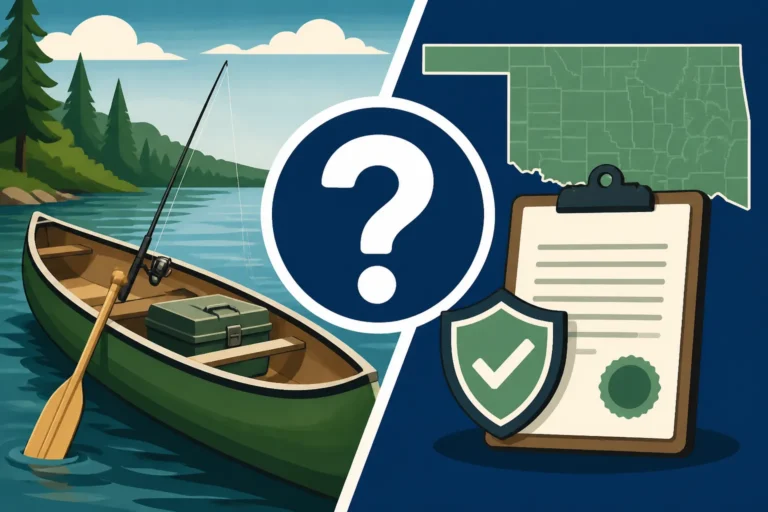
If you attach any kind of motor to your kayak or canoe – even a small electric trolling motor that barely sips battery power – it immediately falls under the "motorized vessel" category and must be registered with the state. This rule exists to ensure consistency and safety across all powered watercraft. Many kayak anglers enjoy the convenience of a trolling motor for hands-free propulsion, allowing them to focus on fishing. While incredibly useful, it does come with the added responsibility of registration. Do Kayaks Need to Be Registered in Oklahoma? is a question you'll want to verify if you plan on motorizing your paddle craft.
So, if you're paddling entirely by hand or pedal, you're usually in the clear. But the moment you introduce that propeller, even a tiny one, you're entering the world of boat registration. Make sure you get those numbers and decals displayed correctly if you go this route.
Exemptions You Might Not Know About
While the vast majority of boats you see on Oklahoma's lakes will be registered, there are indeed a few exemptions. Understanding these can save you unnecessary hassle or, conversely, prevent you from mistakenly believing you're exempt when you're not.
- Non-motorized vessels: As discussed, if your canoe, kayak, rowboat, or sailboat relies solely on human power (paddling, pedaling, rowing) or wind (sailing without an auxiliary motor), it does not need to be registered in Oklahoma. This is great news for those who prefer the quiet approach or a good workout on the water.
- Vessels documented by the U.S. Coast Guard: Larger vessels, typically those over a certain size used for commercial purposes or extended cruising, might be "documented" with the U.S. Coast Guard instead of state-registered. If your vessel holds a current U.S. Coast Guard documentation, it is exempt from state registration. This is a very specific category and doesn't apply to the average recreational boater.
- Lifeboats or dinghies: Small tenders or lifeboats used exclusively for emergency purposes or as a direct auxiliary to a properly registered or documented vessel are generally exempt. They are considered part of the main vessel's safety equipment.
- Vessels operating solely on private ponds or lakes: If your boat is used exclusively on a private body of water that has no direct connection to public waterways (i.e., you can't launch it from a public ramp into it, and it doesn't flow into a public stream or lake), it might also be exempt. This is a niche situation, as most people want to explore Oklahoma's beautiful public fishing spots.
It's always best practice to confirm your specific situation with the Oklahoma Tax Commission or the Oklahoma Department of Wildlife Conservation if you believe your vessel might be exempt. Don't just assume!
The Oklahoma Boat Registration Process: A Step-by-Step Guide
Alright, you've figured out your boat needs to be registered. Now what? The process itself isn't terribly complicated, but like any bureaucratic task, it requires attention to detail and knowing what to expect. Let's walk through it, piece by piece, so you're prepared.
Gathering Your Documents
Before you even think about heading to a tag agency, you need to make sure you have all your ducks in a row. Missing even one crucial document can send you right back home, wasting your precious time. Here’s a checklist of what you’ll generally need:
- Proof of Ownership: This is paramount.
- For a new boat: You'll typically need the Manufacturer's Statement of Origin (MSO) or Manufacturer's Certificate of Origin (MCO). This is the "birth certificate" for your new boat.
- For a used boat purchased in Oklahoma: You'll need the properly assigned Oklahoma Certificate of Title from the previous owner. Make sure it's signed off correctly and notarized if required.
- For a used boat purchased out-of-state: This can be a bit more complex. You'll need the Certificate of Title or Bill of Sale, depending on the regulations of the state it came from. Often, you'll need the original registration from that state as well. Make sure you have clear, legal proof the boat is yours. Registering a Boat Brought Into Oklahoma From Another State can offer more guidance here.
- Bill of Sale: Even if you have a title, a detailed bill of sale is always a good idea, especially for used boats. It should include the purchase price, date of sale, names and addresses of buyer and seller, and the boat's identifying information (HIN, make, model, year).
- Hull Identification Number (HIN): This is the boat's unique serial number, usually found on the transom. You'll need this for the application.
- Motor Information: If the motor is separate from the boat (e.g., an outboard), you'll need its make, model, horsepower, and serial number.
- Personal Identification: A valid driver's license or state-issued ID for the registering owner(s).
- Proof of Oklahoma Residency: If you're registering as an Oklahoma resident, you might need to show proof like a utility bill or driver's license address.
It's a good idea to make copies of everything for your records before you submit the originals. You can never be too prepared when it comes to paperwork!
Navigating the Application: Filling Out the Paperwork Correctly
Once you have your documents, the next step is to complete the application form itself. This form, usually available at tag agencies or sometimes online, will ask for a lot of the information you just gathered. Take your time and fill it out accurately. Errors or omissions can lead to delays and frustration.
Key sections you'll typically encounter:
- Owner Information: Your full name, address, phone number, and driver's license number.
- Vessel Information: Make, model, year, length, hull material (e.g., fiberglass, aluminum), hull identification number (HIN), and whether it's an open boat, cabin cruiser, pontoon, etc.
- Propulsion Information: Type of motor (outboard, inboard, electric), horsepower, and motor serial number.
- Purchase Details: Date of purchase and purchase price. This is important as it affects the registration fee calculation. How Oklahoma Calculates the Registration Fee for a New Boat factors this in.
If you're unsure about a section, don't guess. Ask the tag agency clerk for clarification. It's much easier to get it right the first time than to try and correct mistakes later. Remember, accuracy is your friend here.
Where to Go and How to Pay
In Oklahoma, boat registration and titling are typically handled by your local Oklahoma Tax Commission (OTC) tag agency. These are the same places where you renew your vehicle tags. You can usually find a list of tag agencies on the OTC website or through a quick online search for your specific city or county.
While some forms might be available online for pre-filling, the actual submission of documents, verification, and payment usually need to be done in person at a tag agency. This allows the clerk to review your documents, ensure everything is in order, and issue your temporary registration and decals on the spot.
Regarding payment, most tag agencies accept various forms:
- Cash: Always an option.
- Credit/Debit Cards: Most agencies accept major credit and debit cards, though some might have a small processing fee.
- Checks: Personal checks are often accepted, but it's wise to confirm with your specific agency beforehand.
The fees themselves will depend on several factors, including the type of boat, its length, and its age, especially for used boats where depreciation is considered. Be prepared for the full amount, as well as any titling fees. Oklahoma Boat Titling Fee and Application Cost is a separate consideration from the registration fee. Make sure you understand the total cost before you go, so there are no surprises. Once processed, you'll receive your registration certificate, which you must keep on board your vessel, and the decals to affix to your boat.
Understanding Oklahoma Boat Titling: What It Is and When You Need It
While registration lets you legally operate your boat, the title is the undisputed proof of who owns that boat. It's a critical document, far more important than many new boat owners realize until they need it. Let's dig into why it's so important and when you'll interact with it.
The Importance of a Boat Title: Proving Ownership, Selling Your Boat
Think of your boat's title as its birth certificate and legal ID all rolled into one. It contains all the essential identifying information about your vessel, like the Hull Identification Number (HIN), make, model, year, and crucially, the name of the legal owner(s).
- Undisputable Proof of Ownership: In Oklahoma, the Certificate of Title is the primary legal document proving who owns a boat. If there's ever a dispute over ownership, or if your boat is stolen and recovered, the title is what will confirm you are the rightful owner. Without a title, proving ownership can become a nightmare, potentially requiring court intervention or lengthy investigative processes. It's your ultimate safeguard against fraud and theft.
- Facilitating Sales and Transfers: When it comes time to sell your beloved fishing vessel or transfer it to a family member, the title is indispensable. You cannot legally transfer ownership of a boat in Oklahoma without signing over a valid title. A buyer will expect a clear title, just as you would expect one if you were purchasing a boat. Trying to sell a boat without a title is a huge red flag and will significantly devalue your vessel, if you can even find a buyer willing to take the risk.
- Financing and Insurance: If you finance your boat purchase, the lender will almost certainly hold the title as collateral until the loan is paid off. Similarly, insurance companies rely on the title to verify ownership before issuing policies or processing claims. Having a clear, valid title simplifies all these financial and protective aspects of boat ownership.
It's a document you'll keep safely stored, perhaps in a fireproof safe, and only bring out when you're buying, selling, or perhaps dealing with a legal or insurance matter.
New Boats vs. Used Boats: Different Paths to Getting a Title
The path to obtaining a title differs depending on whether your boat is brand new or previously owned.
For a New Boat:
When you purchase a brand-new boat from a dealer, the process is usually pretty streamlined. The dealer will provide you with a Manufacturer's Statement of Origin (MSO) or Manufacturer's Certificate of Origin (MCO). This document is essentially the boat's "first title" from the factory. You'll take this MSO/MCO, along with a bill of sale, to an Oklahoma tag agency. They will use this document to issue the first official Oklahoma Certificate of Title in your name. The MSO/MCO confirms the boat has never been titled before, and it transfers initial ownership from the manufacturer to you. The tag agency will then collect any applicable taxes and fees before issuing your title.
For a Used Boat:
If you're buying a used boat, the process involves transferring an existing title.
- From an Oklahoma Seller: The previous owner will need to sign over their Oklahoma Certificate of Title directly to you. This signature often needs to be notarized. Ensure all fields are filled out correctly, especially the purchase price and date of sale. You then take this assigned title to a tag agency, pay the transfer fees and any applicable taxes, and a new title will be issued in your name.
- From an Out-of-State Seller: This can be trickier, as title requirements vary by state. You'll need the title from the previous state (if that state issues titles for boats) or a valid bill of sale if the previous state doesn't title boats of that type. You might also need the last registration certificate from that state. When you bring these documents to an Oklahoma tag agency, they will verify the paperwork and then issue an Oklahoma Certificate of Title. Sometimes, an inspection might be required to verify the HIN. It's essential to ensure the out-of-state paperwork is absolutely solid to avoid issues. Do You Need to Title a Boat You Just Bought in Oklahoma? delves into these scenarios.
Always, always ensure you receive a clear, properly executed title (or MSO/MCO for new boats) when you acquire a boat. No title, no deal.
When a Title Transfer is Necessary: Buying, Selling, or Inheriting
A boat title is a living document in the sense that it needs to be updated whenever ownership changes. It's not something you get once and forget about.
- Buying a Boat: As soon as you purchase a boat, whether new or used, you must apply for a new title in your name. This typically needs to be done within a specific timeframe, often 30 days from the date of purchase. Missing this deadline can result in penalties.
- Selling a Boat: When you sell your boat, you are responsible for properly assigning the title to the new owner. This involves signing the title, sometimes in front of a notary, and filling out the buyer's information and the sale date/price. Handing over a clean title is a crucial part of the sale.
- Gifting a Boat: If you decide to gift your boat to a family member or friend, a title transfer is still necessary. While there might not be a sale price, the ownership still changes hands, and the state needs to record the new legal owner.
- Inheriting a Boat: If you inherit a boat, you will need to go through a process to transfer the title into your name. This usually involves presenting a death certificate and documentation proving your right to inherit the vessel (e.g., a will, affidavit of heirship). The tag agency can guide you through the specific requirements.
Each of these scenarios triggers the need for a title transfer to ensure the chain of ownership remains clear and legal. Keeping your title secure and accessible for these events is just good practice for any boat owner in Oklahoma.
Costs and Fees: Demystifying the Numbers
Let's talk money. Nobody likes unexpected costs, and boat registration and titling in Oklahoma come with fees. While I can't give you exact dollar amounts, as those can change, I can definitely explain how those costs are typically structured and what you should budget for. Knowing the general shape of the expense helps you plan.
The Initial Registration Fee Structure
The initial registration fee for a boat in Oklahoma isn't a flat rate across the board. Instead, it's usually calculated based on a few key factors, making it a bit variable. This is where you might find How Oklahoma Calculates the Registration Fee for a New Boat particularly interesting.
- New Boats: For brand-new vessels, the registration fee is often calculated as a percentage of the manufacturer's suggested retail price (MSRP) or the purchase price, whichever is higher. This percentage might decrease as the boat ages. So, a brand-new, high-value bass boat will generally have a higher initial registration fee than a smaller, more economical model. This fee also often includes a certain amount for sales tax on the vessel itself.
- Used Boats: For used boats, the calculation usually takes into account the boat's age and its original value. The registration fee often depreciates over time, meaning an older boat will cost less to register than a newer one of the same make and model. There might be a sliding scale where the percentage applied to the value decreases as the boat gets older, up to a certain point. This is designed to be fairer to owners of older vessels. For example, Used Boat Registration Fee After Five Years of Depreciation in Oklahoma would be considerably less than a one-year-old boat.
- Length and Type: Sometimes, a portion of the fee might also be influenced by the boat's physical characteristics, such as its length. While the primary factor for motorized vessels is often value and age, certain specialized categories or very small motorized vessels might have different, possibly lower, rates.
- Maximum Fee: Oklahoma also has a maximum cap on its boat registration fee. This means that no matter how expensive or new your boat is, your annual registration fee won't exceed a certain amount. This is a nice safeguard for owners of luxury or very high-value vessels. Oklahoma's $151 Boat Registration Fee Cap is a good example of this kind of protective measure.
It's always best to contact your local tag agency or check the Oklahoma Tax Commission's official website for the most current fee schedules. They can give you an accurate estimate based on your boat's specific details.
Titling Fees and Other Potential Costs
Beyond the registration fee, there are other costs associated with getting your boat legally set up in Oklahoma.
- Titling Fee: There is a separate, flat fee for issuing a Certificate of Title. This fee is typically much smaller than the registration fee and is a one-time cost until ownership changes again. Oklahoma Boat Titling Fee and Application Cost covers this directly. It's an administrative charge for processing and creating the official ownership document.
- Sales Tax: When you purchase a boat, whether new or used, you will be responsible for paying Oklahoma sales tax on the purchase price. This tax is usually collected at the time of registration and titling by the tag agency. If you buy from a dealer, they might collect it directly. If you buy from a private party, you'll pay it at the tag agency.
- Late Fees/Penalties: This is a cost nobody wants! If you fail to register or title your boat within the required timeframe (often 30 days from purchase), you can incur late fees or penalties. These can add up quickly, so it's always in your best interest to handle the paperwork promptly. What Happens If You Miss the 30-Day Boat Registration Deadline in Oklahoma? can elaborate on this.
- Notary Fees: If your bill of sale or title transfer requires notarization, you'll pay a small fee to a notary public. Many tag agencies have a notary on staff.
- Additional Decals/Replacements: If you lose your registration certificate or your decals get damaged, there's usually a small fee to get replacements.
When you go to the tag agency, make sure you're prepared for the sum of all these potential costs. It's not just one fee; it's a combination.
Renewal Costs and Schedules
Unlike the title, which is generally a one-time issue per owner, your boat registration needs to be renewed periodically.
- Annual Renewal: Most boat registrations in Oklahoma are valid for one year and must be renewed annually. You'll typically receive a renewal notice in the mail or via email a few weeks before your registration expires.
- Renewal Fee Calculation: The annual renewal fee for registration will also be calculated based on the boat's value and age, similar to the initial registration, but usually on a depreciated scale. So, while your boat might have cost more to register when it was new, its annual renewal fee will likely decrease over its lifespan, up to a minimum annual charge.
- Renewal Process: Renewing your registration is often simpler than the initial registration. You can usually do it in person at a tag agency, and sometimes online or by mail. You'll need your previous registration information and payment. It's a fairly straightforward process designed to keep you compliant year after year.
- Don't Let it Lapse: Just like with initial registration, letting your annual registration lapse can lead to fines and penalties if you're caught operating your boat without current tags. Set a reminder in your phone or on your calendar to ensure you renew on time!
Staying on top of your renewal schedule is a small administrative task that saves you from bigger headaches down the road.
Common Pitfalls and How to Avoid Them
Even with the best intentions, it's easy to stumble over some common hurdles when dealing with boat registration and titling. These are the situations that often lead to frustration, delays, and sometimes, unexpected fines. Let's look at them so you can steer clear.
Missing the Deadlines: The Consequences of Procrastination
This is perhaps the biggest and most common pitfall. Oklahoma, like most states, has strict deadlines for registering and titling a boat after purchase. Typically, you have 30 days from the date of purchase to complete both processes. It seems like a reasonable amount of time, but life happens, and suddenly that deadline is looming or, worse, already passed.
- Why it's a Problem: If you miss that 30-day window, you'll likely face late fees and penalties. These aren't just a slap on the wrist; they can add a significant amount to your total cost. Plus, operating an unregistered boat is illegal, and you could be issued a citation by a game warden if pulled over. Imagine getting your dream bass boat, eager to hit the water, only to be sidelined by a hefty fine because you put off the paperwork. It’s a real buzzkill.
- How to Avoid It: Simple: prioritize! As soon as you purchase a boat, make an appointment or dedicate time within the first week to gather your documents and head to the tag agency. Treat it with the same urgency as getting insurance or a driver's license. Oklahoma's 30-Day Boat Registration Deadline Explained is a key resource to help you understand this. Don't assume you can "just get to it next weekend." Life gets in the way, and deadlines don't wait.
Incorrect Paperwork and Documentation: A Common Headache
Another frequent source of frustration is submitting incomplete or incorrect paperwork. This often leads to your application being rejected, forcing you to go back and forth, wasting valuable time and potentially missing deadlines.
- Why it's a Problem: Imagine arriving at the tag agency with all your documents, waiting in line, only to be told the previous owner didn't sign the title in the correct spot, or the Bill of Sale is missing the Hull Identification Number (HIN). Now you have to track down the previous owner or get new documents, which can be incredibly difficult, especially if they've moved or are uncooperative. A simple error can turn into a major ordeal.
- How to Avoid It:
- Verify Everything at Purchase: When buying a used boat, meticulously inspect all documents at the time of sale. Ensure the seller has properly signed and dated the title, and that all blanks are filled in. Compare the HIN on the title to the HIN on the actual boat. Make sure the Bill of Sale is detailed and accurate. If you're buying from a private party, consider completing the paperwork together at a notary or even at the tag agency to ensure everything is correct.
- Use a Checklist: Before heading to the tag agency, create a physical checklist of all required documents and double-check that you have every single item, accurately filled out.
- Don't Hesitate to Ask: If you're unsure about what's needed or how to fill out a form, call your local tag agency beforehand. Their staff can often provide clear guidance.
Out-of-State Boat Transfers: Special Considerations
Bringing a boat into Oklahoma from another state introduces a unique set of challenges because every state has its own specific rules regarding titles, registrations, and sales tax.
- Why it's a Problem: What constitutes a valid "proof of ownership" in one state might not be sufficient in Oklahoma. Some states don't title very old boats, or they might have different requirements for bill of sales. If you arrive at an Oklahoma tag agency with an out-of-state boat and your documentation doesn't meet Oklahoma's standards, you'll be stuck. You might be asked to provide additional forms, an HIN inspection, or even apply for a bond to prove ownership.
- How to Avoid It:
- Research Oklahoma's Requirements First: Before you even buy an out-of-state boat, thoroughly research what Oklahoma requires for an out-of-state transfer. The Oklahoma Tax Commission website is your best friend here.
- Get ALL Available Documents: Don't just settle for the title. Ask the seller for the last registration certificate, any old bills of sale, and any other ownership documents they might have. The more documentation you have, the better.
- Contact Your Tag Agency: Before driving hours to a tag agency, call them, explain your situation (out-of-state boat), and ask for a detailed list of what you'll need. This pre-emptive call can save you a world of hurt. You can find more targeted advice under Registering a Boat Brought Into Oklahoma From Another State.
Avoiding these common pitfalls simply requires diligence and a bit of proactive planning. Your future self on the water will thank you!
Essential Safety Gear and What it Means for Your Registration
While registration and titling are about legal compliance, they also tie directly into the broader picture of boating safety. Oklahoma has clear requirements for safety equipment that you must have on board your vessel, and knowing these ensures you're not only legal but also prepared for anything out on the water. A game warden checking your registration will also be checking for your required safety gear.
Life Jackets and PFDS: Ensuring You Meet the Requirements
Personal Flotation Devices (PFDs), commonly known as life jackets, are arguably the most critical piece of safety equipment on any boat. Oklahoma has specific rules about who needs to wear them and who needs to have them readily accessible.
- Children 12 and Under: This is a firm rule with no exceptions: any child 12 years of age or younger must wear a U.S. Coast Guard approved life jacket while underway on any vessel in Oklahoma waters. "Underway" means not at anchor, moored, or aground. This rule is non-negotiable and strictly enforced to protect our youngest boaters. Make sure the life jacket fits them properly; an ill-fitting jacket is nearly useless. Life Jacket Rules for Kids 12 and Under on Oklahoma Boats provides more detailed information.
- For Everyone Else: For those 13 and older, you are not required to wear a life jacket at all times, but you must have a U.S. Coast Guard approved life jacket readily accessible for every person on board. "Readily accessible" means it should be in an easy-to-reach location, not stuffed deep in a storage locker or under a pile of gear. It needs to be ready for immediate use.
- Special Circumstances: If you're being towed behind a boat (water skiing, wakeboarding, tubing), you are required to wear a life jacket regardless of age. This makes perfect sense; if you fall, you want that immediate flotation.
- Types of Life Jackets: Not all life jackets are created equal. Ensure yours are U.S. Coast Guard approved. They come in different types (Type I, II, III, V) designed for various situations, from offshore conditions to general recreational use. For most recreational fishing and boating, Type II or III are common. You can find a good selection of approved life jackets at stores like Bass Pro Shops or online through retailers like Amazon. Having the correct type and quantity is essential for compliance and, more importantly, for safety.
Other Required Safety Equipment: From Fire Extinguishers to Lights
Beyond life jackets, a few other items are generally required on board by Oklahoma law, often mirroring federal U.S. Coast Guard regulations. These are practical items that can prevent an incident from becoming a disaster.
- Fire Extinguisher: Most motorized vessels are required to carry a U.S. Coast Guard approved fire extinguisher. The type and number of extinguishers needed depend on the size of your boat and whether it has features like an enclosed engine compartment or fixed fuel tanks. For smaller boats, a single B-I type extinguisher is usually sufficient. This is crucial for dealing with potential engine fires or electrical issues that can quickly escalate on the water.
- Sound-Producing Devices: Every vessel must have a way to make an efficient sound signal. For smaller boats, this could be a whistle or a horn (manual or powered). Larger vessels might require a bell and a whistle. This is used for signaling intentions, warning other boats, or signaling distress.
- Navigation Lights: If you plan to operate your boat between sunset and sunrise, or during periods of restricted visibility (like fog or heavy rain), you must have proper navigation lights displayed. These typically include a red light on the port (left) side, a green light on the starboard (right) side, and an all-around white light (anchor light) visible from 360 degrees. These lights are essential for preventing collisions in low-light conditions.
- Visual Distress Signals (VDS): For boats operating on certain waters (especially coastal waters or large open reservoirs where help might be distant), U.S. Coast Guard approved visual distress signals are often required. These can include flares (pyrotechnic), orange flags (non-pyrotechnic), or electronic distress lights. While less common for smaller inland lake operations, it's good to know the general requirement.
- Type IV Throwable Device: For boats 16 feet or longer, you must carry one U.S. Coast Guard approved Type IV throwable flotation device. This could be a throwable cushion or a ring buoy. This device is meant to be thrown to someone in the water, offering them something to hold onto for buoyancy. It's in addition to the wearable life jackets for everyone on board. Type IV Throwable Device Rules for Boats 16 Feet and Longer explains this in detail.
- Other Potential Items: Depending on your boat's size and where you operate, you might also need things like a dewatering device (a bilge pump or bucket), an anchor and line, and an accessible means of ventilation if you have an enclosed engine space.
It's always a good idea to perform a pre-departure check to ensure all your safety gear is present, in good working order, and easily accessible. Being prepared not only keeps you compliant with Oklahoma regulations but, more importantly, keeps you and your loved ones safe on the water. For a full checklist, you can refer to Safety Gear Checklist for Oklahoma Boaters.
Summary of Oklahoma Boat Registration and Titling Essentials
To help you keep track of the most important takeaways, here's a quick overview of the key points for boat registration and titling in Oklahoma:
| Feature | Registration | Titling |
|---|---|---|
| Purpose | Legal operation on public waters | Proving legal ownership |
| Vessels Covered | Most motorized vessels (including motorized canoes/kayaks) | Most motorized vessels |
| Required For | All motorized vessels | All motorized vessels |
| Frequency | Annual renewal | One-time (until ownership transfer) |
| Proof Received | Registration certificate, hull decals | Certificate of Title |
| Process At | Oklahoma Tax Commission tag agencies | Oklahoma Tax Commission tag agencies |
| Primary Costs | Varies by value, age, length (annual fee) | Flat fee per title transfer + sales tax (one-time) |
| Key Documents | MSO/MCO or previous title, Bill of Sale, ID | MSO/MCO or previous title, Bill of Sale, ID |
| Deadline | Within 30 days of purchase (to avoid penalties) | Within 30 days of purchase (to avoid penalties) |
By understanding these distinctions and staying on top of the requirements, you can ensure your boating adventures in Oklahoma are always smooth sailing, legally speaking.
Disclaimer
This article is for general informational purposes only and does not constitute professional advice. Laws, prices and regulations vary by location and change over time. Consult a qualified professional for guidance on your specific situation.