Do Kayaks Need to Be Registered in Oklahoma?
There's a question that pops into almost every new kayak owner's head, or even seasoned paddlers who are used to the regulations surrounding larger boats: "Do I need to register this thing?" It’s a completely fair question, especially with all the rules and fees that come with owning a motorized boat. The last thing you want is to be out enjoying a peaceful morning paddle on Lake Murray or a quiet float down the Illinois River, only to find out you're technically breaking the law. This guide is here to untangle the confusion, lay out Oklahoma's specific rules for kayaks, and help you understand exactly what you need (and don't need) to do before you hit the water.
The Clear-Cut Answer: Kayaks and Registration in Oklahoma
Let's cut right to the chase, because this is the relief most of you are looking for. The short, sweet, and incredibly welcome answer for most kayak owners in Oklahoma is a resounding "no." If your kayak is truly human-powered, meaning you're propelling it with a paddle, then you are generally exempt from state registration requirements.
What the Law Says About Non-Motorized Vessels
Oklahoma’s Department of Public Safety, which oversees boat registration, is quite specific about what needs to be registered. Their rules primarily focus on vessels that are propelled by machinery, whether it's an outboard engine, an inboard motor, or even a small electric trolling motor. For your traditional paddle-powered kayak, canoe, stand-up paddleboard, or even a rowboat, the state doesn't require you to go through the registration process, obtain a hull number, or affix any decals. This is a huge benefit for folks who just want to enjoy the simplicity of paddling without the added layer of bureaucracy and expense.
Think about it: the joy of a kayak is often its ease of use. You can load it on top of your car, drop it in the water at almost any access point, and be paddling within minutes. Adding a registration requirement to every single one of these non-motorized vessels would not only be a logistical nightmare for the state but also a significant deterrent for many casual paddlers or those just starting out in the sport. It's a testament to encouraging outdoor recreation that the state has kept this barrier low. You can just focus on finding those quiet coves for bass fishing or enjoying a leisurely float with family.
When Your Kayak Might Need a Number Adding a Motor
Now, here's where the "generally exempt" part comes into play, and it's super important to pay attention to this nuance. The moment you decide to attach any form of mechanical propulsion to your kayak, its classification changes dramatically. This isn't just about big gas outboards; it includes even the smallest electric trolling motors. Even if it's just a tiny motor designed for minimal assistance, once it's on your kayak, that vessel is no longer considered solely human-powered in the eyes of Oklahoma law.
This means your once registration-free kayak suddenly falls under the same regulations as a bass boat or a pontoon boat. You'll need to go through the full registration process, obtain a hull number, and display the corresponding decals. Many kayak anglers love the versatility that a small trolling motor offers – it can help you cover more water, fight against wind, or hold position more easily while fishing. However, that convenience comes with the responsibility of registration. If you've been eyeing some of those sweet electric motor setups for your fishing kayak, remember to factor in the registration step before you hit the water. Are Kayaks Exempt From Registration in Oklahoma? covers this distinction in more detail.
Understanding Oklahoma's Boat Registration Requirements
To truly grasp why your paddle-powered kayak is exempt, but a motorized one isn't, it helps to understand the foundational definitions within Oklahoma's boating laws. These definitions are what guide the entire registration process and dictate what's considered a "vessel" in need of state oversight.
The Definition of a "Vessel" in Oklahoma Law
Oklahoma Statutes define a "vessel" as "every description of watercraft, other than a seaplane on the water, used or capable of being used as a means of transportation on water." That's a pretty broad definition, right? It covers everything from a giant yacht to a tiny Jon boat. However, the crucial differentiator for registration purposes comes down to how that vessel is propelled. The law specifically targets "motorboats," which are defined as "any vessel propelled by machinery, whether or not such machinery is the principal source of propulsion."
This is the key phrase: "propelled by machinery." If your kayak relies solely on your paddle, your hands, or the wind (if you rigged a sail), it doesn't fit the "motorboat" definition for registration purposes. This distinction is vital because it separates your leisurely paddle from a power-driven vessel that has different safety and operational considerations. It also highlights why many states choose to exempt purely human-powered craft – they generally pose less risk and have a smaller impact on congested waterways compared to motorized boats. This is Why Kayak Anglers Skip Oklahoma's Boat Registration Process is often a point of pride for many paddlers.
The Role of the Oklahoma Tax Commission (OTC)
When it comes to boat registration and titling in Oklahoma, the Oklahoma Tax Commission (OTC) is the primary state agency responsible. They're the ones you'd deal with if you were registering a car, and it's the same for boats. This means that if your kayak does become motorized and therefore requires registration, you won't be heading to a game warden's office for the paperwork. Instead, you'll visit one of the many licensed tag agencies located throughout the state.
These tag agencies act as the front-line service providers for the OTC, processing registrations, collecting fees, and issuing decals and titles. They're equipped to handle all the necessary forms and verify documentation. While the idea of navigating government paperwork can feel daunting, particularly when it's something you rarely do, the process at a tag agency is generally streamlined. They're used to helping people register all sorts of vehicles and vessels, so don't be afraid to ask questions. It's their job to help you get your vessel legally on the water, whether it's a bass boat or a newly motorized fishing kayak. If you're wondering about the overall process for larger vessels, Do You Need to Title a Boat You Just Bought in Oklahoma? provides a broader look at titling requirements.
The Process for Motorized Kayak Registration
So, you’ve decided to put a motor on your kayak. Awesome! It's going to open up a whole new world of fishing opportunities or just make those long paddles a little less strenuous. But before you zip across your favorite lake, you'll need to make sure your newly motorized vessel is properly registered. This isn't just a suggestion; it's a legal requirement, and ignoring it can lead to some unwanted headaches from a game warden.
Gathering Your Documentation
Before you even think about heading to the tag agency, you'll need to gather a few essential pieces of paperwork. Think of it like registering a car – they need proof of ownership and identification.
First and foremost, you'll need proof of ownership for your kayak. If you bought it new, this would be your Manufacturer's Statement of Origin (MSO) or Certificate of Origin (MCO). If you bought it used, you'll need a bill of sale. This bill of sale should clearly state the buyer's name, seller's name, the date of sale, the kayak's make, model, year (if applicable), and its hull identification number (HIN). The HIN is especially important; it's like the VIN for your car, a unique identifier usually found on the stern or side of the kayak. Without this, proving ownership and getting it registered will be a major roadblock. Make sure it's legible and accurate on your documents.
You'll also need personal identification, usually a valid driver's license or state ID. This is standard procedure to confirm your identity as the owner. Sometimes, they might ask for additional information about the motor itself, especially if it was purchased separately. Having a bill of sale for the motor, detailing its horsepower or thrust, could also be helpful, though the primary focus will be on the kayak itself. Imagine showing up to the tag agency, excited to get your new motorized kayak registered, only to realize you left the MSO or bill of sale at home. It's a frustrating, wasted trip that could easily be avoided with a quick checklist before you leave the house.
Where to Go and What to Expect
Once you have all your documents in order, your next stop is a local Oklahoma tag agency. You can find these easily by searching online for "Oklahoma tag agency near me." When you arrive, you'll explain that you need to register a new (or newly motorized) vessel. They will provide you with the necessary forms, which typically include an application for boat registration and title.
You'll fill out details about yourself and your kayak, including the HIN, make, model, and any information about the motor. The tag agency clerk will verify your documentation and then calculate the registration fees. These fees are typically based on a percentage of the vessel's value and can decrease slightly as the vessel ages, reflecting depreciation. While I can't give you exact figures, understand that it's a one-time titling fee and then an annual registration fee. The good news is that Oklahoma does have a cap on how much you pay for boat registration. How Oklahoma Calculates a 3.25 Percent Boat Registration Fee dives into these calculations.
Once the fees are paid, you'll receive your registration card, new decals, and eventually, your boat title will be mailed to you. The decals, which usually include the registration number and a validation sticker, must be affixed to the bow of your kayak in a specific manner – typically on either side of the front half, in a contrasting color, with specific height requirements. The clerk at the tag agency can give you clear instructions on proper placement. This entire process ensures that when a game warden sees your motorized kayak on the water, they can quickly confirm its legal status.
Common Misconceptions and Why They Persist
Despite the clear rules, there are a few lingering misconceptions about kayak registration in Oklahoma. These often stem from a mix of outdated information, confusion with other types of boating laws, or simply hearing things secondhand from other anglers. Let's clear up some of these persistent myths.
The "Any Vessel on the Water" Myth
One common belief is that any vessel, regardless of how it's powered, needs to be registered if it's on public water. This isn't quite true for Oklahoma. While it's understandable why this myth persists – many states have stringent rules, and boating regulations can feel overwhelming – Oklahoma specifically carves out an exemption for non-motorized vessels. The state's focus for registration is squarely on motorized boats.
This means that your paddleboard, canoe, or un-motorized kayak can be launched on any public lake or river in Oklahoma without a registration number. The key here is the "non-motorized" aspect. This doesn't mean you're free from all rules, however. Federal regulations, particularly those enforced by the U.S. Coast Guard, still apply to all recreational vessels on certain navigable waters, and state boating safety laws are still in effect. For example, carrying appropriate safety gear like a Type IV Throwable Device Rules for Boats 16 Feet and Longer and having a life jacket on board (or wearing it, depending on your age and activity) is still crucial. But the registration itself? Not for your paddle-powered craft.
Confusing Registration with Fishing Licenses
Another widespread point of confusion, especially for kayak anglers, is mixing up boat registration with fishing licenses. People often assume that if you're fishing from a boat, that boat automatically needs to be registered. This isn't correct. In Oklahoma, your kayak's registration status (or lack thereof) has absolutely no bearing on whether you need a fishing license.
If you are 16 years old or older and are actively fishing in Oklahoma waters, you need a valid Oklahoma fishing license, regardless of whether you're fishing from a dock, the bank, a fancy bass boat, or a simple paddle kayak. This license covers the individual angler, not the vessel. So, you might have a completely legal, un-registered, paddle-powered kayak, but if you cast a line without your fishing license, you're the one who could be facing a fine. Game wardens frequently check anglers on the water, and they're looking for your fishing license, not necessarily your kayak's registration sticker (unless it has a motor, of course!). Always make sure your Fishing License Requirements in Oklahoma are up to date before you head out.
Why Oklahoma Keeps Non-Motorized Kayaks Free from Registration
It's easy to assume that all government regulations are just there to collect fees or create more paperwork. But in the case of non-motorized kayak registration, Oklahoma's approach actually reflects a thoughtful balance between oversight and encouraging public access to its beautiful waterways. There are some very practical and beneficial reasons behind this exemption.
Promoting Outdoor Recreation and Accessibility
One of the biggest reasons Oklahoma has maintained this exemption is to promote outdoor recreation and make water sports more accessible to everyone. Kayaking and canoeing are often entry-level activities. They are generally less expensive than motorboating, require less gear, and offer a fantastic way for individuals and families to explore nature. If the state were to impose registration fees and bureaucratic hurdles on every single kayak, it would undoubtedly discourage many people from trying these activities.
By keeping non-motorized vessels exempt, Oklahoma encourages residents and visitors alike to get out on the water. It fosters a connection to the state's natural beauty and promotes a healthy, active lifestyle. This policy ensures that a peaceful paddle on Lake Eufaula or a fishing trip on a small pond doesn't come with an upfront administrative cost or a complex registration process. It aligns with the goal of getting more people outside and enjoying Oklahoma's rich aquatic resources without unnecessary barriers.
The Practicalities of Enforcement and Administration
From a purely logistical standpoint, attempting to register every single non-motorized vessel in Oklahoma would be an administrative nightmare. Imagine the sheer volume of kayaks, canoes, paddleboards, and rowboats in the state – hundreds of thousands, if not more. Each one would need to be tracked, processed, assigned a number, and then have those numbers renewed annually.
This would place an enormous burden on the Oklahoma Tax Commission and local tag agencies, requiring significant resources in staffing, data management, and enforcement. The cost of administering such a program would likely outweigh any revenue generated, especially considering the relatively low cost of these vessels compared to motorboats. Furthermore, enforcing such a rule would be incredibly challenging for game wardens. It's much simpler and more efficient to focus regulatory efforts on motorized vessels, which typically operate at higher speeds, carry more fuel, and therefore have a greater potential for safety and environmental impact. The current system is a practical and efficient compromise that benefits both the state and its paddlers. This is similar to Paddleboats and Oklahoma's Boat Registration Rules where simple, human-powered craft are typically excluded.
Essential Gear for Kayak Anglers Even Without Registration
Just because your paddle-powered kayak doesn't need to be registered doesn't mean you can just grab a paddle and go! Safety, common sense, and a bit of foresight are still absolutely essential for an enjoyable and safe day on the water. Kayak fishing is a fantastic way to experience Oklahoma's lakes and rivers up close, but being prepared makes all the difference.
Safety Equipment You Still Need
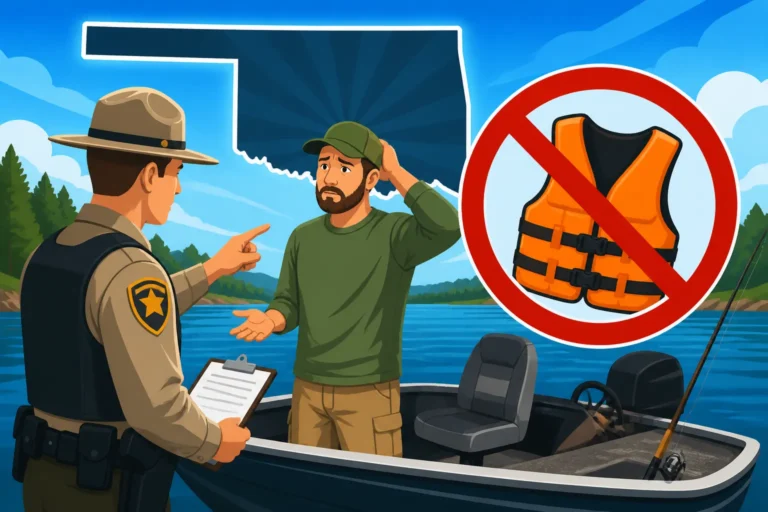
Safety should always be your top priority, regardless of how big or small your vessel is. The biggest item on your list should be a U.S. Coast Guard-approved Personal Flotation Device (PFD), or life jacket. While adults aren't always required to wear it while underway in Oklahoma (unless certain conditions apply, like tubing), you must have one readily accessible on board for every person on the kayak. For children 12 years old and younger, they must wear a PFD at all times while on any vessel, including a kayak. This is a non-negotiable rule, and game wardens will enforce it. Always err on the side of caution; a PFD can save your life, especially if you unexpectedly capsize in cold water or strong currents. Do You Need a Life Jacket in a Kayak in Oklahoma? is a critical read.
Beyond the PFD, consider these:
- Whistle or Air Horn: Required for all vessels, this is your way to signal for help or alert other boaters to your presence, especially in fog or low light.
- Lights: If you're going to be on the water between sunset and sunrise, or during periods of restricted visibility, you need to display appropriate navigation lights. A 360-degree white light is typically sufficient for a kayak, making you visible to other boats.
- Paddle Leash: Not technically a safety item but incredibly useful. Losing your paddle could leave you stranded!
- First-Aid Kit: A small, waterproof kit is always a good idea for minor cuts, scrapes, or other unexpected incidents.
Being prepared with proper safety gear allows you to enjoy the tranquility of kayak fishing without unnecessary worry. You can find excellent, comfortable kayak-specific PFDs at outdoor retailers like Bass Pro Shops, designed to allow for freedom of movement while paddling and casting.
Essential Fishing Gear for Kayak Anglers
Kayak fishing demands gear that's compact, efficient, and ideally, waterproof. You're working with limited space, so every item needs to earn its spot.
- Rods and Reels: Look for shorter rods, typically 6 to 7 feet, that are easier to maneuver in tight spaces. You might bring two – one for your primary technique and a backup or a different setup. Best Rod for Largemouth Bass Fishing could give you some ideas for species-specific setups.
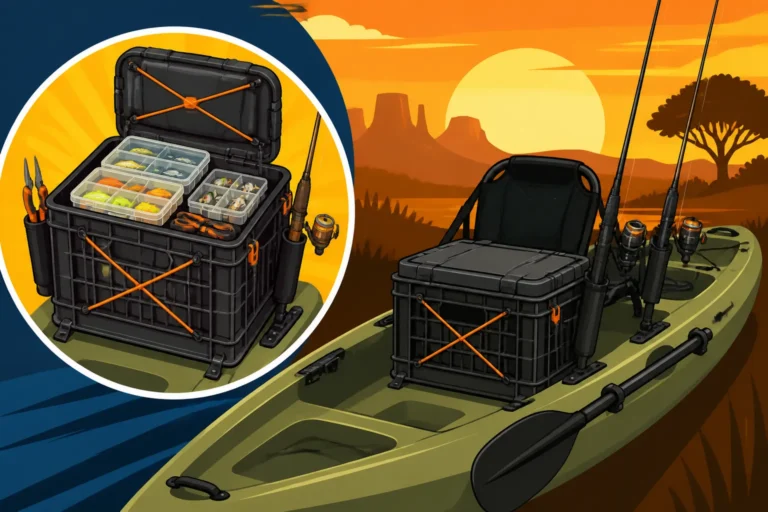
- Tackle Management: Forget the gigantic tackle boxes. Many kayak anglers use milk crate systems, specialized tackle bags, or waterproof boxes that fit snugly into hatches or bungee areas. These keep your lures, hooks, and weights organized and accessible. You can find great modular tackle storage solutions on Amazon that are designed for kayak use.
- Anchor System: A small, collapsible grapple anchor with a sufficient length of rope (and a quick-release system!) is crucial for holding position against wind or current while you're fishing a specific spot. There’s nothing more frustrating than drifting off a hot bite. Kayak Anchor Setup for Fishing Oklahoma Lakes provides guidance on this.
- Cooler: A small, soft-sided cooler that fits behind your seat or in a hatch is perfect for drinks, snacks, and keeping your catch fresh if you plan to take some home for dinner.
- Electronics (Optional but Recommended): A compact fish finder/GPS unit can be a game-changer, helping you locate structure, identify fish, and navigate back to your favorite spots. Many models are designed specifically for kayak mounting.
Remember, the beauty of kayak fishing is its simplicity and stealth. You can get into places bigger boats can't, offering unique angling opportunities. Investing in the right gear, both for safety and for fishing efficiency, will make your time on Oklahoma's waters even more rewarding.
| Category | Non-Motorized Kayak (Paddle-Powered) | Motorized Kayak (Any Motor Attached) |
|---|---|---|
| Registration? | No (Generally Exempt) | Yes (Required) |
| Titling? | No | Yes (Required) |
| Hull ID Number? | Yes (Typically has one from MFG) | Yes (Needed for registration) |
| Decals/Stickers? | No | Yes (Required on bow) |
| Annual Fees? | No | Yes |
| Fishing License? | Yes (If fishing and 16+ years old) | Yes (If fishing and 16+ years old) |
| Life Jackets? | Yes (Required on board for all) | Yes (Required on board for all) |
| Whistle/Horn? | Yes (Required) | Yes (Required) |
| Navigation Lights? | Yes (If operating sunset-sunrise) | Yes (Required sunset-sunrise) |
Disclaimer
This article is for general informational purposes only and does not constitute professional advice. Laws, prices and regulations vary by location and change over time. Consult a qualified professional for guidance on your specific situation.