Best Rods and Reels for Oklahoma Fishing
Choosing the right fishing rod and reel in Oklahoma can feel like an overwhelming task. With so many lakes, rivers, and species to target, it’s easy to get lost in the jargon of rod power, action, gear ratios, and drag systems. This guide aims to cut through the confusion, helping you understand what gear is best suited for your specific angling adventures across the diverse waters of the Sooner State.
Understanding Your Target Species: What Are You Fishing For?
Before you even think about walking into a tackle shop or browsing online, the absolute first question you need to ask yourself is: "What am I trying to catch?" Oklahoma's waters are teeming with a variety of fish, and what works perfectly for a delicate crappie bite won't stand a chance against a rampaging Lake Texoma striper. Your target species dictates everything, from the length and strength of your rod to the line capacity and drag system of your reel. Ignoring this crucial step often leads to frustration, broken lines, lost fish, and ultimately, an unsatisfying day on the water.
Bass Fishing Rods and Reels
Oklahoma is a bass angler's paradise, with abundant largemouth, smallmouth, and spotted bass. Each of these spirited fighters, and the different techniques used to catch them, calls for specific rod and reel combinations.
For the trophy largemouth angler, especially when fishing around thick cover like submerged timber, lily pads, or heavy brush in lakes like Eufaula or Grand Lake, a medium-heavy power, fast action baitcasting rod is often the weapon of choice. These rods, typically between 6'6" and 7'6" in length, provide the backbone needed to rip a big bass out of cover and the fast tip allows for quick, powerful hook sets. Pair this with a baitcasting reel with a gear ratio of 6.3:1 to 7.1:1, offering a good balance of power for pulling fish and speed for working lures quickly. This setup excels with jigs, Texas-rigged plastics, and spinnerbaits.
Smallmouth bass, often found in clearer, rockier waters or flowing rivers, tend to be more line-shy and require a more finessed approach. For these feisty fish, a medium-light or medium power spinning rod (6' to 7' in length) with a fast action is ideal. This setup allows for casting lighter baits like small crankbaits, tubes, or drop shots with lighter fluorocarbon or monofilament lines. A spinning reel in the 2000-2500 size range, known for its smooth drag and easy casting, complements this perfectly. The sensitivity of this lighter gear lets you detect those subtle "thumps" when a smallmouth inhales your bait.
Spotted bass, found throughout many Oklahoma lakes and rivers, often fall somewhere in between largemouth and smallmouth in terms of preferred gear. They're aggressive but can also be found in deeper, clearer water. A medium power, fast action spinning rod or a versatile medium power baitcasting rod can handle most spotted bass scenarios, allowing you to throw anything from shaky heads to small swimbaits. The key is often versatility, allowing you to adapt to changing conditions and bait presentations. Understanding Largemouth Bass Fishing in Oklahoma: The Complete Guide can provide even more specialized insights.
Crappie Fishing Rods and Reels
Crappie, both black and white, are a favorite panfish among Oklahoma anglers for their delicious taste and fun fight. Catching these "slab" crappie requires a delicate touch and sensitive gear, especially when their bite is light.
The classic crappie setup is a light or ultra-light power spinning rod, often 6 to 7 feet in length, though some anglers prefer longer rods (up to 10-12 feet) for spider rigging or single-pole jigging from a boat. The longer rods give you more reach and help keep your bait away from the boat. A fast or moderate-fast action tip is crucial for detecting those barely-there bites, while still providing enough backbone to land a decent-sized crappie. These rods are usually paired with a small spinning reel, typically a 1000 or 1500 size, spooled with light monofilament or fluorocarbon line (4-6 lb test).
This kind of sensitive setup is perfect for vertical jigging small jigs (1/32 to 1/8 oz) over brush piles, around docks, or under crappie lights at night. The light line allows for a natural bait presentation and makes even a small crappie feel like a trophy. When spider rigging, where multiple rods are deployed from the front of the boat, a series of these light action rods allow for covering a wider area and presenting baits at various depths simultaneously. It's a method that requires patience and a keen eye but can be incredibly rewarding. For more on tactics, check out Crappie Fishing Techniques and Seasonal Patterns in Oklahoma.
For those who prefer a bit more versatility, a medium-light spinning rod can also serve double duty, allowing you to cast small crappie jigs but also handle slightly larger panfish or even smaller bass if they decide to bite. However, dedicated crappie anglers will always lean towards the lighter, more sensitive options to maximize their success, especially during challenging bites. The key is to feel everything your bait is doing and react instantly to any change in pressure or resistance.
Catfish Fishing Rods and Reels
Catfish in Oklahoma come in three main varieties: channel, blue, and flathead, and they can range from a pound or two to absolute monsters. This incredible diversity means your gear choice needs to be robust, particularly if you're chasing those legendary trophy blues and flatheads that cruise the depths of our major reservoirs and rivers.
For channel catfish, which are abundant and usually in the 1-10 pound range, a medium-heavy power, moderate-fast action spinning or baitcasting rod (6'6" to 7'6") is often sufficient. These rods have enough flex to absorb the head shakes of a fighting channel cat but enough power to bring them to shore or boat. A spinning reel in the 3000-4000 size range or a conventional baitcasting reel with good line capacity and a reliable drag system, spooled with 10-20 lb monofilament or braided line, will handle most channel cat encounters effectively. This setup works well for traditional bottom fishing with stink baits, cut bait, or worms.
When you start targeting larger blue catfish and flatheads, particularly those 20+ pound brutes that lurk in the Arkansas River system or lakes like Texoma, Eufaula, or Grand Lake, you need to step up your game considerably. Heavy power, moderate or moderate-fast action rods (7'6" to 10' or even longer for bank fishing) are essential. These rods are built with incredible backbone to handle heavy weights, strong currents, and the immense power of a trophy catfish. They are almost exclusively paired with heavy-duty conventional reels, sometimes called "level wind" reels, known for their superior cranking power and massive line capacity.
These robust reels should be spooled with 30-80 lb braided line, or heavy monofilament, to withstand the immense forces exerted by large catfish and to cut through dense structure they might try to dive into. A reliable, smooth drag system is non-negotiable, as it allows the fish to take line without breaking it while still applying constant pressure. For more on these incredible fish, check out Catfish Species You'll Find in Oklahoma. Whether you're drift fishing with cut bait or setting trotlines and jug lines, the gear must be able to handle extreme stress.
Striped Bass and Other Game Fish
Oklahoma offers exciting opportunities for other species, notably striped bass, particularly in the sprawling waters of Lake Texoma. These powerful, schooling fish demand specialized gear to tackle their brute strength and deep-water habits.
For striped bass at Lake Texoma, anglers often use a medium-heavy to heavy power rod, typically 7 to 8 feet long, with a moderate to moderate-fast action. This combination provides enough leverage to fight a hard-pulling striper and enough tip sensitivity to detect bites while trolling or jigging. These rods are frequently paired with conventional reels, sometimes equipped with line counters to precisely track bait depth when trolling. A good quality baitcasting or conventional reel with a smooth, powerful drag system and a high line capacity (spooled with 20-40 lb monofilament or braided line) is crucial for controlling these strong fish, especially when they make deep, powerful runs. Lake Texoma is renowned for its striper population, and getting your hands on specific Best Reels for Oklahoma Striped Bass Fishing will make a huge difference.
Walleye and saugeye, found in lakes like Canton, Tenkiller, and Fort Gibson, require a more nuanced approach. These fish are known for their subtle bites, making sensitivity paramount. A medium-light to medium power spinning rod, 6'6" to 7'6" in length, with a fast action tip, is an excellent choice. This allows for casting lighter jigs, crankbaits, or live bait rigs while providing the sensitivity to feel those delicate "taps." A 2000-2500 size spinning reel with a smooth drag, spooled with 6-10 lb fluorocarbon or braided line, completes this sensitive setup, maximizing your chances of detecting and hooking these elusive fish. For those pursuing walleye specifically, deeper dives into Best Gear for Walleye Fishing in Oklahoma can be incredibly helpful.
Other game fish, like white bass, often caught during their exciting spring runs, can be targeted effectively with a medium-light spinning setup similar to what you'd use for smaller crappie or walleye. Their aggressive schooling behavior means you'll often be casting lighter spoons or small jigs into feeding frenzies, making a sensitive but capable rod and reel combo ideal for reeling in multiple fish quickly.
Spinning Rod and Reel Combos: The Versatile Workhorse
Spinning combos are undeniably the most popular choice for anglers of all skill levels, and for good reason. They are incredibly versatile, relatively easy to learn, and capable of handling a vast array of fishing situations and species. For anyone dipping their toes into Oklahoma fishing, or even seasoned pros looking for a reliable setup, a good spinning rod and reel is an essential piece of equipment. Their design, with an open-faced spool and a bail that guides the line, makes casting light lures effortless and minimizes frustrating backlashes, which can be a common headache with other reel types.
Getting Started: Light and Medium-Light Spinning Gear
If you're just starting your angling journey in Oklahoma or you want to specifically target panfish, crappie, or even some of the stocked trout in our tailwaters, a light to medium-light spinning setup is absolutely the way to go. These rods are typically between 5'6" and 6'6" in length, offering a great balance between castability and maneuverability. Their lighter power means they bend easily, making them incredibly sensitive to the subtle bites of smaller fish, which often feel like nothing more than a slight pressure change on the line.
Paired with a small spinning reel, usually in the 1000 to 2000 size range, spooled with 4-8 lb test monofilament or fluorocarbon line, this setup becomes a joy to fish. You can effortlessly cast tiny jigs, small spinners, or a simple bobber and worm rig a good distance, reaching those productive spots near submerged structure or along the bank. The lighter line offers a more natural presentation, which can be crucial when fish are finicky. It’s perfect for a relaxing afternoon targeting bluegill in a farm pond or jigging for crappie under a dock. Many excellent beginner-friendly combos can be found at Bass Pro Shops, offering good quality without breaking the bank. For an even wider array of choices, with user reviews to help guide your decision, you can always browse options on Amazon.
This class of spinning gear is also fantastic for finesse tactics when bass fishing. When largemouth or spotted bass are holding deep or are pressured, a lightweight spinning combo allows you to present small shaky heads, drop shots, or Ned rigs with incredible precision and subtlety. The increased sensitivity of the lighter rod means you can feel every bump and tick, even from a cautious bass. This versatility makes it an invaluable tool for any Oklahoma angler.
All-Around Performance: Medium Action Spinning Rods
For many Oklahoma anglers, a medium power, fast action spinning rod is the true "swiss army knife" of their tackle collection. If you could only pick one rod to handle a wide range of fishing scenarios in the state, this would be a strong contender. Typically ranging from 6'6" to 7' in length, these rods offer a fantastic blend of casting power, fish-fighting backbone, and enough sensitivity for many different species.
A medium action rod allows you to cast a broader range of lure weights compared to its lighter counterparts, from small crankbaits and spinnerbaits to larger jigs and soft plastics. This makes it incredibly versatile for targeting general bass fishing, as well as handling decent-sized channel catfish, saugeye, or even smaller striped bass. When paired with a 2500-3000 size spinning reel spooled with 8-12 lb monofilament or fluorocarbon, or even 15-20 lb braided line, you have a setup capable of tackling a surprising amount of what Oklahoma's waters throw at you.
This type of combo is often recommended for those who fish occasionally, or for families looking for a versatile setup that can handle a variety of fish on a single trip. It’s robust enough to handle the unexpected bigger fish, but still light enough to make fishing enjoyable. You can easily switch from casting for bass along a shoreline to drifting a live minnow for crappie, making it highly adaptable for a multi-species day out. It’s reliable, forgiving, and consistently performs across a broad spectrum of fishing techniques.
Key Features to Look For in Spinning Gear
When choosing your spinning gear for Oklahoma fishing, beyond just power and action, there are several key features that contribute to performance, durability, and comfort on the water. Paying attention to these details can significantly enhance your fishing experience and ensure your gear stands up to the demands of our diverse lakes and rivers.
For the reel, focus on a smooth drag system. A drag that releases line without jerking or sticking is crucial for fighting fish, especially strong ones like bass or catfish, as it prevents sudden line breaks. Look for reels with multiple ball bearings; generally, more bearings mean smoother operation, though quality of bearings can be more important than quantity. The reel's body material (graphite for lightness, aluminum for strength) and corrosion resistance are also important, particularly if you frequent Lake Texoma, where brackish water can be tough on gear. Reel size, as mentioned earlier, should correspond to your target species and line weight, ensuring adequate line capacity without being overly bulky.
For the rod, the quality of the guides is paramount. Guides made from materials like ceramic or stainless steel reduce friction, allowing for longer casts and protecting your line from wear. A good quality reel seat will securely hold your reel without wobbling, and a comfortable handle, typically made of cork or EVA foam, will reduce fatigue during long days of casting and reeling. Rod blanks made from graphite offer excellent sensitivity and lightness, while fiberglass provides more durability and a forgiving action, ideal for crankbait fishing. Many manufacturers blend these materials to achieve a desired balance.
Finally, consider the overall balance of the rod and reel combo. A well-balanced setup feels lighter in your hand and reduces fatigue, allowing for more comfortable and effective casting throughout the day. Don't be afraid to try out different combos in a store like Bass Pro Shops to see how they feel in your hand. Investing a little more in quality components often pays off in the long run with increased durability and a more enjoyable fishing experience.
Baitcasting Rod and Reel Combos: Power and Precision
Baitcasting rods and reels are the preferred choice for many serious bass and large game fish anglers in Oklahoma. While they have a steeper learning curve than spinning gear (backlashes are common for beginners!), they offer unparalleled power, accuracy, and control once mastered. The direct line pull from the spool provides superior sensitivity and the ability to handle heavier lines and lures with ease, making them indispensable for specific techniques and target species.
Dominating the Depths and Cover: Medium-Heavy Baitcasters
When you're serious about targeting larger largemouth bass, especially in the challenging environments of Oklahoma's lakes like Eufaula, Grand Lake, or Broken Bow, a medium-heavy power baitcasting setup is absolutely essential. These rods, typically 6'8" to 7'6" in length with a fast or extra-fast action, are designed to give you the leverage and backbone needed to muscle big fish out of dense cover. Imagine flipping a jig into a thick laydown, getting a solid strike, and needing to quickly pull that fish away from the snags – a medium-heavy baitcaster provides that necessary power.
This setup excels with heavier lures such as jigs, Texas-rigged soft plastics, spinnerbaits, and medium to large crankbaits. The fast action tip allows for incredibly accurate casting into tight spots, like under docks or along brush lines, and provides the sensitivity to detect subtle bites. Once a fish bites, the rod's quick taper allows for a powerful hookset, driving the hook home even through tough jaws. Paired with a baitcasting reel with a gear ratio of 6.3:1 to 7.1:1, you have a versatile tool for quickly retrieving lures and maintaining control over a fighting fish.
The strength of a medium-heavy baitcaster also comes into play when fishing deeper water with heavier baits. When casting a large jig or a heavy Carolina rig along a ledge, the rod's power helps you feel the bottom contours and detect deep bites. This precision and control are what make baitcasting gear a favorite for tournament anglers and serious bass enthusiasts who demand peak performance in challenging conditions. Many of the specialized bass fishing techniques described in Best Rods for Oklahoma Largemouth Bass would primarily utilize this type of gear.
Taming the Giants: Heavy-Duty Baitcasting for Big Fish
When the pursuit shifts to true trophy fish – the behemoth blue catfish of the Arkansas River, the immense flatheads lurking in deep holes, or the hard-fighting striped bass of Lake Texoma – you need to bring out the heavy artillery. This is where heavy and extra-heavy power baitcasting or conventional setups truly shine. These rods are built like tanks, designed to absorb incredible stress and provide maximum lifting power against the biggest fish Oklahoma has to offer.
Heavy-duty baitcasting rods for these giants are often longer, ranging from 7'6" to 10 feet or more, especially for bank fishing for catfish where longer casts and bait-holding power are crucial. They feature a much slower action than bass rods, bending more deeply into the blank, which helps absorb the shock of powerful runs and keeps heavy fish from tearing off. These rods are usually paired with robust, high-capacity conventional reels. These reels are designed with incredibly strong gearing and drag systems, capable of handling 50-100 lb braided line or heavy monofilament. Look for reels with a low gear ratio (e.g., 4.0:1 or 5.0:1) to maximize cranking power when pulling in heavy fish or fighting strong currents.
For striped bass at Lake Texoma, similar heavy-duty conventional setups are used, particularly for trolling large baits or heavy spoons in deep water. The reels often have line counters to ensure baits are presented at the correct depth, which is vital when targeting suspended schools of stripers. These setups are also invaluable for methods like jug fishing or trotlining for catfish, where the gear needs to withstand constant abuse and hold strong against powerful, unseen fish. The sheer power and durability of these setups mean you can confidently tackle the largest specimens Oklahoma's waters produce, turning what might be an impossible fight with lighter gear into a manageable challenge.
The Learning Curve: Tips for Baitcaster Mastery
While baitcasting reels offer undeniable advantages in power and precision, they come with a notorious learning curve. The infamous "bird's nest" or "backlash," where the spool spins faster than the line peels off, creating a tangled mess, is a rite of passage for every aspiring baitcaster. However, with a bit of patience and practice, anyone can master this rewarding tool.
The key to preventing backlashes lies in proper thumb control. As you cast, your thumb needs to gently feather the spool, applying just enough pressure to prevent it from over-spinning, especially as the lure slows down before hitting the water. Many modern baitcasting reels come with magnetic or centrifugal braking systems that help manage spool speed. Start with these brakes set on a higher, more forgiving setting and gradually reduce them as you gain confidence. Always set your spool tension knob so that when you drop your lure, it falls slowly to the ground without the spool continuing to spin once the lure hits.
Begin practicing with heavier lures (like a 1/2 oz casting plug or jig) in an open area, away from water and obstacles. Use a smooth, deliberate casting motion rather than a jerky one. Focus on keeping your wrist straight and letting the rod do the work. Start with short, controlled casts, gradually increasing your distance as your thumb develops a "feel" for the spool. It’s a bit like learning to drive a stick shift – it feels awkward at first, but soon becomes second nature.
Don't get discouraged by backlashes; they happen to everyone, even experienced pros. When one occurs, resist the urge to pull or force the line. Instead, gently pick at the loops on the spool, slowly unthreading the tangled line. Taking the time to untangle it properly will prevent damage to your line and save you from having to cut it off. There are plenty of online resources and videos demonstrating proper baitcasting techniques that can further aid your learning process. The initial frustration is a small price to pay for the unparalleled control and power a baitcasting combo provides, opening up a whole new world of fishing techniques.
Specialty Rods and Reels: When One Size Doesn't Fit All
While spinning and baitcasting setups cover the vast majority of fishing scenarios in Oklahoma, there are certain situations and species that call for highly specialized gear. These setups are designed with a singular purpose, maximizing efficiency and success for niche techniques that demand unique characteristics from your rod and reel. Whether it's the specific challenge of trolling for stripers or the sheer power required for snagging paddlefish, having the right specialized equipment can make all the difference.
Trolling and Live Bait Rigs for Striped Bass
Trolling is an incredibly effective method for covering large expanses of water and locating schooling striped bass in vast reservoirs like Lake Texoma. This technique often requires a specific type of rod and reel to maximize success. Trolling rods are typically longer (7 to 9 feet), with a moderate or parabolic action, meaning they bend significantly throughout the blank. This action helps absorb the shock of a strike while the boat is in motion and acts like a shock absorber, keeping constant pressure on the fish without pulling the hooks.
These rods are almost always paired with conventional reels, frequently equipped with line counters. A line counter reel is a game-changer for trolling, as it allows anglers to precisely control how much line is out, ensuring that baits are presented at the exact depth where fish are holding. This is crucial when stripers are suspended at specific depths or when trying to match the depth of baitfish schools. The reels themselves need strong drag systems and high line capacity to handle the powerful runs of a large striper and to hold plenty of heavy monofilament or braided line.
When using downriggers or planer boards to spread out multiple lines or get baits deeper, the rod's length and action also play a critical role. The rod needs to load up properly to absorb the tension from these devices, and then transition smoothly into fighting a fish once it strikes. Live bait rigs, often used for stationary fishing for stripers, might utilize slightly shorter, stiffer conventional setups, but still demand robust reels to handle the strong takes and fights from these hard-fighting fish. Mastering these specialized techniques and matching them with the right gear is key to consistently catching Oklahoma's Striped Bass: An Introduced Species Guide.
Paddlefish Snagging Specifics
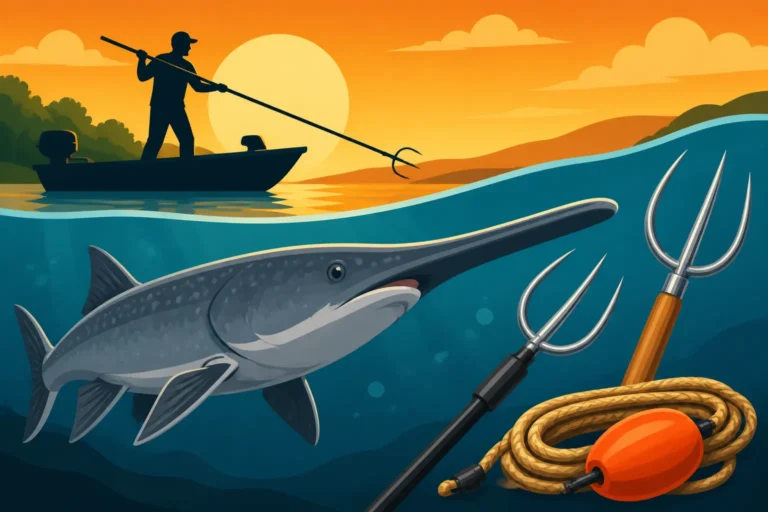
Paddlefish snagging is a truly unique and exhilarating fishing experience in Oklahoma, especially on Grand Lake O' the Cherokees. Unlike traditional fishing where a fish bites a baited hook, paddlefish are filter feeders, so they must be "snagged" by a large, weighted treble hook. This isn't a finesse game; it's a battle of brute force, and your gear needs to be built to withstand immense pressure.
Paddlefish snagging rods are stout, heavy-power blanks, often 8 to 10 feet long, designed with a massive amount of backbone. These rods are generally made of a fiberglass or composite material, prioritizing extreme durability over sensitivity or lightweight feel. The sheer force required to cast a heavy weight (typically 8-12 ounces) and a large treble hook, and then to repeatedly rip that hook through the water column to try and "snag" a fish, would quickly break a conventional fishing rod. Once a paddlefish is hooked, the rod needs the power to turn a fish that can easily weigh 50-100 pounds or more.
These specialized rods are exclusively paired with heavy-duty conventional reels, the kind typically used for saltwater big game fishing or offshore trolling. These reels boast enormous line capacity, holding hundreds of yards of 60-100 lb braided line or heavy monofilament. Their internal gears are built for extreme cranking power, and their drag systems are designed to lock down hard to control a massive fish. The heavy line is not just for strength but also to withstand the abrasive nature of repeatedly dragging a heavy sinker and hook across the lake bottom. For a full breakdown of the necessary equipment, consult a Paddlefish Snagging Gear Guide for Grand Lake. This is definitely not the time to bring out your bass gear!
Fly Fishing for Oklahoma Trout and Panfish
While perhaps not as widely practiced for the "big three" species (bass, crappie, catfish) in Oklahoma, fly fishing offers a beautiful and rewarding experience for specific species, particularly trout and various panfish. This highly specialized method requires a completely different type of rod and reel, focusing on delicate presentation and controlled casting of artificial flies.
For trout fishing in Oklahoma's designated trout waters, such as the Lower Mountain Fork River below Broken Bow Dam or the Illinois River, a 5-weight or 6-weight fly rod, typically 8'6" or 9' in length, is a versatile choice. This setup allows you to cast a variety of nymph, dry fly, and streamer patterns, and has enough backbone to handle both rainbow and brown trout. The fly reel's primary purpose here is to hold the fly line and provide a smooth drag for fighting fish, rather than casting distance. A good quality, lightweight reel with a dependable disc drag system is sufficient.
For panfish like bluegill and other sunfish, especially in smaller streams or ponds, a lighter fly rod, such as a 3-weight or 4-weight, between 7' and 8'6" in length, is incredibly fun. This ultra-light setup makes even a small bluegill feel like a trophy, and allows for delicate presentations of tiny poppers, wet flies, and nymphs. The joy of fly fishing for panfish lies in the finesse and the visual thrill of seeing a fish take a carefully presented fly off the surface. It's a completely different discipline from conventional fishing, but one that offers a unique connection to the water and the fish.
Matching Rod Power and Action to Your Fishing Style
Understanding rod power and action can feel like learning a foreign language, but these two characteristics are fundamental to choosing the right tool for the job. They dictate how a rod performs, how much force it can handle, and how it translates the fight of a fish or the subtle vibration of a lure back to your hands. Ignoring them is like trying to drive a nail with a screwdriver – you might eventually get it done, but it won't be efficient or enjoyable.
Understanding Rod Power: From Ultralight to Heavy
Rod power, sometimes referred to as "weight," describes the lifting strength or stiffness of the rod blank. Essentially, it tells you how much pressure it takes to bend the rod, and therefore, how much force it can exert on a fish and how heavy of a lure it can effectively cast. It's critical to match the rod's power to the size of your target fish and the weight of your lures and lines.
- Ultralight: These rods are extremely flexible and designed for the smallest fish (like small panfish or trout) and the lightest lures (1/32 to 1/8 oz) and lines (2-4 lb test). They make even tiny fish feel like a battle, but lack the backbone for anything larger than a pound or two.
- Light: A step up, light power rods handle slightly larger panfish, crappie, and small trout, as well as light finesse baits. They're typically rated for lures up to 1/4 or 3/8 oz and lines up to 6-8 lb. They offer excellent sensitivity for light bites.
- Medium-Light: A versatile option for larger crappie, walleye, and smaller bass. These rods can cast lures up to 1/2 oz and handle lines up to 10 lb, offering a good balance of sensitivity and modest lifting power.
- Medium: This is your all-around workhorse, suitable for a wide range of bass fishing, larger walleye, and channel catfish. They typically handle lures from 1/4 to 3/4 oz and lines up to 14-17 lb. They offer a good blend of casting ability and fighting power.
- Medium-Heavy: The staple for bass anglers. These rods excel at pulling bass out of cover and casting heavier lures like jigs, Texas rigs, and larger crankbaits (up to 1 oz). They're rated for lines up to 20 lb and provide significant backbone for powerful hooksets and controlling fish.
- Heavy: Reserved for larger fish like big blue catfish, trophy largemouth in heavy cover, and striped bass. Heavy rods can cast lures over 1 oz and handle lines over 20 lb, providing maximum lifting power.
- Extra-Heavy: Specialized rods for the biggest fish, such as giant paddlefish, monster flatheads, or offshore big game. These are brute force tools, designed for extreme lifting power and heavy lines.
Using a rod with too little power for a large fish will result in lost fish and potentially a broken rod. Conversely, using an overly powerful rod for small fish will diminish the fun and make it difficult to feel subtle bites or cast light lures. The sweet spot lies in matching the rod's strength to the demands of your target species and fishing conditions.
Understanding Rod Action: Fast, Moderate, and Slow
Rod action refers to where along the rod blank the rod bends when pressure is applied, and how quickly it returns to its straightened position. This characteristic profoundly impacts casting distance, accuracy, hook-setting power, and how the rod handles a fighting fish.
-
Fast Action: A fast action rod bends primarily in the tip section, typically in the top quarter or third of the rod. This design provides maximum sensitivity, allowing you to feel even the lightest bites. It also allows for quick, powerful hooksets, as the rod loads up quickly. Fast action rods are excellent for techniques where sensitivity and quick reactions are paramount, such as jigging, worm fishing, or using topwater lures for bass. They offer great casting accuracy because the tip recovers quickly, but they can be less forgiving if you set the hook too hard on a soft-mouthed fish.
-
Moderate-Fast Action: These rods bend in the upper half of the blank, offering a good balance between sensitivity and flexibility. They provide a bit more casting distance than fast action rods and are more forgiving when fighting fish, reducing the chances of hooks tearing out. Moderate-fast action is a popular choice for all-around fishing, suitable for many lure types including spinnerbaits, chatterbaits, and some crankbaits, making them a versatile option for various bass fishing techniques.
-
Moderate Action (or Regular Action): A moderate action rod bends more towards the middle of the blank. This deeper bend allows for longer, smoother casts, especially with lighter lures. It also provides a better shock absorber when fighting fish, making it ideal for species that make sudden surges or for using treble-hooked lures like crankbaits and topwater plugs, where a more forgiving action helps keep the fish hooked. They are also often preferred for live bait fishing where a slower, more natural presentation is desired.
-
Slow Action: These rods bend almost throughout their entire length, starting very close to the handle. They offer the most forgiving action, making them excellent for absorbing the shock of strong fish and preventing line breaks with light lines. Slow action rods excel at casting very light lures or presenting live bait with a gentle touch. They are less common for modern bass fishing but are often found in some fly fishing rods, ultralight panfish rods, or specialized trolling setups where a deep bend is beneficial.
Matching action to your technique is key. For example, if you're throwing a crankbait that fish often swipe at, a moderate action rod will allow the fish to engulf the lure better and prevent pulling the hooks. But for flipping a jig into heavy cover, a fast action rod will give you the immediate power to set the hook and rip the fish out.
The Critical Relationship: Line, Lure, and Rod Rating
Understanding rod power and action isn't a standalone concept; it's intricately linked to the line you use and the lures you tie on. Every fishing rod typically has a series of ratings printed on its blank, usually near the handle. These ratings indicate the optimal range for line test (e.g., 8-17 lb) and lure weight (e.g., 1/4 – 3/4 oz) that the rod is designed to handle. Ignoring these recommendations can lead to suboptimal performance, frustration, and even broken gear.
Line Rating: The line rating tells you the tensile strength of the fishing line the rod is engineered to perform best with. If you use line that is significantly lighter than the rod's rating, you might find the rod too stiff to properly load up and cast effectively, resulting in poor casting distance and reduced sensitivity. More critically, using line that is much heavier than the rod's rating can put excessive stress on the rod blank during a fight or a snag. If your line doesn't break first, the rod might, especially if you try to pull a snagged lure free with very heavy line on a lighter rated rod. This is a common cause of rod tip breaks.
Lure Weight Rating: The lure weight rating indicates the optimal range of lure weights the rod is designed to cast efficiently and accurately. Using a lure that is too light for a rod will feel like you're trying to cast a feather with a broomstick – you won't get good distance or accuracy. The rod simply won't load up or flex enough to propel the lure. Conversely, trying to cast a lure that is too heavy for the rod's rating can overstress the blank during the casting motion, potentially leading to a catastrophic rod break mid-cast, which is not only costly but also potentially dangerous.
The Synergy: When your line, lure, and rod power/action are all within their recommended ranges, they work in perfect synergy. The rod loads up smoothly on the cast, allowing you to achieve maximum distance and accuracy with minimal effort. The lure performs as intended, and the rod's action correctly translates subtle bites or bumps on the bottom. During a fight, the rod provides the right amount of leverage and shock absorption, while the line has the appropriate strength to complement the rod's capabilities. This harmonious relationship ensures that you're getting the best possible performance from your gear, making your time on the water more productive and enjoyable. It's truly about finding that balanced combination for every fishing scenario. For example, What an Oklahoma Resident License Buys You for $31 a Year might seem unrelated, but understanding the value of your annual fishing investment means you want your gear to last and perform, which proper matching helps ensure.
Caring for Your Rods and Reels: Longevity on Oklahoma Waters
Investing in quality rods and reels is a significant step toward enjoyable and successful fishing in Oklahoma. However, that investment only truly pays off if you take the time to properly care for your gear. Neglecting your rods and reels, especially after exposure to the elements or the sometimes brackish waters of Lake Texoma, can drastically shorten their lifespan, degrade their performance, and lead to frustrating malfunctions when you least expect them. A little routine maintenance goes a long way in ensuring your equipment is ready for action whenever the fish are biting.
Routine Cleaning and Maintenance
After every fishing trip, especially if you've been on a big lake with lots of spray or dirty conditions, a quick cleaning routine can save your gear from premature wear and tear. Start by rinsing your rods and reels with fresh water. This is particularly crucial if you've been fishing in Lake Texoma, where the high salt content can quickly corrode metal components if not thoroughly rinsed. A gentle spray from a garden hose is usually sufficient; just avoid high-pressure jets that might force water into the reel's internal mechanisms.
Once rinsed, use a soft cloth or towel to gently wipe down your rods, paying attention to the guides and reel seat to remove any grime, dried line slime, or bait residue. For your reels, a damp cloth can clean the exterior. For a deeper clean, specialized reel cleaning kits are available at stores like Bass Pro Shops or online at Amazon, which include appropriate lubricants and cleaning solutions. Lightly lubricate moving parts such as the handle knobs and the bail arm on spinning reels. For baitcasting reels, a tiny drop of oil on the worm gear (if accessible) and under the handle knob can maintain smooth operation.
It's also a good habit to periodically check your rod guides for damage. Small nicks or cracks in the ceramic inserts of guides can abrade your fishing line, leading to unexpected breaks. If you find a damaged guide, it's a relatively simple and inexpensive repair at a tackle shop, and much better than losing a trophy fish due to a frayed line. Similarly, check your reel's drag system to ensure it's not sticking. Back off the drag completely when storing your reel to relieve tension on the drag washers, helping them last longer.
Proper Storage for Extended Gear Life
How you store your rods and reels when not in use is just as important as how you clean them. Improper storage can lead to bent rods, scratched reels, or degraded components over time. The goal is to protect your gear from physical damage, moisture, extreme temperatures, and harmful UV rays.
For rods, consider investing in a rod rack or a dedicated storage solution that keeps them upright and prevents them from leaning against walls or other objects, which can cause the blanks to warp or guides to be bent or broken. Rod sleeves, made of mesh or fabric, are excellent for protecting individual rods from scratches and tangles, especially when transported in a boat or vehicle. Never store rods in a way that puts continuous pressure on the tip or any part of the blank.
Reels should ideally be stored separately from rods, or at least with a reel cover, to protect them from dust, dirt, and accidental knocks. Keep your reels in a dry, temperate environment. Avoid leaving them in a hot garage or shed where extreme temperatures can degrade lubricants and line, or in a damp basement where corrosion can set in. If you have multiple reels, a tackle bag with individual padded compartments is a fantastic way to keep them organized and protected.
Before long-term storage, such as over the winter months, ensure your reels are thoroughly cleaned and lubricated. It's also a good idea to remove old fishing line, especially monofilament, as it can develop memory and degrade over time, losing strength and stretch. Fresh line at the start of a new season is always a good idea. Properly stored gear will not only last longer but will also be ready to perform at its peak the moment you hit the water.
Troubleshooting Common Gear Issues
Even with the best care, sometimes things go wrong. Knowing how to troubleshoot common rod and reel issues can save you a trip to the repair shop and get you back to fishing faster. Many minor problems have simple solutions.
For reels, a common issue is a sticking or inconsistent drag. This is often caused by dirt or old, dried grease on the drag washers. Sometimes, simply backing off the drag completely and re-tightening it a few times can help. If not, a careful disassembly (following your reel's manual) to clean and re-lubricate the drag washers might be necessary. Another common reel issue is a "grinding" feel during retrieve. This could indicate a need for lubrication of internal gears or, in more severe cases, worn-out bearings or gears that require replacement. Always use lubricants specifically designed for fishing reels to avoid damaging components.
For rods, broken guides are a frequent problem, often from accidental knocks or snags. While some skilled anglers can replace a guide themselves, it often requires specialized tools and wrapping techniques. If a guide is just bent, sometimes it can be carefully bent back into shape, but repeated bending will weaken the metal. A broken rod tip is another common issue, often from high-sticking (lifting the rod too high during a fight, putting excessive stress on the tip) or closing it in a car door. Many rod manufacturers offer tip repair kits that can be glued on, or a professional can replace the tip section.
A major backlash on a baitcaster can sometimes seem insurmountable. Instead of forcing it, try to gently pick at the loops with a small pick or the point of a hook. Once a loop is free, carefully pull line from the spool while rotating the handle backward a tiny bit to help free up other loops. Prevention is always better than cure for backlashes! Knowing these quick fixes means less downtime and more time enjoying Oklahoma's fantastic fishing opportunities.
| Gear Type | Ideal Species | Rod Power | Rod Action | Reel Size (Spinning) / Line Weight (Baitcasting) | Common Lures/Baits | Key Benefit |
|---|---|---|---|---|---|---|
| Spinning Combo | Panfish, Crappie, Trout | Ultralight – Light | Fast – Moderate | 1000-2000 / 4-8 lb mono/fluoro | Small jigs, minnows, worms, tiny spinners | Ease of casting light lures, high sensitivity for light bites, beginner-friendly. |
| Spinning Combo | Bass (finesse), Walleye, Channel Cat | Medium-Light – Medium | Fast – Moderate-Fast | 2500-3000 / 8-12 lb mono/fluoro, 15-20 lb braid | Shaky heads, drop shots, small crankbaits, cut bait | Versatile, good for various lure sizes and species, balanced for all-around use. |
| Baitcasting Combo | Largemouth Bass, Spotted Bass | Medium-Heavy | Fast – Extra-Fast | 15-20 lb fluoro/braid | Jigs, Texas rigs, spinnerbaits, larger crankbaits | Accuracy, power for pulling fish from cover, strong hooksets, ideal for heavier lures. |
| Baitcasting Combo | Trophy Catfish, Striped Bass | Heavy – Extra-Heavy | Moderate – Moderate-Fast | 30-80 lb braid/mono | Cut bait, live bait, large spoons, heavy jigs | Max power for large fish, high line capacity, robust drag, excellent for trolling and heavy bottom fishing. |
| Specialty (Snagging) | Paddlefish | Extra-Heavy (Fiberglass) | Slow – Moderate | 60-100 lb braid/mono | Large treble hooks with heavy weights | Unmatched strength for snagging and fighting massive, powerful paddlefish. |
| Specialty (Fly) | Trout, Panfish | 3-6 Weight | Moderate – Fast | Fly line specific to rod weight | Nymphs, dry flies, streamers, poppers | Delicate presentation, unique challenge, rewarding for specific species, artistic casting. |
Disclaimer
This article is for general informational purposes only and does not constitute professional advice. Laws, prices and regulations vary by location and change over time. Consult a qualified professional for guidance on your specific situation.