Do Adults Need to Wear a Life Jacket on an Oklahoma Boat?
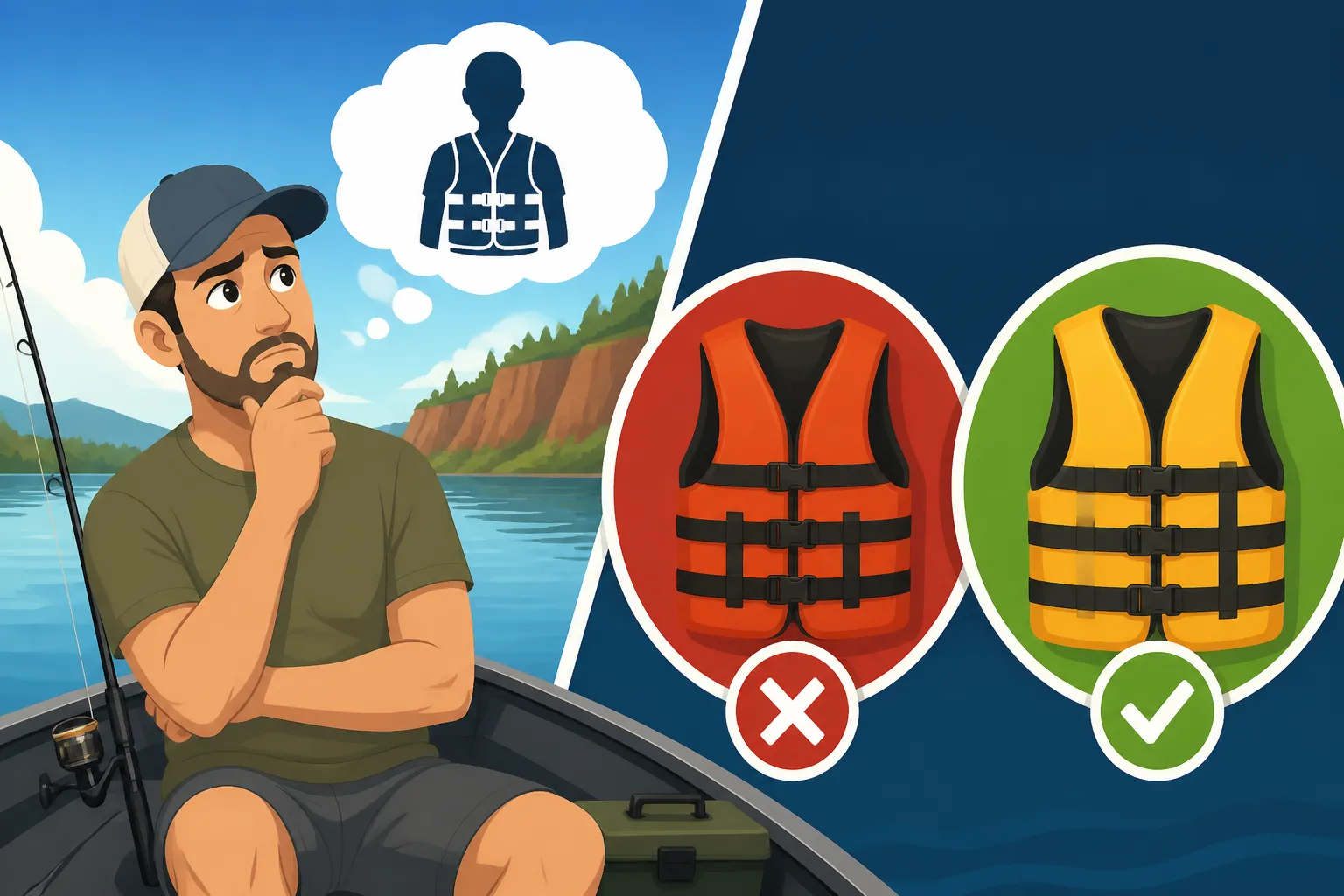
It's a common question that crosses the minds of many experienced anglers and casual boaters alike here in Oklahoma: do adults actually need to wear a life jacket when they're out on the water? The simple truth is that while the law doesn't always require an adult to wear a life jacket, it always requires one to be readily available for every person on board, and there are very specific scenarios where you absolutely must have it on. This guide will unravel the specifics of Oklahoma's life jacket regulations for adults, clearing up confusion and emphasizing why this vital piece of safety equipment is non-negotiable for a safe day on our beautiful lakes and rivers.
Understanding Oklahoma's Life Jacket Regulations
Navigating the rules of the water can sometimes feel as tricky as reading a muddy fishing report. When it comes to life jackets, or Personal Flotation Devices (PFDs) as they're officially called, there's a distinction between carrying them and wearing them that often gets misunderstood. It's not just about what makes sense; it's about what the law states and what personal safety dictates.
The General Rule: Carriage Versus Wear
In Oklahoma, as with most states, the primary rule for adult boaters is that all vessels must carry at least one U.S. Coast Guard-approved life jacket for each person on board. This includes adults. This isn't just a suggestion; it's a legal requirement. So, if you're planning a trip to Lake Eufaula with three friends, you need at least four life jackets on your boat. However, here's where the nuance comes in: for adults, these life jackets do not always have to be worn. They just need to be "readily accessible," meaning they're not stowed away in a locked compartment under a pile of gear. They should be easy to grab and put on in an emergency, ideally within reach of where people are sitting or standing.
Think of it like this: you wouldn't keep your emergency flares in the trunk of your car if you knew you might need them in a hurry. Similarly, a life jacket tucked away at the bottom of a cooler full of ice is not "readily accessible." It needs to be out in the open, perhaps folded neatly on a seat, or hanging on a hook, ready for immediate use. While the law allows for this "carriage" approach in many situations, most seasoned boaters will tell you that the safest approach is often to just wear it, especially in less-than-ideal conditions or when engaging in certain water sports.
Federal Versus State Regulations
It's important to remember that boating laws are a mix of federal and state regulations. The U.S. Coast Guard sets the baseline federal requirements, and states like Oklahoma then adopt these and often add their own specific rules. This means that while a federal law might state one thing, Oklahoma's game wardens and marine patrol can enforce additional requirements. For instance, the general rule about having a PFD for every person on board is a federal mandate. Oklahoma then might specify stricter rules for certain age groups, types of activities, or specific bodies of water.
This interplay can sometimes lead to confusion, but it generally means that if you follow the Oklahoma state regulations, you're almost certainly compliant with federal law as well. The Oklahoma Department of Wildlife Conservation (ODWC) outlines these specifics, which often mirror or enhance the federal guidelines, especially concerning children and specific water activities. Always check the latest ODWC regulations before heading out, as they can be updated.
Who is Considered an "Adult" Under the Law?
When discussing life jacket rules, the definition of "adult" is crucial, as requirements for minors are significantly stricter. In Oklahoma, the law generally considers anyone 13 years of age or older to be an adult in terms of life jacket wear. This means that for anyone 12 years old and younger, wearing a U.S. Coast Guard-approved life jacket is mandatory at all times when a vessel is underway.
This distinction is vital for families enjoying a day on the water. While you, as an adult, might be able to simply have a PFD onboard, your child aged 10, for example, absolutely must be wearing theirs. There are no exceptions for strong swimming kids or calm water for those under 13. This rule is in place for a very good reason: children are at a much higher risk of drowning, and a properly fitted life jacket dramatically increases their chances of survival if they unexpectedly end up in the water. For more information on this, check out Life Jacket Rules for Kids 12 and Under on Oklahoma Boats.
When Adults Must Wear a Life Jacket
While the general rule for adults is to have a life jacket readily accessible, there are specific situations and activities on Oklahoma waters where wearing one becomes mandatory, regardless of age. These rules are designed to protect you when the risk of falling overboard or being incapacitated is significantly higher. Ignoring these requirements can lead to serious legal consequences, not to mention putting your life at risk.
Water Skiing and Tubing Requirements
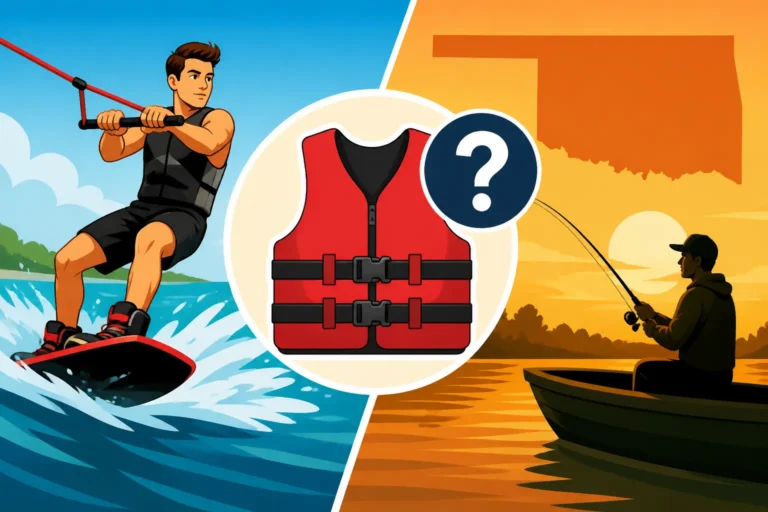
If you or another adult on your boat is enjoying water skiing, wakeboarding, tubing, or any similar activity where you're being towed behind a vessel, then wearing a U.S. Coast Guard-approved life jacket is not optional – it's absolutely required. This makes perfect sense when you think about it. When you're being towed, you're typically moving at speed, often over choppy water, and a fall is almost a guarantee at some point. Being knocked unconscious or disoriented after a tumble is a real possibility, and a life jacket is your immediate flotation device in such an event.
This rule applies to everyone participating in these towed activities, regardless of age. So, whether it's an adventurous teenager or a seasoned adult trying to recapture their youth on a wakeboard, that life jacket needs to be securely fastened. Game wardens are particularly vigilant about this rule, and for good reason. Accidents can happen quickly on the water, and ensuring everyone involved in these dynamic sports is wearing appropriate safety gear is a top priority. You can dive deeper into these specifics by reading Why Water Skiers and Tubers Must Wear a Life Jacket in Oklahoma.
Personal Watercraft Operation Rules
Operating a Personal Watercraft (PWC), like a Jet Ski, WaveRunner, or Sea-Doo, comes with its own set of rules, and mandatory life jacket wear for all occupants is one of them. Unlike larger boats where adults might have the option to just carry a PFD, anyone riding on a PWC in Oklahoma must be wearing a U.S. Coast Guard-approved life jacket.
The nature of PWCs involves high speeds, quick turns, and the increased likelihood of falling into the water, even for experienced riders. When you're ejected from a PWC, it can happen suddenly, and being instantly buoyant can be a lifesaver, especially if you're momentarily stunned or separated from your craft. This rule applies whether you're the driver or a passenger, young or old. It’s a non-negotiable part of PWC safety in Oklahoma. Before you head out on your PWC, make sure everyone has a properly fitting life jacket and that it's worn correctly.
Special Conditions and Cold Weather Advisories
While not always codified as strict legal requirements in every instance, there are certain special conditions and situations where wearing a life jacket, even as an adult, is highly advisable and often implicitly enforced by common sense and safety guidelines. One major factor is cold weather and cold water. Oklahoma winters can be mild, but the water in our lakes and rivers can be dangerously cold, even on a sunny day. Falling into cold water can quickly lead to hypothermia, which impairs your ability to swim, call for help, or even put on a life jacket. In these conditions, many experienced anglers and boaters choose to wear their PFDs proactively.
Furthermore, if you're boating alone, or in rough water conditions, strong currents on a river, or during inclement weather, wearing a life jacket dramatically increases your chances of survival. Imagine being out on a storm-swept Lake Texoma; a life jacket might be the only thing keeping you afloat if your boat capsizes or you're thrown overboard. While a game warden might not write you a ticket for not wearing one in these specific non-mandatory scenarios, they would certainly applaud your decision to prioritize your safety. It’s always better to be safe than sorry, especially when Mother Nature decides to throw a curveball.
The Importance of Having Life Jackets Onboard
Beyond simply complying with the law, having life jackets onboard and understanding their requirements is paramount to safety on the water. It’s not just a piece of gear; it’s a potential lifesaver for you and your passengers. Even when not legally required to wear one, the ability to quickly access a PFD can make all the difference in an unexpected emergency.
The "Readily Accessible" Requirement
Oklahoma law, echoing federal regulations, states that all required life jackets must be "readily accessible." What does this truly mean in practice? It means they cannot be stowed away in their original packaging, under heavy gear, or in a compartment that requires tools or time to open. Imagine your boat suddenly hits a submerged object, or a rogue wave swamps the vessel, and someone is thrown overboard. In those critical seconds, you don't have time to dig through a locker or untie bungee cords.
For a life jacket to be truly "readily accessible," it should be:
- Visible and Unobstructed: Easy to see and grab without moving other items.
- Within Immediate Reach: No need to cross the boat, climb over seats, or go below deck.
- Free from Packaging: Out of any plastic bags or boxes that would impede quick deployment.
- In Good Condition: Not tangled, ripped, or damaged in a way that would prevent proper use.
Many boaters use designated storage bags or nets, or simply keep them folded on seats or in open compartments to meet this requirement. The intent is clear: in an emergency, every second counts. Making sure your PFDs are easy to reach is a simple yet profoundly important aspect of boating safety.
Different Types of PFDs for Different Activities
Not all life jackets are created equal, and choosing the right type for your activity can significantly enhance safety and comfort. The U.S. Coast Guard classifies PFDs into different types (I, II, III, IV, and V), each designed for specific uses and offering varying levels of buoyancy and performance.
| PFD Type | Description & Use | Buoyancy | Best For | Features |
|---|---|---|---|---|
| Type I | Offshore Life Jacket | High | Rough, open waters; remote areas where rescue may be delayed | Turns unconscious wearer face-up; bulky, high visibility. |
| Type II | Near-Shore Vest | Medium | Inland waters; general boating where quick rescue is likely | Turns some unconscious wearers face-up; less bulky than Type I. |
| Type III | Flotation Aid | Medium | Inland waters; general boating, watersports (ski vests) | Good for conscious wearers in calm waters; comfortable for continuous wear. |
| Type IV | Throwable Device | High | Supplemental to wearable PFDs; for immediate rescue of a conscious person | Cushions, rings; not designed to be worn. |
| Type V | Special Use Device | Variable | Specific activities (kayaking, sailing, commercial work, inflatables) | Requires constant wear or specific conditions for effectiveness. |
For most recreational boating on Oklahoma's lakes, Type II and Type III PFDs are the most common and appropriate. A Type III vest, for example, is often chosen for its comfort, making it more likely that adults will actually wear it. It's crucial to select a PFD that is appropriate for the wearer's weight and chest size, as a poor fit can render it ineffective. Remember, a Type IV throwable device, like a cushion or ring buoy, is required for boats 16 feet and longer in addition to the wearable PFDs, but it is not a substitute for a wearable life jacket for each person. You can find more detail on throwable devices in Type IV Throwable Device Rules for Boats 16 Feet and Longer.
When shopping for PFDs, whether online through Amazon or at a specialized outdoor store like Bass Pro Shops, always look for the U.S. Coast Guard approval stamp on the label. This ensures the device meets stringent safety standards.
Beyond the Law: Why Safety Matters
While legal compliance is a must, the true value of life jackets extends far beyond avoiding a fine. They are your primary defense against drowning, especially in unexpected circumstances. Accidents on the water can happen in a blink: a sudden wave, a collision, engine trouble, or simply losing your balance. Even the strongest swimmers can be incapacitated by a blow to the head, a sudden chill, or a medical emergency. In such scenarios, a life jacket can keep you afloat, allowing you time to recover, call for help, or be rescued.
Consider a calm day on Grand Lake O' the Cherokees. You're a strong swimmer, the sun is shining, and the water is warm. Suddenly, your boat loses power, and you're stranded. While you might not immediately be in danger of drowning, if you need to go into the water for any reason – perhaps to fix an issue or retrieve something – a life jacket provides an added layer of security. It conserves energy, helps you stay warm, and makes you much more visible to rescuers. Oklahoma Boat Safety Equipment Checklist delves into other crucial safety gear, but the life jacket remains foundational.
Choosing the Right Life Jacket for Adults
Selecting the right life jacket isn't just about grabbing the first one you see; it's about finding a U.S. Coast Guard-approved device that fits well, is comfortable for the activity, and provides the necessary level of protection. A poorly fitting or uncomfortable life jacket is one that people are less likely to wear, defeating its entire purpose.
US Coast Guard Approval: What It Means
When you're looking at life jackets, the first thing you should always check for is the U.S. Coast Guard approval stamp. This isn't just a label; it's a certification that the device has met rigorous safety standards for flotation, materials, and design. A PFD without this stamp might offer some buoyancy, but it hasn't been tested and approved to save your life in an emergency, and it won't satisfy Oklahoma's legal requirements.
The approval label will specify the PFD's type (Type I, II, III, IV, or V), its intended use, and the weight range it's designed for. It's like a seal of quality assurance for your safety. Always double-check this before purchasing, whether you're browsing the aisles at Bass Pro Shops or adding an item to your cart on Amazon. Don't be tempted by cheaper, non-approved flotation devices; your life is worth the investment in a certified product. You can learn more about these standards in Coast Guard Approved Life Jacket Requirements for Oklahoma Boaters.
Types I, II, III, IV, and V Explained
As we touched on earlier, understanding the different types of PFDs is crucial for making an informed choice.
- Type I (Offshore Life Jackets): These offer the most buoyancy and are designed for rough, open, or remote waters where rescue might be delayed. They're bulky but will turn an unconscious person face-up in the water. Think long voyages on large bodies of water, not typically required for most inland Oklahoma lake fishing.
- Type II (Near-Shore Vests): These are good for calmer, inland waters where quick rescue is likely. They offer less buoyancy than Type I but are less bulky. They might turn an unconscious person face-up, but it's not guaranteed. These are a common choice for general boating.
- Type III (Flotation Aids): These are the most comfortable for continuous wear and are popular for most recreational activities like fishing, waterskiing, and sailing in calm, inland waters. They're designed for a conscious person to be able to put themselves into a face-up position. They won't turn an unconscious person face-up. Many fishing vests are Type III.
- Type IV (Throwable Devices): These are not designed to be worn. They're items like ring buoys or buoyant cushions meant to be thrown to a conscious person in distress. Remember, every boat 16 feet or longer must carry one.
- Type V (Special Use Devices): These are PFDs designed for specific activities or conditions, such as whitewater rafting vests, deck suits, or manually inflatable PFDs. They often require the wearer to do something (like inflate them) or must be worn at all times to count as a legal PFD. If you choose a Type V, make sure it's appropriate for your specific activity and that you understand its particular usage requirements.
Fit, Comfort, and Activity-Specific Jackets
A life jacket only works if you wear it, and you're much more likely to wear one that fits comfortably and is suited to your activity. For adults, this means:
- Proper Fit: The PFD should be snug, but not constricting. To test the fit, put it on and fasten all buckles and zippers. Then, lift your arms straight up over your head. If the life jacket rides up over your chin or ears, it's too big and won't keep your head out of the water. If it's too tight, it will be uncomfortable and limit your movement.
- Comfort: Modern life jackets come in various designs and materials to enhance comfort. Some are more flexible, some have mesh backs for ventilation, and others are specifically contoured for activities like paddling or fishing. If you're going to be casting all day, a Type III fishing vest with large pockets might be more practical and comfortable than a bulky Type I.
- Activity-Specific Design: Consider what you'll be doing. Kayakers and paddleboarders often prefer thinner, higher-backed PFDs that don't interfere with paddling movements. Anglers might appreciate vests with built-in pockets for tackle. If you're just cruising on a pontoon, a basic Type II vest might be perfectly adequate.
Taking the time to try on different styles and ensuring a proper fit is paramount. It’s an investment in your safety, and a comfortable, well-fitting life jacket is much more likely to be worn, especially for those long days out on Oklahoma's reservoirs.
Common Misconceptions About Adult Life Jackets
Despite clear regulations and abundant safety information, some persistent myths about adult life jacket use continue to circulate. These misconceptions can lead to dangerous choices on the water, putting individuals and their companions at unnecessary risk. Let's debunk a few of the most common ones.
"I'm a Strong Swimmer, I Don't Need One"
This is perhaps the most dangerous misconception of all. While being a strong swimmer is certainly a valuable skill, it offers little protection against the unexpected events that lead to drowning. Drowning often isn't about the inability to swim; it's about being incapacitated by unforeseen circumstances.
Imagine this scenario: you're an Olympic-level swimmer enjoying a beautiful afternoon on Lake Murray. Suddenly, your boat is involved in a collision, or you're accidentally knocked overboard by a sudden wake. You could hit your head on the side of the boat, be stunned, or even rendered unconscious. In that moment, your swimming prowess becomes irrelevant. A life jacket, however, automatically keeps your head above water, giving you a chance to recover or await rescue. Cold shock from unexpectedly falling into chilly water can also cause involuntary gasping, hyperventilation, and even cardiac arrest, overwhelming even the strongest swimmers. A life jacket provides immediate flotation and can help conserve body heat, buying you precious time.
"My Boat Has High Sides, I Won't Fall Out"
Another common, yet flawed, line of reasoning is that the design of your boat provides enough inherent safety to negate the need for a life jacket. While a boat with high gunwales or a stable platform certainly offers more protection against accidental falls than, say, a kayak, it doesn't make you immune to going overboard.
Think about fishing on a large bass boat. You might be standing to cast, leaning over the side to land a fish, or moving around a rocking deck. A sudden shift in weight, a slippery surface, or an unexpected wave could send you tumbling into the water. Even on a stable pontoon boat, an unanchored cooler or a sudden turn can throw someone off balance. Furthermore, if the boat itself becomes compromised – takes on water, capsizes, or catches fire – then the "high sides" offer no protection at all. In an emergency, your safest bet is to have a life jacket on, or at least immediately accessible. Relying solely on boat design for your personal safety is a gamble no one should take.
"Only Kids Need Them"
This myth stems from the fact that children are legally required to wear life jackets in Oklahoma, and rightfully so. However, the implication that adults are somehow impervious to the dangers of the water is profoundly mistaken. While children are indeed more vulnerable and require constant vigilance, adults face the same, if not more, varied risks on the water.
Adults are often involved in more complex boating activities, operate vessels, or participate in watersports that carry inherent risks. They might be venturing into less familiar waters or taking on challenges that push the boundaries. Plus, if an adult falls overboard and is struggling, who is left to help the children who are typically on board? An adult wearing a life jacket sets a responsible example for younger passengers and ensures that they, too, have the best chance of survival should an incident occur. It’s about collective safety, not just individual compliance.
Consequences of Not Following Life Jacket Regulations
Ignoring life jacket regulations isn't just a minor oversight; it carries significant legal, financial, and, most importantly, human costs. Game wardens and marine patrol officers in Oklahoma take these rules very seriously because they are directly tied to preventing fatalities and injuries on our waterways.
Fines and Penalties for Violations
If a game warden or marine patrol officer observes you or your passengers violating Oklahoma's life jacket laws, you can expect to receive a citation. The specific fines can vary, but boating safety violations are typically treated as misdemeanors. For instance, not having enough U.S. Coast Guard-approved life jackets on board, or not having them "readily accessible" for adults, can result in a fine. The same goes for adults failing to wear a life jacket when required (such as during waterskiing or PWC operation).
For children under 13, the penalties for not wearing a life jacket are often even stricter, as their mandatory wear is a cornerstone of child safety on the water. Beyond the initial fine, repeated offenses or more severe violations could lead to more significant penalties, including potential court appearances or even suspension of boating privileges in extreme cases. It's a small price to pay to ensure you're compliant rather than facing an unexpected ticket during what should be a relaxing day on the lake. For a broader look at potential penalties, check out Fines for Boating Safety Violations in Oklahoma.
Insurance Implications
While less immediate than a fine, the financial consequences of a boating accident where life jacket regulations were ignored can be substantial. If an accident occurs and it's found that you or your passengers were not in compliance with life jacket laws, your marine insurance policy might be affected. Insurers may deny claims for damages or injuries if the policyholder was found to be negligent or in violation of state or federal boating safety laws.
Imagine a scenario where a passenger falls overboard and sustains injuries, or worse, drowns. If it's determined they weren't wearing a legally required life jacket, or if one wasn't readily accessible, the boat owner could face significant liability. This could lead to higher insurance premiums, denial of coverage, or even civil lawsuits that far outweigh the cost of a few life jackets or the minor inconvenience of wearing one. Protecting yourself legally and financially is another compelling reason to always adhere to life jacket rules.
The Ultimate Cost: Loss of Life
The most tragic and irreversible consequence of not following life jacket regulations is, of course, the loss of life. Drowning is a leading cause of accidental death, and a significant percentage of boating fatalities involve individuals who were not wearing a life jacket. It's a sobering statistic, but it underscores the critical role these devices play.
When a person drowns, it's not just a statistic; it's a family shattered, a community left grieving. The decision to wear a life jacket, or to ensure one is accessible and worn by others when required, is a simple one that has profound implications. It's an act of responsibility not just for your own safety, but for the safety of your loved ones and anyone else who shares the water with you. No fish, no thrill, no sunny day is worth the risk of a preventable tragedy. Prioritize safety, always.
Disclaimer
This article is for general informational purposes only and does not constitute professional advice. Laws, prices and regulations vary by location and change over time. Consult a qualified professional for guidance on your specific situation.