Best Kayak for Bank Fishing at an Oklahoma Lake
Let's be real, a lot of us started our fishing journey by casting a line from the bank. There's a certain peace to it, a simplicity that calls to the soul. But then you start to notice it: that perfect-looking submerged brush pile just out of casting range, that secluded cove promising untouched crappie, or that rocky point where the big bass should be holding, but you just can't reach it from shore. It’s a classic angler's frustration, feeling tethered to the land while the best spots beckon from just a little further out. This guide is for those of us who love the accessibility of bank fishing but dream of extending our reach – and the answer might just be the perfect kayak designed to complement, not replace, that bank fishing spirit.
Why a Kayak for "Bank Fishing" Might Sound Odd But It's a Game Changer
When you hear "kayak fishing," you might immediately picture someone way out in the middle of Lake Texoma, battling a monster striper. But for many of us who prefer the simpler, more accessible approach of bank fishing, a kayak serves a different, equally valuable purpose. It's not about abandoning the shore; it's about unlocking those tantalizing spots that are just out of reach, transforming your limited bank access into a sprawling, private fishing ground.
Bridging the Gap Between Shore and Open Water
Imagine you're at your favorite local pond or a quiet cove on Lake Eufaula. You've cast your line as far as it can go, but you can see a perfect weed line or a brush pile that’s an extra 30 yards out. From the bank, that’s an impossible cast, and those fish are safe from your lure. This is precisely where a kayak becomes your secret weapon. It allows you to silently paddle out, position yourself perfectly, and cast into those prime fishing zones that were previously inaccessible. You're not necessarily going to the deepest part of the lake; you're just extending your "bank" by a few hundred feet, gaining access to countless fish-holding structures that are out of reach from traditional shore points. Think of it as a floating extension of your fishing pier, but one you can steer wherever you need to go. It opens up shallow pockets, lily pad fields, and hidden creek mouths that larger boats can't even dream of reaching, giving you an unparalleled advantage over the fish and other anglers.
Portability and Ease of Launch
One of the biggest headaches with traditional boats, especially for the casual angler, is the whole launch and retrieval process. You need a vehicle to tow it, a decent boat ramp, and often, some help. For the bank angler, that’s just too much hassle. This is where a kayak truly shines. You don't always need a paved boat ramp to launch a kayak. Many bank anglers find success by simply backing their truck or car up to a quiet spot, sliding the kayak off, and getting on the water. You can often carry a lighter fishing kayak a short distance over grass or sand to reach a secluded launch point, avoiding crowded ramps entirely. This freedom is invaluable, allowing you to explore smaller ponds, slower stretches of rivers, or tucked-away coves on larger reservoirs like Grand Lake O' the Cherokees that are too shallow or too remote for bigger vessels. It keeps that laid-back, "just me and the water" feeling that draws many to bank fishing in the first place, but with the added benefit of mobility. If you've ever wrestled with a trailer or waited in line at a busy ramp, the sheer simplicity of a kayak launch is a breath of fresh air.
The Stealth Factor
Fish, especially the larger, more cautious ones, are incredibly sensitive to vibrations and noise. A big bass boat roaring by, even at idle speed, can spook an entire cove. This is where the kayak excels. They are incredibly quiet, gliding through the water with minimal disturbance. This stealth allows you to approach fish-holding structure without alerting your quarry. Imagine silently paddling up to a submerged stump field or a thick patch of cattails where crappie are known to hide. You can cast precisely, present your bait naturally, and often get multiple bites before the fish even realize you're there. This silent approach is particularly effective in shallow waters, small ponds, or during calmer times of day when fish are more likely to be cruising close to the surface or holding tight to cover. It truly puts the "hunter" back in fishing, allowing you to observe and stalk your prey in a way that's impossible from a noisy, gas-powered boat. This advantage is a game-changer for frustratingly finicky fish.
Key Features to Look For in a Bank Fishing Kayak in Oklahoma
Choosing the right kayak for your extended bank fishing adventures in Oklahoma isn't about finding the biggest or fastest model. It's about balancing practical needs with fishing functionality, keeping in mind that you're likely transporting and launching it yourself from less-than-ideal spots. Think about how you typically fish from the bank and what elements you'd want to carry over to your new floating platform.
Stability Over Speed
For a bank angler, comfort and confidence on the water are paramount. You're used to standing on solid ground, and the idea of being wobbly in a small boat can be intimidating. This is why stability should be your number one priority when selecting a kayak. A wider hull, often found in "sit-on-top" (SOT) designs, will offer a much more stable platform than narrower, faster touring kayaks. This stability allows you to safely cast, re-tie knots, dig through your tackle bag, and even stand up to sight-fish if you feel adventurous and the conditions allow. A stable kayak reduces the risk of tipping over, which not only keeps you dry but also prevents the disheartening loss of your favorite rod or tackle box. Look for kayaks with a flat, wide bottom or a pontoon-style hull design. While these might not zip across the lake at top speeds, they offer the peace of mind that allows you to focus on fishing, not balancing. This is especially true if you plan to explore the often-calm but sometimes unpredictable waters of a state park lake or a quiet stretch of the Arkansas River.
Portability and Weight
Remember, the whole point of a kayak for bank fishing is easy access to those hard-to-reach spots. That means you'll likely be carrying it from your vehicle to the water, perhaps across uneven ground or down a short embankment. A heavy, cumbersome kayak will quickly negate the benefit of easy launching. Pay close attention to the kayak's weight and consider the materials it's made from. Rotomolded polyethylene is common, durable, but can be heavy. Lighter materials or designs are available but often come with a higher price tag.
Think about how you'll transport it. Will it go on top of your car, or do you have a small utility trailer? Even if you have a trailer, being able to maneuver the kayak by yourself off the trailer and to the water's edge is crucial. A good rule of thumb is to pick a kayak you can comfortably lift and carry a short distance without straining yourself. If you're struggling to get it to the water, you'll be less inclined to use it for those quick, impromptu fishing trips. Many anglers also find that adding a small kayak cart or dolly, readily available at retailers like Bass Pro Shops or through Amazon, can make even a slightly heavier kayak incredibly manageable for those short treks from vehicle to launch point. This simple accessory can greatly enhance the "ease of launch" factor.
Storage and Rigging Options
Bank anglers typically travel light compared to a fully outfitted bass boat, but you still need space for your essentials: rods, tackle, bait, a cooler with drinks and snacks, and maybe a small anchor. The best kayaks for bank fishing will offer ample, well-designed storage. Look for features like:
- Rod holders: Flush-mounted or adjustable rod holders are incredibly useful for keeping your rods secure while paddling or when you're actively fishing with one rod and need to temporarily put another down.
- Gear tracks or mounting points: These allow you to customize your setup with fish finders, camera mounts, or additional rod holders.
- Tank wells or stern storage areas: These are open spaces, usually in the back, perfect for securing a tackle crate, a small cooler, or a dry bag. Many anglers use a simple milk crate, customized with PVC pipe rod holders, to keep their tackle organized and accessible.
- Bow storage: Often a hatch or bungee-covered area for items you want to keep secure and out of the way, like a first aid kit or extra layers of clothing.
- Paddle holders: A dedicated clip or bungee system to secure your paddle when you're casting and don't want it floating away.
Having these options means you can bring everything you need for a successful day without feeling cluttered or having your gear slide around. Organization on a kayak is key, and the right storage solutions make a huge difference in your fishing enjoyment, allowing you to carry your Best Tackle Setup for Oklahoma Crappie or your Best Lures for Largemouth Bass at Lake Eufaula.
Comfortable Seating
If you're anything like me, a "quick trip" often turns into an all-day affair once the fish start biting. Sitting for hours in an uncomfortable seat can quickly turn a fun outing into a painful one. Many entry-level kayaks come with basic, molded-in seats that offer little to no back support. While fine for short paddles, they are not ideal for extended fishing sessions.
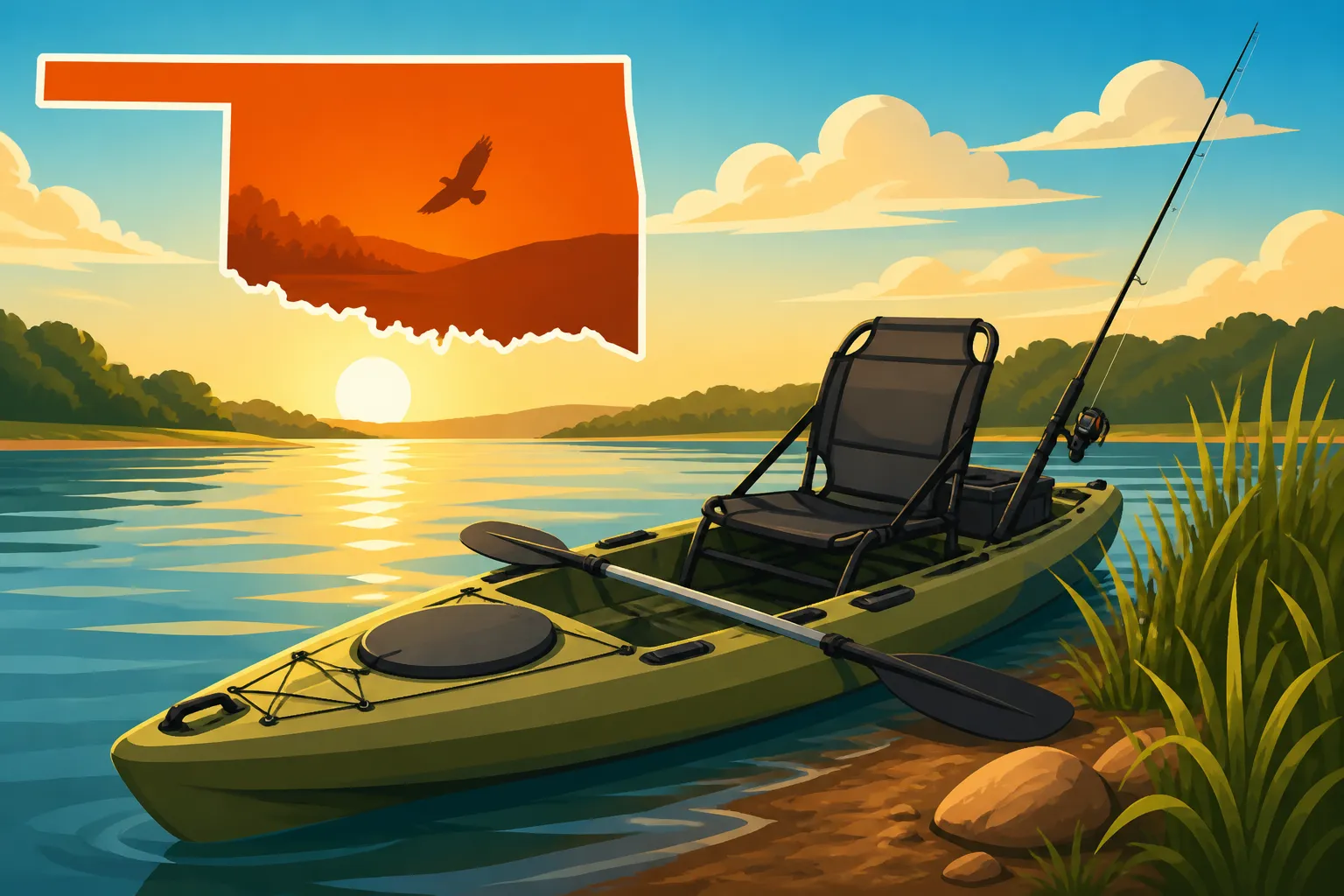
Look for kayaks that feature adjustable, elevated seats. These "stadium-style" seats are a game-changer, offering much better back support, cushioning, and often a higher seating position which can improve your visibility for spotting fish and make casting easier. The ability to adjust the recline or height can also make a big difference as the day wears on. Some seats are even removable, allowing you to use them on shore during a break or swap them out for aftermarket options. Don't underestimate the importance of a comfortable seat; it directly impacts how long you can stay on the water and how much you enjoy your time fishing those hidden Oklahoma gems.
Top Kayak Styles Suited for Oklahoma Bank Anglers
When it comes to picking a kayak, the sheer variety can be overwhelming. But for the specific niche of "bank fishing with a kayak," we can narrow it down to a couple of popular styles that truly excel at providing that extended access without the hassle of a traditional boat.
Sit-on-Top SOT Kayaks: The Angler's Favorite
For bank anglers looking to expand their horizons, the Sit-on-Top (SOT) kayak is almost universally recommended, and for very good reason. These kayaks have an open deck, meaning you sit on top of the kayak rather than inside a cockpit.
Pros:
- Exceptional Stability: SOT kayaks are generally wider and have flatter hulls, making them incredibly stable. This is crucial for fishing, as it allows you to move around, reach for gear, battle a fish, and even stand up to cast without feeling like you're going to tip over. This high degree of stability directly translates to a more confident and less stressful fishing experience, especially if you're new to kayak fishing. You'll feel much more secure bringing in that trophy Oklahoma's 6-Fish Bass Limit for Largemouth and Smallmouth when you're on a solid platform.
- Easy Entry and Exit: Getting on and off a SOT kayak is a breeze, which is a huge plus when you're launching from uneven banks or shallow areas. If you accidentally flip (which is rare with a stable SOT), re-entry from the water is significantly easier than with a sit-inside model. This also makes it easy to wade into shallow water if you need to, then hop back into your kayak.
- Open Deck for Gear: The open design provides plenty of space to organize your tackle, coolers, and rod holders. Many SOT fishing kayaks come with dedicated storage areas, gear tracks, and bungee systems that are perfect for rigging up your fishing essentials. This means you can keep your gear accessible and visible, without feeling cramped.
- Self-Bailing Scupper Holes: Most SOTs have scupper holes that allow water to drain right through the deck. So if a wave splashes over or a fish flops around, the water simply drains out, keeping your seating area relatively dry.
Cons:
- Exposure to Elements: You're completely exposed to the sun, wind, and splashes. This means sunscreen, a hat, and rain gear are absolute necessities, especially during the long Oklahoma summers.
- Slightly Slower: Due to their wider and often shorter design for stability, SOTs aren't the fastest kayaks on the water. However, for extending your bank fishing range, speed isn't usually the top priority.
For exploring those secluded coves on Lake Murray or navigating the shallow edges of Lake Arbuckle, a stable SOT kayak is an excellent choice. You'll find a huge selection of options, from basic models perfect for getting started to more advanced setups with all the bells and whistles, often available through retailers like Bass Pro Shops or online at Amazon.
Recreational Sit-Inside Kayaks: A Niche Option
While less common for dedicated fishing, a wide, stable recreational sit-inside kayak could be considered for a very specific type of bank angler, particularly if portability and shelter from the elements are paramount, and you absolutely plan to stay seated.
Pros:
- More Shelter: The enclosed cockpit offers some protection from splashes, wind, and even the sun, which can be a comfort on cooler days or in choppy conditions.
- Often Lighter and Faster: Generally, sit-inside kayaks, even recreational ones, tend to be a bit lighter and more hydrodynamic than comparable SOTs, making them easier to paddle and carry over longer distances from the car.
Cons:
- Less Stable for Fishing: This is the biggest drawback. Their narrower design means less inherent stability, making it harder to cast, reel, and maneuver with confidence, especially if you snag a big fish. Standing up is generally out of the question.
- Difficult Entry/Exit and Re-entry: Getting in and out, especially from an awkward bank, can be tricky. If you do flip, getting back into a sit-inside kayak in open water is a significant challenge and a safety concern. This is why a Oklahoma Life Jacket and PFD Rules for Boaters is not just a good idea, but mandatory for everyone in a kayak.
- Limited Rigging Space: Cockpits are designed for paddling, not fishing gear. Adding rod holders, fish finders, or tackle storage often requires creative solutions or aftermarket modifications that can compromise the kayak's integrity or simply be less convenient.
Unless you prioritize light weight and shelter over stability and easy access to gear, a sit-inside kayak is generally not the ideal choice for dedicated bank fishing extension. However, if you already own one and want to try it out for short trips on very calm waters, it might be a starting point. Always prioritize safety if you choose this route.
Pedal Drive vs. Paddle Kayaks: What's Right for You?
This is a hot debate in kayak fishing!
-
Paddle Kayaks: These are the traditional choice and, for the bank angler, often the most practical.
- Pros: Simpler, lighter, more affordable, and require less maintenance. They are perfectly suited for quiet, stealthy approaches to those hidden bank spots. You'll find yourself able to sneak up on those skittish crappie along a brush line or ease into a shallow backwater for bass. For most bank fishing extension needs, a paddle kayak is more than sufficient.
- Cons: Requires using your hands for propulsion, which means you have to stop fishing to move.
-
Pedal Drive Kayaks: These kayaks feature a pedal system, similar to a bicycle, that powers a propeller or fins (like Hobie's MirageDrive).
- Pros: Hands-free propulsion! This is a huge advantage, allowing you to cast, fight a fish, or adjust your line while still moving or holding your position. They are also often more efficient for covering longer distances.
- Cons: Significantly more expensive, heavier, and the pedal drive system can be susceptible to damage in very shallow, stump-filled waters (which is often where those bank-extension spots are). They also add a layer of mechanical complexity and maintenance.
For the bank angler extending their reach, a paddle kayak is usually the smart choice. It aligns with the "simplicity" ethos of bank fishing, is more robust for unknown launch areas, and keeps the initial investment lower. However, if your budget allows, and you envision longer paddles to distant shorelines, a pedal drive is undeniably effective.
Getting Your Kayak Ready for Oklahoma Waters
So, you've chosen your trusty vessel to bridge that gap between the bank and those elusive fish. Now it's time to make sure you're geared up not just for fishing, but for safety and practicality on Oklahoma's diverse waterways. A little preparation goes a long way in ensuring your day on the water is enjoyable and productive.
Essential Safety Gear
This isn't optional, folks. Fishing from a kayak, even close to shore, means you're on the water, and safety should always be your top concern.
- Life Jacket (PFD): In Oklahoma, anyone 12 years old and younger is legally required to wear a U.S. Coast Guard-approved life jacket when on a vessel, which includes kayaks. While adults aren't always legally required to wear it, having one easily accessible (and frankly, wearing it) is paramount. Accidents happen fast, and a life jacket is your best friend. Choose a comfortable, fishing-specific PFD that allows for freedom of movement while casting and paddling. You'll want it to be unobtrusive so you'll actually wear it all day long. For more details, check out Oklahoma Life Jacket and PFD Rules for Boaters.
- Whistle or Horn: A sound-producing device is required by law. A simple whistle attached to your life jacket is sufficient and can be critical for alerting other boaters or signaling for help.
- Navigation Light: If there's any chance you'll be on the water after sunset or before sunrise, you'll need a 360-degree white light. Many kayak anglers use a small, battery-powered LED light on a pole. It’s essential for visibility.
- Paddle Leash: A simple leash attaches your paddle to your kayak, preventing it from floating away if you drop it while fighting a fish or reaching for tackle. Trust me, losing a paddle miles from shore is not a fun experience.
- First Aid Kit: A small, waterproof kit with basic supplies for cuts, scrapes, and insect bites is a smart addition to any tackle bag.
- Sun Protection: Oklahoma summers are brutal. Sunscreen, a wide-brimmed hat, sunglasses, and sun-protective clothing (long sleeves, neck gaiter) are non-negotiable for comfort and safety.
Basic Rigging for Bank Anglers
You've got your kayak; now make it yours! One of the joys of kayak fishing is customizing your setup to match your fishing style.
- Rod Holders: Most fishing kayaks come with flush-mounted rod holders, but consider adding a couple of adjustable, track-mounted rod holders for versatility. These allow you to troll, hold a second rod, or simply keep your main rod secure while you paddle. Retailers like Bass Pro Shops offer a wide array of options.
- Anchor System: Even a small, lightweight anchor (often a grapnel or mushroom style) with a short length of rope is incredibly useful for holding your position against wind or current. You don't want to drift away from that perfect brush pile you paddled so hard to reach! A simple trolley system allows you to deploy and retrieve your anchor from any point along the side of your kayak, helping you pivot and adjust to the conditions. Understanding How to Anchor a Boat for Better Fishing can definitely translate to kayak anchoring.
- Tackle Management: A milk crate, often customized with PVC pipe for extra rod holders, is a classic and highly effective way to organize your tackle boxes, soft plastics, and other gear in the stern tank well. Waterproof dry bags are great for protecting valuables like your phone, wallet, and keys. Keep your most-used lures and tools easily accessible in a small bag or tray near your seat.
Transportation and Launching Tips
Getting your kayak from home to the water, especially those unconventional "bank" launch spots, requires a bit of planning.
- Car Topping: Many anglers transport their kayaks on the roof rack of their vehicle. There are various systems available, from simple foam blocks and straps to more elaborate j-cradles or stackers. Make sure your kayak is securely tied down – front and back, not just across the middle – to prevent shifting or flying off at highway speeds.
- Kayak Carts/Dollys: As mentioned, these wheeled carts are invaluable for moving your kayak over distances, especially if you're launching from a spot that's a bit of a walk from your parking area. They make even heavy kayaks feel feather-light.
- Small Trailers: If you have a larger, heavier fishing kayak or multiple kayaks, a small utility trailer or a dedicated kayak trailer can make transportation and solo launching much easier. This is especially helpful if you're frequently visiting spots like those on Lake Eufaula: Oklahoma's Gentle Giant for Bass and Crappie or other large reservoirs.
- Scouting Launch Spots: Part of the fun of extending your bank fishing is finding those secret launch points. Use online maps to look for public access points, small parks, or even road shoulders near promising water. Always be mindful of private property rights; trespass is never okay.
Respecting the Water and Land
As bank anglers, we often appreciate the natural beauty and tranquility of our fishing spots. Let's extend that respect when we bring a kayak into the mix.
- Leave No Trace: Pack out everything you pack in. This includes discarded fishing line, bait containers, and any food wrappers. Oklahoma's waters are a treasure, let's keep them pristine.
- Private Property Awareness: When exploring new "bank" access points with your kayak, be hyper-aware of property lines. Just because you can launch a kayak easily doesn't mean it's public land. Always seek permission if you're unsure. This helps maintain good relationships with landowners and ensures future access for all.
- Consider Others: Be mindful of other anglers, whether they're on the bank or in another boat. Keep noise to a minimum and give everyone ample space. The peace and quiet of fishing is something we all cherish. If you're looking for truly tranquil spots, check out our guide on Remote and Less-Crowded Fishing Spots in Oklahoma.
By thoughtfully choosing your kayak, outfitting it with essential gear, and practicing responsible angling, you'll open up a whole new world of fishing possibilities right from your favorite "bank" spots. It's the perfect blend of accessibility and adventure.
Disclaimer
This article is for general informational purposes only and does not constitute professional advice. Laws, prices and regulations vary by location and change over time. Consult a qualified professional for guidance on your specific situation.