Best Tackle Box Setup for a Day on the Water
There’s nothing quite as frustrating as being out on your favorite Oklahoma lake, the fish are biting, and you’re fumbling through a chaotic mess of hooks, weights, and tangled lines in your tackle box. That precious moment when you need to quickly re-tie a lure or switch out a jig can be lost in a sea of disorganization, and trust me, we've all been there. This guide is all about setting up your tackle box for a single day on the water, ensuring you have exactly what you need, neatly organized, so you can focus on reeling in those fish.
Getting Started: Assessing Your Fishing Style and Target Species
Before you even think about buying a new tackle box or reorganizing your old one, you need to take a step back and consider what kind of fishing you're actually planning to do that day. Are you chasing largemouth bass in the submerged timber of Lake Eufaula? Or maybe you're aiming for a stringer full of crappie at Fort Gibson Lake? Perhaps it's a calm day, and you're just looking to relax and catch some channel cats from the bank of a local pond. Your target species and fishing technique will dictate a huge portion of what goes into your box, and what stays home.
Why Your Target Species Matters
Different fish require different gear, it's as simple as that. A tiny jig for crappie isn't going to cut it for a trophy blue catfish. Similarly, the heavy-duty treble hooks you'd use for a big striped bass at Lake Texoma would be overkill for panfish. Think about the size of the mouth, the fight they put up, and their feeding habits. If you're going for bass, you'll need an assortment of plastic worms, jigs, crankbaits, and topwater lures, often in various colors to match water clarity and forage. For crappie, it’s all about small jigs, minnows, and bobbers. Catfish anglers often lean towards strong hooks, heavy weights, and various stink baits or cut baits.
Let's say you're heading out to Oklahoma's Bass Fishing Rules and Limits on Grand Lake. You're probably going to be focused on a range of artificial baits, heavier line, and perhaps some specialized tools for retrieving snagged lures. On the other hand, a trip to a smaller pond for Bluegill Fishing for Beginners means much lighter tackle, small hooks, and simple baits like worms or crickets. Trying to carry gear for every species "just in case" is a sure-fire way to end up with a heavy, disorganized box that hinders more than it helps.
Matching Your Tackle Box to Your Fishing Method
Are you fishing from a bass boat, a kayak, or strictly from the bank? This also plays a crucial role in your tackle box setup. A boat angler might have the luxury of a large, multi-tray box or even dedicated tackle storage compartments. They can bring more specialized gear, extra line spools, and a wider variety of baits without worrying about portability.
However, if you're a bank angler, or especially a kayak angler, portability and weight become paramount. You can't haul a giant, heavy box when you're hiking to a remote spot or trying to manage gear in a small watercraft. Kayak anglers often opt for waterproof bags, smaller utility boxes that fit in hatches, or crates with rod holders that keep everything accessible yet secure. Bank anglers might prefer a shoulder bag or a backpack-style tackle system, allowing them to carry essentials comfortably while keeping hands free for rods and nets. Understanding these constraints upfront will save you a lot of grief and back pain later on.
The Essentials: What Every Oklahoma Angler Needs in Their Box
No matter what you're chasing, there are some fundamental items that every angler should have in their tackle box, regardless of the target species or fishing method. These are the unsung heroes that make a day on the water smoother and more successful. Forget one of these, and you'll quickly find yourself in a bind.
Fundamental Tools and Accessories
First and foremost, you need a good pair of pliers. Not just any pliers, but fishing-specific pliers that can cut line, remove hooks, and crimp weights. They're indispensable for safely unhooking fish, especially those with sharp teeth or deeply swallowed hooks. Next up is a line cutter, whether it's built into your pliers, a dedicated pair of braid scissors, or even a simple nail clipper. Trying to bite through braided line with your teeth is a recipe for a bad day and a chipped tooth.
A small first-aid kit is often overlooked but incredibly important. Hooks are sharp, fish have spines, and accidents happen. A few band-aids, antiseptic wipes, and maybe some pain reliever can turn a potential trip-ender into a minor inconvenience. Don't forget sunscreen and insect repellent – Oklahoma's sun and mosquitoes can be relentless, especially during summer months. A small rag or towel is also a lifesaver for wiping hands, cleaning fish, or drying off wet gear. Many experienced anglers also carry a small knife, a multi-tool, or a fillet knife if they plan on keeping their catch. For those looking to upgrade their gear, you can often find comprehensive tool kits at retailers like Bass Pro Shops or even handy individual items on Amazon.
Terminal Tackle Basics
Terminal tackle refers to all the bits and pieces at the "business end" of your fishing line. This is where organization truly shines. You'll need a variety of hooks in different sizes and styles to match your baits and target species. Worm hooks for soft plastics, treble hooks for crankbaits, or small J-hooks for live bait are common choices.
Weights are another non-negotiable. From small split-shots for finesse presentations to heavy bullet weights for punching through thick cover or bottom fishing for catfish, you'll want a range. Make sure to have a few different styles, like lead-free options if that's a preference or required in certain areas. Oklahoma Fishing Regulations You Need to Know in Oklahoma covers many environmental considerations. Swivels and snaps are excellent for preventing line twist, especially when trolling or using lures with a lot of action, and for quickly changing lures without re-tying. It’s a good idea to keep these sorted by size in small, clear compartments. Imagine being on Lake Eufaula, the wind picking up, and you're trying to quickly add a heavier weight to your line to get your bait down – having those weights neatly separated by size makes all the difference.
Line and Leader Considerations
While your reel will hold your main line, it's always smart to carry extra line in your tackle box. A small spool of your primary line or a spool of leader material is invaluable for re-spooling a reel in a pinch, or for tying on a fresh leader after a break-off. For example, if you're fishing for bass around heavy cover, your fluorocarbon leader might get frayed. Having an extra spool means you can quickly snip off the damaged section and re-tie a fresh, strong leader.
The type of extra line you carry should complement your main fishing line. Many anglers use braid as their main line and then tie on a fluorocarbon or monofilament leader. So, an extra spool of fluorocarbon in a few different breaking strengths (e.g., 10 lb, 15 lb) would be a wise addition. If you're targeting crappie, a lighter monofilament line for leaders might be more appropriate. Always consider the species you're after and the conditions you expect to encounter.
| Category | Essential Items | Why You Need Them |
|---|---|---|
| Tools | Fishing Pliers, Line Cutter | Hook removal, cutting various line types |
| Safety/Comfort | Small First-Aid Kit, Sunscreen, Bug Spray | Minor injuries, protection from elements |
| Terminal Tackle | Assorted Hooks, Weights, Swivels, Snaps | Matching bait, depth control, line twist prevention |
| Line | Extra Spool of Leader Material | Re-tie leaders, emergency repairs |
| Misc. | Small Towel/Rag, Lip Grips (optional) | Cleaning, handling fish safely |
Organizing for Efficiency: Making Every Second Count
A tackle box isn't just a container; it's a system. And a good system means you spend less time searching and more time fishing. The key to efficiency is creating a logical flow, where the items you need most frequently are the most accessible, and everything has its dedicated place.
The Art of Compartmentalization
Modern tackle boxes and storage systems have come a long way from the single-tray metal boxes of yesteryear. Today, utility boxes with adjustable dividers are your best friend. These clear plastic boxes, often found under brands like Plano or Flambeau, allow you to create custom compartments for different sizes of hooks, weights, swivels, and lures.
I recommend dedicating separate, smaller utility boxes for different categories of terminal tackle. For instance, one box for hooks, another for weights, and a third for swivels and snaps. Within each of these, use the dividers to separate by size. This way, when you need a specific size of worm hook, you can grab that one small box, open it, and quickly find what you need without rummaging through everything else. This approach is far more efficient than having all your hooks and weights mixed in one large compartment. When you're trying to make a quick lure change on the water, especially if the fish are biting, seconds count. A well-organized box lets you get back in the water faster.
Accessibility and Logical Placement
Think about the items you use most often. These should be in the easiest-to-reach sections of your tackle box. For many anglers, this means pliers, line cutters, and a selection of frequently used lures or baits should be on the top tray or in a readily accessible pocket if you're using a soft-sided bag. Lesser-used items, like extra spools of line, a larger first-aid kit, or specialized tools, can be stored in lower compartments or side pockets.
Consider the "flow" of your fishing day. You'll likely start by tying on a lure, so hooks, weights, and maybe a snap are needed. After catching a fish, you'll need pliers to unhook it. If your line breaks, you need cutters and a fresh leader. Arranging your tackle box to follow this natural progression will make your fishing experience much smoother. For example, if you predominantly use soft plastics, have your favorite plastic baits and the corresponding hooks in a dedicated section that's quick to access. When you're standing on the bank of Lake Murray, the sun just rising, and that perfect topwater bite starts, you don't want to be digging for your favorite frog lure.
Seasonal and Species-Specific Customization
While the essentials remain constant, the bulk of your tackle box should evolve with the seasons and the specific fishing opportunities in Oklahoma. What works in spring won't necessarily be effective in the heat of summer or the chill of winter.
Adapting to Oklahoma's Changing Seasons
Oklahoma experiences distinct fishing seasons, each with its own patterns and effective techniques.
- Spring: This is prime time for the spawn. Bass are shallow, crappie move to brush piles, and catfish become more active. Your box should be heavy with shallow-running crankbaits, spinnerbaits, jigs for crappie, and maybe some worms for bedding fish. Spring Bass Spawn Timing in Oklahoma is a great time to be prepared with the right shallow-water lures.
- Summer: Fish often move deeper to escape the heat. Early morning and late evening topwater bites are popular, but midday means targeting deeper structure or fishing at night. Your tackle box should shift to include deep-diving crankbaits, heavy jigs, soft plastics for Carolina rigs, and maybe some heavier line for pulling fish out of thick summer vegetation. For night fishing, consider carrying glow-in-the-dark lures or tackle for Summer Night Fishing Techniques in Oklahoma.
- Fall: As water temperatures cool, fish become more aggressive and feed heavily before winter. This is a fantastic time for various lures like crankbaits, jerkbaits, and swimbaits. Crappie will often move to brush piles again. Your box should reflect this renewed activity with a mix of depths and lure types. Fall Crappie Fishing Patterns in Oklahoma highlights how important bait selection is during this period.
- Winter: Fishing can be slower, but some species like catfish can still be caught. Deep-water jigging for bass and crappie is popular, and trout fishing is stocked in designated areas. Your box would lean towards smaller, subtler baits, blade baits, and perhaps a selection of spoons for vertical jigging. Consider warmer gear too, beyond just your tackle box contents!
Building Out Species-Specific Kits
Rather than one giant, all-encompassing tackle box, many savvy anglers create smaller, species-specific kits. These are typically dedicated utility boxes or small bags packed only with the gear needed for a particular type of fishing. This allows you to quickly grab the "bass box" or the "crappie box" for your specific outing.
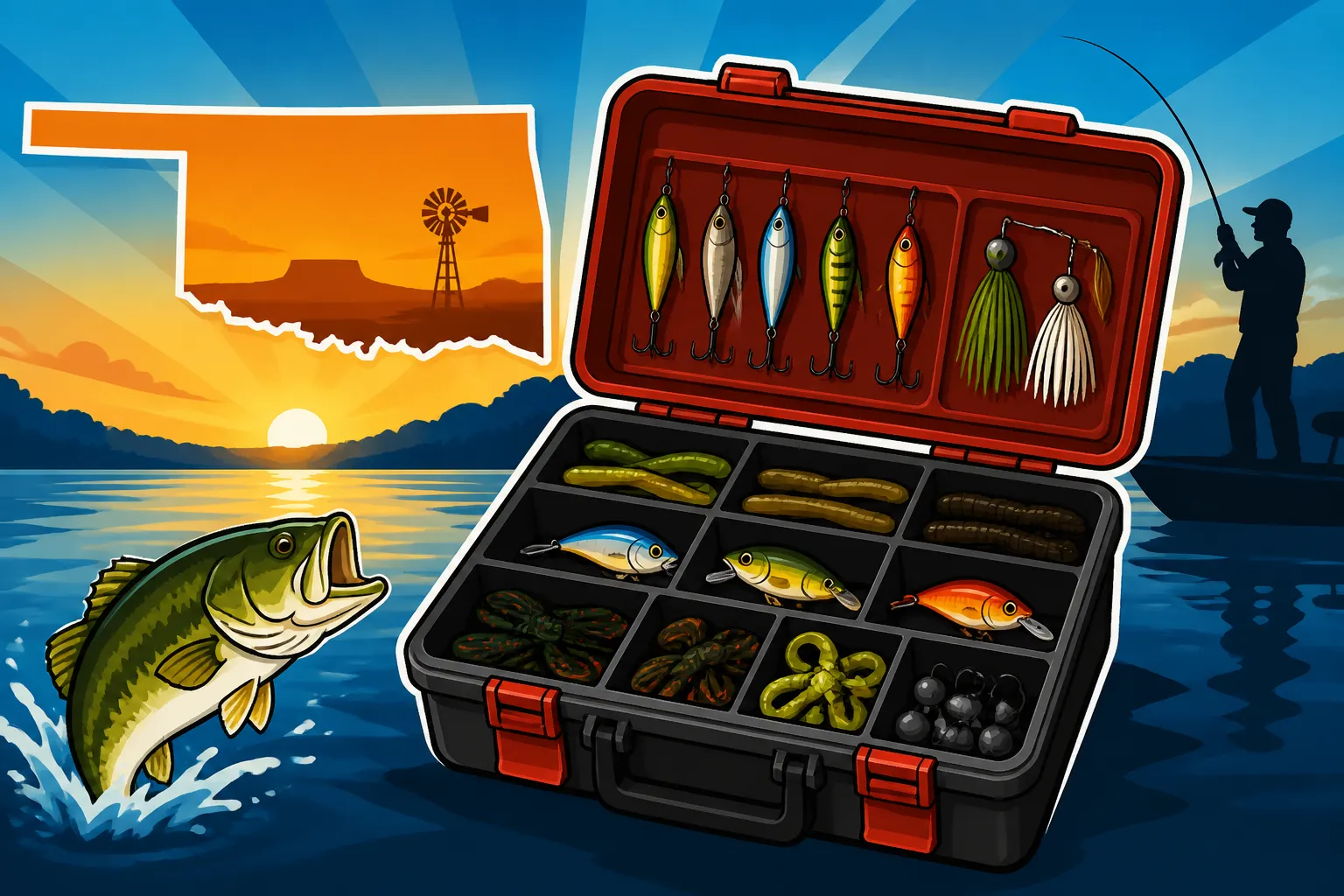
For example, a dedicated bass box might include:
- Assorted plastic worms (Senkos, creature baits, worms)
- Jigs (football, flipping, swim jigs)
- Crankbaits (shallow, medium, deep divers)
- Topwater lures (frogs, poppers, walking baits)
- Spinnerbaits and buzzbaits
- Related terminal tackle: EWG hooks, bullet weights, jig heads.
A separate crappie box would look very different:
- Small jigs (1/32 oz to 1/8 oz) in various colors
- Micro jigs and hair jigs
- Small grubs and plastic bodies
- Live bait hooks (small J-hooks, aberdeen hooks)
- Bobbers (slip bobbers, clip-on bobbers)
- Small split shots and crappie nibblers.
You can see how different these two setups are, which is why a modular approach with specific kits works so well. This way, you only carry what you need, reducing weight and clutter, and ensuring you have the right tools for the job at hand. You can find many specialized lure kits and pre-packaged terminal tackle assortments suitable for these kits at stores like Bass Pro Shops, making it easy to build out your collection.
Disclaimer
This article is for general informational purposes only and does not constitute professional advice. Laws, prices and regulations vary by location and change over time. Consult a qualified professional for guidance on your specific situation.