How to Rig a Kayak for Bass Fishing
So, you’ve decided to hit the water for some serious bass fishing, but you're skipping the big, expensive boat for the stealth and access of a kayak. Good for you! Kayak bass fishing is growing like crazy in Oklahoma, and for good reason – it gets you into places bigger boats can't reach, often where the trophy bass are hiding. But a kayak fresh off the showroom floor isn't quite ready for prime time; it needs to be rigged, and knowing how to set it up efficiently can be the difference between a frustrating day and a fantastic one. This guide will walk you through turning your basic kayak into a lean, mean, bass-catching machine.
The Foundation: Choosing and Understanding Your Kayak
Before you even think about drilling holes or attaching gadgets, it's crucial to understand the kayak you're working with. Not all kayaks are created equal for bass fishing, and knowing your vessel's strengths and limitations will guide all your rigging decisions.
Different Kayak Types for Bass Anglers
When it comes to kayak bass fishing, you generally have a few main types. Each has its own benefits and challenges for rigging.
- Sit-on-Top (SOT) Kayaks: These are by far the most popular choice for bass anglers, and for good reason. They're stable, easy to get on and off, and most importantly, offer plenty of open deck space for gear, tackle, and even standing to cast. The scupper holes in SOTs are often perfect for transducer cables or mounting points. If you're looking for Best Kayak for Fishing Oklahoma Reservoirs, an SOT is usually the top recommendation.
- Sit-in Kayaks: While less common for dedicated bass fishing, some anglers prefer sit-ins for their speed and protection from the elements, especially in colder weather. Rigging can be a bit more challenging due to limited accessible deck space, often requiring creative solutions for rod holders and storage inside the cockpit. You'll need to think about how to keep your gear dry and accessible without impeding your paddle stroke.
- Pedal Drive Kayaks: These are the Cadillacs of fishing kayaks, offering hands-free propulsion which is a huge advantage for bass anglers who want to keep their hands on their rod. They often come with dedicated areas for mounting fish finders and rod holders, and the pedal drive system itself usually has a built-in transducer mount. While they can be pricier, the convenience of a pedal drive can drastically improve your fishing experience, allowing you to cover more water and stay on fish longer.
No matter which type you have, consider how you'll move around, cast, and land fish. The more you can anticipate your movements, the better you can plan your rigging to support those actions seamlessly.
Assessing Your Kayak's Rigging Potential
Every kayak has unique features and limitations. Take some time to really look at yours. Where are the flat surfaces for mounting? Are there scupper holes that can be utilized for wiring or anchor trolleys? How much weight can it comfortably carry, including you and all your gear?
Think about how you'll transport your kayak to the water. Will it be on a roof rack, a trailer, or will you be carting it a short distance? The ease of transport can influence how permanently you rig certain items. For example, a heavy, fully rigged kayak might be a struggle to load solo on a car top. Some kayaks come with track systems already installed, which are a dream for rigging as they allow for tool-free adjustment and removal of accessories. If yours doesn't, don't worry – adding tracks is a common and relatively easy modification that opens up a world of customization options from brands like Hobie, Wilderness Systems, and even generic tracks available on Amazon.
Essential Rigging for Bass Fishing Success
Once you understand your kayak, it's time to add the crucial elements that will make your bass fishing trips more productive and enjoyable. These are the "must-haves" for any serious kayak bass angler.
Rod Holders: Placement and Types
This is probably one of the first things every kayak angler thinks about. You can't hold your rod the entire time, especially when paddling, re-tying, or handling a fish.
- Flush Mount Rod Holders: Many fishing kayaks come with one or two flush-mount holders behind the seat. These are great for safely storing rods while paddling or motoring, keeping them out of the way. However, they're typically not ideal for actively fishing as the rod tip points backward, making it hard to see bites or grab quickly. Consider them for transport or holding a spare rod.
- Deck-Mounted Rod Holders (Adjustable): These are your workhorses. Brands like Scotty and Ram Mounts offer various adjustable rod holders that can be mounted on tracks or directly to the deck. The key is placement. You want a holder that keeps your rod accessible for quick grabs but doesn't interfere with your paddle stroke or casting. Many anglers prefer one on their dominant side, slightly forward, angled out to the side. This allows for trolling a bait or letting a Texas rig soak while still being able to watch the rod tip. If you're going for specific species like largemouth, smallmouth, or spotted bass, having a holder that allows for different angles can be beneficial for various Oklahoma Bass Fishing: Techniques by Season.
- DIY Solutions: Don't be afraid to get creative. Some anglers use PVC pipe sleeves mounted to milk crates or directly to the kayak for additional rod storage. Just ensure whatever you use is secure and won't snag your line or clothing.
When installing, always use marine-grade stainless steel hardware and waterproof sealant to prevent leaks. Nothing ruins a day faster than a leaky kayak.
Storage Solutions: Crates, Bags, and Bungees
Kayak fishing often means carrying a surprising amount of gear, and keeping it organized, accessible, and secure is paramount. There's nothing worse than flipping your kayak and watching all your tackle sink to the bottom of Lake Eufaula.
- Milk Crates & Kayak Crates: The classic milk crate is a kayak angler's best friend. It fits perfectly in many tankwells (the open storage area behind the seat on SOTs) and can be customized with rod holders, tool caddies, and tackle box organizers. Companies like Perception and Wilderness Systems offer purpose-built kayak crates that are even better, often with lids, additional pockets, and mounting points. This is where a Best Kayak Crate Setup for Tackle Storage can make a huge difference, keeping your soft plastics, crankbaits, and terminal tackle neatly organized and within reach.
- Dry Bags and Tackle Boxes: For items that absolutely cannot get wet (like your phone, car keys, or extra layers), a good dry bag is essential. Stash it in a dry hatch or bungee it down securely. For tackle, consider waterproof tackle boxes that float, just in case. They're a small investment that can save you a lot of heartache.
- Bungee Cords and Deck Rigging: Most kayaks come with some bungee rigging, but you can always add more. These are perfect for securing tackle boxes, cooler bags, or even your paddle when you're actively fishing. Just make sure whatever you're strapping down is truly secure and won't shift during paddling or rough water. You can find bungee cord kits on Amazon or at your local hardware store to customize your setup.
Anchoring Systems for Kayak Anglers
Being able to hold your position is critical for fishing certain structure, fighting wind, or targeting specific spots. A dedicated anchor system is a game-changer.
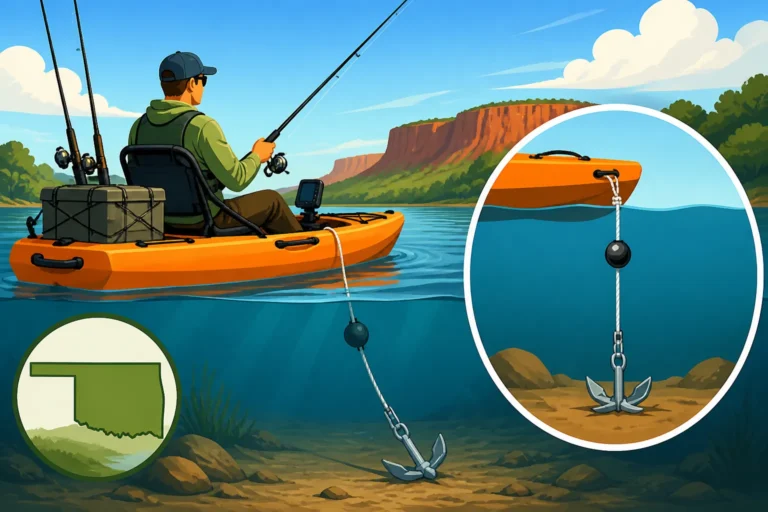
- Anchor Trolley: This is perhaps the most important rigging addition for many kayak anglers. An anchor trolley is a line system that runs the length of your kayak, allowing you to deploy your anchor from either the bow or the stern and then move the anchor line attachment point anywhere along the side of your kayak. This lets you position your kayak perfectly into the wind or current, optimizing your casting angles and presentation. Installing a Kayak Anchor Setup for Fishing Oklahoma Lakes will dramatically increase your effectiveness on the water, especially in windy conditions common on big lakes like Texoma or Grand Lake. You can buy kits or piece one together with marine-grade pulleys, cleats, and rope.
- Anchor Types: For kayaks, a small grapple anchor (1.5-3 lbs) is usually sufficient for holding in most situations. For softer bottoms, a drag chain or even a homemade drift sock can be effective. Power-Pole Micro anchors are also very popular for quick, quiet, and precise shallow water anchoring.
- Deployment Methods: Always attach a float to your anchor line. If you need to quickly ditch your anchor (say, if a big fish takes you for a ride), you can simply unclip the line from your kayak and retrieve it later. Never tie your anchor line directly to your kayak, as this can create a dangerous situation if the anchor gets snagged or you encounter strong current.
Enhancing Your Kayak: Electronics and Comfort
Once you've got the basics down, it's time to consider upgrades that can seriously boost your fishing prowess and make those long days on the water more comfortable.
Installing a Fish Finder on Your Kayak
A good fish finder can give you a massive advantage, showing you depth, bottom structure, and even fish. Installing one on a kayak requires a bit more thought than on a powerboat.
- Mounting Options: There are several ways to mount a fish finder display. Track-mounted arms (from brands like Ram Mounts or Scotty) allow for adjustability and easy removal. You can also build a custom console or mount it directly to a flat spot on your kayak, using a waterproof box to house the battery.
- Transducer Placement: This is key for clear readings.
- Hull-Mounted (Shoot-Through Hull): This involves epoxying the transducer to the inside of the hull, shooting through the plastic. It's protected, clean, and requires no drilling into the hull for external mounting. However, you might lose a little sensitivity, and it only works on single-layer hulls.
- Scupper Hole Mount: Many SOT kayaks have scupper holes designed to fit transducers, or adapters are available. This provides a direct shot to the water for optimal performance and keeps the transducer protected within the hull.
- Arm Mount (Over the Side): This is less common for dedicated bass kayaks but involves an arm that lowers the transducer into the water. It offers excellent clarity but can be cumbersome and prone to snagging.
- Wiring: Run all wires neatly and securely, using cable glands or waterproof sealant where they enter the hull. Always use marine-grade heat shrink tubing on any connections that might get wet. For a deeper dive, check out Best Kayak Fish Finder for Oklahoma Reservoirs.
Battery Management for Kayak Electronics
Powering your fish finder, navigation lights, or even a charging port for your phone requires a reliable battery system.
- Battery Type: Lithium-ion batteries (LiFePO4) are rapidly becoming the standard for kayak anglers due to their light weight, long life, and consistent power output. While more expensive upfront, they offer significant advantages over traditional lead-acid batteries. A 12V, 10-20 Ah battery is usually sufficient for a day of running a fish finder.
- Placement: Keep your battery in a waterproof box or dry bag, secured in a dry hatch or bungee-corded in the tankwell. Ensure it's easily accessible but also completely protected from water.
- Wiring and Charging: Use inline fuses to protect your electronics from power surges. Invest in a good quality charger specific to your battery type. Always ensure connections are tight and corrosion-free.
Comfort Upgrades for Long Days on the Water
Fishing from a kayak often means spending hours sitting. Comfort is king!
- Upgraded Seat: Many stock kayak seats are basic. Upgrading to an aftermarket seat with better back support and padding can make a world of difference. Many fishing kayaks come with stadium-style seats that are adjustable and provide excellent comfort and height for casting.
- Foot Pegs or Pedals: Ensure your foot positioning is comfortable and allows for efficient paddling or pedaling. Adjustable foot pegs are standard, but some anglers add custom footrests.
- Paddle Leash: A simple but critical piece of gear. Losing your paddle in windy conditions on a big lake like Keystone can quickly turn into a dangerous situation. A leash keeps it tethered to your kayak. Speaking of paddles, a Best Kayak Paddle for All Day Fishing Trips can also dramatically improve your comfort and endurance.
Safety and Maintenance for Your Rigged Kayak
Even the most perfectly rigged kayak is useless if you're not safe on the water or if your gear falls apart. Prioritizing safety and proper maintenance ensures many enjoyable trips.
Crucial Safety Gear Every Kayak Angler Needs
Never compromise on safety. The open waters of Oklahoma's lakes can be unpredictable.
- Personal Flotation Device (PFD): This is non-negotiable. Always wear a PFD. Kayak-specific PFDs are designed with larger armholes and mesh backs for comfort while paddling. There's no excuse, especially with regulations like Do You Need a Life Jacket in a Kayak in Oklahoma? and Are Adults Required to Wear a Life Jacket on an Oklahoma Boat? always important to understand.
- Whistle or Air Horn: Required by law in many places, a sound-producing device is critical for signaling other boaters in fog or emergencies.
- Light (for low light/night): If you're out before dawn or after dusk, you need a 360-degree white light to be visible to other boaters. A small, battery-powered LED light on a tall pole works perfectly.
- First Aid Kit: A basic kit for cuts, scrapes, and minor emergencies.
- Communication Device: A fully charged cell phone in a waterproof case is a minimum. A VHF marine radio is a better option for larger lakes where cell service might be spotty.
- Paddle Leash and Spare Paddle: As mentioned earlier, a leash is vital. For longer trips or bigger waters, a breakdown spare paddle is smart insurance.
Transporting and Storing Your Bass Kayak
How you get your kayak to the water and how you store it after your trip are important aspects of kayak ownership.
- Transportation: Whether you use a roof rack, a trailer, or a truck bed extender, ensure your kayak is always securely tied down. Use multiple straps, and check them regularly, especially on longer drives. A sturdy kayak cart can save your back when moving your boat from your vehicle to the launch, particularly if you're hitting lesser-known spots for bass.
- Storage: Store your kayak out of direct sunlight to prevent UV damage, which can weaken the plastic over time. Store it on its side, on padded cradles, or suspended from the ceiling to prevent flat spots or warping. If you store it outside, consider a good kayak cover to protect it from the elements.
| Rigging Category | Essential Items (Must-Haves) | Advanced Items (Nice-to-Haves) | Key Consideration |
|---|---|---|---|
| Rod Management | Flush mount rod holders (for transport) | Adjustable deck-mounted rod holders | Accessibility without interfering with paddling/casting |
| Gear Storage | Kayak crate/milk crate, dry bags | Waterproof tackle boxes, dedicated storage pods | Organization, security, and accessibility |
| Anchoring | Small grapple anchor, anchor trolley, float | Power-Pole Micro anchor, drift sock | Position holding, quick deployment/release |
| Electronics | Basic fish finder, small marine battery | GPS-enabled fish finder, LiFePO4 battery, charging port | Clear readings, battery life, transducer protection |
| Comfort | Good PFD, comfortable stock seat | Upgraded ergonomic seat, paddle leash | Ergonomics for long hours, safety |
| Safety | PFD, whistle, light (for low light), first aid | VHF radio, spare paddle, waterproof phone case | Visibility, communication, emergency preparedness |
Rigging your kayak for bass fishing is a journey, not a destination. You'll constantly discover new gear, better ways to organize, and personal preferences as you spend more time on the water. Start with the essentials, get comfortable, and then gradually add and refine your setup. Remember, the goal is to make your kayak an extension of yourself, allowing you to focus on what truly matters: catching those Oklahoma bass!
Disclaimer
This article is for general informational purposes only and does not constitute professional advice. Laws, prices and regulations vary by location and change over time. Consult a qualified professional for guidance on your specific situation.