Best Crappie Fishing Spots on Hudson Lake, Oklahoma
Crappie fishing on Hudson Lake can sometimes feel like a puzzle, especially when you're staring at miles of water and wondering where those elusive slabs are hiding. It's frustrating to spend hours without a bite, but don't worry, you're not alone in that experience. This guide is dedicated to helping you unlock Hudson Lake's potential, pinpointing the best crappie fishing spots, and sharing the tried-and-true strategies that will put more fish in your cooler.
Understanding Hudson Lake's Crappie Dynamics
Hudson Lake, nestled in Northeast Oklahoma, is a fantastic fishery, but like any large reservoir, it has its quirks. Knowing its geography and the specific crappie rules can make all the difference between a good day and a truly great one.
A Look at Hudson Lake's Unique Features
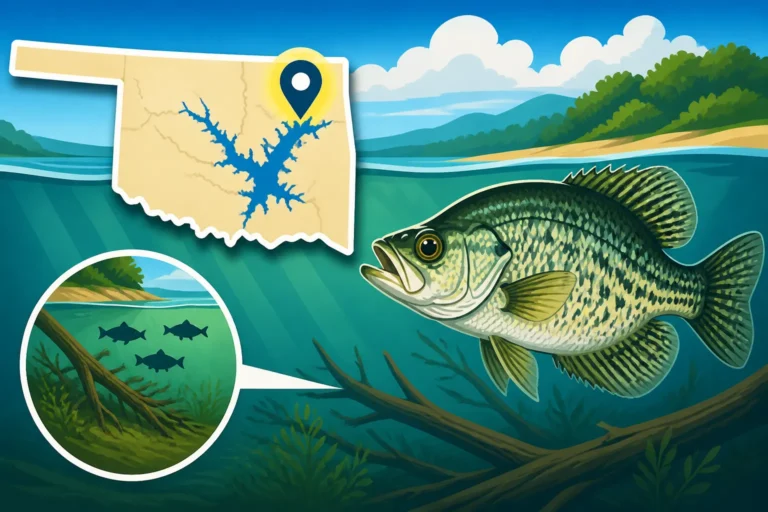
Hudson Lake, covering around 12,000 acres, is a beautiful and somewhat rugged reservoir known for its diverse underwater structure. It's not just a big bowl of water; it's a labyrinth of old creek channels, flooded timber, rocky points, and submerged brush piles. This kind of varied habitat is precisely what makes it a premier destination for crappie anglers. The lake was formed by damming the Neosho River (also known as the Grand River), and its main body still follows that original river channel, which acts as a major highway for fish movement throughout the year.
The shoreline is a mix of rock bluffs, gradually sloping banks, and areas with heavy timber, particularly in the northern reaches and up the various arms. This natural diversity means crappie have plenty of places to hide, feed, and spawn. Understanding these features—the depth changes, the types of cover, and how they relate to the old riverbed—is the first step to consistently finding fish. Unlike some of the flatter, shallower lakes, Hudson has significant depth variations, making it crucial to target different depths depending on the season and time of day.
Crappie Species and Regulations on Hudson
When you're out on Hudson Lake, you'll primarily be targeting both black and white crappie. Both species thrive here, and while they share many similarities, they do have slight preferences for habitat. Black crappie often prefer clearer water and tend to associate more with submerged vegetation and timber, while white crappie are a bit more tolerant of stained water and frequently relate to open water structure like bridge pilings or deeper brush piles. For a deeper dive, you might find our guide on Black Crappie vs White Crappie: Key Differences for Oklahoma Anglers really insightful.
It's absolutely vital to know the local regulations before you drop a line. While the statewide limit for crappie in Oklahoma is generous, some specific lakes have tighter restrictions to protect their fisheries. Hudson Lake is one of those lakes; it has a 10-inch minimum length limit for crappie. This means any crappie you catch that measures less than 10 inches from the tip of its snout to the end of its tail must be immediately released unharmed. The daily bag limit on Hudson Lake is 15 crappie per person. Ignoring these rules can lead to fines and a ruined fishing trip. You can learn more about Hudson Lake's Ten-Inch Crappie Limit Explained to ensure you're always fishing legally. Always keep a tape measure handy and know how to properly measure your catch!
Top Crappie Hotspots on Hudson Lake
Finding crappie on Hudson Lake isn't just about luck; it's about understanding their behavior and knowing where to look for the right kind of structure and cover. There are a few key types of spots that consistently hold fish throughout the year.
Creek Channels and Submerged Timber
One of the absolute best places to start your crappie hunt on Hudson Lake is by focusing on the old creek channels that wind their way through the lakebed. These channels, often visible on a good depth finder, act like highways for crappie, especially during cooler months and when they're transitioning between spawning and deeper summer haunts. The edges of these channels, particularly where they intersect with points or humps, are prime ambush locations.
What makes these channels even better is the abundance of submerged timber. Before the lake was impounded, many trees were left standing, and these now-submerged forests are crappie magnets. Fish will relate to these standing trees at various depths, depending on the season and water temperature. During early spring and late fall, crappie might be shallower on the channel banks, while in the dead of summer or winter, they'll often be suspended right in the timber at deeper depths. Look for dense clusters of timber on your sonar, especially those near a sharp drop-off into a creek channel. Jigging vertically or slowly trolling minnows through these areas can be incredibly effective. Consider bringing a local guide through platforms like FishingBooker if you're unfamiliar with navigating these timber-laden waters, as they can save you a lot of time and frustration.
Docks, Bridges, and Man-Made Structures
Don't overlook the man-made structures on Hudson Lake; crappie love them! Bridge pilings, especially those on the main lake and larger arms, provide excellent vertical cover and often hold baitfish, which in turn attracts crappie. The shadows cast by bridges can also offer comfort to crappie during bright, sunny days. Anglers often find success by jigging around the pilings, paying close attention to the depth where fish are holding. The Salina bridge area, for example, is a well-known spot that consistently produces crappie.
Private docks and boat houses, particularly those with brush piles sunk nearby or underwater lights, are also fantastic crappie real estate. Many property owners thoughtfully (or sometimes accidentally) create ideal crappie habitat by sinking Christmas trees or other brush near their docks. These areas offer both cover and a feeding ground. When fishing docks, always be respectful of private property. Often, you can position your boat a casting distance away and pitch jigs or minnows under and around the structures. Night fishing under lighted docks can be particularly productive during warmer months, as the lights attract plankton and baitfish, drawing crappie in close.
Secluded Coves and Brush Piles
Hudson Lake is riddled with secluded coves, and many of these are absolutely brimming with crappie, particularly during the pre-spawn and spawn periods in spring. These coves often have shallower, warmer water, and abundant natural cover like fallen trees and weed beds. During the spawn, crappie will move into these sheltered areas to lay their eggs, making them easier to target. Look for coves that have a good mix of shallow water access to deeper water, as crappie will stage in the deeper parts before moving shallow to spawn.
Beyond natural cover, many anglers, myself included, spend time sinking artificial brush piles in these coves. These homemade structures become immediate crappie hotels. They provide protection from predators, a place to ambush baitfish, and a focal point for schooling crappie. If you have a good fish finder, search for subtle bumps or clusters on the bottom in 8-20 feet of water within these coves. These could be natural laydowns or sunken brush piles. Slow trolling or casting small jigs and live minnows around these brush piles is an incredibly effective technique. A dedicated search on your sonar can reveal numerous undocumented honey holes. If you're planning a trip to the lake, consider checking out a guide through FishingBooker to help locate these prime spots, especially if your time on the water is limited.
Seasonal Strategies for Hudson Lake Crappie
Crappie behavior changes dramatically with the seasons, largely influenced by water temperature. What works in spring won't necessarily work in summer, so adapting your approach is key to consistent success on Hudson Lake.
Spring Spawn Bonanza
Ah, spring crappie! This is often considered the most anticipated time for many crappie anglers, and for good reason. As water temperatures begin to climb into the 55-65 degree Fahrenheit range, crappie move from their deeper winter haunts into shallower waters for their annual spawn. On Hudson Lake, this typically means they'll be found in the backs of coves, around submerged brush, and along gently sloping banks.
During the pre-spawn phase, as water temperatures hit the low to mid-50s, crappie will stage in slightly deeper water (10-20 feet) just outside the spawning flats. This is when they're feeding heavily to build energy for the spawn. You'll want to target creek channel bends or brush piles at these depths. Once the water warms into the 60s, they move onto the actual beds, often in less than 5 feet of water, around stumps, willow trees, and even rocky banks. Small jigs (1/32 to 1/16 ounce) in bright colors like chartreuse, pink, or white, fished under a bobber, are deadly during this time. Live minnows, fished similarly, are also a top producer. Remember that Crappie Fishing Techniques and Seasonal Patterns in Oklahoma can offer even more general guidance on this exciting time of year.
Summer Deep-Water Tactics
Once the spring spawn concludes and water temperatures rise into the 70s and 80s, crappie on Hudson Lake tend to retreat to deeper, cooler waters. Don't be fooled into thinking they disappear; they just change their address. During summer, crappie will primarily relate to deep structure such as submerged timber, deep brush piles, and the ledges of the old river and creek channels. You might find them suspended over these structures anywhere from 15 to 30 feet deep, sometimes even deeper during the hottest parts of the day.
This is where your electronics really shine. A good fish finder will help you locate these deep-water schools. Techniques like spider rigging (slowly trolling multiple rods with minnows or jigs at different depths) or vertical jigging directly over identified schools are highly effective. Focus on shaded areas, points that drop into deep water, and any thermal breaks you can find. Night fishing also becomes a popular and productive tactic in summer, as crappie move shallower under dock lights or portable fishing lights that attract baitfish.
Fall Feeding Frenzy
Autumn on Hudson Lake can be one of the most productive times for crappie fishing. As water temperatures begin to cool, crappie will start a major feeding spree, bulking up for the leaner winter months. They become much more aggressive and are often found in transition areas between deep and shallow water. This means they might be moving up into the creek channels and even into shallower coves to chase baitfish, especially on cloudy days or during early mornings and late evenings.
Look for crappie around creek channel swings, main lake points, and the edges of larger brush piles. Depths can vary widely, from 8 to 25 feet, so experimentation is key. Trolling jigs or small crankbaits can cover a lot of water and help you locate active schools. Once you find them, you can switch to vertical jigging or casting soft plastic jigs. The fall bite can be explosive, with crappie often schooling tightly and providing fast action. Our article on Oklahoma's Statewide Crappie Bag Limit discusses how many crappie you can keep, which is particularly relevant during a fall feeding frenzy!
Winter Crappie Fishing
Winter fishing for crappie on Hudson Lake requires patience and precision, but it can be incredibly rewarding. With cold water temperatures, crappie become much more lethargic and tend to school tightly in deep water. They'll seek out the warmest, most stable water they can find, which usually means the deepest parts of the main lake and creek channels. They'll often hug structure like standing timber or massive brush piles, sometimes suspended directly within the cover.
You'll need a good fish finder to locate these deep-water schools. Once you find them, vertical jigging with very small jigs (1/32 to 1/8 ounce) or live minnows is the ticket. The key is to present your bait slowly and subtly, as crappie won't chase aggressively in cold water. You'll often find them suspended at precise depths, so setting your bait just above the fish on your sonar can entice a bite. Look for the deepest creek channel bends or humps that top out in 20-30 feet of water, often near the main dam area or major river bends. This is often where you can find large schools of winter crappie stacked up.
| Season | Typical Water Temp | Primary Locations | Effective Techniques | Key Baits/Lures |
|---|---|---|---|---|
| Spring (Pre-Spawn) | 55-60°F | Creek channels, points near coves, brush piles | Jigging, slow trolling | Small jigs, live minnows |
| Spring (Spawn) | 60-68°F | Shallow coves, submerged brush, rocky banks | Bobber fishing, casting jigs | Small jigs (chartreuse, pink), live minnows |
| Summer | 70-85°F | Deep timber, creek channel ledges, shaded structures | Spider rigging, vertical jigging, night fishing | Live minnows, small jigs, deep crankbaits |
| Fall | 60-70°F | Creek channel swings, main lake points, brush piles | Trolling jigs/crankbaits, casting jigs | Small jigs, crankbaits, live minnows |
| Winter | 35-50°F | Deepest creek channels, main lake timber, large brush piles | Vertical jigging (slow), tight-lining | Tiny jigs (1/32 oz), live minnows |
Essential Gear and Techniques for Hudson Lake
Having the right gear and knowing how to use it effectively are fundamental for successful crappie fishing on Hudson Lake. Whether you're fishing from a boat or the bank, a few key items and methods will make a big difference.
Jigs, Minnows, and Preferred Tackle
When it comes to crappie fishing on Hudson Lake, there are two classic baits that stand head and shoulders above the rest: live minnows and small jigs.
Live minnows are often considered the gold standard, especially when crappie are finicky or in colder water. They provide natural movement and scent that can be irresistible. You can fish them under a bobber, tight-line them on a single hook, or use them on a spider rig. Always check with local bait shops like Hook, Line & Sinker in Salina to see what's working best that week.
For artificials, jigs are king. Small soft plastic jigs, typically 1/32 to 1/8 ounce, in colors like chartreuse, white, pink, black/chartreuse, or pearl are highly effective. The key is matching the hatch—what baitfish are they eating? Or, just as often, picking a color that really stands out to a sluggish crappie. Many anglers swear by Bobby Garland Crappie Baits or Mister Twister Sassy Shads. You can tip your jig with a small piece of minnow for added scent, which often makes a huge difference. For more detailed insights into what to throw, check out our guide on the Best Bait for Crappie in Oklahoma.
Your tackle setup should be light. A light to ultralight spinning rod (4-7 feet) paired with a small spinning reel spooled with 4-6 pound monofilament or fluorocarbon line is ideal. This lighter setup allows for better feel of subtle bites and makes fighting even a modest crappie more enjoyable. For vertical jigging or spider rigging, longer rods (8-14 feet) can be advantageous for keeping multiple lines spread out.
Boat vs. Bank Fishing Approaches
Hudson Lake offers opportunities for both boat and bank anglers, though each requires a slightly different approach.
Boat Fishing: If you have a boat, you unlock the vast potential of Hudson Lake. You can access those secluded creek channels, fish deep timber, explore remote coves, and chase schooling crappie across the main lake. A good fish finder is invaluable for boat anglers, helping you locate brush piles, standing timber, and crappie schools. Techniques like spider rigging (trolling multiple jigs or minnows) are incredibly effective for covering water and finding active fish, particularly in deeper areas. Vertical jigging over identified structure is also a go-to method. When fishing from a boat, you have the flexibility to follow the crappie as they move seasonally and adapt to changing conditions. This flexibility is often why anglers seeking out prime spots use services like FishingBooker to connect with local captains who know the lake intimately.
Bank Fishing: Don't have a boat? No problem! While more limited, bank fishing on Hudson Lake can still be productive, especially during the spring spawn or in areas with good public access. Look for public docks, jetties, or state park areas like those at Snowdale State Park and Salina State Park that offer easy access to the water. These spots often have adjacent brush or depth changes that crappie will utilize. During the spawn, you can find crappie in very shallow water near the bank, making them accessible to shore anglers. Casting small jigs or fishing live minnows under a bobber are your best bets. Look for areas where the bank drops off quickly or where there's visible cover like fallen trees. Our article on How to Catch Crappie from the Bank provides even more fantastic tips for shore-bound anglers. Just be mindful of snagging your line on underwater obstacles, as many good bank spots also have plenty of cover.
Disclaimer
Please note that fishing conditions and regulations can change. Always check the latest Oklahoma Department of Wildlife Conservation (ODWC) regulations before heading out on the water. This guide is for informational purposes and does not constitute professional fishing advice. Be safe and practice ethical angling.