Best Bait for Crappie in Oklahoma
Oh, the elusive crappie! We've all been there, standing on the bank or out on the lake, wondering why those usually eager panfish suddenly have lockjaw. It can be incredibly frustrating to try bait after bait with no luck, especially when you know they're down there. This guide is all about cutting through that frustration, helping you understand what makes crappie tick, and equipping you with the best bait choices and techniques to fill your livewell the next time you hit the waters of Oklahoma.
Understanding Crappie Feeding Habits and Preferences
Crappie, both black and white, are fascinating fish with specific dietary preferences that change with their environment and the season. Knowing what they like, and why, is the first step to becoming a more successful angler. It’s not just about tossing anything into the water; it’s about presenting what they naturally want to eat.
Black Crappie vs. White Crappie Diet Differences
While they are often lumped together, black crappie and white crappie have subtle but important differences in their feeding habits and preferred habitats. This means that a bait that works wonders for one might not be as effective for the other in certain situations. It’s all about understanding their world.
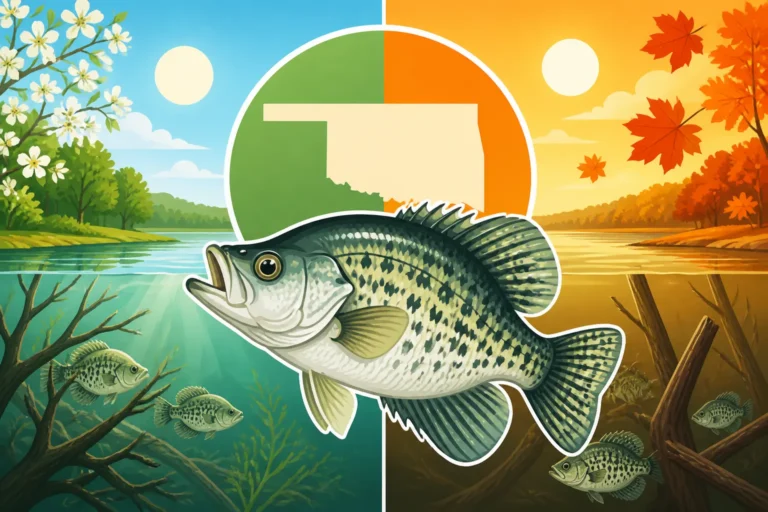
Black crappie, for example, tend to favor clearer water with more submerged vegetation and structure. Their diet often leans more heavily towards zooplankton, small insects, and tiny aquatic organisms, especially when they are younger. As they grow, they'll certainly eat small baitfish, but their preference for cover and the smaller food items within it often dictates their behavior. Think of them as the "bushy cover" crappie. If you're fishing a lake like Lake Tenkiller or Broken Bow, known for its clear water and standing timber, you might encounter more black crappie holding tight to that intricate structure, picking off whatever swims by.
White crappie, on the other hand, are often found in murkier, more turbid waters, and they tend to roam more in open areas, often associating with brush piles, channel edges, and drop-offs rather than dense vegetation. Their diet is typically more focused on small baitfish, like shad or minnows, right from a younger age. They are often the species you'll find suspended over deeper water or schooling along creek channels in reservoirs like Lake Eufaula or Grand Lake O' the Cherokees. This difference in primary forage and habitat preference means that while a live minnow will almost always appeal to both, sometimes a different lure action or size might tempt one species over the other. Black Crappie vs White Crappie: Key Differences for Oklahoma Anglers
The Impact of Water Conditions on Crappie Feeding
The conditions of the water you're fishing in play a huge role in how crappie behave and, consequently, what bait they'll respond to. Ignoring these factors can lead to a very slow day on the water, no matter how good your bait theoretically is. Water clarity, temperature, and even current can turn a hungry crappie into a picky eater in a heartbeat.
Take water clarity, for instance. In crystal-clear lakes, crappie rely heavily on their eyesight to hunt. This means smaller, more natural-looking baits in subtle colors are often the ticket. If your lure is too big or brightly colored, it might spook them in transparent water. Conversely, in stained or muddy water, visual cues are diminished. Here, baits that create vibration or have a strong scent become paramount. Bright, contrasting colors like chartreuse, orange, or even glow-in-the-dark might get noticed where natural colors would disappear. The "flash" of a spinnerbait or the thumping of a jig can act as an irresistible beacon in low visibility.
Water temperature is another critical factor. Crappie are cold-blooded, so their metabolism slows down significantly in colder water, making them less active. They're less likely to chase a fast-moving bait. During these times, a slowly presented, subtle bait – like a tiny jig barely twitching or a minnow on a How to Tightline for Crappie rig – is often more effective. As the water warms, their metabolism speeds up, and they become more aggressive, willing to chase faster-moving lures or larger baits. Understanding these nuances helps you select not just the right bait, but also the right presentation.
Crappie's Finicky Nature: Why Bait Choice Matters So Much
If you've spent any time chasing crappie, you've probably experienced that frustrating moment when they just shut down. One minute they're biting everything you throw at them, and the next, it's like they've vanished or suddenly become the pickiest eaters on the planet. This finicky nature is precisely why your bait choice, and having a variety of options, is so incredibly important when fishing for crappie in Oklahoma. It’s a constant puzzle, and the crappie hold all the pieces!
This sudden change in appetite can be triggered by anything from a passing cloud to a subtle change in barometric pressure, or even just the time of day. What was working perfectly an hour ago might now be completely ignored. This isn't just a mental game; it's a real behavioral shift. They might switch from actively chasing baitfish to just hovering and picking off insects, or they might prefer a different color jig entirely. Having a tackle box stocked with a range of options – different sizes of minnows, various jig colors, different soft plastic profiles – allows you to adapt on the fly. You might start with a brightly colored jig, but if the bite slows, switching to a more natural color or even a tiny minnow could be the game-changer.
The difference between a successful crappie trip and a frustrating one often comes down to these subtle adjustments. Sometimes it's the size of the jig head, the action of the plastic, or even the scent you add. Don't be afraid to experiment. If they're not biting, change one variable at a time: switch colors, then switch sizes, then try a different bait type altogether. That moment when you finally "crack the code" and find what they want is what makes crappie fishing so rewarding, even when it feels like they’re trying to outsmart you.
Live Bait: The Undisputed King for Oklahoma Crappie
When it comes to consistently catching crappie, especially when they're being a bit shy, live bait often reigns supreme. There’s just something about natural movement, scent, and texture that artificial lures, no matter how realistic, can’t always replicate. For many Oklahoma anglers, a bucket of lively bait is as essential as their rod and reel.
The Mighty Minnow: A Crappie Staple
If there's one bait that every crappie angler in Oklahoma knows and trusts, it's the humble minnow. Minnows are, without a doubt, the undisputed champion of crappie baits. Why? Because they are a natural, irresistible food source for crappie across all sizes and species. The darting, struggling action of a live minnow is often all it takes to trigger a strike, even from the most lethargic crappie.
You'll find various types of minnows at bait shops, often referred to as shiners or fatheads, among others. The key is usually matching the size of your minnow to the size of the crappie you're targeting and the forage they're accustomed to. For smaller crappie, a tiny minnow is perfect, but don't be afraid to use a slightly larger minnow, say 2-3 inches, if you're targeting those slab crappie. A bigger meal often means a bigger fish. The natural movement they provide is unmatched, constantly working for you even when your rod is sitting still.
Hooking a minnow correctly is crucial for maximizing its effectiveness and keeping it alive. The most common methods are through the lips (top lip first, then bottom, avoiding the brain) for a more natural swimming action and durability, or lightly through the dorsal fin (above the lateral line, avoiding the spine) to allow it to swim downward and deeper. Both methods keep the minnow alive and struggling, sending out those irresistible distress signals that crappie simply can't ignore. For some anglers, keeping minnows lively with a good aerator and fresh water is as important as the fishing itself. How to Rig a Minnow for Crappie Fishing
Crappie Worms and Grubs: Simple Yet Effective
While minnows might get all the glory, don't overlook the simple effectiveness of crappie worms and grubs, especially for a fun day of fishing or when you're targeting panfish in general. These often include waxworms, mealworms, and small redworms. They might seem small, but they pack a punch in terms of scent and natural appeal, making them incredibly attractive to crappie, bluegill, and other sunfish.
These baits are fantastic when crappie are being finicky or when you're fishing in cooler water and need a very subtle presentation. Their natural protein and wiggling action, even when barely moving, can entice a bite when nothing else will. While they might be more commonly associated with catching smaller crappie and other panfish, don't underestimate their ability to tempt larger slabs, especially if those fish are keying in on insect larvae or smaller prey. They're also an excellent choice for introducing kids to fishing, as the bites are often plentiful.
Rigging these small baits is straightforward. A tiny Aberdeen hook (size 6 or 8) is usually perfect, allowing the worm to wiggle freely without being overwhelmed by the hook. You can fish them under a small bobber, on a light jig head, or even just free-lined for a natural drift. Ultralight tackle really shines here, allowing for delicate presentations and making even a small crappie feel like a trophy. Sometimes, the simplest solutions are truly the best, and a container of crappie worms from your local bait shop can save a slow day.
Natural Baits Beyond the Usual Suspects
Beyond the ubiquitous minnow and the humble worm, there’s a whole world of "natural" crappie baits that can be surprisingly effective in specific scenarios, especially for those who enjoy a bit of experimentation. While you won't find these at every bait shop, they're worth considering if you're looking to try something different or if the crappie are being particularly stubborn.
Think about what crappie naturally feed on in their environment. Small insects like grasshoppers and crickets, especially during the warmer months, can be absolute dynamite. If you're bank fishing near grassy areas in the summer, rigging a lively cricket under a small bobber and casting it near cover can yield incredible results. Their frantic kicking on the surface mimics a struggling insect, a sight crappie find hard to resist. Similarly, tiny pieces of crawfish, though less common for crappie, can be effective in certain waters where crawfish are a prevalent forage. The scent and texture can be a real trigger.
The key to using these unconventional natural baits is often knowing when and where to deploy them. They usually shine when crappie are actively feeding near the surface or in very shallow water, or when they are focusing on a specific, abundant food source. It's also an excellent way to involve kids in the fishing experience, as they can help collect crickets or grasshoppers. Just remember to check local regulations regarding bait collection, as some areas may have restrictions. The art of finding and presenting these baits naturally can lead to some truly memorable catches and add a new dimension to your crappie fishing adventures.
Artificial Lures: Modern Solutions for Fickle Fish
While live bait often holds a special place, artificial lures have come a long way, offering incredible versatility, durability, and the ability to cover more water efficiently. Modern artificial lures can mimic everything from a struggling minnow to a darting insect, and in the hands of a skilled angler, they can be absolutely deadly for crappie in Oklahoma.
Soft Plastics: Jigs, Grubs, and Tubes
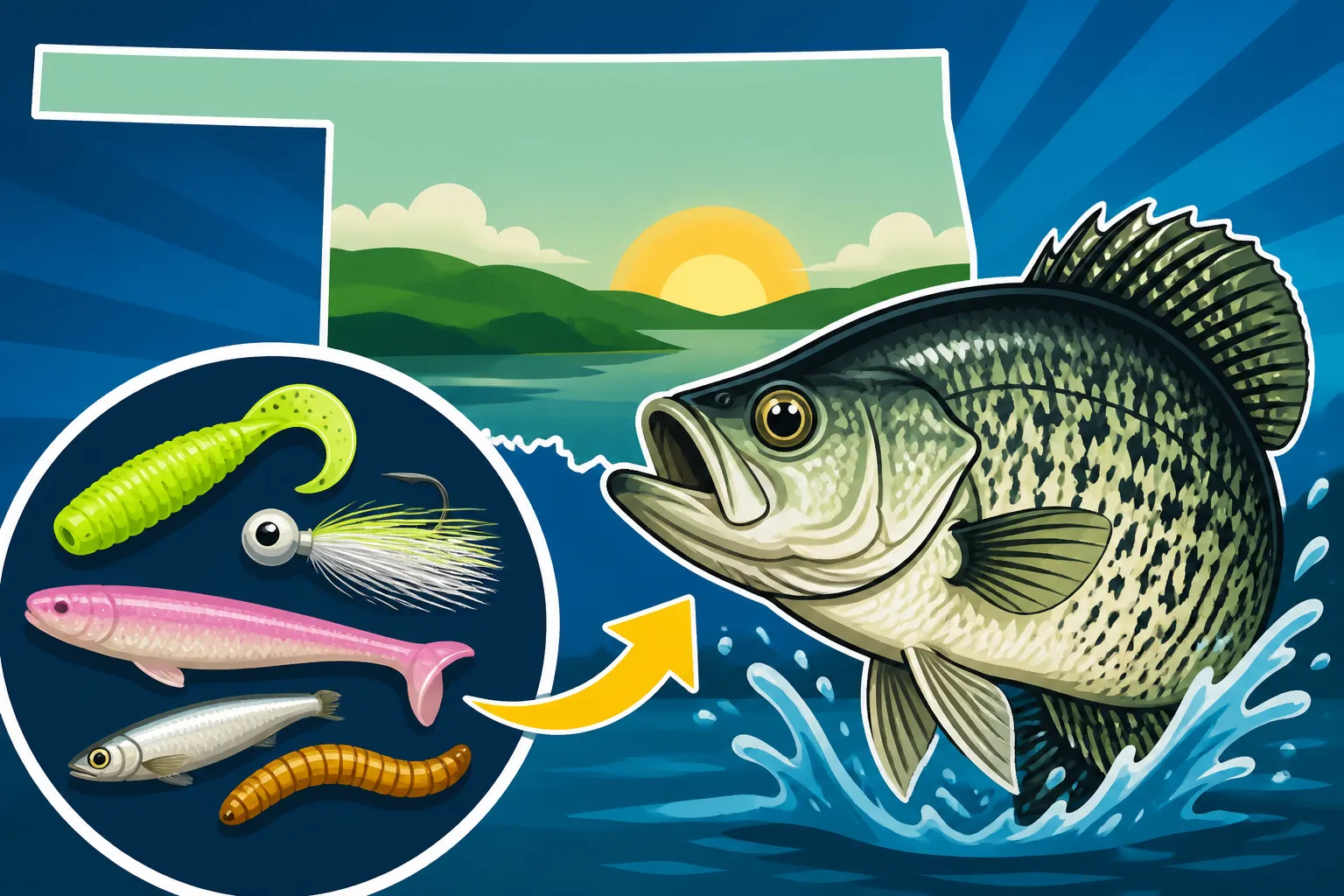
When it comes to artificial lures for crappie, soft plastics are in a league of their own. The sheer variety available is mind-boggling, from tiny jigs to grubs, tubes, and a multitude of creature baits, all designed to tempt a crappie strike. Their versatility makes them a staple in any crappie angler's tackle box.
The appeal of soft plastics lies in their ability to mimic various crappie forage. Paddle tails wiggle like a minnow, curl tails provide a continuous enticing action, and spider jigs or tiny tubes can imitate everything from insects to small crustacea. These baits come in an endless array of colors, sizes, and scent-infused options, allowing you to fine-tune your presentation to match the conditions. For instance, in clear water, a clear or translucent "smoke" colored jig might be best, while in stained water, a vibrant chartreuse or electric chicken pattern could be the ticket. You can find excellent selections of soft plastics on retailers like Amazon, offering convenience and variety right to your door.
Rigging soft plastics is usually done on a jig head, which provides weight for casting and a hook. The weight of the jig head (typically 1/32 to 1/8 ounce for crappie) will depend on the depth you're fishing, the current, and how fast you want the bait to fall. Many anglers also "tip" their soft plastics with a small live minnow, a crappie bite stimulant, or a piece of Berkley PowerBait to add extra scent and appeal, creating a hybrid approach that often proves irresistible. Experiment with different jig head weights and soft plastic styles to see what the crappie are hitting on any given day. Crappie Jigging Techniques
Small Crankbaits and Jerkbaits: Mimicking Baitfish
Sometimes crappie are in a more aggressive mood, or they're keying in on larger baitfish. This is when small crankbaits and jerkbaits truly shine. These hard-bodied lures are designed to imitate larger shad or minnows and can be incredibly effective at drawing strikes from bigger, more territorial crappie, especially those suspended in open water or along prominent structures.
Small crankbaits, often referred to as "mini cranks," come in various diving depths, from shallow runners to those that can get down 8-10 feet or more. Their wobbling action and internal rattles create enticing vibrations and flash that can call in crappie from a distance. Jerkbaits, on the other hand, are designed to be retrieved with a "twitch, twitch, pause" cadence, mimicking a wounded baitfish. That pause, often for several seconds, is when a lurking crappie will often commit to the strike. These lures are particularly effective when crappie are actively feeding on schools of shad.
When selecting these lures, consider the depth crappie are holding at and the water clarity. Natural baitfish colors like silver, white, or shad patterns are excellent in clear water, while brighter colors like firetiger or chartreuse can be more visible in stained conditions. The retrieval technique is paramount: a steady retrieve for crankbaits, or an erratic, stop-and-go for jerkbaits. These lures are fantastic for covering a lot of water quickly, helping you locate active schools of crappie, especially on larger reservoirs like Lake Texoma or Lake Eufaula.
Spinners and Spinnerbaits: Flash and Vibration
For sheer attracting power, especially in less-than-clear water, spinners and small spinnerbaits are tough to beat. These lures are designed to create a lot of flash and vibration in the water, mimicking a fleeing baitfish or insect and calling crappie in from a distance. They can be incredibly effective when crappie are scattered or when you need to grab their attention.
Inline spinners, like the classic Mepps or Rooster Tail, feature a spinning blade that creates both flash and vibration as you retrieve it. They are simple to use and highly effective. Small spinnerbaits, such as the Bobby Garland Baby Shad with a spinner arm or a classic Beetle Spin, combine a soft plastic body with a single blade, offering a similar, but often bulkier, presentation. The thumping action of the blade and the visual flicker can trigger an aggressive reaction strike, even from crappie that aren't actively feeding.
These lures perform particularly well in stained or slightly turbid water where their visual and auditory cues are easier for crappie to detect. They are also excellent choices for fishing around brush piles, submerged timber, or weed lines, as their single hook design (on most spinnerbaits) makes them relatively snag-resistant. Experiment with different blade colors (silver, gold, painted) and body colors. A steady, moderate retrieve usually works best, allowing the blade to spin consistently and create its attractive commotion.
Seasonal Bait Selection for Oklahoma Crappie
Crappie are creatures of habit, but their habits are deeply tied to the changing seasons in Oklahoma. What works in the crisp air of fall might be completely useless in the dead of summer. Adapting your bait and technique to the season is crucial for consistent success, helping you understand where crappie are, what they’re eating, and how aggressively they’re feeding.
Spring: Spawning Season Strategies
Ah, spring! This is arguably the most anticipated season for crappie anglers in Oklahoma. As water temperatures begin to rise, crappie move from their deep winter haunts into shallower waters, first to stage (pre-spawn) and then to build their nests and spawn. This period offers some of the best fishing opportunities of the year, but your bait choice needs to reflect their changing behavior.
During the pre-spawn phase, when water temperatures are typically in the 40s to low 50s, crappie are transitioning. They're moving towards shallower cover but aren't quite on the beds yet. During this time, they’re often focused on feeding to build energy for the spawn. Live minnows fished around brush piles, submerged timber, and deep docks are incredibly effective. Small jigs, particularly those with a slow fall, also excel. Focus on a slower retrieve, as their metabolism is still increasing.
As the water warms into the upper 50s and low 60s, the spawn truly kicks off. Crappie move right into shallow water, often as shallow as 1-3 feet, around submerged cover, reeds, and even rocky banks. During this aggressive period, both male and female crappie will strike baits readily, either to feed or to protect their nests. Small jigs (1/32 or 1/16 oz) in bright colors like chartreuse, pink, or white, fished vertically or with a very slow retrieve, are prime. Live minnows remain a consistent producer. Focus your efforts on any visible cover in these shallow areas. When Do Crappie Spawn in Oklahoma Lakes?
Summer: Deep Water and Night Fishing
When the Oklahoma summer sun beats down and water temperatures soar, crappie typically retreat from the shallows to deeper, cooler waters. This can be a challenging time for anglers, as the fish become less active during the day. However, understanding their summer patterns allows you to adapt your bait and tactics for continued success.
During the heat of summer, crappie will congregate around deep-water structure: submerged creek channels, bridge pilings, brush piles, standing timber, and main lake points in depths ranging from 15 to 30 feet, sometimes even deeper. They'll often suspend over these structures. For daytime fishing, trolling small crankbaits that reach these depths can be very effective for covering water and finding active schools. Deep jigging with heavier jig heads (1/8 to 1/4 ounce) tipped with soft plastics or live minnows, positioned directly over suspended fish you mark on your fish finder, is also a go-to technique.
Another incredibly effective summer strategy is night fishing. Crappie are often drawn to lights suspended over the water, which attract baitfish and insects, creating a feeding frenzy. Under these lights, live minnows are king, but small jigs or beetle spins can also produce. Focus on fishing vertically directly under the lights. The cooler night temperatures make for a more comfortable experience for anglers and often a more active bite from the crappie. How to Find Crappie in Deep Water in Summer
Fall: Feeding Frenzy Before Winter
As the scorching Oklahoma summer gives way to the cooler, crisper air of fall, crappie undergo another significant behavioral shift. This period is often characterized by a "feeding frenzy" as crappie actively try to fatten up before the leaner months of winter. For anglers, fall can be one of the most productive times to target these tasty panfish.
In early fall, as water temperatures begin to drop from their summer highs, crappie will often move out of their deep summer haunts and begin to spread out, often returning to mid-depths and even shallower flats, creek channel bends, and secondary points. They are actively chasing baitfish, which are also schooling up in preparation for winter. This is a great time to use both live minnows and a variety of artificial lures. Trolling with small crankbaits or spider rigging with multiple rods rigged with jigs and minnows can be very effective for locating these nomadic schools.
As fall progresses and water temperatures continue to drop, crappie will continue their aggressive feeding. They might start congregating more tightly around brush piles and channel edges. Jigs in natural baitfish colors (silver, white, gray) or bright colors (chartreuse, orange) are excellent choices. Faster retrieves and covering more water are often the keys to success, as the fish are actively chasing prey. This is a prime time to stock up on crappie for the freezer, taking advantage of their heightened activity before winter fully sets in. Fall Crappie Fishing Patterns in Oklahoma
Winter: Slow and Subtle Approaches
Winter fishing for crappie in Oklahoma can be a bit more challenging, but it can also be incredibly rewarding for those willing to brave the cold. Crappie become much more lethargic in cold water, and their movements and feeding windows are significantly reduced. The key to success lies in slow, subtle presentations and finding where they congregate in their winter havens.
During winter, crappie will typically hold tight to deep structure, often in 20-40 feet of water or more, around prominent creek channels, humps, bridge pilings, and the base of submerged trees. They'll form tight schools and won't chase baits very far. This makes precise boat positioning and accurate presentations critical. Ice fishing, though less common in Oklahoma, follows similar principles for those brave enough to try it during rare freezes.
The best baits for winter crappie are usually small live minnows or tiny jigs (1/32 or even 1/64 ounce) tipped with a small piece of plastic or a crappie nibble. "Dead sticking" a minnow — letting it hang almost motionless — is often the most effective technique. Vertical jigging, with very slow, barely perceptible twitches, can also entice a strike. Patience is absolutely key; bites will be subtle, often just a slight "thump" or the line going slack. Using light line (4-6 lb test) and a sensitive rod will help you detect these faint bites. The colder months demand a more deliberate and finessed approach to consistently catch crappie.
Bait Presentation and Rigging Techniques
Having the best bait in your tackle box is only half the battle; knowing how to present it effectively is the other, equally important, half. Crappie are often sensitive to how a bait moves in the water, its depth, and its overall appearance. Mastering a few key rigging techniques can dramatically improve your success rate and ensure your chosen bait is doing its job.
Single Jig or Minnow Rigs: The Versatile Basics
The single jig or minnow rig is the bread and butter of crappie fishing. It’s simple, versatile, and incredibly effective, making it a go-to for anglers of all skill levels. Whether you're casting to a visible brush pile or slowly working a channel edge, this basic setup provides excellent control over your bait.
For a single jig rig, you simply tie a jig head (from 1/32 oz for shallow water up to 1/8 oz or more for deeper applications) directly to your main line. Then, thread your chosen soft plastic grub, tube, or minnow imitation onto the hook. This setup is fantastic for targeted casts, allowing you to accurately pitch your bait to specific pieces of cover or structure. It's also ideal for vertical presentations, whether you're dangling it directly into a brush pile or slowly lifting and dropping it over a school of suspended crappie. You can let it sink, twitch it gently, or reel it in with a slow, steady retrieve.
When using a live minnow, you can also opt for a simple single hook rig. This might involve a small Aberdeen hook (size 6 or 8) tied directly to your line, often with a split shot or two crimped on a foot or so above the hook to get the minnow down to depth. The simplicity allows the minnow to swim naturally, which is often all you need. Choosing the right jig head weight or split shot size is crucial; too light, and it won't get down, too heavy, and it'll look unnatural or snag too easily.
Spider Rigging and Trolling: Covering Water
When crappie are scattered across an area, or you're trying to locate schools in open water, "spider rigging" or slow trolling can be an incredibly efficient and productive technique. This method allows you to present multiple baits at various depths and distances simultaneously, significantly increasing your chances of finding active fish.
Spider rigging involves using several rods, typically mounted in specialized rod holders on the front or sides of your boat, extending out like the legs of a spider. Each rod is rigged with a different bait – often a live minnow, a jig, or a combination – and fished at varying depths. You then move your boat very slowly, often with an electric trolling motor, typically at speeds less than 1 mph, covering a wide swath of water. This is particularly effective over flats, along creek channel edges, or around large brush fields. The idea is to present a smorgasbord of options to the crappie, allowing them to choose what they prefer and helping you identify where they're holding. How to Spider Rig for Crappie
Trolling, while similar, often involves fewer rods and might use crankbaits or heavier jigs to target specific depths. Whether spider rigging or trolling, the principle is the same: cover water, present a variety of baits, and let the fish tell you what they want. It’s an excellent way to eliminate unproductive water and zero in on the crappie's current location and preference. Just be mindful of local regulations regarding the number of rods you can use at one time.
Bobber and Slip Bobber Rigs: Precision Depth Control
For pinpoint precision and detecting those subtle crappie bites, bobber rigs, especially slip bobber rigs, are indispensable. These setups are fantastic for both bank anglers and boat anglers, allowing you to present your bait exactly where you want it in the water column and detect even the slightest nibble.
A traditional fixed bobber rig is great for shallow water (usually less than 5-6 feet). You simply tie your hook, add a sinker (split shot) a few inches above it, and then attach a bobber at a fixed distance from the hook. This keeps your bait suspended at a set depth. It's easy to cast and visualize a bite, as the bobber dips or moves. This is perfect for fishing around docks, shallow brush, or lily pads.
For deeper water or when you need to adjust your depth frequently, the slip bobber rig is a game-changer. This rig uses a small knot tied onto your main line (called a bobber stop), followed by a bead, then the slip bobber itself, and finally your hook and sinker. The bobber can "slip" up and down the line, stopping at the bobber stop, which you can slide up or down to set your desired depth. This allows you to cast easily, as the bobber slides down to your sinker, and then the bait sinks to the set depth once in the water. It’s perfect for suspended crappie or when you need to fish 10, 15, or even 20 feet deep. The sensitivity of a slip bobber for those light crappie bites is unparalleled.
| Bait Type | Pros | Cons | Best Conditions |
|---|---|---|---|
| Live Minnows | Unmatched natural action & scent; consistently effective | Can be fragile; requires aeration; more costly | Any condition, especially finicky fish or cold water |
| Soft Plastics | Versatile in size, shape, color; durable; cost-effective in bulk | Lacks natural scent/movement; angler skill needed for presentation | All seasons; effective for active or neutral fish; structure fishing |
| Small Crankbaits | Aggressive action, covers water, attracts larger crappie | Less effective for lethargic fish; can snag easily | Active fish; open water; trolling; warmer temperatures |
| Spinners/Spinnerbaits | High flash and vibration; good for stained water | Less subtle for clear water/finicky fish; can twist line | Stained water; scattered fish; covering large areas; active fish |
| Crappie Worms | Natural scent; very subtle action; easy to use | Smaller profile; might attract smaller fish; can fall off hook | Finicky fish; cold water; beginner-friendly; still fishing |
Where to Get Your Crappie Bait in Oklahoma
Knowing what bait to use is excellent, but knowing where to get it, especially fresh and reliable live bait, is just as important. In Oklahoma, you have several options, each with its own advantages, from the local mom-and-pop shops to major retailers and even catching it yourself.
Local Bait Shops: The Angler's Best Friend
For many seasoned crappie anglers in Oklahoma, the local bait shop is more than just a place to buy minnows; it's an institution. These small, often family-run businesses are truly the angler's best friend, offering not just bait but a wealth of invaluable local knowledge.
The primary advantage of a local bait shop is the freshness and quality of their live bait. They understand that lively minnows mean more bites, so they often take great care in sourcing and maintaining their stock. You're much more likely to get vibrant, healthy minnows that will last longer and be more active on your hook. Beyond minnows, they often carry a good selection of worms, grubs, and sometimes even local insects.
But it's the local knowledge that truly sets these shops apart. The owners and staff are often avid anglers themselves, familiar with the local lakes and rivers, and they'll know what the crappie are biting on right now. "What's hitting today?" is the most common question, and their advice on hot spots, effective colors, or recent patterns can be priceless. Supporting these businesses also helps keep fishing communities vibrant. So, before you head out, make a stop at the nearest bait shop; you might leave with not just bait but also the secret to a successful day. Where to Buy a Fishing License in Oklahoma
Sporting Goods Stores and Online Retailers
While local bait shops are excellent for live bait and local intel, larger sporting goods stores and online retailers offer unparalleled convenience and selection for artificial lures, tackle, and general fishing gear. For everything from a new crappie rod to a specific brand of jig, these options are incredibly valuable.
Major sporting goods stores across Oklahoma, like Academy Sports + Outdoors or Bass Pro Shops, typically have extensive fishing departments. Here, you'll find a massive array of soft plastics in every color imaginable, crankbaits, spinners, jig heads, and all the terminal tackle you could ever need. The advantage is the sheer choice and the ability to browse many brands and styles in one place. They also often have sales and promotions, allowing you to stock up on your favorites. While they might carry some packaged worms, live minnows are generally not their specialty.
Online retailers, such as Amazon, have revolutionized how anglers purchase tackle. The convenience of having specific lures, unique jig head designs, or bulk quantities of soft plastics delivered directly to your home is hard to beat. If you're looking for a niche item or want to compare prices across different brands, online shopping is a fantastic resource. You can often read reviews from other crappie anglers, helping you make informed decisions about new products. Remember, while you can't buy live bait online, these platforms are ideal for building out your artificial lure arsenal.
Catching Your Own Bait: A Frugal and Fun Option
For those who enjoy a more hands-on approach and want to save a few dollars, catching your own bait can be a rewarding and even educational experience. It connects you directly with the ecosystem and can be a fantastic activity for kids, teaching them about the food chain and resourcefulness.
Minnows are often the easiest to catch yourself using a minnow trap or a cast net. Minnow traps are usually small wire or plastic cages that you bait with a piece of bread, corn, or dry dog food and place in shallow water overnight. Cast nets require a bit more skill but can yield a large quantity of minnows quickly in areas where baitfish congregate. Before you head out, always check the current Oklahoma fishing regulations regarding bait collection, including permissible methods and size/bag limits for baitfish. Not all bodies of water allow self-collection, and some species are protected.
Beyond minnows, you can easily collect your own worms and grubs. Digging in a moist compost pile or garden after a rain can yield plenty of redworms and nightcrawlers. Flipping over rocks or logs might reveal grubs and other insects. Crickets and grasshoppers can often be netted in grassy fields. The advantage of self-collected bait is that it's usually free, and it's fresh. Plus, there’s a certain satisfaction that comes from catching fish on bait you gathered yourself. It adds another layer to the overall fishing adventure.
Disclaimer
This article is for general informational purposes only and does not constitute professional advice. Laws, prices and regulations vary by location and change over time. Consult a qualified professional for guidance on your specific situation.