Grand Lake Paddlefish Snagging Basics in Oklahoma
There's a unique thrill that comes with chasing one of Oklahoma's most prehistoric and powerful fish – the paddlefish. For many anglers, the thought of grappling with these giants, especially on a lake as iconic as Grand Lake O' the Cherokees, can feel a bit daunting. This guide is here to demystify the process, offering clear, actionable insights into Grand Lake paddlefish snagging basics so you can confidently head out for an unforgettable experience.
Why Grand Lake is the Paddlefish Capital
Grand Lake O' the Cherokees isn't just another beautiful body of water in Oklahoma; it's practically synonymous with paddlefish snagging. The lake's expansive waters and connection to the Neosho River create the perfect environment for these ancient fish, making it a bucket-list destination for anglers eager to experience the unique challenge of snagging. It’s a fishery that supports not only a healthy paddlefish population but also offers an incredible, truly wild fishing experience.
The Unique Draw of Grand Lake for Paddlefish
Grand Lake is fed by the Neosho River, which serves as a vital spawning highway for paddlefish. Every spring, as water temperatures rise and river flows increase, adult paddlefish migrate upstream from the lake into the river to reproduce. This predictable migration creates prime opportunities for anglers to intercept these massive fish as they move. The sheer number and size of the paddlefish found here are what truly set Grand Lake apart. Many anglers travel from across the region specifically to experience this fishery, hoping to land one of the giant, filter-feeding leviathans.
Beyond the migration, the lake itself provides excellent year-round habitat. Paddlefish are constantly moving, typically preferring the open waters and deeper channels where they can filter feed on zooplankton. This nomadic behavior means they can be challenging to locate, but during the spring snagging season, their concentrated movements make them more accessible. Understanding these patterns is key to successful snagging, and Grand Lake’s distinct river and lake dynamics provide a fascinating study in paddlefish ecology.
Understanding the Paddlefish Life Cycle and Behavior
Paddlefish, often called "spoonbill" due to their distinctive, elongated snout, are filter feeders, meaning they don't bite traditional baits or lures. Instead, they swim with their mouths open, sifting microscopic zooplankton from the water. This unique feeding strategy is why snagging is the primary method for catching them. They are generally found in large, slow-moving rivers and reservoirs. In Oklahoma, the bulk of the population resides in the waters feeding the Arkansas River system, with Grand Lake being a major stronghold.
Their life cycle is deeply tied to water conditions. As we mentioned, the spring migration is driven by instinct, water temperature, and flow. When conditions are just right, usually between late March and early May, paddlefish embark on their upstream journey to spawn. Once spawning is complete, they disperse back into the main lake. Knowing these seasonal movements is crucial for knowing when and where to target them. If you’re interested in learning more about the annual timing, our guide on the Paddlefish Snagging Season in Oklahoma dives deeper into the specific windows of opportunity.
Gearing Up for Grand Lake Paddlefish
Snagging a paddlefish isn't like your average bass or crappie fishing trip. These are big, powerful fish, and your gear needs to be up to the task. Trying to tackle a 50-pound (or even 100-pound!) paddlefish with light tackle is a recipe for broken lines, bent hooks, and a lot of frustration. Investing in the right heavy-duty equipment is paramount for both success and safety, ensuring you can effectively fight and land these incredible fish.
Rods, Reels, and Line: Heavy-Duty Essentials
For paddlefish snagging, you need equipment designed for brute force. Think saltwater-grade gear, but for freshwater giants. Your rod should be a stout, heavy-action rod, typically 7 to 9 feet long, with a strong backbone to handle the immense weight and fight of a paddlefish. Many anglers opt for fiberglass rods for their durability and forgiving action under heavy loads. Pair this with a large, heavy-duty baitcasting reel or a robust saltwater-grade spinning reel that can hold a significant amount of heavy line. The drag system on your reel needs to be smooth and capable of handling sustained pressure.
The fishing line is arguably the most critical component. Forget about 10 or 20-pound test; you'll want to spool up with at least 80-pound test braided line, if not 100-pound. Braided line has minimal stretch, allowing for better feel and more direct hooksets, which is essential when you're snagging. Plus, its incredible strength helps you wrestle these powerful fish and retrieve snagged gear. A good quality braided line like PowerPro or Spiderwire, often found on platforms like Amazon, is a common choice among seasoned paddlefish anglers. Don't skimp on line; it’s the weakest link in your setup and where most failures occur.
Snagging Hooks, Weights, and Terminal Tackle
Since paddlefish don't bite, you'll be using large, heavy treble hooks designed to "snag" the fish. These aren't tiny crappie hooks; we're talking about heavy-gauge, sharp treble hooks, often sized 8/0 to 12/0. Look for hooks that are strong enough not to straighten under extreme pressure. Some anglers even prefer a single large J-hook over a treble, but the trebles are more common for snagging. The size of the hook ensures a good hold on the fish's tough hide.
To get your hooks down to where the paddlefish are schooling, you'll need substantial weights. These are typically pyramid or bell sinkers ranging from 8 ounces all the way up to 24 ounces or more, depending on water depth and current. Your rig will usually consist of a heavy main line, a strong swivel, a leader (often 100-pound monofilament or fluorocarbon for abrasion resistance), and then your weight and hooks. The hooks are usually placed about 12-18 inches above the weight. For a complete overview of what you might need, check out our guide on What Gear Do You Need for Paddlefish Snagging in Oklahoma.
Boats, Electronics, and Safety Gear
While it's possible to snag paddlefish from the bank in specific, high-traffic areas during peak migration, having a boat dramatically increases your success rate and access to prime fishing grounds. A sturdy boat, capable of handling varying river and lake conditions, is ideal. Bass boats, jon boats, or even pontoon boats can work, as long as they are stable and have enough space. You'll often be drifting or motoring slowly in current, so a reliable engine is essential.
Modern electronics are invaluable for paddlefish snagging. A good fish finder or sonar unit is your best friend when it comes to locating schools of paddlefish. Look for units with down imaging and side imaging capabilities, like those from Humminbird or Lowrance, which can clearly display the large, cigar-shaped paddlefish arches on your screen. These units, available through retailers such as Amazon, help you pinpoint exactly where the fish are in the water column. Without a reliable fish finder, you’re often just casting blind.
Don't forget safety! When you’re dealing with heavy tackle, large fish, and potentially swift currents, safety is paramount. Always have enough U.S. Coast Guard-approved life jackets for everyone on board, a fire extinguisher, a first-aid kit, and a horn or whistle. Good quality polarized sunglasses can also help you spot subtle movements in the water and protect your eyes from errant hooks.
Mastering the Snagging Technique
Snagging paddlefish isn't about finesse; it's about power and persistence. It requires a specific technique, a keen eye on your sonar, and an understanding of how paddlefish behave in their environment. The challenge lies in accurately casting and effectively sweeping your heavy tackle through areas where fish are concentrated.
Locating Paddlefish: Sonar and Strategy
The absolute key to successful paddlefish snagging is finding the fish. Since they are filter feeders, they don't respond to bait, so you have to be in the right place at the right time. This is where your fish finder becomes indispensable. Look for large, distinct arches or blobs on your sonar screen, often suspended in the water column. Paddlefish typically school up in deeper channels, bends in the river, or along submerged structures. In Grand Lake, during the spring migration, they'll be moving from the main lake into the Neosho River arm and its tributaries.
Once you locate a school, you'll want to position your boat to drift or slowly motor over them. Pay attention to the current and wind, as these will dictate your drift path. You're trying to present your hooks directly into the path of the fish. Some anglers mark waypoints on their GPS when they find a hot spot, allowing them to make repeated drifts through the same productive area. This strategic approach, combining modern electronics with an understanding of fish movement, is crucial for consistently finding paddlefish.
Casting, Retrieval, and the Strike
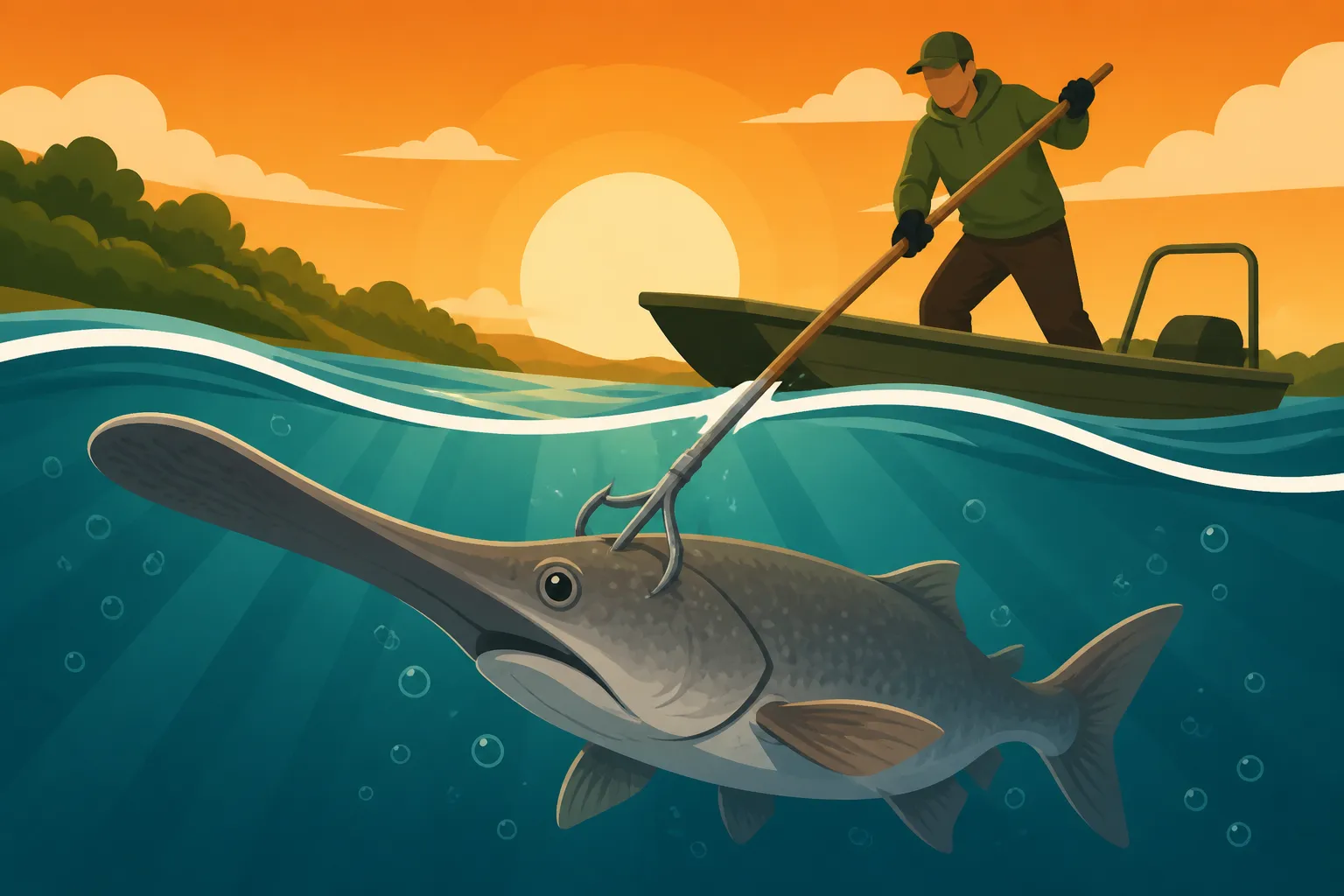
The act of snagging involves casting your heavy rig out, letting it sink, and then sweeping or "snagging" it through the water column. Cast your rig upstream or upcurrent from where you’ve marked fish, allowing it time to sink. Once it hits bottom or is at the desired depth, engage your reel. The technique involves a long, powerful sweep of your rod, pulling the heavy weight and hooks through the water. Imagine it like a large, vertical jigging motion. After the sweep, quickly reel in the slack as you drop your rod tip back down, then repeat the sweep. You're essentially trying to "foul hook" the paddlefish as it swims.
A "strike" when snagging a paddlefish feels less like a bite and more like hitting a log or snagging a very heavy, stubborn object. You’ll feel a sudden, solid thud or a dead weight on your line. When this happens, set the hook hard, multiple times if necessary, with a powerful upward sweep. Don't hesitate or try to finesse it; paddlefish have tough hides, and you need to drive that hook in. Once hooked, the fight is on, and it's often a long, drawn-out battle against a powerful, unpredictable adversary.
Fighting and Landing Your Catch
Fighting a paddlefish is a test of endurance and strength. These fish don't make quick, flashy runs; instead, they dig deep, make powerful, sustained pulls, and often feel like you're reeling in a submarine. Keep your rod tip high, maintain constant pressure, and let your drag do its job. Don't try to horse the fish in too quickly, as this can lead to pulled hooks or broken lines. Work the fish steadily, pumping the rod and reeling down. Patience is key.
When you finally get the fish alongside the boat, landing it requires teamwork and a plan. These fish are far too large for a standard landing net. Most anglers use a large gaff to secure the fish by the lower jaw or gill plate. It’s important to handle these fish carefully, especially if you plan to release them, as they are a fragile, long-lived species. Have a designated person ready with the gaff, and make sure everyone in the boat understands their role to ensure a smooth and safe landing.
Navigating Oklahoma's Paddlefish Regulations
Oklahoma has very specific regulations designed to manage its unique paddlefish fishery, especially on Grand Lake. Ignoring these rules can lead to significant fines and penalties, so it's critical to be informed before you even launch your boat. These regulations are in place to ensure the sustainability of the population for future generations of anglers. You can dive deeper into the general framework by reading about Fishing Regulations You Need to Know in Oklahoma.
Season Dates, Harvest Limits, and Required Permits
The paddlefish snagging season in Oklahoma is highly regulated and typically occurs during the spring migration. For Grand Lake and its tributaries, the season usually runs from March 1st to April 30th. However, it's absolutely crucial to double-check the Oklahoma Department of Wildlife Conservation (ODWC) regulations each year, as dates can shift based on biological assessments. During this season, there's a daily bag limit, usually one paddlefish per person, and an annual limit of two paddlefish per person. Once you harvest a fish, it must be immediately tagged with a special paddlefish tag, which is issued with your fishing license.
Beyond your general fishing license, you will also need a paddlefish permit to legally snag paddlefish in Oklahoma. This permit is relatively inexpensive but mandatory. Non-residents will naturally have higher license costs, but the permit fee is usually standard. Make sure you understand the nuances of Oklahoma Fishing License Costs and Types before heading out. All harvested paddlefish must be reported to the ODWC within a specific timeframe, often at designated check stations, or through an online reporting system. This data helps the ODWC monitor the health of the paddlefish population and adjust regulations as needed.
Responsible Handling, Tagging, and Release
Paddlefish are ancient and vulnerable fish, and proper handling is essential, especially if you plan to release them. If you're going to keep a fish, you must immediately attach your paddlefish tag to the fish. The tag should be visibly affixed to the dorsal fin or gill plate. If you decide to release a paddlefish, handle it with extreme care to minimize stress and injury. Avoid dragging the fish onto dry land; keep it in the water as much as possible.
When releasing, support the fish horizontally and allow it time to recover before letting it swim off. Never hold a large paddlefish vertically by the bill or tail, as this can cause internal damage. A good practice is to bring a pair of bolt cutters or heavy-duty pliers to quickly snip off the snagging hooks from the fish's body rather than trying to remove them by hand, which can cause more trauma. Being a responsible angler means prioritizing the well-being of the fish, whether you keep it or release it.
Important Oklahoma Game Warden Rules
Oklahoma Game Wardens are vigilant in enforcing fishing regulations, particularly during the popular paddlefish season on Grand Lake. They are there to protect the resource and ensure fair play. Expect to be checked, and always have your valid fishing license, paddlefish permit, and any harvested fish readily available for inspection. Know your bag limits and season dates inside and out. Misinterpreting a rule is not an excuse for breaking it.
Game Wardens will also check your boat's safety equipment, including life jackets, fire extinguishers, and throwable devices. If you're wondering about specific requirements, our article on Oklahoma Life Jacket and PFD Rules for Boaters is an excellent resource. Any violations, from exceeding the bag limit to improper tagging or lacking safety gear, can result in hefty fines and potential confiscation of equipment. Always err on the side of caution and follow the rules to the letter.
Optimizing Your Grand Lake Snagging Trip
A successful paddlefish snagging trip on Grand Lake isn't just about having the right gear; it's also about timing and understanding the environmental factors that influence paddlefish behavior. Planning your trip around the best conditions can dramatically increase your chances of hooking into one of these magnificent fish. This often means paying attention to forecasts and local reports.
Best Times, Weather, and Water Conditions
As we’ve discussed, the prime time for paddlefish snagging on Grand Lake is during the spring migration, generally from March through April. Within that window, specific conditions can make certain days better than others. Rising water levels and increased flow in the Neosho River arm often trigger more active paddlefish movement upstream, making them more concentrated and easier to locate. Conversely, stable or falling water can sometimes slow the migration.
Weather plays a significant role as well. Overcast days or periods just before a cold front can often produce good results, as fish may be more active. However, extreme weather, like heavy winds or thunderstorms, should be avoided for safety reasons. Water temperature is also a key factor; paddlefish typically become more active as water temperatures climb into the 50s and low 60s Fahrenheit. Keeping an eye on these factors, perhaps even using a guide like Best Time of Year to Snag Paddlefish at Grand Lake, Oklahoma, can fine-tune your trip planning.
Working with Guides and Local Expertise
For those new to paddlefish snagging or Grand Lake, hiring a local guide can be an invaluable investment. Experienced paddlefish guides spend countless hours on the water and know the subtle nuances of the lake and river, including current hotspots, optimal depths, and the best techniques for prevailing conditions. They often have top-tier equipment and can teach you the ropes much faster than you could learn on your own. Many guides operate directly out of the Grand Lake area, particularly around Grove or Miami, Oklahoma.
Even if you're not hiring a guide, tapping into local expertise can be extremely helpful. Visit local bait and tackle shops like those around Grand Lake. These places are often a hub of information, where anglers share tips on recent catches, successful spots, and current conditions. They might even have specific recommendations for where to buy your heavy-duty treble hooks or snagging weights. Don't be shy about asking questions; the local fishing community is usually more than happy to help fellow anglers succeed.
Disclaimer
Fishing regulations, seasons, and licensing requirements can change. Always consult the latest official Oklahoma Department of Wildlife Conservation (ODWC) regulations before planning any fishing trip to ensure compliance. This guide is for informational purposes only and should not be considered a substitute for official legal documents.