Summer Night Fishing Tips for Oklahoma Reservoirs
The scorching sun and relentless heat of an Oklahoma summer can make daytime fishing feel more like a chore than a relaxing pastime, often leaving anglers frustrated with sluggish fish and sunburnt shoulders. But what if I told you that some of the most exciting and productive fishing actually happens after the sun goes down? This guide is dedicated to unlocking the secrets of summer night fishing on Oklahoma's reservoirs, offering practical tips and techniques to help you enjoy cooler temperatures and more active fish under the stars.
Why Night Fishing is a Game Changer in Oklahoma Summers
When the temperatures soar during the day, much like they do across the state's sprawling lakes such as Lake Eufaula or Grand Lake O' the Cherokees, the fish tend to seek deeper, cooler waters and become less active. But as evening approaches and the air begins to cool, a whole new world of angling opportunities opens up. Night fishing isn't just a way to beat the heat; it's a completely different experience that can be incredibly rewarding.
Escaping the Oklahoma Heat and Sun
One of the most immediate and obvious benefits of night fishing in Oklahoma is the sheer comfort of cooler temperatures. Anyone who's spent a July afternoon battling both the sun and a stubborn fishing line knows the struggle. The intense heat not only saps your energy but can also put immense stress on fish, making them less likely to bite. Night fishing eliminates this problem entirely. You can enjoy a peaceful evening with a gentle breeze, often a welcome relief from the daytime oven. This comfort translates into longer, more enjoyable fishing sessions, and let's be honest, who doesn't prefer fishing when they're not sweating through their clothes?
Beyond personal comfort, avoiding the harsh midday sun can also protect your skin from harmful UV rays, reducing the risk of sunburn and long-term skin damage. While you still need to be mindful of insects and other nocturnal critters, the trade-off for a cooler, more serene environment is often well worth it. Think about it: instead of squinting against the glare, you're enjoying the calm reflections of the moon on the water, a truly magical experience unique to night angling.
Understanding Nocturnal Fish Behavior
Fish behavior dramatically shifts once the sun dips below the horizon. Many species, particularly the ones we love to target in Oklahoma, become much more active at night. The cover of darkness provides a sense of security, allowing them to move into shallower waters to feed without the threat of predatory birds or even us humans casting long shadows. This change in behavior is a fundamental reason why night fishing can be so productive.
Largemouth bass, for instance, are ambush predators that often move from deep structure into shallower coves and along weed lines to hunt baitfish under the cloak of darkness. Crappie, too, are drawn to lighted areas at night, where they feed on insects and small baitfish attracted to the glow. Even catfish, always active, become even more opportunistic feeders after dark, using their keen sense of smell to locate food. Understanding these patterns is key to successful night fishing; it means you might find fish in spots you'd never consider during the day, making your efforts much more effective. If you're looking for more general insights, our guide on Oklahoma Fishing Seasons: A Month-by-Month Guide offers a great overview of how fish behavior changes throughout the year.
The Solitude and Serenity of Night Fishing
There's something uniquely peaceful about being on the water at night. The hustle and bustle of daytime boat traffic often subsides, replaced by the gentle sounds of nature. The quiet can be almost meditative, allowing you to truly relax and focus on your angling. This solitude is a huge draw for many veteran anglers, offering a break from crowded boat ramps and popular fishing spots.
Imagine casting your line under a sky full of stars, the only sounds being the splash of your lure and the occasional chirping of crickets. It's a serene experience that allows for deep concentration and a profound connection with the environment. For those who seek a tranquil escape and a more intimate fishing experience, night fishing on an Oklahoma reservoir like Lake Texoma or Keystone Lake is an absolute must-try. You're not just fishing; you're experiencing the lake in a whole new, quiet dimension.
Essential Gear for Safe and Successful Night Fishing
While the basic principles of fishing remain the same, venturing out after dark requires a bit of specialized gear, especially when it comes to lighting and safety. You don't want to find yourself fumbling in the dark or, worse, running into an unexpected obstacle. A little preparation goes a long way in making your night fishing trip enjoyable and secure.
Lighting the Way: Personal and Boat Lighting
Proper lighting is paramount for night fishing. You'll need to see what you're doing, tie knots, rig baits, and most importantly, navigate safely. For personal use, a good headlamp is non-negotiable. Look for one with adjustable brightness settings and, ideally, a red-light option. Red light preserves your night vision better than white light, which can be disorienting and scare fish. Many excellent headlamps can be found on Amazon, offering robust construction and long battery life.
For boaters, navigation lights are legally required and essential for safety. Ensure your bow (red and green) and stern (white) lights are fully functional. Beyond legal requirements, a good spotlight or floodlight mounted on your boat can be incredibly helpful for spotting hazards, navigating unfamiliar waters, or locating buoys and markers. Some anglers also use underwater submersible lights to attract baitfish and, subsequently, game fish like crappie. These often come in green or white and can dramatically increase your chances of a bite. Always check your local regulations for specific lighting requirements for boats in Oklahoma.
Rods, Reels, and Line for Low-Light Conditions
While your favorite rod and reel combos will generally work, there are a few considerations for night fishing. Sensitivity is key when you can't rely on visual cues for bites. Using a sensitive graphite rod can help you feel subtle taps, which might be missed in the dark with a less responsive rod. For more details on choosing the right gear, our guide on Best Rods and Reels for Oklahoma Fishing might be helpful.
Line choice can also make a difference. Braided line, with its lack of stretch, offers excellent sensitivity for detecting bites. However, some anglers prefer fluorocarbon for its invisibility and abrasion resistance. Regardless of line type, consider having a brighter colored line or a line with a UV-reactive coating on your spinning reels or baitcasters. While not essential, it can sometimes offer a slight visual cue under moonlight or a headlamp. Additionally, glow-in-the-dark bobbers are a fantastic invention for crappie and catfish anglers, allowing you to easily see a strike without having to hold a light on your float constantly.
Baits and Lures That Shine After Dark
Just like lights attract fish, certain baits and lures are designed to be more effective in low-light conditions. Noise, vibration, and scent become even more critical factors when visibility is low. For bass, dark-colored jigs and worms (black, blue, purple) often create a better silhouette against the night sky, making them easier for fish to detect. Spinnerbaits with large thumping blades or chatterbaits create irresistible vibrations. Topwater lures that make a lot of commotion—like poppers and prop baits—can be incredibly exciting at night, as fish strike based on sound rather than sight.
For crappie, small jigs tipped with scent, or minnows under a lighted bobber, are classic night producers. Many tackle shops, and certainly platforms like Amazon, offer glow-in-the-dark crappie jigs that can be "charged" with a flashlight to provide a subtle glow underwater. Catfish, relying heavily on their sense of smell, are less concerned with visual appeal but will readily hit stink baits, cut bait, or live worms.
Here’s a quick overview of essential gear for your night fishing adventure:
| Gear Category | Essential Items | Night Fishing Specifics |
|---|---|---|
| Personal Safety | Life Jacket, First Aid Kit, Bug Spray | Always wear PFD, brighter colors for visibility, good insect repellent |
| Lighting | Headlamp, Boat Navigation Lights | Red-light option on headlamp, spotlight, optional submersible lights |
| Rods & Reels | Sensitive Graphite Rod, Spinning/Baitcasting Reel | Focus on sensitivity, consider braided line for feel |
| Line & Terminal | Fishing Line, Hooks, Sinkers, Swivels | Brighter line for visibility, glow-in-the-dark bobbers |
| Baits & Lures | Jigs, Soft Plastics, Crankbaits, Live Bait | Dark colors, noisy/vibrating lures, scented baits, glow jigs |
| Accessories | Pliers, Clippers, Net, Cooler, Water | Keep tools organized, a good net with a long handle is crucial |
Techniques and Tactics for Targeting Popular Species at Night
Now that you're geared up, let's talk tactics. Night fishing requires a slightly different approach than daytime angling, not just in gear but in how you present your baits and where you focus your efforts. Knowing what each species prefers after dark will significantly increase your chances of success on Oklahoma's many impressive bodies of water.
Chasing Largemouth Bass Under the Stars
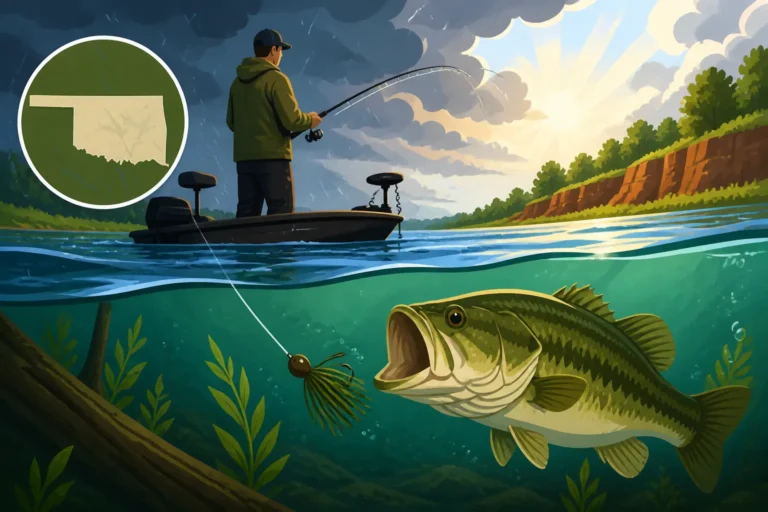
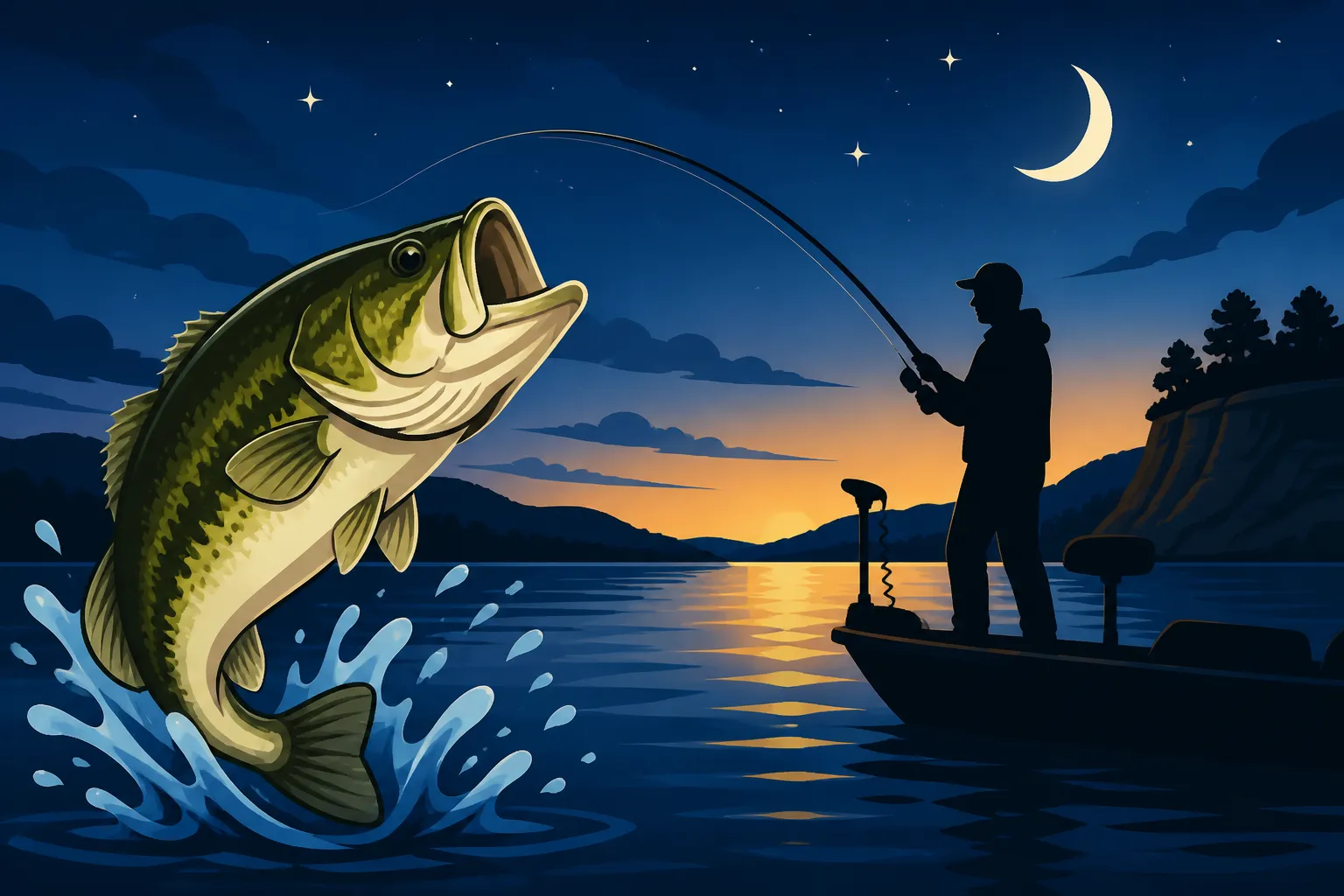
Largemouth bass are incredible nocturnal predators, and night fishing for them can be exhilarating. They often move from their deep, daytime haunts to shallower points, humps, and submerged cover to hunt. The key is to target areas where baitfish are likely to congregate. Look for areas with a good amount of structure, like fallen trees, brush piles, or even dock lights that might attract smaller fish.
When casting, focus on loud, high-vibration lures. Large spinnerbaits with Colorado blades, dark-colored jigs with chunky trailers, or slow-rolled deep-diving crankbaits are excellent choices. Topwater action can be absolutely phenomenal on calm summer nights. Throw a big black Jitterbug or a buzzbait near shorelines, weed lines, and around docks. The sudden explosion of a bass hitting a topwater lure in the dark is an experience you won't soon forget! Remember to work your lures slower than you might during the day. Bass rely more on sound and vibration at night, and a slower retrieve gives them more time to zero in on your offering. If you want to dive deeper into how bass behave, check out our article on Oklahoma Bass Fishing: Techniques by Season.
Crappie Fishing Under Lights
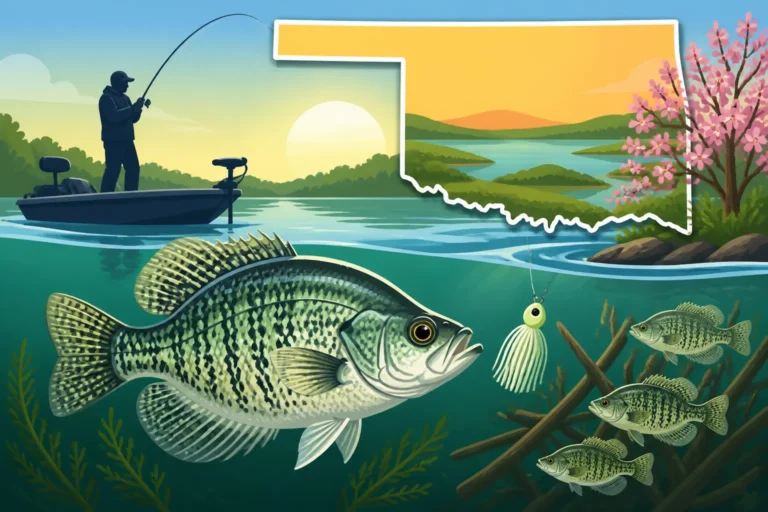
Crappie fishing at night, especially under lights, is a time-honored tradition in Oklahoma. The principle is simple: suspend a light (either above the water or submersible) near your boat or dock. This light attracts plankton, which then attracts baitfish (minnows, shad), and then the crappie move in to feed on the baitfish. This creates a miniature ecosystem right at your fishing spot, making it incredibly productive.
The most common technique involves vertical jigging with small crappie jigs (often glow-in-the-dark) or live minnows suspended under a bobber. Position your boat over a known crappie hotspot—a brush pile, a submerged timber field, or a bridge pillar—and deploy your lights. Crappie will usually hold around the edges of the light, transitioning into the feeding zone. Pay close attention to your depth finder (or fish finder; for more info, read Fish Finder Features That Matter Most on Oklahoma Reservoirs) to locate schools of crappie, as they might be suspended at various depths. Our guide on How to Catch Crappie at Night Under Lights provides even more dedicated advice on this popular technique. Be ready for continuous action once the crappie start biting, as they often school up tightly.
Catfish: The Ultimate Night Hunter
Catfish are arguably the most consistent night biters, as their superior sense of smell and barbels allow them to forage effectively in complete darkness. Whether you're targeting channel catfish, blue catfish, or flatheads, the night offers some of the best opportunities. You can find these whiskered warriors in river channels, creek mouths, deep holes, and along current breaks in Oklahoma's reservoirs.
For channel and blue catfish, cut bait (shad, sunfish), stink baits, and worms are all highly effective. Set up multiple rods with sturdy rigs, using a slip-sinker setup to allow fish to take the bait without feeling resistance. Cast to different depths and areas to cover more water. For the truly adventurous, flathead catfish are ambush predators that prefer live bait, such as bluegill or sunfish. They often lie in wait near structure like submerged logs or rock piles. Use heavy tackle, as trophy flatheads can put up a serious fight. Our comprehensive guide on Catfish Fishing Techniques for Oklahoma Anglers offers even more detailed strategies for landing these powerful fish. Night fishing for catfish is often a patient game, but the reward of a big pull on your line under the cover of darkness is unmatched.
Navigating Common Challenges and Staying Safe After Dark
While night fishing is incredibly rewarding, it does come with its own set of challenges. Staying safe and being prepared for the unexpected is crucial for a successful and enjoyable trip on any of Oklahoma's waters, from Lake Murray to Skiatook Lake.
Avoiding Obstacles and Navigating Safely
Reduced visibility is the most significant challenge when fishing at night. What might be an obvious marker during the day can completely disappear in the dark. If you're on a boat, go slow, especially in unfamiliar waters. Rely heavily on your GPS, depth finder, and a powerful spotlight to scan the water ahead for submerged trees, shallow points, or other boats. It's always a good idea to scout your chosen fishing spot during daylight hours, making mental notes of potential hazards and good structure. This pre-trip recon can save you a lot of trouble later.
Ensure all your boat's navigation lights are working perfectly before you even leave the dock. A dead battery or a burnt-out bulb in the dark is more than just an inconvenience; it can be a serious safety hazard. Consider carrying spare bulbs and a fully charged battery for your headlamp. Even if you're bank fishing, be aware of your surroundings; uneven terrain, slippery banks, and unexpected drops can all pose risks in the dark. For advice on boat care and readiness, consider reading through our information on Oklahoma Boat Safety Equipment Checklist.
Dealing with Insects and Wildlife
Summer nights in Oklahoma often mean bugs. Mosquitos, gnats, and other flying insects can quickly turn a peaceful fishing trip into a constant battle. Generously apply insect repellent before you head out, and consider wearing long sleeves and pants, even if it's warm, to minimize exposed skin. Some anglers even use portable mosquito repellent devices which can create a small bug-free zone around your boat or fishing spot. You can find a wide array of effective repellents and bug-repelling gadgets on Amazon.
Beyond insects, remember that you're in the natural habitat of various nocturnal animals. While most wildlife will avoid you, it's wise to be aware. Snakes, spiders, and other creatures are more active at night. Always use your headlamp when walking along the bank or reaching into dark areas. Keep your food and trash secured to avoid attracting unwanted attention from raccoons or other scavengers. A little caution and preparation can help ensure that your only encounters are with the fish you're trying to catch.
Preparing for the Unexpected
Even on the calmest night, things can go wrong. Always tell someone where you're going and when you expect to return. Have a fully charged cell phone in a waterproof case, and consider a marine radio if you're boating on a larger reservoir. Carry a well-stocked first-aid kit; small cuts or scrapes are much harder to deal with in the dark. A spare anchor, paddles, and tools are also invaluable in case of mechanical issues with your boat.
Weather can change quickly, even at night. Keep an eye on the forecast, and if storms are predicted, it might be best to reschedule your trip. Strong winds or sudden downpours can create dangerous conditions, especially on big, open waters. Being prepared means you can react calmly and effectively to any situation, allowing you to focus on the joy of fishing rather than potential worries. Our guide to Best Night Fishing Spots in Oklahoma might help you find locations that are typically more sheltered or have better accessibility after dark, adding an extra layer of safety to your planning.
Disclaimer
Fishing regulations, license requirements, and safety guidelines can change. Always consult the official Oklahoma Department of Wildlife Conservation (ODWC) website or current regulations guide before heading out on any fishing trip. This article is for informational purposes only and does not constitute official legal advice.